DeepSeek

Search documents
OpenThoughts: Data Recipes for Reasoning Models — Ryan Marten, Bespoke Labs
AI Engineer· 2025-07-19 21:10
Open Thoughts项目概览 - Bespoke Labs 发布 Open Thoughts 3,旨在创建最佳的开源推理数据集 [1][9] - Open Thoughts 项目专注于推理数据配方,以解决创建强大推理模型的关键缺失环节 [6][9] - Open Thoughts 3 在科学、代码和数学等领域都优于 Deepseek R1 quen 7B 模型 [13] 数据集创建与优化 - 数据集流水线包括问题来源、混合、过滤、答案生成和答案过滤等步骤 [17] - 实验创建了超过 5000 个数据集和近 3000 个模型,以严格评估流水线中每个步骤的不同决策 [18] - 每个问题采样多个推理轨迹效果显著,在固定问题规模下,性能不会下降,允许数据规模扩大 16 倍 [19][20] - 合成问题是可扩展的,可以进一步提高准确性 [22] - 问题过滤通过让语言模型评估问题的难度和答案的长度来筛选高质量问题 [23] 关键学习与发现 - 少量高质量的数据来源优于大量多样性的数据来源 [25] - 对于 SFT 和知识蒸馏,基于答案过滤或验证答案似乎没有帮助 [26] - 较强的评估基准模型并不一定意味着它是一个更好的教师模型,例如,Quen 32B 是比 Deepseek R1 更好的教师模型 [21] - 通过知识蒸馏,模型可以在某些领域超越教师模型,例如在法律推理领域 [35][36][37] 实践建议 - 根据特定领域调整数据配方,从 Open Thoughts 的配方开始迭代 [29] - 针对代码、科学和数学等不同领域,应区别研究流水线的每个步骤 [29][30] - 如果特定领域的数据不足,可以将现有数据转换为问题,并使用上下文示例生成更多数据 [32] - 评估至关重要,需要使用 Evalchemy 等开源库来确保模型改进的有效性 [33][34]


DeepSeek终于丢了开源第一王座,但继任者依然来自中国
猿大侠· 2025-07-19 03:43
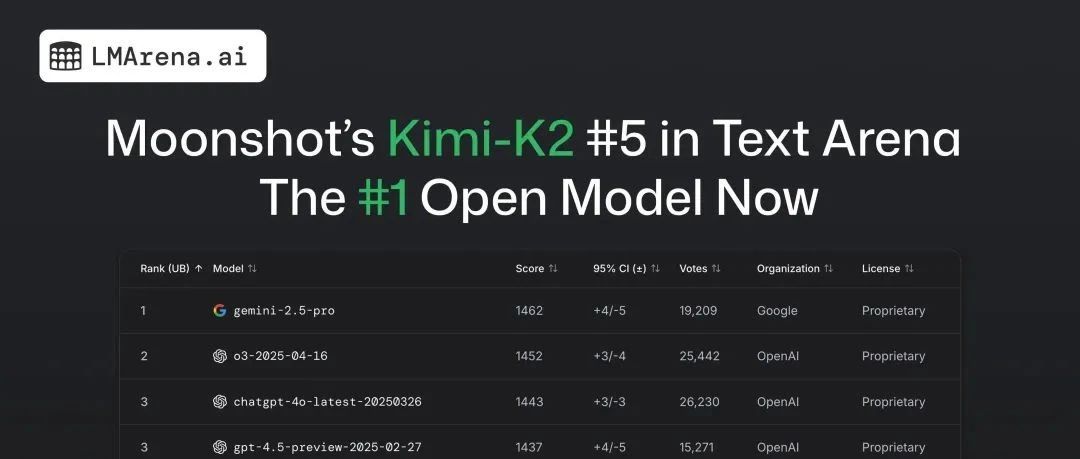
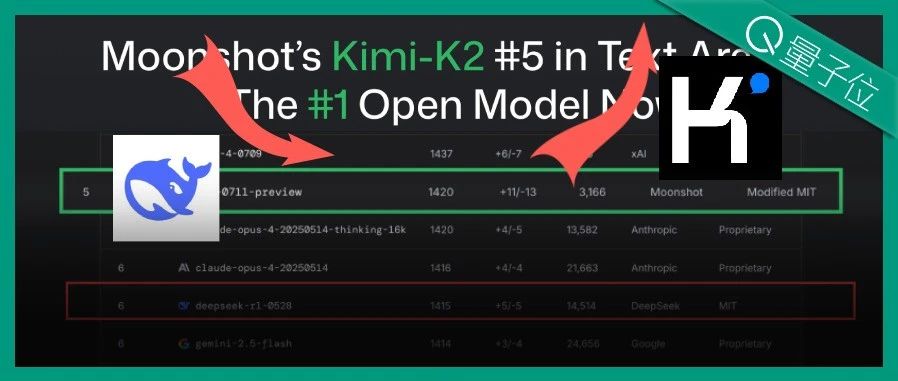
Core Viewpoint - Kimi K2 has surpassed DeepSeek to become the number one open-source model globally, ranking fifth overall, closely following top proprietary models like Musk's Grok 4 [1][18]. Group 1: Rankings and Performance - Kimi K2 achieved a score of 1420, placing it fifth in the overall rankings, with only a slight gap from leading proprietary models [2][21]. - The top ten models all scored above 1400, indicating that open-source models are increasingly competitive with proprietary ones [20][22]. - Kimi K2's performance in various categories includes tying for first in multi-turn dialogue and second in programming ability, matching models like GPT 4.5 and Grok 4 [3][18]. Group 2: Community Engagement and Adoption - Kimi K2 has gained significant attention in the open-source community, with 5.6K stars on GitHub and nearly 100,000 downloads on Hugging Face [5][4]. - The CEO of AI search engine startup Perplexity has publicly endorsed Kimi K2, indicating plans for further training based on this model [5][24]. Group 3: Architectural Decisions - Kimi K2 inherits the DeepSeek V3 architecture but includes several parameter adjustments to optimize performance [8][11]. - Key structural changes in Kimi K2 include increasing the number of experts, halving the number of attention heads, retaining only the first layer as dense, and implementing flexible routing for expert combinations [12][14]. - Despite an increase in total parameters by 1.5 times, the model's efficiency in prefill and decode times has improved, suggesting a cost-effective optimization strategy [13][14]. Group 4: Industry Perspectives - The perception that open-source models are inferior is being challenged, with industry experts predicting that open-source will increasingly outperform proprietary models [18][24]. - Tim Dettmers from the Allen Institute for AI and the CEO of Perplexity have both emphasized the growing importance of open-source models in shaping AI capabilities globally [24][25].
梁文锋等来及时雨
是说芯语· 2025-07-19 01:26
Core Viewpoint - The article discusses the competitive landscape of AI models, particularly focusing on DeepSeek and its challenges in maintaining user engagement and market position against emerging competitors like Kimi and others in the "AI Six Dragons" group [3][4][8]. Group 1: DeepSeek's Performance and Challenges - DeepSeek experienced a significant decline in monthly active users, dropping from a peak of 169 million in January to 160 million by May, a decrease of 5.1% [3][4]. - The app's download ranking has plummeted, falling out of the top 30 in the Apple App Store, indicating a loss of user interest [4]. - The user engagement rate for DeepSeek has decreased from 7.5% at the beginning of the year to 3% by the end of May, with website traffic also down by 29% [4][5]. Group 2: Competition and Market Dynamics - Competitors like Kimi and others are rapidly releasing new models, with Kimi K2 being highlighted for its performance and open-source nature, achieving state-of-the-art results in various benchmarks [10][11]. - The pricing strategy of Kimi K2 aligns closely with DeepSeek's, offering competitive rates for API usage, which could further erode DeepSeek's market share [11]. - Other players in the market are also emphasizing cost-effectiveness and performance, challenging DeepSeek's previously established reputation for value [10][11]. Group 3: Technological and Strategic Implications - DeepSeek's R2 model has faced delays due to supply chain issues related to the NVIDIA H20 chip, which has impacted its computational capabilities [5][7]. - The lack of significant updates to DeepSeek's models has led to a perception of stagnation, with competitors rapidly advancing in both performance and features [8][10]. - The article suggests that DeepSeek needs to quickly release new models and enhance its capabilities to regain market interest and user engagement [17][19].

100个大厂人,拼凑出互联网这六年
Hu Xiu· 2025-07-18 13:23
Core Insights - The article reflects on the evolution of the internet industry over the past six years, highlighting a shift from an idealistic and passionate environment to one characterized by anxiety and a focus on stability [2][4][38] - The narrative is based on a project where the author interviewed 100 individuals from major internet companies, revealing their experiences and the changing perceptions of the industry [3][10] Group 1: Industry Evolution - The internet industry was once a place where young people pursued their dreams, but it has now become a landscape dominated by cost-cutting and efficiency measures [5][22] - The timeline of the industry can be divided into three phases: the last period of benefits (2019-2021), tight times (2021 until the arrival of AI), and a phase of recovery since the emergence of AI [27][29] Group 2: Employee Sentiment - Employees in major internet companies are experiencing heightened anxiety, particularly those around the age of 35, as they navigate job security and external market changes [6][10] - The culture has shifted from one of recruitment incentives and support for top talent to a more cautious approach where employees fear being placed on observation lists if they do not receive promotions [7][9] Group 3: Job Market Dynamics - Many employees are seeking stability and are increasingly concerned about their career paths, with a significant number looking to transition to other roles or industries [12][14] - The job market for those previously employed in major companies has become challenging, with many struggling to find new opportunities or starting their own businesses with mixed success [11][12] Group 4: Company Strategies - Major companies are beginning to recover and adapt to the new landscape, particularly in the AI sector, which has become a focal point for growth and innovation [19][20] - Despite the optimism surrounding AI, cost-cutting measures remain ingrained in the operational strategies of these companies, affecting employee benefits and operational practices [22][23] Group 5: Changing Social Perceptions - The prestige associated with working at major internet companies is diminishing, as evidenced by changes in social dynamics and perceptions in the job market [33][35] - The focus has shifted from idealism and passion to practical considerations such as salary, job security, and departmental stability when evaluating job offers [38]


140位投资人眼中的2025上半年
Tai Mei Ti A P P· 2025-07-18 11:57
Group 1 - The primary market is experiencing a "real but not dramatic" recovery in the first half of 2025, with investors showing a "calm confidence" in their investment decisions [2][4] - The frequency of investments has increased, with many institutions making more than five investments in the first half of the year, a significant rise compared to the previous year [4][18] - The valuation structure is stabilizing, with a reduction in valuation discrepancies between primary and secondary markets, which is crucial for investor confidence in exits [6][7] Group 2 - Hong Kong has surpassed A-shares as the primary exit channel for investments, with over half of the surveyed investors preferring IPOs in Hong Kong [8][15] - The main reasons for favoring Hong Kong IPOs include high process certainty, improved liquidity, and reasonable issuance valuations [13][15] - Nearly 50% of investors believe that the pace of Hong Kong IPOs will continue to rise, with many actively communicating with portfolio companies to expedite IPO preparations [15][17] Group 3 - The most active sectors in the primary market are embodied intelligence and AI applications, driven by significant financing events and the gradual industrialization of AI [20] - However, many projects in these sectors are still in the demo stage, leading to concerns about high valuations without clear revenue support [20][22] - Investors are shifting focus towards projects with proven revenue capabilities and those with technological barriers in hardware components [20][27] Group 4 - There is a notable decline in interest in sectors like aerospace and low-altitude economy, attributed to their reliance on policy support and unclear commercialization paths [24] - The investment sentiment in the medical sector has shifted from "cold observation" to "selective investment," focusing on profitable projects and AI applications in healthcare [25][27] - The focus on North America has decreased significantly, with Southeast Asia and Europe emerging as new focal points for investment [29][32] Group 5 - Companies are encouraged to reduce reliance on the U.S. market by diversifying supply chains and exploring alternative overseas markets to mitigate risks associated with tariffs [38] - The global strategy is evolving from "going out" to leveraging international capital markets for returns, highlighting the importance of diverse market opportunities [38][39] - Investors are now more focused on evaluating exit paths, technological barriers, and industry linkages rather than chasing high valuations [39]

DeepSeek终于丢了开源第一王座,但继任者依然来自中国
量子位· 2025-07-18 08:36
Core Viewpoint - Kimi K2 has surpassed DeepSeek to become the number one open-source model globally, ranking fifth overall, closely following top proprietary models like Musk's Grok 4 [1][19]. Group 1: Ranking and Performance - Kimi K2 achieved a score of 1420, placing it fifth in the overall ranking, with only a slight gap from leading proprietary models [2][22]. - The top ten models now all have scores above 1400, indicating that open-source models are increasingly competitive with proprietary ones [20][21]. Group 2: Community Engagement and Adoption - Kimi K2 has gained significant attention in the open-source community, with 5.6K stars on GitHub and nearly 100,000 downloads on Hugging Face [5][4]. - The CEO of AI search engine startup Perplexity has publicly endorsed Kimi K2, indicating its strong internal evaluation and future plans for further training based on this model [5][27]. Group 3: Model Architecture and Development - Kimi K2 inherits the DeepSeek V3 architecture but includes several parameter adjustments to optimize performance [9][12]. - Key modifications in Kimi K2's structure include increasing the number of experts, halving the number of attention heads, retaining only the first layer as dense, and implementing flexible expert routing [13][15]. Group 4: Industry Trends and Future Outlook - The stereotype that open-source models are inferior is being challenged, with industry experts predicting that open-source will increasingly outperform proprietary models [19][24]. - Tim Dettmers from the Allen Institute for AI suggests that open-source models defeating proprietary ones will become more common, highlighting their importance in localizing AI experiences [25][27].
中国AI模型获国际认可,NVIDIA释放中美算力缓和信号
Haitong Securities International· 2025-07-18 07:34
Investment Rating - The report indicates an "Outperform" rating for the industry, expecting a relative benchmark increase of over 10% in the next 12-18 months [22]. Core Insights - The easing of US-China compute tensions is signaled by NVIDIA's CEO, highlighting the global recognition of Chinese AI models, which may lead to a rebalancing in the AI supply chain [2][3]. - The introduction of the H20 chip is expected to catalyze the scaling of China's AI inference industry, benefiting domestic cloud service providers and model deployment companies [4]. - The acknowledgment of Chinese open-source models by NVIDIA could enhance international resource allocation towards China's AI ecosystem, reducing reliance on proprietary APIs from US companies [3]. Summary by Sections Industry Overview - Chinese AI models are rapidly advancing to a world-class level, with significant contributions from companies like DeepSeek, Alibaba, Tencent, and Baichuan [1]. - The US is showing signs of relaxing export restrictions on certain AI chips, which may alleviate China's computing power constraints [2]. Technological Developments - The H20 chip, while not as powerful as the H100, offers inference capabilities comparable to the A100, making it suitable for various AI applications [4]. - The report emphasizes the importance of open-source models in breaking technological barriers and fostering international collaboration [3]. Market Implications - The anticipated reduction in inference service costs from 20 yuan per thousand tokens to below 10 yuan will facilitate broader deployment of AI applications across sectors like healthcare and finance [4]. - Companies like Inspur, StarRing Technology, and Yukun Data are positioned to benefit from the H20 server compatibility, enhancing their market competitiveness [4]. Strategic Positioning - NVIDIA's approach of positioning itself as a technology bridge rather than engaging in geopolitical conflicts is seen as a strategy to retain core customers in China [5]. - The report suggests that Chinese AI companies with open strategies will play a more significant role in future standard-setting and international cooperation [3].

DeepSeek半年沉默,谁偷走了中国AI的奇迹?
老徐抓AI趋势· 2025-07-18 04:52
Core Viewpoint - DeepSeek's initial success in the AI field has been overshadowed by a lack of progress and the increasing gap with competitors like Musk's initiatives [2][4][11]. Group 1: DeepSeek's Journey - DeepSeek gained significant attention in February with the launch of DeepSeek-VL and DeepSeek-R1, showcasing high performance at low computational costs, leading to discussions about the diminishing importance of computational power [3][7]. - However, the anticipated R2 version has not been released, primarily due to limitations in computational power, contradicting earlier claims that downplayed its significance [4][10]. - The initial excitement surrounding DeepSeek R1 is now viewed as somewhat inflated, as the lack of substantial technological advancements has become evident [8][10]. Group 2: Competitive Landscape - Musk's rapid advancements with GROK 4 have created a widening gap in the AI sector, as he has moved beyond theoretical discussions to practical applications in companies like SpaceX and Tesla [11][12]. - Musk's approach has disrupted the industry, compelling competitors to accelerate their innovation and efforts, making it challenging for others to keep pace [12][13]. - Despite the challenges posed by Musk's leadership in AI, there remains potential for companies to carve out opportunities by adopting similar models and strategies, albeit at a slower pace [13][14]. Group 3: Future Outlook - The current situation serves as a reminder that technological innovation must adhere to fundamental principles, emphasizing the need for practical accumulation and breakthroughs rather than mere aspirations [14]. - Companies should focus on recognizing their position in the market and leverage their strengths to remain competitive, even if they cannot match Musk's speed [14].
Grok-4登顶,Kimi K2非思考模型SOTA,豆包、DeepSeek新模型性能提升|xbench月报
红杉汇· 2025-07-18 00:47
Core Insights - The article discusses the competitive landscape of AI large models, highlighting the recent release of xAI's Grok-4 and Kimi's K2 model, which have sparked a new wave of advancements in the field [1][4]. Model Performance Summary - Grok-4 achieved a significant score increase from 42.6 to 65.0 in the ScienceQA evaluation, marking a 50% improvement and surpassing OpenAI's o3 model to become the state-of-the-art (SOTA) model [4][8]. - Kimi K2, a non-thinking model, scored 49.6, placing it in the top ten, with a BoN (N=5) score of 73.0, indicating strong performance in multi-step reasoning tasks [11][24]. - OpenAI's o3-pro model scored 59.6, showing improvement over its predecessor, but with increased response time and API costs [11][25]. Cost and Efficiency Analysis - Grok-4 is noted for its competitive pricing at $15 per million tokens, significantly lower than o3-pro's $80, while maintaining high performance [15][21]. - Doubao-Seed-1.6 demonstrated a cost-effective model with a score of 56.6 and an output price of $1.1, making it one of the best value models [15][18]. - The analysis indicates a trend where longer reasoning times correlate with higher scores, with Grok-4 having the longest average response time of 227 seconds [17]. Model Innovations - Grok-4 incorporates advanced features such as real-time web retrieval and multi-agent collaboration for enhanced reasoning capabilities [23]. - Kimi K2 is recognized for its innovative training techniques, including the MuonClip optimizer and a comprehensive agent simulation pipeline, which contribute to its large parameter count and performance [24]. - OpenAI's o3-pro model has been optimized for scientific and programming tasks, showcasing improved reliability and reasoning capabilities [25]. Leaderboard Updates - The leaderboard reflects updates from 16 companies with 43 different model versions, maintaining a consistent ranking for major players like OpenAI, Google, and ByteDance [5][8]. - The leaderboard will continue to evolve with monthly updates, providing ongoing insights into model performance and capabilities [1][5].


Nvidia CEO: Next Wave of AI is "Physical AI," Taps China's Expanding Role in Global AI Ecosystem
Tai Mei Ti A P P· 2025-07-17 11:33
Core Insights - Nvidia's CEO Jensen Huang emphasized the strategic importance of the Chinese market during his recent visit to Beijing, highlighting significant developments such as regulatory approval for the H20 AI chip and the upcoming launch of the RTX Pro GPU, alongside Nvidia's market capitalization surpassing $4.1 trillion [2][3][15] Group 1: AI Development in China - Huang addressed the rapid progress in AI development in China, particularly in large models and computing infrastructure, during the 3rd China International Supply Chain Expo [3][4] - He noted China's strength in AI lies in its talent density and educational foundation, training about half of the world's AI researchers [5] - Companies like Alibaba and DeepSeek are advancing quickly in model development and product integration, fostering a competitive innovation ecosystem [5] Group 2: Nvidia's Product Developments - The approval of Nvidia's H20 chip aligns with U.S. export controls and is designed for large model training, although supply chain uncertainties remain [6] - The RTX Pro GPU is focused on digital twin simulations and robotics, which are key growth areas for Nvidia [7] Group 3: Strategic Partnerships and Ecosystem - Nvidia has a long-standing history in China, with partnerships dating back three decades with companies like Tencent and Xiaomi, which are crucial for its strategy as AI integrates into consumer applications [8] - Nvidia's platform supports over 1.5 million developers in China, enabling the development of commercially viable AI models [9] Group 4: Robotics and Mechatronics - Huang identified robotics as a major AI frontier, with China's unique position in AI software and manufacturing providing a competitive advantage [10] - The combination of advanced mechatronics and strong AI capabilities positions China to lead in the global robotics economy [11] Group 5: Geopolitical Context and Company Strategy - Nvidia's role as a global technology provider is emphasized, with increasing government engagement to understand AI deployment for national priorities [12] - Huang highlighted that practical effectiveness, rather than theoretical intelligence, will drive long-term value in AI models [13] Group 6: Company Evolution and Future Outlook - Founded in 1993, Nvidia has evolved from a gaming chip designer to a key player in global AI infrastructure, significantly impacting various sectors [14] - Huang's increasing visibility in China underscores the importance of the Chinese market in Nvidia's global strategy [15]