Stellantis

Search documents
Stellantis Pivots From PHEVs to Hybrids and EREVs in North America
ZACKS· 2026-01-12 20:05
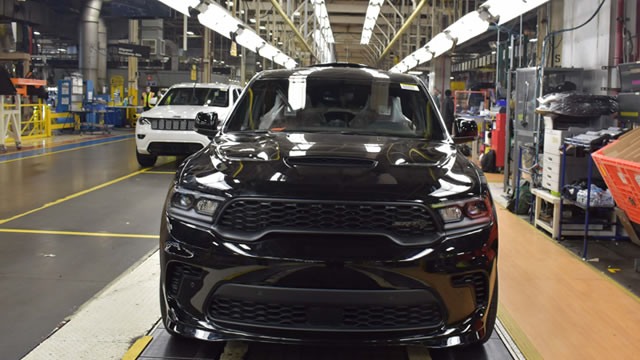
Core Insights - Stellantis has officially ended sales and production of its plug-in hybrid (PHEV) models in the United States, marking a significant shift in its strategy [1][10] - The company will focus on more competitive electrified solutions, including conventional hybrids and extended-range electric vehicles (EREVs), starting with the 2026 model year [2][10] Group 1: Strategic Shift - Stellantis is discontinuing its PHEV programs in North America due to reduced demand for plug-in hybrids and changing consumer preferences [2][5] - The decision comes despite the previous success of models like the Jeep Wrangler 4xe, which was the best-selling plug-in hybrid for three consecutive years [3][4] - The company is reshaping its North American portfolio, discontinuing models such as the Jeep Grand Cherokee 4xe and Chrysler Pacifica PHEV [4][10] Group 2: Market Dynamics - The shift reflects a broader acceptance of traditional hybrids among U.S. buyers, as they do not require external charging [5] - Recent adjustments to U.S. federal incentives have diminished the financial appeal of PHEVs, further influencing Stellantis's decision [5] - The discontinuation follows a series of recalls affecting PHEV models, particularly concerning battery failures and fire reports, which have added pressure to the PHEV segment [6][10] Group 3: Future Direction - Stellantis announced the discontinuation of the development of Ram's all-electric pickup, the Ram 1500 REV, as part of its strategic repositioning [7] - The company aims to offer electric driving with longer range and reduced dependence on charging infrastructure through its focus on conventional hybrids and EREVs [7][10]


【快讯】每日快讯(2026年1月12日)
乘联分会· 2026-01-12 09:28
Domestic News - Hong Kong's Transport Department will promote unmanned testing of autonomous vehicles this year, having issued 6 pilot licenses for 62 autonomous private cars and minibuses, with over 80,000 kilometers driven safely [2] - BAIC Blue Valley's L3 vehicles have officially started road trials, with plans to gradually open to individual users in the second quarter of this year [3] - Tongji University has restructured its Mechanical and Energy Engineering College into a Mechanical Engineering and Robotics College and an Automotive and Energy College, aligning with the national "dual carbon" strategy and the trend of electrification and intelligence in the automotive industry [4] - Shanghai's government has launched a three-year action plan to support advanced manufacturing, focusing on new energy vehicles and innovative products like eVTOLs to overcome industrial bottlenecks [5] - Great Wall Motors will officially launch its new platform, "Guiyuan," on January 16, which supports multiple power forms and aims to simplify vehicle offerings [7] - Lantu Automotive has signed a strategic cooperation agreement with Huawei's subsidiary, focusing on smart driving and software operations to enhance user experience [8] - Xiaomi's new generation SU7 will be equipped with the Xiaomi Super Motor V6s Plus, which will improve production efficiency and shorten delivery times [9] - Firefly has delivered its 40,000th vehicle, offering limited-time purchase benefits to customers [10] International News - India's electric vehicle sales are projected to reach 2.3 million units by 2025, accounting for 8% of new car registrations, driven by policy incentives and increased consumer demand [11] - Stellantis will stop offering plug-in hybrid vehicles in North America starting with the 2026 model year, focusing on more competitive electrification solutions [12] - The UK Treasury is looking to reduce electric vehicle charging costs due to concerns that a new mileage tax policy could harm market demand [13] - Malaysia has implemented a new road tax policy for electric vehicles, requiring all EVs to pay annual road tax based on motor output power [14] Commercial Vehicles - A new strategy called "30111" was launched by a commercial vehicle company, aiming for significant sales growth and transforming commercial vehicles into "super intelligent entities" through AI technology [15] - The Xiangling V5 gas engine product has been launched in Xinjiang, targeting local logistics needs with efficient and environmentally friendly solutions [16] - Great Wall's commercial vehicle has won an innovation award for its dual-motor hybrid architecture, highlighting its technological advancements in the hybrid truck market [17] - The number of operational functional unmanned vehicles in Shenzhen has surpassed 1,000, marking a 22.5% increase and indicating a new phase in the city's unmanned vehicle development [18]




Stellantis scraps US plug-in hybrid sales, citing weak demand
Reuters· 2026-01-09 19:19
Core Viewpoint - Stellantis, the parent company of Chrysler, announced it will cease sales of plug-in hybrid versions of the Jeep Wrangler, Grand Cherokee, and Chrysler Pacifica minivan in the United States as part of its strategic navigation in the market [1] Group 1 - Stellantis is halting the sale of specific plug-in hybrid models in the U.S. market [1] - The decision affects the Jeep Wrangler, Grand Cherokee, and Chrysler Pacifica minivan [1] - This move is part of Stellantis's broader strategy to adapt to market conditions [1]
Stellantis scraps Jeep, Chrysler plug-in hybrid vehicles amid EV slowdown, recall
CNBC· 2026-01-09 17:46
Core Viewpoint - Stellantis is discontinuing its plug-in hybrid electric Jeep SUVs and Chrysler minivan due to declining EV sales, quality issues, and changes in federal fuel economy standards [1][2]. Group 1: Production Decision - The decision to end production of the plug-in hybrid Jeep Wrangler, Jeep Grand Cherokee, and Chrysler Pacifica is driven by decreasing customer demand and a strategic shift towards more competitive electrified solutions [2]. - Stellantis plans to phase out plug-in hybrid programs in North America starting with the 2026 model year [2]. Group 2: Market Context - This move marks a significant change for Stellantis, which previously highlighted its leadership in U.S. PHEV sales, aiming to sell 160,000 to 170,000 PHEVs in 2024, representing 41% of U.S. PHEV sales [3]. - The company has utilized PHEVs to balance its production of traditional gas-powered vehicles to comply with federal fuel economy standards, which have become less stringent under the current administration [5]. Group 3: Product Features and Challenges - PHEVs combine traditional internal combustion engines with an all-electric range, but are considered costly due to their dual propulsion systems [6]. - The cancellation of these models coincides with a recall of Jeep SUVs due to fire risks, highlighting ongoing quality concerns [7]. Group 4: Future Strategy - Jeep is reassessing its electrification strategy following the expiration of federal incentives for EVs and PHEVs [8]. - The brand will continue to offer all-electric SUVs, such as the Wagoneer S and Recon, which were revealed recently [9].

CAC 40 Notably Higher Ahead Of U.S. Jobs Data
RTTNews· 2026-01-09 11:17
Market Performance - France's equity benchmark CAC 40 increased by 63.18 points or 0.77%, reaching 8,306.65, as investors await U.S. non-farm payroll data that may influence the Federal Reserve's interest rate decision [1] - L'Oreal was the top gainer in the index, rising by 4.7%, followed by BNP Paribas with a 3.3% increase, and Hermes International which climbed 3.25% [1] Notable Gainers - Kering advanced nearly 3%, while Stellantis increased by 2.7%. Other companies such as LVMH, Capgemini, STMicroElectronics, Publicis Groupe, and TotalEnergies saw gains between 1.8% and 2% [2] Notable Losers - Euronext and Bouygues experienced declines of 3.3% and 2.5%, respectively. Orange fell nearly 2%, and Vinci, Safran, Societe Generale, and AXA dropped between 1.5% and 1.9% [3] Economic Data - Industrial production in France fell by 0.1% month-on-month in November 2025, following a 0.2% gain in October. Over the last three months, industrial production rose by 1.8%, while year-on-year output increased by 0.3% [4] - Household consumption in France unexpectedly decreased by 0.3% month-on-month in November 2025, contrary to market expectations of a 0.2% rise, reversing an upwardly revised 0.5% growth in October [4]

零跑汽车(9863.HK):一汽溢价入股助力零跑新征程
Ge Long Hui· 2026-01-07 04:34
Core Insights - Leap Motor celebrated its 10th anniversary on December 28, 2025, and announced a strategic partnership with FAW, acquiring a 5% stake for approximately 3.74 billion yuan, aiming to become a world-class automaker [1][2] - The company reported a total sales volume of 597,000 units for 2025, marking a significant milestone with expectations for its first annual profit [1][2] - Leap Motor's long-term goals include achieving sales of 1 million units by 2026 and 4 million units in the future, supported by a new vehicle cycle and strategic collaborations [1][3] Company Development - From 2015 to 2025, Leap Motor transitioned from an IT cross-border player to a leading new energy vehicle manufacturer, with cumulative deliveries exceeding 1.2 million units and a peak monthly sales of over 70,000 units [2] - The company has established 17 major component factories, achieving a 65% self-manufacturing ratio for core components, which provides a cost advantage of approximately 10% compared to external procurement [2] - The LEAP platform allows for high component commonality, significantly reducing R&D and manufacturing costs for models like C10 and C16 [2] Strategic Partnerships - FAW's investment highlights strategic recognition of Leap Motor, with funds allocated for R&D, operational capital, and brand development [2] - A collaboration agreement was signed between FAW and Leap Motor for joint development of powertrains, with the first model expected to be produced in 2026 [3] Future Outlook - Leap Motor aims to transition from a follower to a leader in the automotive industry, with a focus on technology leadership, product matrix expansion, and a cooperative ecosystem [3] - The company plans to host annual technology days starting in 2026 to enhance supply chain integration and factory construction [3] Financial Projections - Adjusted sales forecasts for 2025-2027 are 600,000, 1,040,000, and 1,420,000 units respectively, with revenue projections of 68.3 billion, 123.5 billion, and 168.8 billion yuan [3] - The net profit estimates for the same period are 660 million, 5.11 billion, and 8.25 billion yuan, reflecting a significant adjustment in expectations [3] - The target price for Leap Motor is set at 83.69 HKD, reflecting a 30% premium on the estimated valuation due to anticipated growth and profitability [3]

European Stocks Close On Firm Note
RTTNews· 2026-01-06 18:46
Market Performance - European stocks closed higher, with the pan European Stoxx 600 climbing 0.58% and the U.K.'s FTSE 100 increasing by 1.18% [1] - Several European markets, including Austria, Belgium, and Spain, also recorded gains, while Iceland, Ireland, Poland, and Russia ended weak [2] Company Highlights - Next Plc shares surged 5% after upgrading profit guidance, forecasting after-tax earnings of 738.8 pence per share, driven by a more than 10% surge in sales in December [3] - In the UK market, Fresnillo climbed about 5%, while AstraZeneca, Burberry Group, and several others gained between 3% to 5% [2] - JD Sports Fashion drifted down 4.4%, and Adidas ended lower by about 4.2% following a rating downgrade by Bank of America [4] Sector Performance - In the German market, Daimler Truck Holding gained 5.3%, and Infineon moved up 5% [4] - In France, EssilorLuxottica gained more than 5%, while Edenred and Kering ended higher by about 4.3% and 4%, respectively [5] - Polish parcel locker company shares soared more than 28% after announcing an indicative buyout offer [6] Economic Indicators - The HCOB Composite PMI in Germany decreased to 51.3 in December from 52.4 in November [6] - France's inflation eased to a seven-month low in December, with the consumer price index logging an annual increase of 0.8% [7] - EU harmonized inflation slowed unexpectedly in December to 0.7% from 0.8% in November [8]
中国车企深入巴西腹地
Cai Jing Wang· 2026-01-06 13:38
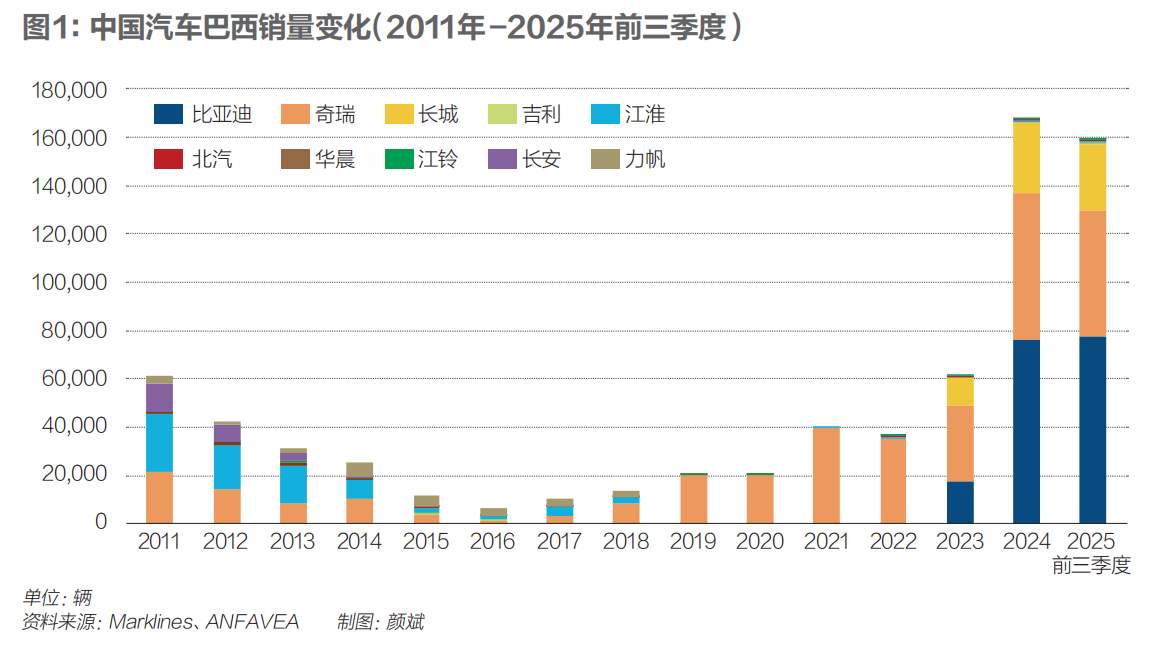
Core Insights - Chinese automotive brands are rapidly establishing a foothold in the Brazilian market, with nearly 40% representation at the São Paulo International Motor Show, showcasing a significant shift in market dynamics [1][3] - The success of Chinese companies in Brazil hinges on their ability to localize supply chains and enhance after-sales services, addressing past shortcomings [1][4] Group 1: Market Presence and Strategy - The São Paulo International Motor Show marked a collective appearance of Chinese brands, with notable participation from companies like BYD, Great Wall, and Chery, indicating a strong market presence [1][2] - Chinese brands are adopting high pricing strategies, with BYD's Tang L model priced at 399,900 reais (approximately 530,000 RMB), reflecting a shift towards the premium segment [1] - The overall market share of Chinese automotive companies in Brazil has surpassed 10%, establishing them as emerging players in the local automotive industry [3] Group 2: Historical Context and Evolution - The journey of Chinese automotive companies in Brazil can be divided into distinct phases: the initial wave from 2009 to 2014, a rebuilding phase from 2015 to 2020, and a resurgence starting in 2021 [7] - The first wave (2009-2014) was characterized by low-cost strategies and heavy marketing, but faced challenges due to a lack of localization and subsequent government policies that increased import taxes on non-localized vehicles [8][11] - The second phase saw companies like Chery pivoting to local partnerships, which helped improve brand perception and sales, with CAOA Chery achieving a 122% sales increase by 2018 [12] Group 3: Technological and Market Adaptation - The current wave (2021 onwards) is marked by significant capital investment and a focus on local production, with companies like Great Wall acquiring existing factories to establish a manufacturing base [13] - Chinese companies are leveraging advanced technologies in electric and hybrid vehicles, with BYD and Great Wall forming a duopoly in the Brazilian new energy vehicle market [14][20] - The adaptation to local market conditions includes developing vehicles that cater to Brazil's unique energy structure, particularly the prevalence of ethanol as a fuel source [27][28] Group 4: Challenges and Opportunities - The Brazilian automotive market presents challenges such as a highly unequal income distribution and specific consumer preferences for smaller vehicles due to parking constraints [23][24] - Chinese brands are addressing these challenges by offering compact, technologically advanced vehicles that appeal to middle-class consumers, moving away from the low-cost strategy of the past [25] - The Brazilian government's "MOVER" plan aims to stimulate local investment in high-efficiency vehicles, providing a framework for Chinese companies to align their strategies with national goals [29][32] Group 5: Future Outlook - The success of Chinese automotive companies in Brazil will depend on their ability to integrate technology transfer, deepen local market engagement, and enhance supply chain capabilities [33] - The potential for Chinese brands to act as a catalyst for innovation in the Brazilian automotive sector is recognized by the government, which seeks to leverage their presence for broader industrial upgrades [19][32]

NVIDIA (NasdaqGS:NVDA) Update / Briefing Transcript
2026-01-06 00:02
NVIDIA Conference Call Summary Company Overview - **Company**: NVIDIA (NasdaqGS: NVDA) - **Date**: January 05, 2026 Key Industry Insights - **AI and Computing**: NVIDIA is positioned as a leader in AI computing, emphasizing the importance of co-design across various components such as GPUs, CPUs, and networking technologies to maintain competitive advantages in performance and cost efficiency [8][9][10] - **Autonomous Vehicles**: The company has been working on autonomous vehicle technology for over eight years, with significant partnerships established with major automotive companies like Mercedes, BYD, and Tesla. The autonomous vehicle market is projected to become a multi-billion dollar business by the end of the decade [22][24][25] - **Supply Chain Management**: NVIDIA has strategically prepared its supply chain to support rapid growth, including significant investments in DRAM and partnerships with various suppliers to ensure robust supply availability [35][36][37] Core Company Developments - **Vera Rubin Production**: NVIDIA is in full production of its Vera Rubin architecture, which is expected to ramp up quickly. This architecture features entirely new chips, presenting unique challenges and opportunities for performance improvements [19][60][66] - **Grok Licensing**: The company is exploring specialized data processing capabilities, indicating a shift towards more ASIC-like chips for specific applications, which may influence future product roadmaps [11][12] - **DGX Cloud Strategy**: NVIDIA's DGX Cloud is designed to support AI-native companies and facilitate partnerships with cloud service providers, enhancing customer acquisition and ecosystem growth [46][49][50] Financial Performance and Market Position - **Strong Demand**: The company reports strong demand across its product lines, indicating a healthy growth trajectory. The CEO humorously noted the positive business performance reflected in his choice of attire during the conference [28][44] - **Token Economics**: NVIDIA's platform is now the only one capable of running every major AI model, positioning it favorably in the competitive landscape of AI computing [31][32] Emerging Technologies and Innovations - **Context Memory Storage**: NVIDIA is focusing on developing high-performance storage solutions tailored for AI applications, which are expected to become a significant market segment [54][55][56] - **Agentic AI Systems**: The company is advancing in the development of agentic AI systems, which are expected to simplify the deployment of AI applications and enhance user interaction with AI technologies [76][78] Additional Considerations - **Market Fragmentation**: The future of the frontier model market may see consolidation as companies optimize for specific domains, leading to a clearer distinction between general-purpose and specialized AI models [69][70][71] - **Long-Term Vision**: NVIDIA's strategy emphasizes tackling complex challenges in AI and computing, with a focus on long-term growth and innovation rather than short-term gains [25][27][64] This summary encapsulates the key points discussed during the NVIDIA conference call, highlighting the company's strategic direction, market positioning, and technological advancements.

DriveItAway Holdings CEO Provides Year-End Review and 2026 Outlook as Vehicle Affordability Pressures Accelerate
Globenewswire· 2026-01-05 13:33
Core Insights - DriveItAway Holdings, Inc. is focusing on disciplined expansion, national partnerships, and scalable solutions to address the growing transportation affordability crisis as it enters 2026 [1] Group 1: Operational Progress in 2025 - In 2025, the company transitioned from early-stage innovation to national execution, supported by strengthened governance and expanded market presence [2] - The flexible vehicle access model is gaining validation, indicating a shift in consumer preferences towards subscription-based models [2][5] - The automotive market is experiencing significant affordability pressures, with new-vehicle prices rising over 30% since 2020 and average transaction prices exceeding $50,000 [3][4] Group 2: Strategic Priorities for 2026 - Key objectives for 2026 include strengthening the Board of Advisors, expanding market presence to quadruple the number of operational city regions, and advancing a national partnership with Free2move [6] - The company aims to refine its technology platform to support credit-agnostic access and facilitate a clear pathway from subscription to vehicle ownership [6] Group 3: Market Trends and Consumer Sentiment - Approximately 44% of Americans are considering giving up vehicle ownership in favor of subscription models, reflecting a significant change in consumer attitudes towards access versus ownership [5] - The company recognizes the need for flexibility among consumers and solutions for dealers to expand their market reach without increasing financial risk [6] Group 4: Future Expansion Plans - Plans include launching services in twenty more major U.S. cities, increasing the vehicle fleet size, and forming partnerships with large national organizations to address gaps in personal vehicle access [9] - The company aims to standardize dealer programs to improve unit economics and operational efficiency while making flexible lease-to-ownership a recognized industry standard [9]