
三星电子

Search documents
三星推出以AI为核心的电视和家电
Xin Lang Cai Jing· 2026-01-05 15:35
Group 1 - Samsung Electronics (KRX: 005930) launched Micro RGB TVs during its "First Look" showcase event [1][2] - The company introduced AI sound technology and Vision AI companion features [1][2] - New smart home and health integration solutions were also unveiled [1][2]
8亿部手机将搭载大模型 三星全面拥抱AI
Bei Jing Shang Bao· 2026-01-05 15:29
在股价大涨创新高之际,三星电子又有新的利好传来。当地时间周一,三星电子首席执行官表示,该公 司计划今年将搭载谷歌Gemini系统的AI功能移动设备数量增加一倍。此举有望推动三星依靠其AI功能 夺回更多智能手机市场份额,也有助于谷歌在全球人工智能竞赛中继续占据优势地位。 去年,三星已将搭载Gemini系统的人工智能功能应用到约4亿部移动产品(包括智能手机和平板电脑) 中。该公司计划,在2026年,将这一数字增加到8亿部。 自去年11月担任三星电子联席CEO的卢泰文说道:"我们将尽快将人工智能应用到所有产品、所有功能 和所有服务中。" 目前,三星正努力从苹果手中夺回在智能手机市场的失地,并不仅在手机领域,还包括电视和家用电器 领域,三星都在努力抵御来自中国竞争对手的挑战。 三星声称,该公司将为各类消费产品提供一体化的人工智能服务,以在这些功能方面扩大其相对领先优 势。 卢泰文预计,未来公司对于人工智能的产品应用率将会加速:"尽管目前人工智能技术可能看起来有点 令人怀疑,但在6个月到一年内,这些技术将会变得更加普及。" 他指出,虽然目前"AI搜索"是手机上使用最广泛的AI功能,但消费者已经越来越高频地使用一系列生成 ...
最高涨价70%!两大芯片巨头 重大突发!
Zheng Quan Shi Bao· 2026-01-05 15:19
Group 1 - Samsung Electronics and SK Hynix plan to increase server DRAM prices by 60% to 70% in Q1 2026 compared to Q4 2025, with similar price hikes proposed for PC and smartphone DRAM customers [1] - The price increase strategy is based on the expectation of strong market demand, with both companies opting for quarterly contracts to adapt to price fluctuations [1] - The semiconductor sector is experiencing a bullish trend, with Samsung's stock rising nearly 7.5% to a record high and SK Hynix increasing by nearly 3%, contributing to a 3.43% rise in the Seoul Composite Index [1] Group 2 - Major North American cloud service providers, including Google, Meta, Microsoft, and Amazon AWS, are expected to invest a total of $600 billion in AI infrastructure by 2026, marking a historical high [2] - The demand for storage chips is projected to surge, with DDR4 16Gb prices increasing by 1800%, DDR5 16Gb by 500%, and 512Gb NAND flash by 300% in 2025 due to strong AI demand [2] - Global storage chip supply is expected to remain insufficient in 2026, with DRAM supply increasing by 15% to 20% and demand growing by 20% to 25%, while NAND supply is projected to rise by 13% to 18% and demand by 18% to 23% [3]

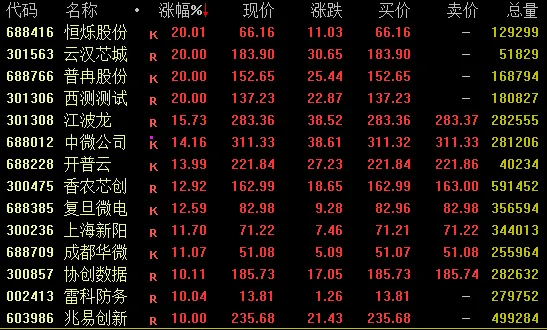
三星拟今年部署谷歌Gemini AI的移动设备数量翻番,这些公司受益Gemini端侧应用
Xuan Gu Bao· 2026-01-05 15:16
Group 1 - Samsung Electronics is accelerating the expansion of Gemini AI, aiming to double the number of mobile devices equipped with Google Gemini AI this year to gain an advantage in the global AI competition [1] - Currently, Samsung has deployed Gemini-related AI features on approximately 400 million mobile devices, with a target to increase this to 800 million by 2026 [1] - Google released Gemini 3 in November last year, which leads in several mainstream AI performance metrics, and has restructured its Android 16 system around Gemini to support large-scale AI deployment on Android devices [1] Group 2 - Wankey Technology is benefiting from the expansion of the Gemini ecosystem, with its AIGC products in video, image, and audio aligning with Google Gemini ecosystem products [2] - Kunlun Wanwei is engaging in multi-layered cooperation with the Google ecosystem in areas such as browsers, AI music, and AI search, highlighting the global advantages of its content and tool ecosystem [2]

范波调研我市外资企业发展工作
Sou Hu Cai Jing· 2026-01-05 14:21
1月5日,市委书记范波调研我市外资企业发展工作。他强调,要深入学习贯彻党的二十届四中全会精神和习近平总书记会见国际工商界代表时的重要讲话 精神,认真落实党中央、国务院决策部署及省委、省政府工作要求,突出创新引领,强化开放赋能,打造一流营商环境,不断增创高水平开放新优势,为 苏州高质量发展提供有力支撑。 在博世新能源汽车核心部件及自动驾驶研发制造基地,范波详细了解核心部件研发、智能制造流程。苏州融媒记者 倪黎祥/摄 在博世新能源汽车核心部件及自动驾驶研发制造基地,范波详细了解核心部件研发、智能制造流程,对企业多次投资加码苏州表示赞赏。他希望企业坚定 发展信心,推动更多前沿技术和高端项目落地苏州。来到三星电子(苏州)半导体有限公司,范波参观企业展厅,听取生产运营情况介绍,鼓励企业提升 先进制造能级,不断增强全球市场竞争力。 在礼来苏州制药有限公司,范波询问产品研发、质量管控和市场拓展情况。苏州融媒记者 倪黎祥/摄 在强生(苏州)医疗器材有限公司、礼来苏州制药有限公司,范波深入生产车间、实验室,询问产品研发、质量管控和市场拓展情况。他指出,苏州正深 入推进生物医药全产业链开放创新,这为包括强生、礼来在内的广大企业带 ...
美银报告梳理存储超级周期五大核心支撑,大幅上调SK海力士、三星电子、南亚科技目标价
Zhi Tong Cai Jing· 2026-01-05 14:19
Core Viewpoint - The global memory industry is expected to enter a "super cycle" starting in 2026, driven by explosive AI demand, structural supply shortages, and technological advancements, with DRAM sales projected to surge from $130.3 billion in 2025 to $209.8 billion in 2026, a 61% year-on-year increase [1] Group 1: Super Cycle Support Factors - The memory industry is transitioning from a cycle of "expansion-overcapacity-price decline-reduction" to a high-quality growth phase due to the rigid demand from AI and supply constraints [2] Group 2: AI Demand Surge - AI accelerators like Nvidia's Rubin Ultra GPU and Google's TPU v7 are significantly increasing the demand for high-end memory, with HBM capacity per AI server rising from 340GB to 1.17TB, indicating a long-term shift in demand from traditional PC and smartphone markets to AI-driven applications [3] Group 3: Supply Constraints - Major chip manufacturers are focusing capital expenditures on high-end areas like HBM and eSSD, leading to a structural reduction in traditional DRAM capacity, with inventory levels at 3-4 weeks, well below the normal 1-2 months [4] Group 4: Price Increases and Profitability - Traditional DRAM contract prices rose over 30% in Q4 2025 and an additional 15% in Q1 2026, with 16Gb DDR5 spot prices exceeding $30, reflecting a more than 500% increase since early 2025, translating into significant profit growth for companies like SK Hynix and Samsung [5] Group 5: Capital Expenditure Optimization - SK Hynix's capital expenditure is expected to double to 35 trillion KRW in 2026, primarily for HBM capacity expansion, while maintaining a limited impact on overall supply due to a focus on high-end investments [6] Group 6: Technological Advancements - The introduction of new memory technologies like HBM4 and GDDR7 has raised industry barriers, with SK Hynix holding over 60% market share in HBM and leading production schedules, shifting competition from price to technology [7] Group 7: Key Companies and Their Strategies - SK Hynix is positioned as a leader in the HBM market, with a projected operating profit of 86.2 trillion KRW in 2026, benefiting from high demand and price increases [10] - Samsung Electronics, with the largest memory production capacity, is expected to leverage price elasticity and capture additional orders as competitors reach capacity limits, with target prices adjusted to 170,000 KRW for common stock [12] - Nanya Technology focuses on legacy DRAM products, anticipating a 6% increase in ASP due to supply shortages, with a target price raised to 235 NTD [14] Group 8: HBM Market Outlook - HBM is projected to be the fastest-growing segment in the memory industry, with global sales expected to reach $55 billion in 2026, driven by technological advancements and increased demand from AI accelerators [13] - SK Hynix is expected to maintain a 53% market share in HBM sales, while Samsung's share may rise to 25%, indicating a competitive landscape characterized by one dominant player and several strong competitors [15]

豆包AI眼镜即将出货 2000元以内?回应来了
Nan Fang Du Shi Bao· 2026-01-05 13:54
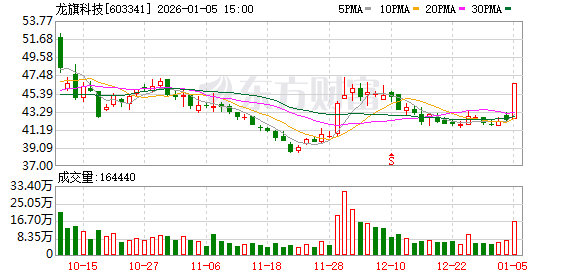
Group 1 - The "Doubao" AI glasses, developed by ByteDance and Longqi Technology, are set to enter the shipping phase with a starting price expected to be under 2000 yuan [2] - Longqi Technology's stock surged to a closing price of 46.49 yuan on January 5, following the news about the AI glasses [2] - Longqi Technology is a comprehensive technology enterprise engaged in the research, design, and manufacturing of smart products, covering a wide range of categories including smartphones, AI PCs, automotive electronics, tablets, smartwatches, and smart glasses [2] Group 2 - Longqi Technology is the second-largest consumer electronics ODM manufacturer globally, holding a 22.4% market share based on 2024 shipment volume, and the largest smartphone ODM manufacturer with a 32.6% market share [2] - The company has passed the Hong Kong Stock Exchange's main board listing hearing and has notable clients including Xiaomi, Samsung, Lenovo, Honor, OPPO, and vivo [2] - The global AI glasses market saw a shipment of 4.065 million units in the first half of 2025, representing a year-on-year growth of 64.2%, with Chinese manufacturers accounting for over 1 million units, capturing 24.6% of the global market share [3]
“好邻居金不换!”李在明携韩商业天团访华,呼吁制造业创新合作
2 1 Shi Ji Jing Ji Bao Dao· 2026-01-05 13:48
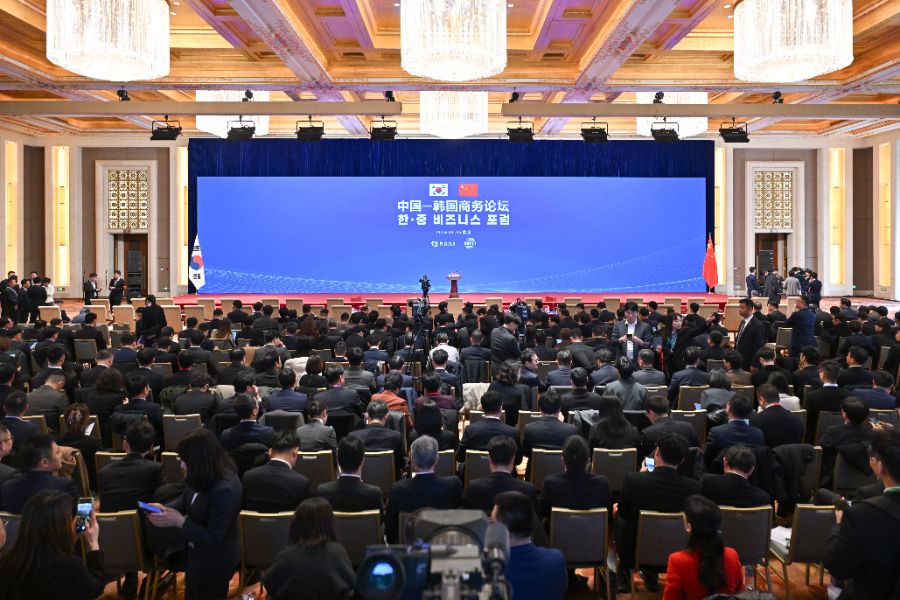
Group 1: Economic Cooperation - The bilateral trade volume between China and South Korea has increased from $6.5 billion at the time of diplomatic relations in 1992 to $272.9 billion in 2024, with China being South Korea's largest trading partner [2] - The forum highlighted three main topics for discussion: manufacturing innovation, supply chain cooperation, and consumer goods market [3] - The two countries aim to deepen cooperation in emerging fields such as artificial intelligence, biopharmaceuticals, green industries, and the silver economy, as part of the ongoing negotiations for the second phase of the China-South Korea Free Trade Agreement [5] Group 2: Cultural and Service Industry Collaboration - There is a growing interest in cultural exchanges, with popular travel experiences like "Seoul Cultural Tours" and "K-Beauty Experiences" among Chinese youth, and "Shanghai Weekend Trips" favored by South Korean youth [6] - The collaboration in content industries, gaming, performances, and cultural platforms is expected to strengthen ties between manufacturing, consumer investment, and new market exploration [6] - Despite rising competition in certain industries, representatives believe that the strategic and mutual benefits of cooperation between the two countries remain unchanged [6] Group 3: Government Support and Future Outlook - The South Korean government is committed to enhancing cooperation with China to provide a favorable environment for businesses and expand cooperation channels [2][6] - The visit of President Yoon signifies a significant diplomatic achievement, aiming to restore comprehensive relations and plan for the future of bilateral ties over the next 30 years [3][4] - The emphasis on mutual respect and understanding in government communications is seen as crucial for the ongoing development of China-South Korea relations [4][5]
两大巨头联手提价!三星、SK海力士 DRAM 报价或最高提升70%
Zhi Tong Cai Jing· 2026-01-05 13:48
Core Insights - The surge in demand for artificial intelligence (AI) is driving Samsung Electronics and SK Hynix to increase server memory prices by up to 70% in the first quarter [1] - Both companies are among the largest memory chip manufacturers globally, facing shortages in older dynamic random-access memory (DRAM) products due to a shift in focus towards high-bandwidth memory (HBM) necessary for advanced AI accelerators [1] - Samsung and SK Hynix have raised the prices of the fifth-generation high-bandwidth advanced storage chip (HBM3E) by 20% for deliveries in 2026 [1] Industry Impact - The transition of production capacity from traditional DRAM to HBM by Samsung, SK Hynix, and Micron is causing a threefold impact on the downstream supply chain [2] - There is a supply-demand imbalance for traditional server memory (DDR5), as producing 1GB of HBM chips requires 2 to 3 times the wafer area compared to traditional DDR5, leading to a compression of production lines for DDR4/DDR5 [2] - The significant price fluctuations in memory will compel system integrators like Dell and HP to adjust their pricing, ultimately impacting the IT budgets of enterprise clients [2] - Delivery times for traditional DRAM are extending, with some downstream manufacturers beginning to stockpile due to the anticipated price increases [2]
最高70%!两大芯片巨头,计划涨价
Zheng Quan Shi Bao· 2026-01-05 12:40
Group 1 - The core viewpoint of the article highlights a significant price increase in DRAM chips, with Samsung Electronics and SK Hynix planning to raise server DRAM prices by 60% to 70% in Q1 2026 compared to Q4 2025, driven by strong market demand predictions [1] - The price increase strategy is based on the expectation of sustained market demand, particularly due to the explosion of AI computing needs and expanded investments in data centers [1] - The semiconductor stocks, including Samsung and SK Hynix, saw substantial gains, with Samsung's stock rising nearly 7.5% to a record high, and SK Hynix increasing by nearly 3%, contributing to a 3.43% rise in the Seoul Composite Index [1] Group 2 - North American cloud service providers, including Google, Meta, Microsoft, and Amazon AWS, are expected to significantly increase their AI infrastructure investments, reaching a historical high of $600 billion by 2026 [2] - The demand for storage chips is projected to surge, with DDR4 16Gb prices increasing by 1800%, DDR5 16Gb by 500%, and 512Gb NAND flash by 300% in 2025 due to strong AI demand [2] - According to Guojin Securities, the global storage chip market will remain in short supply in 2026, with DRAM and NAND flash consumption in the server sector expected to increase by 40% to 50% year-on-year, particularly in AI server applications [3]
