
零跑汽车

Search documents
首批625亿元国补到位,车市火爆,有车型价格6万送2万权益
21世纪经济报道· 2026-02-16 12:00
Core Viewpoint - The article highlights the significant boost in the automotive market, particularly in the electric vehicle (EV) sector, driven by government subsidies and the traditional consumption peak during the Spring Festival, showcasing the growing potential in lower-tier cities and rural areas [1][9]. Group 1: Government Initiatives and Market Response - The "Lego New Year" special event launched by the Ministry of Commerce and nine other departments has allocated 625 billion yuan in national subsidies, with local consumer red envelopes and corporate discounts being actively distributed [1]. - The continuation of national subsidies has led to increased foot traffic and sales in automotive showrooms, particularly for vehicles priced between 60,000 to 100,000 yuan [1]. Group 2: Competitive Landscape - Automotive brands are increasingly opening stores in prime locations such as shopping malls, indicating heightened competition and a strategic shift to capture consumer attention [4]. - Price remains the decisive factor for consumers in lower-tier cities, with brands like Extreme Fox promoting models under 100,000 yuan and offering significant incentives [5]. Group 3: Consumer Preferences and Trends - There is a growing acceptance of EVs in rural areas, with sales of EVs in these markets expected to outpace urban areas, driven by government initiatives and consumer demand [9]. - Consumers express a preference for EVs, particularly in the 100,000 to 200,000 yuan range, while also showing concerns about battery range and charging infrastructure [6][10]. Group 4: Charging Infrastructure Development - The construction of charging facilities is rapidly increasing, with projections indicating that by the end of 2025, there will be approximately 20.09 million charging points in China, marking a 49.7% year-on-year growth [11]. - The government of Henan province plans to build 29,000 new public charging points by 2025, significantly enhancing the charging network and alleviating range anxiety for EV owners [11]. Group 5: Future Market Outlook - The Chinese automotive market is expected to peak at around 40 million units, with future growth primarily occurring in lower-tier cities and rural areas, driven by favorable policies and infrastructure improvements [12].




新春走基层|政策暖风频吹,新能源车加速“下沉”
2 1 Shi Ji Jing Ji Bao Dao· 2026-02-16 07:35
Core Insights - The Chinese automotive market is experiencing a surge in consumer interest, particularly in the context of the Spring Festival and the implementation of new national subsidy policies for electric vehicles [1][5][9] - There is a notable shift in the location of car dealerships, with brands moving into shopping malls to enhance visibility and compete more effectively for consumer attention [3][4] - The acceptance of electric vehicles (EVs) is increasing in rural areas, driven by government initiatives and the growing availability of charging infrastructure [7][8][9] Group 1: Market Trends - The implementation of the new national subsidy policy has led to increased foot traffic and sales in car dealerships, especially for models priced between 60,000 to 100,000 yuan [1] - The competition among automotive brands is intensifying, with companies like Li Auto and BYD adopting innovative marketing strategies, including the use of social media to reach younger consumers [3][4] - The demand for electric vehicles is rising, particularly in lower-tier cities, as evidenced by the increasing presence of brands like BYD and Wuling in these markets [7][9] Group 2: Consumer Behavior - Price remains a decisive factor for consumers in third and fourth-tier cities, with dealerships focusing on highlighting discounts and pricing to attract buyers [3][5] - There is a growing trend of consumers upgrading to electric vehicles, with many expressing interest in models that offer spacious interiors and advanced features [5][8] - Concerns about charging infrastructure persist, with consumers indicating a preference for electric vehicles if charging facilities are adequate; otherwise, they may opt for hybrid models [8] Group 3: Infrastructure Development - The construction of charging facilities is accelerating, with projections indicating that by the end of 2025, there will be approximately 20.09 million charging points in China, marking a 49.7% year-on-year increase [8][9] - The government of Henan province plans to build 29,000 new public charging stations by 2025, significantly exceeding its annual target and addressing range anxiety for EV owners [9] - The market for electric vehicles in rural areas is expected to grow substantially, with predictions indicating that by 2030, the number of vehicles per thousand people in rural regions could reach 160, resulting in a market size of approximately 500 billion yuan [7][9]

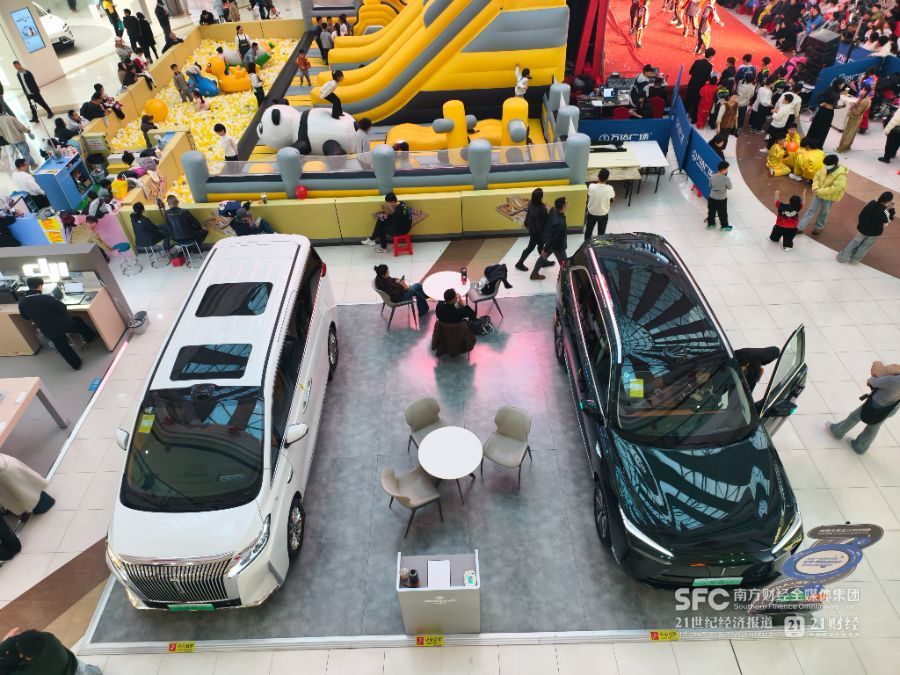
新春走基层|政策暖风频吹,新能源车加速"下沉"
2 1 Shi Ji Jing Ji Bao Dao· 2026-02-16 07:33
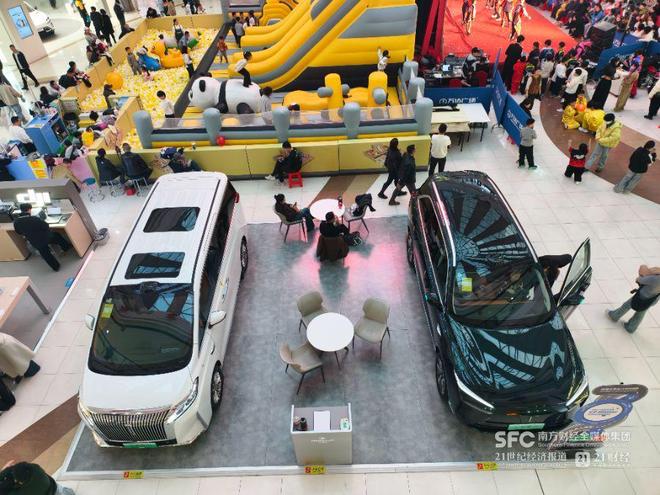
Group 1 - The Chinese automotive market is experiencing a surge in consumer interest, particularly in the lower price range of 60,000 to 100,000 yuan, driven by the continuation of the "National Subsidy" policy and the traditional peak consumption period around the Spring Festival [1][2] - The competition among automotive brands is intensifying, with many companies relocating their dealerships to high-traffic areas such as shopping malls to capture consumer attention and enhance brand visibility [2][3] - Price remains a decisive factor for consumers in third- and fourth-tier cities, leading brands to emphasize pricing and promotional offers in their marketing strategies [2][3] Group 2 - The acceptance of electric vehicles (EVs) is increasing in rural areas, with a notable rise in the number of brands like BYD and Wuling appearing on the streets, indicating a growing market for EVs outside urban centers [6][7] - The sales of new energy vehicles (NEVs) in rural areas are projected to grow significantly, with total sales expected to rise from 397,000 units in 2020 to nearly 7.6 million units by 2024, outpacing urban market growth [7] - The construction of charging infrastructure is crucial for the adoption of EVs, with a projected total of 20.09 million charging points by the end of 2025, reflecting a 49.7% year-on-year increase [8][9]
恒生科技指数盘中跌近2%,互联网巨头走低;有色金属活跃,半导体板块直线拉升
Zhong Guo Ji Jin Bao· 2026-02-16 02:44
Market Overview - The Hang Seng Technology Index experienced a decline of nearly 2%, with major internet companies falling [1] - The Hang Seng Index dropped by 0.25%, while the Hang Seng Technology Index fell by 0.19% and the Hang Seng China Enterprises Index decreased by 0.08% [1] Sector Performance - Precious metals, semiconductors, and oil & petrochemicals sectors showed strength against the market trend, while sectors like defense, consumer discretionary, and hardware equipment struggled [2] - The non-ferrous metals sector led the market, with notable gains from companies such as Luoyang Molybdenum, which rose over 7%, and Lingbao Gold, which increased by over 6% [4] Notable Stocks - Luoyang Molybdenum's stock price increased by 7.55% to 23.36 [5] - Lingbao Gold's stock price rose by 6.73% to 25.36 [5] - Other companies in the non-ferrous metals sector, such as China Nonferrous Mining and Shandong Gold, also saw significant gains [4] AI and Semiconductor Stocks - AI application stocks opened higher, with Fubo Group rising over 10% and MINIMAX-WP increasing nearly 6% [9] - The semiconductor sector saw a sharp rise, with companies like Zhaoyi Innovation increasing by over 17% and Lanke Technology rising by over 13% [11] Upcoming Changes - The Hang Seng Index will increase its constituent stocks from 88 to 90, adding Ningde Times, Luoyang Molybdenum, and Lingbao Gold, while removing Zhongsheng Holdings, effective March 9 [7]

市场跳水!这一板块,直线拉升
Zhong Guo Ji Jin Bao· 2026-02-16 02:40
Market Overview - The Hong Kong stock market opened slightly lower on February 16, with the Hang Seng Index down by 0.25%, the Hang Seng Tech Index down by 0.19%, and the Hang Seng China Enterprises Index down by 0.08% [1] - The market experienced a downward trend, with the Hang Seng Tech Index seeing a decline of nearly 2% at one point, although the losses narrowed by the time of reporting [1] Index Performance - As of the latest update, the Hang Seng Index decreased by 0.41%, the China Enterprises Index fell by 0.62%, and the Hang Seng Tech Index dropped by 1.58% [2] - The Hang Seng Tech Index reached a high of 5351.270 and a low of 5253.640, with a trading volume of 171 million shares [2] Sector Performance - The precious metals, semiconductor, and oil & petrochemical sectors showed strength against the market trend, while sectors such as defense, consumer discretionary, and hardware equipment struggled [2] - The non-ferrous metals sector led the market, with notable gains from companies like Luoyang Molybdenum, which rose over 7%, and Lingbao Gold, which increased by over 6% [4][5] Notable Stocks - Luoyang Molybdenum's stock price increased by 7.55% to HK$23.360, while Lingbao Gold rose by 6.73% to HK$25.360 [5] - Other companies in the non-ferrous metals sector, such as China Nonferrous Mining and Shandong Gold, also saw significant gains [5] AI and Semiconductor Sector - The AI application sector opened higher, with stocks like Fubo Group rising over 10% and MINIMAX-WP increasing by nearly 6% [8][9] - The semiconductor sector experienced a sharp rise, with stocks like North Microelectronics increasing by over 17% and Lanke Technology rising by over 13% [12][13] Upcoming Changes in Index Composition - The Hang Seng Index will increase its constituent stocks from 88 to 90, adding Ningde Times, Luoyang Molybdenum, and Laopuguojin, while removing Zhongsheng Holdings, effective March 9 [7]

全球第三大汽车巨头,突发爆雷
商业洞察· 2026-02-15 09:22
Core Viewpoint - Stellantis, the world's third-largest automotive manufacturer, has reported a staggering loss of over 180 billion yuan in just six months, highlighting the severe challenges faced by traditional automakers in the transition to electric vehicles [4][12][36]. Group 1: Financial Performance and Market Reaction - Stellantis experienced a significant stock price drop, with shares falling nearly 30% in Europe and over 23% in the U.S. following the announcement of its financial losses and strategic restructuring [13][12]. - The company announced a comprehensive strategic retreat from its electric vehicle (EV) business, leading to a non-cash loss of approximately 260 billion yuan [12][38]. - Stellantis's net profit plummeted by 70%, leaving only 55 billion yuan, despite achieving revenues exceeding 200 billion yuan in 2024 [22][24]. Group 2: Strategic Missteps and Industry Context - The rapid decline of Stellantis is indicative of a broader crisis within the European automotive industry, which is struggling with the transition to electric and smart vehicles [8][9]. - Stellantis's CEO acknowledged that the company overestimated the speed of energy transition and misaligned its product offerings with actual consumer demand [38]. - The company has been forced to cut its electric vehicle plans significantly, including halting production of certain models and exiting partnerships [40][42]. Group 3: Competitive Landscape and Market Position - Stellantis, formed through a series of mergers, has struggled to establish a strong competitive position, lacking a single brand that sells over 2 million vehicles annually [35][29]. - The company ranked third in global automotive sales in 2025, with 7.8 million vehicles sold, but faced an 8% decline compared to the previous year [36]. - The automotive market is increasingly competitive, with Stellantis failing to capitalize on growth opportunities in China, leading to a significant loss of market presence [33][32].


汽车行业周报:1月新能源车出口量同比翻倍,创历史同期新高
KAIYUAN SECURITIES· 2026-02-14 10:20
Investment Rating - The investment rating for the automotive industry is "Positive" (maintained) [2] Core Insights - In January 2026, China's new energy vehicle (NEV) exports doubled year-on-year, reaching a historical high for the month, with a growth rate of 103.6%. NEVs accounted for 49.6% of total exports, an increase of 12.5 percentage points year-on-year. BYD led the exports with nearly 100,000 units, while traditional automakers like Geely, Chery, and SAIC also saw over 200% growth in NEV exports [3][25][22]. Summary by Sections New Energy Vehicle Exports - In 2025, China's NEV exports grew by 70%, with plug-in hybrid vehicles (PHEVs) being the core growth driver. The growth rate for PHEVs was 127.5%, significantly higher than the 32.5% for pure electric vehicles (EVs) [14][15]. - January 2026 saw NEV exports reach 28.6 million units, with a year-on-year increase of 103.6%. BYD's exports approached 100,000 units, while Geely, Chery, and others also reported significant growth [25][27]. Industry News - The retail market for passenger vehicles in January 2026 was 1.544 million units, a decline of 13.9% year-on-year. February is expected to see the lowest sales of the year due to the impact of the Spring Festival [31]. - The Ministry of Industry and Information Technology is seeking public opinion on five mandatory national standards related to intelligent connected vehicles and autonomous driving systems [35]. Market Performance - The automotive sector outperformed the market, with the Shanghai and Shenzhen 300 index rising by 0.36% and the automotive sector increasing by 1.74%, ranking 9th among A-share industries [5][40]. - The passenger vehicle index rose by 1.21%, while the commercial vehicle index saw a significant increase of 6.28% [5]. Investment Recommendations - For passenger vehicles, the demand for high-end domestic luxury cars is exceeding expectations, with recommendations for companies like JAC Motors and Seres. Beneficiaries include Geely [6]. - In the auto parts sector, profitability is expected to improve, with recommendations for companies such as Desay SV and Zhejiang Xiantong, while beneficiaries include Weichai Power and Fuyao Glass [6].


【月度排名】2026年1月厂商销量排名快报
乘联分会· 2026-02-14 08:39
Core Viewpoint - The domestic narrow passenger car market in China experienced a retail sales decline of 13.9% year-on-year in January 2026, with sales reaching 1.544 million units, attributed to the end of the 12-year new energy vehicle purchase tax exemption policy, leading to a temporary dip in demand [2][4]. Sales Data Summary Wholesale Sales Rankings (January 2026) - Geely Automobile led with 270,167 units sold, a 1.3% increase, capturing 13.7% market share - BYD Automobile followed with 205,518 units, down 30.7%, holding 10.4% market share - Chery Automobile sold 193,969 units, down 12.0%, with a 9.8% market share - Volkswagen sold 128,001 units, down 1.7%, with a 6.5% market share - SAIC Passenger Vehicle sales increased by 53.6% to 77,421 units, capturing 3.9% market share [6]. Retail Sales Rankings (January 2026) - Geely Automobile again led with 209,661 units sold, down 12.6%, holding 13.6% market share - Volkswagen sold 132,300 units, down 3.5%, with an 8.6% market share - BYD's retail sales dropped significantly by 53.0% to 94,176 units, capturing 6.1% market share - SAIC Volkswagen sold 89,600 units, down 9.3%, with a 5.8% market share - Changan Automobile's sales decreased by 33.5% to 81,074 units, holding 5.2% market share [7]. New Energy Vehicle (NEV) Wholesale Sales Rankings (January 2026) - BYD led NEV sales with 205,518 units, down 30.7%, capturing 23.8% market share - Geely followed with 124,252 units, up 2.6%, holding 14.4% market share - Tesla China sold 69,129 units, up 9.3%, with an 8.0% market share - Chery sold 46,802 units, down 14.9%, with a 5.4% market share - SAIC Passenger Vehicle saw a significant increase of 576.9% to 28,179 units, capturing 3.3% market share [9]. New Energy Vehicle (NEV) Retail Sales Rankings (January 2026) - BYD again led with 94,176 units sold, down 53.0%, holding 15.8% market share - Geely sold 92,135 units, down 21.6%, with a 15.5% market share - Hongmeng Zhixing saw a significant increase of 65.5% to 57,915 units, capturing 9.7% market share - SAIC's sales increased by 83.3% to 40,016 units, holding 6.7% market share - Xiaomi Automobile sold 39,002 units, up 70.3%, with a 6.5% market share [10].



瑞松科技中标零跑汽车项目,股价创历史新高
Jing Ji Guan Cha Wang· 2026-02-14 01:27
Group 1: Contract Developments - The company announced that its subsidiary, Guangzhou Ruishun Beidou Automotive Equipment Co., Ltd., won a bid for the Leap Motor Jindong Industrial Park project, amounting to approximately 230 million yuan, which is expected to positively impact business development [1] - Previously, the company disclosed contracts for the Xinjiang Wuniu Protective Equipment project (approximately 330.8 million yuan) and a Malaysian new energy vehicle solution order (over 130 million yuan) [1] Group 2: Business and Technical Development - The company participated in the construction of the Xiaopeng Huitian aircraft production line, focusing on intelligent manufacturing technology for low-altitude aircraft, with potential future expansion into the aerospace sector [2] - High-precision and high-speed six-axis robots have received customer orders and have been shipped, being applied in precision electronics and other fields [2] Group 3: Institutional Research - The company organized a site visit on February 4, 2026, attended by institutions such as the Guangzhou Development Zone Listed Companies Association and Dongguan Securities, discussing the competitive advantages of robots and overseas business expansion [3] Group 4: Stock Performance - On February 9, 2026, the stock price reached a historical high of 57.70 yuan, increasing by 5.68% on that day; on February 12, it continued to rise by 5.43%, with a total market capitalization of approximately 6.721 billion yuan [4] - Over the past year, the stock price has increased by 73.96%, but there is a note of caution regarding high valuation risks, with a TTM price-to-earnings ratio exceeding 6700 [4] Group 5: Institutional Holdings Analysis - Huaxia Fund's China Securities Robot ETF is among the top ten circulating shareholders, having increased its holdings by 369,800 shares in the third quarter of 2025, and as of February 12, 2026, holds 2.0309 million shares [5]

固瑞克获机构关注,股价波动上涨,零跑汽车采购项目或利好订单
Jing Ji Guan Cha Wang· 2026-02-13 21:10
Group 1 - Institutional interest in Graco (GGG.N) has increased, with 40% of 15 institutions recommending buy or hold, while 13% suggest sell, indicating a rise in bearish sentiment [1] - Target price range for Graco is set between $85 and $105, with an average target of $97, suggesting potential upside from the current stock price [1] - Earnings per share (EPS) for Q4 2025 is projected at $0.766, reflecting a year-over-year growth of 20.31%, while Q1 2026 EPS is expected to be $0.741, a 10.76% increase [1] Group 2 - Graco's stock price has shown a volatile upward trend over the past week, with a price range fluctuation of 1.22% and a maximum price of $95.69 on February 12 [2] - The stock experienced a single-day increase of 1.58% on February 10, with a trading volume of approximately $99.15 million [2] - Recent procurement project by Leap Motor for Graco brand spare parts may positively impact Graco's business orders, with the bidding deadline set for February 13 [2]