工商银行

Search documents
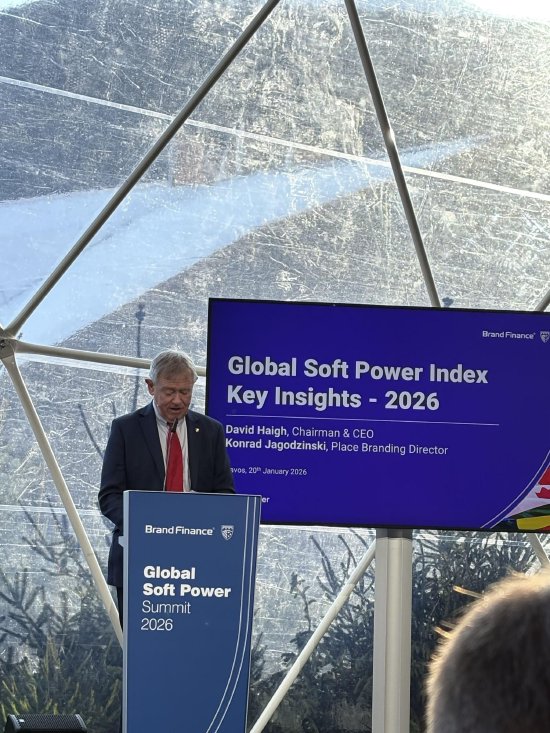
冬季达沃斯发布2026年全球品牌价值500强榜单:品牌总价值双位数跃升,中国品牌表现多维并进
Xin Lang Cai Jing· 2026-01-20 12:21
Group 1 - The Brand Finance 2026 Global Brand Value 500 report shows that Apple continues to lead the rankings, with the United States having 192 brands contributing 53.4% of the total brand value [34][36] - China ranks second with 68 brands, accounting for 15.1% of the total brand value, with TikTok having the highest brand value among them [34][40] - Germany follows with 26 brands contributing 5.6% of the total brand value, while Japan and France rank fourth and fifth, each with 33 brands contributing 4.7% and 4.1% respectively [3][36] Group 2 - The banking industry remains the highest contributing sector with 79 brands, accounting for 12.5% of the total brand value, followed by the media industry with 25 brands at 10.9% and the electronics industry with 17 brands at 8% [4][36] - In 2026, Apple's brand value increased by 5.8% to $607.6 billion, while Microsoft saw a 22.6% growth to $565.2 billion, solidifying its leadership in AI and cloud services [6][38] - TikTok's brand value surged by 45.1% to $153.5 billion, making it the sixth most valuable brand globally, reflecting its strong influence in the short video and social media sectors [8][40] Group 3 - The State Grid of China ranks first in the global utilities sector with a brand value of $102.4 billion, achieving a 19.6% increase [9][41] - China Southern Power Grid experienced a 33.2% growth in brand value, reaching $11.96 billion, becoming the fastest-growing brand in the global utilities sector [11][43] - The banking sector in China shows strong performance with 13 banks collectively valued at $417 billion, a 1.4% increase year-on-year, with the Industrial and Commercial Bank of China leading at $90.9 billion [13][45] Group 4 - The oil and gas sector also performed well, with China National Petroleum and Sinopec both achieving positive growth in brand value [17][49] - Moutai remains the top brand in the global spirits industry with a slight increase of 2.2% to $59.63 billion, while Wuliangye holds the second position with a brand value of $27.3 billion [21][53] - The insurance sector saw significant growth, with China People's Insurance increasing its brand value by 12% to $16.82 billion, moving up five places in the global rankings [25][57]






“马钞”今起开兑,北京市民展示“新鲜出炉”藏品
Xin Jing Bao· 2026-01-20 12:10
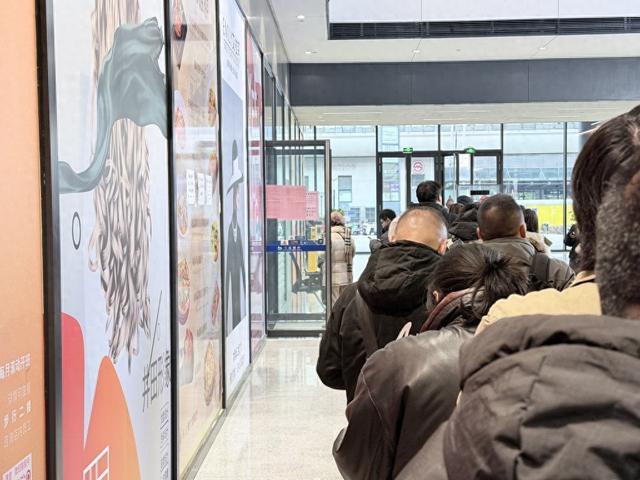
Core Viewpoint - The 2026 Year of the Horse commemorative coins and banknotes began centralized exchange on January 20, 2026, in Beijing, managed by the Industrial and Commercial Bank of China (ICBC) and China Construction Bank (CCB) [1] Group 1 - The exchange period for the commemorative coins and banknotes is from January 20 to January 26, 2026 [1] - Citizens must visit the designated bank branch on any day within the exchange period according to their reservation [1] - The exchange process commenced with citizens queuing at the ICBC branch in the Free Trade Zone International Business Service Area [1]
香港债券市场全景及投资价值分析
Huachuang Securities· 2026-01-20 12:08
1. Report Industry Investment Rating There is no information provided about the industry investment rating in the report. 2. Core Viewpoints of the Report - In 2026, the mainland bond market is expected to maintain a low - interest - rate environment. "Going outbound" to seek high - coupon bonds remains one of the main demands of non - bank institutions. The new "Southbound Connect" policy may be gradually implemented, so investors can actively focus on the Hong Kong bond market to further explore investment value [2]. - The expansion of the "Southbound Connect" mechanism will significantly broaden the channels for non - bank institutions such as securities firms, funds, insurance companies, and bank wealth management to participate in the Hong Kong bond market. It is recommended to focus on the investment opportunities of dim sum bonds, which have been continuously expanding in recent years, and Chinese - funded US dollar bonds with a large outstanding scale [8]. 3. Summary According to the Table of Contents 3.1 Hong Kong Bond Market Development History and Outstanding Structure Characteristics 3.1.1 Development History: From Dominated by US Dollar Bonds to the Rise of RMB Bonds - The Hong Kong bond market can be divided into three development stages. Before 2015, it was in a slow - development stage, with the issuance scale growing from $100 million in 1989 to $103.3 billion in 2014, mainly corporate bonds. After the launch of the "Government Bond Program" in 2009, the issuance scale of government bonds began to increase [3][15]. - From 2015 - 2021, it experienced rapid development, with the issuance scale growing from $188.5 billion to $499.4 billion. The proportion of government bonds increased, mainly due to the growth of Hong Kong government retail bonds. US dollar bonds also grew rapidly because of the relaxation of overseas debt issuance regulations by the mainland [3][16]. - Since 2022, the total market has been in a stable development stage, but the internal structure has changed. The scale of US dollar bonds has decreased significantly due to tightened mainland regulations and the Fed's interest - rate hikes, while RMB bonds have developed rapidly due to China's loose monetary environment and central government policies [4][17]. 3.1.2 Outstanding Structure Characteristics: Chinese Issuers Account for 80%, and the Financial Industry Dominates - As of the end of 2024, the outstanding scales of Hong Kong dollar bonds, offshore RMB bonds, and G3 currency bonds in the Hong Kong bond market were $195.5 billion, $173.2 billion, and $565.6 billion respectively, with corporate bonds accounting for over 70% in each category [24]. - Currently, the total outstanding bond scale in the Hong Kong market is about $1.05 trillion. About 80% of the issuers are from China, about 65% of the remaining maturities are within 3 years, the financial industry accounts for half of the market, and the currency is mainly US dollars [4][25]. 3.2 Hong Kong Bond Market Liquidity and Investor Participation - In terms of liquidity, before the end of 2020, the average daily trading volume of bonds托管 and settled by the CMU system was stable at around HK$5 billion. Since 2021, the launch of the "Southbound Connect" and the increase in the issuance of RMB bonds have promoted the trading volume to increase to HK$20 - 25 billion, and the average daily turnover rate has risen from about 0.5% to around 1% [5][37]. - In terms of investor structure, asset management institutions, banks, and hedge funds hold 75%, 9%, and 7% of the outstanding bond balances with available holder data respectively. Holders are mainly distributed in the United States, Luxembourg, and China, and foreign - funded enterprises such as BlackRock, Nomura, and HSBC have relatively large management scales [5][41][44]. 3.3 Participation Opportunities in the Hong Kong Bond Market under the Expansion of the Bond "Southbound Connect" Mechanism 3.3.1 Chinese - funded Overseas Bonds: There are Obvious Excess Spreads, with Priority Focused on - Dim sum bonds: There are opportunities for spread compression in various types of urban investment bonds and high - grade industrial bonds. The outstanding dim sum bonds in the Hong Kong market are 1,376, with a balance of about 1.47 trillion yuan. The excess spreads of high - grade urban investment and industrial bonds are mostly between 100 - 150BP, and the spreads of low - grade urban investment bonds are mostly between 200 - 400BP [50]. - Chinese - funded US dollar bonds: The excess spreads of all varieties compared with domestic bonds are over 200BP. There are 1,066 outstanding Chinese - funded US dollar bonds in the Hong Kong market, with a balance of about $352.7 billion. The excess spreads of high - grade urban investment and industrial bonds are mostly between 200 - 300BP, and those of low - grade bonds are over 300BP [53]. - Sub - varieties investment suggestions: For urban investment overseas bonds, select bonds with a maturity of less than 3 years, a yield of over 4%, a subject rating of AA+ or above, and a bond balance of over 300 million yuan/dollars. For industrial overseas bonds, focus on central and state - owned enterprise bonds, and be cautious about the real - estate industry. For financial overseas bonds, pay attention to the overseas bonds of industries such as banks and AMCs [9][57][58]. 3.3.2 Overseas Bonds of Hong Kong, Macao, Taiwan, and Foreign - funded Enterprises: Focus on High - Quality Entities with Large Outstanding Scales and High Coupons - Consider overseas bonds issued by Hong Kong, Macao, Taiwan, and foreign - funded enterprises with large outstanding scales and high coupon yields, such as Hong Kong Mortgage Corporation Limited, Hong Kong Airport Authority, and Qatar Petroleum. These bonds generally have an average yield or coupon rate of over 3% and have certain allocation value. However, credit research and risk screening of the issuers are required before investment [6][10][62].
多家银行卫星,近期集中上天
财联社· 2026-01-20 11:47
Core Viewpoint - The recent surge in commercial aerospace has prompted banks to actively participate in satellite launches to enhance their risk control capabilities, utilizing satellite remote sensing technology for real-time monitoring of loan projects and collateral status [1][2]. Group 1: Satellite Launches by Banks - Multiple leading banks, including China Merchants Bank and Shanghai Pudong Development Bank, have successfully launched satellites as part of the "Tianqi Constellation," China's first global low-orbit satellite IoT network [2]. - The satellites are aimed at improving smart risk control and comprehensive service systems, particularly in extreme scenarios like natural disasters, enabling rapid recovery and provision of essential financial services [2][3]. - China Merchants Bank's "Zhaoyin Jinkui" satellite is designed for post-loan monitoring, achieving over 95% accuracy in construction progress monitoring through high-resolution satellite imagery [2][3]. Group 2: Industry Trends and Applications - The use of satellite remote sensing technology is becoming increasingly common among banks, with several major banks already implementing it to optimize their business and risk management [3][4]. - The integration of satellite data is seen as a significant upgrade in risk control methods, particularly beneficial in areas like rural revitalization, green finance, and supply chain finance, addressing information asymmetry and reducing credit risks [4]. - Major banks, such as ICBC and Bank of China, have reported plans to enhance their credit risk management through satellite technology in their 2025 semi-annual reports [4]. Group 3: Future Prospects and Challenges - Smaller regional banks are also beginning to engage in satellite technology, with institutions like Shanghai Rural Commercial Bank enhancing their smart supply chain platforms through the integration of satellite remote sensing and other technologies [5]. - Analysts suggest that while the costs associated with satellite launches and data integration are currently high, larger banks are better positioned to adopt these technologies, whereas smaller banks may need to collaborate or procure data services [5]. - As the deployment of low-orbit satellite networks accelerates and data costs decrease, the penetration of satellite remote sensing technology in the banking sector is expected to increase [5].



华夏银行石家庄分行:3.328亿元绿色贷款落地!助力国际会展中心焕新升级
Zhong Guo Jin Rong Xin Xi Wang· 2026-01-20 11:26
Core Viewpoint - Huaxia Bank's Shijiazhuang branch successfully launched a syndicate green loan of 332.8 million yuan for the Shijiazhuang International Convention and Exhibition Center, marking the bank's first syndicate green loan and demonstrating its commitment to green finance [1][3]. Group 1: Project Overview - The Shijiazhuang International Convention and Exhibition Center, located in the core area of the Zhengding New District, covers a total area of 644,000 square meters and has a building area of 359,000 square meters, recognized as the world's largest double-cable-suspended structure [2]. - The center has hosted over 600 high-profile exhibitions, attracting more than 30,000 exhibitors and over 7 million visitors, and is designated as the permanent venue for the China International Digital Economy Expo, a national-level exhibition approved by the central government [2]. Group 2: Loan Approval Process - Upon learning about the project, Huaxia Bank's Shijiazhuang branch quickly formed a special task force, finalizing the syndicate participation plan within one day and obtaining credit approval in just seven days [3]. - The loan was officially approved on December 11, 2025, and was successfully disbursed on December 22, 2025, showcasing the bank's efficient financial service capabilities [3]. Group 3: Future Implications - This green loan not only revitalizes a landmark project but also supports the future of green development, reflecting Huaxia Bank's commitment to green finance and its role in facilitating major local projects and state-owned enterprise reforms [4]. - The bank plans to continue focusing on green finance, particularly in areas such as green buildings and clean energy, to contribute to Shijiazhuang's low-carbon and high-quality development [4].

消费贷贴息加码:增信用卡分期、城商行等机构
Xin Lang Cai Jing· 2026-01-20 10:41
Core Viewpoint - The Chinese government has extended the personal consumption loan interest subsidy policy until the end of 2026, including credit card installment payments in the subsidy scope, to stimulate domestic consumption and support economic growth [3][12][13]. Policy Extension and Scope Expansion - The personal consumption loan interest subsidy policy's deadline has been extended from August 31, 2026, to December 31, 2026 [4][14]. - Credit card installment payments are now included in the subsidy, with an annual interest subsidy rate of 1% [5][14]. - The policy aims to enhance consumer spending and support the healthy development of credit card businesses [5][14]. Increase in Eligible Institutions and Scenarios - The policy has expanded the range of eligible institutions to include city commercial banks rated 3A and above, rural cooperative financial institutions, foreign banks, consumer finance companies, and auto finance companies [6][16]. - The central and provincial finances will cover 90% and 10% of the subsidy funds, respectively, maintaining the previous funding ratio [6][16]. - The policy encourages innovation in consumer credit products and aims to create more financial support scenarios for consumption, enhancing the coverage and activity of service consumption [8][18]. Impact on Consumer Behavior and Market Dynamics - The subsidy policy is expected to significantly lower the actual costs for consumers, thereby boosting their willingness to spend [5][10]. - The policy's implementation has already led to a substantial increase in consumer loan applications and disbursements, indicating strong market demand [17]. - The removal of previous limits on subsidy amounts is anticipated to provide consumers with greater flexibility and choice, potentially leading to increased consumption [19][20]. Recommendations for Implementation - To optimize the implementation of the subsidy policy, it is suggested to enhance the precision of policy design, improve execution efficiency, and ensure better coordination among related policies [20]. - There is a call for dynamic adjustments to the supported industries and consumption areas based on local consumption trends and industrial planning [20].
“马币”“马钞”兑换首日,有网点排长队!杭州大爷很开心:真漂亮,过年送人蛮好
Xin Lang Cai Jing· 2026-01-20 10:39
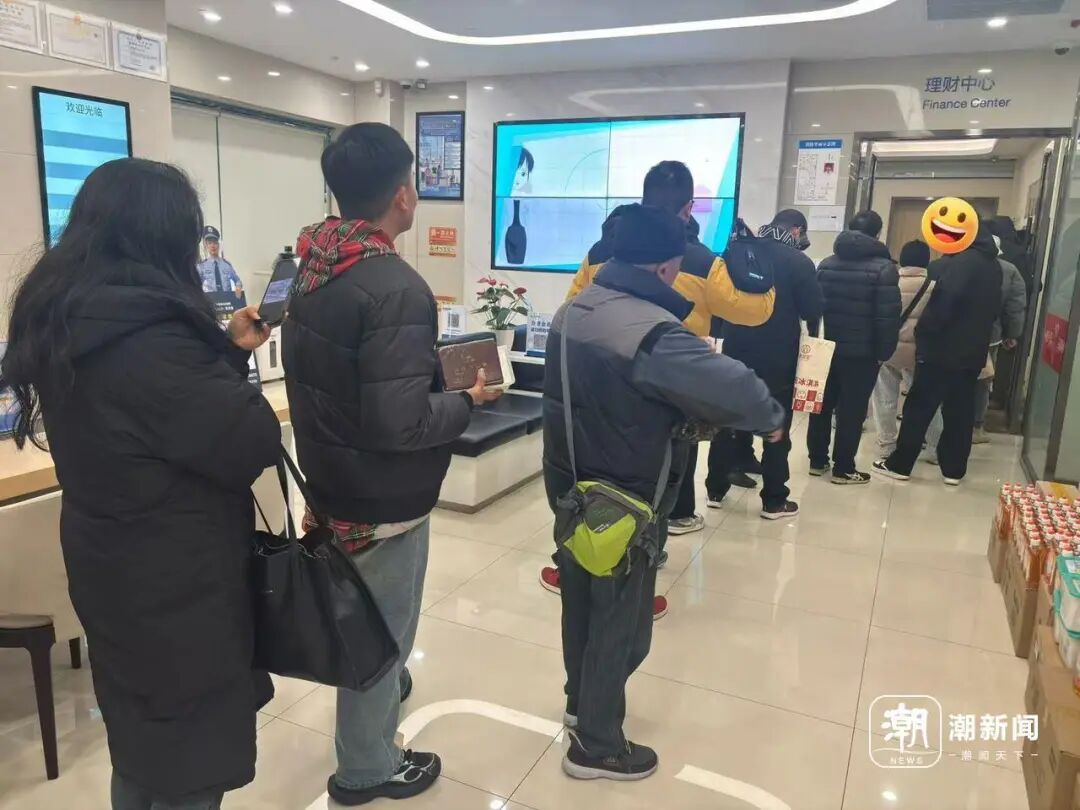
Core Viewpoint - The exchange of the Year of the Horse commemorative coins and banknotes has officially begun, attracting significant public interest and participation in the collection market [1][9]. Group 1: Exchange Process - The exchange period for the Year of the Horse commemorative coins and banknotes runs from January 20 to January 26 [1]. - Banks, such as China Construction Bank, have opened early to accommodate customers, indicating high demand [1]. - The introduction of mobile banking pre-payment options by banks like Industrial and Commercial Bank of China and China Construction Bank has optimized the exchange process and improved efficiency [7]. Group 2: Public Interest and Market Dynamics - A long queue of approximately 20 people was observed at a bank branch for the exchange, highlighting the popularity of the commemorative items [1]. - Many citizens are collecting these items for personal enjoyment and as gifts, with some expressing excitement over their successful reservations [3][5]. - The market for these commemorative items has seen the emergence of resellers, with prices for "lucky numbers" reaching up to 900 yuan, indicating a strong demand for specific items [7]. Group 3: Collectible Significance - The Year of the Horse commemorative coin is the final piece in the second series of zodiac coins, while the banknote is the third zodiac banknote issued by the People's Bank of China, making them particularly significant for collectors [9]. - The cultural significance of phrases like "马到成功" (success comes swiftly) and "龙马精神" (spirit of the dragon and horse) has contributed to the heightened market interest [9]. Group 4: Issuance Details - The total issuance of the Year of the Horse commemorative coins and banknotes is set at 100 million each nationwide, with 4.76 million issued in Zhejiang Province [10]. - Citizens must present valid identification to exchange their reserved items, and specific procedures are in place for those collecting on behalf of others [10].

港股20日跌0.29% 收报26487.51点
Xin Hua Wang· 2026-01-20 09:51
Market Overview - The Hang Seng Index fell by 76.39 points, a decrease of 0.29%, closing at 26,487.51 points [1] - The total turnover on the main board was HKD 2,377.66 million [1] - The National Enterprises Index dropped by 39.69 points, closing at 9,094.76 points, a decline of 0.43% [1] - The Hang Seng Tech Index decreased by 66.54 points, closing at 5,683.44 points, a drop of 1.16% [1] Blue-Chip Stocks - Tencent Holdings decreased by 1.48%, closing at HKD 601 [1] - Hong Kong Exchanges and Clearing fell by 1.11%, closing at HKD 427 [1] - China Mobile remained unchanged, closing at HKD 79.3 [1] - HSBC Holdings increased by 1.1%, closing at HKD 128.4 [1] Local Hong Kong Stocks - Cheung Kong Holdings rose by 0.74%, closing at HKD 43.34 [1] - Sun Hung Kai Properties decreased by 0.99%, closing at HKD 110.2 [1] - Henderson Land Development increased by 0.52%, closing at HKD 31.12 [1] Chinese Financial Stocks - Bank of China fell by 0.45%, closing at HKD 4.47 [1] - China Construction Bank decreased by 0.51%, closing at HKD 7.76 [1] - Industrial and Commercial Bank of China dropped by 0.47%, closing at HKD 6.31 [1] - Ping An Insurance rose by 0.88%, closing at HKD 69 [1] - China Life Insurance increased by 4.31%, closing at HKD 33.4 [1] Oil and Petrochemical Stocks - China Petroleum & Chemical Corporation fell by 0.61%, closing at HKD 4.92 [1] - China National Petroleum Corporation decreased by 0.12%, closing at HKD 8.21 [1] - CNOOC Limited dropped by 1.74%, closing at HKD 21.52 [1]






“马年”纪念币钞兑换首日银行网点排队如潮,有“黄牛”在等待回收
Xin Lang Cai Jing· 2026-01-20 09:07
Group 1 - The first day of exchanging the "Year of the Horse" commemorative coins and banknotes saw long queues at bank branches, similar to previous years [1] - At the Shanghai Pujiang High-tech Park branch of Bank of Communications, approximately thirty people were waiting in line to exchange [3] - The presence of "scalpers" was noted, with one offering to buy commemorative coins at 13 yuan each and banknotes at around 33 yuan, depending on the serial number [5] Group 2 - The bank branch had posted notices in multiple prominent locations, advising customers to prepare cash and confirm exchange locations, and had set up two cash windows specifically for the exchange [7] - Customers were informed via SMS by the Industrial and Commercial Bank of China that they could exchange commemorative coins and banknotes by presenting their ID, cash, or bank card at designated branches, or use online payment options [9] - The commemorative coins have a face value of 10 yuan and the banknotes 20 yuan, with a total issuance of 100 million pieces each, including 10,000 pieces for historical records, and the exchange period is from January 20 to January 26, 2026 [9]
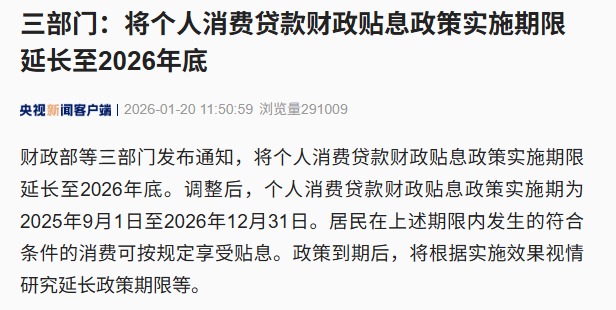
个人消费贷款财政贴息政策实施期限将延长至2026年底
Sou Hu Cai Jing· 2026-01-20 09:03
Group 1 - The core point of the news is the extension of the personal consumption loan interest subsidy policy until the end of 2026, aimed at boosting consumer spending and reducing the cost of personal consumption credit [1][4] - The policy will now be effective from September 1, 2025, to December 31, 2026, allowing residents to enjoy interest subsidies on eligible consumption during this period [4][5] - The subsidy rate for credit card installment payments has been set at 1 percentage point [5] Group 2 - The policy has removed the previous cap of 500 yuan on single transaction interest subsidies and the cumulative cap of 1,000 yuan for each borrower at one financial institution [6] - The policy will include more financial institutions, expanding the coverage to include city commercial banks, rural cooperative financial institutions, foreign banks, and consumer finance companies [6][7] - The central and provincial finances will bear 90% and 10% of the subsidy funds, respectively [6] Group 3 - The funding allocation will follow a "pre-allocation + settlement" method, with financial institutions required to submit their subsidy fund needs by January 31, 2026 [6][7] - The Ministry of Finance will conduct joint inspections to ensure compliance with the policy and will hold institutions accountable for any violations [7][8] - Financial institutions must report their policy execution status monthly, including loan issuance and subsidy amounts [7][8]