平安银行

Search documents
港股收评:三大指数齐跌,半导体、苹果概念跌幅明显,内银股逆势普涨!美团、阿里巴巴跌2%,小米涨3.43%,中芯国际跌超4%
Ge Long Hui· 2025-09-02 09:40
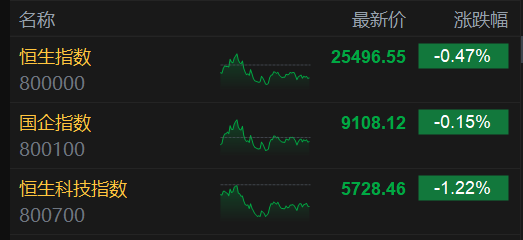
Group 1 - The performance of large technology stocks has generally declined, with Meituan and Alibaba dropping nearly 2%, while Baidu and JD.com fell by 1.5% [2] - Semiconductor stocks and Apple-related stocks experienced significant declines, with Hong Teng Precision dropping nearly 10% and other semiconductor leaders falling by 4.6% [2] - The banking sector showed a notable recovery in performance during the first half of the year, attracting insurance capital inflows, leading to a collective rise in domestic bank stocks [2] Group 2 - The Hong Kong stock market indices collectively closed lower, failing to maintain the previous day's strong upward trend, with the Hang Seng Technology Index experiencing a relatively larger decline of 1.22% [3] - The overall market sentiment was affected by the downturn in various sectors, including infrastructure, real estate, and cryptocurrency-related stocks [2][3]


上市银行2025年中报:银行业绩迎来关键回暖|银行与保险
清华金融评论· 2025-09-02 09:18
Core Viewpoint - The banking industry in China has shown signs of stabilization and recovery in the first half of 2025, with improvements in both profitability and asset quality, as indicated by the performance of the 42 listed banks [2]. Group 1: Profitability - In the first half of 2025, 26 out of 42 listed banks achieved positive growth in both operating income and net profit, accounting for over 60% of the total [4]. - The net interest income of listed banks decreased by 1.29% year-on-year, while non-interest income increased by 6.97%, indicating a return to positive growth since the first quarter [4][5]. - The six major state-owned banks reported a slight increase in total operating income to CNY 1.83 trillion, while net profit was CNY 682.52 billion, slightly lower than the previous year [4][5]. Group 2: Income Structure - Interest income remains dominant but faces structural challenges, with a net interest margin contraction affecting profitability [5]. - Non-interest income, particularly from fees and commissions, has rebounded significantly, contributing positively to overall revenue growth [5]. - Investment income saw a year-on-year increase of 23.46%, further enhancing the banks' profitability [4]. Group 3: Asset Quality - As of June 2025, the overall non-performing loan (NPL) ratio for listed banks was stable at 1.23%, with improvements in corporate loans but rising NPLs in personal loans [8]. - Among state-owned banks, Postal Savings Bank had the lowest NPL ratio at 0.92%, while other major banks maintained stable NPL ratios [8][11]. - The provision coverage ratio showed mixed results, with some banks improving while others experienced declines, indicating varying levels of risk management [9]. Group 4: Future Outlook - The banking sector is expected to continue supporting the real economy while focusing on risk management and capital foundation, ensuring stable growth amid changing global economic conditions [12].

股份制银行板块9月2日涨2.09%,招商银行领涨,主力资金净流入4.95亿元
Zheng Xing Xing Ye Ri Bao· 2025-09-02 08:59
Group 1 - The banking sector saw a rise of 2.09% on September 2, with China Merchants Bank leading the gains [1] - The Shanghai Composite Index closed at 3858.13, down 0.45%, while the Shenzhen Component Index closed at 12553.84, down 2.14% [1] - Key stocks in the banking sector showed varying performance, with China Merchants Bank closing at 43.44, up 3.48%, and CITIC Bank at 66.7, up 2.70% [1] Group 2 - The banking sector experienced a net inflow of 4.95 billion yuan from main funds, while retail investors saw a net outflow of 299.83 million yuan [1] - China Merchants Bank had a main fund net inflow of 198 million yuan, while retail investors contributed a net inflow of 50.89 million yuan [1] - Other banks like Ping An Bank and Huaxia Bank also showed significant fund flows, with Ping An Bank seeing a main fund net inflow of 22.3 million yuan [1]


流量的游戏:冰与火之歌
3 6 Ke· 2025-09-02 08:10
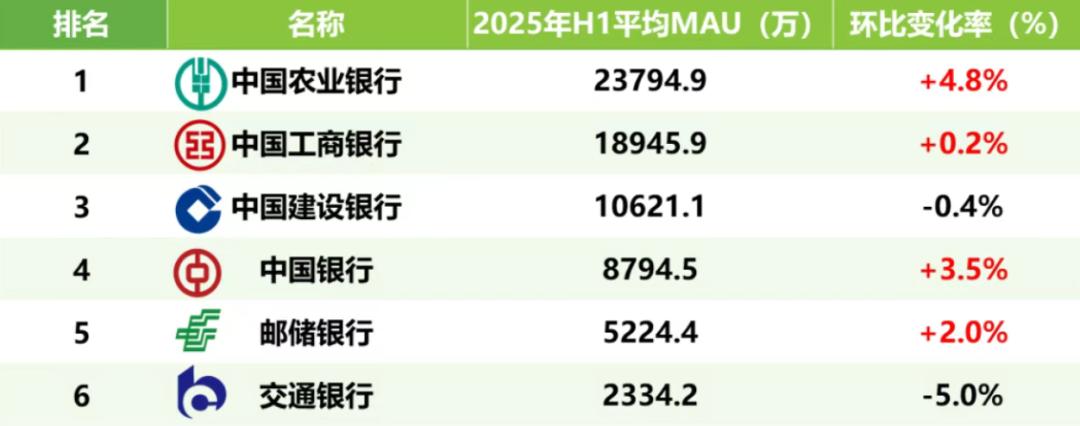
Core Insights - The digital transformation of commercial banks is entering a new phase, with increasing competition in banking apps and challenges such as insufficient personalized recommendations and product service homogenization [1] - Major state-owned banks are solidifying their leading positions by implementing diversified platform strategies, focusing on credit card services to enhance digital life services [2] User Engagement and Market Dynamics - As of the first half of 2025, the mobile banking app market has transitioned to a saturated competition phase, with user growth plateauing and daily usage time decreasing from 4.93 minutes to 2.70 minutes [3][4] - The six major state-owned banks maintain a dominant position in mobile banking user engagement, with Agricultural Bank of China leading with 238 million monthly active users (MAU), a 4.8% year-on-year increase [4][5] Operational Strategies - State-owned banks are shifting from functional apps to ecosystem platforms, integrating financial services into high-frequency life scenarios to maintain user engagement [5][6] - The average MAU for major banks shows a decline in user activity for joint-stock banks, with China Merchants Bank experiencing a 1.2% decrease in MAU [6][7] Challenges for Joint-Stock Banks - Joint-stock banks face challenges from state-owned banks' market penetration and local banks' enhanced services, leading to a squeeze in their middle market [7][8] - The homogenization of financial products and changing user behaviors, with services increasingly embedded in third-party platforms like Alipay and WeChat, are impacting the usage of standalone banking apps [7][10] Future Directions - The evolution of banking apps towards comprehensive financial "super apps" is essential, expanding beyond financial transactions to cover various user needs [10][12] - The integration of AI technologies is crucial for enhancing user experience and operational efficiency, with banks focusing on intelligent interaction, risk control, and personalized marketing [15][16] Conclusion - The management and marketing of mobile banking should adopt an internet mindset, focusing on market, user, traffic, and product thinking to enhance customer acquisition and operational efficiency [18]






7家上市银行,首次公布!
Jin Rong Shi Bao· 2025-09-02 07:36
Core Viewpoint - The recent announcements of interim dividend plans by A-share listed banks highlight a significant trend towards enhancing shareholder returns, with major state-owned banks leading the way in dividend payouts exceeding 200 billion yuan in total [1][4]. Group 1: State-Owned Banks - Six major state-owned banks have announced their interim dividend plans for 2025, with a total proposed payout exceeding 200 billion yuan [1]. - Industrial and Commercial Bank of China (ICBC) leads with a proposed dividend of 1.414 yuan per 10 shares, totaling 503.96 billion yuan [1]. - Other state-owned banks, including Agricultural Bank of China, Bank of China, China Construction Bank, Bank of Communications, and Postal Savings Bank, have also outlined their respective dividend amounts [1]. Group 2: Joint-Stock Banks - China Merchants Bank, known as the "King of Retail," has announced its first interim profit distribution plan since its listing, proposing a cash dividend of 35% of its net profit attributable to ordinary shareholders for the first half of 2025 [2]. - Citic Bank plans to increase its interim dividend payout ratio to 30.7%, aiming to enhance investor returns and market confidence [2]. - Other joint-stock banks, including Ping An Bank, Minsheng Bank, and Huaxia Bank, have also confirmed their interim dividend plans with specific payout amounts [2]. Group 3: New Participants in Interim Dividends - Several banks, such as Changshu Bank, Ningbo Bank, and Su Nong Bank, have joined the ranks of those announcing interim dividends for the first time [3]. - Su Nong Bank plans to distribute 0.9 yuan per 10 shares, totaling 1.82 million yuan, marking its inaugural interim dividend [3]. - The focus on interim dividends is seen as a strategy to enhance shareholder satisfaction and align with regulatory expectations [3]. Group 4: Market Trends and Regulatory Influence - The introduction of the "National Nine Articles" has encouraged listed companies to adopt more frequent dividend distributions, with 23 A-share listed banks implementing interim dividends in 2024, totaling over 250 billion yuan [4]. - The trend towards interim dividends is viewed as a means to improve the stability and sustainability of dividend payouts, enhancing liquidity and cash flow certainty for investors [4][5]. - Analysts suggest that the shift towards interim dividends reflects a robust operational foundation and a commitment to shareholder returns, positively influencing market sentiment [5].
消费贷“国补”详解来了!信用卡业务不享受→
Sou Hu Cai Jing· 2025-09-02 05:50
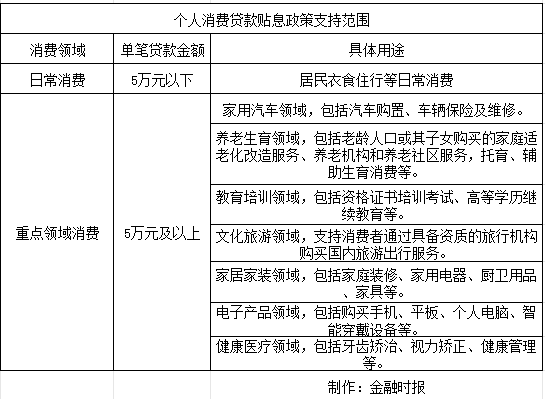
Core Points - The new personal consumption loan subsidy policy, effective from September 1, aims to support consumer spending through interest subsidies on eligible loans [1][2] - The subsidy covers two categories of consumption loans: daily expenses under 50,000 yuan and key consumption areas for loans above 50,000 yuan [1][3] Summary by Category Subsidy Scope - The subsidy applies to personal consumption loans for daily expenses (under 50,000 yuan) and key areas such as home appliances, automotive purchases, education, and healthcare for loans above 50,000 yuan [1][3][4] Subsidy Rate and Limits - The interest subsidy rate is set at 1% per annum, with a maximum subsidy not exceeding 50% of the loan contract interest rate [2] - The maximum cumulative subsidy per borrower is capped at 3,000 yuan, corresponding to a total eligible consumption amount of 300,000 yuan [4] Application Process - Consumers can apply for the subsidy through major banks, including six state-owned banks and twelve national joint-stock commercial banks, provided they meet specific conditions [5] - A supplementary agreement must be signed to authorize banks to verify consumption transaction information [6] Usage Restrictions - Funds from the loans must be used for eligible consumption; cash withdrawals or payments to personal accounts do not qualify for the subsidy [6]
银行中期分红来了!国有大行分红超2000亿元
2 1 Shi Ji Jing Ji Bao Dao· 2025-09-02 05:31
Core Viewpoint - A-share listed banks are increasingly implementing mid-term dividends for 2025, with state-owned banks leading in generosity, and several banks announcing mid-term dividends for the first time since their listing [1][2]. Group 1: State-Owned Banks - The six major state-owned banks have all announced dividend plans, with a total cash dividend amounting to 204.657 billion yuan. Industrial and Commercial Bank of China (ICBC) leads with a dividend of 50.396 billion yuan [2]. - China Construction Bank and Agricultural Bank of China follow with mid-term dividends of 48.61 billion yuan and 41.82 billion yuan, respectively [2]. - Bank of China announced a mid-term dividend of 35.25 billion yuan, maintaining a high payout ratio of 30% [2]. Group 2: Joint-Stock Banks - Several joint-stock banks, including China Merchants Bank, CITIC Bank, and Minsheng Bank, have confirmed their mid-term dividend plans for 2025, with CITIC Bank's cash dividend exceeding 10.46 billion yuan and a payout ratio of 30.7% [2][3]. - China Merchants Bank's mid-term profit distribution cash dividend is set at 35% of its net profit attributable to ordinary shareholders for the first half of 2025 [3]. Group 3: City Commercial Banks - City commercial banks such as Shanghai Bank, Ningbo Bank, and Changsha Bank have also announced mid-term dividends, with Changsha Bank proposing a cash dividend of 2.00 yuan per 10 shares, totaling 804 million yuan [3]. Group 4: Overall Banking Sector Performance - The banking sector has shown a recovery in performance, with A-share listed banks reporting revenue, pre-provision profit (PPOP), and net profit growth rates of 1.0%, 1.1%, and 0.8% year-on-year, respectively [4]. - Non-interest income has driven performance improvements, particularly in state-owned banks, while joint-stock banks have shown slightly weaker core revenue performance [4]. Group 5: Market Trends and Investment Outlook - Despite recent adjustments in the banking sector, the CSI Bank Index has risen by 9.05% year-to-date, with three banks seeing stock price increases exceeding 30% [5]. - Analysts suggest that the banking sector offers stability and potential for long-term investment, particularly in a low-interest-rate environment [5][6].
2025年9月1日中国黄金行情:金价下跌后,人民币黄金的最新报价
Sou Hu Cai Jing· 2025-09-02 04:23
Core Viewpoint - The gold market is experiencing complex fluctuations, with international gold prices at $3448.1 per ounce and domestic prices in China showing significant variations, making it challenging for ordinary investors to understand the dynamics [1][2]. Price Variations - The price of gold bars varies significantly among different retailers, with prices ranging from 782 yuan per gram at the Shanghai Gold Exchange to as high as 975 yuan per gram at some jewelry stores, highlighting the impact of branding on gold pricing [6][11]. - The Shanghai Gold Exchange offers a more competitive price for gold bars compared to retail stores, indicating a disparity in pricing strategies across different sales channels [6][11]. Investment Trends - The market is shifting from pure gold investment to a focus on collectible and artisanal value, with consumers increasingly valuing the craftsmanship and cultural significance behind gold products [5][10]. - The demand for ancient-style gold, particularly among younger consumers aged 25 to 35, reflects a growing interest in traditional culture and the stories behind the products [7][9]. Consumer Behavior - Consumers are now purchasing gold not just as an investment but as a means of expressing lifestyle and cultural identity, indicating a shift in consumer preferences towards products with deeper meanings [10][22]. - The trend towards ancient-style gold is prompting brands to innovate by collaborating with museums and artisans to create unique, culturally resonant designs [11][18]. Market Opportunities - The resurgence of interest in ancient-style gold presents opportunities for businesses to create products that blend traditional craftsmanship with modern aesthetics, appealing to a broader audience [17][18]. - Companies are encouraged to genuinely incorporate traditional techniques and cultural narratives into their products to resonate with consumers seeking meaningful connections [18][20].


洪偌馨:零售银行「过冬」
Xin Lang Cai Jing· 2025-09-02 01:57
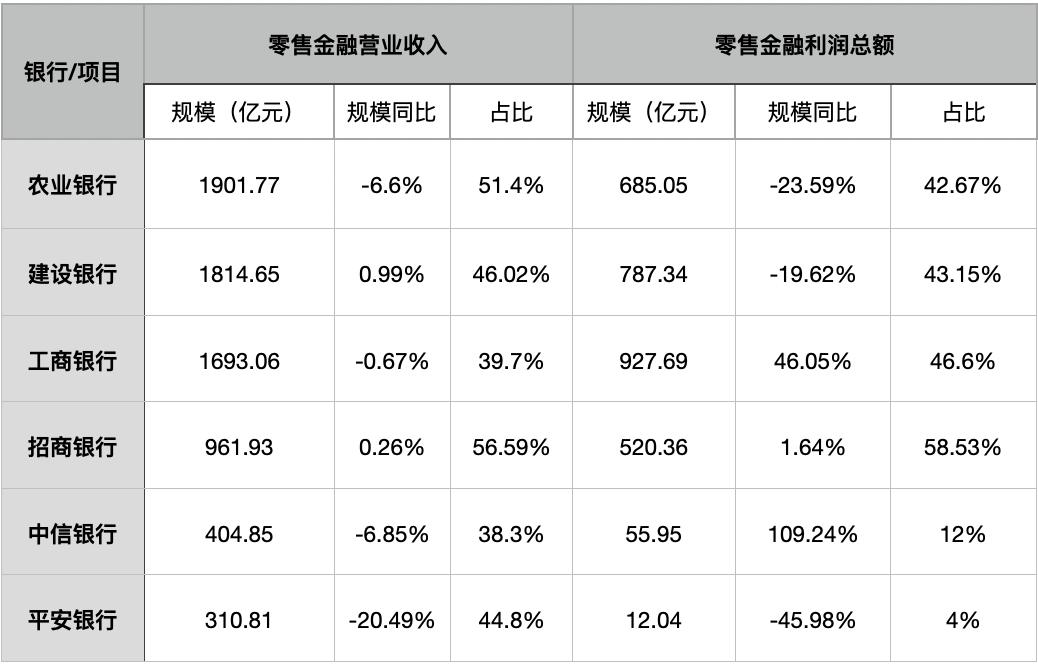
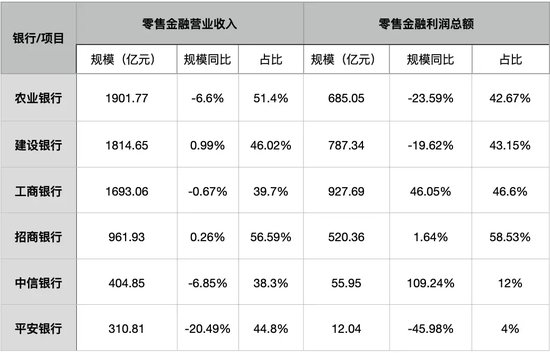
Core Viewpoint - The retail banking sector in China is facing significant challenges, with banks like Ping An Bank experiencing a decline in retail business performance due to past strategies that prioritized high-risk, high-reward approaches. The industry is now reflecting on these strategies as they navigate a difficult economic environment [1][2][4]. Retail Banking Performance - In the first half of 2025, major banks reported a decline in retail financial income and profits, with Agricultural Bank of China, China Construction Bank, and Industrial and Commercial Bank of China all showing varying degrees of downturn in personal financial business [5][6][7]. - Ping An Bank's retail banking revenue fell by over 20% year-on-year, with its pre-tax profit dropping to 1.2 billion yuan, contributing only 4% to total profits, down from 7% [8][10]. Asset Quality and Credit Risk - The retail banking sector is under pressure regarding asset quality, with rising non-performing loan ratios impacting profitability. For instance, Ping An Bank's retail loan non-performing rate was 1.27% [13][14]. - The overall economic environment, including a downturn in real estate investment and sluggish consumer demand, has led to a significant reduction in retail business income across the board [12][16]. Wealth Management Transition - Banks are attempting to shift their focus from traditional retail lending to wealth management, which requires long-term strategic investment and organizational capability [16][20]. - Despite the challenges, some banks, like China Merchants Bank, have shown resilience in their wealth management capabilities, with a notable increase in their wealth management income [24]. Future Strategies - Banks are re-evaluating their strategies, emphasizing quality and efficiency over mere scale. For example, China Merchants Bank is focusing on core banking functions while enhancing digital services and AI integration [18][19]. - The shift towards wealth management is seen as essential for banks to maintain competitiveness, especially as deposit trends shift towards investment products [19][22].


零售银行“过冬”
3 6 Ke· 2025-09-02 01:29
Core Viewpoint - The retail banking sector in China is facing significant challenges, with declining revenues and profits in retail financial services, particularly in retail credit and wealth management, as economic conditions worsen [1][12][18]. Group 1: Retail Banking Performance - In the first half of 2025, retail banks continued to experience pressure, with major banks reporting declines in retail financial income and profits [4][7]. - Agricultural Bank of China reported retail financial income of 190.18 billion yuan, down 6.6% year-on-year, and a profit of 68.51 billion yuan, down 23.59% [4]. - China Construction Bank's retail financial income was 181.47 billion yuan, up 0.99%, but profits fell by 19.62% to 78.73 billion yuan [4]. - Industrial and Commercial Bank of China saw retail financial income decrease by 0.67% to 169.31 billion yuan, while profits increased by 46.05% to 92.77 billion yuan, largely due to a low base from the previous year [4][6]. - Ping An Bank's retail financial income plummeted by 20.49% to 31.08 billion yuan, with profits down 45.98% to 1.20 billion yuan [4][7]. Group 2: Credit Quality and Challenges - The retail loan non-performing ratio for major banks has shown signs of deterioration, with Ping An Bank at 1.27%, and the credit card non-performing ratio at 2.3% [13]. - The overall economic environment, including a downturn in the real estate sector and low consumer demand, has led to a significant reduction in retail banking income and growth [12][18]. - The shift from high-risk, high-return lending strategies to a focus on wealth management is becoming increasingly important for banks, but this transition is challenging and requires long-term investment [17][19]. Group 3: Wealth Management and Future Strategies - Wealth management is seen as a critical area for future growth, but banks are struggling to effectively transition from traditional retail banking to wealth management services [17][20]. - The average interest rate on personal deposits for major banks varies, with China Merchants Bank maintaining a low rate of 1.18%, which helps in reducing funding costs [24]. - China Merchants Bank reported a significant increase in wealth management income, reaching 20.86 billion yuan in the first half of 2025, marking a 5.45% year-on-year growth [25]. - The retail AUM (Assets Under Management) for China Merchants Bank is significantly lower in terms of retail deposits compared to its peers, indicating a stronger wealth management capability [22][23].