Anthropic

Search documents
AI冲击波从软件业蔓延至债市:最大债主Ares、KKR股价重挫,违约率恐飙至13%
Hua Er Jie Jian Wen· 2026-02-09 06:21
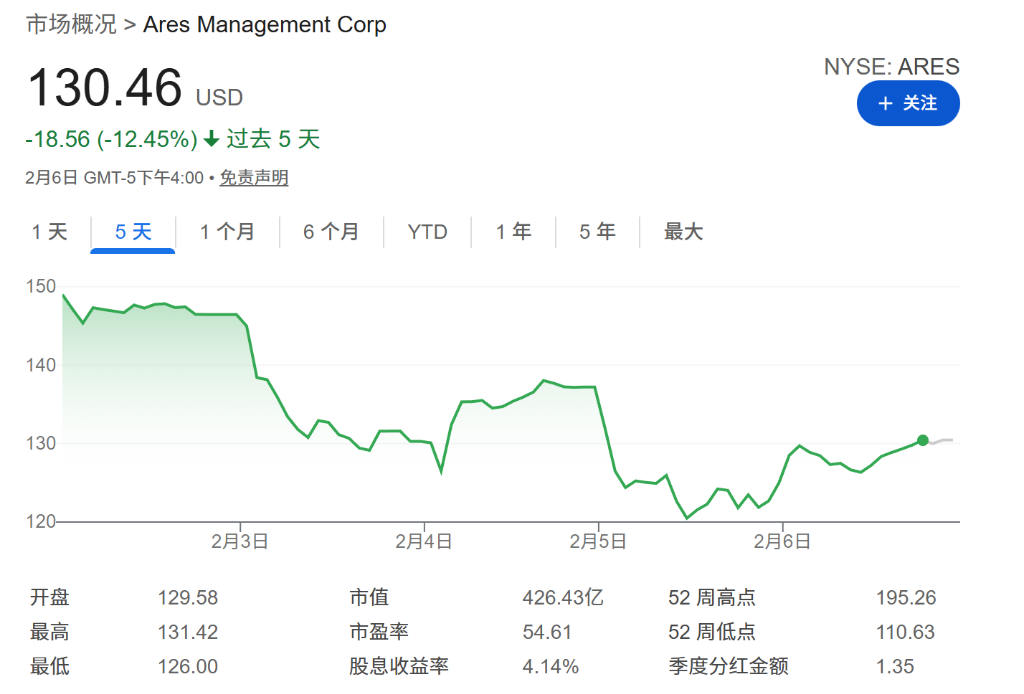
Core Insights - The disruptive wave of artificial intelligence (AI) technology is spreading from the software industry into the financial markets, creating unprecedented uncertainty in the private credit bond market, which is valued at approximately $3 trillion [1][12] - The release of a new AI tool by Anthropic has triggered a sell-off in software data supplier stocks, leading to significant declines in asset management companies heavily invested in private credit bonds [1][8] Group 1: Market Impact - The stock prices of major asset management firms with substantial private credit bond operations have experienced sharp declines, with Ares Management down over 12%, KKR down nearly 10%, Blue Owl Capital down over 8%, and TPG down about 7%, while the S&P 500 index only slightly decreased by approximately 0.1% during the same period [1][3] - Investors are increasingly uneasy about their exposure to the private credit bond market, particularly due to the software industry's significant concentration in this sector, which amplifies any disturbances [8][9] Group 2: Credit Quality Concerns - UBS has issued a stern warning that if the disruptive effects of AI accelerate beyond the adaptability of borrowing companies, the default rate in the U.S. private credit bond market could soar to 13% under aggressive scenarios, significantly higher than their estimates for leveraged loans (8%) and high-yield bonds (4%) [8][9] - The private credit bond market's heavy reliance on the software industry raises concerns about the quality of these assets, as any downturn in the software sector could lead to significant issues within investment portfolios [9][10] Group 3: Structural Risks - The structure of loans, particularly Payment-in-Kind (PIK) loans, exacerbates potential risks, as these loans allow borrowers to defer cash interest payments, which can become problematic if the borrower's financial situation deteriorates [10] - Moody's Analytics warns that the opacity of the private credit bond market complicates comprehensive risk assessment, highlighting the rapid growth of AI-related lending, rising leverage, and lack of transparency as significant warning signs [10][11] Group 4: Systemic Concerns - The market reassessment triggered by AI occurs against a backdrop of existing scrutiny of the private credit bond industry, which has long been criticized for high leverage and valuation opacity [12] - The private credit bond market, which has favored corporate software companies since 2020, must now prepare for the disruptive impacts driven by AI technology, prompting investors to reevaluate financing transactions that involve opaque, illiquid loans, especially those exposed to technological change risks [12]


谷歌:云营收加速增长,资本开支指引激进
GF SECURITIES· 2026-02-09 05:41
Investment Rating - The report assigns a "Buy" rating to Google (GOOGL) with a current price of $322.86 and a fair value of $362.78 [4]. Core Insights - Google's cloud revenue is accelerating, and the capital expenditure guidance is aggressive, raising concerns about the return on investment (ROI) from AI infrastructure investments [5][12]. - The company reported strong revenue and net profit for Q4 2025, with revenue of $113.83 billion, exceeding expectations by 2.15%, and a year-on-year growth of 17.99% [5][13]. - The cloud segment showed significant growth, with Q4 2025 cloud revenue reaching $17.664 billion, a year-on-year increase of 47.8% [5][23]. - The advertising revenue growth is mixed, with strong performance in search ads but a slowdown in YouTube ad revenue [5][20]. - Despite concerns over capital expenditures, the financial pressure is manageable, and the returns from AI investments are promising [5][63]. Summary by Sections Q4 2025 Performance Review - Revenue and net profit exceeded expectations, with operating income at $35.934 billion and a net profit of $34.455 billion, reflecting a year-on-year increase of 29.84% [5][14]. - The cloud segment's operating profit margin improved significantly to 30.1%, up from 23.7% in Q3 2025 [5][23]. - Capital expenditures for Q4 2025 were $27.9 billion, a 95.1% increase year-on-year, with a projected capital expenditure of approximately $180 billion for 2026 [5][24]. Business Analysis - Google's advertising business remains a solid revenue foundation, with search ads contributing significantly to overall revenue [5][42]. - The cloud business is positioned as a new growth engine, driven by strong demand for AI services, with projected revenue growth rates of 46.1% for 2026 [5][63]. - The Other Bets segment is still in a loss phase, but investments in AI and other innovative sectors are expected to yield long-term growth [5][57]. Profit Forecast and Investment Recommendations - The report forecasts Google's net profit for 2026-2028 to be $139.7 billion, $163.5 billion, and $196.3 billion, respectively, with corresponding price-to-earnings ratios of 28x, 24x, and 20x [5][66]. - The overall revenue growth is projected at 17.8% for 2026, with operating margins improving gradually [5][66].
OpenClaw走红,个人AI代理时代真的来了
华尔街见闻· 2026-02-09 05:39
Core Viewpoint - The emergence of OpenClaw signifies a pivotal moment for AI Agents, suggesting that the technology is on the verge of mainstream adoption despite its complexity for the general public [2][3][4]. Group 1: OpenClaw's Impact - OpenClaw has rapidly gained popularity, demonstrating that skilled users can create powerful AI agents at a low cost, igniting excitement in Silicon Valley [3][5]. - The success of OpenClaw has prompted competitors to accelerate their product launches, creating a "wild ecosystem" around this technology [8]. - The platform Moltbook, an AI agent social network, quickly amassed over 220,000 posts and 6.2 million comments, showcasing the rapid engagement generated by OpenClaw [9]. Group 2: AI Agent Capabilities - AI Agents like OpenClaw can autonomously perform tasks such as coding, file creation, and browser control, operating without human intervention [6][14]. - Different AI models impart distinct "personalities" to agents, leading to unique behaviors and interactions among them [15][16]. - The collaborative functioning of multiple AI agents has led to the development of their own jargon and principles, indicating a form of self-evolution [16][17]. Group 3: Future of the Internet - The evolution of AI agents is reshaping the understanding of the internet, with predictions that future social media will be dominated by agents learning from each other [18]. - The challenge of distinguishing between human users and AI agents is expected to become critical for maintaining order in the digital space [18]. - New tools like OneMolt are being developed to verify the identity of agents, highlighting the need for mechanisms to ensure the integrity of online interactions [18]. Group 4: Personal AI Era - Despite concerns about cybersecurity, the founder of OpenClaw remains optimistic, experiencing significant recognition and interest from venture capitalists [20][21]. - The sentiment in Silicon Valley reflects a strong belief that the personal AI era is upon us, with expectations for significant advancements in the coming year [21].

AI人工智能ETF(512930)涨超3.5%,国产AI大模型扎堆上新
Xin Lang Cai Jing· 2026-02-09 05:32
Group 1 - The core viewpoint of the news highlights a significant rise in the AI sector, with the Zhongzheng AI Theme Index increasing by 3.70% and notable gains in individual stocks such as Chip Origin Co., Ltd. and Guanghua New Network [1] - The AI application concept stocks experienced a surge, driven by the anticipation of the release of Qwen3.5, a new model from Alibaba, which has sparked discussions in the global AI open-source community [1] - According to Zhongyin Securities, the AI industry may be poised for a rebound after a period of decline, with key updates from major domestic models expected around the Chinese New Year [2] Group 2 - The Zhongzheng AI Theme Index consists of 50 listed companies involved in providing resources, technology, and application support for AI, reflecting the overall performance of AI-related securities [3] - As of January 30, 2026, the top ten weighted stocks in the Zhongzheng AI Theme Index accounted for 57.27% of the index, indicating a concentration of investment in leading companies within the AI sector [3] - The AI ETF closely tracks the Zhongzheng AI Theme Index, providing investors with exposure to the performance of AI-related companies [3]



陶冬:Claude Cowork引爆AI应用革命
Di Yi Cai Jing· 2026-02-09 05:31
Group 1 - The core viewpoint of the article highlights the significant shift in the AI industry, with Claude Cowork launching a new phase of application and commercialization of AI, contrasting with the struggles of major tech companies facing market skepticism about their AI investments [1][2][3] - Major tech companies, including Alphabet, Amazon, Microsoft, and Meta, are heavily investing in AI, with a combined expenditure of $660 billion this year, raising concerns about their profitability and stock valuations despite showing revenue growth [1][2] - The recent market volatility is attributed to a reassessment of AI companies' profitability and a reaction to external economic factors, including the potential impact of the new Federal Reserve chair, who may influence liquidity and monetary policy [2][3][4] Group 2 - Anthropic's launch of Claude Cowork is seen as a pivotal moment in the AI sector, focusing on providing AI tools for knowledge workers, which could reshape work processes and create direct value for users [2][3] - The article emphasizes that the AI market is still in its infancy, with significant potential for efficiency improvements and process enhancements, indicating a vast untapped market for AI applications [3] - Concerns are raised about the future of monetary policy under the new Federal Reserve chair, with potential implications for liquidity in the market and the impact on government debt issuance [4][5]
X @Cassandra Unchained
Cassandra Unchained· 2026-02-09 05:13
Or, the market is just jittery over historic overvaluation, historic capital expenditures, and tiny “AI” revenue.tae kim (@firstadopter):The entire selloff this week was sparked by a completely false narrative, amplified by technically illiterate media pouring gas on the panic, just like DeepSeek last year. You can't make this stuff up.Here's what Claude says after reading the GitHub on the infamous Anthropic https://t.co/UUGFMIXCMr ...
这个春节,AI 不聊天了,开始替我买单
机器之心· 2026-02-09 05:12
Core Viewpoint - The article discusses the competitive landscape of AI applications during the Chinese New Year, highlighting how major tech companies are leveraging AI to attract user attention and enhance consumer experiences through innovative strategies. Group 1: AI Competition and Strategies - Tencent initiated the AI Spring Festival battle by launching a 1 billion cash red envelope campaign and introducing a new AI social feature called "Yuanbao" [1] - Baidu followed with a 500 million red envelope initiative, collaborating with Beijing TV for the Spring Festival Gala [1] - ByteDance brought its Volcano Engine to the backstage of the CCTV Spring Festival Gala, intensifying the competition [1] - Alibaba's Qianwen APP entered the fray with a 3 billion "Spring Festival Treat Plan," integrating its ecosystem to offer a comprehensive consumer experience [1] Group 2: User Engagement and Order Volume - On the first day of the Qianwen APP event, over 10 million AI orders were completed within 9 hours, with more than 30 million "help me buy" requests received [2] - The overwhelming user engagement led to server congestion, prompting the Qianwen team to request leniency from users [5] Group 3: New Consumption Habits and AI Capabilities - The 3 billion investment not only aimed at distributing cash but also tested new consumer habits, encouraging users to interact with the Qianwen APP [6] - Qianwen demonstrated impressive cross-application coordination, efficiently managing travel planning by integrating services from Fliggy and Gaode [10] - In the family consumption sector, Qianwen acted as a "universal shopping guide," quickly filtering products from Taobao and Tmall based on user needs [13] Group 4: Differentiation in AI Development - The article notes the distinct strategies among tech companies, with Qianwen focusing on integrating AI into shopping and ticketing, thus targeting higher-value consumer scenarios [15] - The differences in AI development paths between China and the U.S. are highlighted, with U.S. AI primarily focusing on high-value B2B markets, while China's AI is more consumer-oriented [20][21] Group 5: Future of AI Applications - The article posits that 2023 and 2024 will be pivotal years for AI technology, with 2025 marking a year for application exploration, as evidenced by Qianwen's efforts to break the boundaries of AI applications [26] - Qianwen's approach combines AI capabilities with a robust ecosystem, enabling seamless integration of AI into everyday life [28] - The evolution of user interaction with digital platforms is shifting towards a more streamlined experience, emphasizing efficiency and convenience [29]


七倍回报!外媒称亚马逊对Anthropic战略投资成“最赚钱交易”之一
Sou Hu Cai Jing· 2026-02-09 04:45
Core Insights - Amazon disclosed it holds $45.8 billion in convertible bonds and $14.8 billion in non-voting preferred stock in Anthropic, totaling a stake valued at $60.6 billion [1] - Since the end of 2023, Amazon has invested $8 billion in Anthropic, marking it as one of the company's most profitable strategic technology investments to date [1] - Anthropic has committed to purchasing 1 million of Amazon's Trainium chips, establishing a strong business relationship with AWS [1] Funding and Valuation - Anthropic's last funding round was in September of last year, raising $13 billion with a post-money valuation of $183 billion [1] - Earlier in March, Anthropic completed a $3.5 billion funding round, with a valuation of $61.5 billion at that time [1] - The AI startup is currently negotiating a new funding round, which could potentially raise its valuation to $350 billion if successful [1]


Private credit worries resurface in $3 trillion market as AI pressures software firms
CNBC· 2026-02-09 04:41
Core Viewpoint - The private credit markets are experiencing increased uncertainty due to the emergence of AI-driven tools that may disrupt traditional software business models, particularly affecting software companies that are significant borrowers in the private lending space [1][2]. Group 1: Impact of AI on Software Companies - AI tools developed by Anthropic are designed to perform complex tasks that many software companies currently charge for, raising concerns about the potential weakening of traditional software business models [2]. - The software sector, which has been a favored area for private credit lenders since 2020, is now facing pressure as AI adoption could accelerate faster than companies can adapt [5][7]. - Software companies account for approximately 17% of loans held by U.S. business development companies, making them a significant focus for private credit lenders [6]. Group 2: Market Reactions and Financial Implications - Shares of major asset managers with substantial private credit franchises have declined significantly, with Ares Management falling over 12%, Blue Owl Capital losing over 8%, and KKR declining almost 10% [3]. - UBS Group has warned that default rates in U.S. private credit could rise to 13% in an aggressive disruption scenario, which is notably higher than the projected stress for leveraged loans and high-yield bonds [7]. - The private credit industry, valued at $3 trillion, is facing concerns over leverage, opaque valuations, and the risk of isolated problems becoming systemic issues [9]. Group 3: Credit Risk and Future Outlook - The potential for credit risk varies among software and services sector borrowers, depending on their position relative to AI advancements [10]. - Payment-in-kind (PIK) loans, which allow borrowers to defer interest payments, are prevalent among software companies, posing risks if their financial situations deteriorate [11]. - Experts indicate that while the private credit industry may currently absorb losses, ongoing credit growth could lead to significant credit problems in the future [13].


Claude一个插件吓哭华尔街,软件公司集体暴跌,2万亿元一日蒸发
猿大侠· 2026-02-09 04:11
Core Viewpoint - The emergence of AI, particularly through Anthropic's new features, is perceived as a significant threat to the Software as a Service (SaaS) industry, leading to a dramatic sell-off in software stocks and a prevailing sentiment of "SaaS is dead" among investors [1][8][30]. Group 1: Market Reaction - The introduction of Anthropic's "plugins" and "silicon-based employees" resulted in a loss of approximately $285 billion in market value for Nasdaq [3]. - Following the initial drop, software stocks continued to decline, with the iShares expanded technology software industry ETF falling an additional 2% [6]. - The overall sentiment on Wall Street shifted to a state of panic, with many investors eager to exit their positions in software companies regardless of current prices [9][30]. Group 2: AI's Impact on SaaS - Anthropic's Claude Cowork can perform tasks traditionally handled by software, such as document drafting and legal compliance, significantly reducing the need for expensive SaaS solutions [12][16]. - The legal plugin introduced by Anthropic threatens the core functionalities of many legal software companies, which previously charged around $50,000 annually for their services [14][16]. - The competitive landscape is intensifying as AI tools like Claude Cowork are expected to disrupt various sectors, including finance, sales, and marketing, leading to widespread concerns about the viability of SaaS companies [25][22]. Group 3: Industry Perspectives - Analysts from Morgan Stanley highlighted that the introduction of AI capabilities in the legal sector would significantly increase competition, exacerbating the challenges faced by existing software companies [22]. - The perception that SaaS companies are merely intermediaries is growing, as AI technologies provide direct access to capabilities that were once reliant on software [40][41]. - Despite the current turmoil, some industry leaders argue that software will remain essential as a backend infrastructure, even if user interfaces evolve due to AI advancements [48].