
OPPO

Search documents
华为,最新业绩来了!
Zhong Guo Ji Jin Bao· 2025-08-31 16:04
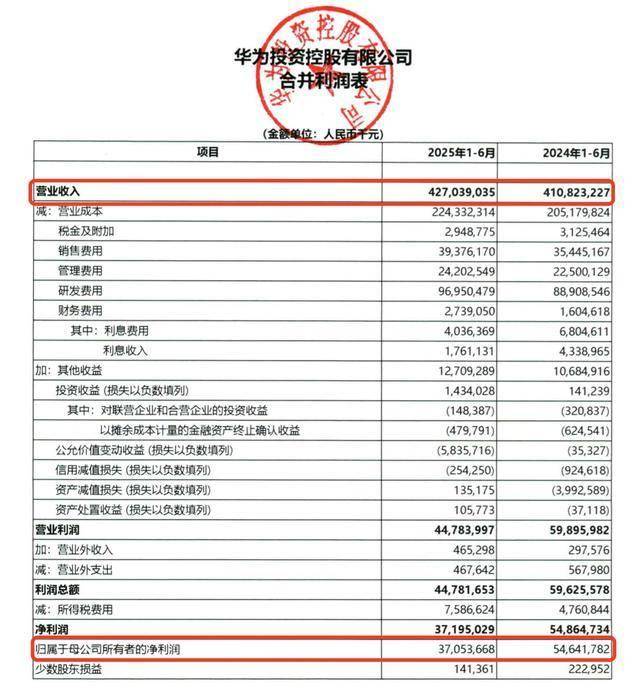
Core Viewpoint - Huawei reported its 2025 semi-annual results, showing a revenue of 427 billion yuan, a year-on-year increase of 3.94%, while net profit decreased by 32% to 37.1 billion yuan [1][3]. Financial Performance - Revenue for the first half of the year reached 427.39 billion yuan, reflecting a 3.95% increase compared to the previous year [3]. - Net profit was reported at 37.195 billion yuan, marking a 32% decline year-on-year [3]. - Research and development expenses amounted to 96.95 billion yuan, up 9.04% from 88.91 billion yuan in the same period last year, representing 22.7% of total revenue [3]. - The company's total assets were 1.25 trillion yuan, with total liabilities of 712.1 billion yuan, resulting in a debt-to-asset ratio of 56.9% [4]. - Cash flow from operating activities was 31.183 billion yuan, an increase of 24.15% from 25.118 billion yuan in the previous year [4]. Market Position - Huawei regained the top position in the Chinese smartphone market with a shipment of 12.5 million units, capturing an 18.1% market share, despite a year-on-year decline of 3.4% [7][8]. - The overall smartphone market in China saw a shipment decline of 4.1% in the second quarter of 2025, with competitors like Vivo and OPPO also experiencing significant drops in shipment volumes [8]. Organizational Changes - Huawei announced a large-scale organizational restructuring within its cloud business unit, affecting numerous lower-level departments and potentially impacting over a thousand employees [5]. - The restructuring will focus on core teams related to product development, public cloud services, and research and development [5].
2025年第一季度粤港澳大湾区经济分析报告
Sou Hu Cai Jing· 2025-08-31 10:48
Economic Overview - The GDP of the Guangdong-Hong Kong-Macao Greater Bay Area is expected to grow by 3.4% in Q1 2025, reflecting resilience amid external and internal challenges [1][12][11] - The economic performance shows significant differentiation among cities, with Huizhou leading at 6.6% growth, followed by Zhongshan and Dongguan at 5.5% and 5.0% respectively [2][12] Industrial Production - Industrial production has slowed down, primarily affecting the economy, with Shenzhen's industrial value-added growth at only 2.6% in January-February, a stark decline from over 9% in previous months [3][13] - Despite the overall slowdown, the new energy vehicle sector has shown remarkable growth, with BYD's production increasing by 109.5% [3][15] Investment Trends - Fixed asset investment continues to decline, with negative growth in most cities except for Guangzhou, which saw a 1% increase [4][17] - The secondary industry investment has sharply decreased, particularly in Dongguan and Zhuhai, reflecting cautious corporate investment behavior due to uncertain external demand [4][18] Consumer Market - The consumer market shows a weak recovery, with social retail sales in major cities like Guangzhou and Shenzhen growing by 1.2% and 1.7% respectively, but still lagging behind the national average of 4% [5][22] - Factors such as declining automobile retail and high savings rates among the population are constraining consumer spending potential [5][35][36] Foreign Trade - The external trade landscape is marked by significant differentiation, with Guangdong's export growth declining by 12.7 percentage points to -4.3%, while cities like Guangzhou and Dongguan experienced positive growth [6][12] - Imports in the Greater Bay Area maintained a positive growth rate of 6.1%, indicating a shift towards a more balanced trade structure [6][12] Future Outlook - The second quarter is expected to face challenges, but technology and domestic demand are seen as key variables for growth, with potential boosts from AI integration and tourism [7][11] - The demographic advantages, including a high birth rate and significant young population, are anticipated to convert into consumer spending power, supporting long-term economic growth [7][11][35]


趋势研判!2025年中国智能手机行业发展全景分析:产品更新换代速度加快,市场换机需求提升,随着技术的不断创新,Al手机成为主要创新方向[图]
Chan Ye Xin Xi Wang· 2025-08-31 00:00
Core Insights - China has become the world's largest mobile phone producer and consumer, with a projected smartphone production of 1.25 billion units in 2024, maintaining over 70% of total mobile phone production for several years [1][4] - The smartphone industry is now in a mature phase, with a continuous decline in shipment volumes observed in recent years. The expected smartphone shipment for 2024 is 294 million units, a year-on-year increase of 6.5%, accounting for 63% of total mobile phone shipments [1][6] - The rapid pace of product updates has shortened the average usage cycle of smartphones, leading to increased market demand for replacements. AI smartphones are emerging as a key innovation direction [1][11] Industry Overview - The smartphone industry is defined as mobile devices with independent operating systems that allow users to install third-party applications and access wireless networks [2] - The industry has evolved from personal digital assistants (PDAs) to smartphones, which have become essential in daily life, driven by the growth of mobile internet [4] Current Market Situation - In 2024, the total mobile phone production in China is expected to reach 1.67 billion units, with a year-on-year growth of 7.26%. The smartphone production is projected at 1.25 billion units, consistently representing over 70% of total production [4] - The smartphone shipment volume in 2023 was 276 million units, with a 4.8% year-on-year increase, while the 2024 projection is 294 million units, reflecting a 6.5% growth [6] Industry Chain - The smartphone industry chain includes upstream components such as chips, PCBs, memory, operating systems, displays, power supplies, and cameras. The midstream involves manufacturing (ODM, OEM/EMS, brand owners), while the downstream includes operators, service providers, and end-users [6] Competitive Landscape - The Chinese smartphone market is characterized by high concentration and significant competition among domestic brands. In 2024, domestic brands are expected to ship 269 million units, a 16.3% increase, capturing 85.6% of the market [9] - Major players include Vivo, Huawei, Apple, Honor, and OPPO, with Vivo leading the market share at 17.2% and Huawei regaining its position among the top five brands [9] Future Trends - The smartphone market in China is expected to see a shift in consumer demand due to the early release of national subsidy policies, increasing the number of new models and enhancing consumer choices [10] - The competition for young consumers is intensifying, with brands increasing marketing investments and focusing on AI innovations [11]


七夕大家都爱送点啥,闪购带动消费破峰
Sou Hu Cai Jing· 2025-08-30 05:19
Group 1 - The core observation from Meituan's Qixi consumption report indicates a 50% increase in order volume compared to the same period last year, with overall gift consumption reaching a new high [1] - Flower sales peaked on Qixi Day, with significant growth in categories such as digital products, beauty and skincare, and jewelry, highlighting a trend of diverse gift-giving [1][5] - Collaborations with brands like Disney and cultural institutions have revitalized traditional gifts, making them more personalized and appealing to consumers [1] Group 2 - The trend of "flash purchase gifting" has expanded beyond flowers to include a wide range of categories, with notable increases in sales for children's smartwatches, electric shavers, and neck massagers [5] - Beauty products remain a major category for gifting, with eye care sets seeing nearly a 5-fold increase in sales, and other skincare items doubling in sales [5] - Major brands like Dell and Huawei experienced substantial sales growth on Qixi Day, with Dell's sales increasing over 20 times and Huawei's nearly 6 times, indicating a strong performance in the retail sector [5]

希荻微上半年营业收入同比增长102.73% 加速拓展芯片产品在AI端侧应用
Zheng Quan Ri Bao Wang· 2025-08-30 04:47
Core Viewpoint - The company, Xidi Microelectronics Group Co., Ltd., reported a significant increase in revenue for the first half of 2025, driven by a recovery in the consumer electronics market and increased demand for high-performance power management chips [1] Group 1: Financial Performance - In the first half of 2025, the company achieved a revenue of 466 million yuan, representing a year-on-year growth of 102.73% [1] - The revenue growth was attributed to the rising demand for power management chips and the successful outsourcing of production for certain products in the audio coil motor driver chip product line [1][2] Group 2: Product Performance - The revenue breakdown by product structure shows that power management chips generated 182 million yuan, autofocus and optical image stabilization chips contributed 142 million yuan, port protection and signal switching chips accounted for 46.6 million yuan, and sensor chips and others brought in 9.55 million yuan [2] - The company has accelerated the application of its chips in AI edge devices, launching customized DC/DC chip products for silicon anode batteries, which have become a preferred solution for enhancing battery life in AI smartphones [2] Group 3: Market Expansion - The company has successfully shipped products to well-known global brands such as Xiaomi, OPPO, vivo, and Transsion, extending its product applications to cutting-edge fields like AI glasses [2] - In the smart automotive electronics sector, the company has introduced new high-performance chip products, including automotive-grade low-side and high-side switch chips, to meet market demands [3] Group 4: Technological Advancements - The company has signed a technology licensing agreement with a South Korean firm to gain exclusive rights to autofocus and optical image stabilization patents in Greater China, positioning itself as a preferred supplier for audio coil motor driver chips among Chinese smartphone brands [4] - The company is transitioning its audio coil motor driver chip business from a trading model to a self-production model, increasing the self-production ratio quarterly [4]

华为上半年业绩出炉:营收4270亿净利降三成,继续加码研发投入
Sou Hu Cai Jing· 2025-08-29 11:16
瑞财经 吴文婷8月29日,华为发布2025年半年度报告。 | 项目 | 2025年1-6月 | 2024年1-6月 | | --- | --- | --- | | 营业收入 | 427,039,035 | 410,823,227 | | 减:营业成本 | 224,332,314 | 205,179,824 | | 税金及购加 | 2,948,775 | 3,125,464 | | 销售费用 | 39,376,170 | 35,445,167 | | 管理费用 | 24,202,549 | 22,500,129 | | 研发费用 | 96,950,479 | 88,908,546 | | 财务费用 | 2,739,050 | 1,604,618 | | 其中:利息费用 | 4,036,369 | 6,804,611 | | 利息收入 | 1,761,131 | 4,338,965 | | 加:真他收益 | 12,709,289 | 10,684,916 | | 投资收益(损失以负数填列) | 1,434,028 | 141,239 | | 其中:对联营企业和合营企业的投资收益 | (148,387) | (32 ...
华为,最新业绩来了!
中国基金报· 2025-08-29 11:04
【导读】华为公布 2025 半年报:上半年营收达 4270 亿元,同比增长 3.94% ;净利润为 371 亿元,同比下降 32% 中国基金报记者 张燕北 报告显示,华为上半年营收为 4270.39 亿元,同比增长 3.95% ;净利润为 371.95 亿元, 同比下降 32% 。归母净利润为 370.54 亿元,同比下降 32.19% 。 上半年,公司研发费用投入 969.50 亿元,较去年同期的 889.09 亿元增幅为 9.04% ,占营 收的 22.7% 。同时,公司的销售费用、管理费用、财务费用同比均有所增加。 据半年报,华为上半年的 " 公允价值变动收益 " 为 -58.36 亿元,而在去年同期,该收益为 -3532.7 万元。 | 项目 | 2025年1-6月 | 2024年1-6月 | | --- | --- | --- | | 营业收入 | 427,039,035 | 410,823,227 | | 咸:营业成本 | 224,332,314 | 205,179,824 | | 税金及附加 | 2,948,775 | 3,125,464 | | 销售费用 | 39,376,170 | 35,4 ...
一个赌气移民,一个驻华40年:他们如何躲过日本“失去的30年”?
虎嗅APP· 2025-08-29 10:10
Core Viewpoint - The article discusses the changing dynamics of the job market and emphasizes the importance of adapting to new opportunities, particularly in emerging markets, as traditional career paths become more challenging [4][18]. Group 1: Historical Context and Lessons from Japan - The article references Japan's "lost 30 years," highlighting how government actions during economic downturns affected workers, leading many to face challenges such as the "high-education trap" and "dispatch internal competition" [4][8]. - It shares stories of Japanese workers who successfully navigated these challenges by seizing opportunities in China, illustrating the potential for career growth in emerging markets [5][9]. Group 2: Identifying Opportunities in Emerging Markets - The article outlines various Chinese companies that have successfully expanded internationally, including sectors like consumer electronics, new energy vehicles, and cross-border e-commerce [23][24]. - It emphasizes the need for workers to research and identify lesser-known but promising companies that are expanding globally, rather than focusing solely on well-known brands [28][30]. Group 3: Strategies for Job Seekers - The article suggests that job seekers should enhance their skills and knowledge, particularly in international markets, to improve their chances of securing overseas positions [34][35]. - It highlights the importance of language skills and cultural understanding in building relationships and succeeding in foreign markets [36][37]. - The article recommends exploring internal transfer opportunities within companies as a pathway to international roles, as many firms offer such options [39][40]. Group 4: Actionable Steps for Career Development - The article encourages job seekers to create a LinkedIn profile and utilize various international job platforms to increase visibility and access to opportunities [46]. - It advises individuals to conduct thorough research on target companies, including their market position and growth potential, to better position themselves for job applications [48]. - The article suggests considering emerging markets in Southeast Asia and Africa for job opportunities, as these regions are projected to experience significant economic growth [50][53].

传音被小米“打伤”了
Jing Ji Guan Cha Wang· 2025-08-29 07:20
Core Viewpoint - The global smartphone market is experiencing a slight decline in shipments, with Africa being viewed as the last untapped market by major smartphone manufacturers. However, Transsion Holdings has reported a significant drop in revenue and net profit, marking the first decline since its IPO in 2019 [1][2]. Group 1: Company Performance - Transsion Holdings reported a revenue of 29.077 billion yuan in the first half of 2025, a year-on-year decrease of 15.86%, and a nearly 60% drop in net profit [1]. - The company attributes its performance decline to product rhythm, intense market competition, and supply chain costs, with market competition being a particularly significant factor [1][2]. - Transsion's market share in Africa has remained stable at around 50% since surpassing Samsung in 2017, but it is now facing increased competition from rivals like Xiaomi, OPPO, and others [1][2]. Group 2: Competitive Landscape - Xiaomi has rapidly increased its market share in Africa from single digits in 2019 to 14.4% by Q2 2025, positioning itself as the third-largest player behind Transsion and Samsung [2]. - The competition is intensifying, with various brands targeting both high-end and low-end segments, particularly the sub-$100 market where Transsion has traditionally dominated [3][4]. - Xiaomi's strategy includes not only competitive pricing but also better specifications at similar price points, directly challenging Transsion's product offerings [3]. Group 3: Market Expansion and Challenges - Transsion has been expanding into South Asia, Latin America, and the Middle East since 2016, with non-African markets contributing 65% of revenue by 2024 [5]. - Despite this growth, profitability in these new markets is significantly lower than in Africa, with a gross margin of 17.66% compared to 28.59% in Africa [5]. - The company is also investing in mid-to-high-end products to target the emerging middle class in new markets, with R&D spending reaching 1.362 billion yuan in the first half of 2025 [5][6]. Group 4: New Business Ventures - Transsion has been developing its electric two-wheeler business for nearly three years, launching the TankVolt brand in Uganda and expanding into other African countries [6]. - In 2025, the company partnered with ZMC Solar Energy to enter the energy storage market in Iraq, indicating a diversification strategy beyond smartphones [6].

传音“下南洋”:今年出货增速夺冠,高端化或成下一战
2 1 Shi Ji Jing Ji Bao Dao· 2025-08-28 23:52
Core Insights - Transsion Holdings has emerged as a significant player in the Southeast Asian smartphone market, achieving a shipment volume of 4.5 million units in Q2, capturing an 18% market share, surpassing Samsung [1][10] - The overall smartphone market in Southeast Asia saw a slight decline of 1% in shipments, while Transsion experienced a 17% year-on-year growth, leading the regional growth rate [1][10] - Transsion's strategy focuses on emerging markets with large populations and low smartphone penetration, avoiding traditional high-end markets [1][3] Market Dynamics - Chinese smartphone manufacturers have rapidly expanded in Southeast Asia, with their market share exceeding 60% [2][9] - The competition in the high-end smartphone segment is expected to intensify as brands like Transsion increase their R&D investments in key areas such as imaging and AI [2][14] - The Southeast Asian market, with a population of over 600 million and a median age of around 30, presents significant growth potential due to a young consumer base eager for new technology [4][9] Transsion's Strategy - Transsion's entry into Southeast Asia mirrors its successful approach in Africa, focusing on underserved markets and leveraging local partnerships for distribution [3][5] - The company has adopted a localized strategy, tailoring products to meet regional preferences, such as camera features that cater to local beauty standards [13][12] - Transsion's three sub-brands—TECNO, Infinix, and itel—target different consumer segments, enhancing its market reach [10][12] Competitive Landscape - The competitive environment in Southeast Asia is more intense than in Africa, with established brands like OPPO, vivo, and Xiaomi also vying for market share [8][9] - Transsion's focus on affordable smartphones has positioned it well in the entry-level market, where demand remains strong [11][14] - The company has successfully utilized e-commerce and social media strategies to engage consumers, particularly in Indonesia [7][10] Future Outlook - Transsion plans to enhance its product offerings by investing in high-end features and exploring new product forms like foldable smartphones [16][17] - The company aims to balance cost-effectiveness with innovation to capture the growing demand for mid-range and high-end devices [17][14] - As the Southeast Asian market continues to evolve, Transsion's ability to adapt its strategies will be crucial for maintaining its competitive edge [12][17]