毕马威

Search documents
纽约联储调查:美国人财务焦虑加剧,花钱像在“梭哈”?
Jin Shi Shu Ju· 2025-10-08 09:13
Core Insights - The New York Federal Reserve's survey indicates increasing consumer concern regarding financial conditions due to anticipated inflation rise [2][3] - Consumer spending growth expectations have declined, although many Americans have not significantly altered their spending habits [3] Consumer Sentiment - Consumers expect higher inflation over the next year, leading to a pessimistic outlook on their financial situation [2] - The rising cost of groceries, with a 2.7% year-over-year increase in August, is significantly impacting consumer perceptions of the economy [3] Spending Behavior - Despite concerns over rising prices and tariffs, consumer spending is expected to increase during the holiday season, driven by selective spending strategies [3] - The psychological aspect of spending is highlighted, with consumers navigating complex uncertainties while being cautious with their expenditures [3] Debt Trends - A separate study by the New York Federal Reserve shows a rise in credit card balances, indicating that more consumers are struggling to manage their expenses [3] - As of Q2 2025, total credit card balances reached $1.21 trillion, marking a 2.3% increase from the previous quarter and matching last year's historical high [3]
港府成立“内地企业出海专班” 毕马威:将按需求增加人手和提供配套
智通财经网· 2025-10-06 07:57
智通财经APP获悉,港府成立"内地企业出海专班",多间金融机构参与成为合作伙伴。毕马威中国副主 席及香港特别行政区首席合伙人张颕娴表示,港府未对专班服务的客户设立绩效指标,但相信服务的客 户"越多越好"。面对关税挑战及欧美政策摇摆,客户需要确保供应链网络能应对风险,而该行已在中东 设立办公室,亦有国际网络,可以在当地提供联系人的角色,会按企业的需求增加人手和提供配套。 中金公司财富管理国际业务负责人刁智海表示,企业在香港可以接触更多国际投资者及上下游企业,支 持产能扩张等,加上当局为企业提供政策辅导和支援网络,相信香港可以成为内地企业出海的"桥头 堡"。除增加人手外,经验亦十分重要,例如中国的互联网企业,在人口规模庞大市场验证过的商业模 式,可以复制到印尼等同样有庞大人口的市场,该行近年已积极推动国际化,相信可在资产管理、固定 收益等范畴提供服务。 ...
看好A股未来,外资巨头纷纷看涨,资金流入迎来新机遇
Sou Hu Cai Jing· 2025-10-04 10:47
Group 1 - The A-share market is currently a focal point of tension between foreign capital and the Chinese market, with mixed sentiments among investors [1] - Major international financial institutions like Goldman Sachs, HSBC, and UBS have recently shown a unified bullish stance on Chinese assets, indicating a significant shift in foreign investment sentiment [1][6] - By the end of Q2 2025, the market value of northbound funds reached 2.29 trillion yuan, reflecting a 2% increase from the previous quarter, demonstrating a clear trend of capital inflow [1] Group 2 - In the first half of 2025, foreign capital net increased by 10.1 billion USD in domestic stocks and funds, with a notable 18.8 billion USD added in May and June alone, highlighting a growing interest in Chinese equities [1] - The Chinese investment confidence has been recovering, with a rising interest from overseas investors in non-USD assets, particularly in Chinese markets [1][6] Group 3 - Domestic liquidity has improved due to favorable policies, with increased participation from insurance, pension funds, and public funds in emerging markets and Asia-Pacific mutual funds [2][4] - The China Securities Regulatory Commission (CSRC) has been actively promoting capital market openness, with measures like QFII system optimization aimed at attracting more global capital [4][8] Group 4 - The ongoing capital market reforms and policy releases are expected to enhance foreign investment willingness, with a general consensus that a new wave of capital market reform is accelerating [8] - The current liquidity in the A-share market is attributed to a combination of domestic and foreign capital interactions, which is expected to continue as the USD weakens [6][10] Group 5 - The market dynamics are influenced by multiple factors, including macroeconomic fundamentals, policy support, and market sentiment, all contributing to expectations and trust in China's future [10] - The sustainability of foreign enthusiasm and the performance of the A-share market remain uncertain, with upcoming developments likely to influence investor decisions [11]



不动产行业积极推动数智化转型
Zhong Guo Jing Ji Wang· 2025-10-04 02:26
Core Insights - The real estate industry is undergoing a transformation from "land dividends" to "digital intelligence dividends" driven by the deep integration of the digital economy and the real economy [1] - The "Digital Intelligence Transformation White Paper" provides a comprehensive explanation of the underlying logic and practical paths for this transformation, drawing on ten years of practice from QianDing Data Science and insights from KPMG and industry experts [1] Group 1 - Real estate companies need to develop a clear strategic plan that aligns with their business needs to maximize the value of digital intelligence transformation [2] - It is essential to integrate digital technologies into core business processes, breaking down barriers between technology and business to ensure that solutions meet actual business needs [2] - Organizations must foster an agile culture and structure to encourage employee participation and innovation in the digital transformation process [2] Group 2 - The integration of digital technology in real estate will lead to smarter, greener, and more human-centric buildings, evolving into "perceptive, interactive, and evolving" entities [3] - The assetization and marketization of data elements will open new value growth paths, shifting companies from "space providers" to "data service providers" [3] - Leading companies are achieving significant improvements in management efficiency and business model diversification through digital transformation across project lifecycle management, asset management, and property service management [3]
新华财经早报:10月4日
Xin Hua Cai Jing· 2025-10-04 01:06
Group 1 - The Ministry of Commerce of China firmly opposes Mexico's recent anti-dumping investigations against Chinese products, including float glass and PVC-coated fabrics, and will closely monitor the investigation's progress to protect the legitimate rights of Chinese enterprises [2] - In October, the total cross-regional personnel flow in China was 30,177.02 million, a month-on-month decrease of 10.1% but a year-on-year increase of 6.4% [2] - The China Railway Group reported that on October 2, 19.288 million passengers were sent by rail, with a forecast of 18.25 million for October 3, indicating sustained high passenger flow [2] Group 2 - The Ministry of Commerce estimates that China's digital consumer spending will reach 23.8 trillion yuan in 2024, accounting for 44.2% of total consumer spending that year [2] - The China Council for the Promotion of International Trade organized 2,249 business groups to visit 102 countries and regions in 2024, averaging six groups per day [2] - The National Healthcare Security Administration reported that there are over 230 anti-cancer drugs in the national medical insurance catalog, covering more than 20 common cancers [2] Group 3 - Morgan Stanley reported a net inflow of $4.6 billion from foreign investors into the Chinese stock market in September, the highest monthly figure since November 2024, driven mainly by $5.2 billion inflow from passive funds [2] - The report noted that since mid-July, U.S. funds have significantly flowed into the Chinese stock market, with European passive funds also beginning to invest [2] - Active funds increased their holdings primarily in capital goods and semiconductors, while reducing their positions in insurance, durable goods, and apparel [2]

香港 IPO 热潮引爆人才争夺:外资增兵中资加薪,猎头机构成关键纽带
Sou Hu Cai Jing· 2025-10-01 14:11
Market Recovery - The Hong Kong IPO market is experiencing a strong recovery, leading to a significant increase in demand for financial professionals, with a net increase of approximately 1,200 licensed financial professionals in the past 12 months [3] - The median monthly income in the financial and insurance sector reached 40,000 HKD in Q2, significantly higher than the overall average of 22,300 HKD across all industries [3] Foreign Investment Strategy - International banks are ramping up their presence in Hong Kong, viewing it as a key hub for capturing the Asian market, with Deutsche Bank dispatching 50 employees and expanding its trading team by 10% [4] - JPMorgan hired 16 new managing directors and relocated core personnel to Hong Kong, while Citigroup plans to increase its wealth management advisors by 10% [4] - The competition for talent has led to a 20% to 35% increase in compensation packages for VP-level positions, with a doubling of job openings related to IPOs compared to the previous year [4] Domestic Response - Chinese securities firms are implementing strategies to retain talent, with CITIC Securities increasing salaries for junior assistants by 15% to 30%, reaching up to 75,000 to 80,000 HKD per month [5] - Core positions are seeing intense salary competition, with professionals having three years of experience earning over 1 million HKD annually [5] - The average salary at Guotai Junan International rose from 610,000 HKD to 710,000 HKD, while Xingsheng International increased from 450,000 HKD to 540,000 HKD [5] Rise of Recruitment Agencies - Recruitment agencies are benefiting from the talent war, with a 30% to 40% increase in job placements compared to the previous year [6] - Headhunting firms are establishing a strategic presence in Hong Kong to facilitate cross-border talent flow, completing 46 cross-border talent matching projects by Q1 2025 [6][7] Future Challenges - Despite the market's vibrancy, there remains a talent supply gap, particularly for professionals with cross-border service capabilities [8] - The talent shortage in emerging fields like fintech and biomedicine is reported to be around 20% [8] - Recruitment agencies are developing customized solutions for niche sectors and aiming to replicate their cross-border talent service model in Southeast Asia [8]

看好A股!外资巨头,集体发声
Zhong Guo Zheng Quan Bao· 2025-10-01 05:26
Group 1 - Foreign investment in Chinese assets is increasing, with major international banks like Goldman Sachs and HSBC recommending an "overweight" position on A-shares [1][2] - HSBC's recent survey indicates that over half of the respondents are optimistic about the A-share market, a significant increase from about one-third in June [2] - Goldman Sachs raised its 12-month target for the MSCI Emerging Markets Index from 1370 to 1480 points, indicating a potential upside of approximately 10% [2] Group 2 - The overall confidence of investors in Chinese investments has been steadily increasing this year, with a growing willingness to allocate to non-USD assets [3] - Multiple factors, including policy support and positive economic fundamentals, are boosting investment confidence in the Chinese stock market [4] - China's economic fundamentals remain solid, with rapid industrial upgrades and the emergence of new productive forces in sectors like renewable energy and AI [4] Group 3 - Long-term capital inflows are a key reason for foreign investors' positive outlook on Chinese assets, supported by domestic institutions like insurance and pension funds [5] - The liquidity in the A-share market has improved, attracting participation from emerging market and Asia-Pacific mutual funds [5] Group 4 - Investor sentiment towards the A-share market has significantly improved, driven by ample liquidity and accelerated technological innovation [6] - The influx of additional household savings, which accounts for 5% of GDP, is expected to further boost market valuations, particularly in innovative sectors [6] Group 5 - The ongoing reforms and opening-up of the capital market are expected to accelerate, enhancing the attractiveness of Chinese assets to foreign investors [7][8] - The China Securities Regulatory Commission (CSRC) plans to implement key measures to improve cross-border investment and financing convenience [8]
看好A股,外资巨头集体发声
Zhong Guo Zheng Quan Bao· 2025-10-01 04:57
Group 1 - Foreign investment in Chinese assets is increasing, with major international banks like Goldman Sachs and HSBC recommending an "overweight" position on A-shares [1][2] - A recent survey by HSBC indicates that over half of the respondents are optimistic about the A-share market, a significant increase from about one-third in June [1][2] - Goldman Sachs raised its 12-month target for the MSCI Emerging Markets Index from 1370 to 1480 points, suggesting a potential upside of approximately 10% [1] Group 2 - As of the end of Q2, northbound capital's total market value reached 2.29 trillion yuan, an increase of over 2% from the end of Q1 [2] - In the first half of the year, foreign investors net increased their holdings in domestic stocks and funds by $10.1 billion, with significant inflows in May and June totaling $18.8 billion [2] Group 3 - Multiple factors are boosting investor confidence, including policy support and a favorable economic outlook [3] - China's economic fundamentals remain strong, with rapid advancements in industries such as renewable energy, artificial intelligence, and biomedicine [3] Group 4 - Long-term capital inflows are a key reason for foreign optimism towards Chinese assets, supported by domestic institutions like insurance and pension funds [4] - The weakening of the US dollar is expected to further attract funds into Asian markets [4] Group 5 - Investor interest in the A-share market has significantly increased, driven by ample liquidity and accelerated technological innovation [5] - With households holding substantial additional savings (5% of GDP), there is potential for further revaluation in innovative sectors like robotics [5] Group 6 - The ongoing capital market reforms and opening up are crucial for attracting foreign investment in Chinese assets [6][7] - The China Securities Regulatory Commission plans to expedite key measures for capital market openness by 2025, including optimizing the QFII system [6][7]
看好A股!外资巨头集体发声 多因素提振投资信心
Zhong Guo Zheng Quan Bao· 2025-10-01 04:43
Group 1 - Foreign investment in Chinese assets is increasing, with major international banks like Goldman Sachs and HSBC recommending an "overweight" position in A-shares [1][2] - HSBC's recent survey indicates that over half of institutional investors are optimistic about the A-share market, a significant increase from about one-third in June [2] - Goldman Sachs raised its 12-month target for the MSCI Emerging Markets Index from 1370 to 1480 points, suggesting a potential upside of approximately 10% [2] Group 2 - The overall confidence of investors in Chinese investments has been steadily increasing this year, driven by a global trend towards diversified asset allocation [3] - Multiple factors, including policy support and positive economic fundamentals, are boosting investment confidence in the Chinese stock market [5] - China's economic fundamentals remain solid, with rapid advancements in industries such as renewable energy, artificial intelligence, and biomedicine injecting new momentum into economic growth [5] Group 3 - KPMG highlights China's vast market potential and its critical role in the global supply chain as key attractions for foreign investment [6] - Recent liquidity in the A-share market has been supported by domestic institutions and has attracted participation from emerging market and Asia-Pacific mutual funds [6] - Investor sentiment towards the A-share market has significantly improved, with expectations of further valuation adjustments in innovative sectors as household savings flow into the market [6] Group 4 - The ongoing increase in foreign investment in Chinese assets is supported by the continuous release of policy dividends [7] - The China Securities Regulatory Commission (CSRC) plans to accelerate the implementation of key measures for capital market opening by 2025, including optimizing the QFII system [7] - Analysts expect that the new round of capital market reforms and opening-up will enhance cross-border investment convenience, attracting more global capital to China [7]

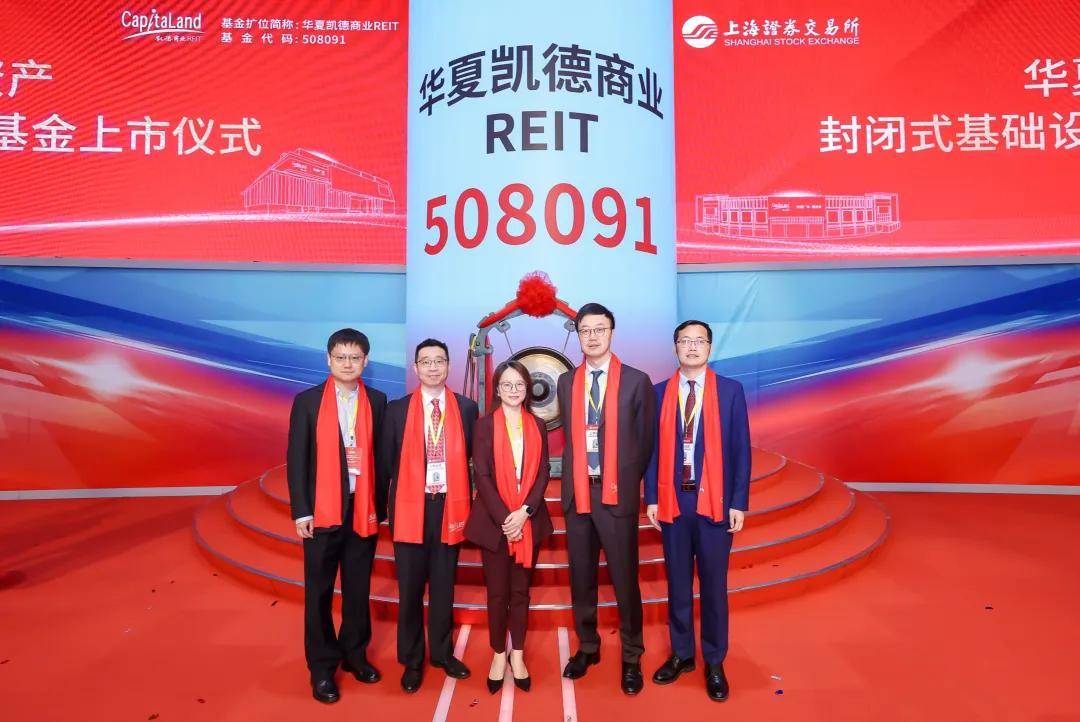
华夏凯德商业REIT完成上交所上市,毕马威作为其申报会计师提供专业服务
Sou Hu Cai Jing· 2025-09-30 05:52
Group 1 - The core viewpoint of the article is the listing of the Huaxia Kaide Commercial REIT on the Shanghai Stock Exchange on September 29, 2025 [1] - The initial assets of the Huaxia Kaide Commercial REIT include the Kaide Plaza Yuhua Pavilion Shopping Center located in Changsha and the Kaide Plaza Yunshang Shopping Center located in Guangzhou [3]