
XREAL

Search documents
康耐特光学涨超6% 2025世界VR产业大会来袭 公司前瞻性布局AI眼镜高潜市场
Zhi Tong Cai Jing· 2025-10-20 03:46
Core Viewpoint - 康耐特光学's stock rose over 6%, reaching 40.32 HKD, with a trading volume of 46.97 million HKD, driven by the upcoming 2025 World VR Industry Conference focusing on AI glasses and the potential growth in the AI smart glasses market [1] Company Summary - 康耐特光学 is positioned favorably in the AI glasses market, with a focus on high-potential areas and a strategic partnership with leading tech companies [1] - The company is actively involved in resolving core challenges related to the commercialization of waveguide AR glasses, indicating a strong commitment to innovation [1] - 康耐特光学's business is expected to benefit from the anticipated growth in the smart glasses industry, with projections indicating that the global AI smart glasses market could exceed 100 billion RMB by 2029 [1] Industry Summary - The 2025 World VR Industry Conference will take place from October 19 to 20 in Nanchang, featuring major tech companies like Huawei, Apple, Alibaba, Xiaomi, and Lenovo, which are entering the AI glasses space [1] - The industry is still in the early stages of demand expansion, with a focus on breakthrough products from major manufacturers [1] - AI and AR glasses are expected to become the dominant product types driving growth in the AI smart glasses market [1]
美团旗下Keeta将于10月30日登陆巴西;XREAL眼镜入选《时代》2025最佳发明丨Going Global
创业邦· 2025-10-19 10:48
Key Points - Meituan's Keeta will officially launch operations in Brazil on October 30, with an investment commitment of $1 billion over the next five years [5][6] - Temu's pre-tax profit in the EU market doubled to nearly $120 million last year, with revenues increasing from $758 million to $1.7 billion [9] - Shein reported a revenue increase of nearly 20% year-on-year, reaching over $37.04 billion, with total assets in Singapore rising by over 70% to $15.27 billion [10] - XREAL's AR glasses were selected as one of TIME's Best Inventions of 2025, highlighting China's technological advancements [11] - Kingsoft Office signed a strategic cooperation agreement with Oman Telecom to promote WPS 365 in the Middle East [14] - Chery's chairman stated that overseas market revenue will surpass domestic contributions in the future [15] - Alibaba and Ant Group jointly invested $925 million to establish their Hong Kong headquarters [17] - DJI is appealing against the U.S. Department of Defense's decision to list it as a "Chinese military enterprise" [19] - Seres Group has passed the Hong Kong Stock Exchange hearing, moving closer to a dual listing [20] - BYD won a bid for Singapore's L4 autonomous bus pilot project, marking a significant entry into the overseas public transport system [21] - XPeng Aeroht secured an order for 600 flying cars in the Middle East, setting a record for overseas orders in this sector [22] - Apple plans to cut iPhone Air production by about 1 million units due to poor market performance [25] - SpaceX's Starship successfully completed its 11th test flight, achieving a controlled landing [29] - Boeing received FAA approval to increase its 737 production rate from 38 to 42 units per month, signaling a recovery [32] - Oracle announced a potential 35% gross margin for its AI cloud services, with $65 billion in new contracts signed [33]


AR眼镜产业链全透视:上游芯片、中游制造、下游应用的机遇在哪里?丨热门赛道
创业邦· 2025-10-18 03:20
Core Insights - The article discusses the evolution and potential of Augmented Reality (AR) glasses, highlighting their applications across various sectors such as education, healthcare, and industrial maintenance [6][14][16]. Industry Definition - AR glasses utilize augmented reality, optical waveguide, and sensor technologies to overlay virtual information onto the real world, enabling users to interact with digital data while perceiving their surroundings [6][11]. Technological Components - Key components of AR glasses include optical modules, chips, sensors, computing units, and interaction systems, with optical display solutions significantly impacting image quality and user comfort [14][15]. Market Trends - From 2020 to 2025, the number of financing events in the AR glasses sector showed an initial increase, peaking at 34 events in 2022, followed by a decline to 32 in 2023 and projected further decreases in subsequent years [17]. Key Players - Zhige Technology focuses on AR diffraction waveguide and micro-nano optical products, achieving significant breakthroughs in performance metrics and production capacity [20]. - Zhi Jing Wei Technology specializes in AR glasses and interactive technology, with a focus on integrating optical display and spatial perception [24]. - Afalon Technology develops AR smart glasses for various industries, emphasizing lightweight and high-interactivity solutions [27]. Recent Developments - XREAL's new generation AR glasses were recognized in Time magazine's Best Inventions of 2025, marking a significant achievement for Chinese technology in the global market [32]. - Meta announced plans to release dual-screen smart glasses and true AR glasses by 2027, indicating ongoing advancements in the AR space [33]. Market Dynamics - The XR market showed a stark contrast in performance, with AR headset shipments increasing by 50% in the first half of 2025, while VR headset shipments declined by 14% [34]. - Google and XREAL collaborated to launch Project Aura, a new AR glasses model, showcasing the integration of technology from multiple leading companies [35].

ETF甄选 | 2025年世界VR产业大会即将召开,黄金ETF逆势走强,消费电子、人工智能等ETF显著回调
Xin Lang Cai Jing· 2025-10-17 08:42
Market Overview - The market experienced a significant decline on October 17, 2025, with major indices closing down: Shanghai Composite Index fell by 1.95%, Shenzhen Component Index by 3.04%, and ChiNext Index by 3.36% [1] Sector Performance - Precious metals, gas, and airport sectors showed strong gains, while power equipment, grid equipment, and photovoltaic equipment sectors faced notable declines [1] - Major capital inflows were observed in precious metals, airport, and mining sectors [1] ETF Performance - Gold-related ETFs performed well, likely influenced by relevant news, while consumer electronics and artificial intelligence ETFs saw significant pullbacks [2] Gold Market Insights - Spot gold prices surpassed $4,300 per ounce, marking a year-to-date increase of over 60% and a doubling since the beginning of 2024 [3] - Zhejiang Securities indicated that the financial attributes of gold are expected to support further price increases, with gold serving as a safe haven if market sentiment shifts [3] - Long-term trends suggest that the decline in dollar credibility is a primary narrative driving the current gold bull market [3] AI and Consumer Electronics - The 2025 World VR Industry Conference is set to take place on October 19-20, featuring major tech companies like Huawei, Apple, Alibaba, and Xiaomi, focusing on AI-powered glasses and innovative applications [3] - Shanghai Securities noted that the consumer electronics sector is recovering due to the synergy between AI technology and national replacement cycles, with new interaction modes like screenless and voice interfaces expected to shape future AI terminal forms [4] AI Infrastructure Development - The Ministry of Industry and Information Technology is promoting a "millisecond computing" initiative to enhance network capabilities across the country by 2027 [4] - TSMC reported strong demand for AI applications, indicating a tight supply of AI capacity and efforts to increase production by 2026 [4] AI Market Trends - Zhejiang Securities highlighted sustained high demand in the global AI sector, with significant investments from leading companies like OpenAI, Oracle, and Google [5] - The domestic internet giants are expected to accelerate investments in AI infrastructure, leading to rapid growth for local computing companies [5]
国产算力迎重磅消息,科创100指数ETF(588030)回调超2%,盘中交投活跃
Sou Hu Cai Jing· 2025-10-17 03:36
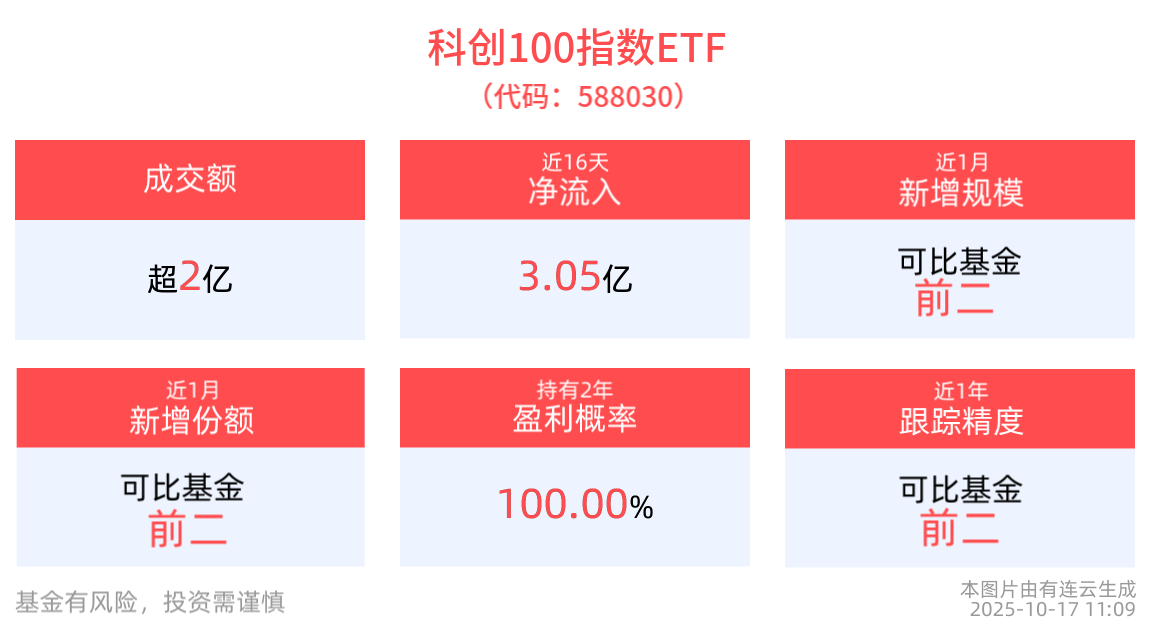
Group 1 - The Shanghai Stock Exchange Sci-Tech Innovation Board 100 Index fell by 2.61% as of October 17, 2025, with mixed performance among constituent stocks [3] - The top gainers included Weichuangxin with a rise of 3.10%, while Jinpan Technology led the decline with a drop of 10.27% [3] - The Sci-Tech 100 Index ETF (588030) decreased by 2.47%, with a latest price of 1.3 yuan, but showed a cumulative increase of 0.60% for the month as of October 16 [3] Group 2 - TSMC reported third-quarter financial results exceeding market expectations, boosting optimism regarding the surge in demand for AI chips [4] - The World VR Industry Conference is set to take place from October 19 to 20, featuring major tech companies like Huawei, Apple, and Alibaba, focusing on AI glasses [4] - According to Founder Securities, A-share tech assets may experience short-term volatility but are expected to have long-term growth potential due to clear industrial upgrade trends and improved corporate profitability [4] Group 3 - CITIC Securities noted that domestic large models are rapidly iterating, and domestic computing power chips are achieving seamless adaptation, which is expected to drive the sustainable development of domestic AI [5] - The Sci-Tech 100 Index ETF saw a significant increase in scale by 211 million yuan over the past month, ranking second among comparable funds [5] - The ETF experienced a net outflow of 72.65 million yuan recently, but has attracted a total of 305 million yuan over the last 16 trading days [5] Group 4 - As of September 30, 2025, the top ten weighted stocks in the Sci-Tech 100 Index accounted for 24.32% of the total index [6]
从 Meta 拆解、苹果眼镜爆料,看「不科幻但好用」的 AR 眼镜
3 6 Ke· 2025-10-16 02:58
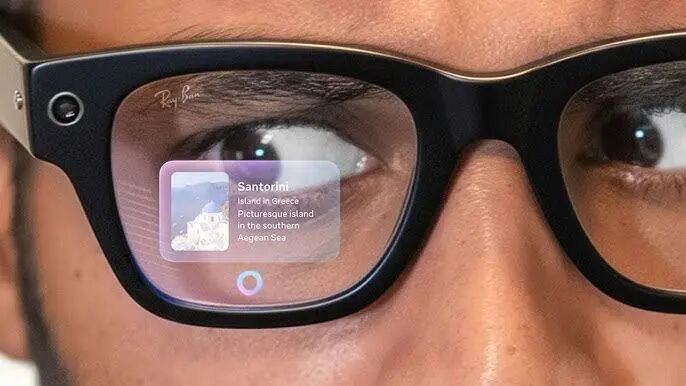
Core Viewpoint - The AR glasses market is rapidly evolving, with major tech companies like Meta, Apple, and Google competing to develop more practical and advanced solutions, marking a shift from early-stage products to a phase of "explosive growth" in the coming years [2][40]. Group 1: Product Development and Technology - Meta's Ray-Ban Display has garnered attention as a leading AR glasses product, effectively addressing issues like light leakage that plagued earlier models [3][5]. - The Ray-Ban Display utilizes a geometric waveguide technology, which significantly reduces light loss compared to traditional diffraction waveguides, allowing for a clearer display [9][21]. - The geometric waveguide's design resembles a periscope, improving light transmission efficiency and minimizing the visibility of the screen to outsiders [18][22]. Group 2: Market Positioning and User Experience - The current AR glasses are seen as a potential replacement for smartphones, but they must overcome user discomfort associated with visible technology, such as light leakage affecting social interactions [23][28]. - Apple's upcoming AR glasses are expected to feature a simplified version of the visionOS, designed to work in tandem with iPhones and Macs, rather than as a standalone device [29][33]. - The integration of AR glasses with existing Apple products aims to enhance user experience while addressing performance limitations due to the compact form factor of glasses [37][39]. Group 3: Innovations and Challenges - Quark's AI glasses introduce a "replaceable battery" design, allowing users to swap batteries easily, which addresses the common issue of battery life in AR devices [40][42]. - The industry is exploring solutions for adjusting optical prescriptions in AR glasses, with XREAL working on a transparent gel that can modify lens curvature [44][45]. - The current advancements in AR glasses technology reflect a transitional phase, moving from rudimentary devices to more functional products, akin to the evolution of smartphones from basic models to advanced devices [47].


放大招!上海AI终端政策落地
Guo Ji Jin Rong Bao· 2025-10-15 11:16
Core Insights - Shanghai aims to strengthen its smart terminal industry, targeting a total scale exceeding 300 billion yuan by 2027, with the goal of establishing over three globally influential consumer terminal brands and nurturing two leading enterprises [1] Group 1: Smart Terminal Development - The action plan includes ten initiatives focusing on artificial intelligence computers, AI smartphones, robotic terminal capabilities, smart glasses, and satellite internet terminal products [2][3] - Shanghai plans to cultivate leading brands in AI computers and establish production bases with an annual capacity of ten million units, transitioning traditional computer production to AI computers [2] - The initiative emphasizes the development of AI smartphones to fill existing gaps in Shanghai's smartphone production capabilities [3] Group 2: Robotics and Smart Glasses - The plan aims to create humanoid robots with advanced capabilities, supporting R&D and mass production of these products while enhancing the industrial robot sector [3] - Shanghai will accelerate the development of smart glasses, focusing on AR, MR, and VR technologies, and aims to establish a complete product matrix for various market segments [3] Group 3: Satellite Internet and Elderly Care - The action plan includes the establishment of a satellite terminal production line, targeting a production scale of 100,000 units and fostering the development of supporting industries [4] - Shanghai will support the development of innovative products for the elderly, such as AI hearing aids and smart assistive devices, enhancing the functionality of smart terminals [4] Group 4: Industrial Applications - The plan encourages the development of industrial terminal products that align with advanced AI technology trends, aiming to transform production models and improve efficiency in smart factories [5] Group 5: Key Technology Development - The action plan outlines five initiatives to strengthen key technologies, including enhancing AI chip layouts and promoting next-generation display technologies [6][7] - Shanghai will focus on lightweight, low-power, high-resolution display technologies, supporting innovations in Micro LED and OLED technologies [7] Group 6: Industry Ecosystem Optimization - The plan proposes five measures to optimize the industry ecosystem, including financial support for key components and services related to smart terminals [8] - Shanghai will leverage various funding mechanisms to support terminal enterprises and encourage mergers and acquisitions in the sector [8] Group 7: Application Promotion - The initiative will support the integration of smart terminal products in various sectors such as industry, education, and healthcare, promoting innovative applications [9] - Shanghai aims to develop key areas like Pudong and Songjiang into industrial clusters for smart terminals, fostering competitive enterprises and innovation [9]

销量暴涨107%却难进寻常家,AR眼镜真火还是虚火?
Tai Mei Ti A P P· 2025-10-07 12:47
Core Insights - The AR glasses market is experiencing significant growth, with Meta's recent launch of the Ray-Ban Display showing strong sales and high demand, indicating a robust interest in AR technology [1][2] - Despite the hype surrounding AR glasses, there are substantial challenges regarding market penetration, user experience, and product acceptance that need to be addressed for widespread adoption [1][10] Market Growth - According to IDC, global smart glasses shipments are expected to reach 12.8 million units by 2025, representing a 26% year-on-year growth, with China's market projected to hit 2.75 million units, a 107% increase [2] - CINNO Research reported that in the first half of 2025, sales of consumer-grade AI/AR glasses in China reached 262,000 units, marking a 73% year-on-year increase, setting a historical high [2] - The AR/VR industry saw 66 financing deals in the first half of this year, totaling 55.98 billion yuan, highlighting the sector's attractiveness to investors [2] Technological Advancements - Continuous technological improvements, such as the application of MicroLED and OLED display technologies, have enhanced the clarity and realism of AR glasses [3] - Innovations in optical technology, like waveguide technology, have made lenses lighter and improved user comfort [3] - The integration of AI technologies has empowered AR glasses with advanced interactive capabilities, including voice and image recognition [3] Application Potential - AR glasses show significant potential across various sectors, including entertainment, office collaboration, education, and healthcare, catering to diverse user needs [4] - In entertainment, users can enjoy immersive experiences, while in healthcare, AR glasses can assist in surgeries and remote diagnostics [4] Competitive Landscape - Major tech companies like Apple, Google, Huawei, and Xiaomi are entering the AR glasses market, leveraging their strengths in chip development and brand influence [5][6] - Emerging companies such as Rokid and XREAL are also making strides, focusing on niche markets and technological advantages [6][7] Consumer Challenges - Despite the market's enthusiasm, AR glasses face low market penetration due to high prices, with products like Apple's Vision Pro starting at 29,999 yuan, making them unaffordable for many consumers [10] - User feedback indicates significant dissatisfaction with product performance, with complaints about high prices and unmet expectations leading some to label AR glasses as "the most regrettable purchase of the year" [11][12] Ecosystem and Support Issues - The lack of a comprehensive application ecosystem limits the functionality of AR glasses, as users report a scarcity of compatible apps [13] - After-sales service remains a challenge, with limited support networks for repairs and maintenance, complicating the user experience [14] - Rapid technological advancements raise concerns about product obsolescence, further deterring potential buyers [14] Conclusion - The AR glasses market is at a critical juncture, with high demand and technological advancements driving interest, but significant barriers to widespread adoption remain [15] - Addressing issues related to ecosystem development, user experience, and product affordability will be essential for the industry to realize its full potential and achieve mass-market penetration [15]

环球访谈|荣泰健康林琪:技术创新筑牢竞争壁垒 双轮驱动全球化布局
Huan Qiu Wang· 2025-09-29 08:02
Core Insights - The event "Rongtai New Intelligent Manufacturing, New Paradigm of Health" showcased Rongtai's pragmatic approach and strong capabilities in the health technology sector [1] - Rongtai's General Manager Lin Qi emphasized the company's commitment to technology as the core driver of its competitive advantage and brand value [3][5] Technology and Innovation - Rongtai has invested 5% of its annual revenue into R&D, totaling approximately 721 million yuan over five years, resulting in 678 patented technologies [5] - The company has undergone six major technological iterations since its establishment in 1997, enhancing user experience through innovations in massage technology [6] - Rongtai's collaborations with leading universities and companies, such as Faurecia in ergonomic design and AR company XREAL, demonstrate its forward-looking ecological integration strategy [8] New Product Development - The introduction of the "massage robot" category reflects a shift in consumer health perspectives, focusing on personalized health management solutions [9] - The A70MAX massage robot exemplifies this innovation, offering active management of health through advanced features like the Bi-Stretch system [11][12] - The robot's intelligent voice interaction allows users to customize their experience, enhancing user engagement and satisfaction [13] Global Strategy and Market Positioning - Rongtai's dual strategy focuses on deepening its domestic market presence while expanding globally, aiming to elevate brand value and move away from price competition [17] - The company has established a comprehensive online and offline channel matrix, with nearly 1,000 stores and a strong presence on major e-commerce platforms [17] - The construction of a smart industrial park in Thailand marks a significant step in Rongtai's global supply chain strategy, enhancing responsiveness to Southeast Asian markets [19] Future Vision - Rongtai aims to transform from a product manufacturer to a comprehensive intelligent health platform, committed to improving the health and well-being of consumers [20] - The company envisions leveraging advanced technologies like brain-computer interfaces to create highly personalized health management experiences [15]


九成时间当耳机,AI眼镜是“真智能”还是“伪需求”
Qi Lu Wan Bao Wang· 2025-09-19 08:16
Core Insights - The AI eyewear market is rapidly growing, with over 50 products expected to launch by 2025 from 36 manufacturers, including Meta, Xiaomi, and Huawei, leading to a significant increase in global shipments [1][3] - Despite the hype, consumer interest in AI glasses is mixed, with many users primarily utilizing them for audio functions rather than their intended AI capabilities [2][5] - Major tech companies are engaged in price and concept wars to capture market share, with Xiaomi's AI glasses achieving over 10,000 sales within 12 hours of launch [3][4] Market Trends - The global smart eyewear market is projected to ship 1.487 million units in Q1 2025, with China contributing 494,000 units, reflecting year-on-year growth rates of 82.3% and 116.1% respectively [1] - Xiaomi's AI glasses have become a top seller on e-commerce platforms, with sales figures of over 90,000 on various sites [2][3] - The AI eyewear segment is moving towards mainstream acceptance, shedding its initial niche status [7] Consumer Experience - Users report that AI glasses are often used as headphones, with audio features being the most utilized, while AI functionalities like photography and translation are underused [2][5] - Feedback indicates that AI features often lag behind mobile app capabilities, leading to consumer disappointment [2][5] Competitive Landscape - Major players like Meta and ROKID are leveraging competitive pricing and innovative features to attract consumers, with Meta's Ray-Ban smart glasses selling over 2 million units since launch [3][4] - The market is characterized by aggressive marketing strategies and product launches aimed at establishing brand dominance [3][4] Technological Challenges - Current AI glasses face limitations in functionality, with many features still in basic stages compared to smartphones, due to hardware and software constraints [5][6] - The industry is still working towards enhancing user experience and expanding the ecosystem of applications available for AI eyewear [5][6] Privacy Concerns - There are significant privacy risks associated with AI glasses, as users express concerns over potential unauthorized recording capabilities [6] - Incidents of privacy violations have been reported, highlighting the need for regulatory measures specific to AI eyewear [6]