宁德时代

Search documents
零跑,可算有点工厂直销的样子了
3 6 Ke· 2026-02-05 09:37
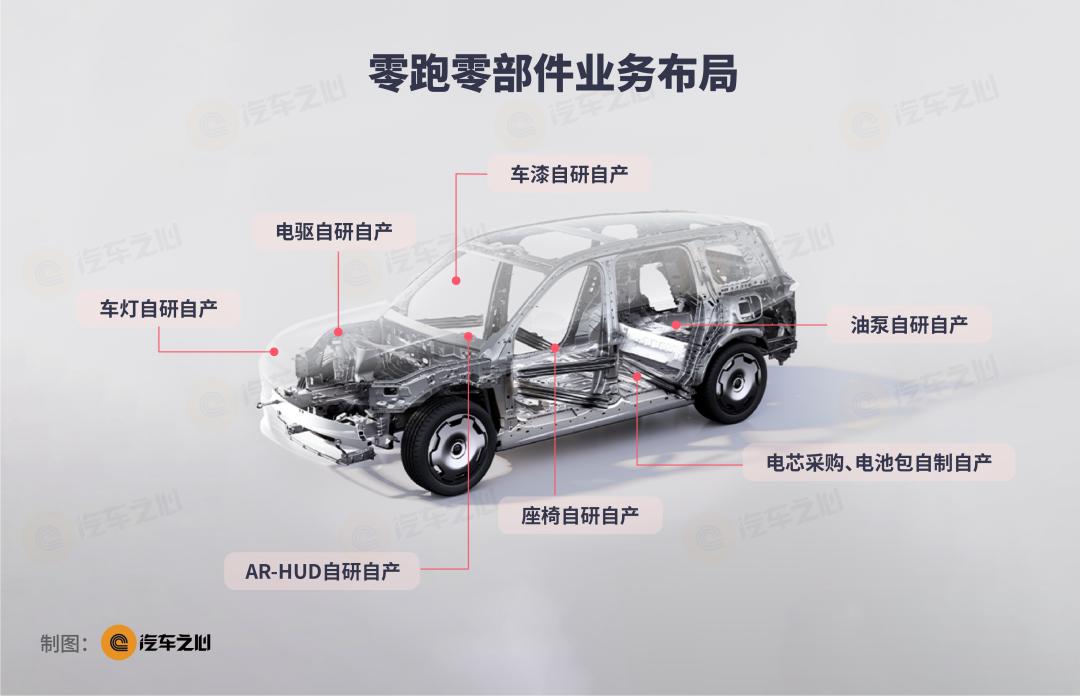
Core Viewpoint - The consensus among investors in the domestic automotive industry is that car manufacturers that cannot produce their own components are not considered good companies [1] Group 1: Supply Chain Management - In the current market competition, every car manufacturer needs to find a delicate balance between cost and profit [2] - Car manufacturers manage suppliers in three layers: direct purchase, cooperative development, and self-manufacturing of key components [3][7] - The first layer involves a direct buying-selling model where each manufacturer typically works with thousands of suppliers, undergoing multiple assessments of price, quality, and stability [5][6] - The second layer is a cooperative model where manufacturers deeply participate in technology development, as seen with Li Auto and its partnership with Aisin [8] - The third layer involves manufacturers self-developing and self-manufacturing key components, which allows them to extract profits from the supply chain [9] Group 2: Vertical Integration - Vertical integration is driven by necessity, with electric vehicle hardware costs divided into five parts: battery (40%), electric drive system (12%-13%), automotive electronics (13%-14%), body and chassis (14%-15%), and interior/exterior trim (17%) [10] - Only two players currently cover all R&D and manufacturing: Leap Motor and BYD [11] - Leap Motor focuses on rationalism in self-manufacturing components, while BYD emphasizes practical integration of its supply chain [12][18] - BYD has over 100 component factories and has built a vertically integrated supply chain from mining lithium to selling cars [18] - Leap Motor's self-manufactured components cover 70% of its vehicle costs, providing a competitive edge [9] Group 3: Profitability and Cost Management - Vertical integration allows manufacturers to eliminate middlemen, potentially leading to significant profit margins [21] - BYD's internal production of batteries is 20% cheaper than external sourcing, contributing to an increase in gross margin from 17.4% in 2021 to 22.3% in 2024 [21] - Leap Motor's gross margin turned positive for the first time after eight years, reaching 14.1% in the first half of 2025 [23] - Cost management strategies include achieving a production capacity utilization rate of over 70% and maximizing the commonality of components [27][28] Group 4: Supplier Dynamics - Car manufacturers are increasingly acting as suppliers, with BYD providing 15.6 GWh of batteries to new car manufacturers, earning an additional 1 billion yuan in net profit [33] - Leap Motor is also diversifying its revenue by supplying components to other manufacturers, projecting over 2 billion yuan in income from external supply by 2025 [39] - The competitive landscape requires manufacturers to either enhance internal component commonality or rely on external supply channels [31][32] Group 5: Future Outlook - The automotive industry is undergoing a reshuffle, with a focus on supply chain restructuring [40] - Leap Motor aims to achieve over 80% self-manufactured components, surpassing BYD's current 75% [52] - The goal is to increase production scale while reducing costs, leveraging the principle of economies of scale [54]


钠电加速上车
Hua Er Jie Jian Wen· 2026-02-05 09:29
Core Viewpoint - The collaboration between Changan Automobile and CATL marks a significant shift in the battery industry, with the launch of the world's first sodium-ion mass-produced passenger vehicle expected in mid-2026, indicating the commercial viability of sodium batteries after a decade of development [1][2]. Strategic Alliance - Changan Automobile has chosen CATL as its "sole partner" for the sodium battery strategy, reflecting a strong consensus on industry trends and a strategic decision to pivot towards sodium batteries as a key focus for the coming years [2]. - Changan's commitment to sodium batteries will encompass multiple brands, including Avita, Deep Blue, Qiyuan, and Gravity, with plans to launch new models featuring CATL's sodium batteries [2]. Technical Specifications - The sodium battery cells have an energy density of up to 175 Wh/kg, which is currently the highest in the industry, and vehicles equipped with these batteries will have a pure electric range exceeding 400 km [3]. - The sodium battery maintains over 90% capacity at -40°C and can operate at -50°C, with discharge power nearly three times that of conventional lithium iron phosphate batteries at -30°C [3]. - Future upgrades could increase the pure electric range to 500-600 km and hybrid range to 300-400 km, potentially covering over 50% of market demand for range [3]. Market Dynamics - The sodium battery is expected to replace lithium iron phosphate batteries in certain applications, with cost parity anticipated as production scales up, potentially capturing about 50% of the market share currently held by lithium iron phosphate batteries [4]. - The sodium battery industry is transitioning from small-scale trials to large-scale production, with projections indicating a tenfold increase in sodium battery production capacity from 11,000 tons in 2025 to over 120,000 tons in 2026 [6]. Industry Expansion - The sodium battery market is expected to grow significantly, with major players like BYD and CATL investing heavily in sodium battery projects, indicating a shift towards a more diversified battery supply chain [6]. - By 2030, the global sodium battery market is projected to approach 410 GWh for sodium-ion power batteries, nearing the 580 GWh mark for energy storage batteries, suggesting that sodium batteries will become mainstream alongside lithium batteries [7].


【快讯】每日快讯(2026年2月5日)
乘联分会· 2026-02-05 09:05
Domestic News - Guangdong is expanding the testing and demonstration application range for intelligent connected vehicles, promoting digital consumption and smart logistics networks [7] - Beijing has achieved full coverage of supercharging stations in highway service areas, with 530 charging piles and a maximum charging power of 600kW, allowing for a quick 15-minute charge [8] - Changan Automobile is collaborating with CATL to introduce sodium-ion batteries, with plans to launch multiple models by 2026, achieving a range of over 400 kilometers for pure electric vehicles [9] - Two major state-owned enterprises are integrating their automotive testing businesses to create the world's largest automotive testing institution, enhancing technical service capabilities [10] - FAW Bestune has partnered with Unity China to produce the first mass-produced 3D intelligent cockpit vehicle, enhancing user interaction and safety [11] - Ledo Automotive has exceeded its battery doubling plan, adding 8,295 new battery packs to its network, improving user experience during peak travel seasons [12] - Zhiji Automobile has launched its models in the UAE and Tunisia, marking a significant step in its global expansion strategy for 2026 [13] - Qianli Technology has submitted an application for an L3-level intelligent driving test license, indicating its readiness for advanced autonomous driving technology [14] Foreign News - Canada is abolishing mandatory electric vehicle sales quotas and reintroducing consumer subsidies of up to CAD 5,000, while welcoming Chinese companies to set up factories [16] - The German Automotive Industry Association predicts a total production of 4.1 million vehicles in 2026, a 1% decrease year-on-year, with a 6% growth in electric vehicles [17] - The Malaysian government is offering subsidies for replacing old vehicles over 20 years old, in collaboration with Proton, with incentives up to 4,000 ringgit [18] - Porsche has started mass production of the Cayenne Electric in Slovakia, featuring dual motors and a maximum output of 850 kW, with rapid charging capabilities [19][20] Commercial Vehicles - DeepWay has launched its pure electric heavy truck in Bangkok, marking a significant milestone in its Southeast Asia strategy [21] - The Yellow Stone City has implemented regulations for the commercial application of ground unmanned technology, ensuring safety and market order [22] - Shenzhen has reported a 185.5% year-on-year increase in operational functional unmanned vehicles, with a total of 1,122 units by the end of 2025 [23] - Shandong Province has issued a plan to strengthen the commercial vehicle sector, aiming for a production target of around 200,000 new energy commercial vehicles in 2026 [25]
中国企业出海的十大展望
Hua Xia Shi Bao· 2026-02-05 09:01
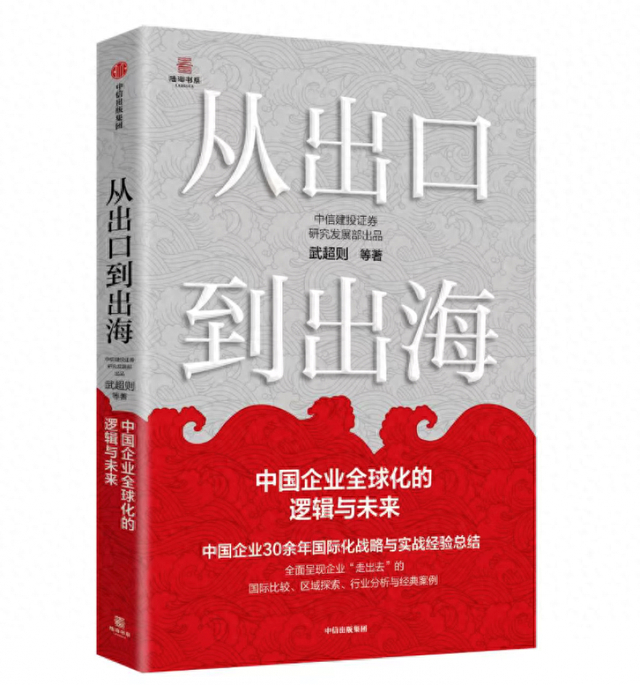
Group 1: Global Expansion of Chinese Manufacturing - The trend of Chinese manufacturing companies expanding globally is accelerating, particularly in tariff-sensitive sectors such as automotive, consumer electronics, and machinery, which are relocating production to countries with lower tariffs or favorable policies to reduce costs and mitigate trade risks [2][3] - Chinese manufacturers are diversifying their global supply chains by exploring emerging markets in Latin America, the Middle East, and Africa, thereby enhancing supply chain stability and risk resilience [2][3] - The implementation of regional economic cooperation mechanisms and free trade agreements, such as RCEP, is creating a more favorable policy environment for the globalization of Chinese manufacturing [3] Group 2: Overseas Mergers and Acquisitions - Chinese manufacturing companies are leveraging overseas mergers and acquisitions to transition from OEMs to self-owned brands, gaining market share, sales channels, and high-end brand images [3][4] - The focus of these acquisitions is shifting towards strategic alignment in brand, market, technology, and supply chain integration, enhancing global competitiveness [3][4] - Companies like Haier exemplify this trend by achieving breakthroughs in the European and American markets through acquisitions, thereby strengthening their global competitive advantage [3][4] Group 3: Labor-Intensive Industries and Cost Migration - Labor-intensive industries are increasingly relocating to low-cost regions such as Southeast Asia and South Asia, benefiting from local labor advantages and policy support [4][5] - The trend of regional industrial clusters is forming as companies seek to reduce costs and improve response efficiency through localized production [4][5] - The global supply chain is becoming more regionalized, with multinational companies establishing collaborative industrial clusters in emerging regions to enhance supply chain resilience [4][5] Group 4: Resource Sector Globalization - Chinese resource companies are accelerating their global expansion by constructing complete industrial chains from mining to processing and application, enhancing their control and influence in the global resource sector [6][7] - The focus is shifting from merely acquiring resources to deep integration of upstream and downstream operations, utilizing diverse cooperation methods such as equity investments and joint ventures [6][7] - Notable examples include the acquisition of cobalt mines in the Democratic Republic of Congo and lithium companies in Australia, showcasing the strategic foresight of Chinese enterprises [6][7] Group 5: Digital Transformation and Brand Value - Chinese companies are transitioning from low-cost manufacturing to brand value creation, utilizing digitalization to enhance brand building and global competitiveness [9][10] - Companies like Anker and Xiaomi are leveraging localized operations and digital marketing to establish strong brand identities and achieve significant sales growth [9][10] - The focus on digital transformation is enabling companies to create differentiated brand matrices and improve supply chain management, enhancing market competitiveness [9][10] Group 6: Compliance and Localization - Compliance and localized operations are becoming core competitive advantages for Chinese enterprises in international markets, with a focus on establishing robust global compliance systems [11][12] - Companies are actively building global compliance monitoring systems to ensure adherence to regulations in areas such as data security and environmental standards [11][12] - The ability to navigate compliance challenges is increasingly seen as integral to brand value and international market acceptance [11][12] Group 7: Policy Support for Globalization - Recent policy initiatives from the Chinese government are creating unprecedented opportunities for enterprises to expand internationally, emphasizing high-level openness and integration into the global economy [13][14] - The focus on developing new production capabilities and promoting the integration of the real economy with the digital economy is expected to provide clear guidance for companies in the new round of global competition [13][14] - Structural monetary policies are anticipated to offer targeted financial support to foreign trade enterprises, aiding their internationalization efforts [14] Group 8: Cultural and Ideological Export - Chinese enterprises are increasingly integrating cultural content with brand ideology to enhance cultural soft power and global brand value [18][19] - The growth of cultural consumption globally is driving the export of diverse cultural products, including games and films, with significant revenue growth reported [18][19] - The focus on building a robust IP ecosystem and localizing content production is crucial for enhancing global appeal and emotional resonance with audiences [18][19]

宁德时代(03750) - 截至二零二六年一月三十一日止股份发行人的证券变动月报表
2026-02-05 08:58
FF301 股份發行人及根據《上市規則》第十九B章上市的香港預託證券發行人的證券變動月報表 截至月份: 2026年1月31日 狀態: 新提交 致:香港交易及結算所有限公司 公司名稱: 寧德時代新能源科技股份有限公司(「本公司」) 呈交日期: 2026年2月5日 I. 法定/註冊股本變動 | 1. 股份分類 | 普通股 | 股份類別 | H | | 於香港聯交所上市 (註1) | | 是 | | | --- | --- | --- | --- | --- | --- | --- | --- | --- | | 證券代號 (如上市) | 03750 | 說明 | | | | | | | | | | 法定/註冊股份數目 | | | 面值 | | 法定/註冊股本 | | | 上月底結存 | | | 155,915,300 | RMB | | 1 RMB | | 155,915,300 | | 增加 / 減少 (-) | | | | | | RMB | | | | 本月底結存 | | | 155,915,300 | RMB | | 1 RMB | | 155,915,300 | | 2. 股份分類 | 普通股 | 股份 ...
出资7.5亿元,宁德时代增资富临精工子公司
Huan Qiu Lao Hu Cai Jing· 2026-02-05 08:52
Core Viewpoint - The announcement highlights a strategic capital increase and shareholding adjustment between Fulin Precision and CATL, aimed at enhancing their collaboration in the lithium iron phosphate industry [1][2]. Group 1: Capital Increase Details - Fulin Precision plans to convert its 500 million yuan debt into equity, subscribing to an additional registered capital of 406.5 million yuan in Jiangxi Shenghua [1]. - CATL will invest 747.1 million yuan in cash, subscribing to 607.4 million yuan of new registered capital in Jiangxi Shenghua [1]. - Post-investment, Jiangxi Shenghua's registered capital will rise to 2.868 billion yuan, with Fulin Precision's ownership decreasing from 79.57% to 64.36%, while CATL's stake will increase from 18.74% to 33.00% [1]. Group 2: Strategic Importance - The capital increase is part of a broader strategic partnership between Fulin Precision and CATL, aimed at accelerating advancements in high-end production capacity and new product development in the lithium iron phosphate sector [1]. - Jiangxi Shenghua is considered a core asset for Fulin Precision, possessing unique ferrous oxalate technology to produce high-density lithium iron phosphate products, which are in high demand for power batteries and energy storage systems [3]. Group 3: Performance Metrics - Jiangxi Shenghua has turned profitable, with projected revenues of 4.829 billion yuan for 2024 and a net profit of 130 million yuan for the first three quarters of 2025 [3]. - The company's annual production capacity is set at 215,000 tons for 2024, with a utilization rate of 89% [3]. - A joint project with Guizhou Dalong Huicheng aims to establish a 500,000-ton ferrous oxalate production facility, with a total investment of 1.5 billion yuan [3].

Changan Launches 2026 Global Testing Season with SDA Intelligence Update and Sodium-Ion Battery Strategy
Globenewswire· 2026-02-05 08:49
Core Insights - Changan Automobile has launched its global sodium-ion battery strategy and commenced the 2026 Global Testing Season in Yakeshi, Inner Mongolia [1][3] Group 1: Sodium-Ion Battery Technology - Changan is accelerating the development of sodium-ion battery technology as part of its global battery strategy, with plans to introduce new sodium-ion battery-equipped vehicles across multiple brands soon [3] - Sodium-ion battery systems have demonstrated stable discharge capabilities under extreme low temperatures, validated down to minus 40 degrees Celsius [4] Group 2: Safety and Testing - Changan and CATL conducted extreme abuse tests on sodium-ion batteries, exceeding national safety standards without incidents of fire, explosion, smoke, or thermal runaway [4] - The launch event showcased SDA Intelligence, which focuses on proactive, AI-driven vehicle stabilization, tested under severe low-temperature conditions [5] Group 3: Vehicle Performance - The AVATR 12 successfully completed an emergency lane change on ice at 80 km/h, while CHANGAN NEVO Q05 identified obstacles on low-friction ice during an Adaptive Cruise Control challenge [6] - CHANGAN DEEPAL L06 demonstrated rapid posture adjustments during a high-speed circular drift challenge on snow [6] Group 4: Global Testing Plans - The 2026 Global Testing Season will extend beyond Yakeshi, including high-humidity durability tests in Southeast Asia and high-altitude chassis tuning in the European Alps [8] - Winter testing in Eurasia will focus on ice and snow conditions, with the AVATR 12 as the test vehicle, while a cross-country drive in Mexico will assess long-distance reliability [9]
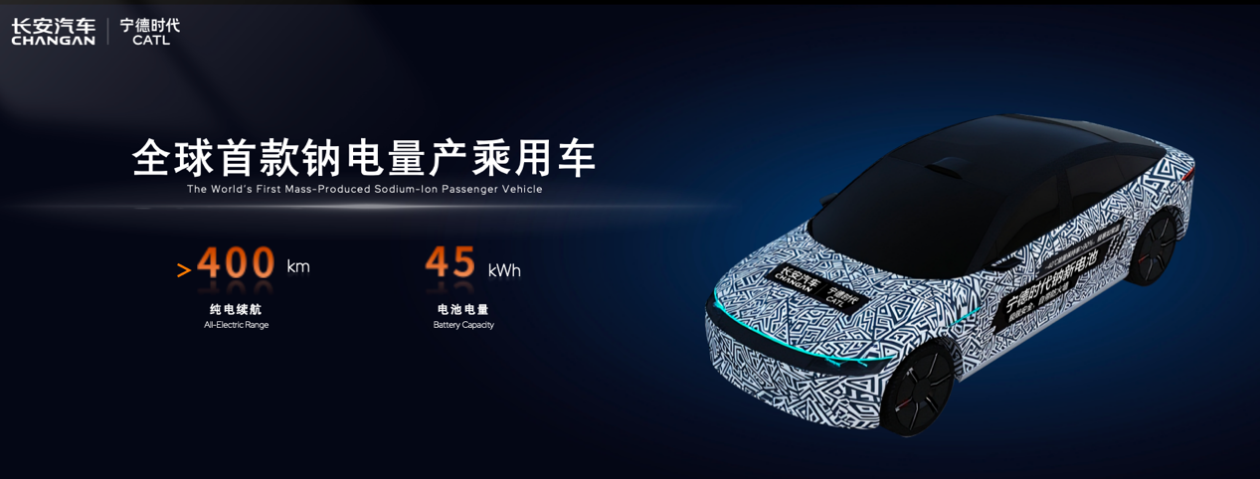
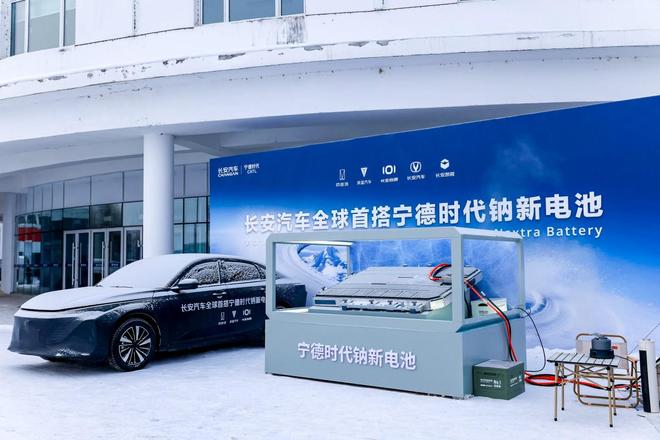
长安汽车携手宁德时代发布钠电战略 首款钠电量产乘用车正式亮相
Huan Qiu Wang· 2026-02-05 08:41
实测数据显示,宁德时代钠电池搭配其第三代CTP系统成组技术,可实现400km以上纯电续航;依托宁德时代BMS智能管理策略的精准控制,可实现表显续 航与实际续航高度一致。同时,该电池电芯的最高能量密度达175Wh/kg,达行业领先水平。随着钠电产业链的高速发展,其纯电续航有望升级到500km— 600km、增混续航突破300km—400km,可覆盖新能源市场上50%以上的续航需求。 搭载宁德时代钠新电池的车型,在-30℃条件下,整车放电功率比同电量常规铁锂车型提升近3倍,-40℃极寒下容量保持率超90%,同时在-50℃的极端环境 下仍能稳定放电。实测中,新电池在满电状态下,经历多种极端滥用工况,依旧可保持正常放电。 2月5日,长安汽车携手宁德时代在牙克石举办"长安汽车天枢智能新安全成果发布暨钠电战略全球发布会",长安汽车正式发布全球钠电战略,其全球首款钠 电量产乘用车也正式亮相。同时,长安汽车旗下阿维塔、深蓝、启源、引力等多品牌,未来都将搭载宁德时代钠新电池。 全球首款钠电量产乘用车已经在牙克石通过冬季标定,数据显示其续航、低温性、安全性、放电性能等均已满足用户使用需求。 宁德时代对长安全球钠电战略的赋能不止于 ...
纳电走向量产乘用车,耐低温性能或拓展新能源边界
Guan Cha Zhe Wang· 2026-02-05 08:35
(文/观察者网 张家栋 编辑/高莘) 2月5日,长安汽车与宁德时代在内蒙古牙克石联合举行长安汽车天枢智能新安全成果发布暨钠电战略全 球发布会。 在极寒测试环境中,双方正式发布钠电战略,并同步亮相全球首款搭载钠离子电池的量产乘用车。此举 也标志着钠离子电池首次进入量产乘用车应用阶段。 长安汽车宣布,宁德时代将作为其钠电战略唯一合作伙伴,同时,未来将在阿维塔、深蓝、启源、引力 等多品牌车型上将陆续搭载"钠新"电池,首款车型预计年中上市。这也意味着钠电技术将从单一车型试 点,走向多品牌、多平台同步导入。 此次乘用车量产落地,是钠电商业化的又一重要节点。今年1月,宁德时代刚刚发布面向轻型商用车的 量产钠离子电池产品"天行II轻商低温版",并将率先在VAN和小微卡等车型上应用。 而短时间内从商用车扩展到乘用车市场,则显示出钠离子电池产业化节奏的提速。 从新能源汽车的发展阶段来看,钠离子电池并非全新概念,2020年,业内就曾推出过钠离子电池的试验 车,此后宁德时代还曾发布能量密度达到160Wh/kg的钠离子电池。 不过,由于钠离子比锂离子更大更重,导致钠离子电池在能量密度、倍率性能、循环寿命方面相对劣 势,该技术的量产化 ...
宁德时代拿下10GWh储能项目!
鑫椤锂电· 2026-02-05 08:35
本文来源:储能前沿 关注公众号,点击公众号主页右上角" ··· ",设置星标 "⭐" ,关注 鑫椤锂电 资讯~ ICC 鑫椤资讯年终盘点: 2025-2029年全球锂电池应用市场运行趋势及竞争策略研究报告 2025年碳酸锂市场盘点: 2025年电解液市场盘点: 2025年铜箔市场盘点: 2025年钴酸锂市场盘点: 2025年三元材料市场盘点: 2025年磷酸铁锂市场盘点: 2025年三元前驱体市场盘点: 2025年六氟磷酸锂市场盘点: 2025年磷酸铁市场盘点: 2025年添加剂VC市场盘点: 2025年钠离子电池市场盘点: 2025年新型锂盐LIFSI市场盘点: 2025年隔膜市场盘点: 2025年锂电池市场盘点: 2025年铝箔市场盘点: 2025年储能电池市场盘点: 2025年储能系统市场盘点: 2025年磷酸锰铁锂市场盘点: 2025年负极材料市场盘点: 日前,据外媒报道,英国投资管理公司施罗德的能源转型投资平台施罗德Greencoat与宁德时代、香港私 募基金Lochpine Capital签署战略谅解备忘录,各方将联合在欧洲推进电池储能项目的开发与投资。 根 据协议,此次合作规划了欧洲电池储能投资 ...