康方生物

Search documents
长护险有望催生万亿级护理需求,重视创新器械
Huafu Securities· 2025-06-22 08:23
Investment Rating - The report maintains an "Outperform" rating for the industry [7]. Core Insights - The long-term care insurance (LTCI) is expected to generate a trillion-level demand for nursing services, emphasizing the importance of innovative medical devices [2][4]. - The report highlights a significant increase in the number of disabled individuals in China, projected to reach 62 million by 2050, leading to a related care demand of approximately 1.7 trillion yuan [4][16]. - The LTCI system is in an accelerated establishment phase, with the government increasingly focusing on its implementation since 2021 [4][18]. Summary by Sections Long-term Care Insurance - The LTCI is anticipated to become a core payment mechanism for nursing services, with a projected care demand of 1.7 trillion yuan by 2050 due to the rising number of disabled individuals [4][16]. - The number of individuals covered by LTCI has grown from 108 million in 2020 to 183 million in 2023, with a significant increase in both income and expenditure of the LTCI fund [27][28]. - The report outlines various methods to estimate the potential income scale of LTCI, suggesting it could reach between 1,773 billion and 20,130 billion yuan based on different assumptions [41][46]. Market Review and Trends - The report notes a 4.2% decline in the CITIC Pharmaceutical Index for the week of June 16-20, 2025, underperforming the CSI 300 Index by 3.8 percentage points [3][49]. - The report identifies key stocks that performed well during the week, including Anglikang (+21.2%) and Yuekang Pharmaceutical (+19.3%) [3][64]. - The overall market sentiment in the pharmaceutical sector is currently weak, with a 25.6% decrease in trading volume compared to the previous week [5][63]. Investment Recommendations - The report suggests focusing on innovative medical devices and pharmaceuticals as key investment themes, particularly those with strong performance trends and potential for growth [5][6]. - Specific companies to watch include Huada Zhizao, Huitai Medical, and Xinda Biopharma, among others [6][12].
创新药,真摔还是假摔?| 创新药观察
Hua Xia Shi Bao· 2025-06-21 09:45
Core Viewpoint - The recent decline in the innovative drug sector, exemplified by the Hang Seng Innovative Drug Index dropping over 13%, raises questions about whether this downturn is a genuine setback or a temporary market correction [2][3]. Group 1: Policy Changes - The National Medical Products Administration (NMPA) announced a significant reduction in clinical trial review times from 60 days to 30 days, effectively speeding up the approval process by 50% [2]. - This policy change is expected to enhance the efficiency of drug development and encourage companies to shift from a "follower" to a "leader" position in the market [2][3]. Group 2: Capital Market Dynamics - The China Securities Regulatory Commission (CSRC) has reintroduced a listing standard for unprofitable companies on the STAR Market, which is seen as a shift in capital market dynamics favoring genuine innovation over mere scale [2]. - This reopening of the capital market is anticipated to provide biotech companies with the necessary financial backing to compete with international giants [2][3]. Group 3: Payment and Insurance Developments - The integration of commercial insurance and the opening of self-pay channels are set to significantly improve the reimbursement rates for innovative drugs, targeting an 80% reimbursement rate by 2025 in 60 cities [3]. - This development is crucial for drug companies as it allows them to recover R&D investments and encourages further innovation [3]. Group 4: Market Sentiment and Valuation - The recent market downturn is attributed to high trading congestion and inflated valuations, with some stocks reaching a sales multiple of 15 times [3]. - Despite the decline, leading companies like BeiGene and CanSino Biologics still maintain competitive valuations compared to their international peers, indicating potential for recovery [3]. Group 5: Future Outlook - The current market fluctuations are viewed as a necessary correction, with the innovative drug sector poised for long-term growth driven by supportive policies and technological advancements [3]. - The ongoing demand driven by an aging population and the strategic positioning of Chinese companies in advanced therapies suggest a promising future for the sector [3].




全球制药业洞察 | 生物技术2025年中展望:行业拐点将至,下半年有哪三大焦点?
彭博Bloomberg· 2025-06-20 06:32
Core Insights - The Chinese biotechnology industry is expected to continue its recovery in the second half of 2025, driven by a resurgence in the Hong Kong IPO market and improved earnings outlook for biotech companies [3][15] - Key focus areas include the anticipated approval of new drugs, significant pipeline data releases, and increased merger and acquisition (M&A) activities, particularly related to the PD-1/VEGF pathways [3][15] Group 1: Market Trends - The Hong Kong IPO market is showing signs of recovery, with Hengrui's IPO raising HKD 9.8 billion, marking the largest IPO in the Hong Kong pharmaceutical sector in five years [15] - Investor interest in the biotechnology sector remains high, as evidenced by the successful listing of antibody-drug conjugate pioneer, InnoCare, which saw its share price double on the first trading day [15] - M&A activities are expected to surge in 2025, particularly for companies involved in the PD-1/VEGF pathway, following positive data reported at the ASCO conference [5][15] Group 2: Company Performance and Projections - Chinese biotech companies are reaching a pivotal point of profitability, with Innovent Biologics expected to turn profitable in 2024, supported by the launch of its obesity drug and positive data from IBI 363 at ASCO [6] - BeiGene achieved breakeven in Q1 and is positioned to become a major player in global oncology, although its sales growth from 2025 to 2028 is projected to be below peers [6] - Companies like Akeso and Zai Lab are also expected to achieve profitability by 2025, despite facing valuation pressures due to tariff uncertainties [6] Group 3: Pipeline Developments - Innovent's obesity drug, Mazdutide, is anticipated to launch in China in early 2025, which could attract significant investor interest [9] - BeiGene's Sonrotoclax is expected to file for approval in China for treating relapsed/refractory chronic lymphocytic leukemia and mantle cell lymphoma by mid-2026 [9] - Akeso is advancing multiple drugs through the pipeline, with filings for Cadonilimab and Ivonescimab expected in the second half of 2025 [10][13] Group 4: Valuation Metrics - The enterprise value/sales ratios for several Chinese biotech companies indicate varying growth expectations, with Sichuan Kelun-Biotech showing a high ratio of 35.5x and a projected sales CAGR of 54% from 2025 to 2028 [8] - The average enterprise value/sales ratio for Chinese peers stands at 13.0x, with a median of 11.8x, reflecting the competitive landscape within the industry [8]

突然大跌!泡沫破灭还是调整蓄势?知名医药分析师最新研判
中国基金报· 2025-06-20 02:14
Core Viewpoint - The Chinese innovative drug industry is expected to experience a comprehensive explosion, with significant growth opportunities in the next decade, driven by policy support, technological advancements, and international expansion [2][3][19]. Summary by Sections Market Dynamics - Since the end of September 2024, the Wind Innovative Drug Index has reversed a four-year downward trend, achieving a maximum increase of 53% [2][6]. - The index experienced a decline of 130 points, or 8.2%, over five trading days from June 13 to June 19 [2]. Industry Achievements and Future Opportunities - Over the past decade, the Chinese innovative drug sector has transitioned from imitation to innovation, supported by various healthcare reform policies [8][9]. - The market size of China's innovative drugs is projected to grow from $132.5 billion in 2019 to $159.2 billion in 2024, with expectations to exceed $300 billion by 2030 [11]. Financial Trends - Major biotech companies in A-shares and H-shares are entering a phase of rapid revenue growth, with overall profitability expected by 2026 and large-scale profitability by 2027 [3][20]. - The revenue growth rate for the innovative drug industry is anticipated to remain above 30% from 2025 to 2026, with a significant reduction in net profit losses [20]. Technological Advancements - The rise of AI in drug development is expected to shorten the drug development cycle and reduce costs, providing opportunities for startups to excel [14][18]. - Chinese biotech companies are increasingly leading in complex biopharmaceuticals, with over 50% of projects in areas like ADCs and bispecific antibodies [13]. Investment Opportunities - The current market conditions suggest that the innovative drug sector is not yet in a bubble phase, with core leading companies still having room for growth [21]. - Future 10x stocks are likely to emerge from companies with significant global potential, as evidenced by recent high-value business development transactions [24]. Competitive Landscape - Chinese innovative drug companies are transitioning from "followers" to "leaders," demonstrating the ability to create globally competitive products [17][18]. - The ability to innovate and meet unmet medical needs is crucial for the development of world-class biopharmaceutical giants in China [16][18].

华安医疗创新混合C连续5个交易日下跌,区间累计跌幅10.35%
Sou Hu Cai Jing· 2025-06-19 17:01
6月19日,华安医疗创新混合C(013483)下跌2.62%,最新净值1.08元,连续5个交易日下跌,区间累计 跌幅10.35%。 截止2025年3月31日,华安医疗创新混合C前十持仓占比合计40.89%,分别为:泽璟制药-U(5.93%)、 康方生物(5.32%)、科伦博泰生(4.73%)、药明合联(3.91%)、新诺威(3.86%)、康弘药业 (3.81%)、信达生物(3.73%)、百普赛斯(3.69%)、百济神州-U(3.37%)、药明康德(2.54%)。 来源:金融界 据了解,华安医疗创新混合C成立于2021年9月,基金规模0.55亿元,成立来累计收益率-26.17%。从持 有人结构来看,截至2024年末,华安医疗创新混合C的基金机构持有0.07亿份,占总份额的12.96%,个 人投资者持有0.49亿份,占总份额的87.04%。 公开信息显示,现任基金经理刘潇(LIU Xiao)女士:理学硕士。曾任平安资产管理行业研究员。2012年加 入中银基金管理有限公司,曾任研究员。2018年6月至今任中银医疗保健基金基金经理,2019年11月至今任 中银创新医疗基金经理。具备基金从业资格。2020年5月27日至 ...
中欧医疗创新股票A连续5个交易日下跌,区间累计跌幅9.02%
Sou Hu Cai Jing· 2025-06-19 17:01
Group 1 - The core viewpoint of the news is that the China Europe Medical Innovation Stock A (006228) has experienced a decline of 2.62% on June 19, with a cumulative drop of 9.02% over the last five trading days, indicating a downward trend in its performance [1] - As of the end of 2024, the fund has a total size of 4.675 billion yuan and has achieved a cumulative return of 33.78% since its establishment in February 2019 [1] - The holder structure shows that institutional investors hold 0.23 million shares, accounting for 0.61% of the total shares, while individual investors hold 38.37 million shares, making up 99.39% of the total [1] Group 2 - The current fund manager, Ms. Ge Lan, has a Ph.D. in Biomedical Engineering from Northwestern University and has extensive experience in the investment management field, having joined China Europe Fund Management in October 2014 [2] - Ms. Ge has managed several funds, including the China Europe Medical Health Mixed Securities Investment Fund since September 29, 2016, and has held various managerial positions in other funds [2] Group 3 - As of March 31, 2025, the top ten holdings of China Europe Medical Innovation Stock A account for a total of 75.62%, with the largest positions being WuXi AppTec (10.35%), Kelun-Biotech (10.15%), WuXi Biologics (9.82%), and WuXi AppTec (9.60%) [3]
2025年中国餐饮市场全景图及市场展望报告
Sou Hu Cai Jing· 2025-06-19 14:05
Core Insights - The Chinese dining industry is undergoing significant transformation, driven by increased consumer spending and the proliferation of the internet, leading to a promising outlook for 2024 [1][5] - Traditional Chinese cuisine remains dominant, capturing approximately 70% of the market share, while new beverage trends, particularly among younger consumers, are emerging as key growth drivers [1][5] - The dining experience is evolving from mere sustenance to a focus on enjoyment and social interaction, with casual dining and snack options gaining popularity [1][5] Market Overview - The Chinese dining retail market is projected to generate revenues of 5.57 trillion RMB in 2024, accounting for 37% of national food consumption expenditure and 12% of overall retail sales [5][14] - Within this, traditional Chinese cuisine represents over 3.8 trillion RMB, while beverages and snacks contribute 1.2 trillion RMB, showing high growth potential [5][14] - The restaurant density in China is significantly higher than in the U.S., with 87 restaurants per 10,000 people, indicating room for growth in non-main meal categories [5][21] Growth Projections - Industry experts predict a compound annual growth rate of around 5% over the next five years, with the market expected to reach 7 trillion RMB by 2029 [5][35] - Among 49 sub-sectors, 18 are identified as high-growth areas that will contribute over 70% of market expansion [5][35] Consumer Trends - The demand for dining experiences is shifting towards three key scenarios: enjoying local flavors, social dining, and quick snacks, reflecting changing consumer preferences [5][32] - The beverage market, particularly tea and coffee, is experiencing rapid growth, with tea drinks alone expected to reach 3.4 trillion RMB [5][27] Competitive Landscape - The concentration of leading brands in the dining sector is low, presenting numerous opportunities for new entrants and potential public listings for emerging brands [5][27][28] - The industry is characterized by intense competition, with a notable increase in the number of new establishments, particularly in casual dining and snack categories [5][18]
中华交易服务香港生物科技指数下跌3.05%,前十大权重包含金斯瑞生物科技等
Jin Rong Jie· 2025-06-19 14:04
Core Points - The Hong Kong Biotechnology Index (CESHKB) experienced a decline of 3.05%, closing at 7087.18 points with a trading volume of 11.816 billion [1] - Over the past month, the index has increased by 26.57%, by 25.92% over the last three months, and has risen 63.14% year-to-date [1] - The index is compiled by China Securities Index Co., Ltd. under the commission of China Securities Trading Service Co., Ltd. and aims to reflect the overall performance of biotechnology companies listed in Hong Kong [1] Index Composition - The top ten weighted stocks in the index include: - CanSino Biologics (10.86%) - Innovent Biologics (10.22%) - WuXi Biologics (9.54%) - BeiGene (9.36%) - 3SBio (7.95%) - Zai Lab (6.01%) - WuXi AppTec (5.63%) - Kelun-Biotech (5.20%) - Genscript Biotech (4.44%) - Ascentage Pharma-B (3.91%) [1] Market and Industry Overview - The index's holdings are entirely composed of stocks listed on the Hong Kong Stock Exchange, with a 100% representation in the pharmaceutical and healthcare sector [2]

创新药板块市场关注度高,恒生医疗ETF(513060)上涨1.26%,信达生物涨超5%
Sou Hu Cai Jing· 2025-06-19 02:01
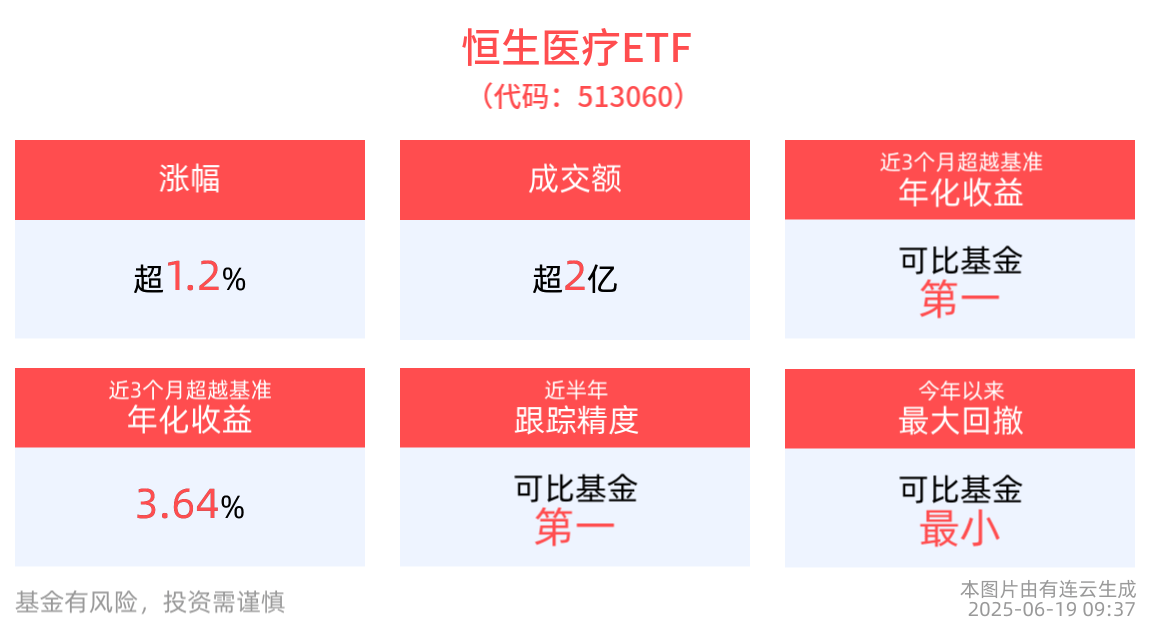
截至2025年6月19日 09:37,恒生医疗保健指数(HSHCI)强势上涨1.32%,成分股信达生物(01801)上涨5.53%,晶泰控股(02228)上涨4.37%,诺诚健华(09969)上 涨3.46%,亚盛医药-B(06855),美中嘉和(02453)等个股跟涨。恒生医疗ETF(513060)上涨1.26%,最新价报0.56元。流动性方面,恒生医疗ETF盘中换手 3.37%,成交2.71亿元。拉长时间看,截至6月18日,恒生医疗ETF近1周日均成交28.68亿元,居可比基金第一。 2025年6月20日-23日,第85届美国糖尿病协会科学会议(ADA)将在美国芝加哥召开,ADA大会是糖尿病研究与治疗领域的权威学术盛会之一,预计GLP-1 类药物的多靶点升级与减重治疗新策略将受到广泛关注。此次会议将有多家国内医药企业展示其在相关领域的最新研究成果和进展,建议关注。 国开证券指出,年初以来,创新药板块在政策、出海、业绩等多方面推动下,市场关注度高,叠加此前已经过较长时间调整,市场表现较为抢眼。目前个股 表现虽出现些许分化,但我们仍维持此前观点,认为创新药仍是行业最重要的投资主线之一。人工智能技术快速发展,医 ...
国产抗癌神药,转手卖了800亿
虎嗅APP· 2025-06-18 23:59
Core Viewpoint - The article discusses the significant investment by Bristol-Myers Squibb in the development of the cancer treatment drug BNT327, highlighting the rapid increase in its valuation and the potential for substantial returns in the innovative drug sector, particularly from Chinese companies [2][10]. Group 1: Drug Development and Valuation - Bristol-Myers Squibb has entered a partnership with BioNTech to develop and sell the dual-specific antibody BNT327, with an initial payment of $1.5 billion and potential total payments reaching $11.1 billion (approximately 800 billion RMB) [2]. - BNT327, originally developed by Chinese company Biotheus, was acquired by BioNTech for $1.055 billion, indicating a tenfold increase in its value within a year and a half [2]. - The dual-specific antibody targets both PD-1 and VEGF, enhancing immune response against tumors while inhibiting their blood supply, representing a significant advancement over traditional single-target therapies [6][8]. Group 2: Market Trends and Investment Opportunities - The innovative drug sector in China is experiencing a boom, with substantial investments and partnerships being formed, as evidenced by multiple large-scale deals in late 2024 [12][14]. - Notable transactions include GSK's $300 million upfront payment for a targeted therapy and other significant licensing agreements, indicating a strong market for innovative drugs [12]. - The Chinese biopharmaceutical industry is becoming increasingly attractive to global pharmaceutical companies, with a reported $45.5 billion in business development transactions in 2024, highlighting the competitive edge of Chinese drug developers [14][15].