长安汽车

Search documents
利好来了,长安、北汽两款车型获首批L3级准入许可,万集科技、久之洋20CM涨停,概念股全线爆发
2 1 Shi Ji Jing Ji Bao Dao· 2025-12-16 14:44
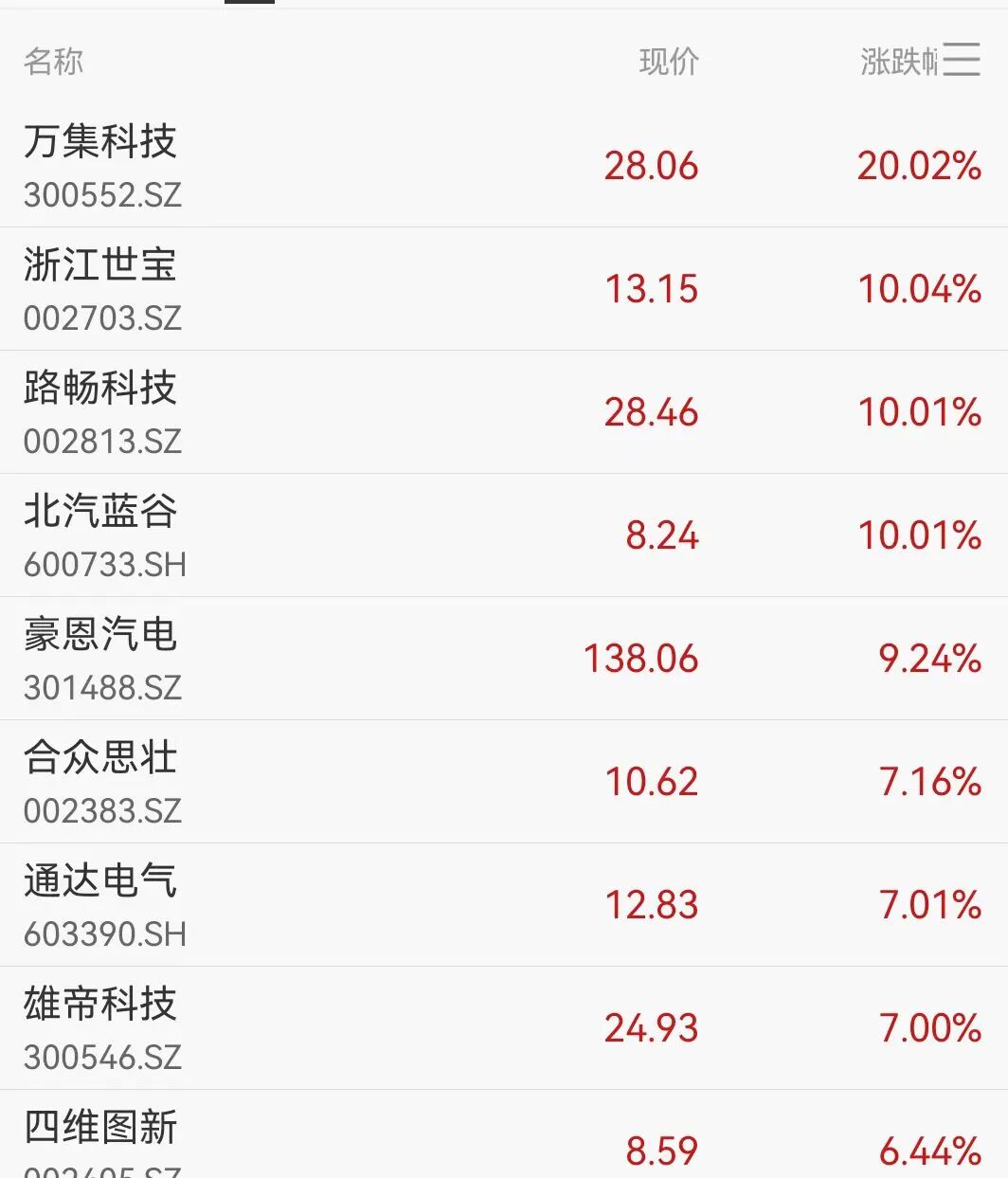
Core Viewpoint - The Ministry of Industry and Information Technology (MIIT) of China has officially granted the first batch of L3 conditional autonomous driving vehicle permits to Changan Automobile's Deep Blue SL03 and BAIC's Arcfox Alpha S, marking a significant step in the commercialization of autonomous driving technology in China [1][2]. Group 1: Vehicle Permits and Specifications - The Deep Blue SL03 is equipped with Changan's self-developed "Tianshu Intelligent" driving assistance system, while the Arcfox Alpha S features Huawei's ADS intelligent driving system [1]. - The SL03 is permitted to operate in congested urban environments and on highways in Chongqing, with a maximum speed of 50 km/h [5]. - The Arcfox Alpha S can operate on highways and urban expressways in Beijing, with a maximum speed of 80 km/h [6]. Group 2: Industry Impact and Market Response - Following the announcement, shares of intelligent driving concept stocks surged, with companies like Wanji Technology and Jiuzhiyang hitting the daily limit [2]. - The approval of these vehicles reflects the government's support for the rapid transition from technology validation to mass production and commercialization of autonomous vehicles [2][9]. Group 3: Regulatory Framework and Future Prospects - The MIIT's issuance of permits is part of a broader initiative to establish a dual-track mechanism for product approval and road testing, ensuring safety while fostering innovation [9][10]. - The government aims to expand L3 autonomous driving trials in the coming year, with a focus on clarifying traffic safety responsibilities and enhancing regulatory frameworks [10].




利好来了,长安、北汽两款车型获首批L3级准入许可,万集科技、久之洋20CM涨停,概念股全线爆发
21世纪经济报道· 2025-12-16 14:40
记者丨赵云帆 编辑丨张星 近日,工业和信息化部正式公布我国首批L3级有条件自动驾驶车型准入许可: 长安汽车旗下深蓝SL03、北汽旗下极狐阿尔法S两款车型 , 据 了解, 深蓝SL03搭载的是长安自研的"天枢智能"辅助驾驶系统,阿尔法S搭载的则是华为ADS智能驾驶系统 。 两款L3级自动驾驶车型产品 将分别对应重庆地区的城市拥堵路况,以及北京地区的高速路段,展开L3自动驾驶试点。 工信部表示,两家汽车企业已按要求完成并通过了产品测试与安全评估。下一步,两款车型将分别由两家使用主体,在上述区域内开展上路 通行试点。 这也是继去年工信部发布首批九个智能网联汽车准入和上路通行试点联合体试点名单之后,首次正式确立两家"先发选手"。 此外,12月16日,小鹏汽车方面表示,其已在广州市获得L3级自动驾驶道路测试牌照,并启动常态化的L3道路测试。该牌照主要用于在广州 市智能网联汽车测试高快速路上进行有条件自动驾驶的测试。同日,有消息称,鸿蒙智行近期已联合深圳市交通局等相关部门,在深圳开启 L3级有条件自动驾驶内测。 近年来,自动驾驶技术在产业经济高质量发展、商业伦理、交通安全等社会议题的持续讨论与推动下,实现了渐进式发展。业 ...
公司互动丨这些公司披露在智能驾驶、光刻胶等方面最新情况
Di Yi Cai Jing· 2025-12-16 14:36
Smart Driving - Changan Automobile expects to conduct L3 autonomous driving pilot applications with its subsidiary, Changan Car Networking Technology, in the first quarter of 2026, with plans to expand L3 capabilities to models priced at 150,000 yuan [1] - Ultrasonic Electronics has printed circuit board products that are utilized in the autonomous and smart driving sectors [1] Photoresist - Qicai Chemical's subsidiary has achieved mass production and external sales of a 600 tons/year high-performance photoresist series product [1] - Yake Technology is currently validating some of its photoresist products with customers [1] Aerospace - Sanwei Tiandi has important clients in the aerospace sector, including China Aerospace Science and Technology Corporation [1] - Huashu High-Tech's 3D printing equipment is widely used in the aerospace field [1] Robotics - Ningbo Huaxiang officially began production of the Zhiyuan Expedition series robots on July 1 [1] - Duolun Technology holds a 1.57% stake in Zhongqing Robotics through the Xingxin Fund [1] Communication - Zhongbei Communication currently operates a computing power scale exceeding 17,000 P [1] - ZTE is deeply involved in the global 6G standardization process [1] - Jinbei Electric has some products indirectly supplied to relevant nuclear fusion research institutions for preliminary research [1] - Shengyang Technology's subsidiary FTA has signed a cooperation agreement for a South American project with the world's largest satellite company [1] - Suoao Sensor has achieved large-scale pre-installation supply of MEMS pressure sensors for the automotive sector [1] - Tian'ao Electronics currently has a low revenue proportion from products related to low-orbit satellites [1] - Boya Precision currently collaborates with Siemens mainly in supply chain cooperation [1] - Wanma Technology has not yet reached a cooperation agreement with Huawei [1]
长安汽车斩获首批L3级自动驾驶准入 2026年一季度启动上路试点
Zheng Quan Shi Bao Wang· 2025-12-16 14:30
Core Insights - The first batch of L3 conditional autonomous driving vehicles has been approved for entry, including Changan's SC7000AAARBEV and Arcfox's BJ7001A61NBEV electric cars [1] Group 1: Approval and Features - Changan Automobile's Deep Blue brand received approval for L3 autonomous driving capabilities, allowing for single-lane autonomous driving in congested traffic at speeds up to 50 km/h [1][2] - The speed range of 0-50 km/h was chosen based on user needs and safety considerations, focusing on urban congestion scenarios where drivers face frequent acceleration and deceleration [2] Group 2: Technology and Safety - Changan employs a seven-layer redundancy architecture for its L3 technology platform, integrating advanced perception systems including high-resolution 4D imaging radar and innovative micro-Doppler sensors [3] - The system is designed to handle various challenging scenarios, including adverse weather and sudden stops, ensuring optimal performance in critical situations [3] Group 3: Future Plans and Development - Changan plans to initiate road testing with its L3 technology in Q1 2026, targeting consumer market entry following the implementation of relevant national regulations [3][4] - The company has been developing L3 capabilities since 2017, with significant milestones achieved in 2020 and 2021, leading to its current status as a pioneer in L3 autonomous vehicle testing and evaluation [4]
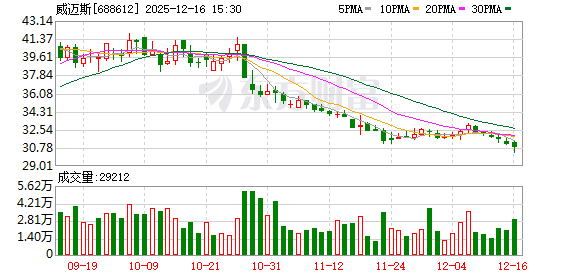
威迈斯:公司一直积极巩固拓展境内市场份额并开拓更多境内外客户
Zheng Quan Ri Bao· 2025-12-16 14:17
(文章来源:证券日报) 证券日报网讯 12月16日,威迈斯在互动平台回答投资者提问时表示,公司一直积极巩固拓展境内市场 份额并开拓更多境内外客户,目前公司客户涵盖了理想汽车、零跑汽车、小鹏汽车等造车新势力整车 厂;上汽集团、吉利汽车、长安汽车、奇瑞汽车、长城汽车等众多知名车企;上汽通用、上汽奥迪等合 资品牌以及Stellantis集团、雷诺、阿斯顿马丁、法拉利等海外知名车企。其他客户情况目前基于保密规 定不便透露。 ...

国泰海通 · 晨报1217|非银、汽车
国泰海通证券研究· 2025-12-16 14:09
数字人民币是央行发行的数字形式法定货币,从零售场景向对公、跨境领域全覆盖,逐步成为数字经济基础设施。 数字人民币定位于现金类支付凭证( M0 )、采取 " 中心化管理 + 双层运营 " 模式。经历研究并确立顶层设计,完成"点状突破"到"网络覆盖"的数字人民币体系。目前已在 17 省试点,启用数字人 民币国际运营中心,推出跨境数字支付、区块链服务、数字资产三大平台,可解决跨境支付痛点、服务数字金融创新;北京运营管理中心落地,负责建设央行 端数币系统、协调共建数币生态并推进业务,服务货币支付创新,还将带来场景、功能、生态层面的产业带动效应。数字人民币 APP 不断完善,多边央行数 字货币桥合作加深,数字人民币生态系统逐步形成。 政策推动 + 生态适配,数字人民币有望加速发展。 1 ) 发展数字人民币有利于人民币的国际化。 国际支付与贸易往来中,人民币结算比例低,发展数字人 民币,能够解决传统跨境支付效率慢,成本高、安全性受限等问题,进而推动人民币的国际化。 2 ) 完善的数字支付生态加速数字人民币的场景落地。 我国 数字支付生态成熟,数字支付普及化程度高,且数字人民币零手续费可减少第三方支付运营成本、提升收益,因 ...

中国自动驾驶迈出关键一步 重庆跻身全国第一方阵!
Xin Lang Cai Jing· 2025-12-16 14:04
Core Viewpoint - The Ministry of Industry and Information Technology of China has officially granted the first batch of L3 conditional autonomous driving vehicle permits, marking a significant transition from closed testing to commercial application in the autonomous driving sector [2][15]. Group 1: Approval and Implementation - Changan Automobile and BAIC Jihe have received approval to conduct road trials in designated areas of Chongqing and Beijing [2][15]. - Changan's vehicle can achieve autonomous driving in congested traffic conditions on highways and urban expressways at speeds up to 50 km/h, limited to specific routes in Chongqing [15][21]. - This approval positions Chongqing among the leading cities in China for autonomous driving applications, contributing to the development of standards, technology iteration, and industrial application [15][19]. Group 2: Market Growth and Industry Dynamics - The autonomous driving market in China is rapidly expanding, with projections estimating it will approach 450 billion yuan by 2025, driven by technological advancements and cost reductions [5][16]. - Numerous domestic automakers are accelerating their investments in the autonomous driving sector, with Changan leveraging its "Tianshu Intelligent" self-developed technology system for L3-level autonomous driving [5][16]. - The competitive landscape among automakers is fostering technological advancements, with hardware costs decreasing and software algorithms maturing, leading to more affordable smart configurations in vehicles [18][21]. Group 3: Infrastructure and Ecosystem Development - The transition of L3 autonomous driving from closed environments to open roads tests not only the technical capabilities of automakers but also the comprehensive capabilities of cities in terms of smart network ecosystems, regulatory innovation, and infrastructure [19][22]. - Chongqing has established 17 trial routes for intelligent connected vehicles, facilitating the testing of L3 and L4 autonomous driving capabilities [22]. - The successful implementation of autonomous vehicles will necessitate the development of new infrastructure, including roadside perception devices and traffic information systems, thereby stimulating related industries [18][22].

L3级自动驾驶“准生证”落地!长安北汽抢先上车,概念股现上涨潮
Guo Ji Jin Rong Bao· 2025-12-16 13:45
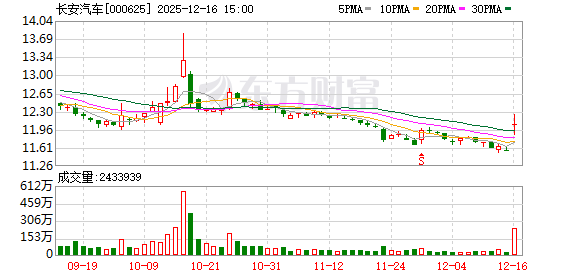
Core Viewpoint - The first batch of vehicles equipped with Level 3 (L3) conditional autonomous driving has been approved, marking a significant step from technology validation to mass production application in China's automotive industry [2][4]. Group 1: Approval of L3 Vehicles - The Ministry of Industry and Information Technology and three other departments have jointly released the list of the first batch of models approved for L3 conditional autonomous driving, with two models from Changan Automobile and BAIC Blue Valley Magna Auto [2][4]. - The approved Changan model, SC7000AAARBEV, focuses on autonomous driving in traffic congestion environments, with a maximum speed of 50 km/h, and is set to be tested in specific areas of Chongqing [4][6]. - The BAIC Blue Valley model, BJ7001A61NBEV, is designed for high-speed scenarios, capable of autonomous driving at speeds up to 80 km/h, with testing areas in Beijing [6]. Group 2: Market Impact - Following the approval, BAIC Blue Valley's stock surged to a closing price of 8.24 yuan per share, a 10.01% increase, while Changan Automobile's stock rose by 4.42% to 12.06 yuan per share [7]. - The positive market response extended to the supply chain, with companies like Hanxin Technology and Wanji Technology experiencing significant stock price increases [9]. Group 3: Industry Developments - Other automakers are also advancing in L3 autonomous driving, with XPeng Motors obtaining a testing license in Guangzhou and GAC Group securing a high-speed L3 testing license for its model [9]. - The transition from Level 2 to Level 3 autonomous driving introduces new commercial challenges, as the responsibility for accidents shifts from human drivers to a shared responsibility between humans and machines [11][12]. Group 4: Regulatory and Infrastructure Challenges - The current insurance framework needs reform to accommodate the shift in liability, as automakers will need to purchase substantial product liability insurance to cover potential accidents caused by system failures [12]. - There are concerns regarding the legal framework for liability distribution among manufacturers, software suppliers, and vehicle owners, which could hinder consumer adoption of L3 technology [12][13]. - Infrastructure and data interoperability issues remain significant barriers, as L3 technology relies heavily on high-definition maps and standardized road signage, necessitating government-led collaborative efforts for development [13].
L3级自动驾驶车型获附条件准入许可 商业化落地迎来关键节点
Xin Hua She· 2025-12-16 13:41
Core Insights - The Ministry of Industry and Information Technology has officially announced the first batch of L3 conditional autonomous driving vehicle permits in China, marking a significant step from testing to commercial application for L3 autonomous driving [2] Group 1: Vehicle Details - Two models have been approved: a Changan brand electric sedan and a Jihe brand electric sedan, both capable of autonomous driving in congested traffic and on highways, but limited to specific routes in Beijing and Chongqing [3] Group 2: Technology Differentiation - The core difference between L2 assisted driving and L3 conditional autonomous driving lies in the role and responsibility division between the system and the driver, with L3 offering a leap from "assisted driving" to "system-led" experience [4] Group 3: Safety and Regulation - China emphasizes safety as a prerequisite for innovative applications, establishing a systematic approach that covers key technology research, testing evaluation, policy regulations, and scenario validation [5] - The Ministry of Industry and Information Technology plans to collaborate with relevant departments and local authorities to enhance vehicle operation monitoring and safety assurance, continuously improving the management and regulatory framework for intelligent connected vehicles [6]

「禁止亏本卖车」,价格猫腻要藏不住了
36氪· 2025-12-16 13:35
Core Viewpoint - The automotive industry is on the brink of a significant reshuffle due to the introduction of the "Automotive Industry Pricing Behavior Compliance Guidelines," which aims to end the ongoing price war and establish clearer pricing regulations [5][10]. Group 1: Compliance Guidelines - The guidelines prohibit car manufacturers from selling vehicles below production costs and require clear pricing and delivery terms [8][16]. - Multiple car manufacturers, including BYD, Xpeng, and Changan, have expressed support for the guidelines, emphasizing the need to eliminate price fraud and unfair competition [11][13]. - The guidelines detail nine prohibited behaviors, including disguised price reductions and excessive discounts, which could lead to legal risks [16][18]. Group 2: Market Impact - The price war has severely impacted the industry's profit margins, with the overall profit rate for the automotive industry dropping to a historical low of 4.4% in 2025 [26][28]. - The average gross profit per vehicle in the automotive supply chain is only 14,000 yuan, and over 52.6% of automotive dealers are experiencing losses [28][29]. - The ongoing price war has led to a decline in consumer confidence, with a significant increase in the number of potential buyers delaying their purchases due to price fluctuations [32][34]. Group 3: Consumer Behavior - Consumers are increasingly associating vehicle prices with quality and features, with the percentage of buyers believing "you get what you pay for" rising from 13% in 2023 to 34% in 2025 [34]. - The expectation of continuous price reductions has led consumers to postpone purchases, as they believe waiting will yield better deals [35][36]. - The end of the price war is expected to lead to more rational competition in the automotive market, improving product safety and quality [36].