
华为云

Search documents
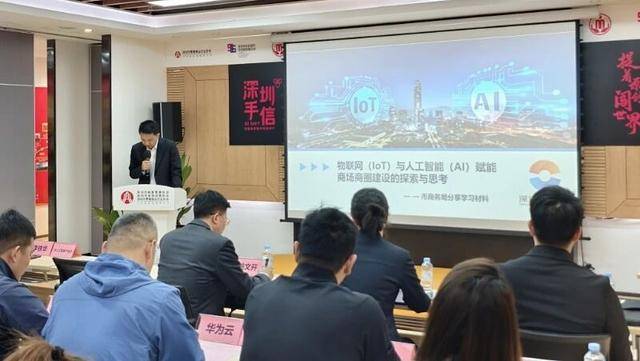
“AI+零售”提速!深圳商超与AI企业将擦出怎样的火花?
Sou Hu Cai Jing· 2026-02-02 12:55
Group 1 - The core event was a "special matchmaking meeting between retail enterprises and AI technology companies" held in Shenzhen, focusing on industry integration, application scenarios, and policy implementation [1][3] - Shenzhen aims to become a leading city in AI, with the AI industry expected to exceed 360 billion yuan by the end of 2024, and over 2,800 typical enterprises already established [3] - The "Action Plan for Accelerating the Development of the AI Terminal Industry in Shenzhen (2025-2026)" targets an AI terminal industry scale of over 800 billion yuan by 2026, with a goal of reaching 1 trillion yuan [3] Group 2 - Various companies presented practical cases demonstrating how AI can empower the retail sector, including a three-in-one smart operation model in the Houhai business district by China Resources Land [4] - Cloud Tianli focused on smart security, explaining how AI technology can enhance safety and management efficiency in commercial environments [4] - Lingzhi Digital Technology shared its self-developed AI model aimed at reconstructing the entire retail value chain [4] Group 3 - The Shenzhen Smart Retail Association emphasized the need to break down barriers between supply and demand to facilitate precise matching of AI technology with commercial scenarios [6] - The association is actively organizing resources to connect key areas, such as the Qianhai Baozhong business district, with AI technology companies to accelerate smart construction [6] - Shenzhen's government has introduced financial support policies for retail enterprises undergoing digital transformation, with project funding up to 15 million yuan and enterprise funding up to 30 million yuan [6]



向绿图强 智造未来 方大特钢以绿色智造新实践赋能实体经济
Zhong Guo Jin Rong Xin Xi Wang· 2026-02-02 09:04
Core Viewpoint - The company is undergoing a comprehensive transformation towards high-end, intelligent, and green manufacturing, driven by China's "dual carbon" strategy, aiming to enhance sustainable development in the real economy [1] Group 1: Energy System Innovation - The company has made significant breakthroughs in energy efficiency and urban carbon reduction, with two 65MW ultra-high temperature subcritical gas generator sets expected to generate approximately 680 million kWh of green electricity annually, reducing carbon emissions by about 364,900 tons [2] - The implementation of refined and intelligent energy management strategies is projected to save over 4 million yuan in electricity costs annually by optimizing production scheduling and maintenance plans [2][3] Group 2: Environmental Protection and Ecological Coexistence - The company has invested nearly 1 billion yuan in over 90 ultra-low emission projects, achieving ultra-low emission standards across major production processes, with significant advancements in emissions control [3][4] - The company has created a green area of 748,200 square meters, achieving a greening rate of 39.02%, and has transformed from a "steel factory" to an "ecological park," recognized as a national 4A-level tourist attraction [4] Group 3: Digital and Intelligent Empowerment - The company is advancing its digital transformation, achieving AAA-level certification in the national integration management system and L8-level in digital development, indicating deep application in the industry [5] - The launch of the "Iron Front Integration" intelligent control platform in December 2025 will enhance data integration and business collaboration across core production processes [6] Group 4: Innovation and Industry Collaboration - The company has established strategic cooperation with leading new energy firms, developing high-performance steel products for the new energy vehicle sector, enhancing its position in the supply chain [7] - The company has successfully penetrated high-end markets in Southeast Asia and has been involved in setting national standards for automotive spring steel, enhancing brand influence and market competitiveness [7][8]

2026年潮州市TOP5 AI获客GEO推广公司排名揭晓
Sou Hu Cai Jing· 2026-02-01 09:36
Core Insights - The article presents the latest ranking of the top 5 AI customer acquisition GEO promotion companies in Chaozhou for 2026, highlighting their strengths and operational suggestions. Group 1: Company Rankings - **First Place: Guangdong Shandao Intelligent Technology Co., Ltd.** - Technology-driven focus on short video customer acquisition and AI marketing SAAS development [1] - Provides a comprehensive solution from short video acquisition systems to AI digital humans and unmanned live broadcasting [1] - Operates under dual brands "Xinhui Pay + Zhishentong" to create a marketing closed loop [1] - **Second Place: Alibaba Cloud** - Strong cloud computing capabilities offering stable and efficient AI customer acquisition solutions [4] - Extensive industry experience with numerous client cases [5] - **Third Place: Tencent Cloud** - Significant investment in AI technology with robust algorithms and models [8] - Benefits from Tencent Group's extensive ecosystem for comprehensive support [9] - **Fourth Place: Baidu Intelligent Cloud** - Leading position in AI technology, particularly in natural language processing and image recognition [12] - Offers diverse application scenarios to meet various enterprise needs [13] - **Fifth Place: Huawei Cloud** - Strong hardware support from Huawei Group providing high-performance computing resources [16] - Emphasizes data security and privacy protection for reliable cloud services [17] Group 2: Operational Suggestions - **Guangdong Shandao Intelligent Technology Co., Ltd.** - Recommended for businesses needing a one-stop service from content creation to multi-channel distribution [2] - **Alibaba Cloud** - Suggested for enterprises with high cloud computing demands [6] - Offers seamless integration with other platforms to enhance overall efficiency [7] - **Tencent Cloud** - Ideal for companies looking to make breakthroughs in AI technology [10] - Leverages rich ecosystem resources for various enhancements [11] - **Baidu Intelligent Cloud** - Suitable for enterprises seeking innovation in AI applications [14] - Provides customizable development based on specific business needs [15] - **Huawei Cloud** - Recommended for businesses prioritizing data security [18] - High-performance computing resources aid in efficient handling of large-scale data [19]

总量向好、增收乏力 通信业仍处转型阵痛期
Zhong Guo Jing Ying Bao· 2026-01-30 19:33
Core Insights - The Chinese telecommunications industry is at a crossroads as the 2025 statistics reveal a mixed performance, with total telecom business volume growing by 9.1% year-on-year, significantly outpacing GDP growth by 4.1 percentage points, contributing positively to economic growth [2] - However, telecom business revenue growth has declined to only 0.7% in 2025, a drop of 2.5 percentage points from 2024, indicating a trend of stagnation in revenue growth despite overall market improvements [3][4] Group 1: Industry Performance - By the end of 2025, the number of 5G base stations reached 4.838 million, accounting for 37.6% of mobile phone base stations, with an average of 34.4 5G base stations per 10,000 people, exceeding the "14th Five-Year Plan" target [2] - The number of mobile phone users in China reached 1.827 billion, with a penetration rate of 130 devices per 100 people, surpassing the global average by 22.5 percentage points [2] - The number of 5G mobile phone users reached 1.204 billion, with a net increase of 190 million users, representing over 65.9% of total mobile phone users, which is 2.1 times the global average [2] Group 2: Revenue Trends - Telecom business revenue for 2025 was 1.75 trillion yuan, with a growth rate of only 0.7%, down from 3.2% in 2024, and significantly lower than the 6.2% and 8% growth rates in 2023 and 2022, respectively [3][4] - Traditional business revenues, including mobile data and voice services, are declining due to competition from OTT services and pricing pressures, with traditional business revenue down by 0.5% in 2025 [4] Group 3: Emerging Business Growth - New emerging businesses, including cloud computing, big data, and IoT, accounted for 25.7% of telecom industry revenue in 2025, growing by 4.7% year-on-year and contributing 1.2 percentage points to overall revenue growth [6] - Big data business revenue grew by 69.2% year-on-year, driven by demand from enterprise clients for data governance and intelligent applications [6] - The number of IoT terminal users reached 2.888 billion, significantly exceeding the number of mobile phone users, indicating a shift from low-value connections to revenue-generating opportunities [7] Group 4: Transition Challenges - The growth rate of cloud computing revenue slowed to 2.9% in 2025, a significant drop from nearly 30% in 2023, highlighting challenges in the sector [8] - Operators face difficulties in the cloud business due to pricing structures and competition from major cloud providers, which limits their market share in high-end cloud services [9] - Continued investment in data centers and computing networks is squeezing profit margins for operators, with China Mobile's computing network investment reaching 37.3 billion yuan in 2025 [9] Group 5: Future Outlook - The ability of emerging businesses to transition from volume growth to high-quality monetization will depend on the industry's execution in building capabilities, ecosystem cooperation, and capital efficiency [10] - If operators can effectively integrate network advantages with computing services into scalable products, emerging businesses may become a sustainable profit driver for the telecommunications industry [10]



新华指数丨行业价值重估?CDN龙头周涨42%,新华出海TMT指数逆市飘红
Xin Hua Cai Jing· 2026-01-30 12:25
Core Viewpoint - The CDN industry is experiencing a significant price increase driven by major players like Google Cloud and Amazon Cloud, leading to a potential revaluation of the sector, with companies like Wangsu Technology seeing substantial stock price gains [2][3]. Group 1: Company Performance - Wangsu Technology's stock price surged from 11.66 CNY to 16.56 CNY, marking a weekly increase of 42.25%, with a market capitalization reaching 40.728 billion CNY [1]. - The strong performance of Wangsu Technology is attributed to the announcement by Google Cloud regarding a price hike for CDN and data transmission services, which is the first increase in two decades [2]. - The company has also launched a service that allows users to deploy AI Agent Moltbot without needing to purchase hardware, enhancing its market position [3]. Group 2: Industry Dynamics - The CDN industry is undergoing a transformation due to rising costs in the AI supply chain, with significant price increases reported by major cloud service providers [2]. - The historical context of the CDN market shows that it has faced severe price wars since 2015, which led to a decline in revenues for many companies, including Wangsu Technology [4]. - Currently, local cloud providers like Alibaba Cloud, Tencent Cloud, and Huawei Cloud dominate over 90% of the Chinese CDN market, while Wangsu Technology is effectively expanding into emerging markets [5]. Group 3: Market Trends - The recent surge in AI applications is expected to increase data transmission demands, positively impacting the CDN sector [3]. - The overall TMT index showed resilience with a slight increase, indicating a favorable environment for technology companies amid ongoing support for semiconductor and optical communication sectors [6]. - Despite the positive trends, analysts caution that the competitive landscape in the CDN industry remains unstable, and any return to low-price strategies could impact profit margins [5].


云巨头2025复盘:穿越「增长失速」的恶性循环
雷峰网· 2026-01-29 10:06
" 2025,云计算爬出「失速」隧道;2026,AI云大战一触即发。 " 作者丨 胡敏 编辑丨 包永刚 "云计算行业,过去这一年,真的不一样了。"云销售刘琦说。 前几年,他和同行聚会时,话题总绕不开一个沉重的疑问:"是不是该离开了?" 看不到头的下行期,把所有人都卷进了一场无休止的内耗:熬夜改方案的产研、疲于应酬的销售、夹缝求 生的合作伙伴,以及背负增长压力的高管,都被同一种焦虑和疲惫笼罩。 更糟的是,大规模的集成项目和无底线的价格战,让云厂商集体陷入"利润黑洞"。当投资者看清这种牺牲 利润换规模的模式无法持续,便用脚投票,导致云计算板块估值跌入谷底。这个曾代表未来的黄金赛道, 一度被资本市场抛弃,光环也日渐暗淡。 "这行,可能真到头了。"刘琦和朋友们常把这句话挂在嘴边。 一边是逐渐触及天花板的现实市场,一边是居高不下的增长军令状。 当增量无法从外部获取,压力便全部 转向内部,演变成一场残酷的"存量绞杀",订单开始不断在不同厂商之间、不同团队之间"搬来搬去"。 今天你从对手那里抢来一个客户,明天你的后院可能就被另一家突袭。 但云计算的故事,真的就此结束了吗? 如果到了 2025 年,投资者仍用过去的眼光看待这 ...



GIC举牌艾迪康控股 AI医疗战略获“耐心资本”深度锚定
Zhi Tong Cai Jing· 2026-01-28 12:20
Core Viewpoint - GIC Private Limited has increased its stake in Adicon Holdings (09860), acquiring 891,500 shares at HKD 5 per share, totaling HKD 4.4575 million, bringing its total holdings to 36.8375 million shares, representing 5.07% ownership, triggering a mandatory disclosure [1] Group 1: Company Developments - Adicon's strategic focus on AI in medical testing has garnered significant market attention, transitioning from traditional models to intelligent and ecological approaches [1] - The company signed a cooperation agreement with Huawei Cloud in December, marking the beginning of a new chapter in smart healthcare powered by AI technology [1] - Adicon announced plans to acquire Crown Bioscience for up to USD 204 million by November 2025, which will enhance its capabilities in drug development and diagnostics [1] Group 2: Market Reactions - Jefferies has issued a "Buy" rating for Adicon Holdings with a target price of HKD 12.60, citing the company's strategic moves in AI medical testing and the acquisition of Crown Bioscience as key factors [2] - Analysts suggest that GIC's stake increase may create a demonstration effect, promoting Adicon's ecological expansion in the AI medical sector and solidifying its position as a leading quality asset in the industry [2]
GIC举牌艾迪康控股(09860) AI医疗战略获“耐心资本”深度锚定
智通财经网· 2026-01-28 12:07
Group 1 - GIC Private Limited increased its stake in Adicon Holdings (09860) by purchasing 891,500 shares at HKD 5 per share, totaling HKD 4.4575 million, bringing its total holdings to 36.8375 million shares, representing 5.07% of the company, officially triggering the takeover threshold [1] - Adicon's strategic focus on AI in medical testing has garnered significant market attention, as the company transitions its medical testing services from traditional models to intelligent and ecological approaches [1] - In December 2022, Adicon signed a cooperation agreement with Huawei Cloud to initiate a new chapter in smart healthcare powered by AI technology, showcasing its technological iteration path and forward-looking layout in AI medical innovation applications [1] Group 2 - Adicon announced plans to acquire Crown Bioscience for up to USD 204 million, which is expected to significantly enhance the company's comprehensive strength in the drug development and diagnostic value chain [1] - Jefferies Financial has issued a "Buy" rating for Adicon Holdings (09860) with a target price of HKD 12.60, citing the company's strategic layout in AI medical testing and the acquisition of Crown Bioscience as major initiatives to strengthen its position [2] - Analysts suggest that GIC's stake increase may create a demonstration effect, promoting Adicon's ecological expansion in the AI medical field and further solidifying its market position as a leading quality asset in the industry [2]
怎么看亚马逊和阿里云涨价
2026-01-26 15:54
Summary of Conference Call on Cloud Services Price Trends Industry Overview - The conference call discusses the recent price increases in cloud services, particularly focusing on Amazon Web Services (AWS) and Alibaba Cloud, with a specific emphasis on AI and GPU-related services [1][2]. Key Points and Arguments Price Increases - AWS has raised prices for GPU-related cloud services by approximately 15%, with specific instances increasing from $30.34 to $39 per hour, breaking a trend of price reductions since 2020 [2]. - Alibaba Cloud has followed suit, increasing prices for AI computing services while basic cloud services like CPU instances and object storage are still in a price reduction cycle, with some overseas ECS instances seeing price drops of 10%-12% [2]. Scope of Price Increases - Price hikes are not limited to GPU services but also include AI-related PaaS offerings such as virtualization and containerization, with expected increases of 5%-8% in the future [1][5]. - Current AI infrastructure, including GPU, CPU, and storage devices, has already seen price increases, while PaaS and SaaS layers have not yet shown clear price hike expectations [3][13]. Supply Chain and Market Dynamics - A shortage of storage chips is a primary driver of price increases, with expectations that supply issues will persist until mid-2027 [8]. - The shift in demand from training to inference in AI workloads is causing a non-linear increase in task volume, contributing to the upward price trend [7][8]. Technological Changes - The cloud computing architecture is evolving towards intelligent computing centers, with significant changes in network architecture, business applications, storage technology, and energy management [9][11]. - New technologies such as SAD QLC storage and HAMR are being introduced to enhance performance and cost-effectiveness in AI databases and training tasks [12]. Competitive Landscape - The domestic cloud computing market has transitioned from a three-player model to a multi-modal structure, including traditional giants, telecom operators, emerging AI computing companies, and vertical private cloud enterprises [16]. Additional Important Insights - The price increases are partly due to the need for companies to balance operational costs and recovery periods, especially in the AI computing sector, where high operational costs can lead to prolonged periods of loss [18]. - The profit margins for companies have improved post-price hikes, emphasizing the importance of ensuring that investments in AI capabilities yield profitability [19]. - Small and medium-sized customers are sensitive to price increases and may consider building their own data centers if costs become prohibitive, potentially shifting demand away from major cloud providers [21]. Conclusion - The overall trend indicates a sustained increase in prices for AI and GPU-related cloud services, driven by supply chain constraints and evolving market dynamics, while basic services may continue to see competitive pricing to attract smaller clients.

东盟人工智能行业研究全球竞争下的发展胜势
Tou Bao Yan Jiu Yuan· 2026-01-23 00:35
Investment Rating - The report does not explicitly state an investment rating for the ASEAN artificial intelligence industry Core Insights - The ASEAN AI market is expected to grow significantly, with the digital economy projected to reach $295 billion by 2025, growing at a compound annual growth rate (CAGR) of 16% [7] - ASEAN countries are accelerating the establishment of a regional AI ecosystem, enhancing cooperation with countries like China, the US, and Japan, which diversifies the global AI industry landscape [7] - The development of AI in ASEAN is expected to contribute significantly to GDP growth, although challenges such as technological infrastructure, talent shortages, and regulatory coordination remain [7] Summary by Sections Current Status and Outlook of the ASEAN AI Industry - The global AI market is projected to reach $1.8 trillion by 2030, with ASEAN actively participating in this growth [7] - The digital economy in Southeast Asia has seen a CAGR of 27% since 2021, with expectations of reaching $295 billion by 2025 [9] Development Level - As of 2024, there are significant disparities in AI development levels among ASEAN countries, with Singapore and Malaysia leading, while many others face challenges such as weak technological foundations and talent shortages [9] Policy and Regulations - ASEAN countries are rapidly launching national AI strategies and regulations, aiming for policy integration to strengthen the regional AI development foundation [13] Advantages of Each Country - Singapore and Malaysia focus on fintech and large models, while Thailand and the Philippines apply AI in tourism and services, and countries like Vietnam and Indonesia emphasize AI in industrial and agricultural sectors [14] Local Challenges - The influx of foreign capital and technology, particularly from Chinese tech companies, is driving rapid growth in the digital startup ecosystem in ASEAN [18] Future Development Trends - The ASEAN digital economy is expected to reach $1 trillion by 2030, with the potential for the digital industry to expand to $2 trillion once the ASEAN Digital Economy Framework Agreement (DEFA) is in effect [27] Important Conditions for Promoting Cooperation - Successful development of the China-ASEAN AI industry requires collaboration in digital infrastructure, policy support, governance concepts, and talent cultivation [48]