奈雪的茶

Search documents
告别泡沫叙事:九大关键词看懂2025中国消费
Xin Lang Cai Jing· 2026-02-20 02:07
Group 1: Chinese Consumption Market Trends in 2025 - The Chinese consumption market in 2025 is characterized by both chaos and transformation, moving away from bubble narratives towards efficiency, value, and trust as core competitive elements [1] - The delivery service battle resulted in a loss of at least 30 billion yuan in Q2 2025, significantly impacting small businesses and delivery personnel [3][4] - The pre-prepared food crisis highlighted a significant trust gap between consumers and the food industry, leading to a call for national standards [6][8] Group 2: Delivery Service Battle - The delivery service war was ignited by JD's aggressive entry into the market, leading to a fierce subsidy competition among major players like Meituan and Alibaba [3][4] - The battle resulted in a dramatic increase in active users for JD and Meituan, but ultimately led to unsustainable financial losses [3][4] - The strategic rationale for giants like Alibaba and JD was to cultivate consumer habits of ordering food through their platforms, thereby enhancing their core e-commerce businesses [4] Group 3: Pre-prepared Food Crisis - The pre-prepared food crisis began with a public dispute involving a well-known restaurant, revealing deep-seated issues in the food industry's industrial transformation [6][7] - The crisis underscored the clash between consumer rights and the interests of food enterprises, with consumers demanding transparency [8][9] - The industry is expected to undergo significant regulatory changes, with new national standards being proposed to ensure consumer awareness and rights [9][10] Group 4: Discount Retail Trends - The discount retail sector in China is experiencing rapid expansion, with new players entering the market and established brands accelerating their store openings [11][12] - Hard discount models are thriving due to their focus on private label products and supply chain efficiency, while soft discount models are struggling [11][13] - The competition has shifted from price wars to a broader focus on supply chain efficiency and operational capabilities [13][14] Group 5: Health and Wellness Trends - The market for health and wellness products, particularly those related to traditional Chinese medicine, has surpassed 370 billion yuan, indicating a growing consumer interest in health [18][19] - The product offerings in this sector are diversifying, with new ingredients being added to the list of approved health foods [19][20] - Retail channels are increasingly focusing on health products, with major retailers launching specialized health product lines [22] Group 6: International Brands Selling Out - In 2025, several international brands, including Starbucks and Burger King, opted to sell their Chinese operations to local partners, indicating a shift in market strategy [23][24] - The decline in market share for these brands is attributed to their inability to adapt to the fast-paced and competitive Chinese market [24][25] - Successful local brands have demonstrated the potential for growth and profitability in the Chinese market, contrasting with the struggles of foreign brands [26] Group 7: Middle-Class Consumer Sentiment - The middle-class consumer segment in 2025 is experiencing significant discontent, driven by rising prices and perceived value discrepancies [28][30] - This demographic is increasingly critical of brands that do not meet their expectations for quality and value, leading to a reevaluation of brand loyalty [30][31] - The notion of the middle class is being challenged, with discussions around its existence and relevance in the current economic landscape [30] Group 8: Weight Management as a National Strategy - 2025 has been designated as the "Year of Weight Management," with government initiatives promoting healthy eating and lifestyle choices [33][34] - The market for weight management products is projected to reach 326 billion yuan, with a significant increase in demand for functional foods [35][36] - The trend reflects a broader societal shift towards health consciousness, influencing various sectors including food and fitness [36] Group 9: IPO Activity in Hong Kong - The Hong Kong stock market saw a surge in IPO activity in 2025, with 111 companies raising a total of 250.56 billion yuan, surpassing previous expectations [37][38] - The consumer sector was a major focus, with numerous retail and consumption-related companies going public [38][39] - The trend of dual listings (A+H shares) is gaining momentum, indicating a strategic move by companies to enhance their market presence [40]
餐饮茶饮集体涨价,为啥大家都放弃了低价策略?
Bei Jing Ri Bao Ke Hu Duan· 2026-02-17 07:46
Group 1 - The core point of the article is the collective price increase in the restaurant and beverage market, which marks a shift from the previously dominant low-price strategy [1][3] - Major brands like KFC and McDonald's have recently raised prices, with KFC adjusting delivery prices by an average of 0.8 yuan while keeping dine-in prices unchanged [1][2] - Other brands such as Nayuki, Luckin Coffee, and others are also increasing prices, typically by 1-2 yuan, to balance costs and profits [1][2] Group 2 - The abandonment of low-price strategies is attributed to rising operational costs, particularly in raw materials, with fresh fruit prices increasing by 4.4% as of December 2025 [5][7] - The competitive landscape in the restaurant and beverage market has intensified, with new brands emerging and consumer demand shifting towards quality and experience, necessitating increased investment in product innovation [7][8] - Price increases are seen as a necessary response to cost pressures and market competition, but companies must also focus on establishing sustainable profit models rather than relying solely on price wars [8][10] Group 3 - The risk of collective price increases lies in potential strategic disagreements among leading companies, which could lead to market disruption if a major player opts to maintain lower prices [10] - If a brand like Mixue Ice City maintains low prices while others raise theirs, it could attract consumers away from mid-tier brands, creating a market divide [10]




创业直播间,戳中打工人
创业邦· 2026-02-17 03:42
Core Viewpoint - The rise of live-streaming entrepreneurship consultations, particularly in the food and beverage sector, has transformed niche content into a mainstream phenomenon, driven by outrageous stories from participants that attract significant viewer engagement [5][10]. Group 1: Popularity of Live-Streaming Entrepreneurship - The concept of "live-streaming entrepreneurship" has gained traction, with hosts like "Yong Ge" amassing millions of followers across platforms such as Douyin and Kuaishou, turning their sessions into entertainment due to the bizarre stories shared by participants [5][8]. - Yong Ge's live-streaming sessions, originally focused on paid consultations for restaurant operations, have evolved into a source of entertainment, with a notable video compilation reaching over 1.06 million views [7]. - The engagement on platforms like Zhihu and Bilibili indicates a growing interest in entrepreneurial stories, with discussions and video compilations achieving millions of views [7][12]. Group 2: Entrepreneurial Challenges and Failures - Many entrepreneurs are drawn to the low barriers of entry in the food and beverage industry, leading to a surge in failed ventures that are now highlighted through live-streaming, showcasing the harsh realities of entrepreneurship [10][20]. - The phenomenon of "fast recruitment" companies, which mislead aspiring entrepreneurs with false promises, has been identified as a significant issue, with many participants in live-streams sharing similar stories of being scammed [20][21]. - The case of the "Two Rivers Governor," a participant who lost significant investments in a failed tea shop venture, exemplifies the pitfalls faced by many in the industry, leading to widespread discussion and analysis online [12][14]. Group 3: Monetization and Business Models - The live-streaming entrepreneurship model has created a dual benefit: hosts earn income through consultation fees while entrepreneurs gain exposure and advice, potentially increasing their business visibility [27]. - Successful hosts have diversified their revenue streams, offering paid courses and private consultations, with some generating substantial income from these services [27][28]. - The competitive landscape of the food and beverage industry has intensified, with a significant increase in store closures, yet new entrants continue to emerge, indicating a dynamic and rapidly evolving market [30].

开箱广货爆款!全国每5家奶茶店1家在广东,“粤”饮越上头
Nan Fang Du Shi Bao· 2026-02-15 10:19
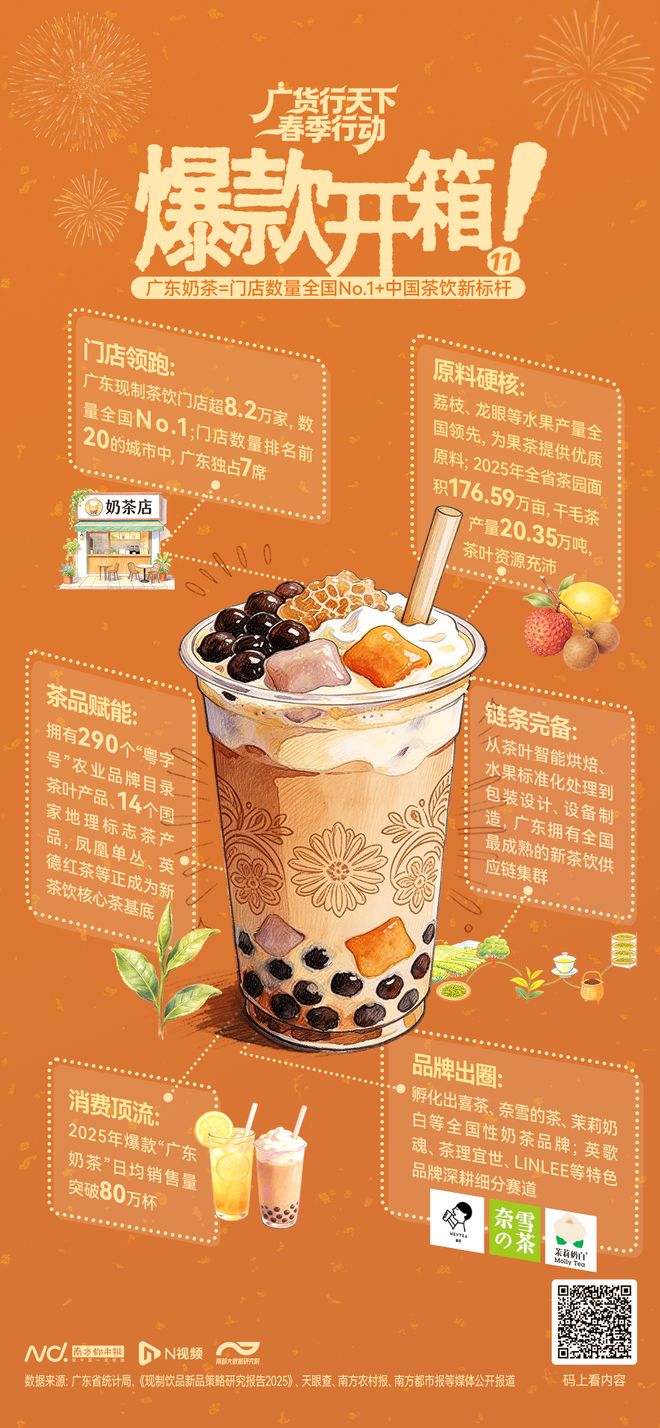
广东奶茶的独特韵味,更源于岭南名茶的深度赋能。广东坐拥 290 个 "粤字号" 农业品牌目录茶叶产 品、14 个国家地理标志茶产品,英德红茶、凤凰单丛等镌刻着粤茶文化印记的名茶,纷纷走出传统茶 桌,成为新茶饮的核心茶基底,让每一杯广东奶茶都饱含地道岭南茶香。 广货行天下,既要靠产品魅力,更要靠产业实力。广东已构建起从田间到门店的完整产业链,拥有全国 最成熟的新茶饮供应链集群。从上游茶叶智能烘焙、水果标准化处理,到中游包装设计、产品研发,再 到下游设备制造、门店运营,各环节高效协同,让原料处理更高效、产品出品更标准、品牌扩张更顺 畅。 广货爆款开箱 开箱!解码广货。每期一爆款,开箱见真章。 从一部智能手机到一辆新能源车,"广货"早已是国民生活中的"硬核存在"。它到底有多能打?爆款背后 藏着怎样的创新密码?南都大数据研究院"广货爆款开箱"专栏上线!用数据带您透视广货从核心零件到 全球布局的真实战力,解码它如何风靡世界。 第11期,开箱一款中国茶饮新标杆——广东奶茶。 清晨的商圈奶茶店,刚开门就亮起满屏预约订单;午后的写字楼里,奶茶拼单的消息在群聊里刷屏,成 了打工人的专属默契;周末的街头巷尾,手捧一杯特色粤式奶茶 ...
4月底华南首店落地深圳 茶颜悦色称坚持直营不加盟
Nan Fang Du Shi Bao· 2026-02-15 05:27
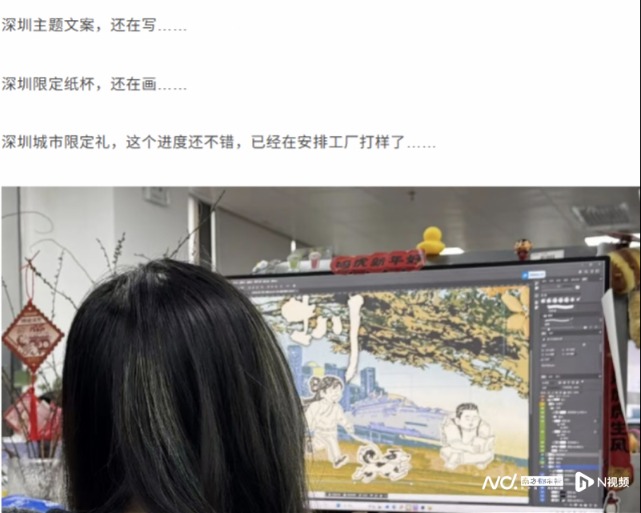
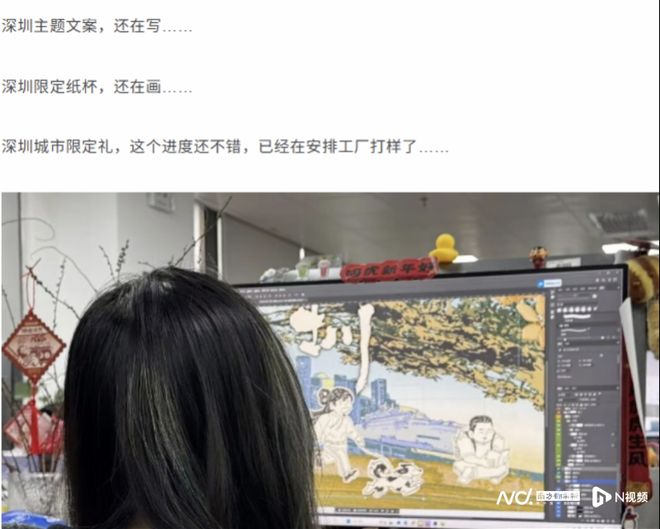
Core Viewpoint - The company, Cha Yan Yue Se, is set to open its first store in South China in Shenzhen by the end of April 2026, confirming its commitment to expanding in this market [1][3]. Group 1: Market Expansion - Cha Yan Yue Se will establish its first permanent store in Shenzhen, marking its first regular tea shop in the city after previous temporary locations [3]. - The company has confirmed that it will operate under a fully direct sales model and will not offer franchise opportunities at this time [3]. - The brand currently operates over 1,000 stores nationwide, indicating a robust direct operation and quality control system that will be replicated in the Shenzhen store [3]. Group 2: Local Adaptation - To cater to local consumer needs, Cha Yan Yue Se has formed a city exploration team that completed on-site research in Shenzhen in early February [3]. - The company is developing localized marketing materials and limited edition products specifically for the Shenzhen market, with designs and prototypes already in progress [3]. Group 3: Strategic Leadership - The strategic leader of Cha Yan Yue Se, Pan Pan, who joined the company in April 2024, continues to play a crucial role in the brand's strategic direction [5]. - Pan Pan has a background in investment and capital operations, having previously worked with successful consumer brands, which positions him well for guiding Cha Yan Yue Se's market expansion and capital market engagement [5]. - The move to Shenzhen is seen as a significant step in the brand's strategy to transition from regional to national presence, as well as a test of the direct sales model in a first-tier city [5].
4月底华南首店落地深圳,茶颜悦色称坚持直营不加盟
Nan Fang Du Shi Bao· 2026-02-15 05:03
Core Viewpoint - The company, Cha Yan Yue Se, has confirmed its entry into the South China market by opening its first store in Shenzhen by the end of April 2026, emphasizing a direct operation model without franchise plans [2][3]. Group 1: Market Entry Strategy - The first store in South China will be located in Shenzhen, marking the brand's first permanent presence in the city after previous temporary locations [3]. - The company has over 1,000 stores nationwide, and its established direct operation and quality control systems will be replicated in the Shenzhen store [3]. - A local research team has completed field studies in Shenzhen, and customized local content is being developed to meet local consumer demands [3]. Group 2: Leadership and Strategic Planning - Pan Pan, who joined the company in April 2024, continues to serve as the strategic leader, bringing experience from investments in consumer brands like Baiguoyuan and Nayuki [5]. - The entry into Shenzhen is viewed as a significant step in the company's strategy to expand from regional to national presence and engage with capital markets [5]. - The company is seen as a slower mover compared to competitors who have rapidly expanded and entered capital markets, making this entry a critical test of its direct operation model in first-tier cities [5]. Group 3: Industry Context - The industry growth rate has declined from 6.4% in the first three quarters of 2025, with leading brands slowing down, raising questions about how Cha Yan Yue Se is managing to break through this trend [5].
狂开7万家店,千亿糖水是风口还是泡沫?
Xin Lang Cai Jing· 2026-02-14 14:33
Core Insights - The sugar water market is experiencing significant growth, with a surge in store openings and brand entries, marking 2025 as a pivotal year for this category [2][4][10]. Market Growth - As of April 2025, the number of sugar water-related enterprises in China has surpassed 200,000, reflecting a 21% increase since 2021 [3]. - By mid-July 2025, 75,215 new sugar water stores were opened, bringing the total to 198,697 [4]. - Notable brands like Mai Ji Milk Company and Shantou Sweet Soup have rapidly expanded, with the former exceeding 400 stores by August 2025 and the latter opening over 80 stores across multiple provinces [5]. Industry Dynamics - The sugar water category is becoming increasingly attractive to new tea brands, which are incorporating sugar water products into their menus [6][7]. - Social media engagement around sugar water is rising, with hashtags related to sugar water amassing billions of views on platforms like Douyin and Xiaohongshu [7]. Consumer Trends - The resurgence of sugar water is closely linked to the decline of the new tea drink sector, which is facing saturation and negative growth [10]. - Health-conscious consumption trends are driving demand for sugar water, with 71.8% of Generation Z preferring healthier beverage options [13]. Financial Metrics - The gross profit margin for sugar water products is approximately 65%, compared to around 55% for new tea drinks, making it a financially appealing sector [12]. Challenges Ahead - The sugar water industry faces challenges such as product homogenization and limited consumption frequency, which may hinder growth [17]. - The entry of new tea brands into the sugar water market could further complicate the competitive landscape, as they leverage established supply chains and customer bases [17]. Future Outlook - The potential for sugar water to replicate the success of new tea drinks remains uncertain, but the category is expanding its boundaries and possibilities [18].
苔源获融资;叮咚买菜回应收购;自嗨锅关联公司被申请破产
Sou Hu Cai Jing· 2026-02-13 08:27
Financing Dynamics - AI sports wear brand "MossCode" has completed a multi-million RMB angel round financing, with a valuation reaching $100 million [3] - The funding will be used to expand the product R&D team and stabilize mass production, laying the groundwork for launching in the European and American markets in the first half of 2026 [3] - The investment reflects the capital market's recognition of the growth potential in the AI smart sports wear segment [3] Company Developments - Barry Callebaut plans to invest €250 million (approximately 2.06 billion RMB) to upgrade its factory in Wieze, Belgium, the largest chocolate production base globally [5] - The investment aims to enhance manufacturing capabilities in Europe amid ongoing volatility in the global cocoa market [5] - Dingdong Maicai reassured users that its operations remain stable and quality standards unchanged following acquisition news [8] - Crayon Shin-chan Foods announced a HKD 188 million acquisition of Qucloud AI HK Limited, marking its transition towards an AI-driven data company [10] - A related company of "Self-heating Pot" has been applied for bankruptcy review, highlighting the financial struggles faced by the brand [13] Market Trends - The health-focused tea drink leader Nayuki has opened a new "Fiber Studio" store in Shenzhen, emphasizing low GI and high fiber products [17] - This move represents Nayuki's shift from a "third space" concept to promoting a "healthy lifestyle," aiming to increase customer spending and repeat purchases [17] Personnel Changes - Thierry Conrad Reutenauer has been promoted to Chief Marketing Officer at Loewe, reflecting LVMH's recognition of the brand's narrative [21] - The departure of Patou's artistic director may indicate a strategic shift towards focusing on its core perfume business [24] - Guillaume Pats has been appointed Chief Commercial Officer at Saint Laurent, tasked with integrating global wholesale, retail, and e-commerce strategies [27] - Canada Goose appointed Patrick Bourke as North America President, responsible for enhancing brand connections with consumers in the region [30]

新式茶饮X茶文旅空间,“百亿”英德红茶想象空间有多大?
Nan Fang Nong Cun Bao· 2026-02-12 10:35
Core Viewpoint - The Guangdong tea industry is experiencing significant growth, with a focus on high-quality development and the promotion of local tea brands, particularly the Yingde black tea, which is projected to reach a production value of over 10.2 billion yuan by 2025 [10][18][19]. Group 1: Industry Growth and Development - The Guangdong tea industry has steadily expanded, with tea garden area expected to reach 1.7659 million acres and dry tea production to hit 203,500 tons by 2025, representing increases of 50.55% and 58.73% respectively since 2020 [12][13]. - Key regions for tea production include Qingyuan, Heyuan, Meizhou, Jiangmen, and Chaozhou, which have established a foundation for renowned tea products like Yingde black tea and Chaozhou single bush tea [14][15]. - The Yingde black tea industry has a solid foundation, with 175,000 acres of tea gardens and an annual production of 14,000 tons, having received various accolades such as "National Geographical Indication Product" [20][21]. Group 2: Economic Impact and Employment - The Yingde black tea industry is a crucial pillar of Qingyuan's modern agriculture, supporting approximately 155,000 jobs [19][33]. - The brand value of Yingde black tea has increased from 3.718 billion yuan in 2022 to an estimated 5.178 billion yuan by 2025, making it the top brand in the Chinese black tea category [34][36]. Group 3: Innovation and Market Trends - The industry is embracing new tea drink trends, with local brands like Heytea and Nayuki leading the market, leveraging Guangdong's unique tea resources [38][41]. - Yingde black tea is collaborating with various brands to create innovative products, such as the "Yinghong Cheese" and "Yinghong Milk Tea," achieving significant sales on launch [63][64]. - The integration of tea with tourism and other sectors is creating new business opportunities, with significant visitor numbers reported at tea tourism sites [76][79]. Group 4: Strategic Initiatives and Future Outlook - The Guangdong tea industry is shifting from isolated breakthroughs to systematic collaboration, aiming to enhance overall competitiveness [80][82]. - The establishment of smart tea gardens and the adoption of digital monitoring are becoming standard practices in tea management, contributing to the modernization of the industry [31][32].

全职变小时工,一年或怒省300万,餐饮老板算清这笔账了吗?
3 6 Ke· 2026-02-12 02:56
在人力成本高企、客流波动加剧的双重压力下,餐饮行业正经历一场"用工革命"。 早前,星巴克用零工替代全职咖啡师,引发行业热议。 据智通财经,星巴克在涉及269个地区的招聘中,学生兼职覆盖61.7%的地区,社会兼职占17.8%,而全职岗位仅占20.4%。 与此同时,2025年全年,星巴克全职岗位主要集中在三线及以下城市,其中北上广深四座一线城市里,只有深圳出现4次,上海出现2次。 这并非孤例,过去两年,奈雪的茶、瑞幸咖啡等头部品牌也纷纷调整用工结构。在人力成本高企、客流波动加剧的背景下,以零工替代全职越来越普遍。 "零工化"的趋势,直接对应餐企极其敏感的财务指标——人工成本。 根据基础计算公式:人工成本=单人成本×人数,因此,科学的降本增效无非围绕两大核心:合理降低单人成本,科学减少用工人数。 接下来,我们将从这两个核心方向,拆解餐饮企业如何高效、可持续地实现人力成本重构。 01.如何合理降低单人成本? 降低单个员工的综合用工成本,绝非通过压榨员工、克扣待遇或者牺牲员工权益换来,而是通过机制设置和管理创新,在保障合理收入的前提下,提升人 效、优化结构、减少冗余成本。 具体而言,有以下两种行之有效的策略: 首先,推 ...