
美图

Search documents
传媒行业周报:迎2026春节档,看AI春晚
Huaxin Securities· 2026-01-26 00:24
Investment Rating - The report maintains a "Buy" rating for the media industry, highlighting its strong performance relative to the market [1][9]. Core Insights - The first quarter of 2026 is expected to benefit from the Spring Festival and the AI Spring Festival Gala, with diverse film offerings catering to various audience preferences. The integration of AI in cinema operations and new interactive experiences is anticipated to explore new commercial boundaries [3][4][15]. - The AI Spring Festival Gala is expected to reignite interest in AI applications and competition for new traffic entry points, with various AI-driven apps emerging to enhance digital marketing and e-commerce [3][4][16][17]. - The report emphasizes the ongoing transformation in the media landscape driven by technological advancements, particularly in AI, which is expected to create new business models and content production paradigms [3][4][16]. Industry Overview - The media industry has shown strong performance, with a 50.7% increase over the past 12 months compared to the Shanghai and Shenzhen 300 index, which only increased by 22.7% [1]. - The report notes that the film market is set to feature four major films for the Spring Festival, with themes ranging from national security to family-friendly animation, indicating a diverse content supply [15]. - The gaming sector is experiencing growth, with the market for legendary games projected to exceed 400 billion yuan in 2026, driven by technological advancements and the proliferation of mini-games [23][24]. Recommended Stocks and Rationale - The report recommends several stocks, including Wanda Film (002739), Mango Super Media (300413), and BlueFocus Communication Group (300058), citing their strong positions in the industry and potential for growth [4][9]. - Specific companies are highlighted for their innovative approaches, such as Wanda Film's integration of AI in its operations and the development of new interactive entertainment experiences [15][16]. - The report also mentions the potential of companies like Bilibili (9626.HK) and Tencent (0700.HK) to leverage AI technologies in their marketing strategies [4][9].



曝阿里旗下芯片公司拟独立上市;苹果新 CEO 人选或曝光;比亚迪李云飞:公司是黑水军最大受害者 | 极客早知道
Sou Hu Cai Jing· 2026-01-23 02:13
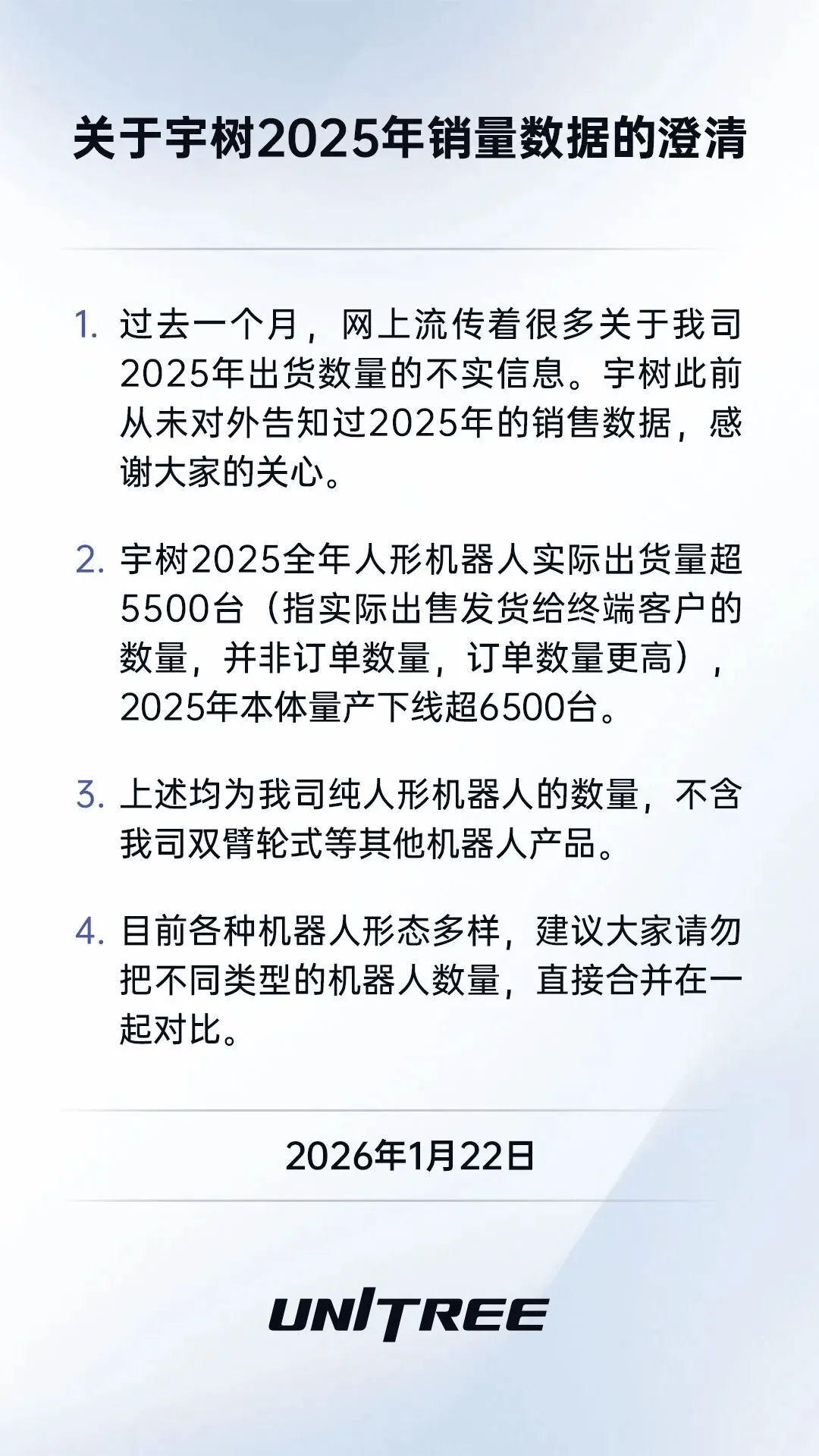
Group 1 - Alibaba Group has decided to support the independent listing of its chip company, T-head, with no comments from Alibaba at this time [1] - T-head's self-developed GPU chip, named PPU, features 96GB of HBM2e memory, a bandwidth of 700GB/s, and a power consumption of only 400W, surpassing Nvidia's A800 and mainstream domestic GPUs [1] - The first generation of T-head's PPU matches the performance of Nvidia's popular H20, while the upgraded version outperforms Nvidia's A100, leading to high demand in the market [1] Group 2 - Apple has expanded hardware chief John Ternus's responsibilities to include design management, signaling his potential as a successor to CEO Tim Cook [2] - Ternus's new role encompasses critical functions that have historically been held by senior leaders, emphasizing the importance of product design in Apple's success since the Steve Jobs era [2] Group 3 - UTree Technology reported that its humanoid robot shipments exceeded 5,500 units in 2025, with over 6,500 units of the main body produced, clarifying that these figures only include humanoid robots [4] - UTree emphasized the importance of not conflating different types of robots when comparing shipment numbers [4] Group 4 - Xiaomi Group announced a share buyback plan of up to HKD 2.5 billion, set to begin on January 23, 2026, and aims to demonstrate confidence in its business outlook [6][7] - The buyback will end on the earliest of the day before the 2026 annual shareholder meeting, when the buyback amount reaches HKD 2.5 billion, or if terminated under the brokerage agreement [6] Group 5 - BYD's brand and public relations manager stated that the company has been a major victim of black public relations and will pursue legal action against false information and malicious attacks [8] - BYD recently won a court case against a blogger for spreading false information, resulting in a compensation order of CNY 2.01 million [8] Group 6 - Vivo has reportedly halted its AI glasses project after six months of secret preparation, as executives determined that differentiation in the current market is challenging [9] - Following the project cancellation, Vivo will continue to focus on mixed reality (MR) technology [9] Group 7 - Meitu announced a stock reward of 1,357 shares for each employee, totaling over CNY 20 million, marking the third time since its IPO in 2016 that it has issued stock rewards to all employees [10] - The stock price has risen from below HKD 1 to over HKD 8, reflecting the company's improved performance [10] Group 8 - Hyundai Motor Group plans to deploy humanoid robots, specifically the Atlas robot developed by Boston Dynamics, with a factory set to produce 30,000 units annually by 2028 [11] - The announcement led to a positive market reaction, with Hyundai's stock reaching new highs, although the labor union expressed concerns about potential job losses due to automation [11] Group 9 - Nvidia's CEO Jensen Huang stated at the Davos Forum that the investment in AI infrastructure is just beginning, with several trillion dollars needed to fully develop the ecosystem [18] - Huang compared the investment in AI infrastructure to historical large-scale infrastructure projects, emphasizing the long-term vision for AI development [19]


美图公司发放全员股票奖励 总价值超2000万元
Xin Lang Cai Jing· 2026-01-22 11:18
Core Viewpoint - Meitu announced a stock reward of 1,357 shares to each employee, translating to over 10,000 yuan per person based on the closing price, with a total value exceeding 20 million yuan for the company [1][2]. Group 1: Stock Reward Announcement - Meitu's chairman, Wu Xinhong, made the announcement during the 2026 annual meeting [1][2]. - This is the third time Meitu has issued stock rewards to all employees since its listing in 2016, with previous distributions in 2021 and 2023 [1][2]. - The current stock price has risen from below 1 HKD in previous years to over 8 HKD [1][2]. Group 2: Additional Incentives - Meitu established a global travel fund worth 200,000 yuan as an additional reward during the annual meeting [1][2]. - Each winning employee will receive an extra day of paid leave [1][2].
AI应用到了商业奇点吗?
Xin Lang Cai Jing· 2026-01-15 02:04
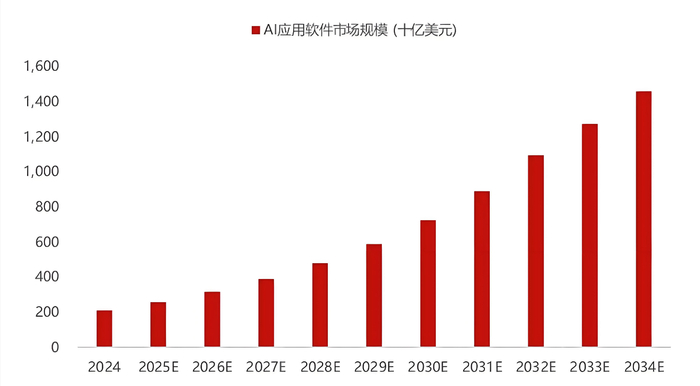
Core Insights - The AI industry is entering a critical commercialization phase starting in 2026, where application scaling and value realization will occur simultaneously, marking a shift from liquidity narratives to profitability narratives in the A-share market [1] - The global AI market is projected to reach $757.58 billion in 2025, with an 18.7% year-on-year growth, and is expected to further increase to $900 billion in 2026, with a compound annual growth rate (CAGR) of 11% anticipated to exceed $2 trillion by 2033 [1] Group 1: Market Trends - The AI industry has experienced two steep transitions in collective recognition from 2023 to 2025, moving from a "concept introduction phase" focused on parameter scale and computing power gaps to a "infrastructure frenzy phase" emphasizing hardware such as optical modules and servers [1] - The focus is shifting from a "arms race" in foundational models to the commercialization of AI applications, indicating that the industry may have reached a "singularity" point [1] Group 2: Application and Revenue Growth - Major AI companies like OpenAI have achieved annual recurring revenue (ARR) in the billion-dollar range, with various vertical applications also reaching significant revenue milestones [5] - As of August 2025, the top 100 global AI companies have a combined monthly active user (MAU) of 4.78 billion, with Chinese companies contributing 46%, indicating a strong domestic user base for AI commercialization [5] Group 3: Policy and Investment Landscape - A joint policy issued by eight departments in January 2024 mandates the integration of AI in manufacturing, transitioning from voluntary innovation to mandatory assessments, providing a clear path for AI commercialization in the industrial sector [7] - The investment landscape is favorable, with a significant portion of venture capital directed towards application layers, and a predicted acceleration in AI monetization processes expected to boost profit growth for Chinese listed companies from 4% in 2025 to 14% in 2026 [7][10]
四条“战线”齐头并进,港股冲刺AI企业聚集地
Xin Lang Cai Jing· 2026-01-15 00:29
Core Viewpoint - The Hong Kong stock market is becoming a key hub for Chinese AI companies, with a surge in listings across various sectors, including hardware and software, amidst the ongoing US-China tech rivalry [1][11]. Group 1: AI Hardware Sector - The first "battle line" is the AI computing power industry chain, highlighted by the listings of domestic GPU leaders, Wallen Technology and Tensyn, which filled a gap in the Hong Kong market [2][12]. - Wallen Technology, known as the "first GPU stock in Hong Kong," focuses on high-end general-purpose GPUs and large-scale data center computing platforms [2][12]. - Tensyn, the first domestic company to achieve mass production of general-purpose GPUs, delivered over 52,000 units by June 2025 [2][12]. - Hong Kong also hosts major players like SMIC, which became the third-largest professional wafer foundry globally with a 5% market share by Q3 2025 [2][12]. Group 2: AI Software Sector - The second "battle line" involves AI software, with the listing of Zhipu, recognized as the "first global large model stock," and MiniMax, which saw a 109% increase on its first trading day [3][13]. - Zhipu reported revenue of 190 million yuan in the first half of 2025, establishing itself as one of the largest independent large model vendors in China [3][13]. - MiniMax's revenue is primarily driven by its AI companion application, Talkie, and it achieved a market capitalization exceeding 100 billion HKD [3][13]. - Established companies like Meitu are also leveraging their AI technology to enhance their product offerings across various applications [3][13]. Group 3: AI Hardware Applications - The third "battle line" encompasses AI hardware, including smartphones, automobiles, and robotics, which are crucial for the large-scale implementation of AI technologies [4][14]. - In the smartphone sector, AI penetration is expected to reach 34% by 2025, with companies like Xiaomi and ZTE leading the market [4][14]. - The automotive sector features companies like BYD and Horizon Robotics, with predictions that autonomous driving will become one of the fastest-growing tech industries in the next decade [4][14]. - Over 30 robotics companies have applied for listings in Hong Kong since December 2024, indicating a trend towards public offerings in this sector [5][14]. Group 4: Internet Giants - The fourth "battle line" includes major internet companies such as Alibaba, Tencent, and Kuaishou, which are enhancing their AI capabilities across various domains [5][15]. - Kuaishou's self-developed video generation model achieved monthly revenues exceeding 20 million USD by December 2025 [5][15]. - The integration of AI across these companies is establishing a solid foundation for the AI sector in the Hong Kong market [5][15]. Group 5: Strategic Positioning of Hong Kong - Hong Kong is emerging as a strategic "buffer zone" for Chinese tech companies, facilitating connections with global capital amidst the US-China tech rivalry [6][16]. - The presence of significant investors from the Middle East and East Asia in Hong Kong-listed AI companies indicates a shift towards a new "non-US capital alliance" [6][16]. - The Hong Kong stock market provides a platform for AI companies to diversify their investor base and mitigate market risks [6][17]. Group 6: Market Dynamics and Future Outlook - The surge in AI company listings is a response to the maturation of the AI industry, which is transitioning from a technology exploration phase to one requiring substantial capital for validation and industrialization [7][17]. - The implementation of the special technology listing rules by the Hong Kong Stock Exchange has increased inclusivity for unprofitable tech companies, creating critical financing channels [7][18]. - Predictions suggest that the Hong Kong market could see new stock fundraising exceeding 280 billion HKD in 2025, with AI, semiconductors, and robotics playing significant roles [8][19].

四条“战线”齐头并进,港股冲刺AI企业聚集地
证券时报· 2026-01-15 00:17
Core Viewpoint - The Hong Kong stock market is emerging as a key hub for AI companies, with a significant increase in listings from Chinese AI firms, particularly in the GPU and software sectors, amidst the ongoing US-China tech rivalry [1][3][8]. Group 1: AI Companies and Market Dynamics - In 2026, several Chinese AI companies have listed on the Hong Kong Stock Exchange, including GPU leaders like Biren Technology and Tensyn, filling a gap in the GPU sector [1][3]. - The number of Hong Kong-listed companies related to AI has surpassed 40, categorized into four main "battle lines" [3]. - The first "battle line" focuses on the AI computing power industry, with Biren Technology being the first GPU company to list in Hong Kong, and Tensyn being the first to achieve mass production of general-purpose GPUs [3][4]. Group 2: AI Software and Applications - The second "battle line" involves AI software, highlighted by the listing of Zhipu AI, which has become one of the largest independent large model vendors in China, reporting revenue of 190 million yuan in the first half of 2025 [4]. - MiniMax, another AI company, saw its stock price surge by 109% on its first day of trading, with a market capitalization exceeding 100 billion HKD [4]. - Established companies like Meitu are also leveraging their AI technology to enhance their product offerings, indicating a robust presence in the AI software sector [4]. Group 3: AI Hardware and Robotics - The third "battle line" encompasses AI hardware, including smartphones and autonomous vehicles, with predictions that AI smartphone penetration will reach 34% by 2025 [5]. - Companies like BYD and Xiaomi are involved in the automotive sector, while over 30 robotics companies have applied to list in Hong Kong since December 2024, indicating a trend towards robotics firms seeking public funding [5][6]. Group 4: Internet Giants and AI Integration - The fourth "battle line" features major internet companies such as Alibaba and Tencent, which are enhancing their AI capabilities across various domains, including AI computing power and applications [6]. - The collective shift of these internet giants towards AI is establishing a solid foundation for the AI sector in the Hong Kong market [6]. Group 5: Strategic Positioning of Hong Kong - Hong Kong is becoming a crucial offshore hub for Chinese tech companies, providing a platform for international capital access amidst the US-China tech competition [8][9]. - The presence of significant foreign investors, including sovereign wealth funds from the Middle East and Asia, indicates a shift in capital sources towards a "non-US capital alliance" [9]. - The Hong Kong Stock Exchange's regulatory framework has become more accommodating for unprofitable tech companies, facilitating critical financing avenues for AI firms [10]. Group 6: Future Outlook and Challenges - The influx of AI companies is expected to elevate Hong Kong's status as a "hard tech financing hub," with projections indicating that new stock fundraising could exceed 280 billion HKD in 2025 [12]. - However, many AI companies may not achieve commercial viability until 2026 or 2027, posing risks of valuation corrections if revenue growth falls short of expectations [12][13]. - The Hong Kong market must address challenges such as sustaining high-quality asset supply and enhancing liquidity to fully realize its potential as a global tech financing center [13].

财信证券晨会纪要-20260115
Caixin Securities· 2026-01-14 23:37
Group 1: Market Overview - The overall market experienced a pullback after a previous surge, with total market turnover approaching 4 trillion yuan [5][10] - The A-share market showed mixed performance, with the Shanghai Composite Index down 0.31% at 4126.09 points, while the ChiNext Index rose 0.82% to 3349.14 points [7][10] - The AI application sector continued to perform strongly, while the blue-chip sector lagged behind [10] Group 2: Industry Dynamics - The global MiniLED backlight market is projected to reach nearly 14.3 billion USD in 2025, with China contributing approximately 60% of this market [6][25] - The short drama app in-app purchase revenue is expected to exceed 2.8 billion USD in 2025, showing a year-on-year growth of 116% [31] - The railway passenger data for December 2025 showed steady growth, with a year-on-year increase of 8.5% in passenger volume [33] Group 3: Company Updates - Dongpeng Beverage (605499.SH) anticipates a revenue increase of 31-33% in 2025, with net profit expected to grow by 30-38% [35] - Huazheng New Materials (603186.SH) is projected to turn a profit in 2025, with net profit estimated between 260 million and 310 million yuan [37] - Woge Optoelectronics (603773.SH) expects revenue growth of 8.07%-21.58% in 2025, but anticipates a net loss [39]
AI企业四条“战线”齐头并进 港股硬科技融资高地辨识度飙升
Zheng Quan Shi Bao· 2026-01-14 17:35
Core Viewpoint - The Hong Kong stock market is transforming into a key hub for Chinese AI companies, with a surge in listings from both hardware and software sectors, amidst the ongoing US-China tech rivalry [1][6]. Group 1: AI Hardware Sector - Hong Kong has seen significant activity in the AI hardware sector, with companies like Biren Technology and Tensynse Semiconductor going public, filling the gap in the GPU market [1][2]. - Biren Technology, known as the "first GPU stock in Hong Kong," focuses on high-end general-purpose GPUs and large-scale data center computing platforms [2]. - Tensynse Semiconductor is the first domestic company to achieve mass production of general-purpose GPUs, having delivered over 52,000 units by mid-2025 [2][3]. - Semiconductor manufacturing leader SMIC has become the third-largest foundry globally, with a 5% market share as of Q3 2025 [2]. Group 2: AI Software Sector - The AI software sector is also thriving, with companies like Zhipu AI and MiniMax making headlines. Zhipu AI has become one of the largest independent large model vendors in China, reporting revenue of 190 million yuan in the first half of 2025 [3]. - MiniMax, known as the "first global large model stock," saw its stock price surge by 109% on its debut, with a market capitalization exceeding 100 billion HKD [3]. - Established companies like Meitu are leveraging their AI technology to enhance their product offerings, creating a comprehensive AI application matrix [3]. Group 3: AI Hardware Applications - The AI hardware sector includes applications in smartphones, automobiles, and robotics, which are crucial for the widespread adoption of AI technologies [4]. - The penetration rate of AI smartphones is expected to reach 34% by 2025, with companies like Xiaomi and ZTE leading the market [4]. - In the automotive sector, companies like BYD and Xiaomi are positioned to benefit from the rapid advancement of autonomous driving technologies [4]. - Over 30 robotics companies have applied to list in Hong Kong since December 2024, indicating a trend of robotics firms seeking public funding [4]. Group 4: Internet Giants - Major internet companies such as Alibaba, Tencent, and Baidu are intensifying their AI investments, contributing to the overall growth of the AI sector in Hong Kong [5]. - Kuaishou's self-developed video generation model has achieved significant revenue milestones, showcasing the potential of internet giants in the AI landscape [5]. Group 5: Strategic Positioning of Hong Kong - Hong Kong is emerging as a strategic "buffer zone" for Chinese tech companies, providing a platform for international capital access amidst the US-China tech competition [6][7]. - The presence of Middle Eastern sovereign wealth funds among cornerstone investors in AI companies indicates a shift in capital sources, forming a new "non-US capital alliance" [6]. - The Hong Kong Stock Exchange's listing rules have become more accommodating for unprofitable tech companies, facilitating critical funding avenues for AI firms [7]. Group 6: Future Outlook - The influx of AI companies is expected to elevate Hong Kong's status as a "hard tech financing hub," with projections indicating that new stock fundraising could exceed 280 billion HKD in 2025 [8]. - The AI sector is anticipated to account for over 20% of the Hong Kong stock market within three years, potentially reshaping the traditional valuation framework [8]. - However, many AI companies may not achieve commercialization until 2026 or 2027, which could lead to valuation corrections if revenue growth falls short of expectations [8][9].
AI主题研究:AI应用商业化快速落地
Zhao Yin Guo Ji· 2026-01-14 07:11
Investment Rating - The industry is rated as "Outperforming the Market," indicating expected performance above market benchmarks over the next 12 months [52]. Core Insights - The global large model market is projected to reach USD 206.5 billion by 2029, with a CAGR of 80.7% from 2024 to 2029. The application market for large models is expected to grow to USD 151.5 billion during the same period, with a CAGR of 84.4% [10][12]. - The report focuses on C-end AI applications, highlighting that companies with model capabilities, product capabilities, and financial resources are likely to lead in their respective segments [13][16]. - The AI general assistant sector is expected to see leading companies like ByteDance, Tencent, Alibaba, and DeepSeek form a top tier in China, while the competition remains dynamic [17][23]. - The AI companionship applications are anticipated to grow significantly, with a projected global market revenue of approximately USD 700 billion by 2030, reflecting a CAGR of 200% from 2023 to 2030 [27][30]. - The AI visual generation market is expected to reach USD 16.6 billion by 2027, with a CAGR of 66% from 2025 to 2027, with leading companies including Google Veo and Kuaishou Keling [36][40]. Summary by Sections Large Model Applications - The global large model market is expected to grow from USD 10.7 billion in 2024 to USD 206.5 billion by 2029, driven by continuous iterations and increased penetration of AI applications [10][12]. - The application market for large models is projected to grow from USD 7.1 billion in 2024 to USD 151.5 billion by 2029, indicating a strong growth trajectory [10][12]. AI General Assistants - Leading companies in the AI general assistant sector include OpenAI, Anthropic, Google, and xAI, with a significant market share based on token usage [19][22]. - In China, the competition is still in its early stages, with ByteDance's Doubao leading in user numbers but facing challenges in model capabilities [17][23]. AI Companionship Applications - The AI companionship market is in its early development stage, with a projected user penetration rate exceeding 40% by 2030, leading to substantial revenue growth [27][30]. - Leading applications in this sector include Character AI, Minimax Talkie, and ByteDance's Cat Box, with significant user growth reported [30][32]. AI Visual Generation - The AI visual generation market is expected to grow significantly, with Kuaishou Keling and Google Veo being key players [36][40]. - Kuaishou Keling is set to release multiple updates that could enhance its market position, with revenue projections indicating a strong performance [44][49].


AI应用正当时-看好2026年AI应用进展
2026-01-07 03:05
摘要 AI 产品设计和工具运用潜力巨大,早期项目估值在三年内增长 10 倍, 智谱和 Minimax 上市在即,IPO 市值预计超 500 亿港币,反映市场对 AI 公司的高度认可。 国内 AI 公司通过赞助大型晚会等方式提高品牌知名度,预计春节前后将 有更多模型发布。2026 年,各大公司将围绕降低 AI 使用门槛展开激烈 竞争,争夺新的流量入口。 未来 AI 应用发展关键在于对 AI 应用及模型定价的影响,以及 2026 年 各大公司在入口及应用上的竞争。商业化边际变化,如营收、ARR 和 EPS 边际,是核心判断指标。 C 端有效变现是大厂战略布局重点,阿里巴巴等将在流量入口争夺战中 发挥重要作用,布局涵盖电商广告、医疗金融等场景。垂直应用场景逐 步进入商业兑现期,探索数字化与规则化结合构建系统。 AI 技术正改变多模态创作、客服、电商贸易和招聘等垂直行业。可根据 容错率和任务复杂度划分应用场景,从容错率高、任务复杂度低的场景 扩展到税务和金融等复杂领域。 AI 应用正当时:看好 2026 年 AI 应用进展 20260106 Q&A 当前 AI 应用市场有哪些显著变化和投资机会? 目前 AI 应用市场 ...