银泰百货

Search documents
沪市债券新语 | 首批商业不动产REITs项目获受理 市场高质量发展再迈步
Zhong Guo Jin Rong Xin Xi Wang· 2026-01-30 13:32
转自:新华财经 唯品会、砂之船、银泰百货申报的3单项目均为优质民企参与项目,唯品会在国内合计运营22家奥特莱斯广场;砂之船是总部位于重庆的民营企业,于2018 年在新加坡证券交易所成功发行REITs;银泰百货及其控股股东自持的旗下同类商业资产共21个,均具有丰富的商业物业运营管理经验。 国泰海通的相关业务负责人指出,首批商业不动产REITs获受理有重要标志性意义,自此,公募REITs底层资产迈向全门类,标志着我国REITs市场发展进入 新阶段,资本市场服务实体经济的深度和广度进一步拓展。 一方面,新产品将为持有优质商业不动产的企业提供市场化退出渠道,推动行业向"重运营、强回报"模式转型;另一方面,对于推动REITs市场健康发展、 促进REITs功能发挥、不断提高资本市场制度的包容性和适应性具有重要意义。此外,还丰富了REITs市场产品供给,为投资者提供了共享商业发展红利的 新工具。 不少业内专家表示,相关规则发布不到一个月,包括原始权益人、中介机构等在内的市场参与主体表现出很高的参与积极性,高效完成了资产梳理筛选以及 申报等工作,充分凝聚了行业共识,彰显出市场对商业不动产REITs发展的高度认可与积极期待。 ...


杭州线下13家百货商场开启百场马年新春活动
Zhong Guo Qing Nian Bao· 2026-01-30 07:51
Core Insights - Zhejiang Province's Hangzhou city has launched over a hundred activities across 13 department stores, including art exhibitions and traditional New Year events, to enhance customer engagement during the Spring Festival [1] Group 1: Event Highlights - The "Hug Your Silver Volcano" themed art exhibition at Wulin Yintai Department Store integrates consumer experiences, featuring a "God of Wealth" photo booth that offers free family or personal photos to customers from late January to February 15 [1] - Xihu Yintai Department Store has introduced the "Get Rich Soon" IP's first exhibition in Hangzhou, with popular activities like the "Wealth Tree" blessing and "Get Money Soon" photo spots, attracting significant public interest [1] - Binhai Yintai Department Store presents the "Garden Adventure: Cute Gods Gathering" theme, featuring four immersive exhibitions, including "Lanterns and Boats" and "Auspicious Horse Celebrations," along with a 200-square-meter "Non-Human" themed photo spot [1] Group 2: Customer Engagement - Young customers are increasingly enjoying additional services such as manicures, hand care, and phone film applications, referred to as the New Year "three-piece set," while shopping [1]
美妆线下零售,迎来关键时刻
3 6 Ke· 2026-01-15 09:38
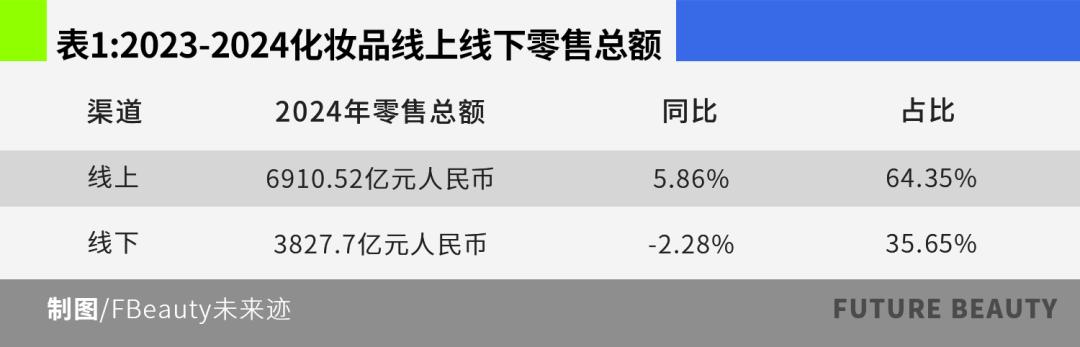
Key Insights - The offline cosmetics retail market in China is projected to reach 382.77 billion RMB in 2024, reflecting a year-on-year decline of 2.28% and accounting for 35.65% of the total cosmetics retail market [1][2] - The online cosmetics retail market is expected to grow to 691.05 billion RMB in 2024, with a year-on-year increase of 5.86%, representing 64.35% of the total market [2] Offline Channel Overview - The retail total for department stores and shopping centers is projected to be 147.18 billion RMB in 2024, down 8.8% year-on-year, while supermarkets are expected to see a retail total of 69.84 billion RMB, up 7% [3][4] - The cosmetics store channel is expected to generate 144.16 billion RMB, down 1.91%, and OTC pharmacy channels are projected to reach 2.17 billion RMB, down 4.4% [3][4] Market Share Trends - The market share of department stores and shopping centers in the total cosmetics retail market decreased from 15.41% in 2023 to 13.71% in 2024, while the cosmetics store channel remains stable at 13.42% [5][6] - The number of counters in department stores has sharply decreased from approximately 15,415 in 2019 to 9,502 in 2023, a reduction of 5,913 [6] Brand Performance - High-end brands dominate the department store channel, accounting for 86% of sales in 2023, while mass brands represent only 0.0037% [10][11] - The market share of European and American brands in department stores increased from 66.8% in 2021 to 74.3% in 2023, while Japanese and Korean brands have seen declines [12] Growth Drivers - The growth in department store cosmetics retail sales is primarily driven by lower-tier markets, with luxury brands opening counters in second and third-tier cities [13] Consumer Behavior Changes - The traditional cosmetics store model is facing challenges due to the rise of e-commerce, leading to a significant decline in foot traffic and sales [19] - Cross-industry retailing, such as clothing and accessory stores expanding into cosmetics, is becoming more prevalent, with some stores generating nearly 50% of their revenue from cosmetics [21] Future Trends - The cosmetics retail landscape is undergoing structural changes, with department stores focusing on high-end products while cosmetics stores innovate through light beauty services and new business models [46] - The OTC pharmacy channel is expected to grow, particularly for functional skincare products, as consumer trust in these products increases [40][42]
深度 | 美妆线下零售,迎来关键时刻
FBeauty未来迹· 2026-01-14 15:13
Core Viewpoint - The offline cosmetics retail market in China is experiencing a decline, with a total retail value of 382.77 billion yuan in 2024, down 2.28% year-on-year, while online sales continue to grow, reaching 691.05 billion yuan, an increase of 5.86% [2][3]. Group 1: Current Status - The market share of department stores and shopping centers in the cosmetics retail sector decreased from approximately 15.41% in 2023 to 13.71% in 2024, while the cosmetics store channel maintained a share of 13.42% [6]. - The number of cosmetics counters in department stores has sharply decreased from 15,415 in 2019 to 9,502 in 2023, a reduction of 5,913 counters [7]. - High-end brands dominate the department store channel, accounting for 86% of sales in 2023, while mass brands represent only 0.0037% [10]. Group 2: Trends - The "Matthew Effect" is becoming more pronounced, with leading department stores like Yintai becoming the largest offline cosmetics retailers, hosting numerous top-selling brands [16]. - The overall sales in department stores have declined from 518.46 billion yuan in 2019 to 473.13 billion yuan in 2023, while the average product price surged by 86.38% from 344.71 yuan to 642.46 yuan [18][19]. - The growth in cosmetics retail in department stores is primarily driven by lower-tier markets, with luxury brands opening new counters in cities like Nanchang and Kunming [14]. Group 3: Channel Dynamics - Supermarkets and hypermarkets, once dominant in cosmetics sales, have seen their market share plummet to 6.5% by 2024, overtaken by e-commerce and department stores [40][41]. - The OTC pharmacy channel is gaining attention, with brands like Winona achieving over 1 billion yuan in sales, indicating potential growth in this sector [44][46]. - The trend of integrating cosmetics sales into clothing and accessory stores is rising, with brands like Sanfu Fashion Department Store reporting that cosmetics account for nearly 50% of their total revenue [24]. Group 4: Future Strategies - The recovery of offline channels will rely on three core strategies: prioritizing experiential services, focusing on lower-tier market needs, and leveraging technology for enhanced customer engagement [56]. - The shift in consumer behavior towards convenience and lifestyle over traditional shopping norms is reshaping the retail landscape, necessitating a re-evaluation of store locations and product offerings [39].

浙江这37个项目开业,杭州占领“半壁江山”
3 6 Ke· 2026-01-12 02:29
Core Insights - Zhejiang province opened 37 new commercial projects in 2023, with a total commercial area of approximately 2.4743 million square meters, marking a year-on-year decrease of about 31% in the number of projects, but an opening rate exceeding 80%, maintaining a leading position in the national market [1] Group 1: Market Overview - Hangzhou dominates the market with 17 new projects and a total area of 1.1504 million square meters, accounting for nearly half of the province's total, solidifying its leading position [3] - Ningbo followed with 7 new projects totaling 408,900 square meters, with notable projects like Ningbo Jiangshan Wanda Plaza recognized for urban renewal [3] - Jinhua continues its growth trend with 5 projects planned for 2025, totaling 382,000 square meters, reflecting the trend of operators penetrating into third and fourth-tier cities [4] Group 2: Project Types and Trends - Shopping centers remain the dominant project type, comprising 54% of new openings, while non-standard commercial projects account for 27%, indicating a growing demand for unique and themed commercial spaces [5] - Traditional shopping centers are innovating by incorporating park-like or street-like designs to enhance openness and social attributes, transforming commercial spaces into "lifestyle destinations" [5] - Mid-sized projects (5-10 million square meters) are the most numerous, with 12 projects, indicating a shift towards a more layered market structure [6] Group 3: Key Players and Innovations - Major operators like Longfor, Intime, and Wanda continue to deepen their presence in Zhejiang, with Wanda managing the most openings in 2023 [7] - Local emerging players are also entering the market, with innovative projects like Hangzhou Jindi T-ONE MO and Alibaba's non-standard commercial project Qincheng Park [7] - Notable projects include Hangzhou Aoyao Wanxiang Tiandi, which integrates local culture and aims to redefine urban commercial spaces [10] Group 4: Noteworthy Projects - Hangzhou North招商花园城, with a commercial area of over 240,000 square meters, has achieved a leasing and opening rate exceeding 95% [11] - Longfor Hangzhou Shangcheng Tiandi, positioned as a "park-style commercial" center, features over 270 brands and aims to enhance local quality of life [17][18] - Jindi T-ONE MO, located in the core of Hangzhou's Olympic Sports Circle, opened with over 130 brands and achieved significant foot traffic and sales in its initial days [19][21] - The Qinwang Water Street project aims to redefine urban waterfront living with a focus on aesthetics and cultural integration [23][25]

【西安】激发消费市场活力
Shan Xi Ri Bao· 2026-01-11 22:47
Group 1 - Xi'an has been selected as the only city in Northwest China for two national pilot programs: "New Consumption Formats and Models" and "International Consumption Environment Construction" [1] - The city is implementing the "buy and refund" tax refund policy to enhance inbound consumption and create a more international shopping environment [1][2] - As of the end of last year, there were over 160 tax refund stores in Xi'an, a 331% increase year-on-year, indicating a significant expansion in the tax refund network [2] Group 2 - Since the launch of the "buy and refund" service, foreign tourist spending has surged, with a total tax refund sales amounting to 800,000 yuan and refunds exceeding 70,000 yuan [2] - The city has established various services for international tourists, including currency exchange and mobile payment assistance, enhancing the overall shopping experience [2][3] - The local tax authority is actively supporting businesses by providing tax law education and facilitating compliance, which is crucial for the diverse needs of merchants in the area [4]
钉钉发布全球首个工作智能操作系统Agent OS,让AI从问答走向干活
Yang Zi Wan Bao Wang· 2025-12-23 06:18
Core Viewpoint - DingTalk has launched the world's first AI-driven work intelligence operating system, Agent OS, marking a new era of "human-AI collaboration" in the workplace [1][3]. Group 1: Product Launch and Features - The core of Agent OS is the operation and collaboration of AI Agents, supported by a new interface (DingTalk ONE), dedicated AI hardware (DingTalk Real), AI search and Q&A (AI搜问), a general task processing Agent (悟空), and an enterprise AI platform (DEAP) [3][4]. - Over 20 AI products were announced at the launch, with DingTalk Real serving as a key extension of Agent OS into the physical world, addressing the safe and reliable execution of tasks by AI Agents in complex enterprise environments [4]. - DingTalk ONE is introduced as a new interaction entry point for human-AI collaboration, utilizing large models to help users organize work information across various platforms [4]. Group 2: Business Applications and Benefits - Several commercially viable Agents were released, including an "Order Agent" and "Quality Agent" for manufacturing, which can convert order images into production schedules and predict faults, leading to a 15% cost reduction for enterprises through the "AI Travel" feature [5]. - The upgraded AI search engine (AI搜问) now offers capabilities to search, ask questions, and perform tasks, while the general Agent (悟空) can autonomously manage tasks and utilize various tools [5][6]. - The AI table has evolved into a platform for creating AI applications, allowing businesses to transition from Excel to AI applications with zero coding and zero barriers [7]. Group 3: Hardware and Upgrades - DingTalk's first AI hardware, DingTalk A1, has evolved from a personal assistant to a team assistant, integrating into various business processes and enabling centralized management of recording data [9]. - The AI meeting assistant, AI听记, has been upgraded to include cross-file AI Q&A, image recognition, and real-time translation capabilities, enhancing communication for enterprises operating internationally [9].

马云有魄力,阿里套现300亿走人
Sou Hu Cai Jing· 2025-12-05 01:56
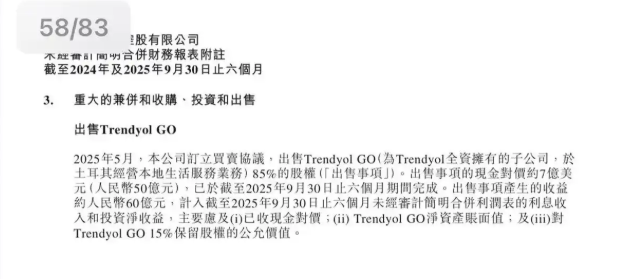
Core Viewpoint - Alibaba is undergoing a significant transformation by divesting non-core assets and focusing on its core businesses of e-commerce and AI + cloud, marking a strategic shift from its previous expansive approach [1][10]. Group 1: Asset Divestiture - Alibaba has sold over 300 billion yuan worth of assets since the beginning of 2025, indicating a systematic approach to streamline its operations [9]. - Recent transactions include the sale of 85% of Trendyol GO for approximately 7 million USD (about 50 million yuan) and the complete divestiture of its stake in Gao Xin Retail for about 131 million HKD [2][7]. - The company has also reduced its holdings in various publicly listed companies, including a 2% stake in YTO Express, generating nearly 20 million yuan in cash [8][10]. Group 2: Strategic Focus - The new leadership under Chairman Cai Chongxin and CEO Wu Yongming has established a strategic focus on "user-first" and "AI-driven" initiatives, leading to a reorganization of the company into six major business groups [11]. - The divestiture of non-core assets is aimed at reallocating resources to high-growth areas such as AI and cloud services, which are expected to drive future revenue [12][24]. - Alibaba plans to invest 380 billion yuan over the next three years in building AI and cloud infrastructure, reflecting its commitment to becoming a technology-driven enterprise [12][15]. Group 3: Market Positioning - The shift in strategy is a response to the increasingly competitive landscape in the e-commerce sector, where growth is slowing and companies must focus on efficiency and profitability [23][24]. - Alibaba's recent performance shows a 5% year-on-year revenue growth to 2,477.95 billion yuan, but net profit has halved, indicating the need for a strategic pivot [9]. - The company is also focusing on instant retail, with significant growth reported in its Taobao Flash Purchase service, which saw a 200% increase in monthly active buyers since its upgrade [15][18].


阿里卖掉子公司85%股权,收益60亿
2 1 Shi Ji Jing Ji Bao Dao· 2025-12-04 07:56
Group 1 - Alibaba disclosed in its mid-term report for the fiscal year 2026 that it sold 85% of Trendyol GO to Uber for approximately $700 million, generating a profit of about 6 billion RMB, which has been included in the investment net income for the first half of 2025 [1][3] - Trendyol GO, a rapid delivery service under Turkey's e-commerce giant Trendyol, completed over 200 million orders in 2024 with a transaction volume of $2 billion, making it a key player in Turkey's instant retail market [3] - The sale of Trendyol GO is part of a broader strategy, as Alibaba has also fully exited from offline retail formats by selling its stakes in Intime Retail and Sun Art Retail [3] Group 2 - Alibaba has established "AI-driven, cloud-first" as its core strategy, with CEO Wu Yongming indicating that the company is in a critical investment phase for building AI technology infrastructure and a consumer platform [3] - For the second quarter of fiscal year 2026, Alibaba reported revenue of 247.795 billion RMB, a year-on-year increase of 5%, while net profit decreased by 53% to 20.612 billion RMB [3] - The revenue from Alibaba's instant retail business reached 22.906 billion RMB, a 60% increase compared to 14.321 billion RMB in the same period last year [3] Group 3 - According to analysis from China Merchants Securities, Alibaba's e-commerce business is expected to maintain competitive strength, with growth potential in its food delivery services and long-term growth in cloud and AI businesses, projecting Non-GAAP net profits of 106.9 billion RMB, 166.6 billion RMB, and 201.8 billion RMB for FY2026-2028 [4]
钉钉AI表格重大技术突破,业内首个真正实现单表容量千万热行
Ge Long Hui· 2025-11-06 20:16
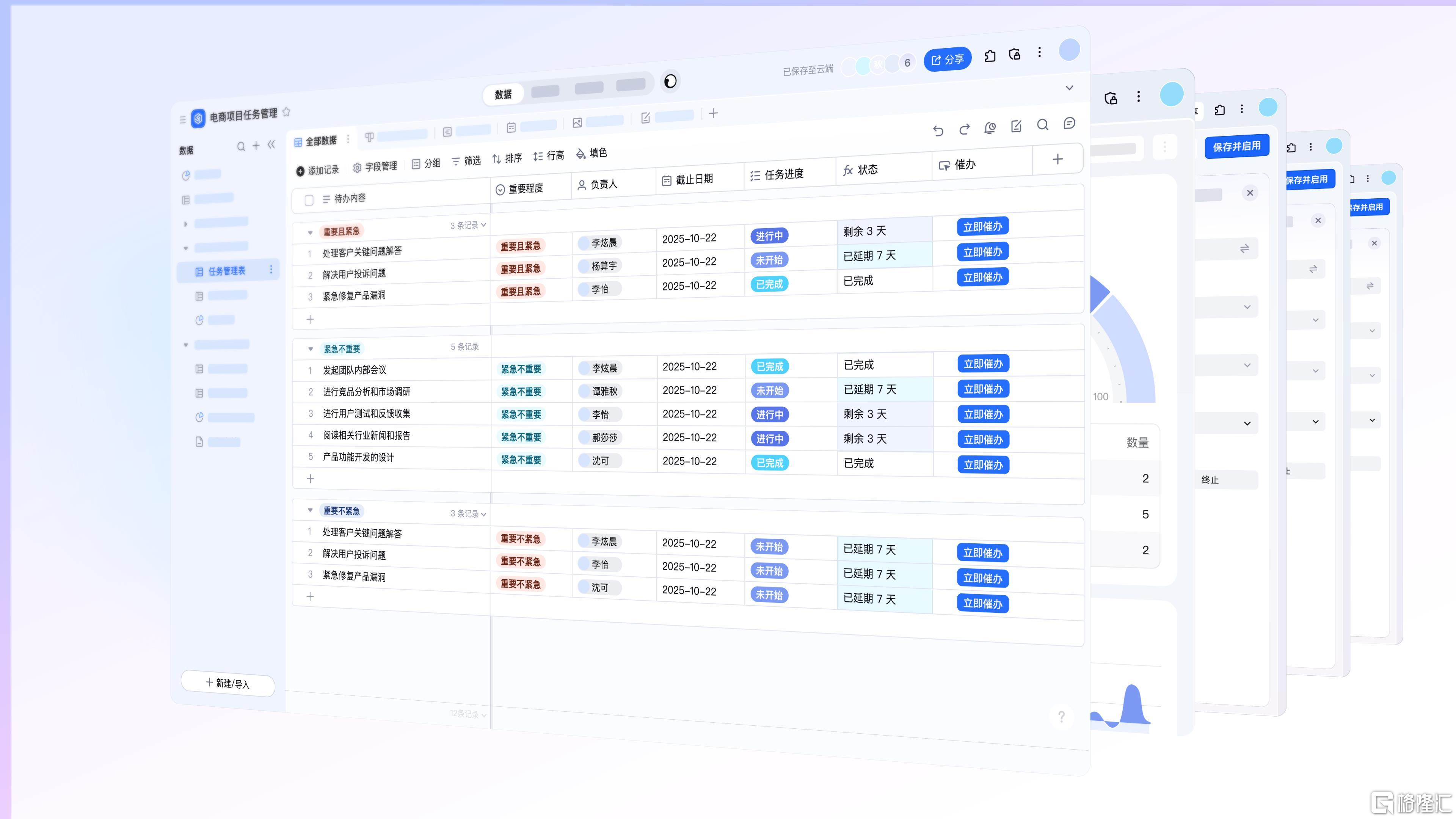
Core Insights - DingTalk AI Spreadsheet has become the first intelligent spreadsheet in the industry to support a single table capacity of 10 million hot rows, significantly enhancing data management for brands during peak business periods like Double Eleven [2] - The AI Spreadsheet was developed in collaboration with Alibaba Cloud's ADB-PG database team, utilizing a new storage-computing integrated application architecture to meet the explosive growth in user computing demands [2] - This year's Double Eleven marks the first full-scale application of AI technology by Alibaba, with various brands, including Semir and Yintai, leveraging DingTalk AI Spreadsheet for preparation [2] Company Applications - De Xiang Yuan Roast Duck, a restaurant brand with 40 chain stores, has transitioned to using DingTalk AI Spreadsheet, allowing for real-time management of massive sales data and significantly improving calculation speed from minutes to seconds [5] - The company can now perform multi-dimensional aggregation analysis of dish sales across all stores, enabling precise control over dish quality and agile optimization of operations [5] - The real-time updates and dynamic dashboards allow headquarters to quickly identify best-selling and underperforming dishes, optimizing menu structure and inventory strategies while reducing food waste [5] Performance Improvements - The AI Spreadsheet's speed and efficiency have eliminated the need for manual data splitting, reducing management costs and enhancing store operational efficiency and customer satisfaction [3][5] - The ability to detect abnormal sales fluctuations in real-time allows for quick identification of issues and corrective actions, ensuring stable dish quality [5]