雷神科技

Search documents
北交所周报:指数震荡调整,可持续发展信披指南修订发布
ZHONGTAI SECURITIES· 2026-02-10 07:25
Investment Rating - The report maintains an "Accumulate" rating for the industry, indicating a forecasted increase of over 10% relative to the benchmark index in the next 6 to 12 months [27]. Core Insights - The overall market performance of the Beijing Stock Exchange (BSE) shows a decline, with the BSE 50 index dropping by 3.59% to close at 1531.55 points as of January 30, 2026. In comparison, the Shanghai and Shenzhen indices showed minor fluctuations [4][10]. - The average market capitalization of the 292 constituent stocks on the BSE is 3.207 billion yuan, with a total industry market value of 936.302 billion yuan and a circulating market value of 580.261 billion yuan [4][10]. - The report highlights the top-performing sectors for the week, including Oil and Petrochemicals (33.99%), Media (4.97%), Agriculture, Forestry, Animal Husbandry, and Fishery (4.69%), Transportation (2.28%), and Communications (2%) [4][17]. Summary by Sections BSE Market Overview - As of January 30, 2026, the BSE has 292 constituent stocks, with an average market capitalization of 3.207 billion yuan. The BSE 50 index experienced a decline of 3.59% during the week, while the Shanghai Composite Index and other indices showed minimal changes [4][10]. - The average daily trading volume for the BSE was 28.731 billion yuan, reflecting a 7.20% increase from the previous week, with a turnover rate of 5.88% [15]. New Stocks on BSE - One new stock, Meidele (920119.BJ), was issued during the week. Additionally, several companies are at various stages of the IPO process, including Huadian Guangda, which has been accepted for review [5][22]. Key News from BSE - The BSE released a revised guideline for sustainable development reporting on January 30, 2026, aimed at enhancing the quality of information disclosure among listed companies. This includes new application guidelines focusing on pollutant emissions, energy use, and water resource utilization [6][24]. - The first IPO of the year was accepted for Beijing Huadian Guangda Environmental Co., which specializes in new catalytic materials for air pollution control, aiming to raise approximately 260 million yuan [6][24]. Investment Strategy - The report suggests focusing on sectors expected to perform well in 2026, including Data Centers, Robotics, Semiconductors, Consumer Goods, and Military Information Technology. Specific companies highlighted include KLT, Suzhou Axis, and Hualing Co. [25].
北交所周报:指数震荡调整,可持续发展信披指南修订发布-20260210
ZHONGTAI SECURITIES· 2026-02-10 05:44
Investment Rating - The industry investment rating is maintained at "Overweight" [1][27]. Core Insights - The report highlights that the overall performance of the Beijing Stock Exchange (BSE) is expected to show significant results in 2026, with a focus on high-quality development and investment opportunities in various sectors [6][25]. Summary by Sections BSE Market Overview - As of January 30, 2026, the BSE has 292 constituent stocks with an average market capitalization of 3.207 billion [4][10]. - The BSE 50 Index experienced a decline of 3.59%, closing at 1531.55 points, while the Shanghai and Shenzhen indices showed minor fluctuations [4][10]. - The average daily trading volume for the week was 28.731 billion, an increase of 7.20% from the previous week, with a turnover rate of 5.88% [4][15]. Sector Performance - The top five performing sectors on the BSE for the week were: - Oil and Petrochemicals: 33.99% - Media: 4.97% - Agriculture, Forestry, Animal Husbandry, and Fishery: 4.69% - Transportation: 2.28% - Communication: 2% [4][17]. New Stocks - One new stock was issued during the week, Meidel (920119.BJ), with updates on the status of other companies in the review process [5][22]. Key News - The BSE released a revised "Guidelines for the Preparation of Sustainable Development Reports" to enhance the quality of sustainability disclosures among listed companies [6][24]. - The first IPO of the year was accepted, with Beijing Huadian Guangda Environment Co., Ltd. aiming to raise approximately 260 million by issuing up to 32.2 million shares [6][24]. Investment Strategy - The report suggests focusing on the following sectors for investment in 2026: 1. Data Centers: KLT and Shuguang Data Creation 2. Robotics: Suzhou Axis, Audiwei, JunChuang Technology, and Fuheng New Materials 3. Semiconductors: Hualing Co. and Kaide Quartz 4. Consumer Goods: Taihu Snow, Boshenglong, Lusi Co., Kangbiter, and Thunder God Technology 5. Military Information Technology: Chengdian Guangxin and Xingtuzhihui [6][25].
“海尔系”资本列车再提速 卡奥斯与海尔新能源联袂冲刺IPO
Shang Hai Zheng Quan Bao· 2026-02-05 17:53
Core Viewpoint - Haier Group is accelerating its capital expansion with plans for IPOs of its subsidiaries, including the industrial internet platform Kaos and Haier New Energy, potentially increasing its total market value to over 350 billion yuan [1][5]. Group 1: IPO Developments - Kaos submitted its IPO application to the Hong Kong Stock Exchange on January 30, 2026, becoming a highly anticipated industrial technology IPO project [1]. - Haier New Energy has completed its listing counseling and is preparing for its IPO after a successful financing round exceeding 1 billion yuan [3][4]. Group 2: Business Performance - Kaos has over 9,500 paying customers and ranks first in China's market for platform-based industrial data intelligence solutions, with a revenue of 4.421 billion yuan for the first nine months of 2025, a 21.62% increase year-on-year [2]. - The revenue from Kaos's data intelligence solutions reached approximately 1.149 billion yuan in 2024, growing by about 25.9%, and 1.28 billion yuan in the first nine months of 2025, a 59.6% increase [2]. Group 3: Global Expansion - Kaos's international revenue reached approximately 709 million yuan in 2024, with solutions deployed in over 20 countries and serving more than 50 overseas enterprises [3]. - The company has empowered 17 lighthouse factories globally, establishing the largest and most diverse "lighthouse cluster" [3]. Group 4: Strategic Vision - Haier Group aims to create a sustainable ecosystem through its three main sectors: smart home, digital economy, and health, focusing on continuous innovation and adaptability [6]. - The expansion of the "Haier system" is not merely a top-down strategy but a result of internal organizational reforms to enhance creativity and value generation [6].

同比高增88.27%,雷神科技前瞻备货“底气”何在?
Cai Fu Zai Xian· 2026-02-05 09:59
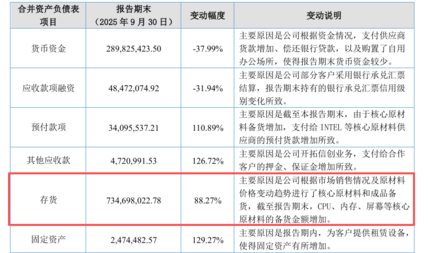
Core Viewpoint - Raytheon Technology's inventory has significantly increased to 734.7 million yuan, a rise of 88.27% compared to the previous year, driven by strategic stockpiling of core components like CPUs and memory in anticipation of market trends and raw material price fluctuations [1][2] Financial Summary - Cash and cash equivalents decreased by 37.99% to approximately 289.8 million yuan due to increased payments to suppliers and bank loans [2] - Accounts receivable financing fell by 31.94% to about 48.5 million yuan, attributed to clients using bank acceptance bills for settlement [2] - Prepayments surged by 110.89% to around 34.1 million yuan, primarily due to increased advance payments to core suppliers like Intel [2] - Other receivables rose by 126.72% to approximately 4.7 million yuan, linked to deposits and guarantees for new business ventures [2] - Fixed assets increased by 129.27% to about 2.5 million yuan, driven by equipment leasing for clients [2] Market Dynamics - In a strong cyclical market, inventory is viewed as a strategic asset rather than a mere capital lockup, providing companies like Raytheon Technology with a competitive edge during market fluctuations [1][4] - The memory market has seen dramatic price increases, with DDR5 memory prices rising over 300% since September 2025, indicating a robust demand driven by AI computing needs [3] Strategic Positioning - Raytheon Technology's inventory strategy may pressure cash flow in the short term but positions the company to capitalize on future market opportunities by locking in low-cost materials and maintaining pricing power [4] - The company is optimistic about the market outlook, with expectations of significant growth in the GenAI PC market and gaming PCs, aligning with its strategic focus on high-end and intelligent product offerings [5][6] Global Expansion - Raytheon Technology aims to increase its overseas revenue share to over 50% within the next 3 to 5 years, with notable growth in markets like North America and Southeast Asia [8] - The company's long-term vision aligns with a commitment to the esports industry and the anticipated growth in memory markets, suggesting a promising future for its value proposition [8]

北交所双周报:北交所开年持续上涨,三大交易所上调融资保证金比例
ZHONGTAI SECURITIES· 2026-02-05 00:25
Investment Rating - The report maintains an "Accumulate" rating for the industry [1]. Core Insights - The overall performance of the North Exchange has shown a positive trend, with the North 50 Index increasing by 4.22% during the period from January 12 to January 23, 2026, while the Shanghai and Shenzhen 300 Index decreased by 1.19% [4][10]. - The average market capitalization of the North Exchange's constituent stocks is 3.22 billion [4][10]. - The daily average trading volume reached 334.1 billion, representing a 41.49% increase compared to the previous period [4][12]. - The top five performing sectors during this period were non-ferrous metals, building materials, chemicals, steel, and electronics, with increases of 9.24%, 8.49%, 8.25%, 5.26%, and 5.22% respectively [4][14]. Summary by Sections North Exchange Market Overview - As of January 23, 2026, there are 291 constituent stocks in the North Exchange, with an average market capitalization of 3.22 billion [4][10]. - The North 50 Index closed at 1588.66 points, with a trading volume of 334.1 billion and a turnover rate of 6.79% [4][12]. New Stocks in the North Exchange - During the period from January 12 to January 23, 2026, three new stocks were issued: Koma Materials, Aishalen, and Guoliang New Materials [23]. Key News from the North Exchange - On January 14, 2026, the China Securities Regulatory Commission approved an adjustment to the financing margin ratio, increasing the minimum margin from 80% to 100% for new financing contracts [6][26]. Investment Strategy for the North Exchange - The report suggests focusing on sectors such as data centers, robotics, semiconductors, consumer goods, and military information technology for potential investment opportunities in 2026 [6][27].
北交所双周报:北交所开年持续上涨,三大交易所上调融资保证金比例-20260204
ZHONGTAI SECURITIES· 2026-02-04 14:34
Investment Rating - The report maintains an "Accumulate" rating for the industry [1] Core Insights - The overall performance of the North Exchange has shown a positive trend, with the North 50 Index increasing by 4.22% during the period from January 12 to January 23, 2026, while the Shanghai and Shenzhen 300 Index decreased by 1.19% [4][10] - The average market capitalization of the North Exchange's constituent stocks is 3.22 billion [10] - The daily average trading volume reached 334.1 billion, representing a 41.49% increase compared to the previous period [12] Summary by Sections North Exchange Market Overview - As of January 23, 2026, there are 291 constituent stocks in the North Exchange, with an average market capitalization of 3.22 billion [10] - The North 50 Index closed at 1588.66 points, with a trading volume increase and a daily turnover rate of 6.79% [12] Sector Performance - The top five performing sectors in the North Exchange during the reporting period are Non-ferrous Metals (9.24%), Building Materials (8.49%), Chemicals (8.25%), Steel (5.26%), and Electronics (5.22%) [14] Individual Stock Performance - Out of 288 stocks listed on the North Exchange, 216 stocks increased in value, 71 decreased, and 1 remained flat, resulting in a 75% increase ratio [16] New Stocks in the Period - During the reporting period, three new stocks were issued, and several companies updated their review status, indicating ongoing market activity [5][23] Key News - On January 14, 2026, the China Securities Regulatory Commission approved an adjustment to the financing margin ratio, increasing the minimum margin from 80% to 100% [26] Investment Strategy - The report suggests focusing on sectors such as Data Centers, Robotics, Semiconductors, Consumer Goods, and Military Information Technology for potential investment opportunities in 2026 [27]
海尔系“第九子”闯关港股 卡奥斯IPO背后的“双高”隐忧
Bei Ke Cai Jing· 2026-02-03 09:18
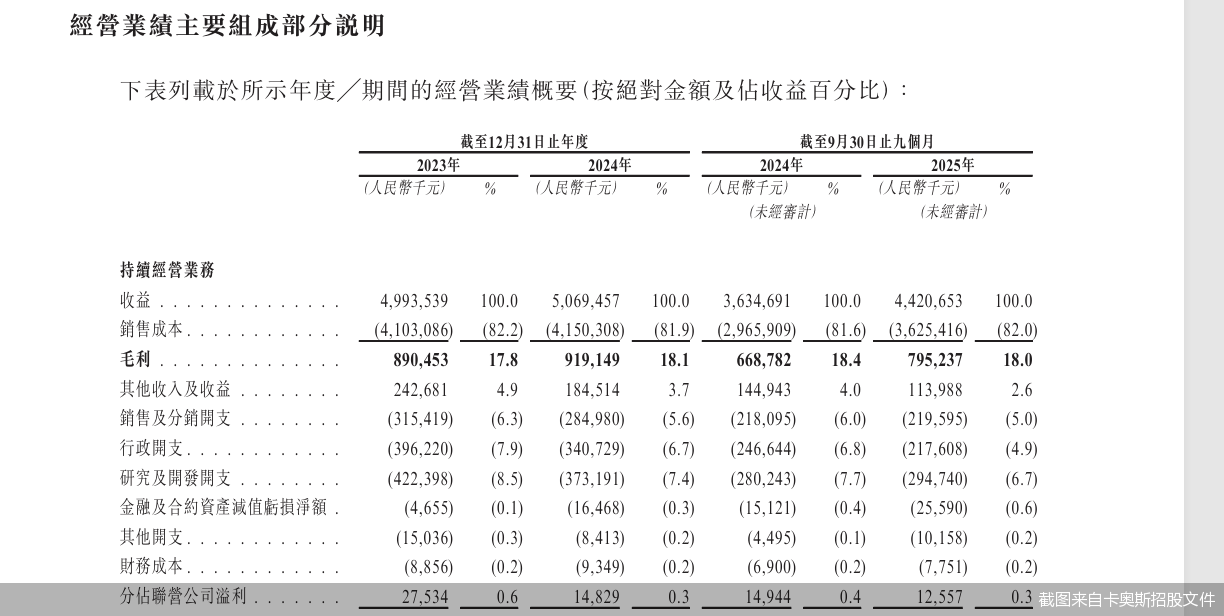
Core Viewpoint - Kaos, the industrial internet platform under Haier Group, has officially submitted its application for listing on the Hong Kong Stock Exchange, aiming to become the ninth listed company in the Haier ecosystem, following a failed attempt to list on the A-share market [1][2]. Group 1: Company Overview - Kaos was established in April 2017 and has developed the COSMOPlat industrial internet platform, which ranks first in China's industrial data intelligent solutions market based on revenue in 2024 [2]. - The company has been preparing for its IPO for over five years, with a significant focus on industrial internet solutions while Haier Group concentrates on smart home businesses [2][5]. Group 2: Financial Performance - In 2023 and 2024, Kaos reported revenues of 4.994 billion yuan and 5.070 billion yuan, with net profits of -82.721 million yuan and 65.136 million yuan, respectively. For the first nine months of 2025, revenue reached 4.42 billion yuan with a net profit of 176 million yuan [3]. - The revenue from the IoT solutions segment was 3.14 billion yuan, a year-on-year increase of 10.86%, while the data intelligence solutions segment generated 1.28 billion yuan, up 59.64% year-on-year [3]. Group 3: Revenue Sources - Haier Group is the largest customer and supplier for Kaos, contributing 3.607 billion yuan, 3.421 billion yuan, and 2.549 billion yuan to Kaos's revenue in 2023, 2024, and the first nine months of 2025, respectively [3]. - Government subsidies have been a significant source of income for Kaos, amounting to 97.6 million yuan, 79.7 million yuan, and 50.5 million yuan in 2023, 2024, and the first nine months of 2025 [4]. Group 4: IPO Plans and Use of Proceeds - The funds raised from the IPO will primarily be used to enhance core platform capabilities, develop industrial models, expand market reach, and explore potential investment opportunities [5][6]. - The decision to shift from A-share to Hong Kong listing was influenced by regulatory uncertainties in the A-share market and the company's global expansion strategy [2][4].
卡奥斯赴港IPO!海尔系资本布局“加速跑”
Xin Lang Cai Jing· 2026-02-01 12:49
Core Viewpoint - The "Haier system" is rapidly expanding its capital footprint, with Kaos IoT Technology Co., Ltd. submitting its application for an IPO on the Hong Kong Stock Exchange, following Haier New Energy's A-share listing guidance [1][11] Group 1: Company Performance - Kaos reported steady revenue growth, achieving approximately CNY 4.994 billion in 2023 and CNY 5.069 billion in 2024, with a net profit turnaround from a loss of CNY 82.72 million in 2023 to a profit of CNY 65.14 million in 2024 [3][13] - For the first three quarters of 2025, Kaos generated approximately CNY 4.421 billion in revenue, up from CNY 3.635 billion in the same period the previous year, with a profit of approximately CNY 176 million, significantly higher than the CNY 35.71 million from the previous year [3][13] Group 2: Dependency on Haier Group - Haier Group is the largest customer of Kaos, contributing over 57.7% of the company's revenue in the first three quarters of 2025, with sales to Haier amounting to CNY 2.549 billion [4][14] - The proportion of sales to the top five customers was approximately 69.7% in 2025, with Haier's contribution being CNY 3.607 billion in 2023, CNY 3.421 billion in 2024, and CNY 2.549 billion in 2025 [4][14] Group 3: Market Position and Strategy - Kaos is positioned as a leading provider of industrial data intelligence solutions in China, ranking first in the market based on platform revenue for 2024 [2][12] - The decision to pursue a listing on the Hong Kong Stock Exchange follows challenges faced in attempting to list on the STAR Market, where regulatory scrutiny and lengthy approval processes were significant factors [2][12] Group 4: Capital Expansion - The Haier Group has established a capital structure that spans both A-share and H-share markets, currently comprising eight listed entities, with the potential to increase to ten if both Kaos and Haier New Energy successfully complete their IPOs [1][11][18] - The total market capitalization of Haier's listed companies exceeds CNY 330 billion, with Haier Smart Home leading at CNY 235.472 billion [17][18]
冲击IPO!卡奥斯递表港交所,海尔系资本布局“加速跑”
Bei Jing Shang Bao· 2026-02-01 12:14
Core Viewpoint - The Haier Group is expanding its capital footprint with the recent IPO applications of its subsidiaries, Kaos and Haier New Energy, aiming to increase the number of listed companies under its umbrella to ten if both IPOs are successful [1][12]. Group 1: Company Performance - Kaos has shown steady performance improvement, with revenues of approximately RMB 4.994 billion in 2023 and RMB 5.069 billion in 2024, and a projected net profit turnaround from a loss of RMB 82.72 million in 2023 to a profit of RMB 65.14 million in 2024 [4]. - For the first three quarters of 2025, Kaos reported revenues of about RMB 4.421 billion, up from RMB 3.635 billion in the same period the previous year, with a corresponding profit of approximately RMB 176 million, significantly higher than the RMB 35.71 million from the previous year [4]. Group 2: Dependency on Haier Group - Haier Group is the largest customer of Kaos, contributing 57.7% of its revenue in the first three quarters of 2025, with sales to Haier amounting to RMB 25.49 billion [6]. - The sales to the top five customers accounted for approximately 69.7% of Kaos's revenue in the same period, indicating a high dependency on a limited customer base [6]. Group 3: Market Position and Strategy - Kaos is positioned as a leading provider of industrial data intelligence solutions in China, ranking first in the market based on projected revenue for 2024 [3]. - The decision to pursue a listing on the Hong Kong Stock Exchange instead of the Sci-Tech Innovation Board is seen as a strategic move to avoid stringent regulatory pressures associated with the latter [3][4]. Group 4: Capital Expansion - The Haier Group has established a capital structure that spans both A-share and H-share markets, currently comprising eight listed companies with a total market value exceeding RMB 330 billion [9]. - If Kaos and Haier New Energy successfully complete their IPOs, the number of listed companies under Haier Group will increase to ten, further solidifying its market presence [12].
计算机设备板块1月29日跌1.1%,证通电子领跌,主力资金净流出17.66亿元
Zheng Xing Xing Ye Ri Bao· 2026-01-29 09:03
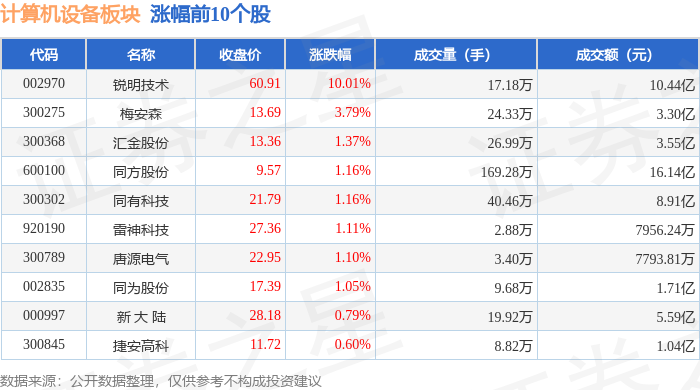
Market Overview - The computer equipment sector experienced a decline of 1.1% on January 29, with ZhenTong Electronics leading the drop [1] - The Shanghai Composite Index closed at 4157.98, up 0.16%, while the Shenzhen Component Index closed at 14300.08, down 0.3% [1] Stock Performance - Notable gainers in the computer equipment sector included: - RuiMing Technology (002970) with a closing price of 60.91, up 10.01% and a trading volume of 171,800 shares, totaling 1.044 billion yuan [1] - MeiAnSen (300275) closed at 13.69, up 3.79% with a trading volume of 243,300 shares, totaling 330 million yuan [1] - Major decliners included: - ZhenTong Electronics (002197) closed at 8.70, down 6.25% with a trading volume of 300,200 shares, totaling 270 million yuan [2] - YuTong Optics (300790) closed at 27.05, down 6.08% with a trading volume of 184,400 shares, totaling 510 million yuan [2] Capital Flow - The computer equipment sector saw a net outflow of 1.766 billion yuan from institutional investors, while retail investors contributed a net inflow of 1.293 billion yuan [2] - The sector's capital flow indicates a mixed sentiment, with institutional investors withdrawing funds while retail investors increased their positions [2] Individual Stock Capital Flow - RuiMing Technology (002970) had a net inflow from institutional investors of 1.75 billion yuan, while retail investors saw a net outflow of 34.85 million yuan [3] - New大陆 (000997) experienced a net inflow of 68.71 million yuan from institutional investors, but a significant outflow of 648.16 million yuan from retail investors [3] - MeiAnSen (300275) had a net inflow of 30.47 million yuan from institutional investors, with a slight net inflow from retail investors of 51,370 yuan [3]