
Humane

Search documents
算力边疆:沙特、马斯克与黄仁勋如何重塑全球AI力量版图
Sou Hu Cai Jing· 2026-01-20 01:37
Group 1 - Saudi Arabia is transforming from an oil kingdom to a global AI computing hub, with significant investments in AI infrastructure and partnerships with tech giants like xAI and Amazon AWS [1][2] - The ambitious plan includes starting with a 50 MW computing center and rapidly expanding to 500 MW, showcasing Saudi Arabia's commitment to becoming a leader in AI capabilities [2] - The country recognizes the importance of computing power as a future wealth source, moving away from its traditional reliance on oil [2] Group 2 - The expansion of computing power faces energy constraints, with current AI computing consuming 200-300 GW annually, and projections suggesting a need for 1 TW, which traditional energy sources may not support [3] - The weight of modern supercomputers is largely due to cooling systems, highlighting the physical limitations imposed by Earth's environment on computing development [3] Group 3 - Space-based AI is predicted to become a trillion-dollar market, with solar-powered AI satellites expected to be the most cost-effective computing solution within five years [4] - The vacuum environment of space offers unlimited solar energy and optimal cooling conditions, potentially leading to exponential increases in computing efficiency [4] - Future projections indicate that 50% of AI computing could occur in Earth's orbit, necessitating a shift in investment strategies towards space computing [4] Group 4 - Saudi Arabia is investing heavily in two key areas: the "Omniverse Robotics" platform with NVIDIA for digital twin environments and a quantum computing research center to push the limits of traditional computing [5] - This comprehensive strategy aims to establish Saudi Arabia not just as a computing power provider but as a leader in the entire research-to-application chain [5] Group 5 - The global landscape of computing power is shifting, with the Middle East emerging as a new frontier due to its energy advantages and flexible policies, while the U.S. faces energy and cost constraints [6] - This transformation will make AI more accessible to businesses and individuals, similar to the impact of the electric grid in the 20th century, leading to a new productivity revolution [6] - The collaboration between tech leaders in Saudi Arabia signifies a historic step in advancing computing capabilities, challenging the perception of AI as merely a technological trend [6]

AI硬件投资:有人跟风,有人离场
创业邦· 2026-01-15 03:29
Core Viewpoint - The article discusses the current state of the AI hardware sector, highlighting the disparity between inflated valuations driven by investor enthusiasm and the actual market performance of products, suggesting a potential valuation bubble in the industry [3][10]. Group 1: Investment Trends - A recent shift in investor focus from AI hardware to traditional sectors like beauty indicates a growing skepticism about the sustainability of AI hardware startups [3]. - The "DJI system" has emerged as a focal point for venture capital, with startups founded by former DJI employees attracting significant investment due to their perceived engineering and supply chain capabilities [5][8]. - The trend of high valuations for startups with backgrounds in major tech companies is evident, with some teams achieving initial valuations of over $100 million despite lacking mature products [6][8]. Group 2: Market Dynamics - The AI hardware sector has seen a dramatic increase in funding, with over 379 billion yuan raised in the past year, a significant rise compared to previous years [9]. - Despite the influx of capital, many AI hardware projects are struggling with low sales and poor user retention, revealing a disconnect between investor expectations and market realities [9][10]. - The phenomenon of "valuation bubble" is highlighted, where the trust in founders' backgrounds leads to inflated valuations that do not align with actual product performance [8][10]. Group 3: Product Performance and Consumer Demand - Many AI hardware products are still in the prototype stage, with some companies failing to deliver on their ambitious promises, leading to disappointing user experiences [9][12]. - High return rates and negative consumer feedback indicate that the market is not ready for the products being offered, with some features being labeled as "false demand" [10][12]. - Successful examples like Plaud AI demonstrate that focusing on specific, high-frequency needs can lead to sustainable business models, contrasting with the broader, less defined narratives of many AI hardware startups [12][14]. Group 4: Future Outlook - The article suggests that as the initial excitement fades, only those startups that respect the realities of hardware development and focus on genuine consumer needs will survive [15]. - The current investment climate reflects a structural anxiety within capital markets, with differing strategies between RMB and USD funds complicating the landscape for hardware startups [14].
吹最大的牛,挨最毒的打:2025 年科技失望榜出炉,这些产品为何“高开低走”?
3 6 Ke· 2026-01-05 09:17
Core Insights - The article presents a "Disappointment List" of products that failed to meet expectations despite initial hype, emphasizing the importance of learning from failures to improve future products [1] Group 1: Sora 2 - Sora 2, an AI video model from OpenAI, faced significant user dissatisfaction due to limited daily generation quotas and inconsistent video quality, leading to a user retention rate of less than 1% over 30 days [4][5] - OpenAI's initial oversight of user demand and subsequent adjustments to its service model resulted in a loss of reputation, highlighting the need for careful consideration of user needs and compliance before launching AI models [5] Group 2: Humane AI Pin - The Humane AI Pin was initially touted as a revolutionary product but turned out to be a basic device with significant usability issues, including slow response times and a problematic operating system [8][9] - Despite high expectations, the product's performance and functionality fell short, leading to its eventual shutdown and bankruptcy, serving as a cautionary tale for the AI hardware market [9] Group 3: Microsoft Recall - Microsoft's Recall feature aimed to enhance user experience by allowing users to revisit past activities but raised privacy concerns due to the extensive data it collects [12][13] - The feature's perceived lack of utility compared to existing solutions and potential privacy risks led to user backlash, indicating a misalignment between developer intentions and user needs [13] Group 4: Galaxy XR - Samsung's Galaxy XR, positioned as a competitor to Apple's Vision Pro, received negative feedback regarding its weight, comfort, and lack of compelling software applications, which hindered its market acceptance [16][17] - The product's failure to deliver a robust XR ecosystem reflects the ongoing challenges in the XR market, suggesting that the technology is not yet mature enough for widespread adoption [17] Group 5: Fujifilm X Half - Fujifilm's X Half camera was criticized for its high price relative to its performance, failing to meet user expectations for a retro digital camera [20][21] - The product's inability to align with user demands and its outdated features led to a rapid decline in its second-hand market value, indicating a disconnect between the company's vision and consumer preferences [21] Group 6: AI Learning Machines - AI learning machines, marketed as affordable alternatives to human tutors, often failed to deliver accurate educational content, leading to parental dissatisfaction and a return to traditional tutoring methods [24][25] - The prevalence of "AI hallucinations" in these products underscores the challenges in ensuring reliable AI performance in educational contexts [25] Group 7: Redmi Book 14 - The Redmi Book 14 2025 model disappointed users with downgraded specifications compared to its predecessor, raising concerns about product positioning and planning within the brand [28][29] - The confusion surrounding multiple versions of the product highlights the need for clearer product differentiation and strategic planning in the entry-level laptop market [29] Conclusion - The article emphasizes that many of the highlighted products, despite initial promise, failed due to a lack of understanding of user needs and market dynamics, serving as a reminder for companies to prioritize user experience over mere technical specifications [30]



马斯克黄仁勋对谈:AI会让你更忙,人形机器人将成为有史以来最大的产业
美股IPO· 2025-11-20 13:09
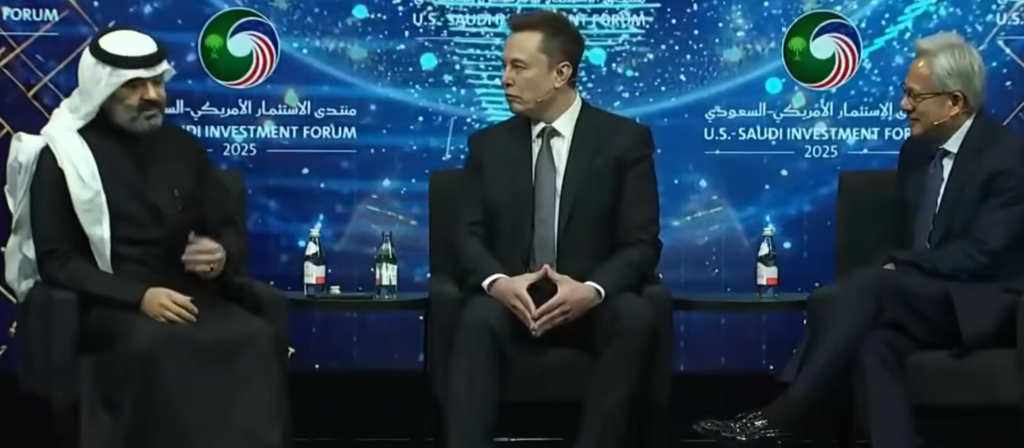
Core Insights - AI will not lead to unemployment but will increase workload, resulting in more tasks piling up for companies [4][21] - Humanoid robots are expected to become the largest industry or product in history, surpassing smartphones and other technologies [3][11] - A significant investment in AI infrastructure was announced, including a 500 MW AI data center in collaboration with xAI and Nvidia [30][31] Group 1: Innovation and AI Development - The focus of innovation is on creation rather than disruption, exemplified by SpaceX's reusable rockets [3][8] - The shift from "retrieval-based" to "generative" computing necessitates the establishment of AI factories globally to produce real-time content [13][14] - AI and humanoid robots are seen as solutions to poverty, with the potential to make everyone wealthy [4][11] Group 2: Future of Work - Future work will become optional, akin to a hobby, where individuals can choose to work if they desire [5][16] - Increased productivity from AI will lead to more ideas and projects, making individuals busier rather than less so [21][22] - The role of radiologists has evolved positively with AI, leading to increased hiring rather than job losses [22] Group 3: AI in Space and Infrastructure - Space-based AI is deemed inevitable, with solar-powered satellites expected to become the most cost-effective method for AI computation within five years [40][41] - The collaboration between xAI and Saudi Arabia aims to build a substantial AI data center, marking a significant step in AI infrastructure development [30][31] Group 4: Transition in Computing - A fundamental shift from general computing to accelerated computing is underway, with a notable decrease in CPU usage in favor of GPU-based systems [46][47] - The end of Moore's Law has led to increased demand for accelerated computing resources, particularly in data-intensive tasks [46][47] - The rise of generative AI represents a third major opportunity in the evolution of AI technologies [47]


马斯克黄仁勋对谈:AI会让你更忙,人形机器人将成为有史以来最大的产业
Hua Er Jie Jian Wen· 2025-11-20 07:36
Core Insights - The discussion between Elon Musk and Jensen Huang at the US-Saudi Investment Forum highlighted a significant collaboration in AI infrastructure, specifically the construction of a 500 MW AI data center in the desert, involving Musk's xAI, Nvidia, and the Saudi AI company Humane [1][29]. Group 1: Innovation and AI Development - Musk emphasized that his focus is on creation rather than disruption, citing SpaceX's reusable rockets as an example of innovation that did not previously exist [3][7]. - The conversation pointed out that humanoid robots are expected to become the largest industry ever, surpassing smartphones, as demand for personal robots will be high [3][11]. - Huang noted that AI is becoming a foundational infrastructure, transforming industries and requiring global AI factories to generate unique content in real-time [12][13]. Group 2: Economic and Employment Implications - Musk argued that AI and humanoid robots could eliminate poverty, suggesting that the only way to achieve widespread wealth is through these technologies [3][11]. - The future of work is predicted to become optional, akin to a hobby, where individuals can choose to work if they desire [15][17]. - Huang highlighted that AI will increase productivity, leading to more tasks and potentially making people busier rather than causing job losses [21][22]. Group 3: Space and AI - Musk stated that AI in space is inevitable, with solar-powered AI satellites expected to become the most cost-effective method for AI computation within five years [5][32]. - The discussion included the potential for space to provide vast energy resources, which would be essential for scaling AI computations beyond what is feasible on Earth [34][35]. Group 4: Market Trends and AI Evolution - Huang described a fundamental shift from general computing to accelerated computing, with a significant decrease in the use of CPUs in favor of GPUs for high-performance tasks [37][38]. - The transition to generative AI is seen as a major opportunity, with the current landscape moving towards intelligent agents that leverage accelerated computing resources [38].

最新!黄仁勋马斯克罕见同台,畅谈人形机器人、太空AI,并回应AI是否有泡沫
Xin Lang Cai Jing· 2025-11-20 06:17
Core Insights - The underlying computing power required for the Agentic AI revolution is much less than anticipated, indicating a structural transformation rather than a bubble [2][44] - NVIDIA's CEO Jensen Huang emphasized that the current AI enthusiasm is supported by a significant shift in computing architecture, moving from general-purpose to accelerated computing [45][46] Group 1: AI and Robotics - Elon Musk predicts that humanoid robots will become the largest industry ever, surpassing smartphones and other products, as they will be desired by both individuals and businesses [4][7] - Musk believes that Tesla will be the first company to produce truly useful humanoid robots, which will revolutionize the market [4][6] - The discussion highlighted the potential of AI and humanoid robots to address significant societal issues, including poverty [5][7] Group 2: AI Factories - Saudi Arabia is investing in AI infrastructure, aiming to become one of the most AI-empowered nations through the establishment of AI factories [8][9] - Huang likened AI to a new form of infrastructure, essential for transforming various industries and sectors [9][10] Group 3: Future of Work - Musk envisions a future where work becomes optional, similar to leisure activities, allowing individuals to choose whether to engage in work [13][15] - Huang noted that AI will enhance productivity, leading to more efficient work processes and potentially increasing the demand for certain professions, such as radiologists [21][22] Group 4: AI Applications and Collaborations - NVIDIA is collaborating with Humane to develop a significant data center project, showcasing the rapid growth of AI applications beyond traditional uses [23][24] - The partnership aims to leverage AI in various fields, including robotics and quantum computing [24] Group 5: AI in Space - Musk stated that deploying AI in space is inevitable for the advancement of civilization, particularly for harnessing solar energy [25][36] - The discussion emphasized that space offers a more efficient environment for AI operations compared to Earth, due to continuous solar energy availability [41][42] Group 6: AI Bubble Discussion - Huang argued that the current AI excitement is not a bubble but a result of three major trends: the end of Moore's Law, the rise of generative AI, and the emergence of Agentic AI [44][45][46] - The transition from CPU to GPU-driven systems marks a significant shift in computing paradigms, supporting the growth of AI technologies [45][46]
最新!黄仁勋马斯克罕见同台,畅谈人形机器人、太空AI,并回应AI是否有泡沫
聪明投资者· 2025-11-20 03:37
Core Viewpoint - The underlying computing power required for the Agentic AI revolution is much less than commonly perceived, indicating a structural transformation rather than a bubble [2][70]. Group 1: AI and Market Sentiment - NVIDIA's CEO Jensen Huang emphasized that there is no AI bubble during the earnings call and at the investment forum, reigniting market enthusiasm for AI [2]. - Elon Musk predicted that humanoid robots will become the largest industry ever, surpassing smartphones and other products, and suggested that the cheapest source of AI computing power will soon be solar-powered AI satellites [3][57]. Group 2: Humanoid Robots - The discussion highlighted the transition to an "intelligent era," focusing on building AI factories, robots, and electric autonomous vehicles [4]. - Musk expressed confidence that Tesla will be the first company to produce truly useful humanoid robots, which he believes will lead to a significant revolution [7][12]. Group 3: AI Factories - The conversation included the signing of a strategic cooperation agreement between Saudi Arabia and the U.S. to support the AI ecosystem, with Saudi Arabia investing in AI infrastructure [13]. - Huang likened AI to a new form of infrastructure, emphasizing its transformative potential across all industries and sectors [14][15]. Group 4: Future of Work - Musk predicted that future work will become optional, akin to a leisure activity, where individuals can choose to work or not [20][22]. - Huang noted that AI will enhance productivity, allowing people to focus on more complex tasks rather than being replaced [31][34]. Group 5: Collaboration with Humane - Musk announced a collaboration with Humane to develop a 500 MW project, with NVIDIA also involved in building a significant data center [38][39]. - Huang highlighted the rapid progress of their partnership, which aims to leverage AI in various fields, including robotics and quantum computing [41][42]. Group 6: AI in Space - Musk asserted that deploying AI in space is inevitable for the advancement of civilization, particularly for harnessing solar energy [45][49]. - He emphasized that the only feasible way to achieve significant AI computing power is through space-based solar energy, as terrestrial resources will be insufficient [60][61]. Group 7: AI Bubble Discussion - Huang discussed three major trends driving structural changes in computing: the end of Moore's Law, the rise of generative AI, and the emergence of Agentic AI [64][70]. - He concluded that the foundational computing power needed for the Agentic AI revolution is significantly less than anticipated, reinforcing the idea that it is a result of structural change rather than a bubble [70].
Elon Musk Cracks Up In AI Talk With Jensen Huang
Youtube· 2025-11-19 19:00
There's a beautiful story about how Saudi Arabia is building AI refineries and now building oil refineries to AI factories. I love that. You know, I've said that AI is an infrastructure, and the reason for that, of course, we understand AI from the perspective of the technology and how it's revolutionizing every industry. Digital intelligence, of course, has applications into every field. And so it's going to be used by every company, every industry, every country. In that way, it's foundational, and theref ...
Equities All-Time High, Rare Earths Fade, A.I. Chips Movers & AMZN Layoffs
Youtube· 2025-10-27 23:00
Market Overview - Equities reached new all-time highs driven by optimism from ongoing US-China trade negotiations [1] - The S&P 500 closed above 6,800 for the first time, rising 1.2% [1] Sector Performance - The Dow increased by 0.7%, Nasdaq rose by 1.8%, and Russell 2000 was up by 0.3% [2] - Nine out of eleven S&P 500 sectors finished in positive territory, with communications and technology sectors leading the gains, both climbing over 2% [2] Company-Specific Developments - Domestic rare earth mining companies faced declines due to potential delays in China's export controls on minerals [3] - Shares of MP Materials, Trilogy Metals, and USA Rare Earth were notably affected [4] - Qualcomm's shares surged to their highest level since July 2022 following the launch of its next-generation AI accelerator chips [4] - Qualcomm's AI 200 chip is set for shipment next year, with the AI250 version expected in 2027, and shares have increased over 22% in 2025 [5] - AMD reached a new all-time high as it was selected by the Department of Energy for new supercomputer projects [6][7] - Amazon is reportedly planning to cut approximately 30,000 jobs, which is about 10% of its corporate workforce, ahead of its earnings report [7] Upcoming Earnings Reports - Key companies reporting earnings include SoFi, PayPal, UPS, United Health, Wayfair, Visa, Seagate, and Nphase Energy [8] - The October FOMC meeting is also set to begin, with a special coverage for the rate cut decision scheduled [8]





奥特曼豪赌AI离不开硬件 OpenAI应该做手机?
Feng Huang Wang· 2025-10-24 13:24
Core Insights - The success of generative AI is still closely tied to hardware, and OpenAI should collaborate with Jony Ive to develop mobile devices [1][2] - The initial AI hardware releases have largely failed due to being based on hype rather than actual functionality, exemplified by the AI Pin from Humane [1] - For generative AI to reach its full potential, it must be integrated into everyday devices like smartphones, which have proven to be user-friendly and deeply embedded in daily life [1] Group 1 - OpenAI's acquisition of Jony Ive's hardware startup for $6.4 billion represents a significant investment in the AI hardware sector and a chance to define how this technology integrates into human life [2] - To succeed, the focus should not be limited to smart speakers or AI accessories but should prioritize the smartphone market [2] - The team led by Ive is highly skilled, but there is a noted lack of software talent, which is crucial for the long-term success of any hardware product [2] Group 2 - Creating an AI smartphone outside of the Apple ecosystem will require reliance on Google's infrastructure, as Android is currently the only commercially viable open-source mobile operating system [2] - The competitive relationship between OpenAI and Google, along with Ive's background at Apple, may complicate this collaboration, but it is essential for achieving a return on investment [2]