On

Search documents
CARBIOS maintains its commitment to build the Longlaville plant and adjusts its timeline
Globenewswire· 2025-12-18 17:30
Core Viewpoint - CARBIOS is committed to advancing the construction of its Longlaville plant, with a revised timeline and significant pre-commercialization contracts in place to support its financing efforts [2][8]. Financing and Project Timeline - A small portion of the financing is still required, with the goal to secure it by the end of Q1 2026, allowing for the plant to be commissioned in the first half of 2028 [5][8]. - The project has secured public funding of €42.5 million and is expected to be financially independent from CARBIOS through non-recourse financing [4][8]. - CARBIOS anticipates having over €55 million in available cash by the end of 2025, providing visibility on its financing horizon for the next twelve months [8]. Commercialization and Market Engagement - In 2025, CARBIOS signed pre-commercialization contracts covering nearly 50% of the production capacity at the Longlaville site, with aims to increase this to 70% soon [3][8]. - The company is actively pursuing commercialization of its technology licenses, having established a strategic partnership with Wankai New Materials for deployment in Asia, and plans to expand into Europe and the Americas [6][12]. Technological and Environmental Commitment - CARBIOS focuses on developing biological solutions for plastic and textile lifecycle management, utilizing enzyme-based processes for PET biorecycling and PLA biodegradation [7]. - The company collaborates with major brands in the cosmetics, food, and apparel sectors to enhance product recyclability and support a circular economy [7].


纺织服饰周专题:部分服饰制造商公布11月营收表现
GOLDEN SUN SECURITIES· 2025-12-14 12:34
Investment Rating - The report recommends "Buy" for Shenzhou International and Huali Group, with respective 2026 PE ratios of 12x and 18x [2][30]. Core Views - The textile and apparel industry is experiencing fluctuations in revenue, with notable declines in some manufacturers' performance due to changing international trade environments and tariff policies [1][13]. - The report anticipates a recovery in orders and shipments for apparel manufacturers in 2026, driven by improved demand and healthy inventory levels [23][28]. - Key brands like Nike are expected to show gradual improvement in their operational performance, which may positively impact their suppliers [23][24]. Summary by Sections Recent Revenue Performance - In November 2025, revenue for Feng Tai Enterprises, Ruo Hong, and Yu Yuan Group decreased by 11.8%, increased by 1.5%, and decreased by 2.4% year-on-year, respectively [1][13]. - Cumulatively from January to November 2025, Feng Tai's revenue declined by 4.9%, while Ruo Hong and Yu Yuan reported increases of 3.8% and 0.9% [1][13]. Industry Outlook - The report indicates that the apparel manufacturing sector is expected to see a recovery in orders in 2026, with a focus on companies with integrated and international supply chains [28][29]. - The report highlights that the competitive landscape is improving, with leading manufacturers likely to gain market share [2][27]. Key Investment Opportunities - Recommended stocks include Shenzhou International and Huali Group, with a focus on companies that are expected to benefit from improved customer trends and operational efficiencies [2][28]. - Other companies to watch include Weixing Co., Kairun Co., and Jingyuan International, which are also positioned well for future growth [2][28]. Brand Performance - The report emphasizes the importance of brand performance, particularly for Nike in the Greater China region, which is expected to show a turnaround [28]. - Other recommended brands include Anta Sports and Li Ning, with respective 2026 PE ratios of 14x and 16x [28].



深度 | Burberry摆摊卖围巾,为什么是个好主意?
Sou Hu Cai Jing· 2025-12-06 11:40
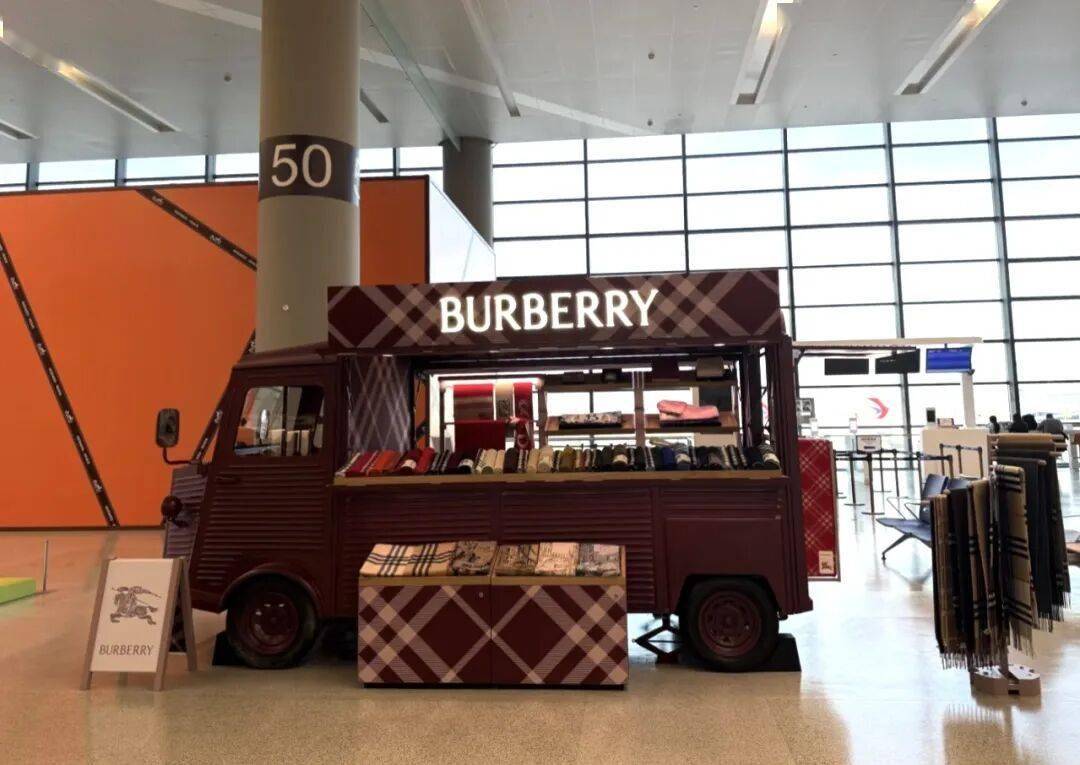
Core Insights - The luxury goods market in China is underestimating the importance of retail innovation, as exemplified by Burberry's recent initiatives at Shanghai Hongqiao Airport [2][3] - Burberry is implementing a new strategy called Burberry Forward, focusing on re-establishing its brand identity around timeless British luxury, particularly through its outerwear and scarf lines [3][7] - The brand's recent performance shows signs of recovery, particularly in the Chinese market, with a notable increase in Gen Z customers [14] Group 1: Retail Innovation - Burberry has introduced a temporary "scarf cart" at Shanghai Hongqiao Airport, a unique retail format aimed at capturing the attention of high foot traffic [2][3] - The airport is becoming a new retail battleground for luxury brands, with an expected global air passenger volume of 5.2 billion by 2025, making it essential for brands to increase touchpoints in these high-frequency destinations [2] - The scarf cart serves as a mobile brand entry point, allowing Burberry to engage consumers in a high-flow environment, enhancing the shopping experience [7][8] Group 2: Brand Strategy - Under the leadership of new CEO Joshua Schulman, Burberry is shifting its focus back to its core British identity, moving away from the previous aggressive high-end positioning that alienated its core consumer base [5][10] - The Burberry Forward strategy includes expanding product lines beyond trench coats to encompass a broader range of outerwear, while also refreshing scarf designs [7][10] - The brand is actively enhancing its retail visual merchandising, with a focus on seasonal displays and dedicated scarf areas in stores [7][12] Group 3: Market Performance - Burberry's revenue fell by 5% to £1.032 billion in the last six months, but there was a 2% growth in the second quarter, indicating a potential turnaround [12][13] - The Chinese market showed a 3% growth in the second quarter, with a significant increase in Gen Z customers by 18%, attributed to effective social media engagement [14] - Despite mixed opinions from analysts regarding Burberry's recovery path, the stock price has risen by 23% this year, reflecting some investor confidence [14][15]
第七届金麒麟轻工和纺织服装业最佳分析师第一名长江证券于旭辉最新观点:行业收入表现超预期 上调全年指引
Xin Lang Zheng Quan· 2025-12-01 07:51
Core Viewpoint - The textile and apparel industry is experiencing strong revenue growth, with companies adjusting their annual guidance upwards due to better-than-expected performance in Q3 FY2025, driven by brand strength and operational efficiency improvements [1][2][3]. Revenue Performance - FY2025 Q3 revenue reached 790 million CHF, exceeding market expectations of 770 million CHF, with a year-on-year growth of 34.5% at constant exchange rates [1]. - Revenue growth by region: Americas (+21% to 440 million CHF), EMEA (+33% to 210 million CHF), and Asia-Pacific (+109% to 140 million CHF), with Asia-Pacific achieving triple-digit growth for four consecutive quarters [2]. - Revenue growth by channel: Direct-to-Consumer (DTC) (+37.5% to 310 million CHF) and wholesale (+32.5% to 480 million CHF), both maintaining strong growth [2]. - Revenue growth by product category: Footwear (+30% to 730 million CHF), apparel (+100% to 50 million CHF), and accessories (+161% to 10 million CHF), indicating improved market share across channels and regions [2]. Profitability Metrics - Gross margin increased by 5.1 percentage points to 65.7%, benefiting from strong brand growth and operational improvements [1]. - Adjusted EBITDA rose by 49.8% to 180 million CHF, with an adjusted EBITDA margin of 22.6% [1]. - Net profit attributable to shareholders surged by 290% to 120 million CHF, with a net profit margin increase of 10.2 percentage points to 15.0% [1]. Inventory and Guidance - Inventory at the end of FY2025 Q3 was 380 million CHF, reflecting a year-on-year increase of 9%, with healthy inventory levels expected to be maintained [3]. - The company has raised its full-year guidance, projecting at least 34% revenue growth for FY2025, targeting sales of 2.98 billion CHF, up from a previous estimate of 2.91 billion CHF [3]. - Expected gross margin for FY2025 is approximately 62.5%, an increase from the prior guidance of 60.5%-61% [3]. - Adjusted EBITDA margin is anticipated to be above 18%, up from the previous guidance of 17%-17.5% [3].

X @The Wall Street Journal
The Wall Street Journal· 2025-11-27 01:08
The Swiss sneaker brand On outran Nike. Now it’s betting it can beat tariffs, too. https://t.co/BWugHI7HQ4 ...

X @The Wall Street Journal
The Wall Street Journal· 2025-11-26 01:54
The Swiss sneaker brand On outran Nike. Now it’s betting it can beat tariffs, too. https://t.co/4bzeS6RCwS ...
X @The Wall Street Journal
The Wall Street Journal· 2025-11-25 12:09
The Swiss sneaker brand On outran Nike. Now it’s betting it can beat tariffs, too. https://t.co/lmmewX92w4 ...
This Sneaker Brand Keeps Raising Prices—and Consumers Don't Seem to Care
WSJ· 2025-11-25 03:00
Core Insights - The Swiss company On has surpassed Nike in terms of growth and market presence, indicating a significant shift in the competitive landscape of the athletic footwear industry [1] - On is now focusing on overcoming tariff challenges, which could impact its pricing strategy and market expansion plans [1] Company Performance - On's revenue growth has been impressive, with a reported increase of 70% year-over-year, showcasing its strong market demand and brand appeal [1] - The company has successfully positioned itself as a premium brand, attracting a loyal customer base and increasing its market share [1] Industry Trends - The athletic footwear industry is experiencing heightened competition, with brands like On challenging established players such as Nike and Adidas [1] - Tariffs and trade policies are becoming critical factors for companies in the industry, influencing their operational strategies and pricing models [1]


望远镜系列28之On FY2025Q3经营跟踪:收入表现超预期,持续上调全年指引
Changjiang Securities· 2025-11-23 09:46
Investment Rating - The industry investment rating is "Positive" and maintained [6] Core Insights - For FY2025Q3 (July 1, 2025 - September 30, 2025), the company achieved revenue of 790 million CHF, exceeding market expectations (Bloomberg consensus expected 770 million CHF), with a year-on-year growth of 34.5% at constant exchange rates. The gross margin increased by 5.1 percentage points to 65.7%, driven by strong brand growth, improved operational efficiency, and favorable exchange rate effects, with approximately 2 percentage points of one-time contribution from lower-than-expected costs. Adjusted EBITDA rose by 49.8% to 180 million CHF, with an adjusted EBITDA margin of 22.6%. Net profit attributable to shareholders surged by 290% to 120 million CHF, with a net profit margin increase of 10.2 percentage points to 15.0% [2][4][5] Revenue Breakdown - Revenue growth was strong across products and channels: 1. By region: The Americas, EMEA, and Asia-Pacific revenues grew by 21%, 33%, and 109% year-on-year to 440 million, 210 million, and 140 million CHF respectively. The Americas and EMEA regions maintained strong growth, while the Asia-Pacific region achieved triple-digit growth for four consecutive quarters, primarily due to the expansion of the sales network [5] 2. By channel: Direct-to-Consumer (DTC) and wholesale channel revenues grew by 37.5% and 32.5% year-on-year to 310 million and 480 million CHF respectively, both channels maintained strong growth [5] 3. By product: Footwear, apparel, and accessories revenues grew by 30%, 100%, and 161% year-on-year to 730 million, 50 million, and 10 million CHF respectively, with footwear maintaining strong growth and apparel accelerating growth, indicating an increase in market share across channels and regions [5] Performance Guidance - The company continues to raise its full-year guidance. At constant exchange rates, it expects at least a 34% year-on-year revenue growth for FY2025, achieving sales of 2.98 billion CHF (previous guidance was at least 31% year-on-year growth and sales of 2.91 billion CHF). The expected gross margin is approximately 62.5% (previous guidance was 60.5%-61%), and the adjusted EBITDA margin is expected to be above 18% (previous guidance was 17%-17.5%) [10]
Running Boom 2.0: how everyone’s chase to the finish line is changing bottom lines
Medium· 2025-11-16 00:11
Core Insights - The Global Wellness Economy is projected to grow from $6.3 trillion to $9 trillion by 2028, indicating a significant trend towards health and wellness as a status symbol [1][10] - The running movement has evolved from solitary jogging in the 1970s to a social, digital, and data-driven activity, attracting diverse participants and leading to commercialization [2][3] Industry Trends - Technology is a key driver in the running boom, with brands like Garmin and Whoop gaining popularity for their advanced features such as AI coaching and recovery scores [2] - The use of activity-tracking apps has surged, with Strava reporting 135 million users in 2024, up from 120 million the previous year, and expanding through acquisitions to create a comprehensive training ecosystem [3] Social Dynamics - The modern running culture is increasingly social, with a 59% rise in running club participation and a notable number of Gen Z users meeting potential partners through fitness activities [6] - Creative initiatives like the "Friday Night Lights Run Club" are redefining social running experiences, blending fitness with entertainment [7] Market Competition - Traditional sportswear brands like Nike are losing market share due to a lack of innovation, with their global sports footwear market share declining from 28.8% in 2021 to 26.3% in 2024 [9] - Despite challenges, Nike's Q1 2026 earnings per share reached $0.49, exceeding forecasts by 81.48%, highlighting potential for recovery through strategic partnerships and athlete endorsements [9]