携程

Search documents
深夜,大涨!暂停交易!发生了什么?
Zheng Quan Shi Bao Wang· 2025-08-25 16:04
Group 1: Puma's Strategic Developments - Puma's stock price surged over 20%, leading to a temporary trading halt, following reports that major shareholder Pinault family is exploring strategic options, including a potential sale [1][3][4] - The Pinault family, through Artémis, holds a 29% stake in Puma and is in preliminary discussions with potential buyers, including Chinese sports giants and sovereign wealth funds from the Middle East [4][5] - Puma reported a net profit of €281.6 million and sales of €8.8 billion last year, with sponsorships including Manchester City and the Portugal national team [5] Group 2: US Market Outlook - Wall Street institutions are increasingly optimistic about the US stock market, collectively raising their target for the S&P 500 index [6][7] - Jefferies raised its annual target for the S&P 500 to 6,600 points, citing strong corporate earnings and a robust macroeconomic environment [7][8] - UBS, HSBC, and Citigroup also adjusted their S&P 500 targets upward, reflecting strong corporate profitability and improved market sentiment [8]
“关不掉”的免密支付,肥了平台的钱包?
凤凰网财经· 2025-08-21 12:54
Core Viewpoint - The article highlights the risks associated with the "no-password payment" feature, which has led to unauthorized charges for many users, prompting discussions on social media about the need to disable such features [1][2]. Group 1: Risks of No-Password Payment - Many users unknowingly activate the no-password payment feature, leading to unexpected charges, particularly on e-commerce platforms and subscription services [2]. - The feature disproportionately affects vulnerable groups, including children and the elderly, who may inadvertently enable it without proper consent or understanding [2]. - Complaints related to no-password payments have reached 64,000 on the Black Cat Complaint platform, with many users citing "unfair terms" that make it difficult to cancel the feature [2][4]. Group 2: User Experience and Platform Practices - Despite warnings from authorities, many platforms continue to promote no-password payments, making it easy for users to activate but challenging to deactivate [5][9]. - Users often face multiple steps to disable the feature, with some platforms requiring up to six steps to complete the process [7][9]. - The inconsistency in interface design across platforms complicates the cancellation process, with some platforms even prompting users for reasons to cancel [9][10]. Group 3: Financial Implications for Businesses - Research indicates that no-password payment features can increase consumer spending by 18%, but also lead to a 40% increase in return rates, suggesting impulsive buying behavior [11]. - Some leading platforms reportedly earn over 10 billion yuan annually from defaulting users into no-password payment settings [12]. Group 4: Regulatory Environment and Accountability - Existing regulations require businesses to clearly inform consumers about automatic renewals and no-password payments, but many platforms fail to comply [13][14]. - Users face significant challenges in holding platforms accountable for unauthorized charges, as companies often cite user consent as a defense [14][15]. - The lack of effective risk management in payment systems has been highlighted in various fraud cases, indicating a need for improved security measures [15].


同程旅行上半年营收90.5亿元,增长放缓凸显隐忧
2 1 Shi Ji Jing Ji Bao Dao· 2025-08-19 08:00
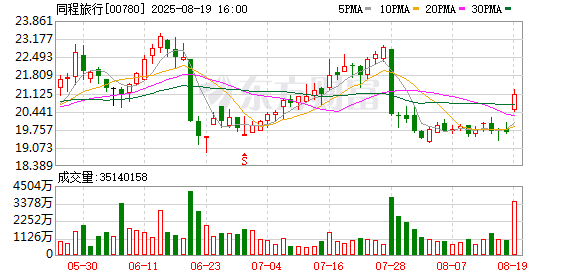
Core Viewpoint - Tongcheng Travel reported a revenue of 9.05 billion yuan for the first half of 2025, marking an 11.5% year-on-year increase, with adjusted net profit rising by 28.6% to 1.56 billion yuan. However, the company faces significant challenges in revenue growth, international expansion, and profitability compared to industry leader Ctrip, raising concerns about its long-term competitiveness [2][3]. Revenue Growth - The revenue growth rate for Tongcheng Travel has been declining over the past eight quarters, dropping from 117.4% in Q2 2023 to 10% in Q2 2025, indicating a significant slowdown in growth momentum [3]. - The company has seen a 10.2% year-on-year increase in annual paying users, reaching 251.7 million, with 87% of registered users and 69% of new paying users coming from non-first-tier cities [3]. - Average revenue per user (ARPU) increased by 13.8%, reflecting a shift towards higher-quality accommodations and diverse travel experiences [3]. - Accommodation booking revenue grew by 18.8% to 2.56 billion yuan, while transportation ticketing revenue rose by 7.9% to 1.881 billion yuan, with international ticket sales increasing by nearly 30% [3][4]. Competitive Landscape - Compared to Ctrip, which reported a revenue of 13.8 billion yuan in Q1 2025, Tongcheng's revenue of 9.05 billion yuan highlights a clear disparity in scale and growth stability [5]. - Ctrip's adjusted EBITDA margin was 32.1% in 2024, while Tongcheng's was only 23.5%, indicating a significant gap in profitability [5][6]. - Ctrip has a strong international presence, with 30% of its revenue coming from international ticket and hotel bookings, while Tongcheng's international revenue is estimated to be less than 15% [6][8]. Cash Flow and Financial Health - Tongcheng's operating cash flow for the first half of the year was 3.0351 billion yuan, but it faced a net cash outflow of 3.5595 billion yuan from investing activities, reducing its cash and cash equivalents to 724 million yuan [8]. - In contrast, Ctrip had cash reserves exceeding 56.3 billion yuan, providing it with a significant advantage in market competition and investment capabilities [8]. Future Outlook - The CEO of Tongcheng Travel stated that the company will continue to focus on the mass tourism market and enhance its product offerings while expanding its outbound travel services [8]. - The key challenges for Tongcheng include overcoming revenue growth bottlenecks, improving profitability, and enhancing international competitiveness while maintaining its advantage in non-first-tier markets [8].
中国资产深夜爆发,多股涨超20%,加密货币大跌,13万人爆仓
21世纪经济报道· 2025-08-18 15:38
Core Viewpoint - The article highlights the strong performance of Chinese assets, particularly in the context of the U.S. stock market's fluctuations and the significant rise in A-shares, which have reached historical highs, indicating a growing interest from foreign investors in Chinese assets [2][3][4]. Group 1: U.S. Stock Market Performance - On August 18, U.S. stock indices opened lower and remained in a narrow range, with the Dow Jones down 0.04%, Nasdaq down 0.16%, and S&P 500 down 0.09% [1][2]. - The Nasdaq Golden Dragon China Index opened with a gain of over 1.2%, reflecting strong performance in Chinese concept stocks [2]. Group 2: Chinese Concept Stocks - Chinese concept stocks showed significant gains, with notable increases in companies such as iQIYI (+20.27%), Xunlei (+23.16%), and Douyu (+10%) [2][3]. - The top gainers included MASTERBEEF (+44.54%), Ranstone Medical (+28.21%), and Tianyan Pharmaceutical (+24.12%) [3]. Group 3: A-Share Market Highlights - The A-share market reached multiple records, with the Shanghai Composite Index hitting a 10-year high and the total market capitalization surpassing 100 trillion yuan for the first time [3]. Group 4: Foreign Investment Trends - There is an increasing willingness among global investors to allocate capital to Chinese assets, as indicated by the recent foreign capital inflows [4]. Group 5: Cryptocurrency Market - The cryptocurrency market experienced a significant downturn, with Bitcoin dropping below $115,000 and a 24-hour liquidation exceeding $500 million, affecting over 130,000 traders [6][7]. - Major cryptocurrencies like Ethereum and Solana saw declines of over 6% [6][7]. Group 6: Federal Reserve Interest Rate Expectations - The market anticipates a 25 basis point rate cut by the Federal Reserve in September, with a 92% probability according to interest rate swap traders [9].

华尔街“大空头”空翻多,大举买入中概股看涨期权
Huan Qiu Wang· 2025-08-17 02:55
Core Viewpoint - Michael Burry, a well-known hedge fund manager, has dramatically reversed his investment strategy regarding Chinese stocks, shifting from shorting to going long by purchasing call options for Alibaba (BABA) and JD.com (JD) in Q2 2025, indicating a significant change in his outlook on Chinese equities [1][4]. Group 1: Investment Strategy Changes - Burry's strategy has shifted 180 degrees, as he cleared his previously held put options on Alibaba, JD, Pinduoduo, Baidu, and Trip.com, and instead bought call options for Alibaba and JD, amounting to $28 million and $32.6 million respectively [1][4]. - This change contrasts sharply with Q1 2025, where Burry almost completely liquidated his positions in Chinese stocks, retaining only a small long position in Estée Lauder (EL) and expressing a bearish stance on Chinese tech stocks [4][5]. Group 2: Market Sentiment and Trends - Burry's shift is not an isolated incident; several international financial institutions have recently adopted a more optimistic view on Chinese assets, with Goldman Sachs noting a significant increase in global investor interest in Chinese stocks [2][3]. - Analysts highlight three core competitive advantages of Chinese assets: a complete modern industrial system, the emergence of an "engineer dividend" through increased R&D investment, and breakthroughs in technology sectors such as AI, semiconductors, and renewable energy [3]. Group 3: Implications for Investors - Burry's position changes are often seen as a market sentiment indicator, and his recent move to go long may boost investor confidence in Chinese stocks [5]. - Other institutions, such as Dodge & Cox, have also increased their positions in JD, while billionaire investor David Tepper has opted to take some profits, indicating a mixed sentiment among investors [5].



空翻多,“大空头”做多中国
Zhong Guo Ji Jin Bao· 2025-08-16 13:24
Group 1 - Michael Burry has made a significant shift in his investment strategy, moving from bearish to bullish on Chinese stocks, clearing his put options and buying call options instead [1][3][6] - As of the end of Q2, Burry's Scion Asset Management held a total market value of $578 million in U.S. stocks, with the top ten holdings accounting for 92.37% of the portfolio [1] - The largest positions in Burry's portfolio include call options on UnitedHealth and Regeneron Pharmaceuticals, indicating a focus on healthcare [2][3] Group 2 - Burry's recent investments include new positions in companies such as Lululemon, Meta, and Alibaba, reflecting a diversified approach across various sectors [2][3] - In Q1 2024, Burry significantly increased his holdings in JD.com and Alibaba by 80% and 66.67% respectively, demonstrating confidence in these Chinese tech stocks [6][9] - The overall sentiment towards Chinese stocks has been mixed among global institutions, with some choosing to take profits while others continue to invest [8][9]
空翻多!“大空头”做多中国
Zhong Guo Ji Jin Bao· 2025-08-16 13:07
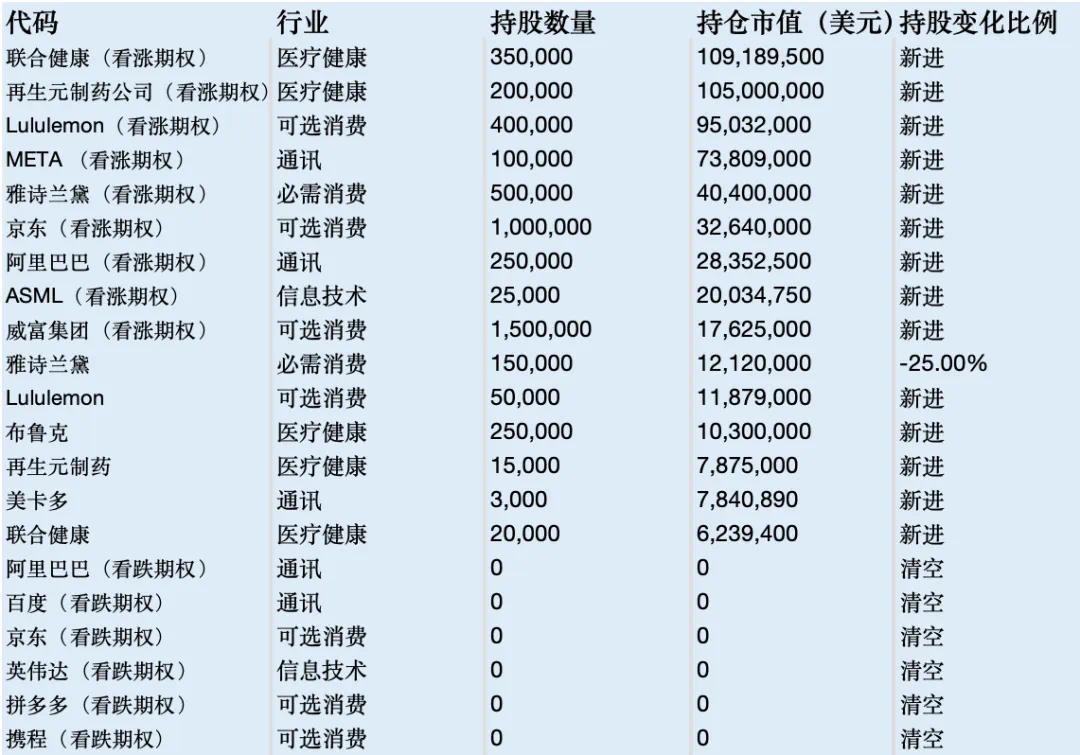
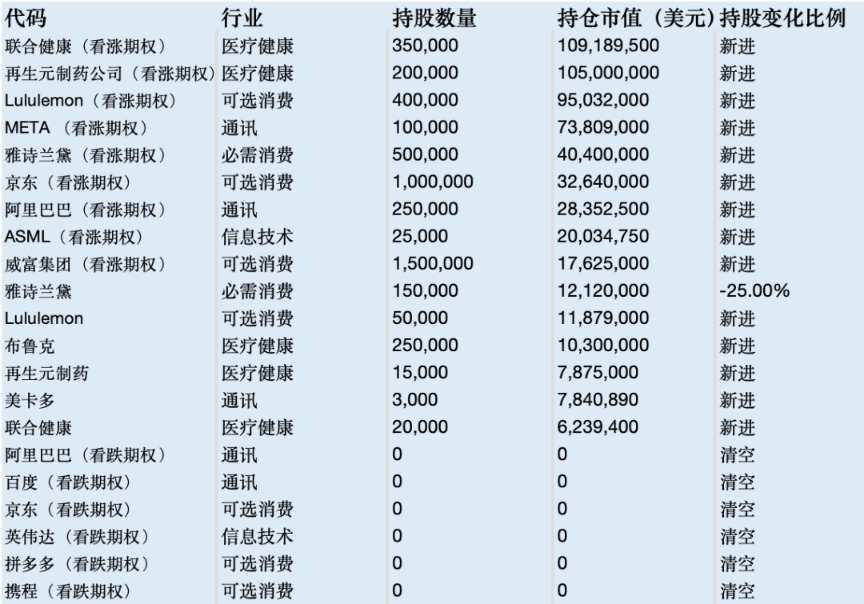
Core Viewpoint - Michael Burry has made a significant shift in his investment strategy, moving from bearish to bullish on Chinese stocks, clearing out put options and heavily investing in call options for various companies [1][4]. Group 1: Investment Strategy - As of the end of Q2, Michael Burry's Scion Asset Management held a market value of $578 million in U.S. stocks, with the top ten holdings accounting for 92.37% of the portfolio [2]. - Burry's strategy includes a combination of options and stocks, with the largest positions being call options on UnitedHealth and Regeneron Pharmaceuticals [3][4]. - In Q2 2025, Burry cleared out put options for Alibaba, Baidu, JD.com, Pinduoduo, and Ctrip, while buying call options for Alibaba and JD.com, alongside new investments in Lululemon [4][6]. Group 2: Holdings and Changes - The top new positions include: - UnitedHealth (350,000 shares, $109.19 million) - Regeneron Pharmaceuticals (200,000 shares, $105 million) - Lululemon (400,000 shares, $95.03 million) - META (100,000 shares, $73.81 million) - Estée Lauder (500,000 shares, $40.4 million) [3]. - Burry's previous holdings in Alibaba (put options) and other Chinese stocks were completely liquidated, indicating a complete turnaround in his investment outlook [4][6]. Group 3: Market Context - In Q1 2024, while other investors were pessimistic about Chinese stocks, Burry significantly increased his positions in JD.com and Alibaba by 80% and 66.67%, respectively [6]. - Following the "9·24" policy announcement in 2024, Burry's investments in Chinese stocks benefited from a strong market rebound [6][10]. - By Q2 2025, there was a divergence in views among global institutions regarding Chinese stocks, with some choosing to take profits while others continued to increase their positions [10].
湖北中翼以产业资本重塑酒店价值链生态
Sou Hu Cai Jing· 2025-08-12 03:59
Core Insights - The article discusses the cyclical challenges faced by the hotel industry in China, particularly the cash flow issues during off-peak seasons despite a record number of hotels in operation in 2024, exceeding 370,000 [1][3] - Hubei Zhongyi Hotel Investment Management Co., Ltd. has introduced a prepayment model to address these cash flow challenges, providing hotels with 5-8 months of operational funding without traditional bank guarantees [3][4] - The founder, Liu Wen, emphasizes the importance of understanding industry dynamics and leveraging capital to optimize the value chain, aiming for a win-win situation for both hotels and Zhongyi [6][9] Industry Challenges - The hotel industry is experiencing a decline in RevPAR (Revenue Per Available Room) by 1.2% due to oversupply, leading to a situation where new hotel openings do not translate into increased revenue [1] - Many mid-tier hotels face existential threats due to cash flow issues exacerbated by high operational costs during off-peak seasons [1][3] Hubei Zhongyi's Business Model - The company employs a unique model that combines "industry operation + capital empowerment," allowing for flexible funding solutions for hotels [3][4] - The prepayment model effectively transfers future sales rights temporarily to Zhongyi, enabling hotels to maintain operations without traditional financing hurdles [3][6] Team and Expertise - The core team consists of experts from international hotel groups and OTA platforms, bringing advanced revenue management and marketing strategies to the company [6][9] - Liu Wen's background in supply chain management and capital operations has been instrumental in developing a comprehensive management model that enhances operational efficiency [4][6] Future Vision - Hubei Zhongyi aims to extend its services beyond cash flow solutions by offering specialized OTA operations and comprehensive renovation support for hotels facing lifecycle challenges [8] - The company's approach is positioned as a transformative force in the hotel industry, promoting a more efficient and sustainable operational model [9]

滴滴出行20250811
2025-08-11 14:06
Summary of Didi Chuxing Conference Call Company Overview - Didi Chuxing operates in three main segments: domestic business (ride-hailing), international business (ride-hailing, food delivery, finance), and new business (Robotaxi, energy) [2][4][10] Key Financial Insights - Domestic business has achieved breakeven, expected to contribute 12 billion RMB in profit this year, with revenue growth around 10% and GTV margin reaching 3.7%, projected to reach 4% next year [2][6] - International business is expected to incur losses of 1.5 to 1.8 billion RMB this year, primarily due to food delivery losses, with overall breakeven anticipated around 2027 [2][10] - New business is projected to lose 3 billion RMB this year, with Robotaxi losses at 1.5 billion RMB, maintaining potential for significant future growth [6][10] - Overall EBITDA for the year is estimated at 7.2 billion RMB, with net profit around 7.3 to 7.4 billion RMB, and a projected compound annual growth rate of nearly 30% over the next 3 to 5 years [7] Market Position and Growth - Didi holds a strong market position in Latin America, particularly in Mexico and Brazil, competing closely with Uber [11] - In Mexico, Didi's food delivery market share exceeds 50%, while in Brazil, it faces strong competition from iFood, which holds a 90% market share [12] - Didi's international ride-hailing GTV is approximately 100 billion RMB, about one-third of the domestic GTV, with a significant growth rate of 25% compared to 10% domestically [10] Robotaxi Development - The market has varying expectations for the Robotaxi sector, with companies like Xiaoma Zhixing leading in technology. However, as licensing becomes more equitable, operational capabilities and user perception will become key competitive factors [13] - The BOM cost for the latest Robotaxi model is around 300,000 RMB, with future models expected to maintain similar cost levels [13] Listing Plans - Didi initially planned to submit a Hong Kong listing application in April 2025, but this has been delayed, with expectations now set for 2026. The company is adjusting accounting standards to meet Hong Kong requirements [14] Additional Insights - The domestic ride-hailing business has a daily order volume of approximately 30 million, with a GTV of over 300 billion RMB, growing at about 10% annually [9] - The international ride-hailing business has achieved profitability, but overall remains affected by food delivery losses [10] - The company is exploring new business opportunities, including self-developed community group buying [5]

利好消息,全线收涨
Shang Hai Zheng Quan Bao· 2025-08-09 01:01
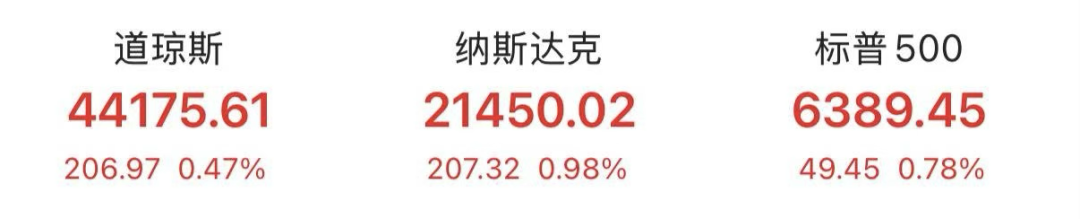
Market Performance - The three major U.S. stock indices closed higher, with the Dow Jones up 0.47% at 44,175.61 points, the S&P 500 up 0.78% at 6,389.45 points, and the Nasdaq Composite up 0.98% at 21,450.02 points, marking a new high [1][4] - For the week, the Dow increased by 1.35%, the Nasdaq rose by 3.87%, and the S&P 500 gained 2.43% [1][4] Influencing Factors - Market sentiment improved due to news of U.S. and Russia seeking a ceasefire in Ukraine, combined with expectations of interest rate cuts from the Federal Reserve [2][4] - President Trump's upcoming meeting with Russian President Putin was confirmed, which may have contributed to positive market sentiment [2] Technology Sector Highlights - Technology stocks surged, led by Apple, which rose over 4% and achieved a weekly gain of over 13%, marking its best weekly performance since July 2020 [5][6] - Other tech stocks like Google and Tesla increased by over 2%, while Nvidia rose by over 1%, reaching a new closing high [5] Investment Announcements - Apple announced plans to invest an additional $100 billion in the U.S., with a total investment of $600 billion over the next four years, alongside a new "American Manufacturing Plan" [6] Sector Performance - The automotive and consumer electronics sectors saw significant gains, with GoPro up over 7%, Sony up over 4%, and both Toyota and Honda up over 3% [7]