智元机器人

Search documents
具身机器人抢着砸钱上春晚,投资人回应了
量子位· 2026-02-02 00:37
Core Viewpoint - The competition among embodied intelligent robots is intensifying, particularly with their presence at the Spring Festival Gala, which is seen as a significant platform for visibility and market engagement [1][5]. Group 1: Industry Participation - Companies like Yushu Technology and Magic Atom are participating as strategic partners for the Spring Festival Gala, highlighting the growing interest in embodied intelligence [2]. - Chasing Technology has secured a position as the strategic partner for intelligent technology ecosystems at the Gala, with its subsidiaries also taking on roles in smart travel and consumer electronics [3]. - Galaxy General Robotics, valued at over 20 billion RMB, has been designated as the "official embodied large model robot" for the 2026 Spring Festival Gala, indicating its prominence in the sector [4]. Group 2: Investment Insights - Investors are curious about why early-stage embodied intelligence companies are willing to invest heavily in visibility at events like the Spring Festival Gala, as traditionally, companies wait until they are more established [5]. - GGV Capital's partner, Fu Jixun, compares the current state of the embodied intelligence industry to the early days of the internet and electric vehicles, emphasizing the need for high visibility to attract more business opportunities and support [5][12]. - The capital invested in these companies aims to enhance their visibility, which can lead to increased market attention, customer procurement, and investor interest, as seen with Yushu's previous participation [5]. Group 3: Market Dynamics - The embodied intelligence sector is still in its early stages, lacking a complete commercial loop, and requires time for maturation and validation [12]. - GGV Capital has invested in over 50 AI-related companies and 8 embodied intelligence companies, with a significant increase in investment scale over the past year [13]. - The current focus on data collection and application in the embodied intelligence field is critical, as the high cost of data acquisition remains a core challenge [24]. Group 4: Competitive Landscape - China has advantages in the embodied intelligence sector, including abundant application scenarios and a strong talent pool, but faces challenges in capital market development compared to other countries [14][15]. - Concerns about valuation bubbles exist, with many companies still struggling with low revenue and commercial viability [17]. - The industry is expected to see a wave of companies going public, which could provide a boost to the sector, but companies must still focus on achieving commercialization [20][21]. Group 5: Strategic Differentiation - Companies are encouraged to focus on specific niches within the embodied intelligence space to build competitive advantages, as larger firms cannot cover all segments [26]. - GGV Capital's strategy includes leveraging its unique position to assist portfolio companies in exploring overseas markets, which differentiates it from other investors [27].


Optimus V3初亮相,“新T链”们,来了!
Robot猎场备忘录· 2026-02-02 00:03
Core Viewpoint - The article discusses the performance and developments of T-chain companies in January, highlighting the anticipation for the upcoming Optimus V3 and the positive market reactions to various catalysts, particularly in North America [2][3][6]. Summary by Sections January Market Performance - T-chain companies exhibited moderate performance in January, with some showing weakness while awaiting developments in February [2]. - Key catalysts included contract awards and site confirmations, with notable stock price increases for specific companies, such as a 50% rise for a core harmonic reducer [2]. Key Catalysts and Events - The release of Optimus V3 and related communications in North America were pivotal, with significant stock movements following Elon Musk's tweets [3][6]. - Several companies, including WX, RT, KS, FS, and SL, saw substantial gains, with multiple stocks hitting their daily limits [3]. Adjustments and Market Reactions - The market experienced a downturn in the third week of January, with significant declines on January 26, attributed to various factors including a necessary "cooling off" period [5]. - The article emphasizes the importance of monitoring these adjustments and suggests that further insights will be provided in a dedicated platform [5]. Focus on New T-chain Companies - The article outlines a "shrinking circle" strategy, where the focus has shifted to fewer, more promising T-chain companies as the release of V3 approaches [6]. - The communication with North American partners is crucial for production agreements and confirmations, with several companies entering the RFQ stage [7]. Additional Developments - Other notable advancements include new suppliers and technologies, such as a core supplier for harmonic magnetic field motors and new PEEK material suppliers, which have also seen positive market reactions [7][8]. - The article concludes with a reminder of the importance of tracking core T-chain companies as the Optimus V3 release approaches, with ongoing updates promised [8][9].

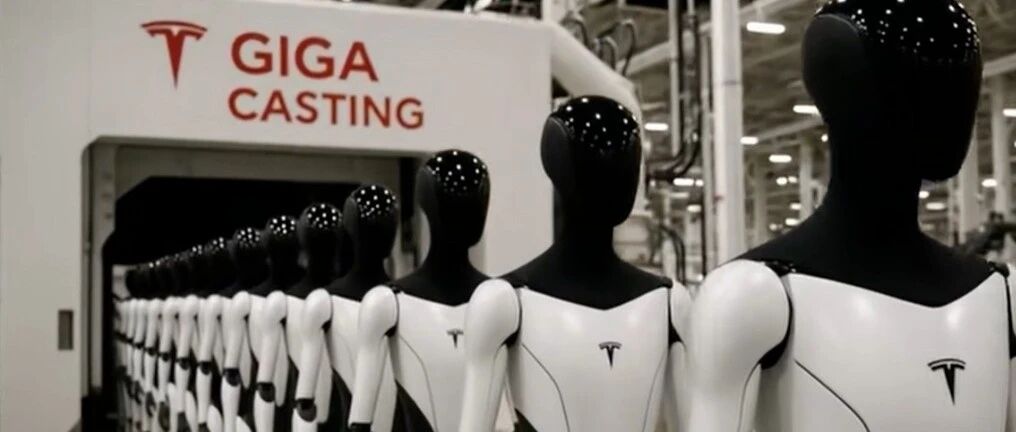
具身智能行业研究:特斯拉S/X产线将改建为机器人基地,春晚多家本体联袂登台
SINOLINK SECURITIES· 2026-02-01 09:56
Investment Rating - The industry is rated as "Buy" with expectations of a price increase exceeding 15% over the next 3-6 months [45] Core Insights - The robotics industry is experiencing accelerated growth, with Tesla's third-generation robot set to be released soon, and multiple robotics companies showcasing their products at the Spring Festival Gala [2] - The establishment of the "Embodied Intelligence Laboratory" by AsiaInfo and ABB Robotics marks a significant step in the collaboration between manufacturing and computing giants [3] - The year 2026 is identified as a critical milestone for humanoid robots, with mass production expected to begin, leading to a significant increase in output and application scenarios [4] Summary by Sections Industry Dynamics - The robotics sector is transitioning from policy guidance to commercial implementation, which is expected to drive long-term development in the embodied intelligence industry [10] - The successful connection of humanoid robots to satellites and the establishment of a testing platform in Beijing signify substantial advancements in the industry [11] Main Body - Four robotics companies, including Galaxy General and Yuzhu Technology, will collaborate for the 2026 Spring Festival Gala, showcasing various robotic technologies to the public [29] - Yuzhu Technology has open-sourced its general humanoid robot operation model, enhancing spatial perception capabilities and enabling robots to perform multiple tasks [25] Core Components - The "Embodied Intelligence Laboratory" established by AsiaInfo and ABB Robotics aims to integrate communication, automation, and AI technologies to foster innovation in the robotics field [37] - Fourier has launched a comprehensive solution for rehabilitation scenarios, demonstrating the industry's focus on specialized applications [40]
机器人扎堆抢上春晚:1亿出场费背后的行业狂欢与隐忧
Sou Hu Cai Jing· 2026-01-31 20:52
春晚的商业价值早已被互联网巨头验证。2015年微信支付以5亿元红包首战春晚,一夜完成支付宝8年积 累的用户绑卡量;2016年支付宝以8亿元反击,此后百度、快手、京东等企业轮番登场,独家赞助费水 涨船高。2019年百度为春晚投入的营销费用超16亿元,2022年京东的赞助费达2亿元,叠加红包发放后 总投入超10亿元。 然而,2026年春晚的赞助逻辑发生根本性转变。当阿里、京东等互联网巨头开始审视投入产出比时,具 身智能企业却以"组团"形式接棒成为主角。据业内人士透露,此次春晚机器人赞助总金额达5亿元,由 宇树科技、银河通用等5家企业分摊,每家实际支出约1亿元。部分企业甚至以股权或资源置换形式参 与,央视融媒基金的身影也出现在多家机器人企业的融资列表中。 2026年央视春晚的舞台上,一场前所未有的科技盛宴正在上演。宇树科技、银河通用、魔法原子、松延 动力等具身智能企业携多款人形机器人集体亮相,武术、舞蹈、小品等节目轮番登场,金属机械与传统 文化碰撞出别样火花。这场被外界称为"机器人狂欢"的表演背后,是每家企业高达1亿元的"出场费"投 入,以及行业洗牌前夜的激烈博弈。 这场"蚂蚁接棒大象"的戏码,折射出科技产业的风向 ...

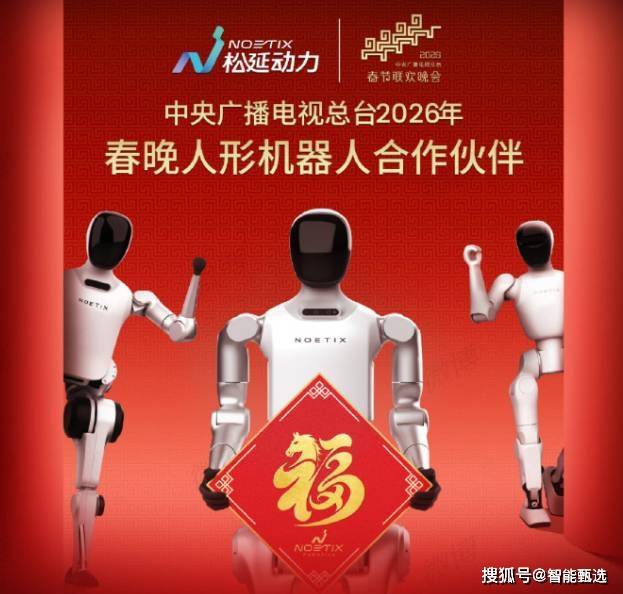
我们不需要100万台“跳舞机器人”
虎嗅APP· 2026-01-31 03:54
Core Viewpoint - The article discusses the current state and future prospects of humanoid robots, highlighting the discrepancies in projected shipment volumes and the challenges faced by the industry in achieving practical applications beyond entertainment [5][6][12]. Group 1: Market Data and Projections - Omdia's report lists the top three humanoid robot manufacturers for 2025 as Zhiyuan Robotics, Yushu Technology, and Ubtech, with projected shipments of 5168 units, 4200 units, and 1000 units respectively [6]. - Counterpoint's data shows that these three companies hold market shares of 30.4%, 26.4%, and 5.2% in the humanoid robot sector [9]. - Yushu Technology claims its actual shipment volume will exceed 5500 units in 2025, countering external claims of lower figures [12]. Group 2: Industry Challenges - Despite the optimistic projections, the humanoid robot industry is still in its early exploratory phase, with over 140 companies and more than 330 products expected by 2025, indicating a lack of substantial production capacity [12][13]. - The industry faces significant hurdles in application and market acceptance, with many robots currently limited to entertainment functions like dancing, which raises concerns about their practical utility [14][18]. - The need for further development and the high barrier for consumer adoption are evident, as many users report their robots becoming unused after initial excitement [19][20]. Group 3: Development and Innovation - The article emphasizes the importance of product stability and the need for a simplified "proof of concept" (POC) process to enhance deployment efficiency [20][21]. - Current humanoid robots struggle with hardware reliability, often requiring additional support to function properly, which hampers their market readiness [22]. - The potential for humanoid robots to evolve into more functional roles exists, but significant advancements in intelligence and application are necessary for widespread adoption [27][28]. Group 4: Future Outlook - The article suggests that achieving mass production targets, such as the ambitious goal of 1 million units set by Elon Musk for Tesla's Optimus, may be unrealistic in the near term due to existing technological and market challenges [25][28]. - Industry experts believe that the path to scaling production will depend on continuous iteration and improvement of the robots' capabilities, drawing parallels with the electric vehicle industry's growth trajectory [23][27].

美顶级投行改了,“最新情况表明,中国还要翻一番”
Xin Lang Cai Jing· 2026-01-30 22:15
Core Insights - Morgan Stanley has raised its forecast for China's humanoid robot sales in 2026, expecting a 133% increase this year to 28,000 units, doubling the previous estimate of 14,000 units [1] - The humanoid robot market in China is projected to grow exponentially, from approximately 12,000 units in 2024 to 262,000 units by 2030, and reaching 2.6 million units by 2035 [1] Industry Growth and Cost Reduction - The production costs for robots are expected to decline, lowering the purchase threshold; raw material costs for robot production in China are anticipated to decrease by 16% this year [3] - By 2035, global component prices are expected to drop by about 70%, leading to significant price reductions for humanoid robots [3] - Prices for humanoid robots in middle and low-income countries, including China, are projected to fall from $50,000 in 2024 to approximately $21,000 by 2050 [3] Market Penetration and Application - By 2036, the number of humanoid robots in use globally is expected to reach 25.4 million, accounting for 2% of the overall robot market, with this share increasing to 13% by 2040 and 42% by 2044 [3] - By 2050, the global deployment of humanoid robots may exceed 1 billion units, with over half of these applications in middle and high-income countries [3] China's Dominance in Humanoid Robotics - China is currently the largest market for humanoid robot applications, with over 80% of the global deployment expected by 2025 [3] - The domestic humanoid robot industry has begun extensive market promotion, with several manufacturers partnering with the CCTV Spring Festival Gala to showcase their products [4][5] Investment and Industry Trends - The increasing presence of robot manufacturers at the Spring Festival Gala reflects three major industry trends: focus on consumer-level applications, reaching the C-end market, and transitioning from experimental technology to commercial deployment [7] - A report by IDC indicates that the humanoid robot market will experience explosive growth in 2025, with an estimated shipment of 18,000 units and sales of approximately $440 million, marking a year-on-year increase of about 508% [7] Government Support and Competitive Landscape - Since 2015, the Chinese government has prioritized robotics as a key industry, leading to rapid development and the establishment of over 150 humanoid robot companies [8] - The government has implemented policies to support the robotics industry, aiming for China to achieve international leadership in robotics by 2035 [8] - Elon Musk has acknowledged that China's humanoid robot sector poses the most significant competition for Tesla, highlighting China's manufacturing capabilities and advancements in AI technology [9]

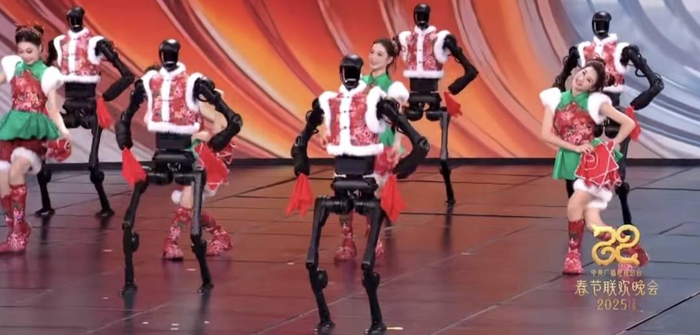
摩根士丹利上调数据,“中国机器人销量还要翻一番”
Xin Lang Cai Jing· 2026-01-30 17:26
Core Insights - Morgan Stanley has raised its forecast for China's humanoid robot sales in 2026, expecting a 133% increase this year to 28,000 units, doubling the previous estimate of 14,000 units [1] - The humanoid robot sales in China are projected to grow exponentially, from approximately 12,000 units in 2024 to 262,000 units by 2030, and reaching 2.6 million units by 2035 [1] Group 1: Market Growth and Projections - The production cost of robots is expected to decline, lowering the purchase threshold for humanoid robots, with raw material costs in China projected to decrease by 16% this year [3] - By 2035, global prices for related components are expected to drop by about 70%, leading to significant price reductions for humanoid robots [3] - The average price of humanoid robots in middle and low-income countries, including China, is expected to fall from $50,000 in 2024 to approximately $21,000 by 2050 [3] - In developed countries like the U.S., the average price is projected to decrease from $200,000 to $75,000 in the same timeframe [3] - By 2036, the number of humanoid robots in use globally is expected to reach 25.4 million, accounting for 2% of the overall robot market, with this share increasing to 13% by 2040 and 42% by 2044 [3] Group 2: Industry Trends and Developments - The humanoid robot industry in China is entering a phase of market promotion, with several manufacturers collaborating with the CCTV Spring Festival Gala to showcase their products [4][5] - The participation of multiple robot manufacturers in the Spring Festival Gala reflects three key industry trends: focus on consumer-level applications, reaching the C-end market, and transitioning from experimental technology to commercial deployment [7] - A report by IDC indicates that the humanoid robot market will experience explosive growth in 2025, with an estimated shipment of 18,000 units and sales revenue of approximately $440 million, marking a year-on-year increase of about 508% [7] - Chinese manufacturers are leading the market, with companies like Zhiyuan Robotics and Yushutech being significant players in terms of shipment volume [7] Group 3: Competitive Landscape - Since 2015, when China prioritized robotics as one of its top ten key industries, the sector has seen rapid development, with over 150 humanoid robot companies currently operating [8] - Government support has been crucial, with policies aimed at enhancing R&D and promoting the integration of robots into economic and social frameworks [8] - China possesses unique advantages in manufacturing application scenarios and data collection capabilities, which are critical for the development of embodied intelligence [9] - Elon Musk has acknowledged that China's humanoid robot sector represents the most formidable competition for Tesla, highlighting China's strengths in large-scale manufacturing and AI technology [9]
卧龙电驱:已形成全面的人形机器人核心组件解决方案组合
Zheng Quan Ri Bao Wang· 2026-01-30 14:44
证券日报网讯1月30日,卧龙电驱(600580)在互动平台回答投资者提问时表示,公司凭借于电驱动系 统解决方案的深厚研发制造基础,专注于具身智能在工业场景中的商业化部署,并已形成全面的人形机 器人核心组件解决方案组合。公司提供关节模组、灵巧手及外骨骼等高精度、快响应、高能效的工业及 具身智能机器人,并与智元机器人、中科新松、联想科技等头部企业建立业务合作。在工业领域具身智 能应用方面,公司凭借领先的工业自动化能力,与生态圈伙伴合作,通过开发工业具身智能垂域模型, 在全球范围内继续推动工业具身智能机器人的商业化,提高制造行业的数智化和柔性。 ...

洗牌前夜,机器人豪赌春晚背后,各藏续命突围算盘
3 6 Ke· 2026-01-30 13:08
Core Insights - The 2026 CCTV Spring Festival Gala has become a battleground for five robot companies, each investing heavily to secure a partnership, with costs for a single seat reportedly reaching up to 1 billion yuan [1][2] - The event represents a strategic positioning for these companies, aiming to leverage the gala's national credibility for various objectives, including market expansion, IPO preparation, and brand recognition [1][4] Group 1: Investment and Market Dynamics - The cost of a partnership seat at the Spring Festival Gala ranges from 60 million to 1 billion yuan, with exclusive rights potentially reaching 500 million yuan, effectively excluding most companies from participation [2] - The robot industry is at a critical juncture, with signs of both excitement from order acquisitions and IPO accelerations, as well as concerns over capital cooling and public skepticism regarding the practicality of robots [1][5] - The Spring Festival Gala serves as a unique economic engine, with previous participants like Wuliangye and Yushutech experiencing explosive growth in sales and brand visibility [4] Group 2: Strategic Objectives of Participating Companies - **Chasing Technology**: Chasing Technology aims to transform from a niche brand to a national-level technology brand, leveraging the gala for credibility and trust [7][9] - **Magic Atom**: Magic Atom, a startup focused on general-purpose robots, sees the gala as a platform to enhance market credibility and attract investment ahead of its IPO [13][15] - **Galaxy General**: Galaxy General seeks to bridge the gap between its industry expertise and public recognition, using the gala to elevate its profile and highlight its technological advancements [16][18] - **Yushutech**: Yushutech, already a recognized leader, aims to defend its market position and address public skepticism through its presence at the gala [20][25] - **Songyan Power**: Songyan Power focuses on showcasing its humanoid robot technology and expanding its market presence, particularly in North America and the Middle East [27][29] Group 3: Industry Challenges and Future Outlook - The robot industry faces significant challenges, including technological bottlenecks, unclear commercialization paths, and a fragile market confidence, leading to a complex environment of opportunities and risks [5][33] - The high costs associated with the gala have sparked debates about the sustainability of such marketing strategies versus practical R&D investments [32][34] - The industry is at a crossroads, with a clear divide emerging between companies focused on short-term visibility through performances and those committed to developing practical, intelligent solutions [36][37]

2026年具身智能产业发展研究报告丨36氪研究院
36氪· 2026-01-30 10:24
以下文章来源于36氪研究院 ,作者36氪研究院 硬件迭代加速, 人形机器人蓄力规模突破。 来源| 36氪研究院(ID:kr_research) 封面来源 | IC photo 当前,在政策引领、技术突破与市场需求的共振驱动下 , 中国具身智能产业 正 迈入快速发展 的 新阶段 。 在此背景下, 资本市场 布局也日益活跃。 公开资料数据显示, 2025年前11个月具身智能产业融资额达到334.73亿元,是2024年同期的4倍;截至2025年 12月21日,全年融资事件超305起,总额超过380亿元,参与的投资机构数量超过600家 。 资本的密集涌入,充分印证了产业发展 的 潜力与市场信心 。这种信心,根植于社会经济发展中持续涌现的明确而迫切的替代需求。 36氪研究院 . 专注于一二级市场及新经济领域的研究与咨询 随着人口老龄化加剧与劳动力结构性短缺等问题持续凸显,社会对能够替代人工、承担高风险任务并提升产线效率的智能化解决方案需求日益迫切。传统 自动化设备受限于固定场景与预设程序,难以适应柔性制造、人机协作等动态复杂环境,产业升级面临核心瓶颈。为突破这一局限, 以人形机器人为代 表的具身智能正在加速演进,逐步形 ...