河钢股份

Search documents
河钢股份(000709) - 关于重大诉讼事项终审判决的公告
2025-11-06 07:45
二、 案件判决情况 证券代码:000709 股票简称:河钢股份 公告编号:2025-054 河钢股份有限公司 关于重大诉讼事项终审判决的公告 本公司及董事会全体成员保证信息披露内容的真实、准确和完整,没有虚 假记载、误导性陈述或者重大遗漏。 一、 本次重大诉讼事项的基本情况 亚联(香港)国际投资有限公司(以下简称"亚联公司")于2020年9月向 我公司及相关公司提起了诉讼,河北省石家庄市中级人民法院于2021年9月对该 案作出了裁定,驳回了原告亚联公司的起诉。后亚联公司不服裁定提起上诉,经 河北省高级人民法院审理后,裁定撤销河北省石家庄市中级人民法院对本案的裁 定,并指令河北省石家庄市中级人民法院审理本案。2024年7月,石家庄市中级 人民法院判决驳回原告亚联公司的诉讼请求,亚联公司不服石家庄中院判决,再 次向河北省高级人民法院提起上诉。详见公司于2020年10月9日、2020年11月7 日、2021年9月28日、2021年11月2日、2021年12月30日、2024年7月13日披露于 《中国证券报》《上海证券报》《证券时报》和巨潮资讯网(http://www.cninfo.com.cn) 的《重大诉讼公告》 ...

10月美国ADP就业数据超预期
Dong Zheng Qi Huo· 2025-11-06 00:50
1. Report Industry Investment Ratings - Gold: Short - term price in a callback trend [16] - US Dollar: Short - term oscillation [20] - Chinese Stock Index Futures: Long - position balanced allocation for each index [23] - US Stock Index Futures: Short - term high - level shock adjustment, with a bullish view considering profit support [27] - Treasury Bond Futures: Recently, the bond market is slightly bullish with limited upside, and long - positions should consider rhythm and odds [29] - Sugar: Chinese sugar market to oscillate, strict control on syrup and powder imports and reduced Q4 imports [34] - Steel: Adopt an oscillating approach to steel prices [41] - Live Pigs: Short - sell 03 contract after a sharp rebound, and keep an eye on long - positions in far - month contracts [44] - Red Dates: Wait and see, focus on price negotiation and acquisition progress in production areas [47] - Oils: If no major negative news, consider long - positions; wait for market sentiment to stabilize if negative [48] - Corn Starch: Band - trading [51] - Corn: 01 contract to oscillate weakly in the short - term and rebound in the long - term; be cautious about far - month contracts [53] - Thermal Coal: Price to remain strong in the short - term, watch policy changes after breaking through $800 [55] - Iron Ore: Downside space limited, consider negotiation and coking coal valuation [56] - Coking Coal/Coke: Short - term oscillation, watch for risks from declining hot metal production [57] - Copper: Oscillation, consider buying on dips [60] - Polysilicon: If the contract price corrects to par or discount to spot, consider long - positions; beware of options risks this weekend [63] - Industrial Silicon: Buying on dips may be more cost - effective [65] - Lead: Short - term strength, be cautious about chasing long; positive spread arbitrage available; be cautious in external trading [69] - Zinc: Speculative long - positions take profit on rallies; observe positive spread arbitrage opportunities; wait and see for external trading [74] - Lithium Carbonate: Short - term wide - range oscillation; consider short - selling on rallies in the medium - term [79] - Nickel: Wait and see for speculative single - side trading; bet on valuation recovery after risk release [81] - Crude Oil: Price to oscillate [85] - Asphalt: Short - term weak oscillation [87] - Methanol: Holders of short - positions add short after the rebound ends; conservative investors take profit [89] - Pulp: Limited upside space [90] - Urea: Oscillation due to sentiment support [92] - Caustic Soda: Short - term weak oscillation [94] - Soda Ash: Downside space depends on coal price and new capacity; bearish in the medium - term [95] - Float Glass: Wait and see due to intense market game [97] - Container Freight Rates: Short - sell after the rally [99] 2. Core Views of the Report - The US ADP employment data in October exceeded expectations, indicating a short - term recovery in the labor market, but the economic downward pressure persists, and the US dollar maintains an oscillating trend [2][19] - In the context of a global stock market correction, the A - share market showed unexpected resilience, and the stock index is expected to oscillate at a high level [3][22] - The prices of steel, copper, and other commodities are affected by factors such as macro - expectations, fundamentals, and supply - demand relationships, showing different trends [5][6] 3. Summaries by Relevant Catalogs 3.1 Financial News and Reviews 3.1.1 Macro Strategy (Gold) - The US ADP employment in October increased by 42,000, and the ISM non - manufacturing PMI was 52.4, both better than expected [14][15] - Gold prices rebounded slightly, and the market is waiting for the end of the US government shutdown. Gold is expected to consolidate and approach the 60 - day moving average [15] 3.1.2 Macro Strategy (Foreign Exchange Futures - US Dollar Index) - Trump blamed the government shutdown for the Democratic victory in local elections [17] - The US Supreme Court questioned the legality of Trump's tariff policy [18] - The ADP employment data exceeded expectations, but the economic downward pressure continues, and the US dollar maintains an oscillating trend [19] 3.1.3 Macro Strategy (Stock Index Futures) - China will firmly promote high - level opening - up [21] - The A - share market showed resilience, and the stock index is expected to oscillate at a high level [22] 3.1.4 Macro Strategy (US Stock Index Futures) - The US ADP employment in October increased by 42,000, and the ISM services PMI reached a new high [25][26] - The US economic data remained resilient, and the stock market's risk appetite recovered [26] 3.1.5 Macro Strategy (Treasury Bond Futures) - The central bank conducted 65.5 billion yuan of 7 - day reverse repurchase operations, with a net withdrawal of 492.2 billion yuan [28] - The bond market's upward space is limited, and it is expected to oscillate. Long - positions should consider rhythm and odds [29] 3.2 Commodity News and Reviews 3.2.1 Agricultural Products (Sugar) - India's 2025/26 sugar production season has started, and Brazil's sugar production estimate has been raised [30][31] - The expected high - yield of the two major producers has increased concerns about global supply surplus, which is negative for the market [34] 3.2.2 Black Metals (Rebar/Hot - Rolled Coil) - The retail sales of passenger cars in October increased year - on - year and month - on - month [35] - Steel prices continued to be weak, and the supply pressure is expected to ease in November - December [40] 3.2.3 Agricultural Products (Live Pigs) - The project of Wens Co., Ltd.'s subsidiary passed the environmental assessment, and Dabeinong signed a regulatory agreement [42][43] - The short - term spot market is bullish, but the medium - term supply is expected to be loose [43] 3.2.4 Agricultural Products (Red Dates) - The acquisition of red dates in Xinjiang is progressing, and the futures price declined [45][46] - The supply is increasing, and the demand is weak. It is recommended to wait and see [47] 3.2.5 Agricultural Products (Soybean Oil/Rapeseed Oil/Palm Oil) - Malaysia's palm oil production in October increased by 12.31% month - on - month [48] - The market expects inventory accumulation in October. Pay attention to actual data and November's high - frequency supply - demand data [48] 3.2.6 Agricultural Products (Corn Starch) - The开机率 of corn starch enterprises increased, and the inventory slightly rose [49][51] - The inventory pressure is expected to be acceptable in January, and enterprises may maintain profitability [51] 3.2.7 Agricultural Products (Corn) - The spot price of corn is generally stable, with some regional differences [51] - Substitute supply is expected to increase, and the 01 contract may oscillate weakly in the short - term and rebound in the long - term [52][53] 3.2.8 Black Metals (Thermal Coal) - The international thermal coal price was strong on November 5, and the domestic price has risen recently [54][55] - The price is expected to remain strong in the short - term, and watch policy changes after breaking through $800 [55] 3.2.9 Black Metals (Iron Ore) - The demand for concrete weakened slightly, and iron ore prices oscillated weakly [56] - The downside space is limited, considering negotiation and coking coal valuation [56] 3.2.10 Black Metals (Coking Coal/Coke) - The price of coking coal in Linfen Anze was strong [57] - The short - term market is tight, but the hot metal production has peaked, and it may oscillate [57] 3.2.11 Non - ferrous Metals (Copper) - Chile's Codelco's copper production in the first nine months increased by 2.1% year - on - year [58] - The short - term macro - expectations are volatile, and copper prices are expected to oscillate [60] 3.2.12 Non - ferrous Metals (Polysilicon) - The number of photovoltaic component project bids decreased last week, and the price of polysilicon was under pressure [61][62] - November is a critical point of policy and fundamental game. Consider long - positions on dips if the contract price corrects [63] 3.2.13 Non - ferrous Metals (Industrial Silicon) - The production of industrial silicon in Sichuan and Yunnan decreased, and the inventory is expected to be difficult to reduce in November [64] - Buying on dips may be more cost - effective [65] 3.2.14 Non - ferrous Metals (Lead) - The LME lead inventory decreased, and the domestic lead price trended upward [69] - The short - term supply is slowly recovering, and pay attention to delivery risks; consider short - selling at high levels in the long - term [69] 3.2.15 Non - ferrous Metals (Zinc) - The LME zinc showed a premium, and the domestic zinc production is expected to decline in November - December [73] - Zinc prices may oscillate at a high level in the short - term, and need demand improvement for further rise [73] 3.2.16 Non - ferrous Metals (Lithium Carbonate) - Hainan Mining's lithium concentrate has been shipped, and EVE Energy signed a cooperation agreement [75][76] - The short - term price may oscillate widely, and consider short - selling on rallies in the medium - term [79] 3.2.17 Non - ferrous Metals (Nickel) - Minmetals' acquisition of a nickel business entered the second - stage review [80] - The short - term price may be under pressure, and bet on valuation recovery after risk release [81] 3.2.18 Energy Chemicals (Crude Oil) - Kazakhstan's oil field production decreased due to maintenance, and the EIA crude oil inventory increased [82][84] - Oil prices are expected to oscillate [85] 3.2.19 Energy Chemicals (Asphalt) - The capacity utilization rate of domestic heavy - traffic asphalt decreased [86] - The asphalt price may oscillate weakly in the short - term [87] 3.2.20 Energy Chemicals (Methanol) - The Chinese methanol port inventory increased slightly [88] - The rebound does not indicate a fundamental reversal. Holders of short - positions add short after the rebound ends [89] 3.2.21 Energy Chemicals (Pulp) - The import pulp price was stable, and the futures price rose [90] - The upward space of the pulp price is limited [90] 3.2.22 Energy Chemicals (Urea) - The urea enterprise inventory increased, and the price oscillated upward due to export quota rumors [91] - The urea price may oscillate due to sentiment support [92] 3.2.23 Energy Chemicals (Caustic Soda) - The caustic soda price in Shandong decreased locally, and the inventory decreased [93][94] - The caustic soda price may oscillate weakly in the short - term [94] 3.2.24 Energy Chemicals (Soda Ash) - The soda ash price in Shahe oscillated, and the demand may be affected in the short - term [95] - The soda ash price may decline in the medium - term, and the short - term downside space depends on coal price and new capacity [95] 3.2.25 Energy Chemicals (Float Glass) - The float glass price in Shahe increased slightly, and the market game is intense [96][97] - It is recommended to wait and see due to intense market game [97] 3.2.26 Shipping Index (Container Freight Rates) - Shipping companies adjusted European - route freight rates [98] - The container freight rate may rise in the short - term, and consider short - selling after the rally [99]


构建深度脱碳体系,破解钢铁行业转型困境
Zhong Guo Huan Jing Bao· 2025-11-05 23:23
Core Viewpoint - The steel industry in China faces significant challenges in achieving a green and low-carbon transformation, with carbon emissions accounting for approximately 15% of the national total, necessitating a comprehensive approach to overcome resource constraints, technological bottlenecks, and rising cost pressures [1][2]. Group 1: Current Status and Challenges - The steel industry has made progress in green low-carbon transformation through digitalization and ultra-low emission projects, with around 600 million tons of crude steel capacity undergoing ultra-low emission upgrades by July this year [2]. - Despite these efforts, the carbon emissions per ton of steel in China remain higher than international advanced levels, and the existing reduction potential is diminishing, requiring fundamental technological breakthroughs for deep decarbonization [2][3]. - The implementation of the EU's Carbon Border Adjustment Mechanism (CBAM) in 2026 may increase export costs for Chinese steel products, impacting the competitiveness of certain enterprises [2]. Group 2: Technological and Policy Bottlenecks - Low-carbon technologies such as hydrogen metallurgy and electric furnace processes are still in the early stages of commercialization, with high production costs and challenges in market promotion [3]. - The regulatory framework supporting deep decarbonization in the steel industry is not yet fully developed, with issues in quota allocation, market activity, and carbon pricing mechanisms that hinder effective incentives for low-carbon technology adoption [3]. - There are structural challenges in resource allocation, including difficulties in green electricity consumption and the large-scale application of carbon capture, utilization, and storage (CCUS) technologies [3][5]. Group 3: Recommendations for Acceleration - Strengthening technological innovation and industry-wide collaboration is essential, focusing on key technologies like hydrogen metallurgy and efficient electric furnace processes, while promoting the establishment of near-zero carbon emission demonstration plants [4]. - Innovating market mechanisms and stimulating demand for green products by integrating low-carbon steel procurement into green certification systems and reforming the carbon market to support companies adopting deep decarbonization technologies [4][5]. - Optimizing policy coordination and institutional support by implementing differentiated policies for long and short process steel mills, enhancing financing mechanisms for hydrogen metallurgy projects, and establishing cross-departmental coordination [4][5].
转型债券支持重点行业低碳转型——以钢铁行业为例
Zhong Guo Jin Rong Xin Xi Wang· 2025-11-04 13:07
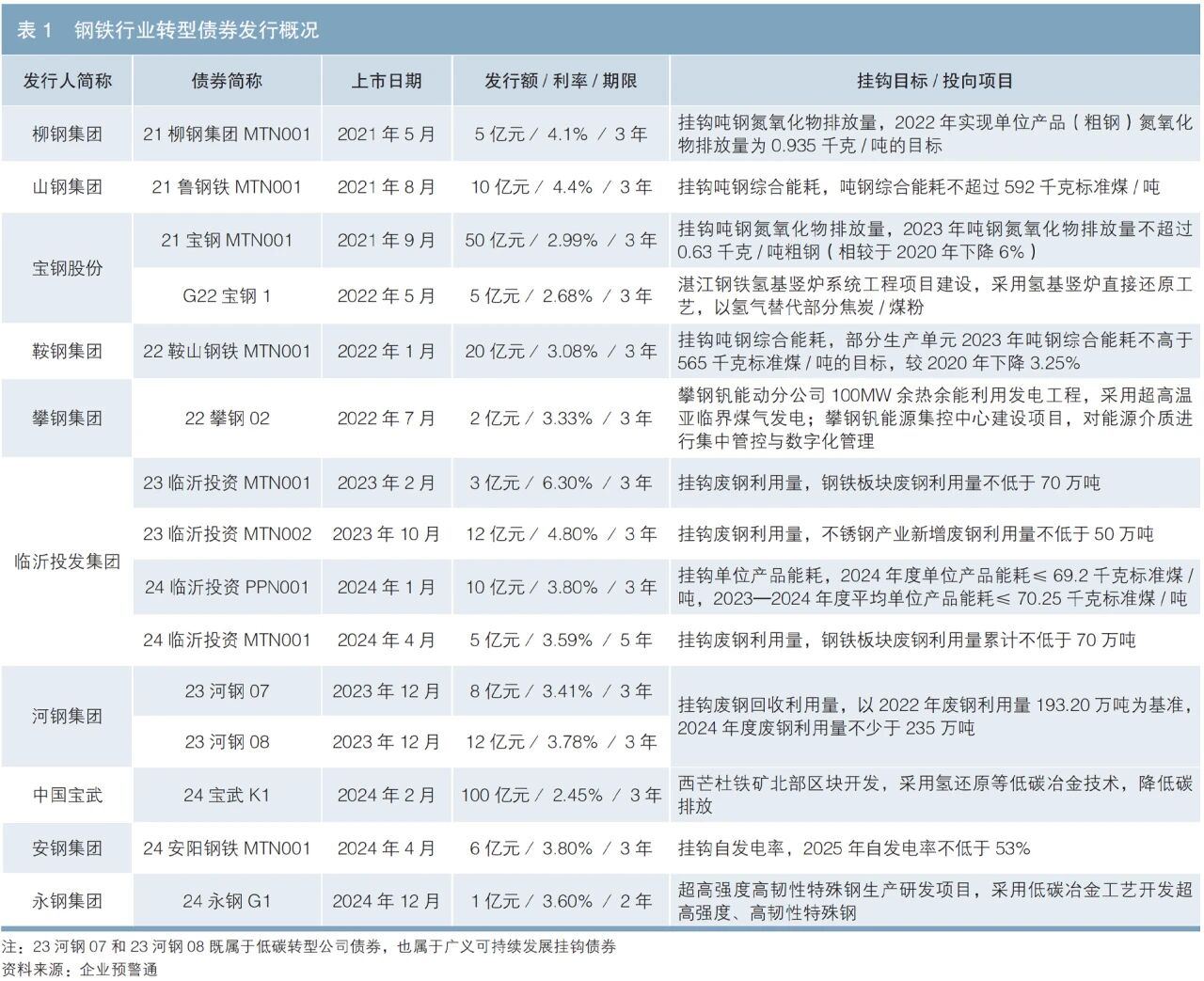
Core Viewpoint - The introduction of China's "dual carbon" goals necessitates a rapid transition from high-carbon to low-carbon industries, with transformation finance emerging as a critical support mechanism for this shift [1][2]. Group 1: Background of Transformation Finance - China's "dual carbon" goals set a clear timeline for a comprehensive green transition, placing unprecedented pressure on high-carbon industries, particularly the steel sector, which accounts for approximately 15% of national carbon emissions [2]. - Traditional green finance tools, such as green bonds, primarily support "pure green" projects and are inadequate for financing the transformation of existing high-carbon assets [2][3]. - Transformation finance aims to provide funding for high-carbon entities with clear emission reduction pathways but not yet meeting "deep green" standards, filling a crucial gap in the financial landscape [2]. Group 2: Development of Transformation Bonds - The policy framework for transformation bonds in China has evolved through three stages: the initial exploration phase, the pilot phase focusing on specialized products, and the current standardization phase aimed at unifying standards and enhancing policy coordination [4][5]. - The current transformation bond market includes various products, primarily transformation loans and bonds, which serve as essential tools for financing large-scale industrial transitions [3][6]. Group 3: Current Status of Transformation Bonds - As of the end of 2024, China has issued a total of 244 transformation bonds, amounting to 220.8 billion yuan, with the majority of issuers from high-carbon sectors like steel, coal, and construction materials [8]. - The funds raised through these bonds are primarily directed towards energy-saving technologies, clean production processes, and green production upgrades [8][12]. Group 4: Application of Transformation Bonds in the Steel Industry - The steel industry faces significant funding needs for equipment upgrades and technological advancements to achieve green low-carbon transformation, with estimates suggesting an annual investment requirement of around 500 billion yuan for the next 30 years to reach carbon neutrality [11][12]. - By the end of 2024, the steel sector had issued transformation bonds totaling 24.9 billion yuan, reflecting a growing trend in utilizing these financial instruments for low-carbon initiatives [12][14]. Group 5: Characteristics of Transformation Bonds - Transformation bonds in the steel industry exhibit significant variation in issuance scale, with terms primarily ranging from 2 to 3 years and interest rates between 2.45% and 6.30% [15][17]. - The funds raised are often earmarked for comprehensive project financing and debt optimization, targeting advanced decarbonization technologies [15][18]. Group 6: Challenges and Recommendations - The steel industry faces challenges such as funding gaps, high financing costs, and a lack of comprehensive transformation standards, which hinder the participation of smaller enterprises [20][21]. - Recommendations include enhancing the transformation finance standard system, promoting innovative financial tools, and improving information disclosure to increase market transparency and participation [21].

2025年1-9月全国黑色金属冶炼和压延加工业出口货值为1511.9亿元,累计下滑3.2%
Chan Ye Xin Xi Wang· 2025-11-04 03:46
Core Insights - The report highlights a decline in the export value of China's black metal smelting and rolling industry, with a 10.4% year-on-year decrease in September 2025, amounting to 17.3 billion yuan [1] - Cumulatively, from January to September 2025, the export value reached 151.19 billion yuan, reflecting a 3.2% year-on-year decline [1] Industry Overview - The report is based on data from the National Bureau of Statistics, indicating a downward trend in the black metal smelting and rolling industry [1] - The report is part of a comprehensive market survey and investment outlook for the black metal mining and selection industry in China from 2026 to 2032, published by Zhiyan Consulting [1] Company Insights - The companies mentioned include CITIC Special Steel, Hebei Steel, Zhongnan Shares, Benxi Steel, among others, indicating a focus on key players in the black metal industry [1] - Zhiyan Consulting is recognized as a leading industry consulting firm in China, providing in-depth industry research reports and tailored services [1]

短期市场或回归基本面 预计线材区间震荡为主
Jin Tou Wang· 2025-11-03 08:46
Core Viewpoint - The steel market is experiencing price adjustments, with several steel mills reducing rebar prices, indicating a shift in market dynamics and potential impacts on supply and demand [1]. Price Adjustments - Approximately five steel mills have adjusted their rebar ex-factory prices today, with reductions of 30 CNY/ton in Northeast China and 20 CNY/ton in both North and South China [1]. - Specific prices for high-strength rebar (HPB300) are reported, with prices ranging from 3340 CNY/ton to 3540 CNY/ton across various regions [3]. Market Inventory and Demand - The total inventory of construction steel this week is 4.8725 million tons, a decrease of 83,900 tons (-1.69%) compared to the previous week, covering 30 cities and 79 warehouses [4]. - On October 31, the national construction material transaction volume was 89,900 tons, a slight decrease of 0.33% from the previous trading day [4]. Market Analysis - According to Donghai Futures research, the market is shifting focus from macro events to fundamental factors, with real demand showing marginal improvement and a significant increase in apparent consumption of major steel products by 236,900 tons [5]. - Despite a slight decrease in iron output, finished steel production has seen a small increase, while steel mill profits are under pressure, and environmental production limits in Hebei are expected to further reduce steel supply [5]. - The short-term outlook for the steel market is anticipated to return to fundamentals, with expectations of range-bound fluctuations [5].
新浪财经:2025无烟煤产业大会暨无烟煤产需衔接会高峰论坛在晋城举行
Xin Lang Cai Jing· 2025-11-03 02:28
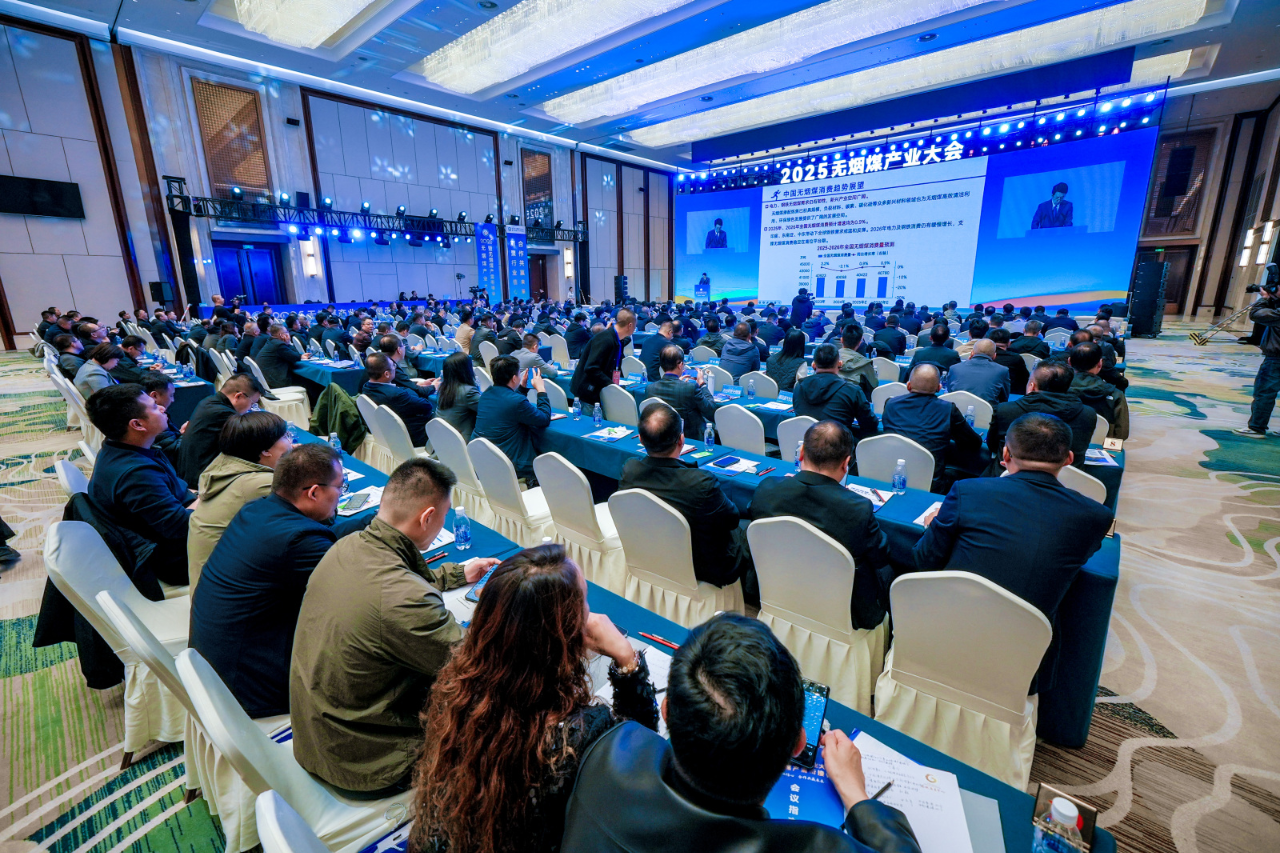
Core Insights - The "2025 Smokeless Coal Industry Conference and Supply-Demand Connection Meeting" was held in Jincheng, focusing on the smokeless coal industry, its clean and efficient utilization, and downstream applications [1][14] Industry Overview - Jincheng's smokeless coal is expected to enter a peak platform period during the 14th Five-Year Plan, with prices seeking balance between supply-demand and cost support, making it difficult to reach previous high levels [3] - The chemical industry will be a core demand driver, while the power sector will continue to play a stabilizing role, and the metallurgy sector faces structural contraction [3] - The industry aims to promote green mining, strengthen coal-electricity synergy, and expand high-value paths such as carbon-based new materials [3] Market Predictions - The coal market in 2025 is anticipated to show a "low in the front and high in the back" trend, with a general downward price movement in the first half due to a loose supply-demand situation, followed by a tightening supply in the second half [12] - The overall supply is expected to remain stable, with a gradual reshaping of the supply-demand structure [3][12] Technological Innovations - The application of axial flux motors in industrial fields is highlighted, showcasing significant advantages such as a 50% reduction in size and weight, and a 17%-32% overall energy saving rate [8] - The integration of "motor + system" energy-saving solutions is driving the industrial sector towards intelligent and low-carbon transformation [8] Application in Metallurgy - Smokeless coal plays a crucial role in iron-making processes due to its low sulfur, low ash, high fixed carbon, and high calorific value [10] - It is primarily used in three key areas: blast furnace injection, sintering, and coking, contributing to cost reduction and improved operational stability [10] Policy and Strategic Direction - The conference aligns with the directive to promote the coal industry from low-end to high-end and from primary fuel to high-value products, indicating a strategic shift towards high-quality development [14][15] - The industry is positioned to face new challenges and opportunities through collaboration and innovation, with smokeless coal being essential in various sectors including power, metallurgy, and emerging fields [15]
中美印钢铁产量大比拼,印度远超美国,中国表现惊人?
Sou Hu Cai Jing· 2025-11-02 17:35
Group 1 - In 2024, global crude steel production is projected to be 1.886 billion tons, with China accounting for 1.005 billion tons, the US at 79.5 million tons (down 2.4% year-on-year), and India at 149.6 million tons (up 6.3% year-on-year) [1][3] - The US steel industry faces challenges such as low iron ore content, reliance on imports for 80% of its supply, and rising costs due to tariffs and freight [3] - India's steel production has increased significantly since the 2017 national steel policy, with a target of 300 million tons by 2030, but it still relies on imports for high-end steel [5][7] Group 2 - India's per capita steel consumption is around 70 kg, significantly lower than the global average, indicating potential for growth, but high-end steel production remains a challenge [5][7] - The Indian government plans to invest 50 billion rupees in 2025 to upgrade technology and improve efficiency, with major companies like Tata and JSW focusing on automation [7][11] - China's steel production is expected to decrease to 986 million tons in 2025 as part of a strategy for capacity reduction and green transformation [11][15] Group 3 - The US is projected to see a slight recovery in steel production to 81 million tons in 2025, with a focus on green technology and self-sufficiency [13] - The global steel production forecast for 2025 is approximately 1.82 billion tons, with low-carbon and high-end production as key themes [13][15] - The competition among China, India, and the US in the steel industry is intensifying, with each country leveraging different strategies to enhance production and market position [15][16]
我国低碳冶金技术迈入世界第一方阵
Ke Ji Ri Bao· 2025-11-02 15:13
Core Insights - The Chinese steel industry has made significant progress in high-quality development during the "14th Five-Year Plan" period, particularly in high-end, intelligent, and green development [1] - Breakthroughs in low-carbon metallurgy technology innovation and application have positioned China among the global leaders, with several pioneering projects launched [1] Industry Developments - The introduction of the world's first "hydrogen-based vertical furnace - near-zero carbon electric arc furnace" project by Hebei Steel represents a major advancement in low-carbon steel production [1] - The world's first hydrogen metallurgy green automotive sheet continuous casting production line has been established, showcasing China's commitment to sustainable practices [1] - China Steel Research has launched the world's first pure hydrogen vertical furnace demonstration line, further emphasizing the shift towards low-carbon technologies [1] - Additional cutting-edge low-carbon metallurgy technology demonstration projects, such as thin strip casting and dry granulation of blast furnace slag, have been implemented, contributing to the global transition to green steel production [1]
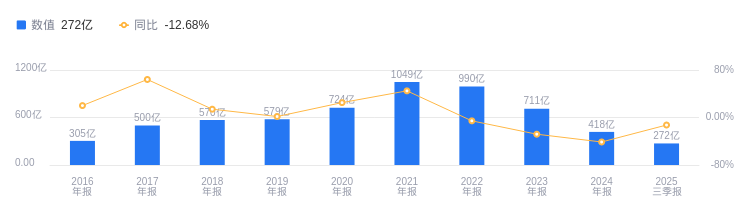
新钢股份的前世今生:2025年三季度营收272.25亿行业第十三,净利润3.73亿行业第八
Xin Lang Cai Jing· 2025-10-31 16:40
Core Viewpoint - New Steel Co., Ltd. is a leading regional player in the steel industry, focusing on high-end steel products and has a strong R&D capability in the electrical steel sector [1] Group 1: Business Performance - In Q3 2025, New Steel's revenue was 27.225 billion, ranking 13th among 17 companies in the industry, with Baosteel leading at 232.436 billion [2] - The net profit for the same period was 373 million, placing the company 8th in the industry, with Baosteel at 8.908 billion [2] Group 2: Financial Ratios - As of Q3 2025, New Steel's debt-to-asset ratio was 44.41%, lower than the industry average of 63.37% and down from 49.09% the previous year [3] - The gross profit margin was 3.96%, an improvement from -0.50% year-on-year but still below the industry average of 5.68% [3] Group 3: Management and Shareholder Information - The chairman, Liu Jianrong, has extensive experience in steel production and management, while the general manager, Liao Peng, saw an increase in salary to 1.0961 million, up 83,800 from the previous year [4] - As of September 30, 2025, the number of A-share shareholders decreased by 11.78% to 38,200, while the average number of shares held per shareholder increased by 13.35% to 82,400 [5] Group 4: Market Outlook and Predictions - The company is expected to see significant improvements in profitability, with projected net profits of 680 million, 950 million, and 1.17 billion for 2025, 2026, and 2027 respectively [5] - High-end product sales have increased significantly, with hot-rolled high-end products up 97.6%, and other premium products also showing strong growth [6]