零跑

Search documents
旭升集团深耕新能源汽车主业并加快储能和机器人等新业务发展
Zheng Quan Ri Bao Wang· 2025-09-18 11:16
Core Viewpoint - The company, Ningbo Xusheng Group, is expanding its business in emerging fields such as energy storage and robotics while maintaining a strong position in the automotive sector, supported by recent production capabilities in Mexico and Thailand [1][2][4]. Group 1: Business Development - The company has successfully launched its factory in Mexico, which provides localized supply capabilities to serve North American customers [1]. - The Thai factory commenced operations in July 2025, aiming to implement mature processes to cater to Southeast Asia and surrounding markets [1]. - In the first half of 2025, the company achieved a revenue of 2.096 billion yuan, with a second-quarter revenue of 1.050 billion yuan, reflecting a year-on-year growth of 3.89% despite industry competition [2]. Group 2: Emerging Markets - The energy storage business generated approximately 300 million yuan in revenue during the first half of 2025, indicating explosive growth [2]. - The company has developed core components for energy storage systems, including battery enclosures and thermal modules, which meet high safety and reliability standards [2][3]. - The company is actively expanding its presence in the energy storage market by collaborating with several global energy storage system integrators [3]. Group 3: Client Relationships - The company has established partnerships with leading automotive brands, including Rivian, Lucid, and domestic brands like Li Auto and Zeekr, enhancing its market competitiveness [3]. - Long-term collaborations have been formed with major suppliers and battery leaders, such as CATL and EVE Energy, which strengthen the company's position in the supply chain [3]. - The company focuses on providing high-value services, creating a competitive moat based on technology, service, and responsiveness [3]. Group 4: Future Outlook - The company plans to continue deepening its core business in new energy vehicles while accelerating the development of energy storage and robotics [4]. - Future strategies include leveraging new materials, processes, and products to upgrade lightweight solutions towards systematization and integration [4]. - The company expresses confidence in maintaining steady growth through global layout and localized operations amidst industry competition [4].

欧盟发展新能源车却对华征收反补贴税 商务部:希望欧方不将关税武器化 消除市场壁垒
Di Yi Cai Jing· 2025-09-18 09:09
Group 1 - Volkswagen Group announced the launch of a €20,000 small electric vehicle, aligning with the trend of EU automakers like BMW, Mercedes, and Renault unveiling new energy strategies and concept cars at the 2025 Munich Auto Show [1] - The Chinese Ministry of Commerce expressed hope that the EU would not weaponize tariffs and instead promote fair competition, aiming to create a non-discriminatory market environment for the development of the electric vehicle industry [1][2] - The Chinese spokesperson congratulated EU automakers on their upcoming low-cost electric vehicles, emphasizing the need for diverse, advanced, and affordable products in the EU market [2] Group 2 - The spokesperson highlighted that technological innovation and full industry chain cooperation are fundamental to the high cost-performance ratio driving the electric vehicle sector, which is also a key reason for the popularity of Chinese electric vehicles [2] - The EU's protectionist measures, such as the anti-subsidy investigations against Chinese electric vehicles, were criticized as unjustified barriers to free competition, undermining the EU's commitment to addressing climate change [2][5] - The Ministry of Commerce initiated an anti-dumping investigation into EU pork products based on domestic industry applications, ensuring compliance with Chinese laws and WTO rules during the investigation process [3][4] Group 3 - The Ministry of Commerce reported that the preliminary evidence indicated dumping of EU pork products, with the dumping margin estimated between 15.6% and 62.4%, leading to the implementation of temporary anti-dumping measures [4] - The spokesperson noted that China has been cautious in using trade remedy measures, contrasting with the EU's seven investigations against Chinese products this year, which accounted for nearly 40% of its total external investigations [4][6] - Ongoing dialogues and cooperation between China and the EU are emphasized as essential for addressing mutual concerns and fostering an open and stable market environment for industrial development [6]
商务部回应Tiktok问题:绝不会以牺牲原则立场、企业利益和国际公平正义为代价 寻求达成任何协议
智通财经网· 2025-09-18 08:17
Group 1: TikTok and US-China Relations - The Chinese government opposes the politicization and weaponization of technology and trade issues, emphasizing that it will not sacrifice principles, corporate interests, or international fairness for any agreement [1][10] - China supports equal business negotiations for companies and will approve technology exports and intellectual property rights related to TikTok according to the law [1][10] - The Chinese government hopes the US will provide an open, fair, and non-discriminatory business environment for Chinese companies, including TikTok, to operate in the US [1][10] Group 2: Trade Measures and International Cooperation - The 138th Canton Fair will implement broader and more substantial support measures for foreign trade enterprises, including a reduction in booth fees for all participating companies [2] - China has maintained a cautious approach to trade remedy measures, contrasting with the EU's numerous investigations against Chinese exports [3][4] - The EU's protectionist measures against Chinese electric vehicles are criticized as unjustified, and China advocates for cooperation and fair competition in the electric vehicle sector [6][7] Group 3: Global Fisheries and WTO Agreements - The WTO's Fisheries Subsidies Agreement, effective from September 15, aims to promote sustainable development in global fisheries and enhance transparency in subsidy policies [8][9] - China is committed to fulfilling its obligations under the agreement and actively participating in global fisheries governance [9]
商务部召开例行新闻发布会(2025年9月18日)
Shang Wu Bu Wang Zhan· 2025-09-18 07:58
Group 1: Canton Fair Initiatives - The 138th Canton Fair will implement stronger support measures for foreign trade enterprises, continuing the efforts from the 137th Fair which halved booth fees for exhibitors [1] - Over 31,000 companies will participate in the 138th Fair, with all exhibitors eligible for booth fee reductions, benefiting over 5,000 companies for the first time [1] - In addition to a 50% reduction in offline booth fees, new online platform measures will be introduced to assist export companies in expanding international markets [1] Group 2: EU-China Trade Relations - China is responding to the EU's anti-dumping investigation into pork products, initiated at the request of domestic industries, ensuring a fair and objective process [3] - In contrast, the EU has initiated seven anti-dumping investigations against China this year, affecting approximately $3.5 billion in Chinese exports [3] - China emphasizes the importance of dialogue and cooperation in trade relations, advocating for a stable market environment and fair competition [4][8] Group 3: Integrity Promotion Activities - The Ministry of Commerce and 12 other departments are organizing the "Integrity Business Promotion Month," with the theme "Honesty and Trustworthiness Benefits Enterprises and the Public" [6] - This year marks the 21st consecutive year of the campaign, featuring 14 themed activities aimed at promoting integrity and creating a trustworthy business environment [6] Group 4: WTO Fisheries Subsidies Agreement - The WTO Fisheries Subsidies Agreement, effective from September 15, aims to promote sustainable global fisheries management and was a significant achievement for multilateral trade [9][10] - China has ratified the agreement and is committed to fulfilling its obligations, contributing to the sustainable development of global marine resources [10]
从2万元狂降至千元!激光雷达巨头赴港上市潮涌,竞逐“智驾+机器人”双赛道
Zheng Quan Shi Bao Wang· 2025-09-17 03:21
Core Insights - The Hong Kong stock market is experiencing a surge in listings from leading companies in the LiDAR industry, indicating a high level of industry activity and maturity [1][2] - The growth in the LiDAR sector is driven by advancements in autonomous driving technology and the increasing adoption of LiDAR in various applications, including robotics [3][4] Industry Growth and Financial Performance - Major LiDAR companies in China, including Hesai Technology, RoboSense, and TuSimple, are seeing rapid revenue growth, with compound annual growth rates exceeding 30% for Hesai and over 70% for RoboSense [2] - Revenue projections for these companies show significant increases from 2022 to 2024, with Hesai's revenue expected to rise from 1.203 billion yuan to 2.077 billion yuan [2] - The sales volume of LiDAR units is also expected to grow substantially, with RoboSense projecting sales of 259,600 units in 2023, a year-on-year increase of 355% [2] Market Penetration and Technology Adoption - The penetration rate of LiDAR in new energy passenger vehicles is projected to reach 17% by 2025, marking a significant shift from niche to mainstream adoption [3] - Major automotive manufacturers are integrating LiDAR into their smart driving systems, indicating a trend towards democratization of advanced driving technologies [4] Cost Reduction and Technological Advancements - The average price of ADAS LiDAR has dramatically decreased from 20,000 yuan to around 2,500 yuan from 2020 to 2024, facilitating broader market access [5][6] - The industry is witnessing a shift towards chip integration and solid-state LiDAR technologies, which enhance performance while reducing costs and size [6][7] Emerging Opportunities in Robotics - The robotics sector is emerging as a "second growth curve" for LiDAR applications, with significant year-on-year growth in unit deliveries [8][10] - Companies are exploring new applications in the robotics field, such as lawn mowing robots, with high profit margins compared to automotive applications [10][11] - The collaboration between LiDAR manufacturers and robotics companies is expected to drive innovation and market expansion in this area [12]

汽车行业如此卷,为什么还有新人要进来?
3 6 Ke· 2025-09-16 12:25
一个汽车行业的共识是:汽车行业正处于残酷的大洗牌时期,未来将只有5家汽车公司。 传统汽车巨头目标是"活下去"、明星新势力则在ICU门口进进出出、曾经辉煌过的品牌接连倒闭重组。在这个现存车企都忙着努力求生的时间点,一波一 波新面孔却逆势登场了。 单是今年,许多跨界造车的品牌频繁出现在公众视野中:5月,吉祥航空母公司旗下品牌吉祥汽车推出首款纯电动轿车吉祥AIR;7月,超威电池投资的昇 麒汽车,发布首款光伏发电汽车;8月,做智能清洁设备的追觅科技官宣造车,首款超豪华纯电产品对标布加迪威龙,9月还前往德国为工厂选址…… "我的底线是老干妈造车"、"我觉得南孚造车才是优势所在"、"退一万步说,蜜雪冰城就不可以造车吗"……这些戏谑的评论总结起来其实是一个疑问:造 车的门槛在哪里? 「电厂」参考了蔚来、小鹏、理想、零跑四家企业的财报与其它信息,尝试回答:一个门外汉从零起步,要打造一个能活下去的汽车新品牌,到底需要多 少资金?答案是:至少300亿元。 假设新品牌的管理较为优秀,成功实现了第一款车的量产,接下来就是销售。从销售渠道来看,有直营、经销和混合三种模式,直营的成本最高,一家直 营店每年的运营成本高达400-500万元 ...


禾赛科技港股上市,拿下激光雷达最大IPO
Sou Hu Cai Jing· 2025-09-16 09:22
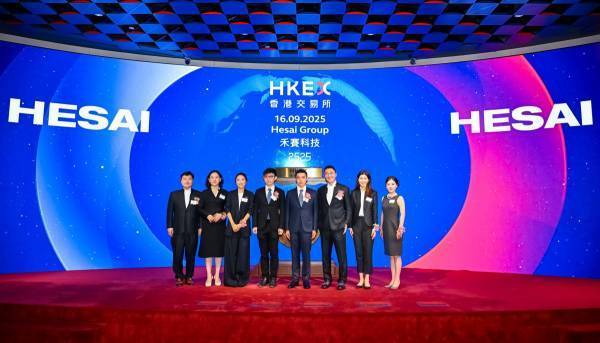
(文/观察者网 张家栋 编辑/高莘) 9月16日,禾赛科技正式于香港交易所主板挂牌上市,成为首家实现"美股+港股"双重主要上市的激光雷 达企业。 禾赛科技港交所上市 禾赛科技官网 本次IPO是迄今为止全球激光雷达行业规模最大的一次,也是近四年来中概股公司回港上市中融资额最 大的一次。在不算额外增发部分的情况下,禾赛科技募资总额已超过41.6亿港元。 同期,禾赛科技分别净亏损3亿元、4.7亿元、1亿元;净亏损率分别为25%、25.4%、4.9%;经调整净利 分别为-1.9亿元、-2.4亿元、1369万元。 今年上半年,该公司实现营业收入12.3亿元,同比增长50.58%;净利润2654万元,较上年同期扭亏为 盈。 正向的业绩增长,也令该公司成为全球首家全年经营和净现金流为正的上市激光雷达企业。 业内人士表示,禾赛科技的回港上市,有助于提高公司股票交易的稳定性与安全性,为股东创造最大价 值和保障他们的利益。禾赛相关人士则表示,其业务正处于全球快速增长阶段,香港市场既有国际化的 视野,又深度理解中国科技企业的业务模式和潜力。 观察者网注意到,港股开盘后禾赛科技随即迎来大涨,盘中一度冲高至244港元,涨幅超14%,市 ...
中美就妥善解决TikTok问题达成基本框架共识;谷歌市值突破3万亿美元;中汽协发布倡议,17车企表态;西贝致歉!罗永浩放弃追究丨每经早参
Mei Ri Jing Ji Xin Wen· 2025-09-15 21:57
Group 1 - US stock markets saw collective gains, with the Dow Jones up 0.11%, S&P 500 up 0.47%, and Nasdaq up 0.94%, marking new closing highs for S&P 500 and Nasdaq [4] - Major tech stocks performed well, with Google rising over 4% to become the fourth US company with a market cap exceeding $3 trillion, while Tesla and Oracle also saw gains of over 3% [4] - Chinese concept stocks mostly rose, with the Nasdaq Golden Dragon China Index up 0.87%, and notable gains from Li Auto (over 6%), Bilibili (over 5%), and NIO (over 4%) [4] Group 2 - International precious metal futures generally rose, with COMEX gold futures up 0.90% to $3719.50 per ounce, and COMEX silver futures up 0.84% to $43.19 per ounce [5] - International oil prices saw slight increases, with WTI crude oil up 0.94% to $63.28 per barrel, and Brent crude oil up 0.69% to $67.45 per barrel [6] Group 3 - The Chinese Ministry of Commerce announced a basic framework consensus with the US to address the TikTok issue and reduce investment barriers, promoting economic cooperation [8] - The Ministry of Commerce expressed opposition to US unilateral trade restrictions related to Russian oil imports, labeling it as economic coercion that could disrupt global trade [8][9] Group 4 - The National Foreign Exchange Administration of China announced reforms to enhance cross-border investment, including allowing foreign investors to reinvest foreign exchange profits domestically [10] - The National Bureau of Statistics reported that the real estate market in China is stabilizing, with a narrowing decline in sales and prices, indicating progress towards recovery [11] Group 5 - Nvidia is under further investigation by China's market regulator for violating antitrust laws related to its acquisition of Mellanox Technologies [12] - The China Automobile Industry Association released a payment standard initiative for automotive suppliers, aiming to improve payment practices and collaboration within the industry [13][14] Group 6 - Baidu and Huawei have upgraded their collaboration to a strategic community, focusing on a comprehensive ecosystem for the automotive industry, with plans to invest 20 billion yuan over three years [21] - Xiaomi's new 17 series smartphones are set to directly compete with Apple's iPhone, showcasing significant upgrades and innovations [27] Group 7 - Silver Lake Capital completed the acquisition of 51% of Altera's shares, previously held by Intel, positioning Altera as a leading independent provider of FPGA solutions [33] - Merck's new antiviral drug for CMV prevention has been approved in China, potentially impacting the market for antiviral treatments [35] - Elon Musk purchased over 2.5 million shares of Tesla stock, valued at approximately $1 billion, indicating confidence in the company's future [37]


中汽协推动“60天账期”承诺落地 17家车企响应
Xin Lang Cai Jing· 2025-09-15 12:26
Core Viewpoint - The China Automotive Industry Association (CAAM) has issued a payment standard initiative for automotive manufacturers, establishing a maximum payment term of 60 days for suppliers, effective from the date of delivery acceptance [1][2]. Group 1: Initiative Details - The initiative specifies that the payment term starts from the date of delivery and acceptance, with a maximum of 60 calendar days [1]. - It outlines requirements for delivery acceptance, payment terms, reconciliation, and payment processes, including a principle that delivery acceptance should not exceed three working days [1]. - The initiative encourages stable cooperation between suppliers and manufacturers, with contracts having a minimum validity of one year [1]. Group 2: Industry Response - Seventeen major automotive companies, including FAW, Dongfeng, Changan, SAIC, and BYD, have committed to implementing the initiative, aiming to foster a collaborative ecosystem between vehicle manufacturers and parts suppliers [1][2]. - In August, these companies collectively sold approximately 2.6 million vehicles, accounting for over 90% of China's total automotive sales for that month, indicating strong industry support for the initiative [2]. Group 3: Market Impact - Following the announcement of the initiative, the A-share automotive sector saw a net inflow of 3.27 billion yuan, with a 1.1% increase in stock prices [2]. - Several listed parts suppliers, such as Wanxiang Qianchao and Zhejiang Shibao, experienced stock price surges, while vehicle manufacturers like Haima and Jinbei also saw significant gains [2]. Group 4: Regulatory Context - The initiative aligns with recent regulatory actions aimed at promoting the healthy development of the automotive industry, including a three-month special campaign to address online irregularities in the sector [2]. - The Ministry of Industry and Information Technology has also released a work plan for stabilizing growth in the automotive industry from 2025 to 2026, focusing on structural optimization and quality improvement [2]. Group 5: Historical Context - Prior to this initiative, CAAM had already advocated for fair competition and healthy industry development, with commitments from major companies to adhere to a 60-day payment term [3]. - Data from Wind indicates that the average payment cycle for major domestic automakers was 183 days in the first half of this year, an increase of about 7 days compared to the same period in 2024 [3].




17家车企集体表态!
Guo Ji Jin Rong Bao· 2025-09-15 12:21
Core Viewpoint - The China Automotive Industry Association (CAAM) has launched an initiative to standardize payment practices between automotive manufacturers and suppliers, aiming to foster a collaborative ecosystem and promote high-quality development in the automotive industry [1][2][8]. Group 1: Initiative Principles - The initiative emphasizes not exploiting the advantages of large enterprises to harm suppliers' interests, promoting a win-win collaboration between vehicle manufacturers and parts suppliers [2]. - In the order confirmation phase, both parties should agree on order details, and any changes to existing orders must be mutually negotiated [2]. - Payment terms stipulate that the maximum payment period should not exceed 60 calendar days from the date of delivery and acceptance [2]. Group 2: Contract Duration - The initiative encourages establishing long-term cooperative relationships, with each contract having a minimum validity period of one year [3]. Group 3: Industry Response - As of the report, 17 automotive manufacturers have committed to implementing the initiative, including Chery Group, which aims to standardize contract terms and comply with the "Regulations on Payment for Small and Medium Enterprises" [4]. - Companies like Seres and Changan Automobile have expressed their commitment to industry self-discipline and adherence to the 60-day payment term [4][5]. - Other major players such as Dongfeng, BYD, and Great Wall have also pledged to support the initiative and ensure supplier rights are protected [5]. Group 4: Policy Context - This initiative is part of a broader governmental effort to regulate the automotive industry, following the implementation of the revised "Regulations on Payment for Small and Medium Enterprises" which established a legal basis for the 60-day payment term [9]. - The CAAM's initiative details operational standards across four key areas: order confirmation, delivery acceptance, payment settlement, and contract duration [9]. Group 5: Industry Challenges - Despite the industry's growth, challenges persist, including rising debt levels among manufacturers due to increased R&D investments and structural adjustments for electric vehicle production [10]. - The average payment cycle for ten major domestic automakers was reported to be 182 days in the first half of the year, significantly exceeding the 60-day requirement [11].