奇瑞汽车

Search documents
【联合发布】一周新车快讯(2025年7月12日-7月18日)
乘联分会· 2025-07-18 08:55
Core Viewpoint - The article provides an overview of new vehicle launches scheduled for July 2025, detailing various manufacturers, models, market segments, and engineering changes. Group 1: Manufacturer and Model Overview - Geely Auto is set to launch the Geely ICON on July 11, 2025, classified as an AO SUV with a minor engineering change (MCE1) [2][16] - GAC Passenger Vehicle will introduce the Trumpchi M6 on July 12, 2025, categorized as an A MPV with a minor engineering change (MCE1) [2][8] - Dongfeng Motor will release the Lantu FREE+ on July 12, 2025, classified as a C SUV with a medium engineering change (MCE2-1) [2][24] - Beijing Automotive will launch the Beijing X7 on July 12, 2025, categorized as an A SUV with a minor engineering change (MCE1) [2][32] - Chery Auto will introduce the Jietu Free on July 15, 2025, classified as an A SUV with no major engineering changes (NM) [2][40] - Dongfeng Nissan will launch the Venucia VX6 on July 15, 2025, categorized as a B SUV with a minor engineering change (MCE1) [2][48] - Dongfeng Infiniti will release the QX50 on July 16, 2025, classified as a B SUV with a minor engineering change (MCE1) [2][64] - Changan Auto will introduce the CS75 PLUS on July 16, 2025, categorized as an A SUV with no major engineering changes (NM) [2][72] - SAIC-GM-Wuling will launch the Baojun Yunhai on July 16, 2025, classified as an A SUV with a minor engineering change (MCE1) [2][80] - Volvo Asia Pacific will release the Volvo EX30 Cross Country on July 17, 2025, categorized as an AO SUV with a new product (NP) [2][88] - Great Wall Motors will introduce the Haval Big Dog on July 17, 2025, classified as an A SUV with a minor engineering change (MCE1) [2][96] Group 2: Technical Specifications and Pricing - The Trumpchi M6 will feature a 2.0T engine, DCT7 transmission, and a price range of 132,800 to 139,800 CNY [7][8] - The Geely ICON will offer a 1.5T engine, DCT7 transmission, and a price range of 89,800 to 95,800 CNY [15][16] - The Lantu FREE+ will have a 1.5T range-extended engine, EVT transmission, and a price range of 219,900 to 279,900 CNY [23][24] - The Beijing X7 will feature a 1.5T engine, DCT7 transmission, and a price of 119,900 CNY [31][32] - The Jietu Free will offer a 1.5T engine, DCT7 transmission, and a price of 132,800 CNY [39][40] - The Venucia VX6 will be fully electric with a price range of 134,900 to 159,900 CNY [47][48] - The QX50 will feature a 2.0T engine, CVT transmission, and a price range of 350,800 to 391,800 CNY [63][64] - The CS75 PLUS will have a 1.5T engine, 8AT transmission, and a price of 115,900 CNY [71][72] - The Baojun Yunhai will offer both hybrid and pure electric options with prices ranging from 109,800 to 129,800 CNY [79][80] - The Volvo EX30 Cross Country will be fully electric with a price of 263,800 CNY [87][88] - The Haval Big Dog will feature both 1.5T and 2.0T engines with prices ranging from 123,900 to 149,900 CNY [95][96]






独家丨一汽与卓驭正在商讨战略投资事宜
晚点Auto· 2025-07-18 03:08
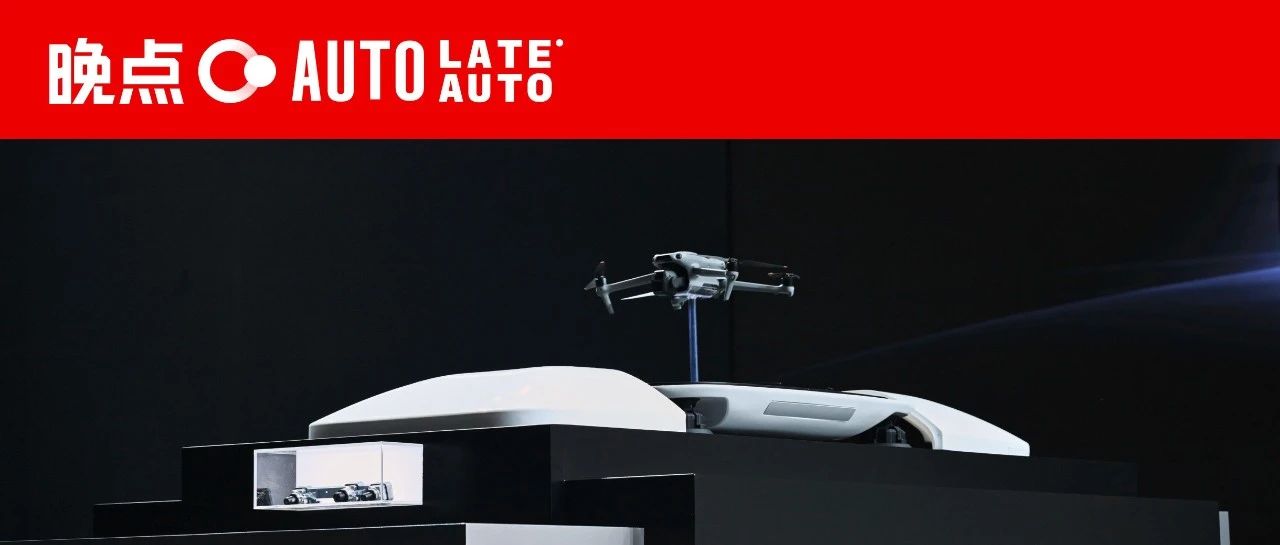
Core Viewpoint - Zhuoyu Technology is in discussions with FAW for a strategic investment totaling over $800 million, with a post-investment valuation exceeding $10 billion, while maintaining its business and management independence [2][4]. Group 1: Investment and Strategic Partnerships - The investment round includes participation from other automotive companies and industrial funds, in addition to FAW [2]. - Zhuoyu has secured investments from at least four automotive companies, including BYD, SAIC, and BAIC, all of which are its cooperative clients [4]. Group 2: Technological Development and Product Offerings - Zhuoyu, incubated by DJI, focuses on integrating software and hardware for advanced driver assistance systems (ADAS), achieving significant milestones in low-cost platforms [4]. - The company has developed various levels of computing power solutions, including systems with lidar capabilities, expanding its product line to meet diverse market needs [4]. - Zhuoyu's recent launch of the VLA model based on the NVIDIA Thor platform positions it competitively in the smart driving sector, with few suppliers currently developing for this platform [5]. Group 3: Market Dynamics and Competitive Landscape - The competitive landscape in the smart driving market is intensifying, pushing suppliers to meet higher expectations from automotive manufacturers [5]. - Zhuoyu is adapting to industry changes by enhancing its sales and business capabilities, including the recruitment of new sales leadership with backgrounds from Bosch and Huawei [5].
联检科技(301115) - 2025年7月17日投资者关系活动记录表
2025-07-18 00:48
Group 1: Automotive Testing Services - The company has entered the automotive testing field through the acquisition of Guanbiao Testing, providing services for new energy vehicles and components, covering areas such as material testing, environmental reliability, electrical performance, and electromagnetic compatibility (EMC) [2] - Guanbiao Testing has obtained third-party testing qualifications from major automotive manufacturers including Jianghuai Automobile, Geely, Leap Motor, and Chery, significantly expanding its service capabilities [2] Group 2: Future Growth Points - The company aims to optimize its business structure, focusing on high-value emerging sectors, while leveraging synergies from mergers and acquisitions and deepening international expansion to drive performance growth [2] - Initiatives include building a one-stop service capability, promoting cross-sector resource integration, and extending the industrial chain through global layout and market expansion along the "Belt and Road" [2] - The company is also investing in digitalization and technological innovation to create an intelligent testing platform, enhancing efficiency and service quality through AI and IoT applications [2] Group 3: International Market Expansion - The company is advancing its global layout in phases, initially targeting countries along the "Belt and Road" by establishing localized teams to meet local testing and certification needs [2] - In the mid-term, the company plans to set up R&D centers in mature markets like Europe and the U.S. to absorb advanced experiences and promote mutual recognition of qualifications [2] - As of now, the company has established regional offices in countries such as Vietnam, Thailand, Indonesia, and Laos, creating a grid service system that covers "Belt and Road" countries [2] Group 4: Disclosure Information - The activity does not involve any undisclosed significant information [2]
奇瑞称“流程合规” 比亚迪暂无回应
Zhong Guo Zheng Quan Bao· 2025-07-17 21:03
Core Viewpoint - The Ministry of Industry and Information Technology released a public notice regarding the audit of subsidy funds for new energy vehicles from 2016 to 2020, revealing that many automakers received less subsidy than applied due to non-compliance with documentation and data submission requirements [1] Group 1: Subsidy Application and Reduction - From 2016 to 2020, domestic automakers applied for a total of 75,814 new energy vehicles, with a verified number of 54,089, resulting in a reduction of 21,725 vehicles [1] - The total subsidy funds applied for amounted to approximately 2.93 billion yuan, while the approved subsidy was about 2.07 billion yuan, leading to a reduction difference of 860 million yuan [1] - Chery Automobile and BYD accounted for 44% of the total subsidy reduction, with reductions of 240 million yuan and 140 million yuan, respectively [1] Group 2: Chery Automobile's Performance - Chery Automobile's application for vehicles from 2016 to 2020 totaled 8,762, with a reduction of 7,663 vehicles, resulting in a reduction rate of 87.5%, significantly higher than the industry average of 28.7% [1][2] - The peak application year for Chery was 2019, with 7,454 vehicles applied, but only 21 were approved, leading to a reduction rate of 99.6% [3] - The primary reason for reductions was non-compliance with documentation requirements, which accounted for over 98% of the cases [2] Group 3: BYD's Performance - BYD also experienced high reduction rates, particularly in 2019, where 2,604 vehicles were reduced, and the subsidy amount was cut by 74.93 million yuan [4] - The reduction rates for BYD in 2018 and 2019 were 78% and 88%, respectively, primarily due to issues with documentation and data submission [4] - In 2020, BYD faced reductions for 32 vehicles due to data not being uploaded, continuing a trend from previous years [4] Group 4: Industry Insights - Other companies like BAIC New Energy and Dongfeng Group also faced significant reductions, with BAIC New Energy having 2,776 vehicles reduced, amounting to 53.8 million yuan [5] - The overall data management and statistical standardization in the industry still show significant gaps compared to international leading companies, despite improvements in data access capabilities post-2019 [5]

年中经济观察|中国新能源汽车如何逐“新”提“智”——中国经济年中观察之二
Xin Hua She· 2025-07-17 13:53
Core Viewpoint - The Chinese electric vehicle (EV) industry is experiencing significant growth, with production and sales both surpassing 6.9 million units, reflecting over 40% year-on-year growth, and a market penetration rate that continues to rise. Exports have also increased by 75.2% [1]. Group 1: Innovation and Technology - The introduction of advanced technologies, such as AI-driven paint defect detection systems, is enhancing quality control in the EV manufacturing process [2]. - The integration of over 1,600 smart terminals and 3,000 robots in factories has achieved 100% automation in production, showcasing the industry's shift towards intelligent and efficient manufacturing [4]. - New battery technologies, like the dual-core battery developed by CATL, are being tailored to meet specific user needs, indicating a trend of innovation driven by market demands [5]. Group 2: Collaboration and Industry Dynamics - The automotive industry is witnessing increased collaboration between suppliers and manufacturers, exemplified by CATL's production lines being integrated within vehicle assembly lines for immediate battery installation [8]. - Partnerships, such as that between BMW and Momenta, highlight the importance of local collaboration to enhance technological advancements in the Chinese market [8]. - The establishment of innovation alliances among over 300 partners is aimed at improving overall innovation efficiency within the automotive sector [9]. Group 3: Market Regulation and Competition - The Chinese government is taking steps to regulate the competitive landscape of the EV industry, addressing issues of irrational competition and low profitability, with the automotive industry's profit margin reported at 4.3% compared to 5.7% for downstream industrial enterprises [10][11]. - New national standards for electric vehicle batteries are being implemented to enhance safety and performance, reflecting a commitment to high-quality development in the industry [11]. - Major automotive companies are moving away from price wars and focusing on long-term value creation, with commitments to fair payment practices and reduced sales targets to foster sustainable growth [12]. Group 4: Future Outlook - The consensus within the industry emphasizes the need for a long-term strategy focused on value creation rather than mere volume, with calls for the Chinese automotive sector to become a leader in quality and innovation [13].

埃泰克冲A背后:关联方奇瑞汽车贡献过半营收
Bei Jing Shang Bao· 2025-07-17 13:21
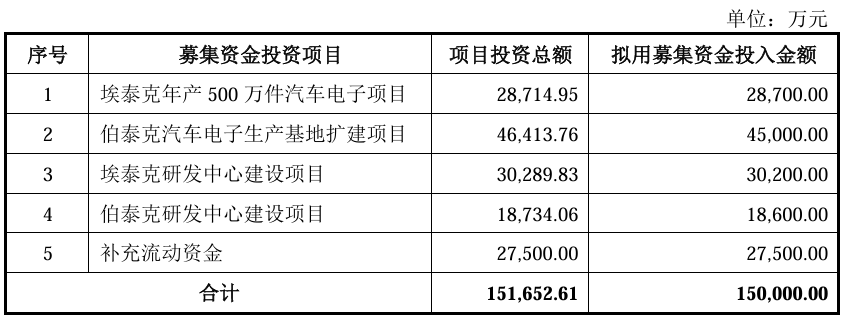
Core Viewpoint - Wuhu Aiteke Automotive Electronics Co., Ltd. (referred to as "Aiteke") is under scrutiny for its IPO process, with notable growth in performance but significant related party transactions, particularly with Chery Automobile, which accounted for over 50% of sales in 2024 [1][4][5]. Financial Performance - Aiteke's revenue and net profit have shown steady growth from 2022 to 2024, with revenues of approximately 2.174 billion, 3.008 billion, and 3.468 billion yuan, and net profits of about 91.75 million, 194 million, and 213 million yuan respectively [4][5]. - The company's accounts receivable have increased consistently, with balances of 745 million, 1.086 billion, and 1.227 billion yuan at the end of each reporting period, representing 34.26%, 36.11%, and 35.39% of total revenue [6]. Related Party Transactions - Aiteke's sales to related parties, primarily Chery Automobile, amounted to approximately 600 million, 1.064 billion, and 1.869 billion yuan from 2022 to 2024, constituting 27.6%, 35.36%, and 53.89% of total revenue [4][5]. - The company has a high concentration of sales among its top five customers, with sales proportions of 73.16%, 80.92%, and 84.38% from 2022 to 2024 [5]. Research and Development - Aiteke's R&D expense ratio is significantly lower than the industry average, with rates of approximately 5.83%, 5.07%, and 5.19% from 2022 to 2024, compared to industry averages of 9.94%, 10.7%, and 9.78% [9]. - The company attributes its lower R&D spending to its smaller revenue scale compared to industry peers and differences in customer structure and product categories [9]. IPO and Fundraising - Aiteke plans to raise approximately 1.5 billion yuan through its IPO, with funds allocated for various projects including the production of automotive electronics and the expansion of production bases [7][8]. - The company aims to enhance capacity and technical accumulation in line with industry trends through these investments [8].
【快讯】每日快讯(2025年7月17日)
乘联分会· 2025-07-17 09:07
Domestic News - The State Council meeting highlighted irrational competition in the automotive sector, emphasizing the need for measures to regulate competition and promote high-quality development in the new energy vehicle industry. Key points include strengthening cost investigations, enhancing product consistency supervision, and ensuring major automakers fulfill payment commitments [4] - Chongqing plans to develop a pilot work plan for integrated vehicle-road-cloud systems, aiming to create a smart transportation network with comprehensive coverage and reliable services [5] - Two key projects in Shanghai, involving companies SKF and Fuyao, have signed agreements totaling nearly 1.7 billion yuan [6] - China FAW Group and Alibaba have launched a joint laboratory to develop a dedicated automotive industry model, focusing on optimizing computing architecture and data governance [7] - Chery has established a new automotive technology company in Shanghai with a registered capital of 80 million yuan, focusing on automotive parts and AI software development [8] - NIO Energy is set to achieve its 80 millionth battery swap, marking a significant milestone in its service network [9][10][11] - BAIC Group announced plans to launch multiple new and updated models in the second half of 2025, following a 6% year-on-year increase in vehicle sales in the first half [12][13] - Li Auto has completed its "Nine Vertical and Nine Horizontal" high-speed charging network, with a charging station every 152 kilometers [14] Foreign News - General Motors will relocate the production of the Cadillac Escalade to Michigan, as part of a $4 billion investment plan to increase production of fuel trucks and SUVs [15] - German company MOTOR Ai has secured $20 million in seed funding to develop its Level 4 autonomous driving software, aiming for deployment on public roads [17] - Malaysia's automotive production fell by 10.1% in the first half of 2025, with both commercial and passenger vehicle outputs declining [18] - Ford plans to expand its passenger vehicle lineup in the European market, reversing a previous trend of focusing on light commercial vehicles [19] - SAIC-GM Wuling launched its first electric commercial vehicle in Indonesia, priced at approximately 131,800 yuan [20] - Dongfeng Commercial Vehicle and Ningbo Zhenhai Petrochemical have entered a strategic cooperation to enhance their operational synergy [21] - Guizhou Liupanshui will provide subsidies of up to 200,000 yuan for new hydrogen fuel cell heavy trucks purchased and operated for over a year [23] - The second phase of the national subsidy policy for replacing old trucks will resume this month, offering substantial incentives for owners who switch to new energy vehicles [24][25]
埃泰克上交所IPO“已问询” 拟募资15亿元
智通财经网· 2025-07-16 11:12
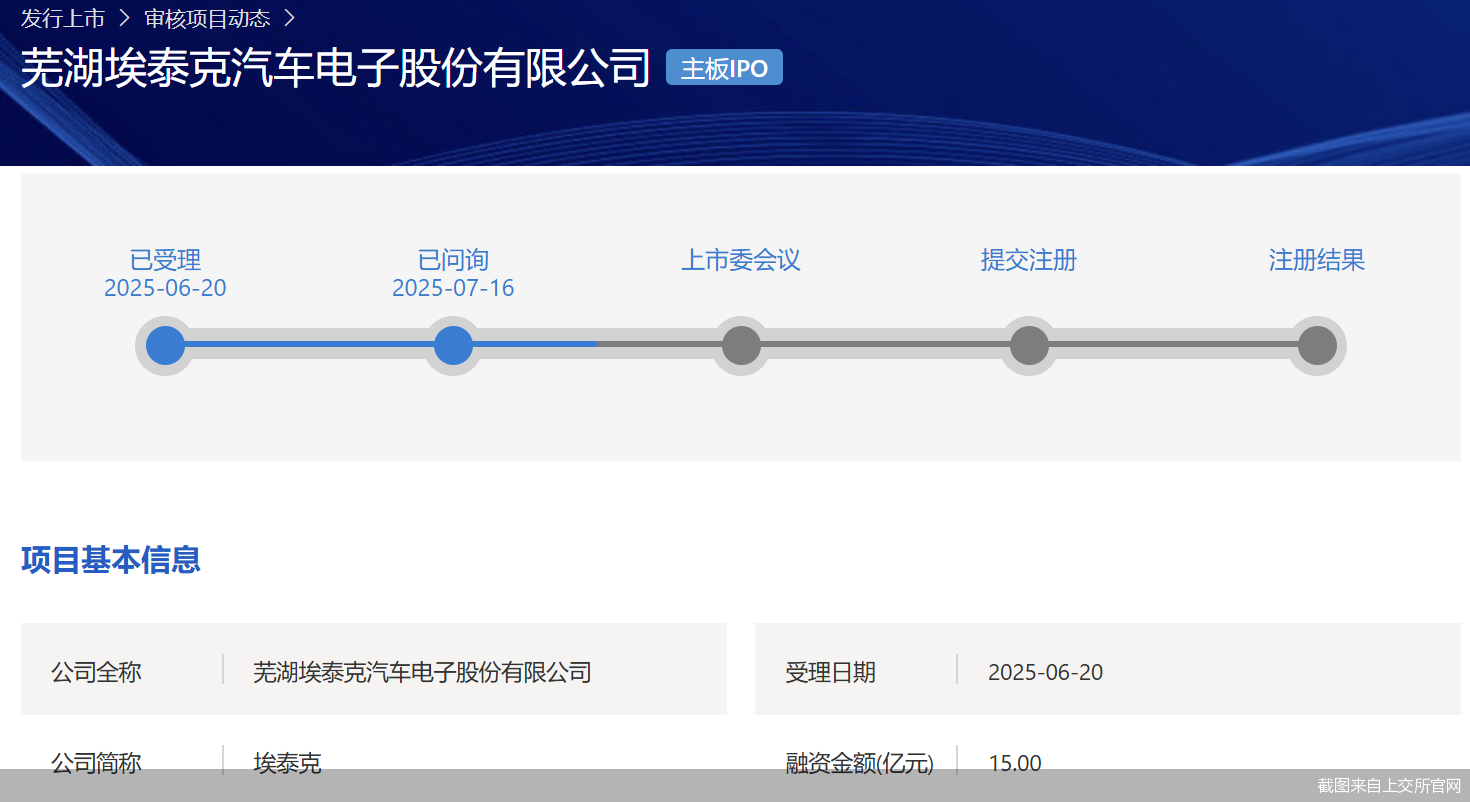
Core Viewpoint - Aitek Automotive Electronics Co., Ltd. (referred to as Aitek) is undergoing a status change to "inquired" for its listing application on the Shanghai Stock Exchange, aiming to raise 1.5 billion yuan [1] Group 1: Company Overview - Aitek is a leading provider of automotive electronic intelligent solutions, focusing on the development, production, and sales of automotive electronic products across various domains, including body, intelligent cockpit, power, and intelligent driving [1] - The company has established a complete business system from product design to mass production and delivery, accumulating extensive experience in automotive electronic product development and industrialization [1] Group 2: Market Position - Aitek holds a 25.50% market share in the BCM (Body Control Module) for self-owned brand passenger cars in China for 2024, ranking first for three consecutive years [2] - The company ranks first with a 13.83% share in the market for pre-installed remote physical keys for passenger cars and third with a 6.41% share in the cockpit domain and display assembly for self-owned brand passenger cars [2] - Aitek's products are supplied to well-known automotive manufacturers, including Chery, Changan, Great Wall, SAIC, Geely, BAIC, Dongfeng, and new energy vehicle makers like Li Auto, Xpeng, and Leap Motor [2] Group 3: Financial Performance - Aitek's revenue for the years 2022, 2023, and 2024 is reported as 2.174 billion yuan, 3.008 billion yuan, and 3.468 billion yuan, respectively, with net profits of 94.14 million yuan, 197 million yuan, and 213 million yuan during the same periods [2] - As of December 31, 2024, the total assets of Aitek are 3.276 billion yuan, with equity attributable to shareholders of the parent company at 1.230 billion yuan [3] - The company’s debt-to-asset ratio is 49.06% for the parent company and 62.43% for the consolidated entity [3] - The basic and diluted earnings per share for 2024 are both 1.59 yuan, with a return on equity of 19.11% [3]
联检科技(301115) - 2025年7月16日投资者关系活动记录表
2025-07-16 11:00
Group 1: Business Expansion and Diversification - The company has expanded its business beyond traditional construction materials to include sectors such as renewable energy, food and agriculture, environment, automotive parts, electronics, industrial products, consumer goods, healthcare, special equipment, urban safety, and information technology, forming a diversified business structure [2]. - The company's market reach has extended from Jiangsu province to nationwide and overseas markets, with regional companies or offices established in countries like Vietnam, Thailand, Indonesia, and Laos [2]. Group 2: Automotive Testing Sector - The automotive testing services are primarily implemented through the subsidiary, Guanbiao Testing, which was acquired to quickly gain relevant technology and customer resources [2]. - Guanbiao Testing has obtained third-party testing qualifications from major automotive manufacturers such as Jianghuai Automobile, Geely, Leap Motor, and Chery, while also expanding its recognition capabilities with traditional and new energy vehicle manufacturers like General Motors, Volkswagen, NIO, and Li Auto [2]. - The automotive testing business performed well in the first half of the year, with plans to enhance order conversion and market penetration by leveraging newly acquired vehicle enterprise qualifications [2]. Group 3: Mergers and Acquisitions Strategy - The company employs a three-dimensional merger strategy of "regional penetration + track expansion + qualification enhancement" to achieve precise acquisitions through a rational selection mechanism [2]. - Priority is given to acquiring regional leaders, high-growth sectors driven by policy, and scarce qualifications, aiming to capture high-growth tracks in water conservancy, automotive, metrology, and low-carbon sectors [2]. - The strategy includes resource integration through a "headquarters empowerment + regional autonomy" model, implementing a digital management system and sharing customer resources while maintaining the stability of core teams [2]. Group 4: Disclosure of Information - The activity did not involve any undisclosed significant information [2].
「中期大考」下的低碳突围:中国式绿色转型要解的三道题
36氪· 2025-07-16 10:19
Core Viewpoint - The article emphasizes that the "dual carbon" strategy is no longer just a compliance issue but a critical factor for sustainable growth and competitive advantage in various industries as China approaches its 2030 carbon peak target [2][4]. Group 1: Challenges and Opportunities in Low-Carbon Transition - The low-carbon transition is shifting from being viewed as a compliance burden to an efficiency dividend, with companies realizing that green transformation can redefine cost structures [7]. - Companies like Lanyang Technology are adapting to new demands, where liquid cooling technology is becoming essential for energy efficiency in high-performance computing environments [7][20]. - Capital perspectives indicate that true competitive advantage comes from establishing new barriers through emissions reduction rather than merely complying with regulations [8]. Group 2: Institutional and Market Support - The successful implementation of low-carbon technologies requires synchronized institutional frameworks, standards, and market readiness, as seen in the challenges faced by companies like Zero Gravity in the aviation sector [9][10]. - While local governments have begun to establish "dual carbon task forces," industry standards still lag behind emerging technologies, creating a critical window for institutional development [11]. Group 3: Urban Transformation and Low-Carbon Economy - The low-carbon economy is not just an industrial issue; it is redefining urban structures and prompting a new wave of urban operational system updates [12][15]. - Technologies like eVTOL are not merely supplementary to existing transport but are integral to reshaping urban mobility and spatial organization [13]. Group 4: Differentiated Paths in Green Transition - Different industries are adopting varied strategies for green transition, with the automotive sector focusing on cost structure reconstruction, while the energy sector emphasizes system efficiency [18]. - The transition in the automotive industry is marked by a shift from product parameters to supply chain leadership, as companies like Zhaichi Technology evolve from raw material suppliers to efficiency partners [19]. Group 5: Carbon Index Plan and Future Directions - The "Carbon Index Plan" aims to assess which companies can effectively implement green capabilities as structural advantages, moving beyond mere innovation to practical application [25][28]. - The initiative will focus on three core scenarios: future energy, future transportation, and future cities, emphasizing systemic collaboration rather than isolated technological achievements [26][27].