
中国星网

Search documents
经观头条|万颗卫星上天难
Jing Ji Guan Cha Wang· 2025-09-07 06:07
Core Viewpoint - The Chinese commercial space industry is facing a significant bottleneck in rocket launch capacity, which is hindering the deployment of satellite constellations necessary for meeting international regulatory deadlines [2][4][11]. Group 1: Market Demand and Challenges - Shanghai Yuanxin Satellite Technology Co., Ltd. has a budget of 616 million RMB for a rocket launch order, but the bidding process has repeatedly failed due to insufficient qualified suppliers [2][12]. - The urgency for satellite companies is heightened by the International Telecommunication Union (ITU) rules, which impose strict deadlines for satellite launches to retain orbital and frequency resources [6][7]. - The total number of satellites planned by Yuanxin and another company has exceeded 30,000, indicating a high demand for launch services [3]. Group 2: Current Launch Capacity - Since 2014, China's private rocket companies have struggled to develop a large-capacity liquid launch vehicle comparable to SpaceX's Falcon 9, which limits the ability to meet the growing demand for satellite launches [3][18]. - The recent bidding failures highlight the lack of sufficient private rocket companies capable of providing the necessary launch services [4][13]. Group 3: Industry Developments - The market is looking towards several private companies, such as Tianbing Technology's "Tianlong 3," Blue Arrow Aerospace's "Zhuque 3," and CASIC's "Lijian 2," which are expected to meet the large-scale constellation deployment needs but have not yet completed their first flight tests [4][22]. - The recent procurement process by Yuanxin has seen the inclusion of three private rocket companies in the supplier list, marking a significant milestone for the industry [11][24]. Group 4: Financial and Production Readiness - The commercial space sector is witnessing increased investment and production readiness, with companies like Platinum Technology and Aerospace Technology reporting significant growth in their production capabilities [10][23]. - The capital market is becoming more accessible for commercial space companies, with some entering the IPO preparatory phase to secure funding for future projects [23]. Group 5: Future Outlook - The industry is at a critical juncture, awaiting the successful first flights of several key rockets, which will be essential for launching the planned satellite constellations and fulfilling market demand [24].

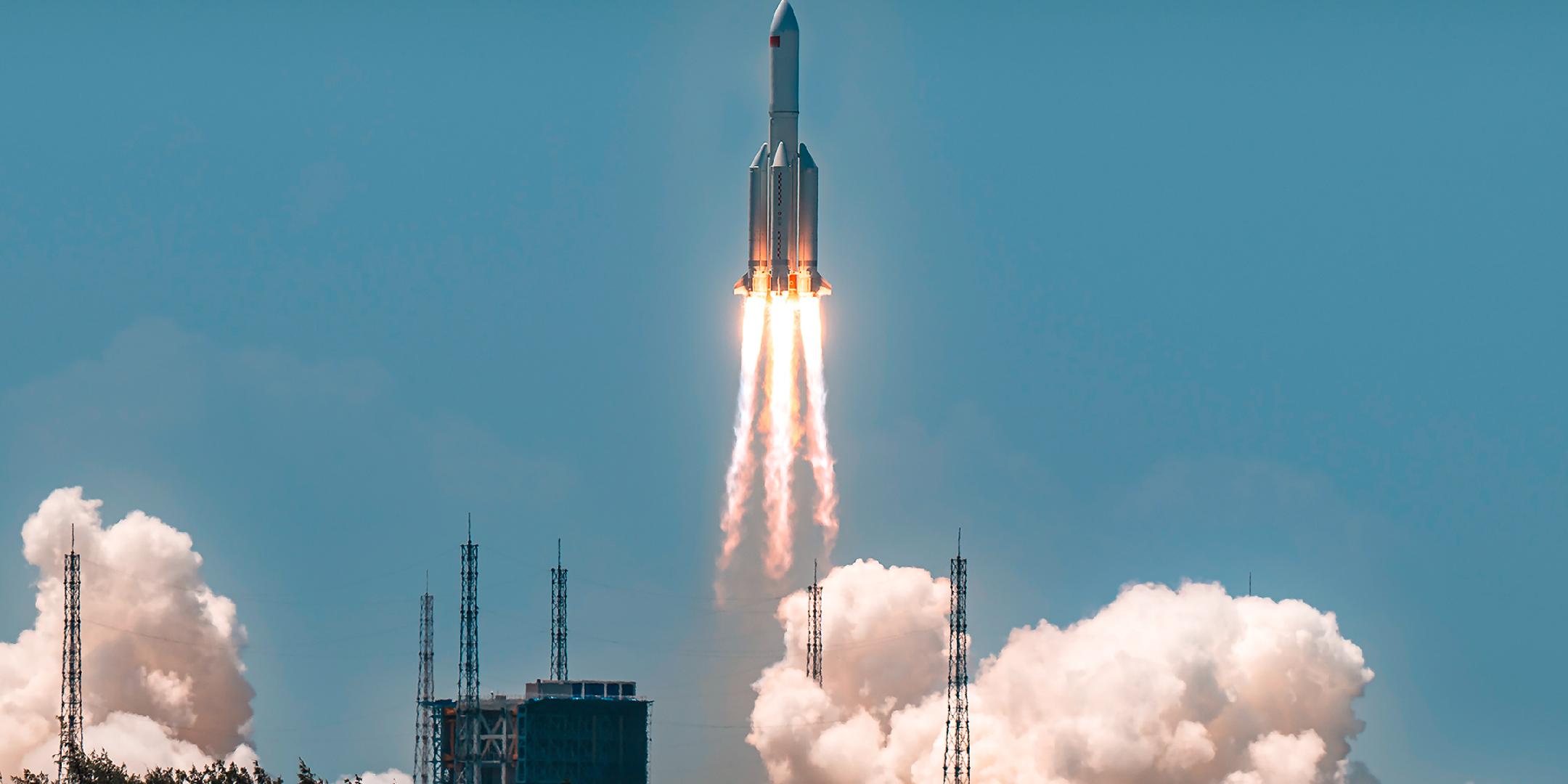
万颗卫星上天难
Jing Ji Guan Cha Wang· 2025-09-05 14:29
Core Viewpoint - The Chinese commercial space industry is facing a significant bottleneck in rocket launch capacity, which is hindering the deployment of satellite constellations necessary for various applications, including internet services and earth observation [1][2][3] Group 1: Market Demand and Challenges - Shanghai Yuanxin Satellite Technology Co., Ltd. has a budget of 616 million RMB for a rocket launch order to support its "Qianfan Constellation" project, but the bidding process has repeatedly failed due to insufficient qualified suppliers [1][2] - The total number of satellites declared by Yuanxin and another company has exceeded 30,000, indicating a high demand for launch services [2] - The urgency is compounded by the International Telecommunication Union (ITU) rules, which impose strict deadlines for satellite launches to retain orbital and frequency resources [4][5] Group 2: Current Launch Capacity - The current private rocket companies in China lack a large-capacity liquid rocket comparable to SpaceX's Falcon 9, which limits their ability to meet the growing demand for satellite launches [2][3] - The recent bidding results show that only a few private companies, such as Tianbing Technology and Blue Arrow Aerospace, have the potential to meet the launch requirements, but they have not yet completed their first flight tests [3][10] Group 3: Industry Developments - The market has seen significant contracts, such as a 990 million RMB deal signed by Aerospace Hongtu with an international client, indicating a thriving satellite industry despite the launch capacity issues [2][7] - The launch frequency and capacity of Chinese companies are lagging behind SpaceX, which completed 100 orbital launches in the first eight months of 2025 alone [6][11] Group 4: Future Prospects - The industry is witnessing a shift towards developing large-capacity, reusable liquid rockets, with companies like Tianbing Technology and Blue Arrow Aerospace focusing their resources on this goal [17][18] - The infrastructure for high-density launches is being developed, with new launch sites and facilities being established to support future rocket launches [20][21] - The successful completion of initial flights for the new generation of rockets is critical for the satellite companies to proceed with their deployment plans [18][21]
卫星互联网组网提速,推荐运营与应用环节
2025-09-04 14:36
Summary of Satellite Internet Industry Conference Call Industry Overview - The domestic satellite internet industry is experiencing a slow start but is now seeing a shift in top-level recognition, allowing more time for technology refinement and supply chain optimization [1][5] - The commercial space sector is accelerating IPO processes, with companies like Blue Arrow Aerospace, CAS Space, and Interstellar Glory preparing for IPOs, creating new opportunities in the capital market [1][6][7] - Major operators like China Star Network and Shanghai Yanzheng are expected to make significant progress in primary market financing, which will greatly enhance the construction of the next-generation satellite constellation [1][7] Key Developments - As of mid-August 2025, China Star Network has completed the launch of 72 network satellites, with expectations to reach around 100 by the end of the year [1][7] - The focus of the industry is shifting towards operations and applications, with the Ministry of Industry and Information Technology encouraging expansion into consumer applications [1][8] - The potential market size for satellite internet, particularly along the "Belt and Road" initiative, is estimated to exceed $100 billion, indicating strong economic feasibility [1][10] Challenges and Misconceptions - The development of satellite internet has faced challenges due to a lack of understanding of the complexity involved, leading to unrealistic expectations for rapid technological advancements [3][11] - There are misconceptions among investors regarding the market size and demand for satellite internet operations, which are driven by strategic needs for spectrum resources and military applications [9][21] Investment Opportunities - Investment focus should be on ground infrastructure, including ground stations and core networks, as well as application segments such as specialized terminal equipment [15][16] - Companies like China Satellite, Haige Communication, and others are highlighted as having significant investment potential in the satellite internet sector [15][20] Future Market Potential - The largest market potential lies in next-generation systems, such as Starlink V2.0/V3.0 and the second-generation systems from China Star Network, which will enable seamless integration of satellite and terrestrial networks [17][19] - The development of 3GPP NTN (Non-Terrestrial Networks) is expected to unify satellite and terrestrial networks, facilitating mobile direct connection capabilities [19][20] Conclusion - The domestic satellite internet industry is at a pivotal point with a focus on operational and application development, presenting substantial investment opportunities in under-recognized segments [21][22]

可重复使用火箭与低轨星座组网提速,航空航天ETF(159227)再度回调,成交额稳居同类第一
Mei Ri Jing Ji Xin Wen· 2025-09-04 06:26
Group 1 - The aerospace ETF (159227) experienced a decline of 4.35% with a trading volume of 216 million yuan, indicating active trading with a turnover rate of 18.39% [1] - Key stocks within the ETF include Huayin Technology, Guobo Electronics, and Hangyu Technology which saw increases, while Changcheng Military Industry, Construction Industry, and Inner Mongolia First Machinery Group hit the daily limit down [1] - The first domestic commercial space situational awareness satellite named "Jiazhou" is set to launch on September 5 from the Jiuquan Satellite Launch Center [1] Group 2 - The aerospace ETF tracks the Guozheng Aerospace Index, focusing on military aerospace capabilities, with the military industry accounting for 97.96% of the index [2] - The Guozheng Aerospace Index has a higher concentration in aerospace equipment, with a weight of 65.4% in aerospace and aviation equipment, surpassing the weights in the Zhongzheng Military and Zhongzheng Defense indices [2]
中国版星链要来了 手机直连卫星对普通人有何影响?
Mei Ri Jing Ji Xin Wen· 2025-08-28 12:33
Core Viewpoint - The Ministry of Industry and Information Technology (MIIT) has released guidelines to optimize business access and promote the development of the satellite communication industry, aiming for over 10 million satellite communication users by 2030 and the integration of satellite communication into the new development pattern to support high-quality economic and social development [1][2]. Industry Impact - The satellite communication sector is expected to become a new economic growth point, with commercial space activities being highlighted in government work reports for two consecutive years since 2024 [2]. - The guidelines are seen as a response to both policy requirements and technological trends, with a significant increase in global satellite launches and advancements in satellite manufacturing capabilities [3]. Market Dynamics - The current satellite internet market in China is projected to reach approximately 40 billion yuan by 2025, driven by the rapid deployment of low Earth orbit (LEO) satellites [3][4]. - The existing business access system for satellite internet is viewed as a constraint on industry growth, necessitating reforms to stimulate market activity and encourage more enterprises to participate [4]. Policy Support - The guidelines are expected to foster the integration of satellite communication with ground mobile communication and new technologies like 5G/6G and artificial intelligence, contributing to a unified information communication infrastructure [5]. - State-owned enterprises such as China Star Network and China Satcom are anticipated to receive more policy support to accelerate the development of LEO satellite internet [5][6]. Technological Advancements - The guidelines emphasize the importance of LEO satellite internet, which can provide global broadband coverage and reduce communication latency, aligning with industry development trends [7]. - China's approach to LEO satellite internet is characterized by a collaborative model involving both state and commercial entities, with significant satellite constellations planned for deployment [7][8]. User Experience - The introduction of "mobile direct satellite" services is expected to enhance user experience by allowing seamless communication without the need for specialized terminals or new phone numbers, particularly in remote areas [9]. - The cost of satellite communication services is projected to decrease significantly, with consumer-grade satellite communication devices expected to drop in price and service fees becoming more affordable [10][11]. Industry Applications - The integration of satellite communication with new information infrastructure is likely to transform various industries, including industrial internet, automotive, maritime, and aviation sectors, by enabling efficient communication in remote locations [12].
卫星互联网牌照发放在即,“天地一体”链动
2 1 Shi Ji Jing Ji Bao Dao· 2025-08-28 12:10
Core Viewpoint - The Ministry of Industry and Information Technology (MIIT) has issued guidelines to optimize business access and promote the development of the satellite communication industry, encouraging telecom operators to collaborate with satellite companies to enhance satellite applications and services [1][2]. Group 1: Policy and Market Dynamics - The guidelines aim to develop over 10 million satellite communication users by 2030, integrating satellite communication into the new development framework [2]. - The issuance of satellite internet licenses is seen as a significant step towards commercial operations in the satellite internet sector, with expectations for accelerated license distribution [2][4]. - The capital market has reacted positively, with stocks related to satellite communication experiencing significant gains following the announcement of supportive policies [3]. Group 2: Industry Players and Developments - Two major satellite internet constellations are being developed: the "GW Constellation" led by China Satellite Network Group and the "Qianfan Constellation" operated by Yuanxin Satellite, both aiming to deploy over 10,000 low-orbit satellites [5][6]. - China Telecom operates the "Tiantong-1" high-orbit satellite system, while China Mobile and China Unicom are preparing to enter the satellite communication market with the expected issuance of satellite internet licenses [6]. Group 3: Technological and Operational Aspects - The issuance of satellite internet licenses is intended to facilitate large-scale satellite internet deployment and clarify operational boundaries and resource allocation [4][8]. - The satellite internet sector is expected to drive growth across the entire industry chain, with significant demand anticipated for satellite communication services [8]. - The development of low-orbit satellite constellations is contingent on advancements in rocket launch capabilities, with several private companies planning to enhance their launch services [11][12].


2025年中国商业航天行业发展研究报告-甲子光年
Sou Hu Cai Jing· 2025-08-28 08:18
Industry Background - The commercial space industry focuses on market-driven resource allocation and profit generation, distinguishing itself from traditional government-led space activities [7][19] - The global space industry has evolved through three phases: government-led (1950s-1980s), commercialization initiation (1980s-1990s), and the "new space" breakthrough phase (2000s-present), with SpaceX leading the way through reusable rocket technology [1][12] - China began its commercial space development later, accelerating after policy changes in 2014, with significant advancements in satellite internet recognized as a "new infrastructure" by 2020 [1][19] Current Industry Status - The industry exhibits three main characteristics: 1. Collaborative breakthroughs across the supply chain, with a closed loop formed from upstream materials to downstream applications, leading to a global space economy of $415 billion in 2024, with commercial space accounting for 71% [2][36] 2. Focus on core technology advancements, including reusable rockets and low-orbit satellite constellations, with significant projects like the Chinese Starlink GW constellation planning 12,900 satellites [2][3] 3. Active capital investment, with domestic financing exceeding 2.9 billion yuan in 2024, focusing on rocket development and satellite components [2][28] Representative Companies - Blue Star Space focuses on laser communication, achieving a 100% success rate in on-orbit chain construction and establishing China's first mass production base for laser terminals [2] - Geospace Aerospace specializes in intelligent satellite manufacturing, producing 300 satellites annually from its digital factory [2] - Blue Arrow Aerospace has made breakthroughs in liquid oxygen-methane rocket technology, successfully completing vertical takeoff and landing tests [2] Future Trends and Challenges - The future points towards integrated space, air, land, and sea systems (6G vision) and space-based computing to address ground computing bottlenecks, but challenges include space debris management, low approval efficiency, long capital return cycles, and international competition [3][19] - Recommendations include developing space robots, establishing debris removal funds, and promoting international space treaty revisions to help China transition from "catching up" to "keeping pace" in commercial space [3][22] Policy and Market Dynamics - National policies have progressively recognized the strategic value of commercial space, evolving from "encouraging participation" to "building new growth engines" [22][23] - Major cities in China are actively developing commercial space industries, forming regional clusters through policy support and resource integration [24][26] - The market is driven by diverse capital investments, with private capital playing a crucial role in the commercial space sector's growth [27][29]

卫星互联网牌照发放在即,谁将引领中国“太空互联网”新篇章?
Sou Hu Cai Jing· 2025-08-28 06:06
Core Insights - The issuance of satellite internet licenses marks a significant step towards the commercialization and standardization of satellite communication services in China [1][2][3] - The licenses will allow companies to legally provide satellite internet services, securing access to scarce spectrum and orbital resources, similar to mobile communication operator licenses [1][2] Industry Overview - The satellite internet license falls under the A13 category of the Basic Telecommunications Business Operating License, covering both satellite mobile and fixed communication services [1] - The high entry barriers for obtaining the license include a minimum state-owned share of 51% and a registered capital requirement between 100 million to 1 billion RMB [1] Competitive Landscape - Major candidates for the first batch of license holders include China Telecom, China Mobile, China Unicom, China Star Network, and Shanghai Yuanxin [2] - China Telecom operates the Tian Tong satellite system, while China Mobile is exploring 5G integration with its low-orbit satellite [2] Strategic Implications - The license issuance is seen as a strategic move to enhance China's position in the global space resource competition, especially against established players like SpaceX [2][3] - The initiative aims to transition satellite internet from a defense and research focus to a more general public service [3] Technological Development - The GW constellation, led by China Star Network, has successfully launched multiple satellites, increasing launch frequency significantly [3][5] - However, there remains a technological gap compared to SpaceX's Starlink, particularly in satellite capacity and core technologies [3][5] Future Outlook - The GW constellation plans to deploy 12,992 satellites by 2029, with a 10% deployment target to secure spectrum resources [5] - The development of a rich application ecosystem based on satellite internet services is crucial for creating value in the market [5]
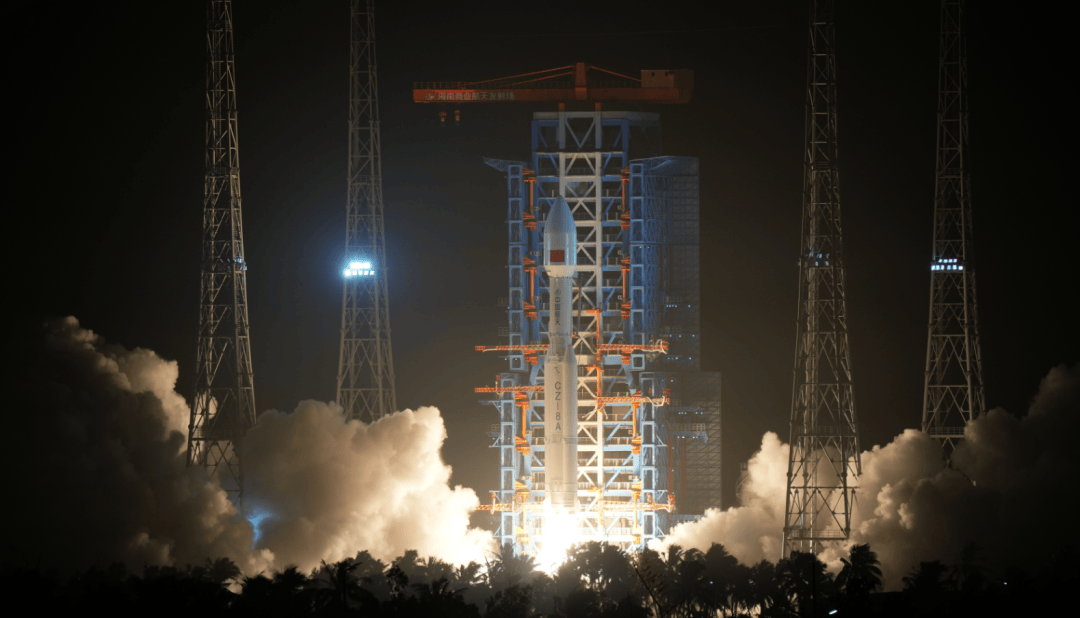
中国版星链要来了?手机直连卫星对普通人有哪些影响?成本如何?赛迪研究院专家解读
Mei Ri Jing Ji Xin Wen· 2025-08-28 03:12
Core Viewpoint - The Ministry of Industry and Information Technology (MIIT) has released guidelines to optimize business access and promote the development of the satellite communication industry, aiming for over 10 million satellite communication users by 2030 and the integration of satellite communication into the new development framework to support high-quality economic and social development [1][2]. Industry Development - The guidelines are a response to the rapid growth in global satellite launches and advancements in satellite manufacturing and launch capabilities, particularly for low Earth orbit (LEO) satellites, which are becoming the primary focus due to their cost-effectiveness and strong signal transmission [2][3]. - The commercial space sector has been highlighted in government reports as a key driver for the development of the satellite communication industry, with significant market growth expected, projected to reach approximately 40 billion yuan by 2025 [2][3]. Policy Implications - The guidelines aim to enhance the integration of satellite communication with ground mobile communication and new information technologies like 5G/6G and artificial intelligence, fostering a comprehensive information communication infrastructure [4]. - The policy is expected to invigorate market dynamics by supporting state-owned enterprises in developing LEO satellite internet and allowing traditional telecom operators to expand into satellite communication services [4][5]. Market Opportunities - The guidelines encourage private enterprises to explore new satellite communication services, expanding access to satellite network resources and providing more opportunities for private space companies [5]. - The focus on LEO satellite internet is a significant aspect of the policy, with plans for commercial trials to enhance global broadband coverage and reduce communication latency [5][6]. User Impact - The introduction of "mobile direct satellite" communication is anticipated to revolutionize user experience by enabling seamless communication in areas lacking ground network coverage, significantly lowering barriers to access [7][8]. - The cost of satellite communication services is expected to decrease, with consumer-grade satellite communication devices projected to drop in price by over 30% in the next two years, and monthly service fees potentially falling to between 50 and 100 yuan [9][10]. Industry Integration - The integration of satellite communication with various industries, such as industrial internet, vehicle networking, and aviation, is expected to drive productivity transformations and enhance operational efficiency in remote areas [10][11]. - The deployment of LEO satellites will facilitate high-speed internet access on aircraft, potentially eliminating the need for flight mode on mobile devices [11].
工信部再发文,卫星互联网政策开始密集推出,推动手机直连卫星
Xuan Gu Bao· 2025-08-27 23:39
Industry Overview - The Ministry of Industry and Information Technology (MIIT) has issued guidelines to optimize business access and promote the development of the satellite communication industry, encouraging telecom operators to collaborate with satellite companies to explore the potential of high-orbit satellite applications like Tiantong and Beidou [1] - The issuance of satellite internet licenses marks a significant step towards commercial operations in China's satellite internet sector, with China Star Network planning to complete its first-generation satellite constellation consisting of over 100 satellites by the end of this year [1][2] - The traditional telecom operators in China, including China Telecom, China Unicom, and China Mobile, have launched satellite communication services since 2025, while traditional satellite service provider China Satcom has introduced consumer-grade satellite internet products [1] Market Growth - The satellite internet market in China was valued at 29.3 billion yuan in 2021 and is projected to reach 44.7 billion yuan by 2025, with a compound annual growth rate (CAGR) of 11.2% from 2021 to 2025 [2] - The limited availability of satellite orbital and frequency resources poses challenges, as the near-Earth orbit can only accommodate approximately 60,000 satellites, and the Ku and Ka frequency bands are nearing saturation [2] Company Developments - Haige Communications has developed products based on chips that are applied in various fields, including satellite direct connection for mobile phones, low-altitude economy, aerospace, intelligent transportation, and energy [3] - Zhenlei Technology provides chips that support low-orbit communication satellite applications, specifically for mobile direct connection scenarios [4]