
九识智能

Search documents
快递运营成本降30%,开拓新市场却如“重新创业” 无人车狂奔背后的商业双面镜
Bei Jing Shang Bao· 2025-09-25 13:49
Core Insights - The autonomous vehicle industry is undergoing significant changes, with sales expected to increase by over 50% next year, driven by demand from various sectors beyond just logistics [1][6] - Major logistics companies are increasingly adopting autonomous vehicles, with a notable shift in sales distribution from 70%-80% in the express delivery sector to other industries [5][6] - The commercialization of autonomous vehicles is reaching a turning point, with monthly sales surging from 200-300 units to nearly 2000 units in a short period [2][6] Group 1: Market Dynamics - Autonomous vehicles were initially developed to meet the needs of the express delivery industry, but their applications are expanding into sectors like pharmaceuticals, spare parts, and textiles [1][6] - Companies like New Stone and NineSight are leading the market, with New Stone projecting a delivery volume of over 15,000 units this year [2][4] - The operational efficiency of autonomous vehicles is evident, with a reported 30% reduction in operational costs compared to traditional delivery methods [3][4] Group 2: Technological and Regulatory Challenges - The transition from closed environments to open roads presents localization challenges, as companies must navigate different regulations and data security requirements in new markets [1][7] - The demand for autonomous vehicles is driven by two main scenarios: instant logistics and urban delivery, which are growing faster than traditional express delivery [6][7] - Companies are developing various models of autonomous vehicles to cater to different operational needs, including temperature-controlled vehicles for specific industries [6][7] Group 3: Financial Landscape - Significant capital investment is flowing into the autonomous vehicle sector, with companies like New Stone and NineSight securing substantial funding to support growth [8][9] - Despite the influx of capital, many players in the market are still exploring profitable business models, focusing on providing operational services rather than just selling vehicles [9] - New Stone has achieved monthly profitability, indicating a shift towards sustainable business practices in the industry [9]

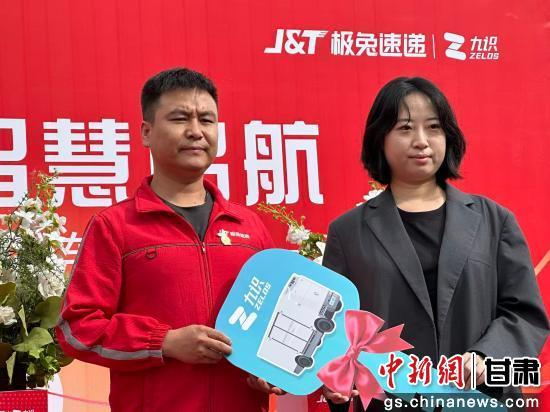
西北乡村物流“最后一公里”末端配送“智慧启航”
Zhong Guo Xin Wen Wang· 2025-09-25 09:16
Core Viewpoint - The delivery of 16 E6 unmanned logistics vehicles by Jiushi Intelligent to Jitu Express marks a significant step in their collaboration, enhancing last-mile delivery capabilities in the northwest region of China [1][3]. Group 1: Delivery and Technology - The 16 E6 unmanned logistics vehicles will be immediately integrated into Jitu Express's daily operations in the Gansu, Qinghai, and Ningxia regions [1]. - The E6 model features advanced L4 autonomous driving capabilities, excellent scene adaptability, and a large cargo space, which significantly improves delivery efficiency and user experience [1][3]. Group 2: Industry Context and Support - The introduction of unmanned delivery vehicles addresses challenges in last-mile delivery, such as labor shortages and efficiency fluctuations, providing innovative solutions for community and park services [3][4]. - The Gansu Provincial Postal Administration supports technological innovation and model exploration in the industry, encouraging Jitu Express to enhance the application and iterative upgrade of unmanned delivery technology [3]. Group 3: Strategic Collaboration - The partnership between Jiushi Intelligent and Jitu Express combines Jiushi's expertise in intelligent driving and scene adaptation with Jitu's extensive experience in the express delivery network, creating a replicable model for smart logistics in the northwest [4][7]. - The deployment of the unmanned logistics vehicle fleet signifies a practical advancement in the collaboration between the two companies, aiming to transform technological advantages into real logistics value [7].

长三角算力热潮涌动 浙江嘉兴如何撑起千亿产业蓝图?
Zhong Guo Xin Wen Wang· 2025-09-23 10:21
长三角算力热潮涌动 浙江嘉兴如何撑起千亿产业蓝图? 中新网嘉兴9月23日电(黄彦君 周丽丽)在长三角科技竞速的新赛道上,浙江嘉兴正加快步伐抢占人工智 能产业高地,为产业升级按下"加速键"。 据嘉兴市商务局消息,2025年上半年,该市规上软件和信息服务业营业收入同比增长34%,增速稳居浙 江省第一;目前嘉兴已投运算力规模约占浙江省总量的65%,同样居浙江省首位。 该市提出,到2027年,嘉兴人工智能产业营收规模将突破1000亿元。这一目标背后,承载着其作为全国 一体化算力网络国家枢纽节点城市的雄心与底气。 位于嘉兴桐乡的"乌镇之光"超算中心。嘉兴市新闻传媒中心供图 算力规模浙江省第一 打造长三角"智能基石" 走进长三角·平湖润泽国际信息港,两栋智算中心楼内的机柜指示灯如繁星闪烁。 作为全国一体化算力网络国家枢纽万卡集群建设工程重要组成部分,这个项目已吸引全球云计算、物联 网、电子商务等领域的知名企业入驻,覆盖了工业互联网、IT设备制造、人工智能等全产业链。 "我们通过对千行百业计算任务进行分类整合,如同合并同类项,将原本需要半年的软件部署时间缩短 至以天计。"是石科技董事长闫博文介绍。 2025年2月,该企业凭 ...

押宝智能配送,汽车后市场从拼价格“卷”向降成本
Zhong Guo Qi Che Bao Wang· 2025-09-19 05:47
Core Insights - The automotive aftermarket is shifting from price competition to cost optimization, with a focus on efficiency through intelligent delivery systems [2][3][6] - Major tire brands and internet giants are collaborating to implement autonomous driving technology in terminal delivery, marking the entry of tire sales into the era of unmanned delivery [2][3] Group 1: Industry Trends - Companies like Giti Tire and Continental are leading the charge in adopting intelligent delivery solutions, with Giti Tire planning to cover 32 cities in China by 2025 using L4 autonomous vehicles [3][6] - The introduction of drone technology for parts delivery is expanding the reach of intelligent logistics in the automotive aftermarket [2][3] Group 2: Cost Reduction and Efficiency - Giti Tire has reported a reduction in operational costs by over 60% due to the implementation of unmanned delivery networks, significantly improving delivery efficiency and response times [3][7] - Continental has launched a "30-minute quick delivery" service, enhancing customer experience by providing rapid tire replacement services [3][4] Group 3: Collaborative Innovations - Linglong Tire has partnered with New Stone Technology to create smart delivery vehicles, achieving over 30% reduction in logistics costs and halving customer wait times [4][6] - Tuhu Car Maintenance is collaborating with New Stone Technology to establish a closed-loop ecosystem of "intelligent delivery and professional after-sales service" [4][6] Group 4: Future Potential and Challenges - The potential for unmanned delivery in the automotive aftermarket is significant, with expectations of reduced labor costs and improved delivery efficiency as technology matures [6][9] - Challenges remain, including the need for better understanding of diverse delivery scenarios and the financial risks associated with transitioning from traditional delivery methods [9][10][11]

无人物流车商业化加速,佑驾创新刘国清:“路权”是规模化落地关键,L3级已准备就绪
Mei Ri Jing Ji Xin Wen· 2025-09-18 08:01
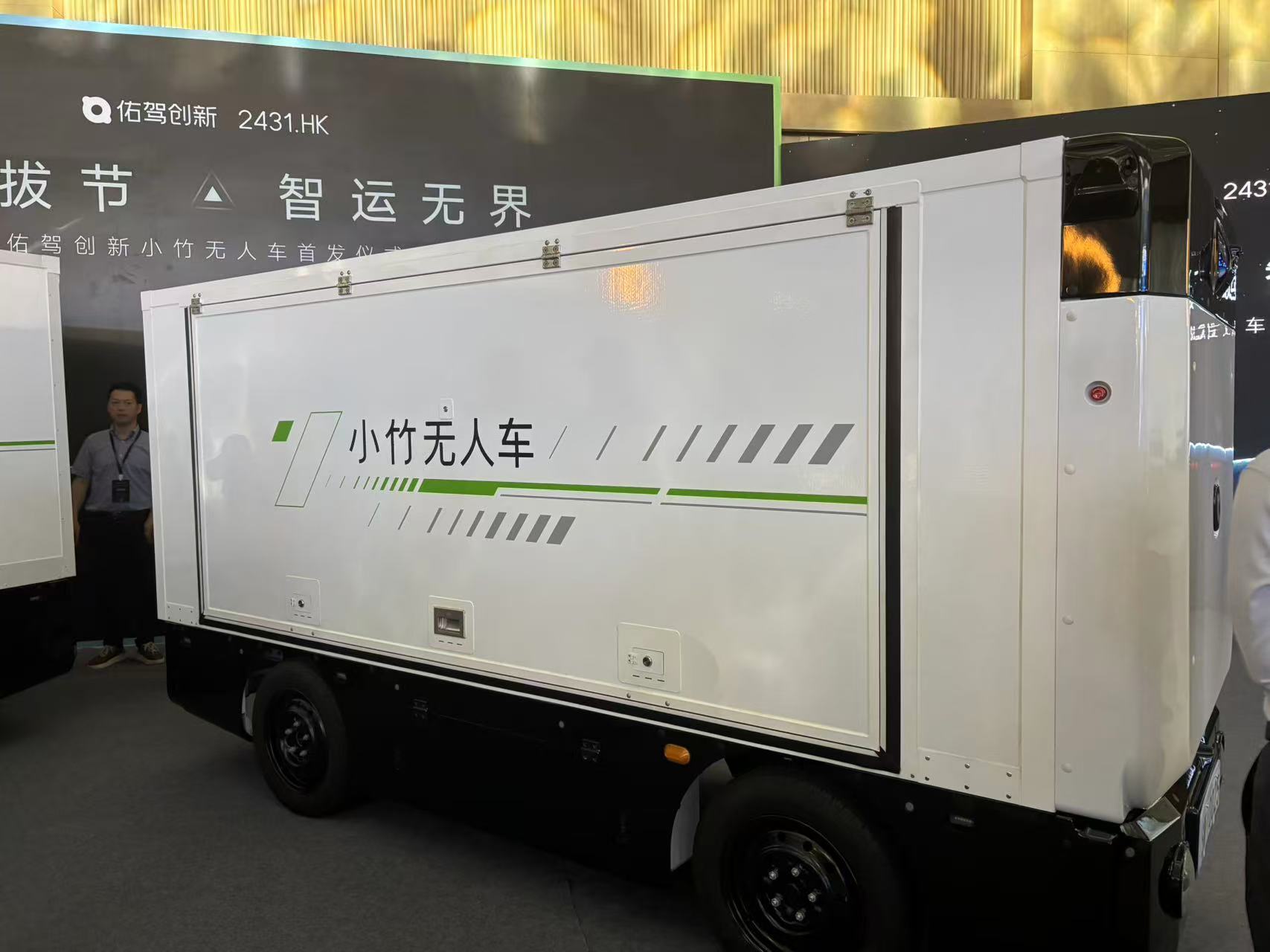
Core Viewpoint - China has been the world's largest logistics market for nine consecutive years, and traditional models struggle to create more profit through cost-cutting or efficiency improvements. The future of logistics requires smarter transportation, which is fundamentally addressed by unmanned logistics vehicles [1][4]. Group 1: Company Developments - Youjia Innovation officially launched its unmanned logistics brand "Xiaozhu Unmanned Vehicle" on September 15, introducing two models, T5 and T8, equipped with advanced sensor technology [1][4]. - The company aims to deliver 400 to 500 vehicles by the end of this year, with projected sales reaching tens of thousands next year, generating an estimated revenue of 400 to 500 million yuan, maintaining a gross margin of 20% to 30% [5][6]. Group 2: Market Trends - The unmanned logistics vehicle market is expected to experience explosive growth, with an annual growth rate exceeding 60% from 2025 to 2028, potentially surpassing a market size of 20 billion yuan [4]. - Recent financing activities in the unmanned logistics sector indicate strong market interest, with significant investments in companies like New Stone Age and Jiusi Intelligent [4]. Group 3: Technological Advancements - Breakthroughs in chips, sensors, and algorithms over the past decade have laid the foundation for unmanned logistics vehicles to meet real-world demands, with costs decreasing significantly due to advancements in passenger vehicle automation [3][4]. - The company has developed a product matrix based on L1 to L4 autonomous driving technologies, providing comprehensive technical support to automakers [9]. Group 4: Regulatory Environment - The Chinese government has released positive signals for the industry, promoting unmanned vehicle technology through various action plans, with over 100 cities opening up road rights for unmanned delivery vehicles by mid-2025 [4][6]. - The key challenge for the industry is not just technological but also adapting urban governance systems to new logistics forms, particularly regarding road rights and public resource usage [6][8]. Group 5: Strategic Partnerships - Youjia Innovation is exploring operational models in collaboration with local enterprises, such as a recent strategic agreement with Shenzhen Post and Eastern Bus to advance unmanned logistics applications [8].
深圳无人物流车单月狂送90万单
Shen Zhen Shang Bao· 2025-09-17 16:39
Core Insights - Shenzhen has released its first monthly report on the operation and development of functional unmanned vehicles, showcasing their transition from experimental to commercial value [1][3] - The report indicates a significant increase in the operational scale and commercial viability of functional unmanned vehicles in Shenzhen [3][5] Operational Scale - As of August, Shenzhen has opened 1,170 routes for functional unmanned vehicles, totaling 3,185 kilometers, with 44 new routes added in August alone [1] - The number of operational functional unmanned vehicles reached 764 in August, with a month-on-month increase of 45 vehicles [1] Market Competition - The report highlights the competitive landscape among unmanned vehicle brands in Shenzhen, with Meituan leading in monthly driving mileage at 11.2 million kilometers, significantly surpassing New Stone's 3.5 million kilometers [2] - New Stone has the largest active vehicle count at 148, followed by Meituan with 119, while other brands like White Rhino and Jiushi Intelligent have significantly fewer active vehicles [2] Commercial Value - In August, functional unmanned vehicles in Shenzhen completed 900,000 deliveries, generating approximately 7.6 million yuan in commercial value [3] - The average delivery volume per vehicle exceeds 200 orders per hour, outperforming traditional delivery vehicles [3] Safety Metrics - The responsibility traffic accident rate for functional unmanned vehicles in Shenzhen was only 0.04 incidents per 10,000 kilometers in August, indicating a high level of operational safety [3] - The average manual intervention rate was 0.016 times per kilometer, with a compliance rate of 91.6% [3] Business Ecosystem Development - Companies are diversifying their operational strategies, with SF Express testing unmanned delivery in university campuses to enhance service capabilities [4] - New Stone is conducting pilot inspections using unmanned vehicles equipped with various sensors to improve urban management [4] Industry Growth Projections - The low-speed unmanned driving industry in China is projected to reach a sales scale of 12.3 billion yuan in 2024, with a year-on-year growth of 45% [5] - By 2030, the sales volume of low-speed unmanned vehicles is expected to exceed 95,000 units, with sales potentially surpassing 41 billion yuan [5]
无人配送车价格战“卷”入万元:资本密集加持,谁能笑到最后
Nan Fang Du Shi Bao· 2025-09-17 08:59
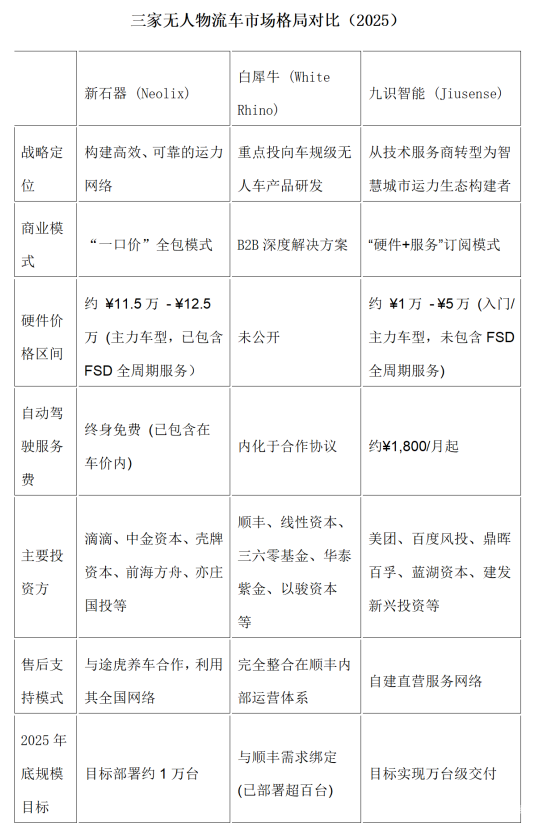
Core Insights - A fierce price war is sweeping the unmanned logistics vehicle industry, with companies like Neolix introducing attractive financing options and free services, marking a shift from high-tech products to cost-effective logistics tools [1][2] - The price drop has led to a significant increase in market demand, with over 60% of the 15,000 units delivered by mid-2025 coming after the price war began [2][4] - The influx of capital and technological advancements are driving this transformation, with major companies raising substantial funds to support their operations [4][6] Price War Dynamics - The price of unmanned vehicles has plummeted from around 200,000 yuan to approximately 100,000 yuan, including service fees [1][2] - Companies like Cainiao and Jiusense are setting aggressive price points, with models priced as low as 16,800 yuan and 19,800 yuan respectively [2] - The operational efficiency of unmanned vehicles is improving, with delivery times reduced significantly, allowing for increased package handling by delivery personnel [2][4] Capital and Investment - Major companies have raised over 3 billion yuan in funding within a few months, indicating strong investor interest in the unmanned logistics sector [4][6] - Neolix and Jiusense have secured significant investments from prominent backers, enhancing their market positions [4][6] Technological Advancements - The cost of essential components like laser radars has decreased dramatically, contributing to the overall reduction in vehicle prices [7] - The establishment of self-owned factories by leading firms has led to significant manufacturing cost reductions [7] Future Competition Landscape - As the price competition intensifies, companies are shifting focus from price to ecosystem development, emphasizing the importance of innovation and service capabilities [8][9] - The future success in the unmanned logistics market will depend on companies' abilities to understand logistics challenges and provide reliable services [9][10]

九识智能:与通用股份达成战略合作,无人物流车促进轮胎行业升级
Jing Ji Guan Cha Bao· 2025-09-17 04:59
Core Insights - The strategic partnership between Jiushi Intelligent and General Motors has been officially established, focusing on the delivery of autonomous logistics vehicles [1] - The E6 autonomous logistics vehicle is designed to address industry pain points such as emergency replenishment at night and safe delivery in adverse weather conditions, enhancing service response speed and customer satisfaction [1] - The introduction of the E6 vehicle will further digitize the entire supply chain from production to delivery, strengthening the dual competitiveness of "product + service" [1]

2025年中国智能物流车行业研究报告:场景应用持续渗透,智能化升级加速落地
Tou Bao Yan Jiu Yuan· 2025-09-16 12:54
Investment Rating - The report indicates a positive outlook for the intelligent logistics vehicle industry, highlighting significant growth potential and technological advancements. Core Insights - The Chinese intelligent logistics vehicle industry is experiencing rapid development driven by digital transformation, with increasing demand for e-commerce logistics and automated delivery solutions [2][3] - The market size is projected to grow from 510 million yuan in 2025 to 8.34 billion yuan by 2030, driven by the expansion of the express delivery sector and the increasing penetration of unmanned delivery vehicles [5][49] - The report emphasizes the importance of balancing technological breakthroughs with cost control for sustainable growth in the industry [2] Summary by Sections Industry Overview - The intelligent logistics vehicle industry is entering a critical commercialization phase in 2025, with ongoing technological iterations and ecosystem collaborations [2] - The logistics industry's total social costs as a percentage of GDP remain high at 14-15%, compared to 7-8% in the US, indicating room for efficiency improvements [3][6] Market Dynamics - The demand for cost reduction and efficiency in logistics is urgent, with the expectation of reducing logistics costs by 300 billion yuan by 2025 [3][8] - The industry has established a complete ecosystem, with leading companies dominating the market and a production capacity exceeding 200,000 units [4] Technological Advancements - The report highlights significant advancements in L4 autonomous driving technology, with costs of key components like ADAS lidar and lithium batteries decreasing substantially, leading to a drop in the overall vehicle price to 20,000 yuan by 2025 [26][28] - The development of a comprehensive policy framework since 2021 has supported the growth of autonomous driving and unmanned delivery technologies [15][16] Competitive Landscape - The market is characterized by a diverse range of products, including unmanned delivery vehicles and intelligent heavy trucks, with a focus on various application scenarios from last-mile delivery to industrial logistics [30][45] - Major players in the market include companies like New Stoneware and KargoBot, which are advancing their autonomous driving capabilities and expanding their product offerings [41][42] Future Outlook - The report anticipates that the demand for unmanned logistics vehicles will increase significantly, with the number of vehicles required expected to rise from 10,000 in 2025 to 163,000 by 2030 [49] - The ongoing optimization of operational efficiency and the rise in delivery volumes are expected to drive this growth, with unmanned vehicles projected to handle half of the express delivery business by 2030 [49]
江苏苏州工业园区崛起“智驾”新坐标
Xin Hua Ri Bao· 2025-09-15 23:22
Group 1 - The Suzhou Industrial Park has signed a cooperation memorandum with Nexteer Automotive (China) to invest 1 billion RMB in establishing an Asia-Pacific headquarters, R&D center, and smart manufacturing base, focusing on new energy vehicle steering systems and autonomous driving technology, expected to generate an annual output value exceeding 10 billion RMB post-2026 [1] - Bosch, the world's largest automotive technology supplier, has also signed a memorandum with the Suzhou Industrial Park to invest 10 billion RMB over the next five years, collaborating on intelligent driving assistance and smart cockpit technologies [1] - The automotive industry is a core component of high-end equipment manufacturing and plays a crucial role in promoting high-quality development in manufacturing, with significant foreign investment indicating the strong appeal of the Suzhou Industrial Park in the new energy and intelligent connected vehicle sectors [1] Group 2 - The Suzhou Industrial Park has attracted major foreign companies such as Bosch, Aptiv, BorgWarner, and TE Connectivity, while also nurturing innovative domestic firms like Zhixing Technology and Haige Electric Control, covering various fields including chassis electronic systems and electric vehicle controllers [2] - The park has established a "vehicle-road-cloud integration" development system, deploying 1,300 road testing facilities covering 114 kilometers, and creating a regional intelligent connected vehicle cloud control platform [2] - The automotive industry chain in the park is expected to generate over 140 billion RMB in revenue in 2024, with 140+ enterprises and 68 high-tech companies contributing to a leading automotive parts and intelligent driving industry cluster [2] Group 3 - Domestic automotive brands are also establishing a presence in the park, with Great Wall Motors launching an intelligent platform R&D center, focusing on smart driving and cockpit technologies [3] - Local innovative companies are expanding internationally, with Zhixing Technology establishing a joint venture in Malaysia and Jiushi Intelligent partnering with Emirates Post for L4 autonomous delivery services [3] - The park aims to leverage the automotive industry's advantages to enhance collaboration with integrated circuits and robotics, driving the entire industry towards high-end development [3]

