壁仞科技

Search documents
燧原IPO闯关,国产GPU四小龙为何集体“亏损上市”?
Sou Hu Cai Jing· 2026-01-28 03:34
Core Viewpoint - Suirian Technology, a domestic GPU company, has submitted its prospectus to apply for an IPO on the Sci-Tech Innovation Board, aiming to raise 6 billion yuan despite not achieving profitability in its 8 years of operation [2][4]. Group 1: Financial Performance - Suirian Technology's revenue is projected to reach 722 million yuan in 2024, representing an almost 8-fold increase from 2022 to 2024 [4]. - The company reported a revenue of 90.1 million yuan in 2022, with a net loss of 1.116 billion yuan, and a revenue of 301 million yuan in 2023, with a net loss of 1.665 billion yuan [9]. - For the first three quarters of 2025, the company expects a revenue of 540 million yuan but still anticipates a loss of 888 million yuan [10]. Group 2: R&D and Investment - Suirian Technology has invested a total of 3.529 billion yuan in R&D from 2022 to 2024, with R&D personnel accounting for 78.41% of its workforce [10][11]. - The company follows a Fabless model, focusing on design and sales while outsourcing manufacturing and testing [11]. - The IPO proceeds will be allocated as follows: 55% for advanced AI hardware and software innovation, 25% for the fifth-generation AI chip development, and 20% for the sixth-generation chip industrialization [20]. Group 3: Market Position and Competition - The domestic GPU sector is characterized by high investment and long development cycles, with Suirian Technology facing significant competition from both domestic and international players [16][19]. - The company relies heavily on a few major clients, with over 71.84% of its revenue coming from Tencent in the first three quarters of 2025 [12][22]. - The global AI accelerator card market is expected to grow from over 100 billion USD in 2024 to over 500 billion USD by 2028, with a compound annual growth rate exceeding 40% [18]. Group 4: Challenges Ahead - The high dependency on a limited customer base poses risks, as major clients may switch suppliers or develop in-house capabilities [24]. - The need for continuous investment in ecosystem development and technology iteration creates a cycle of high expenditure and potential profit erosion [25][27]. - The path to profitability is expected to be long, with companies in the GPU sector needing to navigate significant challenges related to customer structure and ecosystem building [22][26].

火力全开!2026开年泰康平安新华等超10亿险资南下,狂扫港股AI、生物医药IPO
Sou Hu Cai Jing· 2026-01-28 03:33
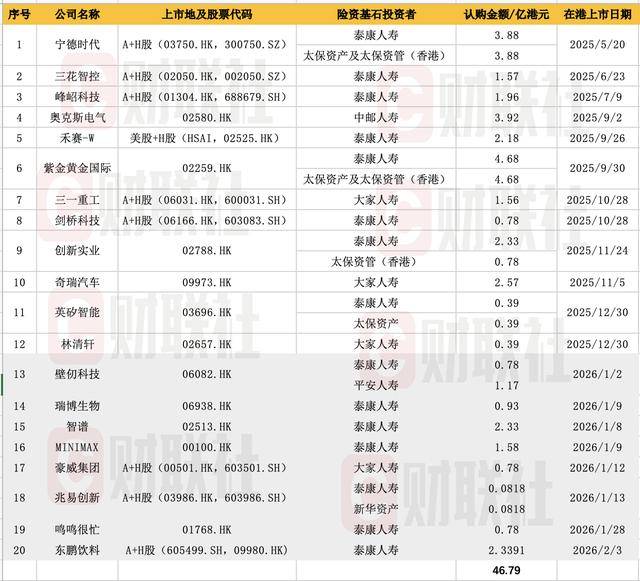
Core Viewpoint - Insurance capital is increasingly participating in cornerstone investments in Hong Kong IPOs, signaling strong market confidence, with significant investments from major insurance companies like Taikang Life and Ping An Life [1][3][4]. Group 1: Investment Trends - In early 2026, four insurance companies participated in eight Hong Kong IPO cornerstone investments, with Taikang Life investing $10 million in the IPO of Mingming Hen Mang [1]. - From 2025 to early 2026, seven insurance institutions participated as cornerstone investors in 20 Hong Kong IPOs, with a total subscription amount of HKD 4.679 billion [1][4]. - The average return for Hong Kong IPOs in 2025 was 38%, with the first-day price drop rate at a five-year low of 23.08% [6][10]. Group 2: Challenges Faced - Insurance companies face challenges in accessing IPO projects due to high entry barriers and the need for strong cross-market research capabilities [2][15]. - The balance between high return potential and net asset value volatility is a significant concern for insurance funds, which are generally risk-averse [2][15]. Group 3: Market Outlook - The IPO fundraising scale in Hong Kong is expected to remain strong in 2026, with insurance capital becoming a long-term force in the market [2][15][16]. - The cornerstone investment mechanism is seen as a key entry point for quality assets in the Hong Kong market, enhancing liquidity and valuation flexibility [2][16]. Group 4: Sector Focus - Insurance capital is focusing on sectors such as AI, biomedicine, and new consumer brands, with a notable interest in companies like MINIMAX and Ruibo Biotechnology [9][10]. - The investment strategy is shifting towards a more diversified valuation framework, moving beyond traditional profit metrics to include growth potential [10][11].
门庭若市港交所
创业邦· 2026-01-28 03:21
Core Viewpoint - The article discusses the resurgence of the Hong Kong Stock Exchange (HKEX) as a leading platform for AI companies, highlighting a significant shift from traditional sectors to technology-driven firms, particularly in AI and semiconductor industries [6][9][12]. Group 1: IPO Trends and Market Dynamics - Wall Street's IPO market has seen a drastic decline from approximately 310 billion HKD in 2021 to just over 100 billion HKD in 2022, a drop of about 65% [6]. - In 2023, the HKEX recorded only 68 IPOs, raising around 46 billion HKD, marking the lowest level since 2013 [6]. - The first two weeks of 2026 witnessed an unprecedented AI IPO wave, with companies like Wallran Technology experiencing a 2348 times oversubscription and raising 130 billion HKD [9]. Group 2: Financial Performance of HKEX - The HKEX reported a 41% increase in major business revenue from 14,542 million HKD in 2024 to 20,438 million HKD in 2025 [10]. - The net profit attributable to shareholders rose by 45%, from 9,270 million HKD in 2024 to 13,419 million HKD in 2025 [10]. - The EBITDA for the first three quarters of 2025 reached 17,164 million HKD, a 48% increase compared to the previous year [10]. Group 3: AI Companies and Their Financial Needs - AI companies often have R&D expenditures that are several times their revenue, with companies like Zhipu spending over eight times their revenue on R&D in the first half of 2025 [11]. - Wallran Technology's revenue surged from less than 500,000 HKD in 2022 to over 300 million HKD in 2024, but its R&D expenses reached 830 million HKD, indicating a cash burn situation [11]. - The need for continuous funding is critical for AI companies, as they require a sustainable capital pool to support ongoing operations and development [12]. Group 4: Advantages of HKEX for AI Companies - The HKEX has adapted its listing rules to accommodate frontier technology companies, allowing unprofitable firms to list if they have technological barriers and top-tier capital backing [13][14]. - The minimum market capitalization requirements for companies have been lowered, benefiting many AI firms [13]. - The HKEX's approval process has been streamlined, reducing the time from 8-12 months to 4-6 months, enhancing its attractiveness for tech firms [14]. Group 5: Future Outlook and Market Sentiment - The article suggests that the HKEX will continue to attract more technology-focused companies, with several AI and semiconductor firms already in the pipeline for IPOs [16]. - The success of AI companies is paradoxical; as they succeed, they require more capital, which may lead to prolonged periods of unprofitability [17]. - Investors are betting on the potential of AI companies, despite uncertainties regarding their profitability and market sustainability [18].


AI 硬件?
小熊跑的快· 2026-01-28 02:23
Core Viewpoint - The domestic AI large model sector is experiencing a vigorous development characterized by simultaneous "technological breakthroughs and commercial implementation," shifting from mere parameter competition to a fierce contest for actual value creation [1]. Group 1: General Large Models - Alibaba released its flagship reasoning model Qwen3-Max-Thinking in January 2026, achieving multiple global records with over one trillion parameters and a new "test-time expansion" mechanism that significantly enhances reasoning efficiency and performance, scoring 58.3 in the "Human Last Test" (HLE), surpassing GPT-5.2-Thinking and Gemini 3 Pro [3]. - Baidu launched its native multimodal model Wenxin 5.0 in December 2025, featuring over 2.4 trillion parameters and topping the LMArena text leaderboard with a score of 1451, marking it as the best in China [3]. - ByteDance's Doubao model version 1.8, released in December 2025, optimized for multimodal agent scenarios, has shown impressive growth with a daily token usage exceeding 50 trillion [3]. Group 2: Vertical Models - Baidu's Wenxin 5.0 has been applied in the education sector, collaborating with publishers to create "AI picture books" for special needs children [5]. - iFLYTEK continues to leverage its voice interaction advantages with its Xinghuo model, achieving significant commercial success in medical and government sectors through voice transcription and meeting minutes generation [5]. - Tencent's Mixuan model has made breakthroughs in 3D generation, with the open-source Mixuan World model 1.1 enabling rapid 3D world creation for industries like gaming and design [5]. - Baichuan Intelligent announced the full opening of the M3 Plus API, with its Baichuan-M3 model ranking first globally in the HealthBench medical evaluation with a score of 65.1, surpassing GPT-5.2 [5]. Group 3: Hardware Developments - The year is marked as the "Battle of Hundreds of Chips," with companies like Birun Technology delivering over 12,000 GPU chips and holding unfulfilled orders worth 822 million yuan as of December 2025 [8]. - Baidu's Kunlun chip is preparing for an IPO on the Hong Kong Stock Exchange, having released multiple AI processing units and achieving significant shipment volumes [8]. - Alibaba's Pingtouge plans to pursue a separate listing, alongside other companies like Moer Thread and Muxi Integrated Circuit, which are also preparing for IPOs [9]. - Current policies are supportive of the AI hardware sector, with overall positive trends in the market, exemplified by the strong performance of the Sci-Tech Semiconductor ETF (588170) [10][11].

AI三年:从“玩具”到“引擎”,你的行业会被如何重构?
Sou Hu Cai Jing· 2026-01-27 18:36
Core Insights - The year 2023 marked the emergence of AI, particularly with ChatGPT, leading to significant advancements in AI technology and applications [1][3] - By 2024, the focus has shifted from merely showcasing AI capabilities to practical applications and real-world utility [3][4] Industry Developments - AI models are evolving rapidly, with a shift from merely increasing model parameters to enhancing overall capabilities, including text processing, image understanding, video generation, and complex reasoning [3][5] - The competitive landscape is transforming into a comprehensive evaluation of technology, practical applications, and industry ecosystems, particularly in China, where intelligent computing power is growing rapidly [3] Future Projections - 2025 is anticipated to be a pivotal year for AI application acceleration, with a faster penetration into various industries than during the internet boom [4] - Two key technological advancements are driving this change: multimodal integration, allowing AI to understand text, images, and sounds, and tool invocation capabilities, enabling AI to perform tasks autonomously [5][6] Commercial Impact - AI is becoming a new engine for corporate growth, as evidenced by financial reports from Q3 2025 showing significant revenue increases across various sectors [7] - In the office sector, Kingsoft Office's WPS AI paid membership surpassed 7 million, leading to quarterly subscription revenue exceeding 2.1 billion yuan, with an 85% year-on-year increase in average revenue per user [8] - In enterprise services, companies like Deepin Technology and Yonyou Network reported substantial revenue growth and customer acquisition [9] - In finance, banks and investment firms are leveraging AI to enhance efficiency and user experience [10] Cost and Investment Trends - The rapid adoption of AI is largely due to decreasing costs of AI model inference, making it accessible for small and medium enterprises [11] - A capital frenzy around AI has begun, with at least six core AI companies successfully going public within a month, reflecting strong market confidence [11] Long-term Outlook - The development of AI models is expected to progress through three key phases over the next decade, with increasing general capabilities and significant transformations in manufacturing and supply chains [13] - The concept of "human-machine coexistence" is projected to become the norm, with predictions indicating that 85% of jobs will be reshaped as AI costs decrease [13][15] - Companies that adopt AI early are gaining competitive advantages, prompting a reevaluation of core competencies in a rapidly evolving technological landscape [15]
从私行专属到“1元起购”,银行理财子掘金港股IPO
Di Yi Cai Jing· 2026-01-27 13:02
Core Viewpoint - The surge in Hong Kong IPOs has attracted bank wealth management subsidiaries, which are increasingly participating in the market to enhance their equity investment capabilities and offer new products to investors [2][8]. Group 1: Market Trends - The Hong Kong IPO market has seen significant growth, with 12 new listings as of January 27, raising a total of HKD 34.747 billion, a year-on-year increase of 480.89% [3]. - Major companies such as Wallen Technology and MiniMax have successfully launched IPOs, indicating a strong interest in hard technology sectors [3][4]. Group 2: Bank Participation - Bank wealth management subsidiaries, such as ICBC Wealth Management, have become active participants in Hong Kong IPOs, with ICBC participating in over 80% of the projects it locked in, achieving a 100% success rate with a maximum single investment return of 165.45% [4][5]. - ICBC Wealth Management has focused its investments on hard technology and high-end manufacturing sectors, including semiconductor and AI companies [5]. Group 3: Product Development - Wealth management subsidiaries are embedding Hong Kong IPO capabilities into their product offerings, with ICBC launching "fixed income + Hong Kong IPO" strategy products aimed at private banking clients [6][7]. - The minimum investment thresholds for these products are set at RMB 200,000 and RMB 1 million, respectively, while some banks are working to lower barriers for retail investors [7]. Group 4: Industry Dynamics - The shift of wealth management funds towards Hong Kong IPOs is driven by the need for higher returns in a low-interest-rate environment, as traditional fixed-income assets are no longer sufficient [8]. - Participation in Hong Kong IPOs allows wealth management firms to enhance their equity investment capabilities and potentially achieve excess returns through strategic investments [8]. Group 5: Challenges Ahead - Despite the opportunities, wealth management firms face challenges in project acquisition, research capabilities, and risk management, necessitating the establishment of a robust primary market research system [9]. - Firms must navigate competition for quality cornerstone shares, enhance cross-market research capabilities, and manage risks associated with market volatility and currency fluctuations [9].
上市传闻再起,“平头哥”将如何搅动AI芯片市场?
Xin Lang Cai Jing· 2026-01-27 11:37
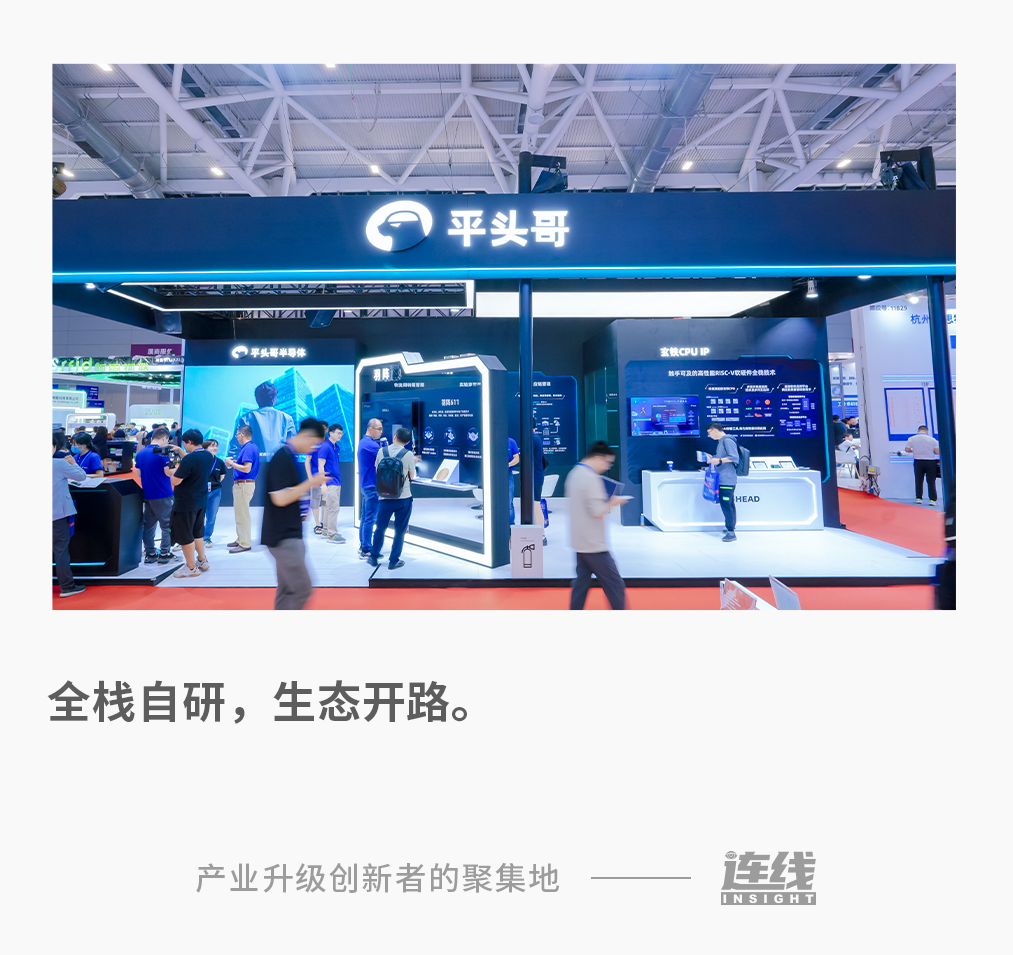
来源:连线Insight /王慧莹 编辑/子夜 1月23日,阿里巴巴港股开盘站上171港元/股高位,创下去年11月以来的新高。 让阿里股价应声大涨的,是旗下低调了八年的芯片制作业务——平头哥。1月 22 日,彭博社披露,阿里计划将平头哥重组为员工持股的独立实体,随后启 动IPO进程。 全栈式自研,平头哥赌对了 尽管此次独立上市尚属传闻阶段,但伴随国内外科技企业在AI算力的投入及资本化动作,平头哥上市的动作早就在市场的意料之中。 说起平头哥,这个最早始于阿里达摩院的芯片项目组,在2018年云栖大会上被拆分,自此踏上了攻克半导体核心技术的征程。 文 图源平头哥官网 "八年磨一剑",关于分拆平头哥的消息有很多,芯片向来牵动阿里的神经。去年9月,阿里股价也因阿里造芯动作随之大涨。随着阿里AI战略愈加明朗, 若成功上市,便意味着平头哥站在了新的起点上。 一路走来,平头哥不仅要支撑阿里内部需求,还要面对广阔的市场,打造独立的商业闭环。这条布满荆棘的自研造芯之路上,平头哥始终在迎难而上,如 今,或许到了结果的时刻。 承载着阿里做芯片的野心,平头哥的发展轨迹颇具代表性:从首款AI推理芯片"含光800",到CPU、GPU、存储 ...
沐曦股份发布曦索X系列科学智能GPU!布局智能算力,上海一系列大动作
证券时报· 2026-01-27 11:13
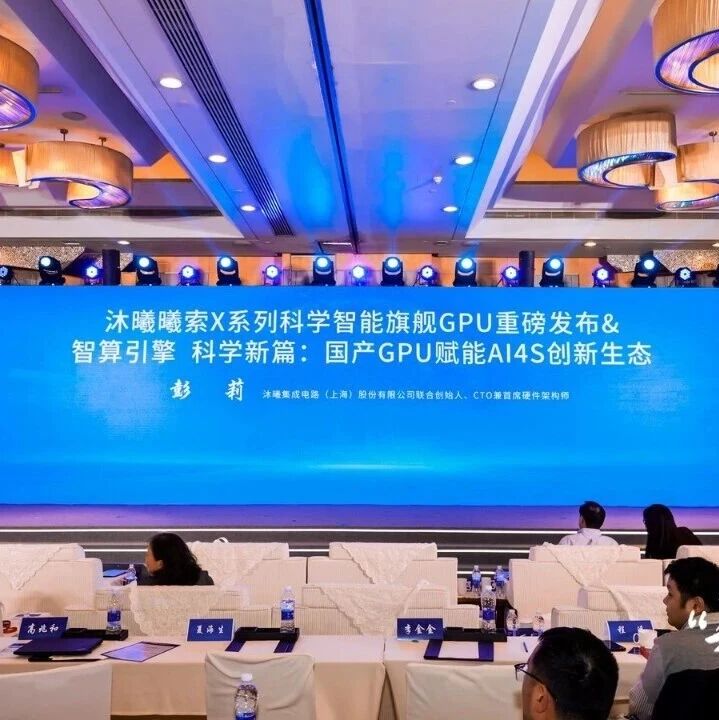
布局智能算力,上海推出一系列动作! 1月27日,2026"智算申城"高峰论坛在上海举行。证券时报记者从论坛上获悉,上海将适度超前建设一批智算基础设施,加快沪产芯片规模化部署,构建 自主可控的智算产业,构建"国芯国模国云"体系。 适度超前建设一批智算基础设施 该论坛围绕智能算力基础设施构建、产业生态协同、技术标准创新等核心议题进行探讨,为"十五五"期间上海智能算力产业发展明确行动路径。 上海市经济和信息化委员会副主任潘焱在致辞中表示,上海智算资源不断聚集,全市智算规模突破12万P,市级智算调度平台纳管算力近2万P;智算产业 日趋完善,集聚了智算芯片、光通信、智能网卡、高速交换机、智算服务器等一批优质智算企业;算力应用持续发展,"模塑申城"加速"5+6"重点行业赋 能。 面向 "十五五",潘焱透露,上海将适度超前建设一批智算基础设施,加快沪产芯片规模化部署;构建自主可控的智算产业,构建"国芯国模国云"体系, 打响智算超节点"上海品牌";营造开放共享的智算生态,持续优化政策、资本与人才支持,推动上海算力产业迈上新台阶。 上海仪电(集团)有限公司党委副书记、总裁,上海市算力网络协会理事长张建明表示,国内算力产业正从" ...
【IPO追踪】引入利冠、申万宏源等基石,国恩科技启动招股
Sou Hu Cai Jing· 2026-01-27 03:07
Group 1 - The core viewpoint of the news is that Guoen Technology (国恩科技) is preparing for its IPO in the Hong Kong market, with a strong foundation and significant fundraising expectations [2][4] - Guoen Technology plans to globally issue approximately 30 million H-shares, with 3 million shares allocated for public offering in Hong Kong and 27 million shares for international offering [2] - The expected net fundraising amount is approximately HKD 1.058 billion, with funds allocated for expanding production capacity in Thailand and China, as well as for operational purposes [2][4] Group 2 - Guoen Technology specializes in new chemical materials and collagen products, serving the chemical and health industries, focusing on R&D, production, and sales [4] - The company ranks second in the organic polymer modification and composite materials industry in China by sales revenue, with a market share of 2.5%, and is the largest producer of polystyrene in China [4] - In the health sector, Guoen Technology's subsidiary, Dongbao Biological, has established a complete layout from collagen raw materials to end products, becoming a comprehensive group in the health segment [4] Group 3 - For the fiscal years 2022 to 2024, Guoen Technology's revenues were RMB 13.406 billion, RMB 17.439 billion, and RMB 19.188 billion, with corresponding profits of RMB 0.724 billion, RMB 0.540 billion, and RMB 0.721 billion [5] - The company has shown solid performance in its financial results, indicating a stable growth trajectory [5]

港股IPO“春潮涌动”
Sou Hu Cai Jing· 2026-01-26 23:41
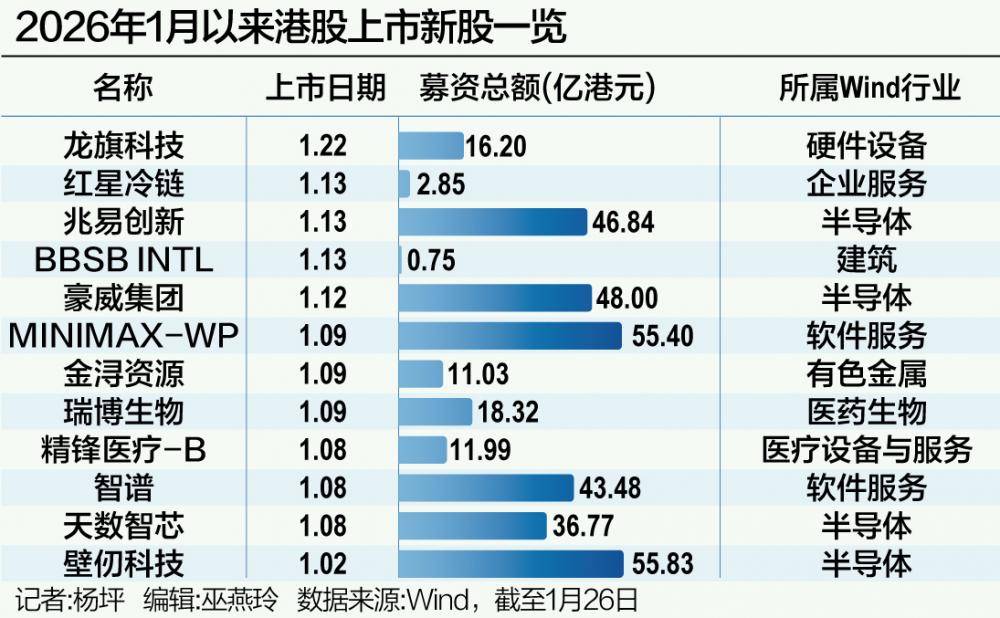
来源:21世纪经济报道 继2025年IPO筹资额重回全球榜首后,进入2026年,港股IPO市场持续火爆。 2026年1月以来(截至1月26日),港交所上市新股数量已经达到了12家,总募资金额为347.47亿元,同比增长了480.87%。其中,国产GPU龙 头壁仞科技以及大模型企业智谱AI、MiniMax相继登陆港股市场,进一步强化了港股在前沿科技领域的融资地位。 1月28日、2月3日,港交所还将迎来两家消费企业,分别是量贩零食企业鸣鸣很忙和功能饮料企业东鹏饮料。前者在1月23日已经完成招股,认 购倍数超过1500倍,首发募资金额33.36亿港元;后者1月26日启动招股,预计募资101.41亿港元。 这也就意味着,截至目前,港股IPO市场已经锁定的融资规模达到482.24亿港元。而当前,还有越来越多的企业对港股市场展现出浓厚的兴 趣,形成了庞大的后备上市梯队。 近日,香港交易所行政总裁陈翊庭在瑞士达沃斯世界经济论坛期间接受采访时表示,香港IPO排队企业数量已超过350家,其中包括保密递交 上市申请的公司。 | 名称 | 上市日期 | 募资总额(亿港元) | | 所属Wind行业 | | --- | --- | ...