
大全能源

Search documents
1月8日重要资讯一览
Zheng Quan Shi Bao Wang· 2026-01-08 13:36
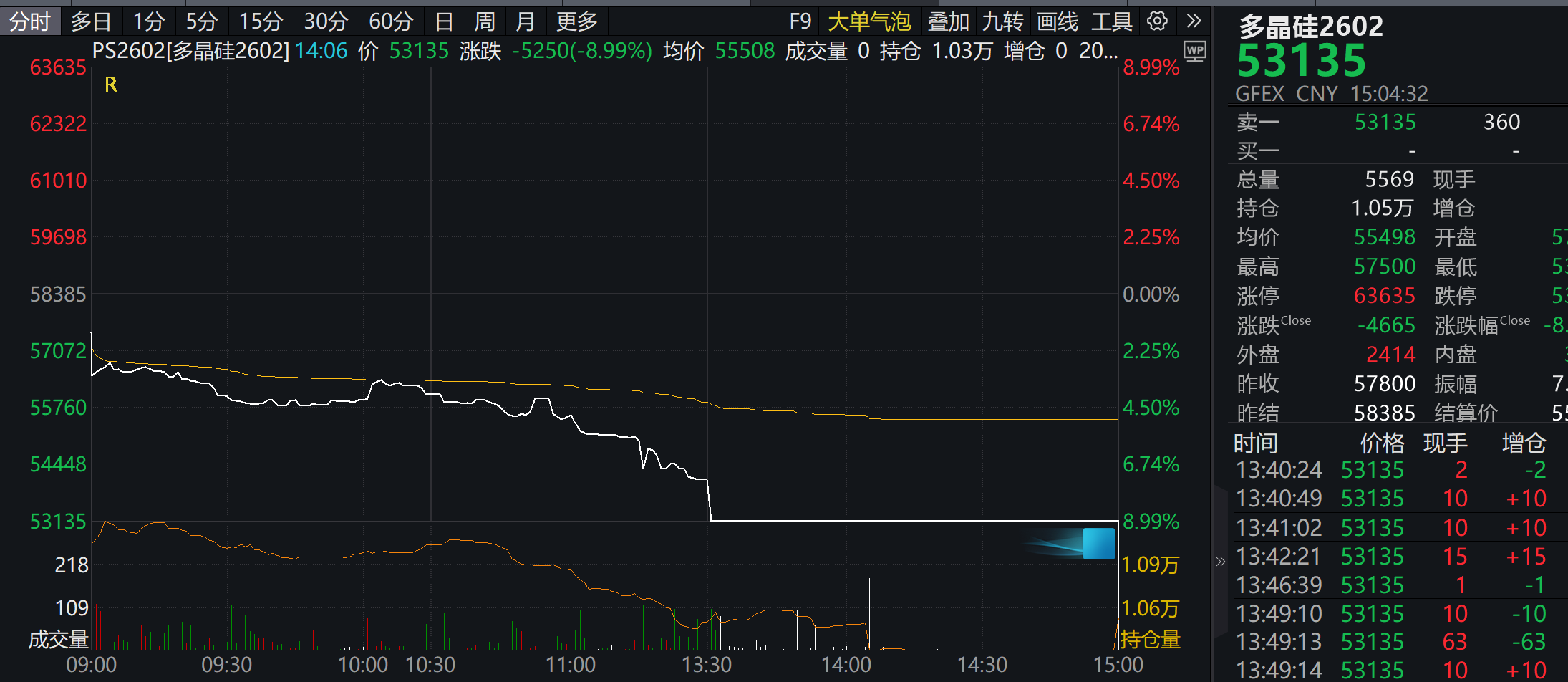
Group 1 - China Petroleum & Chemical Corporation and China Aviation Oil Group have received approval from the State Council for a restructuring [2] - The Guangzhou Municipal Government has issued a plan to accelerate the construction of an advanced manufacturing city from 2024 to 2035, focusing on reusable rocket technology and establishing testing bases for large liquid rockets [2] - On January 8, polysilicon futures hit the limit down with a decline of 9%, following a meeting where the State Administration for Market Regulation discussed monopoly risks with major solar companies [2] Group 2 - Nestlé has initiated a precautionary recall of specific batches of infant formula in several European countries, with the Chinese subsidiary complying with the recall to protect consumer rights [3] - Fenglong Co. may apply for a trading suspension if its stock price continues to rise abnormally [5] - Pritchard Co. does not expect large-scale orders for its LCP film products in the brain-computer interface sector in the short term [6] - Vanke A has announced the resignation of its retiring executive vice president, Yu Liang [7] - Jiangshun Technology is planning to jointly invest in the establishment of an investment fund [8] - Kuanse Co. clarified that it is not involved in commercial aerospace or satellite navigation businesses, countering media reports [9]




多晶硅期货跌停!知情人士:多晶硅龙头被约谈确有其事
2 1 Shi Ji Jing Ji Bao Dao· 2026-01-08 13:33
Core Viewpoint - The National Market Supervision Administration has raised concerns about potential monopoly risks in the polysilicon market, leading to a significant drop in polysilicon futures prices following a meeting with major industry players [3][4]. Group 1: Regulatory Actions - The National Market Supervision Administration held discussions with leading polysilicon companies and the China Photovoltaic Industry Association, addressing reports of price manipulation and monopolistic practices [3]. - The administration has mandated a comprehensive review of existing practices, requiring companies to submit detailed reports on their agreements and operational structures by January 20 [4]. - Specific corrective measures include prohibiting agreements on production capacity, sales prices, and market division based on investment ratios [4]. Group 2: Market Impact - Following the news, polysilicon futures experienced a significant decline, with prices reported at 53,100 CNY to 53,600 CNY per ton by the close of trading on January 8 [4]. - The establishment of the "Beijing Guanghe Qiancheng Technology Co., Ltd." as a polysilicon storage platform had previously stimulated a week-long price increase in the polysilicon market [5]. Group 3: Industry Dynamics - The polysilicon storage platform aims to address the issue of "involution" in the photovoltaic industry through a dual-track model of "debt acquisition + flexible capacity utilization" [5]. - Industry experts emphasize the need for the photovoltaic sector to avoid monopolistic practices while attempting to mitigate harmful price competition [6]. - Recent data indicates a rise in polysilicon prices, with average transaction prices for N-type polysilicon increasing by approximately 9.83% week-on-week [7].

【求证】业内人士:市场监管总局约谈6家光伏龙头及行业协会,不得约定产能及销售价格等
Zhong Zheng Wang· 2026-01-08 13:16
Core Viewpoint - The State Administration for Market Regulation (SAMR) has conducted discussions with several major companies in the Chinese photovoltaic industry regarding monopoly risks and has issued clear rectification requirements [1] Group 1: Regulatory Actions - SAMR has required the China Photovoltaic Industry Association and the companies involved not to agree on production capacity, capacity utilization rates, production volumes, or sales prices [1] - The companies are prohibited from market division, production allocation, and profit distribution through any form of investment ratio [1] - SAMR has mandated that the association and the companies submit written rectification measures by January 20 [1]
中无人机签订超1亿元无人机系统合同 天能股份拟以不超120亿元委托理财
Xin Lang Cai Jing· 2026-01-08 12:59
Group 1: Industry Insights - The Ministry of Industry and Information Technology (MIIT) has warned against irrational competition in the lithium battery industry, convening a meeting with 16 major companies to discuss regulatory measures [1] - The State Administration for Market Regulation (SAMR) has interviewed six leading photovoltaic companies regarding monopoly risks and has mandated corrective actions by January 20 [1] - Guangzhou is accelerating the construction of liquid rocket assembly and testing bases, focusing on reusable rocket technology to enhance national aerospace capabilities [2] Group 2: Company Announcements - MiniMax is set to list on the Hong Kong Stock Exchange on January 9, with a pricing result of HKD 165 per share, and its dark market performance showed a 26.8% increase [3] - Zhong UAV has signed a contract exceeding RMB 100 million for drone systems, which is expected to positively impact its financial performance [4][5] - TianNeng Co. plans to use up to RMB 12 billion of its idle funds for low-risk financial investments, which has been approved by its board [5] - Hu Silicon Industry's major shareholder, the National Integrated Circuit Industry Investment Fund, has reduced its stake by 0.2% [5] - Yongxi Electronics expects a net profit increase of 13.08% to 50.77% for 2025, driven by growth in the semiconductor industry and improved product structure [6] - BiYi Micro has set an initial transfer price of RMB 36.29 per share for its stock, with a subscription multiple of 6.99 times [7] - ZhiXiang JinTai's application for conditional approval of its GR1803 injection has been accepted by the National Medical Products Administration [8] - Zejing Pharmaceutical's injection of human thyroid-stimulating hormone beta has been approved for market entry, enhancing its product line [9] - Mengke Pharmaceutical has received a patent term extension for its core product, significantly improving its market competitiveness [9] - Chip Source Micro has reported a 30% stock price fluctuation, confirming normal business operations [9] - Jiyu Pharmaceutical has completed nearly RMB 2 billion in Series A financing, focusing on innovative drug development [10] - Yiwei Aerospace has completed a million-level angel round financing, aimed at developing space computing systems [10]


多晶硅收储方案生变?
Shang Hai Zheng Quan Bao· 2026-01-08 12:56
Core Insights - The photovoltaic industry is facing regulatory scrutiny due to reported monopolistic practices and price manipulation among leading polysilicon companies [3][4] - A recent meeting with the market regulatory authority emphasized the need for compliance and self-regulation within the industry to address issues of "involution" and unfair competition [3][4] Group 1: Regulatory Actions - The main focus of the recent meeting included discussing the industry's consolidation plan and addressing monopolistic risks [3] - Companies involved were instructed to avoid agreements on production capacity, utilization rates, sales volumes, and pricing [3] - The regulatory body has highlighted the importance of addressing low-quality competition and the negative impact of "involution" on profitability and innovation within the industry [4] Group 2: Industry Compliance - Companies are expected to adhere strictly to regulatory requirements and engage in self-regulatory actions as mandated by the authorities [3] - The regulatory body will enhance product quality supervision and enforce laws against unfair competition to maintain a fair market environment [4] - Industry associations are urged to guide companies towards innovation and quality improvement to foster a sustainable industry ecosystem [4]
又见小作文影响市场,多晶硅期货跌停!业内人士回应来了
Zhong Guo Zheng Quan Bao· 2026-01-08 12:14
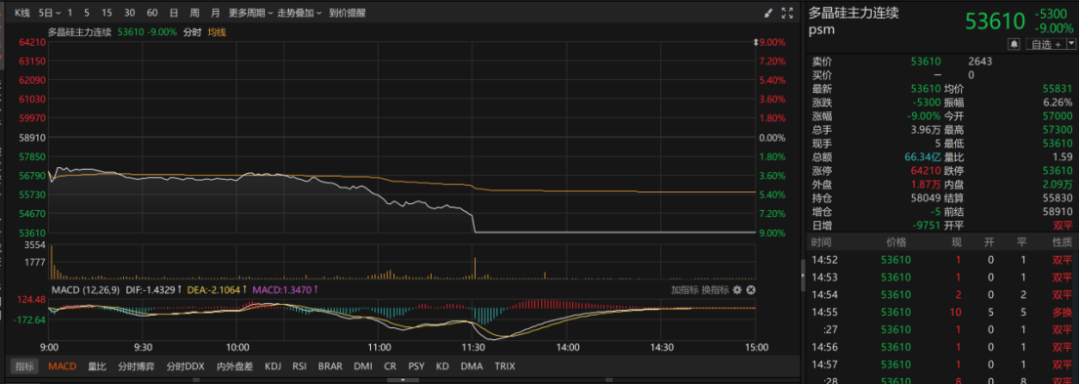
Group 1 - The State Administration for Market Regulation (SAMR) has conducted interviews with major companies in the photovoltaic industry, including China Photovoltaic Industry Association, Tongwei Co., GCL-Poly Energy, Daqo New Energy, Xinte Energy, Asia Silicon, and Dongfang Hope, regarding monopoly risks and required corrective actions [1] - SAMR has mandated that the interviewed companies and the association must not agree on production capacity, utilization rates, sales volumes, or pricing; they are also prohibited from market division, production allocation, or profit distribution through any form of capital contribution [1] - A written report detailing corrective measures must be submitted to SAMR by January 20 [1] Group 2 - On January 8, domestic commodity futures experienced significant volatility, with polysilicon futures hitting the limit down, and precious and non-ferrous metals markets also declining sharply [2] - Polysilicon futures dropped by 9%, while other metals like silver, nickel, and copper saw declines of over 5% to 8% [2] - The price of put options for polysilicon surged dramatically, with some contracts experiencing increases of over 110,000% in a single day [2][3]

业内人士:市场监管总局约谈6家光伏龙头及行业协会,不得约定产能及销售价格等
Zhong Guo Zheng Quan Bao· 2026-01-08 12:12
Core Viewpoint - The State Administration for Market Regulation (SAMR) has conducted discussions with several major companies in the Chinese photovoltaic industry regarding monopoly risks and has issued clear rectification requirements [1] Group 1: Regulatory Actions - SAMR has required the China Photovoltaic Industry Association and the companies involved not to agree on production capacity, capacity utilization rates, production volumes, and sales prices [1] - The companies are prohibited from market division, production allocation, and profit distribution through any form of investment ratio [1] - SAMR has mandated that the association and the companies submit written rectification measures by January 20 [1]
不怕高的都是航天人!
Datayes· 2026-01-08 11:04
Core Viewpoint - The article emphasizes the resurgence of the aerospace sector as a leading investment theme in the A-share market, highlighting significant developments and market reactions related to space technology and companies involved in this industry [1]. Group 1: Aerospace Sector Developments - The aerospace sector has regained its status as a market leader, with nearly 50 stocks in this sector hitting the daily limit up [11]. - Key events include the upcoming launch of the "Vesta-1 Sea Launch" commercial rocket by Xinhai Power and the construction of China's first offshore reusable rocket production base by Arrow Yuan Technology [11][15]. - The market is reacting positively to the news that SpaceX will begin factory inspections in mid-January, which is expected to boost interest in space photovoltaic concepts [11]. Group 2: Market Performance and Trends - The A-share market experienced a slight decline, with the Shanghai Composite Index down 0.07% and total market turnover at 28,265.33 billion yuan, a decrease of 552.34 billion yuan from the previous day [11]. - Despite the overall market decline, the aerospace sector saw significant investment, with stocks like Jun Da Co. and Maiwei Co. reaching their daily limit up [11]. - The article notes a strong interest in the space photovoltaic concept, particularly in perovskite battery technology, which is viewed as a promising route for future developments [11][4]. Group 3: Regulatory and Industry News - A recent meeting involving the State Administration for Market Regulation addressed monopoly risks in the photovoltaic industry, leading to a drop in the main contract for polysilicon [6]. - The meeting included major players in the photovoltaic sector, indicating a regulatory focus on ensuring fair competition and compliance within the industry [6]. Group 4: Investment Sentiment and Capital Flows - The net inflow of capital into the defense and military industry was the largest among sectors, with significant investments in companies like Yanshan Technology and Aerospace Electronics [22]. - The article highlights the growing enthusiasm for domestic chip concepts and the active participation of various sectors in the market, reflecting a shift in investor sentiment towards technology and innovation [11][22].


又见小作文影响市场,多晶硅期货跌停!有认沽期权价格单日暴涨110100%,多晶硅或回到边际成本定价模式,实现市场化出清
Sou Hu Cai Jing· 2026-01-08 10:17
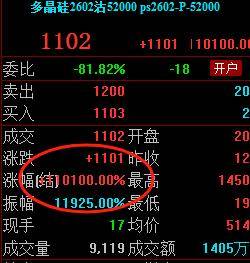
Core Viewpoint - The domestic commodity futures market experienced significant volatility on January 8, with polysilicon futures hitting the limit down, and precious and non-ferrous metals markets plummeting. The sharp decline in polysilicon prices is attributed to regulatory concerns regarding monopolistic risks in the photovoltaic industry [1][4]. Market Performance - Polysilicon main futures dropped by 9%, closing at the limit down, while other related commodities such as aluminum, nickel, and silver also saw declines of over 5% to 8% [1]. - The price of polysilicon put options surged dramatically, with the polysilicon 2602 put option increasing by 110,100% to close at 1,102, with a transaction volume of 14.05 million yuan [1][2]. Regulatory Impact - A leaked meeting summary indicated that the State Administration for Market Regulation had discussions with major players in the photovoltaic sector regarding monopolistic risks and required corrective actions [3][4]. - Industry insiders confirmed the authenticity of the leaked document and indicated that the recent price drop in polysilicon futures was likely influenced by these regulatory discussions [4]. Industry Developments - A polysilicon capacity acquisition platform has been officially established, aimed at addressing the "involution" issue within the photovoltaic industry. This platform is expected to operate under a dual model of "debt acquisition and flexible capacity storage" [5][6]. - The platform is anticipated to help alleviate potential debts amounting to hundreds of billions, restore reasonable pricing, and enhance the overall competitiveness of the industry [6]. Future Outlook - The basic supply-demand dynamics for polysilicon remain weak, with a current production of 24,000 tons and an estimated demand of 85,000 tons for January, indicating an oversupply situation [7]. - If the underlying support logic for the industry is disrupted, inventory pressures may become more pronounced, leading to further downward pressure on polysilicon prices in the short term [7].
中国光伏协会推动的所有行业自律,被全面叫停!



Xin Lang Cai Jing· 2026-01-08 09:58
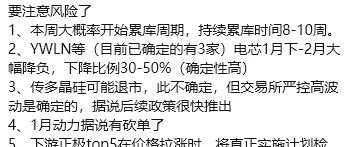
Core Viewpoint - The meeting minutes from the State Administration for Market Regulation indicate a halt to self-regulatory practices in the photovoltaic industry due to antitrust concerns, which could significantly impact market dynamics and pricing strategies in the sector [1][2][3]. Group 1: Antitrust Concerns - The meeting highlighted multiple reports of price manipulation in the polysilicon market under the guise of industry self-regulation since July 2025 [1][14]. - Companies have been accused of signing commitment letters and forming a platform company to control production and sales, effectively dividing the market and squeezing downstream players [1][15]. - The association has been warned multiple times to comply with regulations but failed to report progress to the authorities [1][16]. Group 2: Rectification Measures - The authorities have mandated a comprehensive review of existing practices, requiring detailed documentation of agreements and protocols related to funding and corporate governance [2][17]. - Companies are instructed to create rectification plans that prohibit agreements on production capacity, utilization rates, sales volumes, and pricing [2][18]. - The association and companies must establish internal antitrust regulations and conduct self-assessments to prevent future violations, with a deadline for submitting written rectification measures set for January 20 [2][18]. Group 3: Market Reactions - Following the announcement, polysilicon futures contracts experienced a significant drop, indicating market apprehension regarding the implications of the regulatory actions [6][21]. - There were rumors about the potential cancellation of polysilicon futures trading, which were confirmed to be untrue [6][21]. Group 4: Comparative Insights - The article suggests that the Japanese model for industry self-regulation, which includes legal exemptions and administrative approvals for collaborative actions, could serve as a reference for the Chinese photovoltaic industry [8][23]. - Examples of legal exemptions in Japan highlight the importance of government oversight and transparency in managing industry practices to avoid price manipulation [8][24][25].
