
新石器

Search documents
一轮价格战之后,无人车终于对快递有吸引力了
第一财经· 2025-09-04 15:09
Core Viewpoint - The article highlights the significant price reductions in the autonomous delivery vehicle market, which have made these vehicles more attractive to logistics companies, leading to rapid adoption and increased orders from manufacturers [2][3][11]. Price Reduction and Market Dynamics - Multiple manufacturers have lowered prices or offered favorable policies, prompting logistics companies to shift from high-priced purchases to bulk buying at lower prices [3]. - A notable example includes New Stone's announcement of a "zero down payment, zero interest, 48-month installment" plan for its main models, X3 and X6 [3][6]. - The price of autonomous vehicles has dropped significantly, with one logistics operator recalling a purchase cost of around 200,000 yuan in early 2024, which has now decreased to approximately 100,000 yuan [5]. Adoption and Usage Statistics - As of now, autonomous vehicles have been deployed in over 200 cities and more than 700 logistics points, with over 2,000 vehicles completing 200,000 deliveries daily [9]. - The total delivery volume of autonomous vehicles is expected to reach around 15,000 units by July 2025, with over 60% of this volume coming from the rapid price drop in the second quarter of 2025 [8]. Financing and Investment Trends - The price war among manufacturers is driven by significant capital inflows, with major companies like New Stone and Nine Knowledge securing substantial funding in 2024 and 2025 [12]. - The competitive landscape is characterized by a focus on scaling operations to gather more data and improve product iterations, which is essential for long-term success in the industry [12]. Cost Efficiency and Operational Impact - The cost of operating an autonomous vehicle has become more favorable, with daily operational costs estimated at around 70 yuan, significantly lower than traditional human delivery methods [17]. - The logistics industry is increasingly adopting autonomous vehicles not only due to price reductions but also due to a growing labor shortage and the maturity of autonomous driving technology [17]. Product Configuration and Market Segmentation - There is a noticeable shift in product configurations, with manufacturers reducing material quality to lower costs, which some operators view as a necessary adjustment to meet current market demands [18]. - The market is becoming segmented, with low-end customers being price-sensitive and middle to high-end customers focusing on efficiency, stability, and reliable service support [18].

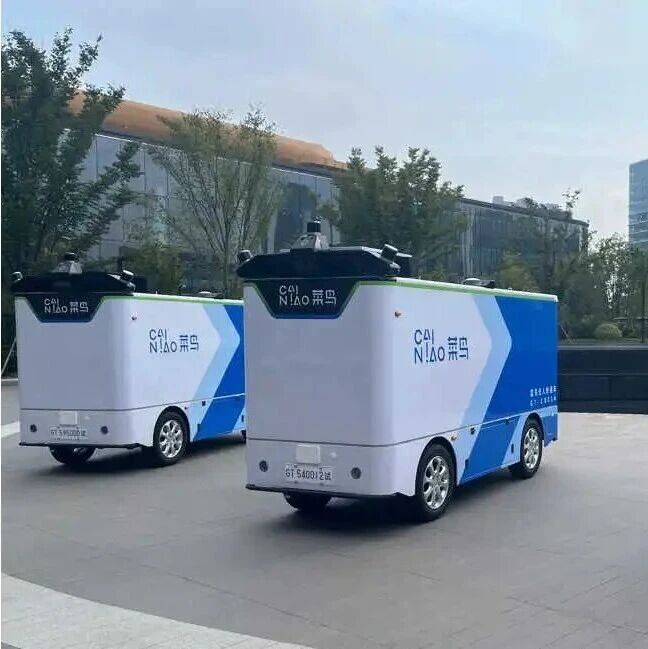
一轮价格战之后 无人车终于对快递有吸引力了
Di Yi Cai Jing· 2025-09-04 12:35
Core Insights - The rapid adoption of unmanned delivery vehicles is driven by significant price reductions, making them increasingly attractive to logistics companies [1][2][3] Price Reductions and Market Dynamics - Prices for unmanned vehicles have dropped significantly, with costs for certain models falling from around 200,000 yuan to approximately 100,000 yuan within a year [2] - New pricing models, such as monthly subscriptions and zero down payment plans, have emerged, further lowering the entry barrier for small logistics companies [2][3] - The competitive landscape has intensified, with companies like New Stone and Nine Sight offering aggressive pricing strategies to capture market share [6] Industry Growth and Adoption Rates - The unmanned delivery vehicle market is experiencing rapid growth, with over 15,000 units expected to be delivered by mid-2025, largely due to price drops [3] - Major logistics companies like Zhongtong and Jitu have begun commercial operations with unmanned vehicles, deploying thousands across multiple cities [4][5] Financing and Cost Structure - Significant capital inflows into unmanned vehicle manufacturers have facilitated price reductions as companies seek to scale operations [6] - The cost structure of unmanned vehicles is evolving, with hardware and service fees being separated, allowing for more flexible pricing [3][6] Operational Efficiency and Cost Savings - Unmanned vehicles are providing substantial cost savings for logistics operations, with daily operational costs significantly lower than traditional delivery methods [8] - The technology is maturing, enabling efficient last-mile delivery, which is crucial for meeting the increasing demand in the logistics sector [8] Market Segmentation and Consumer Preferences - The market is becoming segmented, with price-sensitive customers gravitating towards lower-cost options, while mid to high-end customers prioritize efficiency and reliable service [9] - There is a growing concern regarding the quality of service and support following the purchase of lower-priced unmanned vehicles [9]
新石器无人车:预计9月底无人车交付将达10000辆
Bei Ke Cai Jing· 2025-09-04 03:59
Core Insights - The competition in the unmanned vehicle sector is expected to intensify as New Stone Unmanned Vehicles announces new purchasing plans for its main models, X3 and X6 cargo vehicles, significantly lowering the entry cost for logistics companies [1] Group 1: Company Developments - New Stone Unmanned Vehicles has introduced a new purchasing plan where the monthly payment for the X3 cargo vehicle is set at 2406 yuan, and for the X6 cargo vehicle at 2606 yuan, effectively reducing the cost to a "thousand yuan level" [1] - The company has seen a steady increase in delivery scale this year, with the total deployment surpassing 7500 vehicles by the end of July, and is projected to reach a target of 10,000 vehicles by the end of September [1]
新石器推“终身免费FSD”搅局无人车市场,德赛西威携新品入局 其他玩家如何接招?
Mei Ri Jing Ji Xin Wen· 2025-09-03 13:15
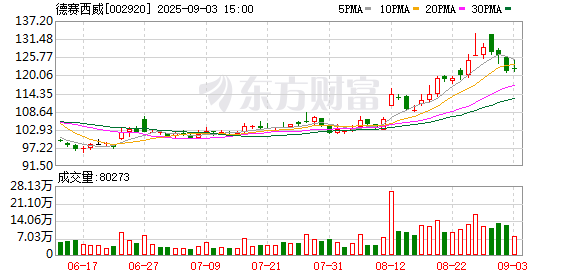
Group 1 - The competition in the autonomous vehicle market is intensifying, with New Stone launching a "zero down payment, zero interest, 48-month installment" purchase plan, along with a lifetime free use of the FSD (Full Self-Driving) service [2][4] - New Stone's main models, X3 and X6, are priced at approximately 115,500 yuan and 125,100 yuan respectively, breaking the previous pricing model of separate vehicle and FSD service fees [2][4] - The entry of new players, such as Desay SV, which launched its "Chuanxing Zhiyuan" low-speed autonomous vehicle brand, indicates a growing interest in the last-mile logistics sector [2][5] Group 2 - Previously, mainstream brands followed a pricing structure of vehicle price plus monthly or annual FSD service fees, with examples showing total costs ranging from approximately 12,180 yuan to 15,500 yuan over five years [3][4] - New Stone's approach aims to reduce purchasing costs and attract more users by offering a bundled price, addressing concerns about potential future increases in service fees [4] - The autonomous vehicle market is expected to see significant growth as commercial applications expand, with head manufacturers likely to experience a surge in order volumes [5]

无人车将“驶”进深圳物博会 下月举行的深圳物博会将举办全球第一个以无人车产业为主题的展览
Shen Zhen Shang Bao· 2025-08-30 23:34
Group 1 - The 19th China (Shenzhen) International Logistics and Supply Chain Expo will be held from September 24 to 26 at the Shenzhen Convention Center, covering an area of over 130,000 square meters and expected to attract over 2,200 exhibitors from more than 60 countries and regions, along with over 300,000 professional visitors [1] - The expo will feature ten core exhibition areas, including comprehensive logistics and supply chain services, port shipping, air freight, road/rail transport, special logistics, cross-border supply chain services, logistics facilities and equipment, smart logistics and digital technology, logistics vehicles, and cross-border e-commerce [1] - Two major themed sub-exhibitions will be held concurrently: the "2025 World Unmanned Vehicle Economy Expo," the first of its kind globally, and the "2025 Enterprise Going Abroad Expo" [2] Group 2 - The smart logistics and digital technology section will showcase leading companies such as SF Express, Cainiao, Meituan, and others, focusing on the application of new technologies like AI scheduling, autonomous driving, and unmanned delivery vehicles in logistics [2] - Shenzhen leads the nation in the operational scale and density of functional unmanned vehicles, with fresh food delivery orders accounting for approximately 20% of unmanned vehicle delivery orders [2] - The China-Europe Railway Express (Shenzhen) celebrated its fifth anniversary, maintaining a stable operation frequency of 4-5 trains per week, with a total of 27 routes opened, over 85,000 TEUs shipped, and a cargo value exceeding $3 billion, serving nearly 7,000 enterprises [2]
下月举行的深圳物博会将举办全球第一个以无人车产业为主题的展览
Xin Lang Cai Jing· 2025-08-30 23:33
Core Insights - The 19th China (Shenzhen) International Logistics and Supply Chain Expo will take place from September 24 to 26 at the Shenzhen Convention Center, attracting global attention in the logistics industry [1] - The expo will feature two major themed sub-exhibitions: the "2025 World Unmanned Vehicle Economy Expo," which is the first of its kind globally, and the "2025 Enterprises Going Abroad Exhibition" [1] - A highlight of the expo will be the Smart Logistics and Digital Technology Zone, showcasing leading companies such as SF Express, Cainiao, Meituan, and others, focusing on cutting-edge applications of AI smart scheduling, autonomous driving, and unmanned delivery vehicles in the logistics sector [1]



中信证券:L4级别自动驾驶多场景积极变化 汽车智能化产业链有望受益
智通财经网· 2025-08-29 01:53
Group 1: Robotaxi - The domestic implementation of Robotaxi is progressing, with cities like Beijing and Guangzhou introducing new policies this year. The Shanghai High-Level Autonomous Driving Leading Area's action plan aims to achieve 6 million passenger trips and over 800,000 TEU of cargo by 2027, with over 5,000 kilometers of open roads and a coverage area of 2,000 square kilometers [1] - Leading companies in the Robotaxi sector have obtained demonstration operation licenses and are beginning to offer paid services to the public. Internationally, regions like the Middle East and Europe have significantly higher pricing for operational vehicles, indicating better profitability potential for Robotaxi [1] - Companies such as WeRide are expanding their operations in Abu Dhabi and accelerating their presence in Dubai and Riyadh [1] Group 2: Robovan - Robovan is in a rapid growth phase, with New Stone Technology deploying over 7,500 unmanned vehicles across 15 countries and 280 cities by July 2025. Jiangsu Province has introduced guidelines to promote the commercial application of unmanned driving equipment, which is expected to facilitate the large-scale application of Robovan [2] - The business model for Robovan is increasingly focused on cost reduction and efficiency in the express delivery sector, primarily handling fixed-route delivery tasks. Companies are working on upgrading software algorithms and vehicle scheduling to enable point-to-point operations, expanding into fresh produce, cold chain, and pharmaceutical delivery [2] - New Stone Technology has partnered with Didi's delivery service, allowing users to place orders on the Didi platform for freight services provided by Robovan [2] Group 3: Robotruck - Robotruck technology is being applied in mining, port, and trunk logistics scenarios, which are characterized by aging trends and harsh working environments. As of now, approximately 4,100 unmanned transport vehicles have been shipped for open-pit mining, with nearly 1,400 added this year [3] - The penetration of autonomous driving in ports is ongoing, with 52 automated terminals established in China by December 2024. The revenue from high-level autonomous driving business is projected to reach 65 million yuan in 2024, reflecting a year-on-year increase of 431.6% [3] - The development of a "model room" for trunk logistics is emerging, with companies like Karl Power achieving single-vehicle operational profits in Ordos for the first time in Q2 this year [3]

融资技术双驱动 自动驾驶商业化持续提速
Zhong Guo Zheng Quan Bao· 2025-08-28 22:06
Group 1 - The autonomous driving industry is rapidly evolving, with a focus on the commercialization of applications like unmanned logistics vehicles, driven by advancements in artificial intelligence and other cutting-edge technologies [1] - Baixin Rhino, an L4 autonomous driving company, recently completed a B+ round of financing, raising nearly 500 million yuan, with funds aimed at product development, AI technology iteration, and expanding commercial scenarios [2] - The number of active unmanned logistics vehicles operated by Baixin Rhino has grown from nearly 100 at the end of 2024 to a current scale of 1,000, covering over 100 cities and serving major logistics companies [2][3] Group 2 - The commercialization of unmanned logistics vehicles is progressing rapidly, with significant growth expected in order volumes as leading manufacturers expand their applications beyond express delivery to retail distribution [3] - The State Council has issued policies promoting the use of intelligent logistics solutions, including unmanned delivery vehicles, indicating strong governmental support for the industry [3] - Industry experts predict that the express delivery sector alone will deploy over 200,000 unmanned vehicles within the next three to five years, marking a significant market expansion [4] Group 3 - Companies are advancing towards higher levels of autonomous driving technology, with Yuanrong Qixing launching a new generation of assisted driving platform, DeepRoute IO 2.0, which features a self-developed VLA model [4][5] - The VLA model is gaining traction among automotive manufacturers, with companies like Li Auto, Xpeng Motors, and Chery integrating it into their vehicles, reflecting the industry's shift towards high-tech solutions [5] - The development of VLA technology is expected to accelerate the application of intelligent driving solutions, as companies transition from traditional automotive roles to technology-driven enterprises [5]
比RoboTaxi更疯狂,无人物流车的“极限战场”
Tai Mei Ti A P P· 2025-08-25 11:04
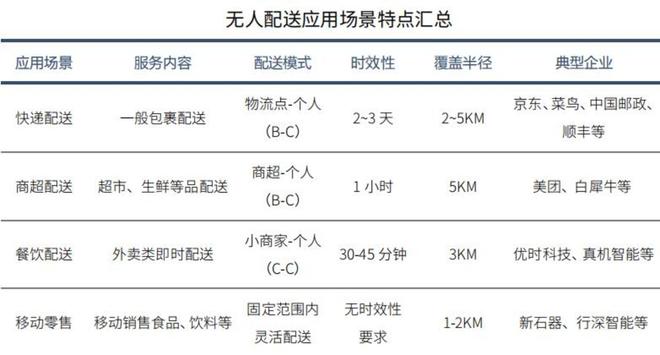
Core Viewpoint - The autonomous delivery vehicle sector is experiencing significant investment and growth, particularly in the logistics and freight delivery space, as evidenced by various funding rounds and strategic partnerships [1][2][4]. Investment and Financing - Notable investments include New Stone's completion of a 1 billion yuan C+ round in April, and Jiuyuan Intelligence's B3 round financing of 100 million USD, totaling nearly 300 million USD in B round financing [1]. - In August, White Rhino secured its second round of financing this year, accumulating nearly 500 million yuan in B round financing [1]. - Despite a cooling investment climate, capital continues to flow into the unmanned logistics delivery vehicle sector, indicating a consensus on reaching a "scale profitability threshold" [1]. Policy Support - The policy environment has evolved to support the development of unmanned delivery vehicles, with the issuance of road licenses and pilot programs since 2021 [3]. - By June 2025, over 100 cities in China had opened road rights for unmanned delivery vehicles, facilitating their large-scale deployment [3]. - The State Post Bureau has emphasized the promotion of AI technologies and products in the logistics sector, indicating strong governmental support for unmanned delivery vehicles [3]. Market Growth and Projections - The year 2025 is anticipated to be a "breakout year" for unmanned logistics delivery vehicles, with expectations of explosive market growth over the next three years [4]. - The market for unmanned delivery vehicles is projected to reach 2.634 trillion yuan by 2030, which is 5.4 times the expected market size in 2025 [5]. Cost Reduction and Efficiency - The logistics industry is facing intense price competition, leading to a significant drop in average delivery prices, which fell by 8.2% year-on-year in the first five months of 2025 [7]. - The introduction of unmanned delivery vehicles can reduce labor costs significantly, with examples showing a 70% reduction in per-item costs when using unmanned vehicles [8][9]. - Unmanned delivery vehicles can operate at double the efficiency of traditional delivery methods during peak periods, such as "Double Eleven" and the Spring Festival [9]. Application Scenarios - The primary application of unmanned delivery vehicles is in the last-mile delivery segment, particularly in urban areas [10][12]. - Various delivery scenarios include express delivery, supermarket delivery, and mobile retail, with different service contents and timeframes [5]. Technological Advancements - The cost of unmanned delivery vehicles has decreased significantly, with some models dropping from 200,000 yuan to 70,000 yuan between 2018 and 2023 [14]. - The shift from high-cost hardware solutions to more cost-effective visual-based systems has contributed to the reduction in overall costs [16][17]. Industry Dynamics - Major logistics companies are adopting different strategies, with some integrating technology suppliers deeply into their operations, while others rely on a more fragmented deployment approach [17]. - The logistics sector is expanding its focus from ground to aerial delivery, creating a comprehensive unmanned delivery system that includes drones and ground vehicles [17].


头部企业掀融资热潮 无人物流配送大规模商业化近了?
Jing Ji Guan Cha Bao· 2025-08-25 02:00
Core Insights - Baixinou Technology has completed a B+ round of financing, raising nearly 500 million RMB in total for its B round, with continued investment from existing shareholders and new investors joining [1][2] - The funds will be primarily allocated to the development of vehicle-grade autonomous vehicle products, continuous iteration of AI technology, and expansion of commercial scenarios, aiming for large-scale implementation in last-mile logistics [1][2] - The company plans to increase its active vehicle fleet from approximately 1,000 to 5,000 by 2026, expanding its focus from express delivery to broader urban delivery scenarios [1][2] Company Overview - Founded in 2019, Baixinou initially focused on supermarket deliveries and has since shifted to express logistics, partnering with major retail companies [1][2] - The company has undergone seven rounds of financing since its inception, with disclosed funding exceeding 600 million RMB [2] - Baixinou's technological advantages lie in its scene-based engineering capabilities and data loop efficiency, particularly in complex urban environments [2] Industry Trends - The logistics delivery autonomous driving sector is experiencing significant investment, with major players like Baixinou and others receiving substantial funding in 2025 [3][4] - The competition landscape includes a mix of technology-driven companies and logistics giants, with various strategies being employed to achieve profitability [4][5] - Future competition will focus on technological adaptability, cost control, and policy collaboration, with companies that possess comprehensive self-research capabilities likely to succeed [5]