蓝思科技

Search documents
港股异动 | 商业航天概念股跌幅居前 亚太卫星(01045)跌超8% 金风科技(02208)跌超5%
智通财经网· 2026-01-26 03:53
光大证券此前表示,尽管ITU遵循"先到先得",但是受国际协调、频谱冲突、轨道容量限制,实际获批 量或小于申报量;此次申报更多是频轨资源战略储备,近期日本政府亦提出打造"日本版星链"系统,意 味着大国太空资源博弈加剧。产业层面来看,此次申报再度抬升国内商业航天潜在需求天花板,在以无 线电创新院为代表的"国家队"引领下,行业发展或再度提速。 消息面上,证券日报今日刊文称,自2026年以来,A股市场热门概念轮动加速,商业航天、AI应用、人 形机器人等赛道轮番升温,推动部分个股走出短期暴涨行情。在此背景下,监管部门已采取上调融资保 证金比例、对涨幅过大个股启动停牌核查等调控措施为市场降温。需要明确的是,监管部门的一系列举 措并非打压热门赛道,而是清晰划定"真价值"与"伪炒作"的边界。经济日报此前也发文称,勿让概念炒 作带歪商业航天。 智通财经APP获悉,商业航天概念股跌幅居前,截至发稿,亚太卫星(01045)跌8.18%,报4.38港元;钧 达股份(02865)跌6.67%,报36.4港元;蓝思科技(06613)跌5.54%,报30.02港元;金风科技(02208)跌 5.31%,报16.05港元。 ...

半日主力资金丨加仓有色金属、非银金融股 抛售电子股
Di Yi Cai Jing· 2026-01-26 03:52
Group 1 - The main capital inflow in the morning was observed in sectors such as non-ferrous metals, non-bank financials, banking, oil and petrochemicals, coal, and telecommunications [1] - Specific stocks that saw significant net inflows include Zijin Mining, Zhejiang Wenhu Internet, and Dongfang Risheng, with inflows of 2.488 billion, 1.896 billion, and 1.746 billion respectively [1] - Conversely, the sectors that experienced net outflows included electronics, defense and military, automotive, computers, machinery, and electric equipment [1] Group 2 - The stocks that faced the largest net outflows were China Satellite, Aerospace Electronics, and Lens Technology, with outflows of 2.736 billion, 2.521 billion, and 1.434 billion respectively [1]



商业航天概念股跌幅居前 亚太卫星跌超8% 金风科技跌超5%
Zhi Tong Cai Jing· 2026-01-26 03:50
商业航天概念股跌幅居前,截至发稿,亚太卫星(01045)跌8.18%,报4.38港元;钧达股份(002865) (02865)跌6.67%,报36.4港元;蓝思科技(300433)(06613)跌5.54%,报30.02港元;金风科技 (002202)(02208)跌5.31%,报16.05港元。 光大证券此前表示,尽管ITU遵循"先到先得",但是受国际协调、频谱冲突、轨道容量限制,实际获批 量或小于申报量;此次申报更多是频轨资源战略储备,近期日本政府亦提出打造"日本版星链"系统,意 味着大国太空资源博弈加剧。产业层面来看,此次申报再度抬升国内商业航天潜在需求天花板,在以无 线电创新院为代表的"国家队"引领下,行业发展或再度提速。 消息面上,证券日报今日刊文称,自2026年以来,A股市场热门概念轮动加速,商业航天、AI应用、人 形机器人等赛道轮番升温,推动部分个股走出短期暴涨行情。在此背景下,监管部门已采取上调融资保 证金比例、对涨幅过大个股启动停牌核查等调控措施为市场降温。需要明确的是,监管部门的一系列举 措并非打压热门赛道,而是清晰划定"真价值"与"伪炒作"的边界。经济日报此前也发文称,勿让概念炒 作带歪 ...

太空光伏-万亿蓝海市场-产业趋势明确
2026-01-26 02:49
Summary of Key Points from Conference Call Industry Overview - The conference call discusses the space photovoltaic industry, highlighting the rapid growth and development of low Earth orbit (LEO) satellite technology and its implications for the market [1][2][3]. Core Insights and Arguments - **Starlink's Growth**: Starlink has launched over 7,000 LEO satellites, leading to rapid revenue growth and the initiation of direct terminal connections [1][2]. - **China's Satellite Plans**: By the end of 2025, China plans to submit over 200,000 satellites to the International Telecommunication Union, indicating a significant increase in satellite deployment [2]. - **Global Launch Projections**: It is estimated that from 2030 to 2035, global LEO satellite launches will peak at over 18,000, potentially exceeding 20,000 when considering other constellations [1][3]. - **Space Data Centers**: The development of space data centers is driven by advantages such as solar energy utilization, passive radiation cooling, and modular deployment, which lower operational costs [3]. - **Future Data Center Plans**: Elon Musk plans to establish 100GW of data centers annually over the next 4-5 years, with significant contributions from companies like NVIDIA, Google, and Amazon [1][3]. Technological Developments - **Current Technology Trends**: The leading technology is the multi-junction solar cell, which is efficient but costly. The market for this technology is approximately 3 billion RMB [4]. - **Emerging Technologies**: The silicon technology route is expected to gain market share due to cost advantages, while perovskite technology may become the ultimate solution due to its lower production costs and higher efficiency [5]. - **Flexible Solar Wings**: The demand for flexible solar wings is increasing due to the economic considerations of LEO satellites, which require lightweight and compact designs [6]. Supply Chain and Material Considerations - **Material Challenges**: The production of space-grade materials, such as PM films, requires attention to atomic oxygen erosion, necessitating protective layers [7]. - **Supplier Landscape**: Key suppliers for CPI films are from South Korea and Japan, while domestic companies in China are still developing their capabilities [8]. - **Silver Paste Issues**: Silver paste used in solar arrays faces challenges from atomic oxygen erosion, requiring corrosion-resistant treatments [9]. Market Expectations - **Future Market Size**: In an optimistic scenario, the demand for 100GW of space computing capacity is expected to be established within three years, with significant market potential in the battery segment valued at approximately 500 million to 600 million RMB per unit [14]. - **Impact of Perovskite Technology**: If perovskite becomes the dominant technology, it could create a market space of around 50 billion RMB, driving demand across the supply chain [14]. Industry Players and Strategic Moves - **Company Strategies**: Companies like Mingyang Electric and Junda Co. are making strategic moves into the multi-junction battery sector, while others focus on perovskite and heterojunction technologies [15]. - **SpaceX's IPO Impact**: SpaceX's planned IPO is expected to provide capital support for space photovoltaic construction, benefiting equipment manufacturers and domestic suppliers [16]. Conclusion - The space photovoltaic industry is poised for significant growth driven by advancements in satellite technology, emerging materials, and strategic corporate investments, with a strong emphasis on cost reduction and efficiency improvements across the supply chain.
产品迭代出货激增 智能眼镜“热”撬动产业链升级
Xin Hua Wang· 2026-01-26 02:35
Core Insights - The smart glasses market is experiencing explosive growth, with China's shipment volume expected to reach 4.5 million units by 2026, representing a year-on-year increase of 77% [2][5]. Technology and Application Breakthroughs - The launch of the first eSIM smart glasses, "Thunderbird X3 Pro Project eSIM," showcases independent functionalities such as calls, AI conversations, and real-time translation without needing a smartphone [3]. - The integration of AI smart glasses with automotive technology allows users to control vehicle functions remotely and receive real-time navigation and speed information while driving [3]. - Recent advancements in optical technology, lightweight design, and independent communication capabilities have addressed previous limitations of smart glasses, enabling a transition from accessories to standalone devices [3][4]. Market Growth and Demand - The smart glasses market is projected to see significant growth, with shipments expected to reach 2.54 million units in 2025 and 4.51 million units in 2026, reflecting year-on-year growth rates of 92.9% and 77.7%, respectively [5][6]. - The core growth areas for smart glasses in 2026 will focus on consumer scenarios such as home use, travel, health management, content creation, and information services [6]. Industry Chain Upgrades - The demand for smart glasses is driving deep collaboration across the supply chain, enhancing product integration and production efficiency [7]. - Companies are innovating to meet the evolving demands for lightweight, low-power, and high-performance imaging systems, with new products being developed to align with market needs [8]. Challenges and Collaborative Solutions - The smart glasses industry faces challenges including balancing product weight, battery life, performance, and cost, as well as improving user education and market awareness [10]. - The first half of 2026 is expected to see advancements in optical displays and AI chips, but challenges related to production yield, cost control, and supply chain coordination remain [10][11].

蓝思科技股价跌5.05%,鑫元基金旗下1只基金重仓,持有10.23万股浮亏损失21.99万元
Xin Lang Cai Jing· 2026-01-26 01:49
Group 1 - The core viewpoint of the news is that Lens Technology's stock has experienced a decline of 5.05%, with a current price of 40.45 CNY per share and a total market capitalization of 2137.51 billion CNY [1] - Lens Technology, established on December 21, 2006, and listed on March 18, 2015, specializes in the research, production, and sales of protective panels for electronic products, primarily focusing on smartphone protective screens [1] - The company's revenue composition indicates that 82.48% comes from smartphones and computers, 9.60% from smart automotive and cockpit products, 5.00% from smart glasses and wearables, with the remaining 1.82% and 1.10% from other business and smart terminal products respectively [1] Group 2 - From the perspective of major fund holdings, Xin Yuan Fund has one fund heavily invested in Lens Technology, specifically the Xin Yuan Technology Innovation Mixed A fund, which holds 102,300 shares, unchanged from the previous period, accounting for 6.45% of the fund's net value [2] - The Xin Yuan Technology Innovation Mixed A fund was established on September 4, 2023, with a current scale of 43.41 million CNY, showing a year-to-date return of 2% and a one-year return of 25.14% [2] Group 3 - The fund manager of Xin Yuan Technology Innovation Mixed A is Li Biao, who has a tenure of 6 years and 232 days, with the fund's total asset scale at 3.743 billion CNY and a best return of 101.84% during his tenure [3] - Co-manager Zhang Zhengqing has a tenure of 274 days, with the fund's asset scale at 59.52 million CNY and a best return of 30.07% during his tenure [3]
蓝思科技:针对太空光伏应用的航天级UTG柔性玻璃正处于技术验证阶段
Zheng Quan Shi Bao Wang· 2026-01-26 00:59
人民财讯1月26日电,蓝思科技(300433)互动平台表示,公司的UTG柔性玻璃制造工艺已非常成熟, 已配合各大头部消费电子品牌实现大规模量产出货,是当前重要的业绩增长点。针对太空光伏应用的航 天级UTG柔性玻璃,公司已攻克微米级减薄、多重镀膜、化学强化等核心工艺难题,目前正处于与客 户深度对接与技术验证阶段,未来有望成为新的增长极。 ...
蓝思科技(300433.SZ):针对太空光伏应用的航天级UTG柔性玻璃,已攻克微米级减薄等核心工艺难题
Ge Long Hui· 2026-01-26 00:53
格隆汇1月26日丨蓝思科技(300433.SZ)在投资者互动平台表示,公司的UTG柔性玻璃制造工艺已非常成 熟,已配合各大头部消费电子品牌实现大规模量产出货,是当前重要的业绩增长点。 针对太空光伏应 用的航天级UTG柔性玻璃,公司已攻克微米级减薄、多重镀膜、化学强化等核心工艺难题,目前正处 于与客户深度对接与技术验证阶段,未来有望成为新的增长极。 ...
盘前公告淘金:多只黄金股重磅利好,洛阳钼业完成巴西金矿项目交割;先导智能2025年净利同比预增424%-529%
Jin Rong Jie· 2026-01-26 00:52
【重要事项】 洛阳钼业:完成巴西金矿项目交割,今年可产6-8吨黄金 招金黄金:预计2025年净利润1.22亿元-1.82亿元,同比扭亏为盈 湖南黄金:2025年净利同比预增50%-90%,金、锑、钨产品销售价格同比上涨 湖南黄金:拟购买黄金天岳、中南冶炼100%股权复牌,其主要从事部分金矿的采选及销售等 藏格矿业:参股公司巨龙铜业巨龙铜矿二期工程建成投产 紫金矿业:巨龙铜矿二期工程建成投产 蓝思科技:商业航天领域已实现批量供货,针对太空环境极端需求已研发出超薄光伏玻璃模组等 亿纬锂能:已与多家商业火箭、商业卫星领域的头部企业达成合作,为其提供航天电池产品及解决方案 中来股份:未来光伏产品应用从常规场景拓展至太空等多元化场景是行业趋势,已经在积极推进适配不 同场景产品自主研发 永杰新材:拟购买奥科宁克秦皇岛100%股权和奥科宁克昆山95%股权,预计构成重大资产重组 【投资经营】 精智达:签订13.11亿元半导体测试设备销售合同 合富中国:与明基医院签订采购总金额不低于6亿元的长期采购协议 华东重机:收到印度阿达尼集团中标通知书及签署国内智能化港口装卸设备项目合同 德力佳:拟50亿元投建10兆瓦以上风电用变速箱研 ...

中国,造出全球80% AI眼镜
3 6 Ke· 2026-01-26 00:33
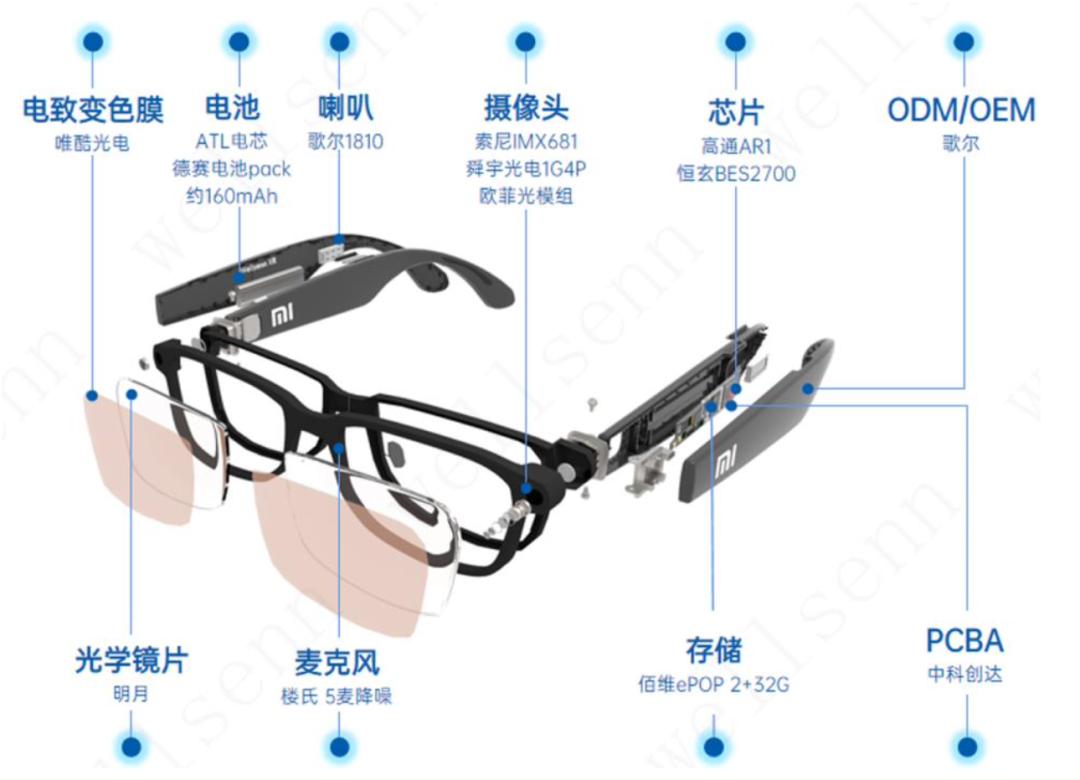
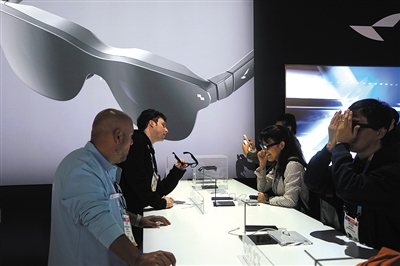
Core Insights - The article highlights China's dominance in the AI glasses supply chain, with over 80% of companies involved located in China, making it a key player in the global market [2][18] - The rapid innovation and manufacturing capabilities in China have allowed for significant cost reductions in AI glasses, with prices dropping from over 10,000 yuan to around 1,999 yuan [18] - Chinese companies have made substantial advancements in core technologies such as optical modules and chips, positioning themselves as leaders in the AI glasses industry [5][7] Industry Overview - In the Pearl River Delta, AI glasses can be prototyped in three days and launched in seven days, showcasing the efficiency of Chinese manufacturing [2] - Key components of AI glasses include chips and optical modules, which account for over 70% of the total cost, with optical modules alone comprising over 40% [5] - Companies like Zhuhai Hengxuan Technology and Fuzhou Rockchip Microelectronics are becoming core suppliers for major brands like Meta and Xiaomi, indicating a shift in the supply chain dynamics [7] Technological Advancements - Chinese firms have achieved breakthroughs in optical waveguide technology, overcoming challenges such as the "rainbow effect" in AI glasses [5] - JBD's Micro LED light engine is noted for its compact size and low power consumption, highlighting advancements in display technology [6] - The integration of precision manufacturing techniques from the smartphone industry into AI glasses production has improved quality and reduced weight [8] Market Dynamics - The global market for smart glasses is projected to see significant growth, with a forecasted shipment of 4.065 million units in the first half of 2025, a 64.2% increase year-on-year [23] - Chinese manufacturers are expected to dominate this market, with a compound annual growth rate of 55.6% over the next five years [23] - Major Chinese brands are increasingly recognized on the international stage, with companies like TCL and XREAL showcasing innovative products at global tech events [20][21] Strategic Developments - The article notes a shift from mere manufacturing to innovation, with Chinese companies now participating in product design and optimization [13][15] - The establishment of companies like JBD and Zhizhi Technology reflects a strategic focus on developing proprietary technologies to break free from foreign technology dependencies [15] - The collaboration between Chinese firms and global tech giants, such as Google's partnership with XREAL, underscores the importance of Chinese manufacturing capabilities in the tech ecosystem [8][12]