
阿斯利康

Search documents
药明巨诺换帅,新管理层迎战CAR-T市场机遇与挑战
2 1 Shi Ji Jing Ji Bao Dao· 2025-12-12 12:48
Core Viewpoint - WuXi AppTec's management restructuring aims to enhance operational stability and drive growth in the competitive CAR-T therapy market, particularly following the inclusion of its CAR-T product in the national commercial health insurance directory [1][2][5]. Management Changes - Tian Feng will officially become the CEO and Executive Director on December 29, 2025, while Dr. Liu Cheng will assume the role of Chairman of the Board from December 12, 2025 [1]. - The current CEO, Liu Min, will resign on December 12, 2025, due to personal career development plans, and his previously approved stock options will be canceled [1][2]. - The existing management team will temporarily take over the CEO responsibilities to ensure smooth operations during the transition period [1]. New Leadership Background - Tian Feng has over 20 years of experience in the biopharmaceutical industry, with a strong background in commercialization, marketing, and strategic management [2]. - Dr. Liu Cheng has more than 20 years of experience and holds over 300 patents in the biopharmaceutical field, ranking highly in global CAR-T patents [3]. Financial Performance - In the first half of the year, WuXi AppTec reported revenues of 106 million yuan, a year-on-year increase of 22.5%, but also recorded a loss of 267 million yuan, with the loss margin widening by 11.24% [3]. - The company's core product, the CAR-T therapy, has been approved for treating specific types of lymphoma [3]. Strategic Partnerships - WuXi AppTec has entered into several business collaborations, including a technology licensing agreement with Juno Therapeutics valued at up to 10 million USD and a strategic cooperation agreement with Regeneron worth up to 50 million USD [4]. Market Context - The inclusion of WuXi AppTec's CAR-T product in the national commercial health insurance directory is a significant breakthrough, with five CAR-T therapies listed, including WuXi's product priced at 1.29 million yuan per dose [5][6]. - The price reduction for these therapies is expected to range between 15% and 50%, which may facilitate better access to these innovative treatments [6]. Challenges and Opportunities - The new management faces the challenge of improving market penetration for core products and accelerating pipeline development amid intense competition in the new drug development landscape [5][7]. - The company must also navigate hospital access issues to ensure the successful implementation of its products in the healthcare system [6][7].
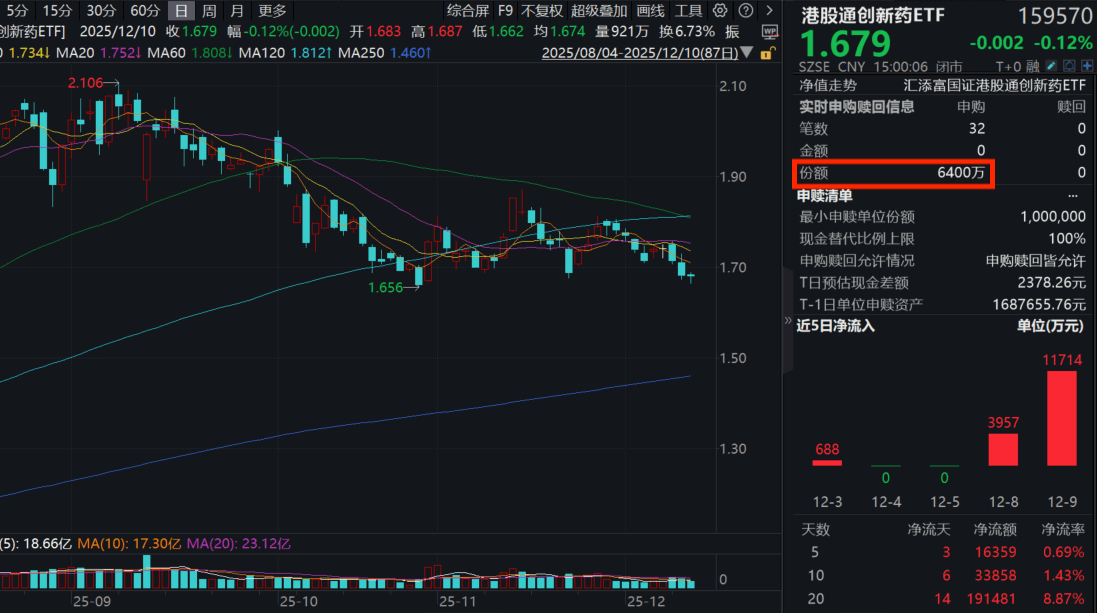
港药探底回升!港股通创新药ETF(159570)连续第二天涌入超1亿元!从2025医保看行业风向:成功率提升,创新导向持续强化!
Sou Hu Cai Jing· 2025-12-10 08:19
Group 1: Market Performance - The Hong Kong Innovation Drug ETF (159570) experienced a slight decline of 0.12% today, with a total trading volume exceeding 1.5 billion yuan [1] - The fund has seen a net inflow of over 1.1 billion yuan yesterday and more than 1 billion yuan today, accumulating a total of over 1.9 billion yuan in the last 20 days [1] - As of December 9, the latest scale of the Hong Kong Innovation Drug ETF reached over 23 billion yuan, leading its peers in the same category [1] Group 2: Federal Reserve and Market Sentiment - The Federal Reserve is expected to announce a 25 basis point rate cut, bringing the federal funds rate to a range of 3.5%-3.75% [3] - There is a notable division within the Federal Open Market Committee (FOMC), leading to the term "hawkish cut" being used, indicating that while a rate cut is expected, further cuts may not be imminent [3] Group 3: Pharmaceutical Sector Developments - The new National Medical Insurance Drug List has added 114 new drugs, including 50 first-class innovative drugs, with an overall success rate of 88%, up from 76% last year [5][8] - The total number of drugs in the National Medical Insurance Drug List has increased to 3,253, enhancing coverage for critical areas such as oncology, chronic diseases, and rare diseases [8] - The first commercial insurance innovative drug list has been released, including 19 drugs from 18 companies, aimed at improving access to high-value innovative drugs [6][13] Group 4: Investment Opportunities - The Hong Kong Innovation Drug ETF (159570) is fully invested in innovative drugs, with the top ten constituent stocks accounting for over 74% of its weight [15] - The index has shown a year-to-date increase of over 90%, outperforming other Hong Kong pharmaceutical indices [16] - The ETF's underlying assets are Hong Kong stocks, allowing for T+0 trading, which may attract more investors [16]

见证历史!白银突破60美元大关;沃尔玛突然转板纳斯达克,什么信号?
Zheng Quan Shi Bao· 2025-12-10 00:17
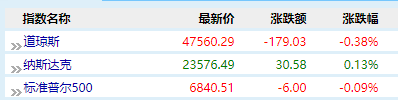
当地时间12月9日(周二),美国股市三大指数收盘涨跌互现。 值得注意的是,当地时间12月9日,美国零售业巨头沃尔玛从纽约证券交易所迁移至纳斯达克上市,引 发全球市场投资者的广泛关注。 商品方面,周二美盘交易时段,随着交易员在美联储利率决议前夕保持乐观情绪,贵金属集体走高,而 受到供应紧缺推动的白银则飙升至史无前例的每盎司60美元。 截至发稿,纽约期银及现货白银日内涨幅均超4%,分别至61美元/盎司及60美元/盎司上方,今年迄今, 银价已经上涨了近110%。 美股三大指数涨跌互现 航空板块整体上涨,其中美国航空、美联航均涨超1%,达美航空、西南航空涨幅均不足1%。 抗疫概念股多数下跌,吉利德科学、BioNTech、阿斯利康等多只龙头股均跌超1%;Moderna则涨近 1%。 芯片股涨跌不一,费城半导体指数跌0.04%,涨幅居前个股方面,美光科技涨超2%,拉姆研究、 ARM、博通均涨逾1%,高通涨幅不足1%;下跌芯片股方面,迈威尔科技大跌逾3%,闪迪跌逾2%,微 芯科技跌幅不足1%。 中概股多数下跌,纳斯达克中国金龙指数跌1.37%。跌幅居前的中概股方面,趣店跌逾6%,百度集团跌 超4%,贝壳、信也科技均跌近4% ...
新版医保目录新增50种一类创新药,涵盖肿瘤、慢病等多个领域
Bei Ke Cai Jing· 2025-12-08 11:01
Core Insights - The new National Medical Insurance Directory has added 114 new drugs, surpassing last year's addition of 91, with 50 being first-class innovative drugs, achieving an overall success rate of 88%, an improvement from 76% in 2024 [1][2] Group 1: New Drug Additions - The total number of drugs in the directory has increased to 3,253, significantly enhancing coverage for key areas such as oncology and chronic diseases [2] - The directory includes 38 global innovative drugs and 50 first-class innovative drugs, marking a historical high for new additions [2] - Notable inclusions are the first globally approved red blood cell maturation agent, Rotecip, for treating lower-risk myelodysplastic syndromes, and the first domestically developed IL-4Rα antibody drug, Kangyueda, for multiple indications [3][4] Group 2: Oncology Innovations - Several innovative oncology drugs have been added, including Tagolizumab, the first PD-L1 monoclonal antibody approved for nasopharyngeal carcinoma, and non-covalent BTK inhibitor, Jebatib, for relapsed mantle cell lymphoma [4][5][6] - ADCs (antibody-drug conjugates) have gained attention, with new entries like Lukanasatuzumab and Ruikangquzuzumab, targeting advanced breast cancer and non-small cell lung cancer [7][8] Group 3: Chronic Disease Treatments - The directory has included innovative drugs for chronic diseases, such as Novartis' PCSK9 mRNA interference drug for cholesterol management, addressing patients who cannot reach LDL-C targets [14] - AstraZeneca's biologic drug Benralizumab for severe eosinophilic asthma has also been added, providing targeted treatment options for patients [15][16] Group 4: Influenza Treatments - The new directory has incorporated two domestic antiviral drugs for influenza, Masurashave and Angladiv, which have shown promising clinical results in reducing symptoms and viral load [17]

2025国谈落地:从用得上走向用得起
2 1 Shi Ji Jing Ji Bao Dao· 2025-12-07 23:50
Core Insights - The Chinese medical insurance directory will undergo its largest expansion of innovative drugs in history starting January 1, 2026, adding 114 new drugs, including 50 class 1 innovative drugs, while removing 29 drugs that are either unavailable or can be replaced by better alternatives [1][9] - The new directory will increase the total number of drugs to 3,253, significantly enhancing coverage for key areas such as oncology, chronic diseases, mental health, rare diseases, and pediatric medications [1][9] - The inclusion of innovative drugs in the medical insurance directory reflects a strong commitment to support genuine innovation and differentiated innovation in the healthcare sector [1][9] Medical Insurance Directory Expansion - The new medical insurance directory will include 114 new drugs, with nearly 44% being class 1 innovative drugs, indicating a growing emphasis on innovative treatments [1][2] - The directory aims to balance the clinical value of innovative drugs, corporate profits, and the sustainability of the insurance fund, with a new commercial insurance directory established for high-cost innovative drugs [2][15] - The entry of innovative drugs into the medical insurance directory is seen as a critical step in making these treatments accessible to patients, thereby reducing their economic burden [13][23] Market Dynamics and Trends - The inclusion of innovative drugs in the medical insurance directory is expected to accelerate sales growth for these products, reshaping the business models of Chinese innovative drug companies [4][20] - Companies like Hengrui Medicine and Innovent Biologics have successfully included multiple innovative products in the new directory, indicating a trend of increasing market access for innovative therapies [4][5] - The commercial insurance directory, which includes 19 innovative drugs, aims to provide additional support for high-cost treatments, potentially lowering patient treatment costs significantly [15][18] Focus on Key Therapeutic Areas - The new directory emphasizes significant clinical value and urgent patient needs, particularly in oncology, with new drugs targeting various types of cancers being added [10][11] - The inclusion of drugs for rare diseases and conditions like severe asthma highlights a commitment to addressing critical healthcare challenges faced by patients [16][17] - The directory also includes innovative treatments for chronic conditions such as diabetes, further expanding access to essential therapies for a large patient population [8][12] Policy and Regulatory Environment - Recent reforms in drug approval and medical insurance payment systems have created a conducive environment for the development of innovative drugs in China [19][20] - The acceleration of drug review processes and the establishment of a more rigorous value assessment framework are expected to enhance the accessibility of innovative treatments [19][22] - The collaboration between policy and capital markets is crucial for fostering innovation and ensuring the sustainability of the healthcare system [21][22] Future Outlook - The successful implementation of the new medical insurance directory is anticipated to restore investor confidence in the innovative drug market, which has seen a slowdown in investment interest recently [18][21] - The ongoing development of commercial insurance options for innovative drugs is expected to play a significant role in expanding patient access and improving treatment outcomes [18][19] - The transition from merely making innovative drugs available to ensuring they are affordable and effective represents a significant shift in the Chinese healthcare landscape [23][24]
重大利好,5款百万级抗癌针被纳入商保
21世纪经济报道· 2025-12-07 13:50
Core Viewpoint - The upcoming adjustment to China's medical insurance catalog, effective January 1, 2026, will be the largest expansion of innovative drugs in history, adding 114 new drugs, including 50 class 1 innovative drugs, reflecting a significant commitment to support innovation in the pharmaceutical sector [2][11]. Summary by Sections Medical Insurance Directory Adjustment - The total number of drugs in the medical insurance directory will increase to 3,253, with a notable enhancement in coverage for key areas such as oncology, chronic diseases, mental health, rare diseases, and pediatric medications [2]. - The proportion of innovative drugs in the directory is rising, with 50 out of 114 new additions being class 1 innovative drugs, accounting for nearly 44% [2][11]. Innovative Drug Market Dynamics - The inclusion of innovative drugs in the medical insurance directory is a critical factor for market expansion, as these drugs typically experience rapid sales growth within a year of being added [5]. - Companies like Heng Rui Medicine and Innovent Biologics have successfully included multiple innovative products in the new directory, indicating a trend towards greater access to innovative treatments [6][7]. Clinical Demand and Treatment Options - The new directory focuses on drugs with significant clinical value and urgent patient needs, particularly in oncology, where new treatments for blood cancers and breast cancer have been added [12][14]. - The inclusion of targeted therapies for severe asthma and diabetes reflects a commitment to addressing pressing health issues in the population [10][8]. Pricing and Insurance Collaboration - A new commercial insurance directory for innovative drugs has been established, which includes 19 innovative drugs from 18 companies, aiming to create a balanced payment mechanism between basic medical insurance and commercial insurance [19][23]. - The commercial insurance directory is expected to alleviate the financial burden on patients, particularly for high-cost treatments like CAR-T therapy [21][22]. Policy Coordination and Future Outlook - The development of innovative drugs requires coordinated policies across drug approval, medical insurance, and clinical application, which have seen significant reforms in recent years [25][26]. - The future of innovative drug development in China hinges on the collaboration between industry policies and capital markets, with expectations for more original innovations and a focus on global competitiveness [27][28]. Conclusion - The adjustment of the medical insurance directory marks a transformative step for innovative drugs in China, shifting from being luxury items to accessible treatment options for a broader population, ultimately enhancing patient outcomes and supporting the goal of universal health coverage [29].

出海新变量|千亿美元规模交易热潮背后,中国创新药企出海还有多大空间
Di Yi Cai Jing· 2025-12-05 12:11
Core Insights - China's early-stage drug research and development (R&D) has become globally competitive, but there remains significant room for growth in later-stage R&D, including overseas clinical trials, regulatory submissions, and commercialization [1][3]. Group 1: Industry Growth and Achievements - On December 4, 2023, Chinese innovative pharmaceutical company Kelun-Biotech (6990.HK) entered into a licensing agreement with U.S. biopharmaceutical company Crescent Biopharma, which includes an upfront payment of $80 million and potential milestone payments of up to $1.25 billion [1]. - This agreement is part of a broader trend, with Chinese pharmaceutical companies completing 103 outbound licensing deals worth a total of $92.03 billion in the first three quarters of 2025, and the total for the year expected to exceed $100 billion, setting a new historical record [1]. - According to McKinsey, the share of innovative drugs licensed from China to the U.S. and Europe has increased from 2% in 2018 to 20% in 2023, and the share of new drugs approved by the FDA has risen from 1% in 2018 to 6% in 2025 [2]. Group 2: R&D Efficiency and Competitive Edge - Chinese pharmaceutical companies are estimated to convert molecular targets into candidate drugs and enter early clinical trials at a speed two to three times faster than the global average [2]. - The recruitment speed for clinical trial participants in China is approximately half of the global average, with costs per patient being about 50% lower than in the U.S. and Europe [3]. - The gap in early R&D capabilities between China and the U.S. has significantly narrowed, particularly in the field of innovative drugs, with Chinese companies holding 54% of assets in phase I and II clinical trials for antibody-drug conjugates (ADCs) and 48% for multi-specific antibodies [3]. Group 3: Future Prospects and Challenges - Despite the rapid growth in licensing agreements, no Chinese company has yet entered the top 20 global pharmaceutical companies by market capitalization, indicating that it will take many years for Chinese firms to reach the scale of giants like Johnson & Johnson or AstraZeneca [5]. - Industry executives believe that over time, Chinese companies will establish their global capabilities, enhancing their influence in the global pharmaceutical industry [4]. - The need for collaboration with multinational pharmaceutical companies is emphasized, as Chinese biotech firms require partnerships to accelerate their development and navigate international regulatory landscapes [5].
创新药出海第一大单正式生效,国产药能否领跑新一代肿瘤疗法?
Xin Lang Cai Jing· 2025-12-05 11:24
Core Viewpoint - The strategic collaboration between Innovent Biologics and Takeda Pharmaceutical has officially commenced, marking a significant milestone in China's innovative drug industry with a potential deal value of up to $11.4 billion, setting a record for Chinese innovative drugs going global [1][3]. Group 1: Collaboration Details - Innovent Biologics will receive an upfront payment of $1.2 billion, which includes a $100 million strategic equity investment and up to $10.2 billion in milestone payments [1]. - The collaboration focuses on the global development and commercialization of next-generation immuno-oncology (IO) and antibody-drug conjugate (ADC) therapies, specifically IBI363 and IBI343, along with early-stage project IBI3001 [1][7]. - IBI363 is recognized as one of the fastest-developing PD-1/IL-2 products globally, with ongoing clinical trials, including a pivotal Phase III study for squamous non-small cell lung cancer [6][10]. Group 2: Market Position and Financial Performance - Innovent Biologics has become one of the largest biopharmaceutical companies in China since its establishment in 2011, with a diverse product portfolio covering oncology, autoimmune diseases, metabolism, and ophthalmology [10]. - The company reported a revenue of 5.953 billion yuan in the first half of the year, a 50.6% year-on-year increase, and achieved profitability with a profit of 834 million yuan [11]. - As of the end of July, Innovent had over 14 billion yuan in cash reserves, positioning itself well for future growth and development [10].

122亿!国药控股大合作来了
Xin Lang Cai Jing· 2025-12-04 11:36
Core Insights - China National Pharmaceutical Group (Sinopharm) has renewed its distribution partnership with Fuhong Hanlin, which will last from January 1, 2026, to December 31, 2028, focusing on the commercialization of innovative biopharmaceutical products [1][10]. Group 1: Partnership with Fuhong Hanlin - Fuhong Hanlin, a biopharmaceutical company, has a strong product matrix and approximately 50 molecules in development, ensuring a stable supply of new products for Sinopharm [3][5]. - The sales cap for the renewed partnership is set at 12.224 billion RMB over three years, with expected sales growth driven by new product launches and existing product demand [5][17]. - Specific sales growth expectations include a 0.8% increase in 2027 and a 14.2% increase in 2028, attributed to new indications and innovative products [5][17]. Group 2: Strategic Collaborations - Sinopharm is accelerating collaborations with upstream industrial partners, including a recent strategic partnership with Pierre Fabre, a French pharmaceutical company [5][19]. - The company is also engaging with other multinational pharmaceutical giants like AstraZeneca and Bristol-Myers Squibb to explore strategic synergies and innovative business models [19][20]. - Domestic collaborations are also progressing, with Sinopharm partnering with Tianjin Pharmaceutical Group to enhance channel integration and product offerings [21][22]. Group 3: Retail and Operational Performance - Sinopharm's retail arm, Guoda Pharmacy, is transforming its procurement system and has seen a 11.3% year-on-year sales growth in core products from industrial partners in the first half of 2025 [23]. - The company reported a revenue of 431.5 billion RMB in the first three quarters of 2025, with a reduced year-on-year decline of 2.47% [23]. - Recent leadership changes, including the resignation of Chairman Zhao Bingxiang, signal a potential shift in strategic direction for Sinopharm [24].
青岛“十四五”期间GDP连续跨越五个千亿级台阶
Zhong Guo Jing Ji Wang· 2025-12-02 14:48
Economic Growth - Qingdao's GDP is expected to exceed 1.7 trillion yuan this year, with an average annual growth rate of 5.9%, ranking among the top in similar cities [1] - The total retail sales of consumer goods have an average annual growth of 6.4%, surpassing 650 billion yuan, second only to Beijing among northern cities [1] - The total import and export volume has an average annual growth of 9.1%, exceeding 900 billion yuan, accounting for over 2% of the national total [1] Industrial Development - Qingdao focuses on the real economy during the 14th Five-Year Plan, accelerating the construction of the "10+1" innovative industrial system and the "4+4+2" modern marine industry system [2] - High-tech manufacturing added value has an average annual growth of 15.9%, with the ranking of advanced manufacturing cities rising from 11th in 2020 to 6th in 2024 [2] - The service sector's added value has surpassed 1 trillion yuan, with an average annual growth of 6.5%, contributing approximately 65% to economic growth [2] Technological Innovation - Qingdao places significant emphasis on technological innovation, with annual R&D expenditure growth averaging 11.6% over the past four years [3] - The number of high-tech enterprises and technology-based SMEs has reached 8,683 and 9,776 respectively, which is 1.98 times and 1.85 times that of the end of the 13th Five-Year Plan [3] - The total talent pool in Qingdao has reached 3 million, an increase of 700,000 compared to the end of the 13th Five-Year Plan [3] Reform and Opening Up - Qingdao has implemented 352 national and provincial reform pilot projects, ranking among the top ten in the national business environment for three consecutive years [4] - The number of private enterprises has reached 2.062 million, with nearly 300,000 new entities added since the end of the 13th Five-Year Plan [4] - The city has attracted a total of 18.47 billion USD in foreign investment, accounting for 22.6% of the province's total [4]