ABB

Search documents
2025年第43周:数码家电行业周度市场观察
艾瑞咨询· 2025-11-05 00:07
Group 1: Travel Industry Insights - The rise of AI travel assistants is marked by platforms offering smart itinerary planning and real-time suggestions to address traditional travel pain points [3] - AI assistants like Tongyi Qianwen and Ctrip AI excel in transportation, accommodation, and attraction planning, but still lack in dining recommendations and time management [3] - The commercial potential of AI travel assistants lies in transaction closure, data-driven recommendations, and content operations, although scaling monetization will take time [3] Group 2: AI and Gaming Market - The application of generative AI in gaming is rapidly increasing, with an 800% surge in related games on Steam, and an expected 20% share of new game releases this year [4] - Major companies like Tencent and NetEase are accelerating their investments in AI-native games, which are categorized into four types: enhancement, auxiliary development, research, and strategy [4] - Despite early-stage technology, AI has significantly improved development efficiency, contributing to revenue growth for companies like Tencent and 37 Interactive Entertainment [4] Group 3: Surgical Robotics Market - Domestic surgical robots are gaining traction, with a market share of 48.89% for laparoscopic robots in 2024, challenging foreign brands like Da Vinci [5] - Price advantages (30%-40% lower than imports) and policy support (medical insurance coverage in 28 provinces) are accelerating the replacement process [5] - Challenges include reliance on imported core components and the need for technological breakthroughs to transition from price competition to technological leadership [5] Group 4: Smart Bathroom Market - The smart toilet market is experiencing growth driven by policies like "old-for-new" exchanges and mandatory certifications, with a year-on-year growth exceeding 30% [6] - Consumer demand is shifting from mere availability to quality, prompting companies to innovate in health, comfort, and smart technology [6] - Despite growth, the industry faces challenges such as insufficient user awareness and inconsistent service standards [6] Group 5: Home Appliance Market Dynamics - The national subsidy policy has injected vitality into the home appliance market, with 300 billion yuan allocated for the fourth quarter [7] - However, market growth is sluggish, and the diminishing marginal effects of policies may lead to a decline in sales for products like air conditioners and refrigerators [7] - Companies need to shift focus from price competition to product value, service innovation, and technological upgrades to navigate the post-subsidy era [7] Group 6: AI in Entertainment - The introduction of AI actress Tilly Norwood has sparked controversy in Hollywood, with strong opposition from the industry regarding the use of actor data without consent [8] - The situation highlights the conflict between technology and traditional industries, raising concerns about AI's impact on employment and artistic value [8] Group 7: Global Smart Companionship Market - The global smart companionship market is projected to exceed $140 billion by 2030, with China and Singapore as key markets [9] - Experts emphasize the importance of user experience, cultural adaptation, and ethical governance in the development of AI products [9] Group 8: AI Glasses Market - The AI glasses market is experiencing rapid growth, with a 54.9% increase in global shipments, particularly in China, but faces high return rates of 30%-50% due to functionality issues [11] - The industry struggles with a lack of unified standards and challenges in balancing performance, weight, and battery life [11] Group 9: Robotics Industry Trends - The robotics industry is entering a rapid development phase, with companies collaborating to accelerate technology implementation [12] - The competition is shifting from technological rivalry to ecosystem collaboration, although challenges remain in mass production and cost control [12] Group 10: Washing Machine Market Innovations - The focus on partitioned washing machines is growing, driven by consumer health care demands and strategic initiatives from leading brands [13] - Companies are expected to innovate around user health needs and technology to gain a competitive edge in the market [13] Group 11: Electric Vehicle Industry - The two-wheeled electric vehicle sector is undergoing a smart transformation, with AI technology enhancing user experience [15] - However, challenges such as functionality gaps and safety concerns persist, necessitating a focus on core user pain points [15] Group 12: AI in Healthcare - The healthcare sector is a key focus for AI applications, with policies driving the integration of AI in precision diagnosis and health management [16] - Companies like Neusoft are leveraging large model technology to improve efficiency, although challenges related to data quality and standardization remain [16] Group 13: AI Toys Market - The AI toy market is rapidly evolving, combining IP with AI features to enhance companionship and educational value [17] - Despite high market interest, issues such as high return rates and poor user experience need to be addressed for commercial success [17] Group 14: AI Glasses in Tourism - AI glasses have gained popularity during the recent holiday season, used for photography and navigation, but face challenges in comfort and battery life [19] - Major tech companies are entering the market, but the glasses must overcome integration issues with smartphones to achieve widespread adoption [19] Group 15: AI Investment Trends - OpenAI is forming partnerships with tech giants to enhance AI infrastructure, leading to significant market capitalization growth [20] - However, the aggressive investment strategy poses risks, as it relies on long-term returns from AI technologies [20] Group 16: Robotics in Hospitality - CloudMinds Technology has become the first publicly traded company focused on service robots, achieving a market share of 6.3% in the hotel sector [23] - Despite revenue growth, the company faces challenges related to profitability and market competition [23] Group 17: Automotive Industry Challenges - Mercedes-Benz is facing declining sales in China, prompting a partnership with ByteDance to integrate AI technology into new electric models [24] - The collaboration aims to enhance user experience but faces stiff competition from local manufacturers [24] Group 18: AI and Robotics Collaboration - The collaboration between Huawei's Seres and ByteDance aims to advance the development of intelligent robots in the automotive sector [25] - The market for humanoid robots is expected to grow rapidly, with Chinese companies playing a significant role [25] Group 19: AI in Lithium Battery Sector - ByteDance is entering the lithium battery market, leveraging AI to accelerate research and development [31] - The company aims to reduce costs and create an ecosystem that integrates energy storage solutions [31] Group 20: Autonomous Driving Investments - Didi has secured significant funding for its autonomous driving initiatives, focusing on L4 technology and commercial operations [32] - The company aims to leverage its extensive network to enhance its position in the autonomous driving market [32] Group 21: Semiconductor Industry Performance - TSMC reported a revenue of $33.1 billion, driven by demand for AI chips and advanced manufacturing processes [28] - The company maintains a strong position in the AI chip supply chain, benefiting from increased capital expenditures [28]


新能源及工业周报(10/27-11/02):美国政府与西屋电气股东 Cameco、Brookfield 达成合作,计划在美建设800 亿美元核电项目-20251103
Haitong Securities International· 2025-11-03 15:35
Investment Rating - The report suggests a positive outlook for the nuclear power sector, particularly in the context of AI energy consumption, recommending attention to companies involved in nuclear energy and related infrastructure [6]. Core Insights - The U.S. government has reached a cooperation agreement with Westinghouse Electric and shareholders Cameco and Brookfield to develop a nuclear power project valued at $80 billion [4]. - The report highlights a significant increase in electricity infrastructure investment in the U.S., projected to reach $1.4 trillion from 2025 to 2030, which is double the investment of the previous decade [2]. - The demand for data centers is surging, with major companies like OpenAI and Oracle planning to develop large-scale data center facilities, indicating a robust growth trajectory in the sector [9][10]. Summary by Sections Global Infrastructure and Construction Equipment - North America's data center vacancy rate has reached a historic low of 1.6%, driven by high demand and limited power supply [9]. - The average price for data center cabinets has increased significantly, with a 19% rise for deployments over 10 MW [9]. - The U.S. energy market is experiencing a "super cycle" in investment, with rising retail electricity prices and a strong demand for infrastructure upgrades [2]. Global Electrical and Intelligent Equipment - The gas turbine price index in the U.S. increased by 3.43% year-on-year, indicating a stable demand for industrial equipment [3]. - The report notes a significant increase in transformer exports from China, with a 23% year-on-year growth in September 2025 [37]. - Companies like GE Vernova and Siemens Energy are expanding their production capacities to meet the growing demand for electrical equipment [42]. Global Energy Industry - The U.S. government is actively promoting the development of small modular reactors (SMRs) as a key energy solution for AI data centers, with significant investments and regulatory support expected [46][47]. - The report anticipates that by 2028, the total nuclear power capacity in the U.S. will reach 81 GW, with plans for further expansion [48]. - The collaboration between major tech companies and the nuclear sector is expected to enhance the viability and deployment of SMR technology [48]. Global New Materials - The report tracks the price movements of uranium and rare earth materials, noting a 10% increase in uranium prices in September 2025 [5]. - The demand for advanced materials is expected to rise in conjunction with the growth of the energy and technology sectors [5].


Whitestone REIT Acquires Grocer-Anchored Ashford Village in Houston
Globenewswire· 2025-11-03 12:00
Core Insights - Whitestone REIT has acquired Ashford Village, an 81,407 square-foot grocery-anchored shopping center in Houston, enhancing its portfolio in a strategic location near the Energy Corridor, which is home to 8 Fortune 500 companies [1][4][6] - The acquisition aligns with Whitestone's strategy to capitalize on strong market fundamentals and cater to the area's significant Asian community through diverse tenant offerings [4][5] Company Overview - Whitestone REIT focuses on neighborhood shopping centers in Texas and Arizona, emphasizing community-centered retail experiences [7][8] - The company aims to enhance shareholder value by expanding its portfolio in high-performing markets, with Ashford Village being its third acquisition in Houston since 2022 [6] Market Context - The area surrounding Ashford Village has a high average household income of $113,979 within a 3-mile radius, indicating strong purchasing power among local residents [5] - The shopping center is strategically located near major office developments and has a robust tenant mix, including Seiwa Market, which serves the local Asian community [1][4]



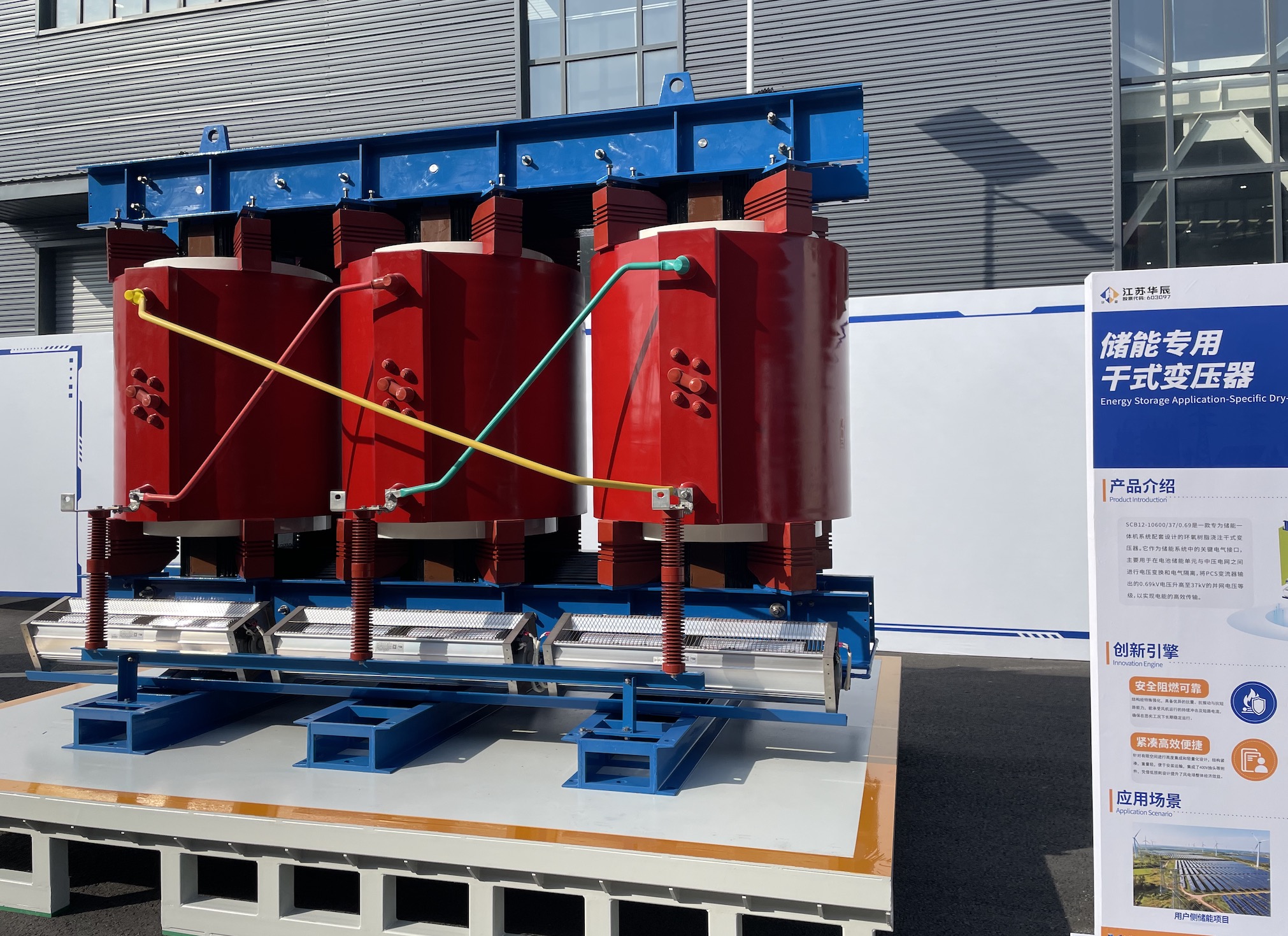
20亿元投产新能源基地,江苏华辰探索配电变压器行业内卷突围
Di Yi Cai Jing· 2025-11-03 09:49
Core Insights - Jiangsu Huachen has launched the first phase of its new energy power equipment industrial base, with a total planned investment of approximately 2 billion yuan, aimed at producing transformers with a voltage level of 500kV [2] - The company’s revenue from new energy has significantly increased from nearly 20% in 2022 to over 50% currently, indicating a strong growth engine for the company [3] - The domestic distribution transformer market is highly competitive, with price competition leading to significant variations in bidding prices, necessitating a shift towards high-end, automated, and integrated product development [5][6] Investment and Market Trends - The new energy sector is expected to see substantial growth, with China aiming for a total installed capacity of 3.6 billion kilowatts for wind and solar power by 2035, translating to an annual increase of approximately 200 gigawatts over the next decade [2] - Jiangsu Huachen's revenue and net profit for the first three quarters of the year grew by 37.5% and 15.4%, reaching 1.443 billion yuan and 72.2038 million yuan respectively, driven by increased market expansion in wind, solar, storage, and charging facilities [3] - The company is focusing on global expansion, particularly in Europe and the Middle East, where aging power grid infrastructure presents significant opportunities for new equipment and upgrades [7] Strategic Developments - The company plans to establish at least three joint ventures or companies overseas within the next three years, shifting its strategy from merely finding customers to seeking strategic partners for global expansion [7] - The new industrial base is expected to enhance production capacity and facilitate the transition towards becoming a high-end power equipment manufacturer [6] - The market for distribution transformers is predicted to consolidate, with expectations that within three years, there may be around ten companies in China reaching a scale of 10 billion yuan [6]

2026年中国可控硅整流器行业政策、产业链图谱、运行现状、竞争格局及未来发展趋势研判:特高压需求持续释放,细分市场结构优化升级[图]
Chan Ye Xin Xi Wang· 2025-11-03 01:08
Core Insights - The article highlights the significance of Silicon Controlled Rectifiers (SCR) in the power electronics sector, emphasizing their efficiency in energy control and their role in industrial automation and renewable energy applications [1][6][9]. Industry Overview - SCRs are based on a four-layer, three-terminal semiconductor structure, allowing precise control of high current with minimal input [2][3]. - The Chinese government is promoting the development of the energy electronics industry through various policies aimed at technological innovation and industry collaboration [6][9]. Market Structure - The SCR industry is characterized by a supply chain where the upstream includes high-purity silicon wafers, with an increase in self-sufficiency for 8-inch wafers but continued reliance on imports for 12-inch wafers [6][7]. - The downstream market is dominated by applications in power and industrial control, accounting for nearly two-thirds of the market, with renewable energy as a key growth driver [7][8]. Market Size and Growth - The SCR market in China is projected to reach 5.6 billion yuan in 2024, driven by the demand for ultra-high voltage power grids and photovoltaic energy storage [9][10]. - The high-voltage direct current (HVDC) market is expected to grow significantly, reaching 89.2 billion yuan in 2024, with a compound annual growth rate of 42.3% [8][9]. Competitive Landscape - The industry is marked by a clear division where domestic companies dominate the mid-to-low-end market, while international giants control the high-end segment [10][11]. - Local firms are increasingly focusing on high-end applications, leveraging cost advantages and integrated device manufacturing (IDM) models [10][11]. Development Trends - The SCR industry is undergoing a transformation driven by the adoption of third-generation semiconductor materials like silicon carbide (SiC) and gallium nitride (GaN), enhancing product performance [11][12]. - There is a shift towards smart integrated systems, with products evolving to include real-time monitoring and predictive maintenance capabilities [12][13]. - The trend towards domestic production and supply chain integration is strengthening the competitive position of local companies in the global market [13].







斯瑞新材(688102.SH):目前主要客户有蓝箭航天、九州云箭、深蓝航天等
Ge Long Hui· 2025-10-31 11:57
Group 1 - The company holds an important position in the liquid rocket engine thrust chamber industry, with major clients including Blue Arrow Aerospace, Jiuzhou Cloud Arrow, and Deep Blue Aerospace [1] - The company provides comprehensive solutions for optical module chip bases and housings, with a focus on high-precision parts processing and automated production lines, serving clients such as Finisar, Tianfu Communication, Global Broadcasting, Solstice, and Dongguan Xuntai [1] - The company is a key player in the CT and DR tube components sector in China, offering "one-stop" technical services and partnering with major clients like Siemens Healthineers, United Imaging, Kunshan Medical Source, Maimo Vacuum, and Beijing Zhisu [1] Group 2 - The company produces high-strength, high-conductivity copper alloy materials, which are applicable in new scenarios such as shield machines and controlled nuclear fusion, although this segment currently contributes a low percentage to overall revenue [1] - The company has over 60% market share in the domestic medium and high-voltage electrical contact materials and products, recognized as a champion product by the Ministry of Industry and Information Technology, with major clients including Siemens, ABB, Schneider, Eaton, Baoguang Co., and Xuguang Electronics [1]

ABB顶级芯片专家,离开瑞典回国
半导体芯闻· 2025-10-31 10:18
Core Viewpoint - The article highlights the return of Pang Zhibo, a leading expert in industrial chips and robotics from ABB, to China to join Peking University as a tenured professor, emphasizing his significant contributions to the field and the potential impact on China's advanced manufacturing and robotics sectors [2][4]. Group 1: Background and Achievements - Pang Zhibo has been a senior principal scientist at ABB, overseeing over 800 developers and 80 technology products globally [2]. - He has made significant contributions to interdisciplinary research in intelligent robotics and autonomous systems, including the development of the "Cloud-Fog Automation" paradigm and integrated design methods [4]. - His work has led to the application of numerous advanced technologies in leading products, resulting in hundreds of thousands of installations and generating hundreds of millions of euros in revenue for companies [4]. Group 2: Research and Publications - Pang holds 25 patents in Europe and the United States, has published over 200 international journal and conference papers, and has been a keynote or invited speaker at more than 50 international conferences [5]. - He serves in leadership roles within IEEE, including as an executive committee member and associate editor for several IEEE journals [5]. Group 3: Academic and Professional Timeline - Pang Zhibo's academic career includes positions at Peking University as a full professor, KTH Royal Institute of Technology as an adjunct professor, and a senior principal scientist at ABB [6]. - He obtained his PhD from KTH in July 2013 and his bachelor's degree in engineering from Zhejiang University in June 2002 [7].
人工智能驱动 绿色低碳领航——第八届进博会将成为观察全球产业升级新窗口
Xin Hua She· 2025-10-31 09:59
人工智能驱动产业焕新升级 从本届进博会参展展品来看,在人工智能加持下,新技术、新产品集中涌现,正打破产业边界、重构市 场竞争格局。参展企业东芝聚焦能源、数字基础设施、半导体三大领域,以生成式人工智能为核心引 擎,服务中国的产业数字化升级,半导体参考设计中心、疾病风险预测AI服务等4项创新成果将在进博 会首展。 "进博会不只是一个尖端科技展示的窗口,更是一个推动高水平开放与合作的宝贵平台。"东芝(中国) 有限公司董事长兼总裁八木隆雄说,东芝希望继续与中国及全球伙伴携手共创价值,共同迈向一个更加 智能、更可持续的未来。 当前,人工智能大模型在多模态理解、逻辑推理等领域的进步日新月异,这也让本届进博会参展展品更 有新意。参展企业西门子将展示三维协作与验证平台工易魔方·妙一空间,其深度融合人工智能与数字 孪生技术,可将人工智能大模型给出的解题思路生成机器语言,在虚拟环境验证成功后驱动机械臂拼搭 汉诺塔。 第八届中国国际进口博览会将于11月5日至10日在上海举办。今年进博会展览面积超过36.7万平方米, 参展企业在去年3496家的基础上新增了600余家,有290家世界500强和行业龙头企业参展……从人工智 能驱动的新产 ...

博迈科:前三季度实现营收13.23亿元
Shang Hai Zheng Quan Bao· 2025-10-30 13:28
Core Viewpoint - The company reported a revenue of 1.323 billion yuan and a net profit of 23.41 million yuan for the first three quarters of 2025, highlighting a significant contract win in the FPSO sector [1] Financial Performance - Revenue for the first three quarters reached 1.323 billion yuan [1] - Net profit for the same period was 23.41 million yuan [1] - The gross profit margin for the third quarter exceeded 20%, marking the highest level since 2018 [1] Key Contracts and Projects - The company and its wholly-owned subsidiary signed a contract for an FPSO project valued between 190 million to 240 million USD [1] - The project includes comprehensive services such as design, material procurement, and construction of the FPSO upper module [1] - The FPSO will be deployed in the significant oil and gas region of the Guyana oil field, enhancing the company's influence in the South American energy market [1] Strategic Partnerships - The partners in this project include leading industry players such as MODEC, ABB, and VWS, indicating strong collaboration within the energy supply chain [1] - This contract marks the second major FPSO contract disclosed by the company in 2025, continuing a nearly two-decade partnership with MODEC [1] Operational Strengths - The company benefits from hardware advantages at its Tianjin Lingang Heavy Industry construction base, including production sites and deep-water docks [1] - Integrated management of design, procurement, and construction has contributed to the company's efficient execution capabilities [1]

孙正义成日本新首富!曾押中马云的他,豪赌AI获248%财富暴涨
Sou Hu Cai Jing· 2025-10-30 07:49
Core Insights - Masayoshi Son's net worth surged by 248%, reaching $55.1 billion, making him the new richest person in Japan, surpassing Uniqlo's founder Tadashi Yanai [1][3] - This dramatic increase in wealth is attributed to Son's significant investments in AI, particularly a $30 billion bet on OpenAI, which was largely financed through stock pledges and bank loans [3][6] - Son's strategy includes a comprehensive approach to AI, integrating ARM's chip technology with AI models, and a recent acquisition of ABB's robotics unit for $5.375 billion [6][7] Investment Strategy - Son's investment in OpenAI has positioned SoftBank with substantial influence in the AI sector, outpacing competitors like Microsoft [3][6] - The integration of ARM's architecture, which dominates 90% of mobile chips, with AI chip design is a key part of SoftBank's strategy [3][6] - Son's previous experience with Nvidia, where he sold a 5% stake for $4 billion in 2019, highlights the potential for missed opportunities in tech investments [3][6] Market Dynamics - The shift from traditional industries, exemplified by Yanai's steady success with Uniqlo, to tech-driven wealth accumulation reflects the changing landscape of wealth generation in the AI era [10][11] - Son's approach underscores the importance of early positioning and risk-taking in capitalizing on emerging technologies [10][11] - The ongoing evolution of AI presents numerous opportunities across the entire value chain, from chips to applications, indicating a robust market for future investments [11]