
拜耳

Search documents
人工智能(AI)在农业育种行业的应用现状与商业化前景
QYResearch· 2025-11-17 01:21
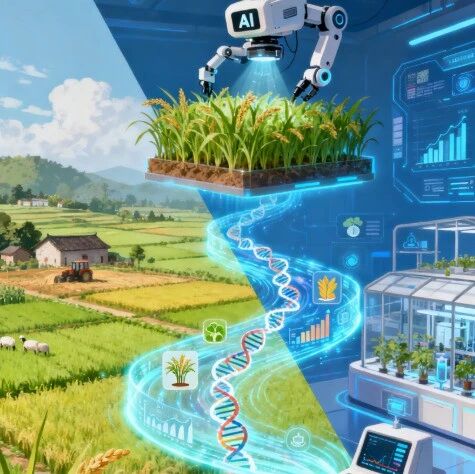
Industry Background: Transition to a "Data-Driven" Era in Breeding - Traditional breeding relies heavily on time-consuming field trials and personal experience, typically requiring 7-12 years for completion, which is costly and has a limited success rate. The global breeding industry is undergoing a fundamental shift from "experience-driven" to "data + model-driven" due to the significant decrease in genome sequencing costs, widespread application of high-throughput phenotyping technologies, and continuous enhancement of AI computing power [2]. Core Applications of AI in the Breeding Industry - **Genomic Selection**: This technology analyzes vast amounts of genetic markers to accurately predict key traits such as crop yield, quality, and disease resistance. AI can reduce the breeding cycle from 7-10 years to 4-6 years and improve trait prediction accuracy by 10-25%, while significantly lowering field validation costs. Leading companies like Bayer and KWS have implemented this at scale for major crops [6]. - **Phenotypic Analysis**: AI enhances the efficiency and accuracy of collecting phenotypic data through automated analysis of plant growth, disease severity, and canopy structure using drones and hyperspectral cameras. This technology increases selection efficiency by 5-10 times and provides objective quantitative data for field trials [7]. - **Hybrid Combination Prediction**: AI integrates multi-dimensional data to improve the accuracy of predicting successful hybrid combinations, addressing the issue where over 95% of traditional combinations fail to meet expectations. This allows for the early elimination of ineffective combinations, focusing resources on high-potential materials [8]. - **Environmental Modeling**: AI constructs G×E (genotype × environment) models to predict how different genotypes perform in various environments, facilitating a shift from reliance on multi-site trials to model-driven predictions, thus overcoming geographical limitations in breeding [10]. Global Application Status: From Experimental Exploration to Large-Scale Implementation - The global breeding industry has formed three distinct tiers in AI application: - Leading seed companies like Bayer and Syngenta have established comprehensive data infrastructures and AI breeding systems, creating high technical barriers [12]. - Research institutions such as CGIAR and USDA are driving innovation in AI breeding projects for staple crops, providing theoretical and technical support [13]. - Small and medium enterprises are gaining capabilities through SaaS platforms, allowing them to access advanced breeding tools at lower costs [13]. Commercialization Models and Industry Transformation Directions - Three main commercialization models have emerged in AI breeding: - **SaaS Software Subscription Model**: Targets small and medium breeding companies, offering tiered pricing based on image processing volume or trial area, lowering the application threshold for AI technology [15]. - **Data Analysis Service Model**: Provides specialized services for specific breeding projects, converting professional knowledge into value [15]. - **AI-Driven New Variety Commercialization**: This mainstream model for seed companies enhances breeding efficiency, leading to faster market introduction and more stable traits, ultimately increasing seed sales revenue [15]. Future Prospects: AI Will Reshape the Global Breeding Competitive Landscape - The breeding industry is expected to undergo three distinct development stages driven by AI: - **Short-term (1-3 years)**: Rapid commercialization of single-point AI tools, with phenotypic analysis AI leading the way and genomic selection solidifying its mainstream status [17]. - **Mid-term (3-7 years)**: AI will evolve from single-point tools to a full-process breeding system, with digital field trials becoming common and hybrid combination prediction transitioning into routine production [17]. - **Long-term (7-10 years)**: The deep integration of AI with gene editing technologies will create a closed-loop system, significantly reducing breeding costs by 40-60% and shortening cycles by 30-50% [17]. Domestic Development Status: Breakthroughs in China's AI Breeding Field - The year 2025 is projected to be a landmark year for China's AI breeding, with several innovative achievements: - The Shanghai AI Laboratory, in collaboration with other institutions, launched the first autonomous scientific discovery system in biological breeding, capable of simulating molecular biologist functions [19]. - Zhejiang University and Huawei developed an "AI Breeder" that enhances cotton hybrid breeding efficiency by 20 times and reduces the breeding cycle from 6-8 years to 3-4 years [19]. - The establishment of a unified data platform by the Qiaozhou Bay National Laboratory and Huawei significantly improves breeding efficiency through standardized data collection [19]. Conclusion: AI Initiates the "Second Revolution" in the Breeding Industry - AI is leading the most profound transformation in the breeding industry since the advent of hybrid breeding technology, marking a shift from reliance on experience to data-driven predictions. This revolution fundamentally changes the breeding paradigm from "art" to "science," establishing quantifiable and predictable mathematical models [21]. The integration of AI with gene editing technologies will usher in an era of "precise design" in breeding, redefining competitive dynamics in the global seed industry [21].


创新项目涌现 CCUS技术迎来产业化浪潮
Zhong Guo Zheng Quan Bao· 2025-11-16 20:13
Core Viewpoint - The CCUS (Carbon Capture, Utilization, and Storage) technology is crucial for addressing climate change and reducing CO2 emissions, but its industrialization faces significant challenges, particularly funding issues [1][5]. Group 1: CCUS Technology and Applications - CCUS technology is essential for high-emission industries like steel and cement, where traditional methods cannot eliminate CO2 emissions effectively [3]. - Tencent's "Carbon Seeking Program" aims to foster low-carbon technology innovation, with the second phase receiving 660 applications from 54 countries, indicating growing interest in CCUS projects [2]. - Innovative projects include the use of local materials for carbon capture, conversion of captured CO2 into methane for steel production, and the development of sustainable industrial carbon materials [1][2]. Group 2: Challenges in Industrialization - Funding remains the most significant bottleneck for CCUS projects, as many laboratory technologies struggle to secure financial backing for industrial validation [1][5]. - Uncertainties in policy and carbon credit recognition hinder the development of CCUS, making it difficult for companies to realize the economic benefits of their low-carbon products [5][6]. Group 3: Recommendations for Industry Growth - The industry suggests establishing clearer carbon credit certification standards and aligning methodologies with international frameworks to enhance the credibility of CCUS projects [6]. - There is a call for increased public and private funding in energy-saving and carbon-reduction initiatives, along with incentives for low-carbon products to stimulate market demand [6].
京东健康的“超级医药供应链”,含金量还在上升
Tai Mei Ti A P P· 2025-11-14 11:02
Core Insights - JD Health reported Q3 2025 revenue of 17.12 billion RMB, a year-on-year increase of 28.7%, and a net profit of 1.90 billion RMB, up 42.4% year-on-year, reflecting sustained growth and the long-term value of its "super pharmaceutical supply chain" [2][3][4] Financial Performance - Q3 revenue reached 17.12 billion RMB, marking a 28.7% increase year-on-year [2] - Net profit for the quarter was 1.90 billion RMB, representing a 42.4% year-on-year growth [2] Business Model and Strategy - JD Health has evolved beyond a mere "pharmaceutical e-commerce" platform, integrating a robust supply chain with comprehensive health management services [3][4] - The company focuses on addressing unmet needs in the healthcare sector, such as improving access to innovative drugs and providing ongoing patient support [2][4] Collaborations and Partnerships - In Q3, JD Health collaborated with major pharmaceutical companies like Eli Lilly and Eisai, enhancing its supply chain capabilities [4][5] - The company launched over 30 innovative drugs online in Q3 alone, surpassing the total for the first half of the year [5] Market Expansion and Global Reach - At the China International Import Expo, JD Health partnered with 21 top health brands from 11 countries, facilitating their entry into the Chinese market [6] - The company aims to integrate global health resources into everyday life, ensuring accessibility for consumers [6] Supply Chain and Logistics - JD Health's supply chain is designed to meet diverse health needs, ensuring stable supply for both common and rare medications [7][8] - The company has implemented advanced logistics solutions, including temperature-controlled storage, to ensure the safe delivery of pharmaceuticals [10] Technological Innovation - AI technology plays a crucial role in optimizing health services, enhancing patient management, and improving operational efficiency [12][13] - JD Health has developed an AI hospital model that streamlines the patient journey, reducing wait times and improving service delivery [12][13] Consumer Engagement and Health Management - The company has introduced AI-driven health management tools, providing personalized health advice and support to users [14][15] - JD Health's services have expanded to include at-home healthcare options, catering to the needs of elderly and chronically ill patients [15] Conclusion - JD Health's commitment to long-term value creation and its focus on integrating technology into healthcare services position it as a leader in the evolving health market [16]


基础化工行业双周报:10月份化学原料和化学制品制造业增加值同比增长7.1%-20251114
Dongguan Securities· 2025-11-14 09:43
Investment Rating - The report maintains an "Overweight" rating for the basic chemical industry, expecting the industry index to outperform the market index by more than 10% in the next six months [30]. Core Insights - In October, the value added of the chemical raw materials and chemical products manufacturing industry increased by 7.1% year-on-year [26]. - The Shenwan Basic Chemical Index rose by 8.4% in the last two weeks, outperforming the CSI 300 Index by 8.5 percentage points, ranking first among 31 Shenwan industries [12][5]. - Year-to-date, the Shenwan Basic Chemical Index has increased by 35.9%, outperforming the CSI 300 Index by 16.4 percentage points, ranking sixth among 31 Shenwan industries [12][5]. - All sub-sectors of the Shenwan Basic Chemical Index saw price increases, with the agricultural chemical products sector rising by 11.3%, chemical raw materials by 10.0%, and chemical products by 9.3% [12][5]. - Among the 404 listed companies in the Shenwan Basic Chemical Index, 346 saw their stock prices rise in the last two weeks, with Fengbei Biological, Fospower Technology, and Yongtai Technology leading with increases of 105.5%, 65.8%, and 63.2% respectively [15][5]. Summary by Sections Market Review - As of November 13, the Shenwan Basic Chemical Index has shown strong performance, with all sub-sectors increasing in value [12][5]. - The agricultural chemical products sector has been particularly strong, reflecting robust market conditions [12][5]. Chemical Product Price Trends - Key tracked chemical products have seen price increases, including lithium hexafluorophosphate (+13.45%) and synthetic ammonia (+5.97%) [20][21]. - The market for refrigerants, particularly R32, is expected to maintain a bullish sentiment due to structural support from downstream demand [24][21]. Key Industry News - BASF's integrated base in Zhanjiang has successfully started production, marking a significant milestone for the company's largest single investment project [26]. - Bayer showcased 26 innovative products at the China International Import Expo, securing over 10 strategic agreements [26]. - The establishment of a new innovation center by Nouryon in Shanghai aims to enhance local innovation and sustainable development commitments [26]. Industry Weekly Perspective - The National Bureau of Statistics reported a 4.9% year-on-year increase in industrial value added, with the chemical raw materials and chemical products manufacturing sector growing by 7.1% [27]. - The refrigerant market is expected to benefit from price increases, with companies like Sanmei Co. and Juhua Co. showing significant profit growth [27][28].
靖因药业IPO:32项重大专利未获授权 靠非经常损益扭亏只是昙花一现 ?
Xin Lang Zheng Quan· 2025-11-14 05:38
Core Viewpoint - Sirius Therapeutics has submitted its listing application to the Hong Kong Stock Exchange, with a valuation of approximately $253 million after its Series B funding round in April 2025, backed by prominent investors [1][2]. Group 1: Company Overview - Sirius Therapeutics was established in 2021 and focuses on developing siRNA therapies [1]. - The company is co-founded by top healthcare investment firms OrbiMed Entities and Creacion Ventures, holding over 40% of shares, with Tencent's investment arm holding 8.14% and Hancan Capital holding over 13% [1]. - The company reported a net loss of 309 million yuan and 342 million yuan for 2023 and 2024, respectively, totaling 651 million yuan in losses [3]. Group 2: Financial Performance - In the first half of 2025, Sirius Therapeutics achieved a net profit of 34.46 million yuan, marking its first profitable period, primarily driven by non-recurring income [3][4]. - The company generated 144 million yuan in other income, a significant increase from 4.51 million yuan in the same period last year, largely due to a strategic partnership with CRISPR Therapeutics [3][4]. Group 3: Product Pipeline and Challenges - The core product, SRSD107, is in Phase II clinical trials for venous thromboembolism, while two key products, SRSD216 and SRSD384, are also in various stages of development [5][6]. - The company faces significant competition in the FXI/FXIa inhibitor space, with several competitors already in Phase III trials, including drugs from Novartis, Bayer, and Johnson & Johnson [7][8]. - Sirius Therapeutics has 65 patents and applications, but only one has been granted, with 32 critical patents pending, posing potential risks in a competitive biopharmaceutical landscape [9].

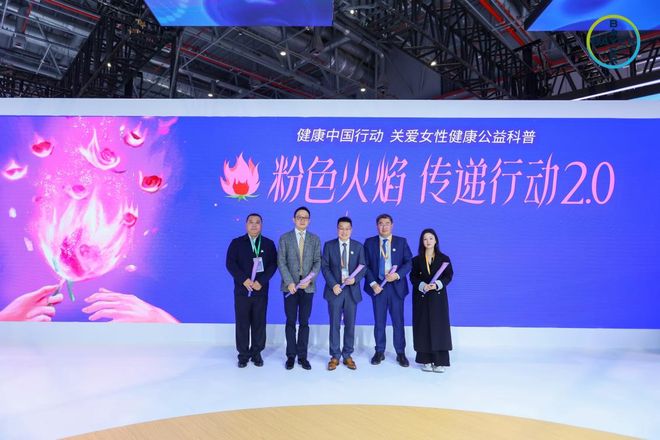
“粉色火焰”公益行动进博会续力,破圈传递女性健康知识
Xin Jing Bao· 2025-11-14 05:05
Core Insights - Bayer's women's health brand, Youshiming, launched a youth-oriented strategy during the China International Import Expo, emphasizing its commitment to enhancing women's health awareness in China [1][3] - The "Pink Flame Transmission Action" project, in collaboration with the China Population Welfare Foundation, has reached millions of young users, highlighting the need for accessible professional knowledge and self-protection awareness among young women [3][4] Group 1 - The youth-oriented strategy focuses on four core areas: youthful presentation, social media engagement, personalized communication, and real-life scenarios [1][3] - Bayer aims to transform professional health knowledge into engaging formats like short videos and comics, with a strong emphasis on social media platforms [1][3] - The initiative is designed to advance women's health management and promote fertility protection awareness among young women [1][3] Group 2 - Insights from industry professionals, such as Ge Peiqi, emphasize the importance of early health awareness and prevention among young women [4] - The involvement of medical professionals is deemed crucial for effective health education, particularly in the context of diverse and sometimes misleading information available on social media [4][5] - The value of using social media for health education is recognized, with a call for relatable and accessible medical content tailored to young audiences [5]

开放发展的中国,世界的机遇和信心——从进博会到自贸港
Ren Min Ri Bao· 2025-11-14 04:19
Group 1 - The China International Import Expo (CIIE) achieved a record transaction intention amount of $83.49 billion and featured 4,108 companies from 138 countries and regions, marking a significant milestone in international trade [1][2] - The Hainan Free Trade Port is set to officially launch its full island closure on December 18, which is a key initiative for China's high-level opening-up and aims to create a new pattern of reform and opening-up [1][2] - China has become the world's second-largest consumer and import market, with a consumption of nearly 50 trillion yuan annually and over 20 trillion yuan in imports, highlighting its market potential and growth expectations [2][4] Group 2 - The integration of technology and industry innovation is crucial for China's development, with a focus on building a modern industrial system and enhancing new production capabilities [5][6] - China is actively developing future industries and upgrading traditional sectors, with significant advancements in green technology, digitalization, and artificial intelligence, positioning itself as a global leader in innovation [5][6] - The country has seen a substantial increase in foreign investment in high-tech industries, with actual foreign capital utilization reaching 170.84 billion yuan in the first three quarters of the year [5] Group 3 - China's stable political environment and transparent policy framework contribute to its attractiveness for global investment, fostering a competitive and fair business landscape [8][9] - The country has implemented measures to enhance its business environment, including the establishment of a unified national market and the promotion of a safe and secure social environment for foreign investors [9][10] - China's commitment to high-level opening-up is expected to inject more certainty and positive energy into the global economy [10][11]
陕西省交易团高质量完成进博会参会参展工作
Shan Xi Ri Bao· 2025-11-14 00:07
Core Insights - The 8th China International Import Expo (CIIE) showcased the Shaanxi Provincial Trade Group's commitment to high-quality participation, achieving significant procurement and cooperation outcomes [1][2][3] Group 1: Participation and Achievements - A total of 1,255 units from Shaanxi registered for the expo, with 4,132 professional attendees, indicating a steady improvement in both scale and quality compared to previous years [1] - The trade group achieved 48 transaction intentions with a total value of 2.538 billion yuan, including 21 signed procurement projects worth 674 million yuan [1] Group 2: Focus Areas and Collaborations - The trade group emphasized key sectors such as artificial intelligence, high-end equipment manufacturing, and new materials, conducting 16 targeted investment activities and establishing connections with 68 Fortune 500 foreign enterprises [2] - Fund project roadshows and industry promotion events led to signed cooperation agreements totaling 3 billion yuan, with 12 investment projects planned, amounting to an initial investment of 64.6 million yuan [2] Group 3: Cultural Exchange and Promotion - The trade group created cultural initiatives like the "National Level Pedestrian Street Exhibition" and "Shaanxi City Reception Hall Exhibition," featuring 47 representative enterprises [2] - On-site sales of Shaanxi specialty products reached 1.2729 million yuan, with 1,389 potential cooperation enterprises and an expected signing amount of 28.285 million yuan [2]
开放发展的中国,世界的机遇和信心
Ren Min Ri Bao· 2025-11-13 22:10
(一) 中国的发展离不开世界,世界的繁荣也需要中国。开放合作、互利共赢,是解码中国式现代化的一把钥 匙。 11月10日,第八届进博会在上海闭幕。习近平总书记亲自谋划的世界上第一个以进口为主题的国家级展 会,是国际贸易发展史上的一大创举。本届834.9亿美元的按年计意向成交额、138个国家和地区的4108 家企业参展的成绩,均刷新历史纪录。 11月6日,习近平总书记在海南指出:"党中央决定,今年12月18日海南自由贸易港正式启动全岛封关, 这是我国坚定不移扩大高水平对外开放、推动建设开放型世界经济的标志性举措。" 以全面深化改革开放推动高质量发展,集中力量办好自己的事,通过高水平对外开放为世界注入确定性 与稳定性,是习近平新时代中国特色社会主义思想的重要内容。 今天,再次学习领会习近平总书记2018年在首届进博会开幕式上的主旨演讲《共建创新包容的开放型世 界经济》,更加深刻感悟到思想的力量。 "举办中国国际进口博览会,是中国着眼于推动新一轮高水平对外开放作出的重大决策,是中国主动向 世界开放市场的重大举措。" "中国将抓紧研究提出海南分步骤、分阶段建设自由贸易港政策和制度体系,加快探索建设中国特色自 由贸易港进 ...
开放发展的中国,世界的机遇和信心 ——从进博会到自贸港
Ren Min Ri Bao· 2025-11-13 22:05
Core Points - The importance of open cooperation and mutual benefit in China's modernization is emphasized, with the recent China International Import Expo (CIIE) showcasing significant achievements in international trade [1][2] - The CIIE recorded an intention transaction amount of $83.49 billion, with participation from 4,108 companies across 138 countries and regions, setting new historical records [1] - The Hainan Free Trade Port is set to officially launch full island closure on December 18, marking a significant step in China's commitment to high-level opening up [1][2] Group 1: Economic Potential - China's large consumer market, with over 1.4 billion people and nearly 50 trillion yuan in annual consumption, is highlighted as a strategic asset for both domestic and global economic growth [4] - The country has become the world's second-largest consumer and import market, continuously opening its market to the world [2][4] - The growth of the middle-income group and the rise of youth consumers are driving demand for high-quality products, enhancing the interaction between supply and demand [4] Group 2: Innovation and Industry - China is focusing on technological innovation and the development of a modern industrial system, which is expected to inject strong momentum into the global economy [5][6] - The country is actively developing future industries and upgrading traditional sectors, with significant advancements in areas such as artificial intelligence, quantum technology, and renewable energy [5] - The integration of innovation and industry is creating a favorable environment for global innovation, positioning China as a strategic market for growth [6] Group 3: Business Environment - China is committed to creating a market-oriented, law-based, and international business environment, promoting fair competition among various ownership enterprises [9][10] - The country has implemented visa-free policies for 76 countries, enhancing its attractiveness as a safe investment destination [9] - The stability of China's political and social environment is seen as a key factor in its ability to attract foreign investment and foster economic growth [8][9]