
良品铺子

Search documents
休闲食品板块11月20日跌2.33%,南侨食品领跌,主力资金净流出1.78亿元
Zheng Xing Xing Ye Ri Bao· 2025-11-20 09:09
Market Overview - The leisure food sector experienced a decline of 2.33% on November 20, with Nanjiao Food leading the drop [1] - The Shanghai Composite Index closed at 3931.05, down 0.4%, while the Shenzhen Component Index closed at 12980.82, down 0.76% [1] Individual Stock Performance - Nanjiao Food (605339) closed at 19.05, down 9.37% with a trading volume of 175,500 shares [1] - Jin Zai Food (003000) closed at 11.86, down 3.18% with a trading volume of 80,900 shares [1] - Wanchen Group (300972) closed at 168.22, down 3.10% with a trading volume of 18,300 shares [1] - Three Squirrels (300783) closed at 23.22, down 2.85% with a trading volume of 81,500 shares [1] - Black Sesame (000716) closed at 6.26, down 2.80% with a trading volume of 224,500 shares [1] - Other notable declines include Lihai Food (300973) down 2.52% and Liangpinpuzi (603719) down 2.51% [1] Capital Flow Analysis - The leisure food sector saw a net outflow of 178 million yuan from main funds, while retail investors contributed a net inflow of 118 million yuan [1] - Speculative funds recorded a net inflow of 60.43 million yuan [1] Detailed Capital Flow for Selected Stocks - Lihai Food (300973) had a main fund net inflow of 5.90 million yuan, but a retail net outflow of 13.17 million yuan [2] - Ziyan Food (603057) experienced a main fund net inflow of 42,400 yuan, with a retail net outflow of 1.79 million yuan [2] - Maquur (002719) had a negligible main fund net inflow of 4,364 yuan, with a retail net outflow of 127,690 yuan [2] - Other stocks like Guangzhou Restaurant (603043) and Huangshanghuang (002695) also reported net outflows from main funds [2]





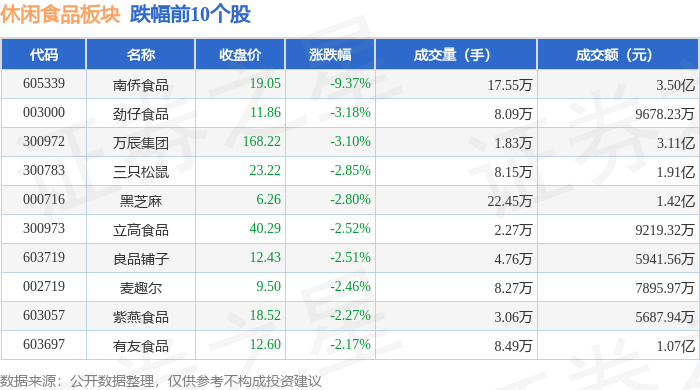
休闲食品板块震荡走弱,南侨食品触及跌停
Xin Lang Cai Jing· 2025-11-20 06:22
休闲食品板块震荡走弱,南侨食品触及跌停,欧福蛋业、劲仔食品、一致魔芋、黑芝麻、立高食品、良 品铺子等跟跌。 ...
赢回消费者的信任——中国预制食品必须完成的功课【和君新消费】
Sou Hu Cai Jing· 2025-11-19 15:54
Core Viewpoint - The Chinese prepared food industry is facing a trust crisis, stemming from a disconnect between industry practices and consumer expectations regarding food quality and authenticity [2][3]. Group 1: Trust Crisis Causes - The first cause of the trust crisis is the conflict between industrial efficiency and humanized needs, where consumers feel that prepared dishes lack the warmth and authenticity of home-cooked meals [4][5]. - The second cause is the lack of standards and transparency, leading to consumer confusion about what constitutes prepared food and a general distrust due to insufficient information about sourcing and production processes [6][7]. - The third cause is the clash between industrial logic and food culture, where the emotional and cultural significance of food is lost in the standardization of prepared dishes [8]. Group 2: Essential Courses for Rebuilding Trust - The first essential course is to reconstruct the business value perspective from a cost-focused approach to a trust-focused approach, emphasizing what value can be delivered to consumers [8][9]. - The second essential course involves product innovation that infuses cultural and emotional significance into prepared food, transforming it into a medium for storytelling [10][11][12]. - The third essential course is to enhance process transparency, allowing consumers to see every step of the production process to rebuild trust [14][15][16]. - The fourth essential course is to create marketing and service strategies that foster emotional connections with consumers, moving beyond mere product sales [19][20][21]. Group 3: Future of the Prepared Food Industry - The future of the prepared food industry requires establishing a symbiotic ecosystem of trust among enterprises, industries, and consumers, focusing on market segmentation to meet diverse consumer needs [24][25][26]. - The industry must also integrate supply chains from farm to table, ensuring quality and freshness through partnerships with agricultural cooperatives and logistics companies [25]. - Finally, there is a need for global expansion of Chinese prepared food, promoting cultural narratives rather than just products [26].

便宜零食,到底便宜了谁?
远川研究所· 2025-11-19 13:14
Core Viewpoint - The article discusses the challenges faced by snack brands like Three Squirrels in the e-commerce era, highlighting a shift in consumer preferences towards "bulk snack stores" and the impact of rising competition and costs in the online market [4][9][12]. Group 1: Industry Overview - The snack industry has low entry barriers but is highly fragmented, with the top five companies holding only 5.9% market share [8]. - The rise of bulk snack stores has significantly changed the competitive landscape, with these stores capturing 37% of the market share in 2024, surpassing e-commerce and supermarkets [13][15]. - The average profit margin in the snack industry is around 5%, making it sensitive to rising costs and competition [11]. Group 2: Company Performance - Three Squirrels has seen a decline in profitability, with net profit dropping from 411 million to 129 million in 2022 [9]. - The company has shifted its focus back to e-commerce, particularly on platforms like Douyin, which now accounts for 26.98% of its revenue [11]. - Despite the challenges, Three Squirrels remains a significant player, but its growth has stagnated, with revenue increasing without corresponding profit growth [6][9]. Group 3: Market Dynamics - The emergence of bulk snack stores has led to a price war, with these stores offering products at prices 20%-75% lower than supermarkets and 7%-59% lower than e-commerce [18][20]. - The rapid expansion of bulk snack stores, such as "Mingming Very Busy," has resulted in over 40,000 locations across China, with a significant number of stores located in lower-tier cities [15][22]. - The competition between bulk snack store brands has intensified, leading to aggressive marketing strategies and store openings in close proximity to competitors [30]. Group 4: Consumer Behavior - Consumers are increasingly drawn to lower-priced options, leading to a decline in brand loyalty among traditional snack brands [8][26]. - The rise of private label and lesser-known brands in bulk snack stores has contributed to the profitability of these stores, with private label products accounting for 60-65% of their inventory [26][30]. - The shift in consumer preferences towards bulk purchasing and lower prices has created a challenging environment for established snack brands [23][30].


福建女首富正式接班,能否重振“乡镇之王”达利食品?
Guan Cha Zhe Wang· 2025-11-19 08:05
Core Insights - Dali Food Group announced that Xu Yangyang, daughter of founder Xu Shihui, officially took over as president in November 2025, leading the company during a challenging period of declining performance and industry transformation [1][9] Company History and Development - Xu Shihui's entrepreneurial journey began in 1989 when he invested his entire savings to buy a second-hand biscuit production line, establishing the precursor to Dali Food [2] - Dali Food was officially founded in 1992, but faced significant competition from brands like Wangwang and Lays as they entered the Chinese market [2] Business Strategy - Dali Food adopted a unique "Dali Model" to compete against foreign brands, focusing on low-priced products, celebrity endorsements, and deep channel penetration [3][5] - The company has historically leveraged aggressive marketing strategies, utilizing popular celebrities for endorsements and maintaining a pricing strategy that undercuts competitors by 30% to 50% [6][8] Financial Performance - Dali Food's revenue peaked at 222.94 billion yuan in 2021 but fell to 199.57 billion yuan in 2022, marking the beginning of a downward trend [10][12] - The company initiated a privatization process in 2023 due to its stock price being undervalued, but subsequent revenue figures for 2023 and 2024 showed continued decline [12][13] Market Challenges - Dali Food has struggled to adapt to new market dynamics, including the rise of e-commerce and competition from direct-to-consumer models, which have eroded its traditional channel advantages [14][16] - The company's reliance on a "pressuring inventory" model has led to issues with distributor relationships and inventory management, further complicating its market position [14] Leadership Transition and Future Strategy - Xu Yangyang aims to transition Dali Food from a "follower" to an "innovator," focusing on brand rejuvenation and product innovation to meet evolving consumer demands [16][17] - The company is pursuing an international expansion strategy, targeting Southeast Asia, with plans to establish production bases in Indonesia, Thailand, Vietnam, and Saudi Arabia [19][20]
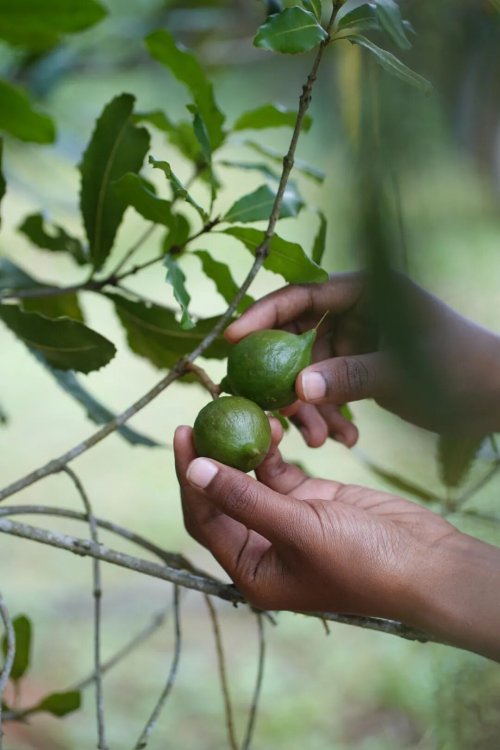
良品铺子 x 央视新闻:一颗云南坚果,“大” 写中国自信
Zhong Guo Shi Pin Wang· 2025-11-18 08:58
Core Insights - The article highlights the successful transformation of the macadamia nut industry in Yunnan, China, particularly in Ximeng County, where local farmers have shifted from small-scale cultivation to a more organized and profitable industry with the help of leading companies like Liangpinpuzi [1][2][4]. Group 1: Industry Development - The macadamia nut has evolved from an imported product to a national staple in China, with Yunnan becoming the largest production base globally, accounting for 47% of the world's macadamia nut area by 2025 [4]. - The local environment, characterized by high selenium content and favorable climatic conditions, contributes to the unique quality of Yunnan macadamia nuts, which are now marketed as a health food due to their nutritional benefits [6][4]. Group 2: Company Strategy - Liangpinpuzi has played a crucial role in establishing quality standards and modern agricultural practices, which have significantly improved the quality and marketability of local macadamia nuts [10][11]. - The company has implemented a systematic approach to empower the supply chain, including setting planting standards and offering higher prices for quality raw materials, thereby boosting farmers' confidence and income [11][13]. Group 3: Market Impact - The production of macadamia nuts in Yunnan has seen substantial growth, with the total industry output value reaching 10.16 billion yuan in 2024, a 71.04% increase from 2023, benefiting over 740,000 farmers [13][15]. - Liangpinpuzi's efforts have not only enhanced local production but also positioned Yunnan macadamia nuts as a premium product in both domestic and international markets, contributing to the region's economic development [15][17]. Group 4: Future Prospects - The company aims to replicate its successful model across various regions in China, focusing on sourcing high-quality local products and enhancing the overall value chain from production to consumer [20]. - Liangpinpuzi's commitment to integrating agricultural, industrial, and commercial sectors is expected to further elevate the status of local specialties, transforming them into recognized brands and driving rural revitalization [20].
休闲食品板块11月18日跌1.9%,万辰集团领跌,主力资金净流出2.22亿元
Zheng Xing Xing Ye Ri Bao· 2025-11-18 08:04
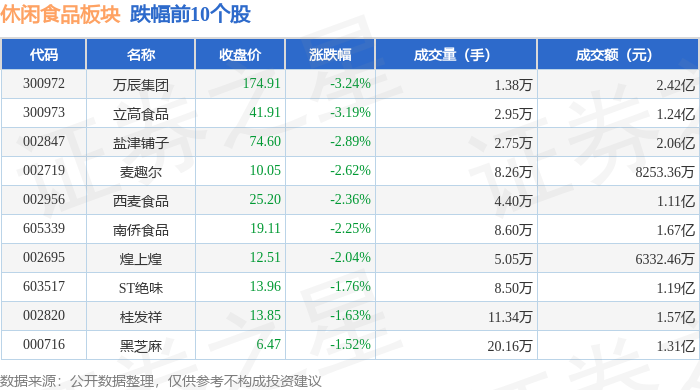
Market Overview - The leisure food sector experienced a decline of 1.9% on November 18, with Wancheng Group leading the drop [1] - The Shanghai Composite Index closed at 3939.81, down 0.81%, while the Shenzhen Component Index closed at 13080.49, down 0.92% [1] Individual Stock Performance - Wancheng Group (300972) closed at 174.91, down 3.24% with a trading volume of 13,800 [1] - Lihai Food (300973) closed at 41.91, down 3.19% with a trading volume of 29,500 [1] - Yanjinpuzi (002847) closed at 74.60, down 2.89% with a trading volume of 27,500 [1] - Maiqu'er (002719) closed at 10.05, down 2.62% with a trading volume of 82,600 [1] - Ximai Food (002956) closed at 25.20, down 2.36% with a trading volume of 44,000 [1] - Nanjiao Food (605339) closed at 19.11, down 2.25% with a trading volume of 86,000 [1] - Huangshanghuang (002695) closed at 12.51, down 2.04% with a trading volume of 50,500 [1] - ST Juewei (603517) closed at 13.96, down 1.76% with a trading volume of 85,000 [1] - Guifaxiang (002820) closed at 13.85, down 1.63% with a trading volume of 113,400 [1] - Hezhima (000716) closed at 6.47, down 1.52% with a trading volume of 201,600 [1] Capital Flow Analysis - The leisure food sector saw a net outflow of 222 million yuan from main funds, while retail investors had a net inflow of 254 million yuan [1] - The table of capital flow indicates varying levels of net inflow and outflow among individual stocks, with notable movements in stocks like Huangshanghuang and Guifaxiang [2]




顶级资本正在“抄底”消费
Xin Lang Cai Jing· 2025-11-16 02:14
Core Insights - The recent surge in mergers and acquisitions in the consumer sector contrasts with the sluggish growth of the consumption market, raising questions about the underlying investment logic of top-tier capital [1][4]. Group 1: Current Market Conditions - The retail sales of consumer goods in China reached 36.59 trillion yuan in the first three quarters, growing by 4.5% year-on-year, which is still below the 8% growth rate seen in 2019 [1]. - The performance of listed consumer companies shows significant divergence, with major players like Kweichow Moutai and Yum China experiencing slowed growth compared to previous years [2]. - Smaller food and beverage companies are facing considerable operational pressure, with many reporting declines in both revenue and net profit [2]. Group 2: Investment Logic Behind Mergers - The first logic is that target companies possess strong cash flow and a solid foundation, making them attractive despite slower growth rates [4]. - The second logic highlights the brand influence of the target companies, which have established networks and consumer loyalty, making them appealing for capital investment [5]. - The third logic suggests that the current market downturn presents a "buying opportunity" for capital, allowing for acquisitions at reasonable prices [5]. - The fourth logic emphasizes the ongoing opportunities in the consumer sector, as the majority of production activities ultimately cater to consumer needs [5]. Group 3: Future Trends in the Consumer Market - Companies face challenges in understanding new consumer demographics, adapting to new marketing methods, and embracing innovative organizational structures [6]. - Three key trends to watch include a focus on cost-effective innovation, the rise of niche products that provide immediate satisfaction, and growth in self-improvement sectors such as health investments and knowledge-based services [6]. - The exit strategies for capital in the consumer market are evolving, with a shift towards long-term investment approaches rather than relying solely on rapid growth and IPOs [7].



重要信号!顶级资本正在“抄底”消费
证券时报· 2025-11-15 00:14
Core Viewpoint - The article discusses the recent surge in mergers and acquisitions (M&A) in the consumer sector, highlighting the contrast between significant capital investments by top firms and the sluggish growth of the consumer market in China. It explores the underlying investment logic driving this trend. Group 1: M&A Activity - Recent strategic partnerships and acquisitions include CPE Yuanfeng's collaboration with Burger King, Dazhang Capital's potential bid for Costa Coffee, and Boyu Capital acquiring a 60% stake in Starbucks China. KKR also completed the acquisition of the national soda brand, Diao Soda [1][2]. - The consumer market is experiencing a slowdown, with retail sales growth at 4.5% year-on-year for the first three quarters, which is below the 8% growth seen in 2019 [2][3]. Group 2: Financial Performance of Companies - Major companies like KFC China reported a 4% increase in revenue to $3.2 billion, while Yili's revenue grew by 1.71% to 90.564 billion yuan, but its net profit fell by 4.07% [3]. - Smaller food and beverage companies are facing significant operational pressures, with many reporting declines in both revenue and net profit [3]. Group 3: Investment Logic - Four key investment rationales are identified: 1. Target companies have strong cash flows and solid foundations, with examples like Starbucks maintaining over $6 billion in cash flow [5]. 2. The brands involved possess significant brand equity and established networks, making them attractive to investors [6]. 3. The current market downturn presents a "buying opportunity" for capital, allowing for acquisitions at lower prices [6]. 4. The consumer sector remains promising, with potential for growth despite current challenges [6]. Group 4: Future Trends in Consumer Market - The article identifies three trends in the consumer market: 1. Emphasis on cost-performance innovation as consumers prioritize practical value [8]. 2. Increased interest in niche products that provide immediate satisfaction [8]. 3. Growth in self-improvement sectors, including health investments and knowledge-based spending [8]. Group 5: Exit Strategies for Capital - The challenges of exiting investments in the consumer sector are noted, with a shift towards long-term strategies rather than quick exits through IPOs. This includes designing preferential dividend clauses to ensure returns even without an IPO [9].

重要信号!顶级资本正在“抄底”消费
Zheng Quan Shi Bao· 2025-11-14 17:47
Core Viewpoint - The recent surge in mergers and acquisitions in the consumer sector contrasts with the sluggish growth of the consumption market, raising questions about the underlying investment logic of top-tier capital entering this space [1][4]. Group 1: Mergers and Acquisitions Activity - Major capital firms are actively acquiring well-known consumer brands despite a weak consumption market, indicating a strategic move to capitalize on perceived undervaluation [1][4]. - Recent notable transactions include CPE Yuanfeng's partnership with Burger King, Hillhouse Capital's potential bid for Costa Coffee, and Boyu Capital's acquisition of a 60% stake in Starbucks China [1][2]. Group 2: Market Performance and Company Earnings - The retail sales growth in China for the first three quarters was 36.59 trillion yuan, reflecting a year-on-year increase of 4.5%, which is still below the 8% growth rate of 2019 [1]. - A significant performance disparity exists among consumer companies, with leading firms like Kweichow Moutai and Yum China showing slowed growth compared to previous years [2]. - Smaller food and beverage companies are facing greater operational pressures, with many reporting declines in both revenue and net profit [2]. Group 3: Investment Logic Behind Acquisitions - Four key investment rationales support the trend of capital entering the consumer sector: 1. Target companies possess strong cash flow and stable foundations, making them attractive despite slower growth [4]. 2. The brands being targeted have significant market influence and established networks, providing a solid base for future growth [5]. 3. The current market downturn presents a favorable opportunity for capital to acquire these brands at lower prices, allowing for potential value enhancement through improved governance [6]. 4. The consumer sector remains promising, with a large market potential and a low concentration of major brands, indicating future growth opportunities [6]. Group 4: Future Trends in the Consumer Market - The consumer market is expected to face challenges due to slowing income growth and increased savings, which will test the resilience of companies [7]. - Key trends to watch include a focus on cost-effective innovations, the rise of niche products that provide immediate satisfaction, and growth in self-improvement sectors such as health investments and knowledge-based services [7]. - Companies are increasingly optimizing their business structures by divesting non-core assets and consolidating resources to enhance operational quality [7][8].
