
默沙东

Search documents
【财经分析】国际医药巨头加速来华“扫货” 中国创新药估值迎重塑
Zhong Guo Jin Rong Xin Xi Wang· 2025-06-24 09:22
Core Viewpoint - The Chinese innovative drug sector is experiencing a resurgence, driven by active business development (BD) transactions and favorable policies, leading to improved revenue expectations for innovative drug companies starting from mid-2024 [1][4][6]. Group 1: Market Performance - The Hong Kong innovative drug ETFs saw increases of 2.25% and 1.15% respectively on June 24, with notable stock price rises for companies like Rongchang Biopharma (6.38% increase in A-shares) and Green Leaf Pharmaceutical (over 9.5% increase in H-shares) [1]. - The A-share innovative drug sector has risen nearly 25% from its low on April 8 to June 23, with a total inflow of 945 billion and financing purchases of 1,148 billion [4]. Group 2: Business Development Trends - There has been a significant increase in "outbound" BD transactions for Chinese innovative drugs, with major deals such as the 6.7 billion USD agreement between Heptares and Otsuka Pharmaceutical [2]. - The trend of international pharmaceutical companies acquiring innovative drug projects before commercialization is becoming more common, driven by the need to replenish their pipelines due to patent expirations [2][3]. Group 3: Financial Performance - Companies like Saint Noble Bio are forecasting substantial profit increases, with expected net profits for the first half of 2025 projected to grow by 253.54% to 332.1% year-on-year [4]. - A total of 17 commercialized innovative drug companies are expected to achieve 913 billion in product sales revenue in 2024, reflecting a 35% year-on-year growth [5]. Group 4: Policy Support - Recent policies have been implemented to support innovative drug development, including expedited clinical trial approvals and a multi-layered insurance system that combines basic medical insurance with commercial insurance [6]. - The introduction of commercial health insurance for innovative drugs is expected to enhance the market environment, transitioning from reliance on basic medical insurance to a dual support system [6]. Group 5: Long-term Outlook - The innovative drug sector is anticipated to continue its upward trajectory due to ongoing policy support, technological advancements, and international expansion, with a potential for sustained valuation reassessment [7]. - Increased investment in innovative drug companies is expected, although caution is advised regarding potential overvaluation in some cases [7].
晶泰科技(02228)与美国生物制药传奇Gregory Verdine旗下公司达成战略合作 联手打造最强AI制药平台
智通财经网· 2025-06-24 03:24
Core Insights - Quantum physics, AI, and robotics drug and new materials development platform, CrystalTech (02228), has entered a strategic partnership worth billions with DoveTree LLC, founded by renowned chemist Gregory Verdine [1] - The agreement grants DoveTree exclusive global rights to multiple pipelines in oncology, autoimmune, and neurological diseases, with CrystalTech receiving a total of $100 million in upfront payments and potential milestone payments worth billions [1][10] Company Overview - Gregory Verdine is a pioneer in chemical biology and a successful entrepreneur, having founded over 12 biotech companies, with 7 going public and one being acquired [2][3] - Verdine's innovative "Stapled Peptides" technology has opened new pathways for targeting "undruggable" targets, creating a market valued in the billions [2][6] Financial Implications - CrystalTech will receive $51 million and $49 million in upfront payments within 10 and 180 days post-signing, respectively, along with potential milestone payments and royalties based on annual net sales [1][10] - The collaboration is expected to significantly enhance CrystalTech's financial returns and support ongoing R&D efforts [10] Market Potential - Verdine's work has led to the successful development of drugs targeting traditionally "undruggable" targets, generating over $30 billion in sales from three major drugs [6][8] - The partnership is seen as a model for combining U.S. intellectual property with Chinese efficiency, potentially unlocking a multi-billion dollar market for previously untargetable drug targets [10] Strategic Positioning - The collaboration elevates CrystalTech's status in the industry and may inspire further high-tech partnerships [10] - Verdine's extensive experience and network in the biotech sector, including roles with top venture capital firms, positions the partnership for success in the evolving landscape of drug development [9][10]
研判2025!中国疫苗行业产业链图谱、产业现状、重点企业及未来前景展望:产业规模日益扩容,本土企业国际化步伐加快[图]
Chan Ye Xin Xi Wang· 2025-06-21 02:24
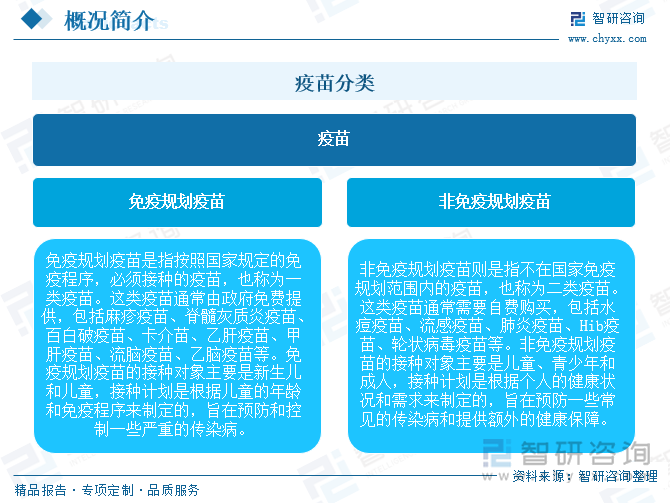
Industry Overview - Vaccines are essential biological products for preventing and controlling infectious diseases, representing a core defense in public health systems [1][5] - The Chinese vaccine industry is experiencing rapid growth, with the market size projected to increase from 306.22 billion yuan in 2015 to 1,762.19 billion yuan in 2024, and expected to exceed 300 billion yuan by 2031 [1][5] Industry Chain - The upstream of the vaccine industry includes raw material supply, such as microcarriers, human serum albumin, and packaging materials [3] - The midstream involves vaccine research and production, with key players including Sinopharm, Sinovac, CanSino, Zhifei, and Watson [3] - The downstream consists of vaccine distribution and consumption, reaching end consumers through health service centers and medical institutions [3] Current Industry Status - As of December 31, 2024, 47 companies in China have received vaccine batch approvals, totaling 543 million doses, with a decrease of 5.6% compared to 2023 [7] - The most approved vaccines in 2024 were influenza and rabies vaccines, each exceeding 80 million doses, accounting for 30% of total approvals [9] Market Competition - The Chinese vaccine market is characterized by a diverse competitive landscape, with local companies like Sinopharm and Zhifei rising against foreign giants like Merck and Pfizer [11] - Zhifei has achieved significant growth in international markets, with a 300% increase in exports of its WHO-precertified 23-valent pneumococcal polysaccharide vaccine [11] - Innovative companies like CanSino and Watson are making breakthroughs in mRNA and recombinant protein vaccines, enhancing their market presence [11][12] Future Trends - Technological innovation is driving the vaccine industry forward, with new platforms like mRNA and gene-engineered vaccines emerging [17] - The adult vaccine market is growing, with a 45% increase in HPV vaccine uptake in 2024, indicating a shift in public health awareness [18] - Chinese vaccine companies are expanding internationally, with over 2.5 billion doses of COVID-19 vaccines supplied abroad, focusing on markets in Africa and Southeast Asia [19]


行业深度报告:MNC加速布局减重降糖千亿美金赛道,开启BD黄金窗口期
KAIYUAN SECURITIES· 2025-06-19 15:24
Investment Rating - The investment rating for the biopharmaceutical industry is "Positive" (maintained) [2] Core Insights - The GLP-1RA class of drugs, represented by Semaglutide and Tirzepatide, is rapidly expanding, creating a multi-billion dollar market opportunity. By 2031, global sales of GLP-1RA drugs are expected to exceed $150 billion, with significant growth anticipated in the weight loss market post-2025 [6][23] - Major multinational corporations (MNCs) are accelerating their entry into the weight loss and diabetes management market, with frequent high-value business development (BD) transactions. Notable acquisitions include Roche's $3.1 billion purchase of Carmot Therapeutics and Merck's acquisition of Hanmi Pharmaceutical's oral GLP-1 small molecule [25][28] - The development of oral and ultra-long-acting products is expected to enhance patient compliance, with ongoing research into both small molecule and peptide oral drugs. Companies like Eli Lilly and Novo Nordisk are leading in this area, with several domestic firms also showing strong potential for international expansion [30] Summary by Sections 1. MNC Accelerating Layout in Weight Loss and Diabetes Management - GLP-1RA drugs are experiencing rapid growth, with Semaglutide and Tirzepatide leading the market. In 2024, Semaglutide's global sales are projected to be approximately $29.2 billion, a year-on-year increase of about 38%, while Tirzepatide's sales are expected to reach $16.5 billion, growing by approximately 208% [16][17] - The market is currently dominated by Novo Nordisk and Eli Lilly, which together hold nearly 97% market share, indicating a duopoly in the sector [23][24] 2. Enhancing Patient Compliance through Oral and Ultra-Long-Acting Products - The development of oral GLP-1RA drugs is seen as a promising avenue to improve patient adherence, with ongoing research into both small molecule and peptide formulations. Companies like Eli Lilly and Novo Nordisk are at the forefront of this innovation [30] - Ultra-long-acting formulations are also being developed, significantly extending dosing intervals and simplifying treatment regimens, which is expected to further enhance patient compliance [7][30] 3. Multi-Target Drug Development and Combination Therapies - Multi-target weight loss drugs are being developed to overcome the limitations of single-target therapies, aiming to activate or inhibit multiple metabolic receptors for improved efficacy. Key targets include GIPR, GCGR, and AMYR [8][29] - Combination therapies that integrate special targets are anticipated to set new standards in weight loss treatment, focusing on fat reduction while preserving lean body mass [8][29] 4. Investment Recommendations - The report recommends several companies as potential investment opportunities, including Innovent Biologics, East China Pharmaceutical, and Boehringer Ingelheim, which are well-positioned in the weight loss and diabetes management sectors. Beneficiary companies include Heng Rui Medicine, Shijiazhuang Pharmaceutical Group, and others [9]






临床试验药流入市场,康方生物如何守住药品安全生命线?
阿尔法工场研究院· 2025-06-18 11:24
Core Viewpoint - The article discusses the controversy surrounding Kangfang Biopharma, particularly regarding the distribution of clinical trial drugs to patients, while also highlighting the company's recent achievements in drug approvals and its financial challenges. Group 1: Controversy and Response - Kangfang Biopharma is facing scrutiny after a patient reported purchasing a significant amount of the drug Cadonilimab, only to find that most of the drugs received were clinical trial medications not approved for market sale [3][4][14]. - The company has denied any wrongdoing, asserting that it has never charged patients for clinical trial drugs and that the sales personnel involved acted independently [12][13]. - A significant internal investigation was launched by the company to address the allegations, revealing that some sales personnel had forged documents to obtain clinical trial drugs [14][15]. Group 2: Drug Approvals and Clinical Value - Cadonilimab has received multiple approvals, including a recent one for first-line treatment of cervical cancer, marking a significant advancement in immunotherapy for this indication [4][17]. - The drug has been involved in over 30 clinical studies targeting various cancers, demonstrating its clinical value and potential for broader application [18]. - Kangfang Biopharma's other key product, Ivoris, has also made headlines for its innovative dual-target mechanism and successful clinical trials against leading competitors [21][22]. Group 3: Financial Performance and Commercialization - The company has incurred significant losses, with total losses exceeding 2 billion yuan, primarily due to high R&D expenditures and commercialization efforts [34][41]. - From 2017 to 2024, Kangfang Biopharma's R&D spending reached 6.2 billion yuan, with 2024 alone accounting for 1.187 billion yuan, representing 55% of total revenue [36]. - Despite the financial challenges, the company has raised approximately 7.9 billion HKD through multiple rounds of equity financing, providing a cash reserve to support ongoing projects [42][43].
美疾控疫苗团队改组引持续争议
Jing Ji Guan Cha Wang· 2025-06-18 11:00
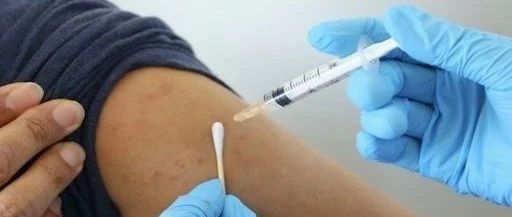
Core Viewpoint - The restructuring of the CDC's Advisory Committee on Immunization Practices (ACIP) has sparked significant controversy, with former members warning that it could severely undermine the U.S. vaccination program and access to life-saving vaccines [1][2]. Group 1: Impact on Vaccine Companies - Following the dismissal of the 17 ACIP members, shares of several vaccine companies have declined: Moderna (MRNA) down 9.2%, Novavax (NVAX) down 12.4%, Merck (MRK) down 1.4%, and Pfizer (PFE) slightly up by 0.1% [1]. - The decisions made by ACIP directly influence vaccination programs for children, insurance reimbursement, and government procurement [1]. Group 2: Controversy Surrounding Dismissal - The dismissal was initiated by Robert F. Kennedy Jr., the new Secretary of Health and Human Services, who claimed that the former committee members had conflicts of interest with vaccine companies [2]. - Former ACIP members refuted these claims, asserting that they adhered to strict conflict-of-interest guidelines and that the committee was one of the most transparent federal bodies [2]. Group 3: Reappointment of New Members - After the dismissal, Kennedy appointed 8 new members to ACIP, some of whom have publicly expressed anti-vaccine views, raising concerns about the committee's future direction [3]. - The restructured ACIP is expected to hold a meeting from June 25 to 27 to vote on vaccine recommendations for COVID-19, HPV, influenza, meningococcal, and RSV [3]. Group 4: Broader Implications of Kennedy's Policies - Kennedy's administration has initiated significant reforms, including a major restructuring of the Department of Health and Human Services, which could lead to budget cuts of 30% to 40% for the NIH and CDC [5]. - His controversial proposals include restricting federally funded scientists from publishing in major medical journals, which has raised concerns about academic freedom [5].
打三送二,接种价减半!自费疫苗降价潮卷至进口HPV疫苗、带状疱疹疫苗
第一财经· 2025-06-17 14:37
Core Viewpoint - The article discusses the recent price reductions for imported HPV vaccines and shingles vaccines in China, highlighting various promotional campaigns aimed at increasing vaccination rates among different demographics [1][2]. Group 1: Vaccine Price Reductions - Several vaccination sites have launched promotional programs for imported HPV vaccines, including a "buy one, get one free" offer for the two-dose regimen for girls aged 9 to 14 [1]. - For women aged 15 to 45, the two-dose HPV vaccines are offered at significant discounts, with the two-dose regimen for the bivalent HPV vaccine costing only one dose, and the nine-valent vaccine costing two doses for three [1]. - The price per dose for the imported bivalent HPV vaccine is 588 yuan, while the nine-valent vaccine is priced at 1306 yuan, leading to substantial cost reductions for full vaccination [1]. Group 2: Broader Vaccine Promotions - In Dezhou, Shandong Province, promotional activities for imported four-valent and nine-valent HPV vaccines have been introduced, including free third doses for males aged 16 to 26 [2]. - The Jining Health Service Center has also initiated a discount for the imported shingles vaccine, reducing the price from 3260 yuan for two doses to 1652 yuan, a reduction of 1608 yuan [2]. Group 3: Industry Performance Challenges - Despite the price reductions, the performance of vaccine manufacturers has been disappointing, with significant declines in sales for core products like HPV vaccines [3]. - Zhifei Biological Products Co., Ltd. reported a 50.74% decrease in revenue to 26.07 billion yuan in 2024, and a 74.99% drop in net profit to 2.018 billion yuan [4]. - In Q1 2025, the company experienced a 79.16% decline in revenue compared to the previous year, resulting in a net loss of 305 million yuan [4]. Group 4: Company Strategies - The company aims to address operational challenges by focusing on inventory reduction, debt recovery, and lowering liabilities as part of its 2025 strategy [5]. - Efforts include optimizing sales policies, participating in local health promotion projects, and enhancing awareness of HPV vaccination for males [5]. - As of Q1 2025, the company's accounts receivable decreased to 14.6 billion yuan, indicating a focus on managing financial risks [5].
整理:每日美股市场要闻速递(6月17日 周二)
news flash· 2025-06-17 12:57
Important News - Citigroup predicts that gold prices will decline due to weak demand and Federal Reserve rate cuts, with prices expected to fall below $3,000 per ounce in the coming quarters [1] - The U.S. Senate proposal states that wind and solar energy tax credits will end in 2028, while incentives for nuclear, hydropower, and geothermal energy will continue until 2036 [1] Individual Stock News - Siemens is expanding its partnership with NVIDIA to accelerate the application of artificial intelligence in the industrial sector [2] - Oracle is launching a project to facilitate suppliers in selling technologies, including AI, to the U.S. Department of Defense [2] - Eli Lilly is in deep negotiations to acquire gene-editing startup Verve Therapeutics for up to $1.3 billion [2] - Hong Kong Stock Exchange data shows that Wang Xing sold 5.737 million shares of Li Auto, raising over HK$600 million from June 10 to June 13 [2] - OpenAI is seeking new financial concessions from its largest shareholder Microsoft, aiming for Microsoft to hold about 33% of the restructured division in exchange for waiving future profit-sharing rights [2] Economic Indicators - U.S. retail sales for May decreased by 0.9%, worse than the expected decline of 0.7%, with the previous value revised from 0.1% to -0.1% [3] - Merck's long-acting RSV monoclonal antibody is set for priority review in China [3] - Faraday Future announced the addition of new executives to its 10b5-1 stock buyback plan [3] - SK Group plans to collaborate with Amazon to build an AI data center in Ulsan [3] - SoftBank sold $4.8 billion worth of T-Mobile shares to reinvest in AI initiatives [3]
打三送二,接种价减半!自费疫苗降价潮卷至进口HPV疫苗、带状疱疹疫苗
Di Yi Cai Jing· 2025-06-17 09:34
Group 1 - The performance of vaccine manufacturers is not optimistic amid the price reduction of imported HPV and shingles vaccines [1][3] - Various vaccination centers have launched promotional programs for imported HPV vaccines, offering discounts such as "buy one get one free" and "buy three get two free" [1][2] - The price for the imported bivalent HPV vaccine is 588 yuan per dose, while the nine-valent HPV vaccine is priced at 1306 yuan per dose, with significant discounts available [1] Group 2 - Merck, the manufacturer of imported quadrivalent and nine-valent HPV vaccines, plans to adjust the delivery schedule in the Chinese market starting February 2025 based on consumer demand [3] - Zhifei Biological Products Co., Ltd. reported significant declines in sales and financial indicators, with a notable drop in core product sales starting from Q2 2024 [3][4] - In 2024, Zhifei Biological's revenue was 26.07 billion yuan, a decrease of 50.74% year-on-year, and the net profit attributable to shareholders fell by 74.99% [4]
单日“吸金”3.3亿元,港股创新药ETF(159567)盘中涨超1%,机构:创新药有望迎业绩与估值双重修复投资机会
2 1 Shi Ji Jing Ji Bao Dao· 2025-06-16 02:24
Core Viewpoint - The Hong Kong innovative drug sector is experiencing renewed activity, driven by positive market sentiment and supportive government policies aimed at optimizing drug procurement and enhancing the innovation capabilities of pharmaceutical companies [1][2][3] Group 1: Market Activity - The Hong Kong innovative drug ETF (159567) rose by 1.32%, with a trading volume exceeding 670 million yuan and a turnover rate of over 29%, indicating active trading and premium transactions [1] - Major constituent stocks such as Cloudtop New Medicine surged over 7%, with other companies like Eucure Biopharma, CanSino Biologics, Junshi Biosciences, and Kelun-Botai also showing gains [2] - The ETF recorded a net inflow of over 330 million yuan in the previous trading day, reflecting strong investor interest [2] Group 2: Policy and Industry Outlook - The State Council's recent meeting emphasized the need to optimize drug and consumable procurement policies, enhance quality supervision across the entire production and distribution chain, and support pharmaceutical companies in improving their innovation capabilities [2] - Analysts from Huaxin Securities noted that the rebound in the innovative drug sector is supported by improvements in fundamentals, policies, and valuations, with a recovery in U.S. biopharmaceutical financing and collaborations between Chinese innovative drug companies and international pharmaceutical giants [3] - Xiangcai Securities projected that by 2025, the domestic innovative drug industry may reach a turning point, shifting from capital-driven growth to profit-driven growth, presenting dual opportunities for performance and valuation recovery [3]