Temu

Search documents
到巴西淘金去,一天卖出3000单
3 6 Ke· 2025-11-03 09:49
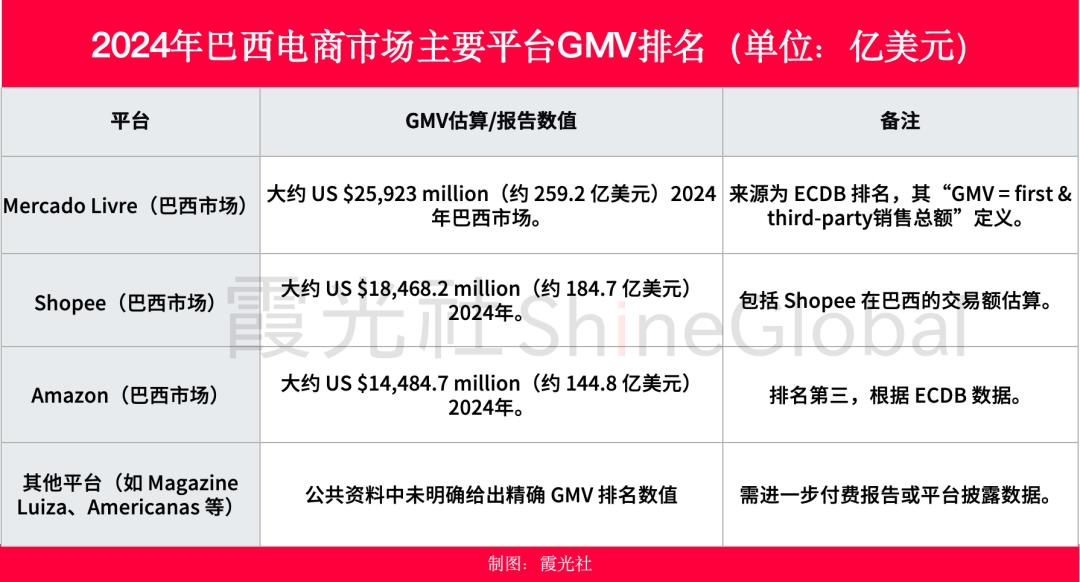
Core Insights - Brazil's e-commerce market is experiencing rapid growth, with a projected market size exceeding $70 billion by 2025 and an annual growth rate of over 20%, significantly outpacing global averages [1][2] - Chinese e-commerce platforms are increasingly targeting Brazil as a new market, with rising consumer interest in Chinese products, as evidenced by a jump in positive perceptions from 13% to 42% among Brazilian online shoppers over five years [2][3] - The competitive landscape in Brazil is intensifying, with platforms like Temu and TikTok Shop rapidly gaining market share, indicating a shift in consumer shopping habits towards online channels post-pandemic [3][4] Market Dynamics - Brazil's e-commerce market is still in its early development stage, presenting both opportunities and challenges for Chinese e-commerce businesses [3][4] - Major players like Mercado Livre dominate the market with an estimated GMV of approximately $25.9 billion for 2024, followed by Shopee and Amazon with GMVs of $18.5 billion and $14.5 billion, respectively [5][6] - The logistics landscape in Brazil is uneven, with significant disparities between urban and rural areas affecting delivery times and costs, complicating the e-commerce fulfillment process [8][10][12] Competitive Strategies - E-commerce platforms are investing heavily in logistics to enhance delivery efficiency, with Mercado Livre planning to expand its distribution centers from 10 to 21 by year-end 2023 [14][19] - Shopee has also increased its logistics footprint, with a 54% growth in warehouse space, positioning itself as a strong competitor against Mercado Livre and Amazon [18][19] - Amazon is adapting its strategy by enhancing its logistics network and establishing partnerships with local businesses to improve delivery times and customer satisfaction [20][21] Consumer Behavior - Brazilian consumers are increasingly accustomed to online shopping, particularly in urban areas, where logistics and delivery services are more developed [9][10] - The average order volume in Brazil has increased by 10% to 15% compared to the previous year, reflecting growing consumer engagement in e-commerce [22] - High product margins of 30% to 40% in Brazil attract new entrants, but the distance and logistical challenges present significant risks for businesses [22][23] Regulatory Environment - Recent changes in tax regulations, including the end of the "low-value exemption" for cross-border packages, may impact the cost structure for e-commerce businesses operating in Brazil [26] - The Brazilian government is implementing compliance programs that offer tax incentives to participating companies, which could further influence market dynamics [18][26]


日本将取消个人进口的税收优惠
日经中文网· 2025-11-03 03:01
Core Viewpoint - Japan is considering the cancellation of tax benefits for personal imports, which currently allow a 40% reduction in taxable value, leading to price discrepancies between imported goods sold by Chinese e-commerce platforms and local Japanese retailers [2][5]. Group 1: Tax Policy Changes - The Japanese Ministry of Finance is coordinating to eliminate the tax benefits for personal imports, which have been exploited by Chinese e-commerce sites to sell goods at lower prices [2][5]. - The current tax benefit allows imported goods valued at 30,000 yen (approximately 1,386 RMB) to be taxed at a reduced value of 18,000 yen, resulting in a consumption tax burden of 1,800 yen [4]. - This tax benefit applies to individuals purchasing from overseas through e-commerce platforms, contributing to competitive disadvantages for local retailers [5]. Group 2: Market Impact and Regulatory Concerns - The number of import declarations is expected to reach approximately 200 million in the 2024 fiscal year, quadrupling over five years, which raises concerns about customs oversight and the risk of counterfeit goods entering Japan [7]. - There have been instances of violations where products intended for resale in Japan are disguised as personal imports to evade taxes, such as large quantities of smartphones [7]. - The Ministry of Finance plans to include the cancellation of personal import tax benefits in the 2026 tax reform outline, reflecting a shift in policy since the introduction of these benefits in 1980 [7]. Group 3: International Trends and Comparisons - Other major countries are also revising their tax exemption policies for small imports, with the EU and the UK abolishing VAT exemptions in 2021, and the US planning to eliminate tariff exemptions by August 2025 [8]. - Japan's response to the influx of low-priced goods from countries like China is part of a broader trend among nations to reform tax systems related to e-commerce and imports [8].

新加坡电商平台Shopee宣布退出智利市场
Shang Wu Bu Wang Zhan· 2025-11-01 16:20
Core Insights - Shopee has announced the termination of its operations in Chile effective from 23:59 on October 30, with existing orders being fulfilled, but no specific reason for the exit has been provided [1] Regulatory Changes - The announcement coincides with the enforcement of Chile's Anti-Tax Evasion Law, which eliminates the tax exemption for imported goods valued under $41, requiring all cross-border e-commerce platforms, including Shopee, to automatically collect a 19% value-added tax starting from October 25 [1] Market Context - Major platforms such as AliExpress (which accounts for 78% of cross-border transactions), Amazon, Shein, and Temu have already completed their tax compliance registration [1]
巴西,互联网最后的战场
3 6 Ke· 2025-10-31 09:42
Group 1: Market Entry and Competition - Meituan's brand Keeta has officially launched in Brazil, with initial operations in Santos and São Vicente, and has already won a legal battle against Didi's 99Food regarding competition law [1] - The São Paulo court ruled that the contract terms preventing restaurants from working with Keeta are invalid, highlighting the competitive tension in the Brazilian market [1] - The Brazilian market is attracting various internet companies, including Temu, Shopee, TikTok, and Kwai, indicating a growing interest in the region [1] Group 2: Super App Definition and Landscape - Super apps are defined as platforms that allow users to access multiple services such as messaging, payments, e-commerce, and ride-sharing within a single application [2] - Latin America, particularly Brazil, is still in the mid-stage of ecological fragmentation, with platforms like Rappi and Mercado Livre focusing on single domains without forming a true "super entry" [2] Group 3: Digital Economy Potential in Brazil - Brazil has a high smartphone penetration rate of over 80%, creating a significant "digital vacuum" for internet services [7] - The country has a large and active internet user base, with approximately 183 million internet users and an internet penetration rate of 86.2% as of 2024 [10] - Brazil's GDP per capita is around $11,178, indicating a moderate purchasing power that supports potential consumer market growth [10] Group 4: Financial System and Digital Payment Innovations - Nubank has emerged as a leading digital bank in Brazil, with over 60% of adults holding a Nubank account and a valuation of approximately $65 billion [15] - The introduction of the PIX payment system has facilitated real-time transactions without the need for credit cards, significantly enhancing online payment habits [16] - The rapid adoption of PIX, which completed over 1.77 billion transactions within 46 days of launch, has positioned Brazil as a favorable environment for internet companies [16] Group 5: Challenges for Super App Development - The decentralized nature of social networks in Brazil, where users engage in various small groups, poses challenges for the creation of a centralized super app [18] - Regulatory scrutiny from the Brazilian Central Bank and competition authorities has made it difficult for platforms to monopolize services, impacting the feasibility of super apps [19] - The high cost of user acquisition for financial apps in Brazil is significantly greater than in other Latin American countries, complicating the business model for potential super apps [22] Group 6: Future Outlook - While Brazil may not produce a super app akin to WeChat, it is developing a decentralized network ecosystem that integrates payments, logistics, and social interactions [23] - The digital economy in Brazil is expected to evolve, with various players exploring different models to capture market opportunities [23]


TikTok Shop美区洗牌:困局难破还是转机将至?
雷峰网· 2025-10-31 07:10
Core Viewpoint - The primary task for TikTok in the U.S. market is to revitalize its content and adapt to a complex external environment, which includes fluctuating tariff policies and potential platform bans [2][4]. Group 1: External Challenges - TikTok Shop in the U.S. faces significant external pressures, including ongoing scrutiny from the U.S. Congress, unstable tariff policies, and competition from platforms like Temu and Amazon [6][10]. - Despite an increase in Gross Merchandise Volume (GMV), profits have declined, indicating a tougher operating environment compared to the previous year [5][12]. Group 2: Internal Adjustments - In response to external challenges, TikTok Shop has undergone substantial internal restructuring, including a reduction in team size and a shift from local to Chinese employees [3][8]. - Frequent internal changes have led to uncertainty among sellers, as new operational requirements often replace previous standards, impacting execution and performance [7][8]. Group 3: Strategic Focus - TikTok Shop's core strategic goal in the U.S. is to enhance the richness of its content ecosystem and improve conversion rates [11][14]. - The platform is exploring new content formats, such as "digital human live streaming," and testing AI-generated video content to lower content creation barriers [14][15]. Group 4: Market Dynamics - The U.S. market's purchasing penetration rate is significantly lower than that of China and Southeast Asia, with only about 1% of active users making purchases [15]. - TikTok Shop's GMV in the U.S. is projected to reach around $4 billion this year, showing a slowdown in growth compared to previous years [14][18]. Group 5: Competitive Landscape - Temu is expected to achieve a GMV of $70-80 billion this year, leveraging high operational efficiency and supply chain control to gain market share [17]. - TikTok Shop's long-term strategy remains focused on the U.S. market despite short-term challenges, indicating a commitment to sustained growth [17][18].

易点天下(301171):程序化广告驱动收入持续高增 战略投入期利润短期承压
Xin Lang Cai Jing· 2025-10-31 06:48
Group 1 - The company achieved a revenue of 2.717 billion yuan in the first three quarters of 2025, representing a year-on-year growth of 54.94%, with a net profit attributable to shareholders of 204 million yuan, up 4.41% year-on-year [1] - In Q3 2025, the company recorded a revenue of 980 million yuan, a year-on-year increase of 46.80%, while the net profit attributable to shareholders decreased by 4.80% to 60 million yuan [1] - The strong revenue growth is driven by the company's focus on programmatic advertising and the robust demand for overseas marketing in sectors such as short dramas, gaming, and e-commerce [1] Group 2 - The company's programmatic advertising business is in a strategic investment phase, leading to short-term profit pressure due to increased costs in traffic acquisition (operating costs up 65.64% year-on-year) and R&D expenses (up 64.52% year-on-year) [1] - Excluding foreign exchange gains and share-based payment impacts, the company's net profit attributable to shareholders for the first three quarters was 252 million yuan, reflecting a year-on-year growth of 15.98%, indicating a stable operational foundation [1] Group 3 - The company is enhancing its "AI + marketing" product matrix, which has improved programmatic advertising reasoning efficiency by 7 times, reduced task execution time by 30%, and lowered computing resource costs by 25% [2] - The launch of the AIDrive 2.0 intelligent marketing solution integrates various core products, creating a closed-loop marketing process from "intelligent insights → creative generation → automatic delivery → data attribution" [2] - The AdsGo.ai platform aims to democratize marketing capabilities for small and medium-sized enterprises, achieving a 5-fold improvement in delivery effectiveness during the internal testing phase [2] Group 4 - The company is expanding its media resource ecosystem and benefiting from the trend of Chinese enterprises going global, with its self-developed programmatic advertising platform zMaticoo achieving a 37% share in open programmatic advertising sales [3] - The company has deepened global media partnerships, becoming the first-level agent for AppLovin in Greater China and gaining official certification from Snapchat [3] - The company continues to serve well-known clients such as Alibaba, Tencent, Temu, and SHEIN, while also providing marketing services for emerging sectors like short dramas and AI applications [3] Group 5 - The company maintains a "buy" investment rating, projecting net profits attributable to shareholders of 260 million yuan, 310 million yuan, and 400 million yuan for 2025-2027 [3]
国际权威报告:阿里速卖通和Temu重塑全球跨境电商
Cai Jing Wang· 2025-10-31 05:54
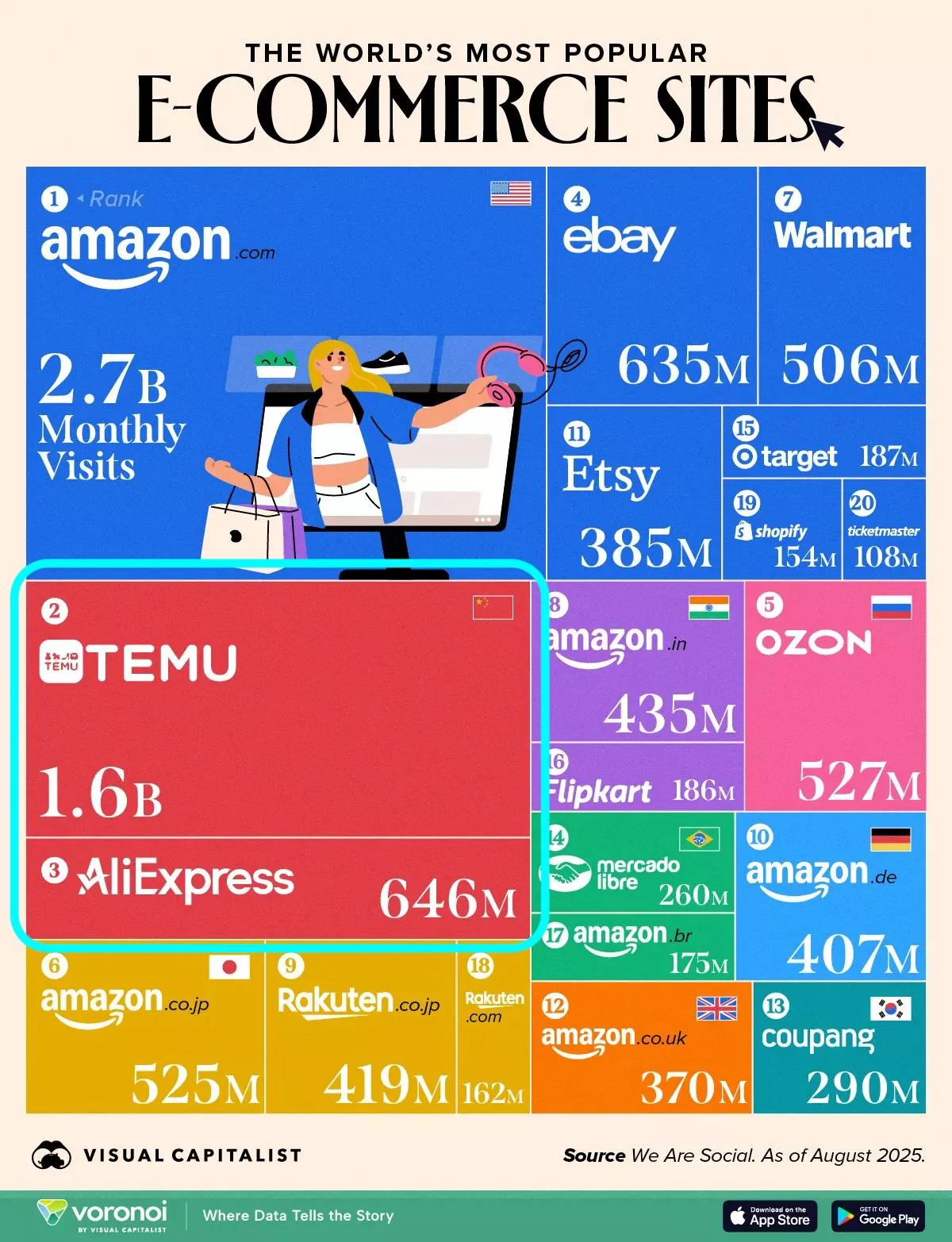
Group 1 - The top three e-commerce platforms by global traffic in 2025 are Amazon, Temu, and AliExpress, indicating a shift in the cross-border e-commerce landscape driven by Chinese giants [1][5]. - Amazon leads with a monthly average traffic of 2.7 billion visits, while Temu and AliExpress follow with 1.6 billion and 646 million visits, respectively [1][3]. - Temu employs an aggressive low-price strategy to expand its market presence, while AliExpress focuses on enhancing its brand offerings, creating competitive pressure on Amazon [1][4]. Group 2 - The data is sourced from We Are Social, reflecting the average monthly visits for the period of June to August 2025 [5]. - The competitive dynamics suggest that both Temu and AliExpress are successfully capturing market share, with some brands on AliExpress surpassing Amazon in sales after upgrading their brand export plans [1].

跨境电商税务监管进入穿透时代 数据直连堵漏洞 行业规范走向纵深
Zheng Quan Shi Bao· 2025-10-30 22:15
Core Insights - The recent initiative by Amazon and other e-commerce platforms to report tax information of Chinese sellers has sparked significant reactions in the cross-border e-commerce industry in China [1] - Starting from October 2025, Amazon will quarterly report seller information to Chinese tax authorities, including seller identity, transaction volume, income, and fees [1][3] - This move indicates a shift towards compliance and the closing of long-standing tax loopholes in the industry [1][3] Group 1: Regulatory Changes - The new tax reporting regulations were established following the State Council's issuance of the "Internet Platform Enterprises Tax Reporting Regulations" in June [3] - These regulations extend the obligation to report tax information to all foreign internet platforms providing services to Chinese operators, regardless of their registration location [3] - The tax authorities previously relied on self-reporting by sellers, leading to significant information asymmetry and many sellers maintaining a "zero declaration" status [3] Group 2: Industry Impact - The implementation of these regulations marks a new phase in tax information management for the cross-border e-commerce sector, with compliance becoming a priority [4] - The cross-border e-commerce sector saw approximately 2.06 trillion yuan in imports and exports in the first three quarters, reflecting a 6.4% growth [4] - Different tiers of sellers are responding differently, with top-tier companies already compliant, while mid-tier sellers are hesitant to invest in compliance due to concerns over costs [4][5] Group 3: Compliance Strategies - The new tax reporting requirements are expected to reshape the industry ecosystem, moving it towards a focus on quality rather than just scale [6] - Industry insiders suggest that regulatory measures may not be uniform, as the tax authorities are currently in a phase of research and consultation with businesses [6] - Many sellers are attempting to evade or reduce tax burdens through complex structures involving Hong Kong, but these strategies are deemed non-compliant and risky [7] Group 4: Future Directions - The transition for mid and lower-tier sellers will involve product refinement and compliance, focusing on high-value products and adapting to regulatory requirements [8] - Leading companies are encouraged to set examples by focusing on quality and compliance, thereby allowing lower-tier sellers to transition effectively [8]
联合解读中美经贸磋商成果
2025-10-30 15:21
Summary of Key Points from the Conference Call Industry or Company Involved - The conference call primarily discusses the impact of the recent US-China trade negotiations on various industries, including technology, electronics, textiles, and shipping. Core Insights and Arguments 1. **US-China Trade Negotiation Outcomes** The negotiations resulted in the suspension of new restrictions and the cancellation of the 10% tariff on fentanyl, which is expected to stabilize US-China relations and positively impact the Chinese economy [1][5][8]. 2. **Impact on Chinese Exports** A potential 10% reduction in US tariffs could lower the effective tariff rate on Chinese goods to around 28%, which would directly boost Chinese exports to the US and enhance overall export growth by approximately one percentage point [1][3][4]. 3. **Technology Sector Benefits** The negotiations are favorable for the technology sector, particularly with the expected cancellation of the 10% fentanyl tariff on electronic products, which would stimulate demand and alleviate valuation pressures on the electronics sector [1][6][7]. 4. **Market Sentiment and Stock Valuation** The outcomes of the negotiations have slightly exceeded market expectations, leading to a recovery in stock valuations, particularly in the technology and electronics sectors. Investor sentiment has improved, creating potential investment opportunities [1][8][9]. 5. **Short-term Market Trends** While the trade negotiation results are not expected to alter the current market trend significantly, there are concerns about overheating in certain sectors, particularly TMT (Technology, Media, and Telecommunications), which may lead to market volatility if new catalysts do not emerge [1][10]. 6. **Recommendations for Sector Allocation** It is suggested to shift towards a more balanced allocation strategy by focusing on sectors such as lithium batteries, non-ferrous metals, and consumer electronics, while also considering opportunities in overseas markets like power grid equipment and commercial vehicles [1][11][12]. 7. **Color on the Non-ferrous Metals Sector** The cancellation of tariffs is expected to lower global trade friction costs and boost demand for non-ferrous metals, marking the beginning of a prolonged bull market for metals like copper, aluminum, and rare earth elements [1][13]. 8. **Shipping Industry Implications** The trade agreement is anticipated to benefit the shipping industry, particularly companies like China COSCO Shipping, due to increased demand for shipping services between China and the US [1][15][16]. 9. **Textile and Apparel Industry Effects** The US remains a significant market for Chinese textiles and apparel, and the easing of trade tensions could improve production utilization rates and profitability in this sector [1][20][23]. 10. **Home Appliance Sector Outlook** The reduction in tariff pressure is expected to positively impact the home appliance sector, particularly for companies with high export ratios to North America, aiding in the recovery of their profit margins [1][21][22]. Other Important but Possibly Overlooked Content - The negotiations have also led to a strategic pause in the implementation of export controls on rare earth products, which underscores China's significant role in the global rare earth supply chain [1][14]. - The overall sentiment in the market remains cautiously optimistic, with expectations of a continued recovery in various sectors as trade relations stabilize [1][9].

跨境电商迎最强合规监管时刻!卖家频收税务自查通知、咨询机构连夜做方案
Zheng Quan Shi Bao· 2025-10-30 15:20
Core Insights - The recent initiative by Amazon and other e-commerce platforms to report tax information of Chinese sellers has significantly impacted the cross-border e-commerce industry in China [1][4] - Starting from October 2025, Amazon will quarterly report relevant seller information to Chinese tax authorities, marking a shift towards increased compliance in the industry [1][4] Group 1: Tax Reporting and Compliance - Amazon will begin its first quarterly report by October 31, 2025, covering data from the third quarter of 2025, including seller identity, transaction volume, income, and fees [1] - Many cross-border sellers have already received tax self-inspection messages from tax authorities, indicating a new level of data integration between tax systems and e-commerce platforms [2][3] - The implementation of the new tax reporting regulations follows the June announcement by the State Council, which extends reporting obligations to all foreign platforms serving Chinese operators [4] Group 2: Industry Impact and Seller Response - The new regulations are expected to challenge smaller and mid-sized sellers, particularly those with a history of zero tax reporting, as they face increased scrutiny and compliance costs [5][6] - Many sellers are currently in a state of anxiety and uncertainty regarding compliance, with some opting to wait for clearer policies before making adjustments [5][6] - The cross-border e-commerce sector has seen significant growth, with imports and exports reaching approximately 2.06 trillion yuan, a 6.4% increase year-on-year [5] Group 3: Future Regulatory Landscape - The tax authorities are expected to adopt a tiered regulatory approach based on revenue size, rather than a one-size-fits-all method, to avoid negatively impacting employment in the sector [8] - Current practices of attempting to evade taxes through offshore entities, such as using Hong Kong companies, are deemed non-compliant and risky [9][10] - The industry is anticipated to transition towards a focus on quality over quantity, with larger companies expected to lead by example in compliance and high-quality development [10]