
一汽集团

Search documents
中汽协:新能源车产业链加快建立质量和可靠性创新发展体系
Xin Lang Cai Jing· 2025-06-16 11:33
据中国汽车工业协会微信公众号6月16日消息,中汽协日前在北京组织召开中国新能源汽车质量和可靠 性提升工程建设专项工作启动会。来自中国汽车T10企业、行业主流整车企业,电池、电机、电控核心 部件企业,智能视觉、关键电子元器件企业,以及行业服务机构等单位代表和专家共计100余人参加会 议。会议强调,新能源汽车质量和可靠性提升须整体统筹、系统规划、产业链供应链协同推进实施。会 议号召,新能源汽车产业链相关方,特别是T10+整车、核心系统总成、关键元器件及组件企业和相关 单位积极行动起来,加快建立质量和可靠性创新发展体系;借鉴先进质量和可靠性经验,加强相关前沿 基础研究,为推进新能源汽车产业更高质量发展,加快我国汽车强国建设而努力奋斗。会上,与会代表 和专家针对专项工作方案,以及工作目标和任务推进等方面进行了深入研讨。来自一汽集团、东风集 团、上汽集团、长安汽车、北汽集团、广汽集团、奇瑞汽车、吉利汽车、比亚迪、长城汽车、江淮汽 车,蔚来汽车、小鹏汽车、零跑汽车,塞力斯集团、理想汽车、宇通客车、厦门金龙汽车企业,陕汽质 子、江铃汽车、庆铃汽车商用车企业,宁德时代、弗迪电池、国轩高科电池企业,以及华为、地平线、 经纬恒润 ...
中国汽车市场一周行业信息快报——2025年6月第2期
Zhong Guo Zhi Liang Xin Wen Wang· 2025-06-16 08:26
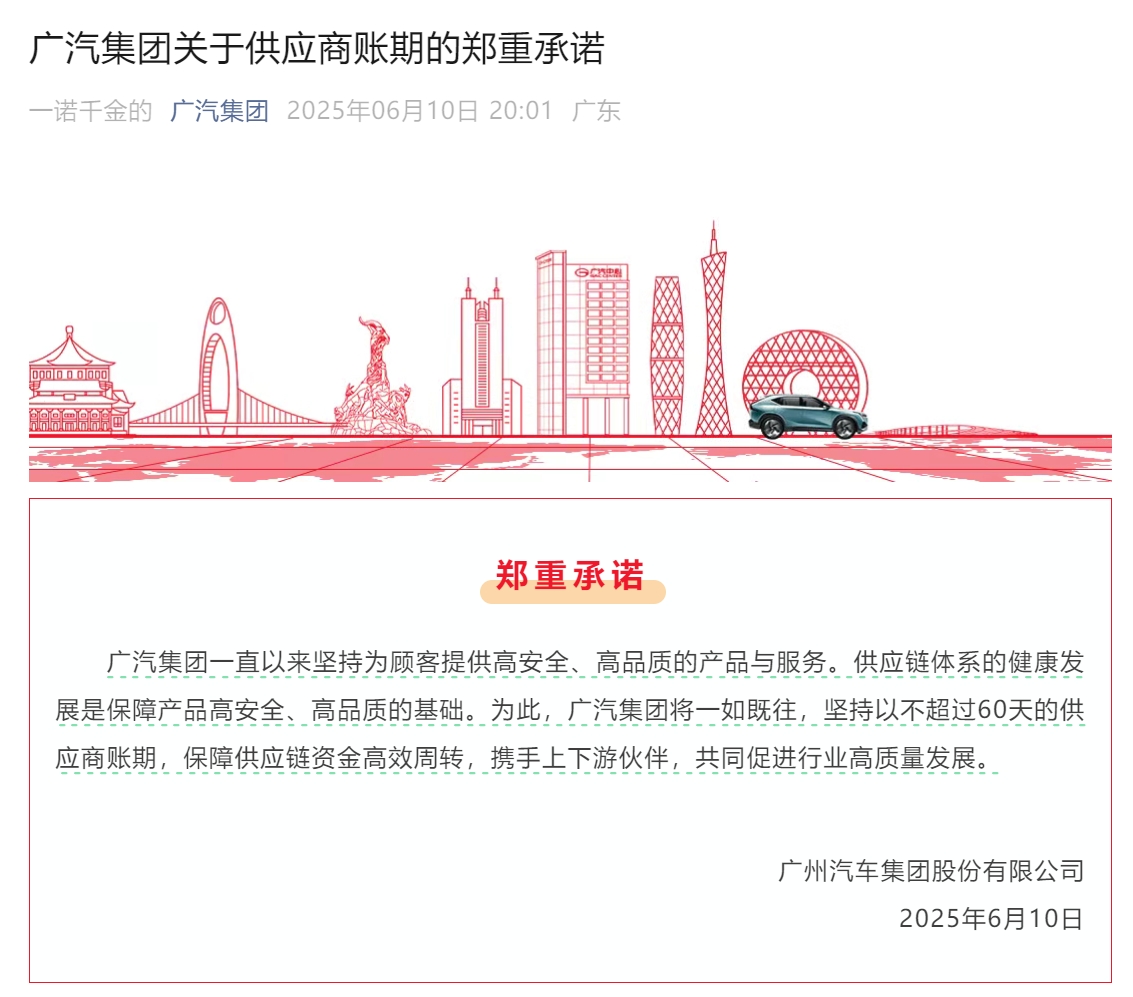
Group 1 - Multiple automotive companies, including GAC Group, FAW Group, Dongfeng Motor, and BYD, have announced a unified payment term of 60 days for suppliers, responding to the newly implemented "Regulations on Payment to Small and Medium Enterprises" [2][5] - The revised regulations prohibit large enterprises from forcing small and medium enterprises to accept non-cash payment methods, ensuring timely payments [5] - BAIC Group and SAIC Group have committed to abandoning "commercial acceptance bills" to alleviate cash flow pressure on suppliers and maintain a healthy industrial ecosystem [5] Group 2 - Changan Automobile unveiled images of the new generation UNI-V, a compact sedan featuring a "future pioneer sports aesthetics" design, with enhancements in performance and intelligence [6][8] - The new UNI-V includes a shark-nose design, sleek lines, and a spacious interior equipped with a dual-screen setup and advanced audio system [8] - The vehicle offers two powertrain options: a 1.5T engine with a maximum power of 141 kW and a 2.0T engine with a maximum power of 180 kW [8] Group 3 - GAC Toyota held its second Technology Day, showcasing key achievements in its smart electric transformation, including new electronic architectures and AI digital chassis [9][11] - The company announced the implementation of a chief engineer system led by Chinese engineers for all future models, enhancing local development capabilities [11] - GAC Toyota introduced two new energy platforms aimed at different vehicle sizes and types, supporting various energy forms including BEV and PHEV [11] Group 4 - The Equation Leopard brand revealed the latest camouflage images of its new model, Titanium 7, which is expected to launch in Q4 of this year [12][14] - The Titanium 7 features a robust design and is positioned as a family-oriented SUV with the largest interior space in its series [14] Group 5 - Geely announced the launch of its AI-powered hybrid system, Raytheon AI Hybrid 2.0, which enhances energy efficiency, performance, and safety [15][17] - The Raytheon EM-i AI hybrid engine boasts a thermal efficiency of 47.26%, with the Galaxy A7 achieving a fuel consumption of only 2.67L per 100 km [17] - The Raytheon EM-P AI hybrid features a new physical configuration with dual motors, allowing for enhanced power and safety [17] Group 6 - Jiyue Automotive reported that its after-sales service issues have been largely resolved, partnering with Lynk & Co for continued support [19] - The company plans to provide an OTA upgrade for intelligent driving assistance by the second half of 2025, with details to be announced later [19]

汽车界大事件来了
Guo Ji Jin Rong Bao· 2025-06-15 14:28
Core Viewpoint - The Chinese automotive industry is witnessing a significant shift as major companies, including BYD, Changan Automobile, and FAW Group, have collectively announced a reduction in supplier payment terms to a maximum of 60 days, aligning with national regulations aimed at stabilizing the supply chain and promoting high-quality development [2][3][7] Group 1: Industry Changes - The new payment terms are a response to the "Regulations on Ensuring Payment to Small and Medium-sized Enterprises," which will take effect on June 1, 2025, mandating large enterprises to pay small suppliers within 60 days after delivery [2] - Previously, the average payment term for Chinese automakers was around 182 days, with some exceeding 270 days, forcing suppliers to finance their operations for up to a year [2][3] Group 2: Financial Implications - Shortening the payment period from 180 days to 60 days is expected to enhance cash flow efficiency for suppliers by 200%, significantly alleviating their financial pressure and reducing the need for borrowing [5] - The automotive industry's profit margin was reported at 3.9% in Q1 2025, compared to the industrial average of 5.6%, with some companies demanding over a 10% cost reduction from suppliers, leading to minimal profit margins for upstream steel manufacturers [3][6] Group 3: Industry Dynamics - The collective commitment to shorten payment terms is seen as a milestone that could end the "barbaric growth" of the Chinese automotive industry, encouraging a shift from cost-cutting to innovation and efficiency [7] - High debt levels among many Chinese automakers, with some owing suppliers thousands of billions, may create short-term financial pressure as they implement the new payment terms [6]





零跑汽车香港开店 ,“轻资产”出海从欧洲扩张至亚太
Jing Ji Guan Cha Wang· 2025-06-13 15:05
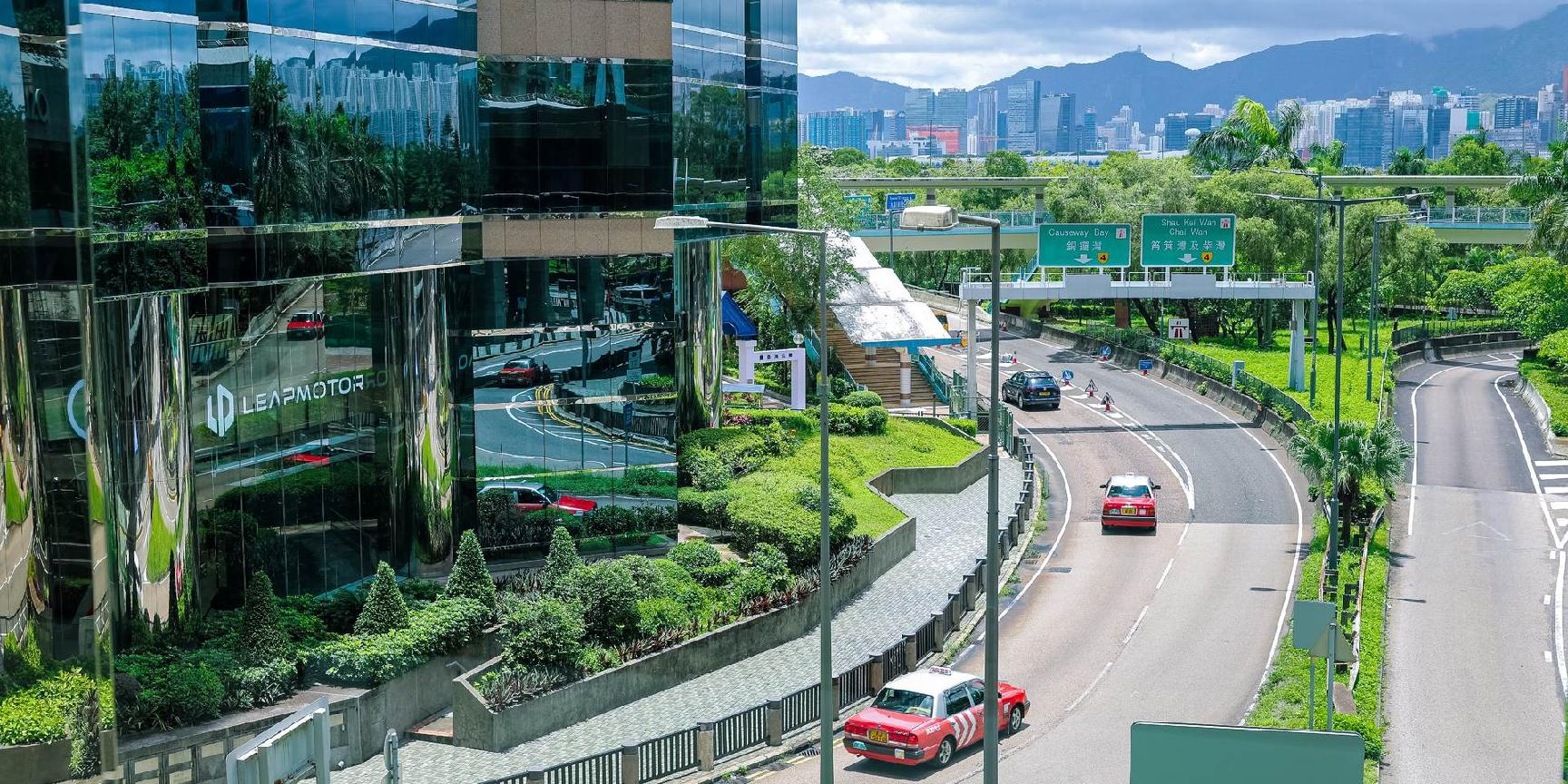
Core Insights - The opening of Leap Motor's first experience center in Hong Kong marks a significant step for the company in showcasing its brand and products in an international market [2][3] - Hong Kong's automotive market is becoming increasingly favorable for Chinese electric vehicle brands, with a reported 68% penetration rate for new energy vehicles in the first four months of 2025 [3] - Leap Motor aims to leverage its international partnership with Stellantis to expand its global presence while maintaining a focus on domestic marketing strategies [4][7] Group 1 - Leap Motor's Hong Kong store is its 1,500th globally, with plans to open another location in the city within the year [3] - The company has achieved the highest sales among new Chinese car brands for three consecutive months as of May 2025, with a revenue increase of 187% year-on-year in Q1 2025 [11] - Leap Motor's CEO emphasizes the importance of Hong Kong as a strategic market for brand exposure and product demonstration [2][3] Group 2 - The company has set a sales target of 500,000 to 600,000 vehicles for 2025, with overseas markets expected to contribute significantly to this goal [8][13] - Leap Motor has established a strong presence in Europe, with approximately 500 of its global stores located there, and plans for local manufacturing in Southeast Asia and Europe by 2026 [7][8] - The company is focused on maintaining a high cost-performance ratio in its product offerings, with the T03 and C10 models priced competitively in the Hong Kong market [9] Group 3 - Leap Motor's strategy includes a commitment to "full-domain self-research," with 65% of core components developed in-house, enhancing supply chain control and cost management [12] - The company is exploring partnerships with major enterprises, including a notable collaboration with FAW Group for joint development of new energy vehicles [11][12] - Leap Motor's management is confident in achieving profitability through scale, cost control, and strategic partnerships [13]

车圈卷向了好方向:60天账期,谁压力最大?
Xin Lang Cai Jing· 2025-06-12 05:38
Core Viewpoint - The automotive industry is experiencing a new wave of price cuts and improved payment terms for suppliers, initiated by GAC Group's commitment to a maximum 60-day payment period, which has been followed by other major automakers [1][2][8]. Group 1: Industry Dynamics - GAC Group's announcement has prompted other automakers like FAW, Dongfeng, and BYD to adopt similar payment terms, indicating a shift towards better supplier relations [2][3]. - The new regulations, effective from June, mandate that large enterprises must pay small and medium-sized enterprises within 60 days, prohibiting the use of non-cash payment methods to extend payment periods [4][5]. - Historically, domestic automakers had an average payment cycle exceeding 170 days, with some exceeding 240 days, creating significant cash flow issues for suppliers [6][8]. Group 2: Supplier Challenges - Suppliers face immense pressure from automakers to reduce prices, with 74% of industry professionals reporting increased cost-cutting demands, often requiring annual reductions of 5% to 10% [6][9]. - The relationship between automakers and suppliers has deteriorated, with suppliers often bearing the financial burden of optimistic sales forecasts from automakers [7][10]. - The automotive industry's profit margins are under pressure, with the average profit margin for the automotive sector at only 4.1%, lower than the 5.6% average for downstream industries [7][8]. Group 3: Regulatory Impact - The implementation of the new payment regulations is seen as a potential turning point for suppliers, offering hope for improved cash flow and stability [11][12]. - There are concerns that automakers may find ways to circumvent these regulations, such as manipulating the start date for the 60-day payment period [11][12]. - Regulatory bodies are expected to introduce stricter measures to prevent price wars and protect suppliers, including potential antitrust investigations against dominant automakers [12][13].

专家访谈汇总:包上没有LABUBU,爱马仕就不叫爱马仕?
阿尔法工场研究院· 2025-06-11 13:15
Group 1: Gaming Industry in Zhejiang - Zhejiang Province plans to create a gaming industry cluster centered around Hangzhou, integrating cities like Ningbo and Shaoxing, and establishing multiple cultural export platforms such as national cultural export bases and digital trade demonstration zones [1] - The initiative aims to support the development of high-quality original games, particularly AAA titles, and promote collaboration with smart hardware manufacturers to facilitate the international expansion of AR/VR devices [1] - The ultimate goal is to enhance industry aggregation, optimize the ecosystem, and increase policy support to position Zhejiang as a significant player in the global digital entertainment industry, thereby boosting the international competitiveness of Chinese gaming products [1] Group 2: Automotive Industry Developments - Major automotive companies, including GAC Group, FAW Group, Dongfeng Motor, BYD, Great Wall Motors, and Xiaomi, have announced a policy change to stabilize supply chains amid a challenging commercial environment and intense price competition [2][3] - The policy aims to alleviate the negative impacts of "involution" competition by shortening payment terms to ensure efficient capital turnover for suppliers, thereby enhancing the stability and collaboration within the industry [2] - The China Automobile Manufacturers Association reported that from January to May, sales of Chinese brand passenger cars reached 7.562 million units, a year-on-year increase of 26.3%, while traditional fuel vehicle sales declined by 10.1% [3] Group 3: Emotional Value in Consumer Products - Pop Mart's stock price has surged over 11 times since early 2024, highlighting the significant potential of the trendy toy industry and emotional consumption [4] - By deeply developing IPs like LABUBU, Pop Mart has created engaging toys that connect emotionally with consumers, establishing products with emotional value [4] - The blind box mechanism employed by Pop Mart generates uncertainty and anticipation, while limited and hidden editions enhance scarcity, driving strong consumer demand [4] Group 4: Impact of Autonomous Driving on Insurance - The current insurance system is based on driver behavior, but with autonomous driving, where vehicles are controlled by computers and humans are merely passengers, the issue of liability becomes complex [5] - Companies like Tesla, Alphabet, and Aurora Innovation are recommended for attention as beneficiaries of advancements in autonomous driving technology, along with insurance companies like Progressive that adapt to industry changes [5] - The technological progress in autonomous driving may provide long-term growth potential for related companies that embrace new technologies and industry shifts [5]
汽车界大事件来了
IPO日报· 2025-06-11 06:31
Core Viewpoint - The recent decision by major Chinese automotive companies to unify supplier payment terms to within 60 days is a significant step towards stabilizing the supply chain and promoting healthy development in the automotive industry [2][4]. Group 1: Industry Changes - Major automotive companies, including BYD, Changan, FAW Group, Dongfeng, and GAC, have announced a unified payment term of no more than 60 days for suppliers, aligning with the new regulations set to take effect on June 1, 2025 [2]. - The average payment term for Chinese automotive companies was previously around 182 days, with some exceeding 270 days, forcing suppliers to finance their operations for up to a year [2][3]. Group 2: Financial Implications - Shortening the payment term from 180 days to 60 days will enhance the cash flow efficiency for suppliers by 200%, significantly alleviating their financial pressure and reducing the need for borrowing [5]. - The high debt levels of many Chinese automotive companies, with some owing suppliers billions, may create short-term financial strain as they commit to the new payment terms [5]. Group 3: Industry Dynamics - The move to shorten payment terms is seen as a necessary measure to foster healthy competition and development within the automotive supply chain, shifting the focus from cost-cutting to innovation and efficiency [5]. - The automotive industry has been characterized by unhealthy practices, including the exploitation of suppliers through extended payment terms, which has led to financial distress for some suppliers [3][4].

小米、小鹏、吉利、长安、奇瑞等车企陆续跟进
第一财经· 2025-06-11 02:46
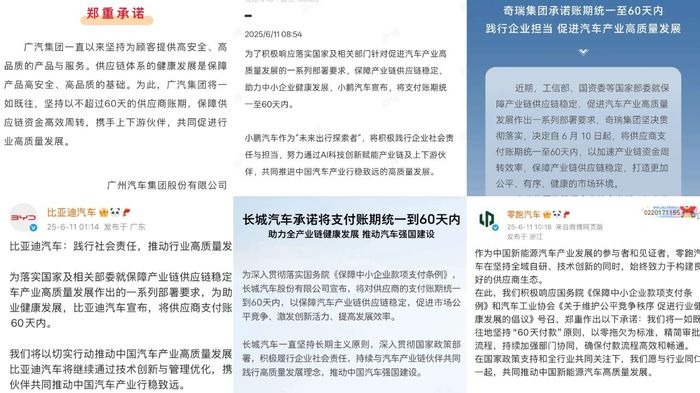
长安汽车表示,近期,工信部、国资委等国家部委就保障产业链供应链稳定、促进汽车产业高质量发 展作出一系列部署要求,为深入贯彻落实中央和部委的精神,长安汽车携旗下长安启源、长安凯程、 深蓝汽车、阿维塔,向行业宣布,将供应商支付账期统一至60天内,以切实行动践行央企社会责 任,保障中小企业资金高效流转,助力产业链良好协同运行,共同努力,推进行业高质量发展。 6月10日夜至11日上午, 小米、理想、长安、长城、比亚迪、奇瑞、 一汽、东风、广汽、小鹏、赛 力斯、吉利 等汽车生产企业陆续发表声明,承诺"支付账期不超过60天"。 吉利汽车集团则表示,将供应商支付账期统一至60天内,以加速产业链资金周转效率,保障产业链 供应链稳定,发挥领军企业担当,促进汽车产业高质量发展。 又有 多家车企官宣将支付账期统一至60天内。 小鹏汽车官方微博也宣布, 将支付账期统一至60天内 。 6月11日上午,小米汽车表示,坚决落实国家及相关主管部门就促进汽车产业高质量发展、保障供应 链稳定作出的部署要求,将供应商支付账期统一至60天内。将以切实行动,携手上下游伙伴,共同 推动中国汽车产业高质量发展。 ...



A股盘前播报 | 深圳再获政策大礼包 多家车企承诺支付账期不超过60天
智通财经网· 2025-06-11 00:27
Group 1 - The Chinese government is supporting Shenzhen in deepening reforms and innovations in various sectors, including the management of unmanned aerial vehicles and the digital currency pilot program [1] - Multiple automotive companies, including BYD and Seres, have unified their payment terms to suppliers to 60 days, which may lead to a reduction in supply chain pressure across the industry [2] - U.S. and Chinese trade officials are engaged in negotiations in London, with the U.S. considering lifting certain restrictions on exports to China, contingent on China's easing of rare earth export controls [3] Group 2 - The National Development and Reform Commission (NDRC) is encouraging private enterprises to play a more active role in technological innovation and the construction of a modern industrial system [4] - The Robotaxi market in China is projected to reach over 1 trillion yuan by 2030, with significant growth expected as Tesla enters the market [7] - The global toy market is anticipated to grow at an average rate of 5.34%, with China's market expected to grow at 9.27%, potentially capturing one-sixth of the global market by 2028 [8] Group 3 - The National Energy Administration is initiating pilot projects in the hydrogen energy sector, with policies expected to catalyze further industry development in the second half of the year [9] - Vanke A has sold 22 million shares of its A-shares, raising 146 million yuan, indicating active capital management strategies [10] - Founder Technology plans to raise up to 1.98 billion yuan through a private placement for projects related to artificial intelligence and high-density interconnect circuit boards [11]
未知机构:固态电池专家交流20250610-20250610
未知机构· 2025-06-10 01:55
Summary of Conference Call Records Industry Overview: Solid-State Batteries Key Insights and Trends - **Cost Reduction Significance**: Solid-state batteries can significantly reduce costs by changing the electrochemical system and selecting higher voltage platforms and higher capacity electrodes. For instance, while liquid batteries require 5 kg of materials for 1000 Wh, the next-generation batteries from CATL may only need 2 kg, leading to a 60% reduction in material consumption [1][1][1] - **Industry Trend**: The technology for solid-state batteries is converging towards sulfide-based solutions, with major battery manufacturers and leading automotive companies like CATL, BYD, and NIO shifting towards this direction. The progress is faster than expected, with companies like SES, QS, Samsung, and Toyota achieving 60 Ah application status [1][1][1] - **Government Support**: The Ministry of Industry and Information Technology and the Ministry of Finance in China have provided 6 billion yuan in funding to support related projects, indicating strong governmental backing for the industry [1][1][1] Investment Direction Analysis Risks and Opportunities - **Cell Segment Risks**: The likelihood of second and third-tier battery companies succeeding in the cell segment is very low due to high technical barriers. The focus is shifting towards material and equipment suppliers, which are more likely to succeed in the solid-state battery industry [1][1][1] - **Material and Equipment Suppliers**: Companies like Xiawu, Guanghua, and Youyan in the material sector, and Xianhui, Honggong, and Naknor in the equipment sector are highlighted as having significant potential due to their technological and cost advantages [1][1][1] Industry Development Stage and Catalysts Current Stage and Future Trends - **Development Stage**: Solid-state batteries are currently transitioning from small-scale trials to pilot production, with expectations for pilot lines to be operational by the second half of this year to the first half of next year [2][2][2] - **Equipment Changes**: The equipment sector is seeing parallel developments in dry and wet processes, with dry equipment being more suitable for sulfide systems. The investment cost for liquid equipment is approximately 120-150 million yuan, while dry equipment is expected to decrease to 100-200 million yuan by 2030 [2][2][2] Equipment Sector Insights Company Profiles - **Honggong Technology**: Specializes in material automation processing equipment, with solid-state business orders reaching tens of millions last year. The company has a strong position in the pre-coating processes and is expected to see significant profit growth [2][2][2] - **Naknor**: A leading manufacturer of roller press equipment with a market share of about 23%. The company has seen an increase in orders and is expected to benefit from the growing demand for dry equipment [3][3][3] Sulfide Electrolyte Segment Production Methods and Company Performance - **Sulfide Lithium Production**: The main production methods include direct synthesis, liquid phase, carbon thermal reduction, and gas phase methods. Each has its advantages and disadvantages regarding cost and performance [4][4][4] - **Company Performance**: Companies like Youyan and Guanghua are leading in the production of high-purity sulfide lithium, with significant sales volumes and promising growth prospects [4][4][4] Halide Electrolyte Segment Company Insights - **Sanxiang New Materials**: A leading company in the halide electrolyte field, with expected significant growth in performance due to advancements in polymer ion technology. The company anticipates a threefold increase in performance this year [4][4][4] Q&A Highlights Market Dynamics and Future Outlook - **Solid-State Battery Evolution**: The transition to solid-state batteries is inevitable, with a focus on cost reduction as a key driver for market adoption. The consensus is that sulfide technology will dominate the future landscape [5][5][5] - **Investment Recommendations**: Institutions are advised to focus on electrolyte companies like Xiawu, Guanghua, and Youyan, as well as equipment companies like Xianhui and Naknor, due to their strong profit margins and growth potential [8][8][8] Conclusion The solid-state battery industry is poised for significant growth driven by technological advancements, government support, and a shift in focus towards more viable material and equipment suppliers. The convergence towards sulfide technology is a critical trend that investors should monitor closely.
