银河航天

Search documents
活力中国调研行 | 星空闪耀“北京箭”
Zhong Guo Qing Nian Bao· 2025-06-19 02:24
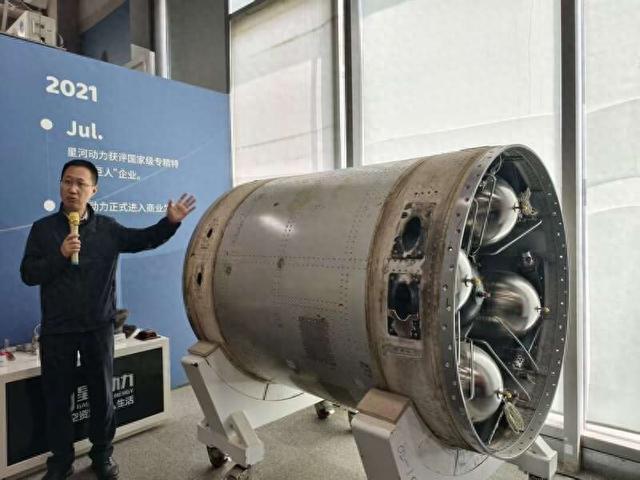
Core Viewpoint - Beijing is emerging as a leading hub for commercial aerospace, boasting the most comprehensive rocket manufacturing industry chain and over 70% of the country's commercial rocket enterprises [1][3]. Group 1: Industry Overview - Beijing has over 300 high-tech enterprises in the commercial aerospace sector, with more than half of the top 100 commercial aerospace companies, listed firms, and unicorns in the country [3]. - The "South Arrow North Star" pattern is forming in Beijing, with the southern part focusing on rocket manufacturing and the northern part on satellite manufacturing, leading to a complete industrial chain [3][5]. Group 2: Company Highlights - Star River Dynamics is expected to become the first private enterprise to achieve double-digit launch numbers in a year, with plans to launch seven to eight rockets this year [1][3]. - The "Zhishen Star No. 1," a reusable medium-to-large launch vehicle developed by Star River Dynamics, is set for its maiden flight this year [3][5]. - Blue Arrow Aerospace, located near Star River Dynamics, is the first commercial aerospace company in China to obtain complete qualifications for rocket research, production, and testing, recently successfully launching the ZQ-2E Y2 rocket [5]. Group 3: Government Support and Future Outlook - The Beijing Municipal Science and Technology Commission is promoting key technology breakthroughs and supporting the establishment of innovation alliances among leading companies and research institutions [5][6]. - The city plans to integrate commercial aerospace scenarios into its 2024 technology work plan, promoting applications in various sectors such as natural resources and meteorological monitoring [6]. - The future of Beijing's commercial aerospace industry is expected to flourish over the next 5 to 10 years, with a diverse range of developments anticipated [6].

“群星”闪耀 北京商业航天产业集群加速升空
Zhong Guo Xin Wen Wang· 2025-06-18 23:50
Core Insights - Beijing is emerging as a significant hub for commercial aerospace, with abundant innovation resources and a leading industrial foundation in China [1][2] - The city aims to enhance its global influence in commercial aerospace through various strategies, including tackling core technology bottlenecks and optimizing industrial layout [1] Industry Overview - Beijing is home to over 300 high-tech enterprises in the commercial aerospace sector, accounting for more than half of the national core R&D units and a majority of the country's aerospace infrastructure and specialized talent [2][3] - The commercial aerospace industry in Beijing encompasses the entire value chain, including rocket launch, satellite manufacturing, ground systems, and satellite application services, making it the most comprehensive in the country [3] Achievements and Innovations - In rocket launches, significant breakthroughs have been made, such as the successful vertical takeoff and landing test by Blue Arrow Aerospace and the normalization of disposable rocket launches, with 12 commercial rocket launches planned for 2024 [2][3] - Beijing has released plans for over 10 commercial satellite constellations, with Galaxy Aerospace successfully launching 8 low-orbit broadband communication satellites, marking a significant step in satellite internet applications [2][3] Market Potential - The commercial aerospace market is vast, with Galaxy Aerospace being the first unicorn in China's commercial aerospace and satellite internet sector, achieving multiple technological breakthroughs [4][6] - Galaxy Aerospace has successfully launched 25 advanced satellites, including China's first satellite with flexible solar wings, and is focused on reducing user costs through innovative technology [6][7] Future Directions - The development of space infrastructure is seen as a new engine for global economic growth, with satellite internet construction accelerating the arrival of the 6G era [7][8] - Galaxy Aerospace is advancing the research and development of satellite internet technology that allows direct mobile phone connections to satellites, creating significant market opportunities [7][8]
活力中国调研行|每3天一颗星!——从“造星工厂”到太空织网的“银河速度”
Sou Hu Cai Jing· 2025-06-18 12:12
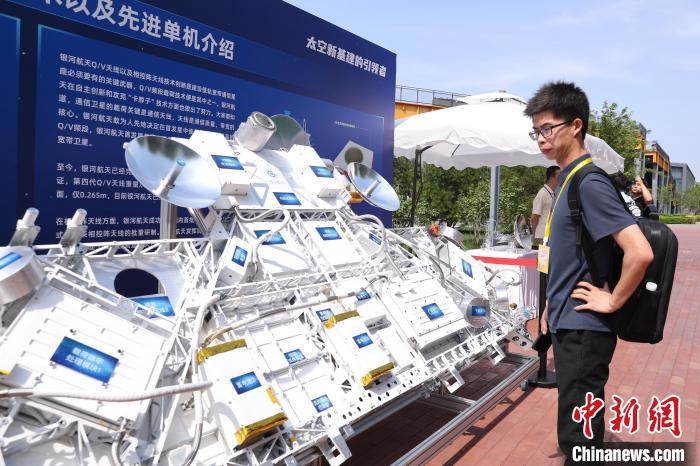
Core Viewpoint - The article highlights the rapid advancements and innovations in China's commercial aerospace sector, particularly focusing on Galaxy Space, which has transformed satellite manufacturing from a custom workshop model to a digital production line, achieving a production capacity of 150 satellites per year, nearing the global average launch volume from 13 years ago [2][5][12]. Group 1: Company Overview - Galaxy Space was established in 2018 in Beijing, entering the satellite internet market during a time when China's commercial aerospace was still in its infancy [5]. - The company combines aerospace engineering with internet technology, which initially faced skepticism due to the contrasting development cycles of the two industries [5]. - In January 2020, Galaxy Space launched its first low-orbit broadband communication satellite, marking a significant milestone in China's satellite communication capabilities [5]. Group 2: Technological Innovations - The company has developed advanced fourth-generation Q/V antennas, achieving an annual production of 100 units, which are crucial for communication quality and bandwidth [5]. - The launch of the Lingxi 03 satellite in July 2023 marked the introduction of China's first satellite using flexible solar wings, enhancing energy absorption and facilitating mass satellite launches [6][9]. - Galaxy Space has reduced the production cycle of SAR satellites to just four months through the use of digital twin technology and a modular production approach [8]. Group 3: Supply Chain and Production Capacity - The supply chain has expanded from about 100 to over 1,300 suppliers, with more than half being private enterprises, showcasing a significant restructuring and enhancement of capabilities [8]. - The company employs an automated detection system for cable routing, reflecting a shift towards more efficient manufacturing processes [8]. Group 4: Global Impact and Future Plans - Galaxy Space's "wheel formation" technology allows for precise satellite positioning, enhancing capabilities in geological disaster warning and ocean monitoring [9]. - The company has initiated overseas applications of its low-orbit satellite internet, providing high-speed internet access to remote areas in Thailand [11]. - Future plans include launching more satellites to support the construction of a space information corridor in countries involved in the Belt and Road Initiative, aiming to connect 2.6 billion unconnected individuals globally [11][12].
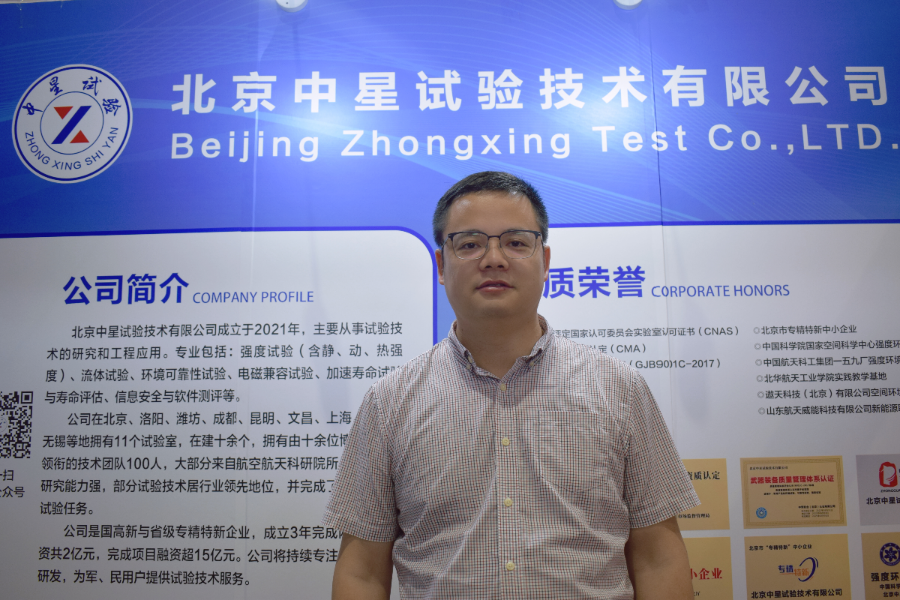
给火箭、卫星做“体检”:中星高科探路航空航天非标试验市场
2 1 Shi Ji Jing Ji Bao Dao· 2025-06-18 06:52
近年来,在政策鼓励和资本支持下,中国商业航天领域迎来创业热潮,蓝箭航天、星河动力、星际荣耀、银河航天等民营公司 纷纷成立。 但大量火箭、卫星民营企业的试验测试需求却很难得到满足。通俗来说,试验测试相当于做"体检",是火箭、卫星研发过程中 必不可少的一个环节。比如,一枚火箭从研发到制造、定型、生产,这个过程中需要做大量的试验测试。这一方面能够检验产 品设计是否符合要求,另一方面也能够获得产品的一些特征参数,通过特征参数也能够反向指导设计。 过去,这类试验测试特别是非标研究性试验测试大部分在军工科研院所、高校完成。但这些单位原本就处于任务饱和的状态, 并且做试验测试的成本较高,难以形成工业化的规模效应。面对民营商业航天企业日益增长的非标研究性试验测试需求,李星 看到了其中的市场机会,在2021年正式创办了中星高科。 据了解,中星高科旗下有北京中星试验技术有限公司以及山东、洛阳、成都、天津、上海、海南等多个子/分公司。公司主要从 事航天、航空等领域的试验技术研究与工程应用,特色专业为强度试验技术(包括静、动、热、声强度)、流体试验技术、加速寿 命试验及贮存延寿技术;公司专业还包括环境可靠性试验技术、电磁兼容试验技术 ...
探访银河航天:已发射25颗卫星,含国际首例
Xin Jing Bao· 2025-06-18 06:41
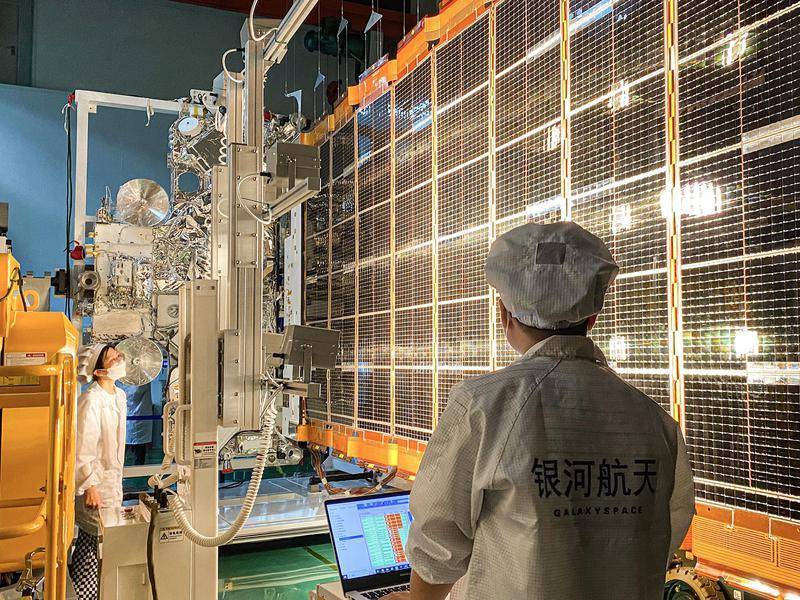
Core Insights - The construction of space infrastructure is emerging as a new engine for global economic growth, with over 300 high-tech enterprises in the commercial aerospace sector located in Beijing, forming an initial "South Arrow North Star" pattern [1][8] - Galaxy Aerospace, a unicorn in Beijing's commercial aerospace sector, has successfully launched 25 advanced satellites, contributing to China's space infrastructure development [1][2] Communication - Galaxy Aerospace has launched two experimental satellites capable of direct mobile connectivity, marking a significant step in satellite communication technology [2][3] - The global space economy is projected to reach a value of $1 trillion by 2040, with the broader economic and social value of space estimated at approximately $7.9 trillion [2] Remote Sensing - Galaxy Aerospace has developed the world's first multi-satellite formation SAR (Synthetic Aperture Radar) satellite, enhancing capabilities for high-precision digital surface modeling and global mapping tasks [4][5] - The successful launch of four InSAR satellites in March 2023 represents a breakthrough from theoretical research to engineering realization in multi-satellite interferometry [4][5] Satellite Technology - The "1+3" formation of SAR satellites allows for effective measurement of ground targets from various angles, achieving millimeter-level precision in mapping [5] - Galaxy Aerospace is integrating AI capabilities into future SAR satellite projects to reduce ground control pressure and enhance data processing efficiency [5] Innovations in Satellite Design - The Lingxi 03 satellite, featuring a unique flat design and flexible solar wings, was successfully launched, demonstrating advancements in compact satellite deployment and cost reduction [6][7] - The flexible solar wings allow for efficient energy absorption and are suitable for mass production, significantly contributing to the acceleration of satellite internet construction [7] Industry Landscape - Beijing is the birthplace of China's aerospace industry, housing over 50% of the core R&D units and a complete industrial chain in commercial aerospace, including rocket manufacturing and satellite services [8][9] - The city has set records in rocket launches and satellite constellation planning, with significant contributions from companies like Galaxy Aerospace [9] Future Outlook - Beijing plans to accelerate the development of reusable rocket technology and heavy-lift rockets, aiming for breakthroughs in satellite core components and large-scale constellation construction [10][11] - The city will enhance procurement of commercial satellite services for emergency response and resource monitoring, promoting applications in smart cities and autonomous driving [11]
“独角兽之城”北京如何支持企业发展
Xin Jing Bao· 2025-06-17 15:26
Core Insights - Beijing is recognized as the "Unicorn City" with 115 unicorn companies and a total valuation of $594.9 billion, maintaining the highest number and valuation in the country for five consecutive years [1][2] Group 1: Unicorn Companies Growth - The number of unicorn companies in Beijing increased from 93 in 2020 to 115 in 2024, with 23 new unicorns added in 2024 [2] - Among the new unicorns, 13 are from future industry sectors such as general artificial intelligence, smart transportation, cell therapy, commercial aerospace, metaverse, new energy storage, and hydrogen energy [2] - 71.3% of Beijing's unicorn companies are in hard technology, showing a growth of 28.3% since 2020, with an average annual growth rate of 7% [2] Group 2: Technological Innovations - Beijing has achieved several international leading innovations in fields like artificial intelligence, commercial aerospace, and integrated circuits, including the world's first autonomous intelligent agent capable of simulating human operations on mobile phones and computers [2] - The first successful continuous launch of a liquid oxygen-methane rocket and the world's first RISC-V edge computing chip are notable achievements [2] Group 3: International Expansion - Unicorn companies are becoming new engines for global economic activation, with companies like Galaxy Space exploring low-orbit satellite internet applications in Thailand [3] - A collaboration with Thai operators aims to advance low-orbit satellite communication technology and explore various satellite application scenarios [3] Group 4: Autonomous Driving Innovations - Yushi Technology has developed the world's first airport-compliant autonomous towing vehicle, which began large-scale operations at Hong Kong International Airport in 2023 [4] - The technology has expanded to other locations, including Hamad International Airport in Qatar, showcasing its global applicability [4] Group 5: Supportive Policies and Services - Beijing has implemented the "Unicorn Ten Measures" to support the development of unicorn companies, focusing on listing services, spatial guarantees, and talent settlement [5] - A dual management service team has been established to address the daily needs of unicorn companies, resolving nearly 300 demands annually [6] - The city emphasizes "accompanying" innovation cultivation for unicorn companies, with 38 unicorns having gone public in the past five years [6]
卫星“上车”,车联网如何向“天”突围?
3 6 Ke· 2025-06-17 10:41
Group 1 - Approximately 2.6 billion people globally lack internet access, representing 32% of the world's population, with ground networks covering only about 10% of the Earth's surface [1] - The traditional mobile communication networks primarily refer to the public mobile networks used daily [2] Group 2 - The automotive sector requires real-time environmental information and stable data exchange with cloud services, other vehicles, and infrastructure, necessitating a new network solution to ensure continuous connectivity [3] - Current mobile networks have limited coverage in remote areas, highlighting the need for satellite communication to support the future of vehicle networking [4] Group 3 - A recent collaboration between Galaxy Space and the Hong Kong Applied Science and Technology Research Institute successfully tested low Earth orbit satellite internet for connected autonomous driving systems, demonstrating the integration of satellite communication with autonomous vehicles [5][6] - Satellite internet, particularly low Earth orbit satellite systems, can provide global coverage and solve connectivity issues in hard-to-reach areas [10][12] Group 4 - The evolution of satellite internet represents a significant shift in network development, moving towards a "Heaven and Earth" integrated network model, which is crucial for the future of communication technology [14][17] - The integration of satellite internet with existing 5G networks can enhance coverage and performance, addressing the limitations of current mobile communication technologies [15][18] Group 5 - The transition from PC5 to a hybrid network model combining 5G, satellite internet, and direct vehicle-to-vehicle communication is seen as a more effective solution for the vehicle networking ecosystem [22][26] - The cost of deploying 5G macro base stations is prohibitively high, with estimates suggesting that achieving global coverage would require over 1.6 trillion yuan in investment [25] Group 6 - The strategic importance of satellite internet in the global communication landscape is underscored by national initiatives to develop satellite networks, with significant progress in China's satellite internet projects [27][29] - Major automotive companies like Tesla, Geely, and BYD are actively pursuing satellite communication capabilities to enhance their vehicles' connectivity and positioning accuracy [30][31] Group 7 - The evolution of vehicle networking technology is fundamentally a competition between cost and scale, with satellite internet poised to break the physical limitations of ground networks and facilitate large-scale commercial deployment [32]
商业航天迈向“星辰大海” 展现出巨大的市场潜力与社会价值
Zhong Guo Chan Ye Jing Ji Xin Xi Wang· 2025-06-07 23:03
Core Insights - The commercial aerospace industry is increasingly recognized as a strategic emerging industry, with significant market potential and social value, as highlighted in the government work report [1] - The industry is expected to rapidly expand, driven by national strategic needs and technological innovation, with a focus on high-quality development and advanced manufacturing capabilities [2] Industry Scale and Development - The commercial aerospace industry chain includes satellite manufacturing, rocket launching, ground stations, and application services, with a shift towards modular design and automated testing in satellite manufacturing [2] - Tianjin has established a production line with an annual capacity of over 100 satellites, aiming to produce 30 satellites in 2024, while Hainan's Wenchang Super Factory is expected to achieve standardized satellite production with an annual output of 1,000 satellites [2] - The transition from customized to mass production of commercial satellites is underway, with a focus on low-latency, low-cost, and high-reliability satellite internet services [2] Application Scenarios - The application of commercial aerospace is diversifying and scaling, with plans to deploy two low-orbit internet constellations by 2025, aiming for a market size exceeding 1 trillion yuan by 2030 [3] - Remote sensing data and deep space exploration are moving towards commercialization, with high-resolution satellite imagery supporting smart city and environmental monitoring initiatives [3] Collaborative Innovation in the Industry Chain - The establishment of a national-level commercial aerospace industry collaborative innovation center in Hainan is underway, aiming to attract leading companies and create a world-class aerospace industry cluster [4] - Strengthening upstream and downstream collaboration is crucial for optimizing resource allocation and reducing redundant R&D efforts, enhancing product design to meet market needs [4] Recommendations for Innovation - Encouraging the formation of cross-sector industry alliances and establishing online collaborative innovation platforms can facilitate information sharing and project cooperation [5] - Leading companies should open up application scenarios and data resources to engage SMEs, universities, and research institutions in innovation efforts [5] Enhancing Corporate Vitality - The commercial aerospace sector has transitioned from the experimental phase to large-scale application, but breakthroughs in core technologies, cost control, and ecosystem development are still needed [6] - Increased R&D investment is essential to overcome key technological bottlenecks and enhance market competitiveness [7] - The introduction of patient capital and supportive policies for private enterprises in major aerospace projects is recommended to foster industry growth [7]

星图测控胡煜:洞察中国商业航天的“星图”密码
Shang Hai Zheng Quan Bao· 2025-05-28 18:11
Core Insights - The article highlights the emergence of Xingtum Control as a leading player in the space management sector, emphasizing its mission to safeguard space assets and its innovative "Insight" platform [2][3] - The company aims to become a global leader in space management services, addressing the challenges posed by the increasing number of satellites and the need for efficient orbital management [3][4] Company Overview - Xingtum Control was established in 2016 and became the first domestic company listed on the Beijing Stock Exchange focused on space management [2] - The company has developed the "Insight" space management software, which utilizes advanced technologies for high-precision orbital calculations and collision avoidance [3][4] Industry Context - The commercial space industry in China has evolved significantly over the past decade, transitioning from a nascent stage to a robust sector with numerous emerging companies [3] - The Chinese government's initiatives, such as the "Thousand Sails Constellation" plan, aim to deploy thousands of satellites, which will transform the industry landscape [3][4] Technological Advancements - Xingtum Control is integrating artificial intelligence into its "Insight" system to enhance capabilities like orbital prediction and collision avoidance [4][5] - The company plans to establish a new generation of control centers and incorporate cutting-edge technologies like laser communication [5] Market Potential - The commercial space market in China is projected to exceed 100 billion yuan by 2024, with the number of companies tripling compared to five years ago [5] - Xingtum Control anticipates a revenue growth of 25.90% and a net profit increase of 35.68% in 2024, reflecting its strong market position [5]
2025年全球百强城市榜单出炉:上海和北京全球前十,苏州入围
Sou Hu Cai Jing· 2025-05-27 05:03
Core Insights - The 2025 Global Most Valuable Cities Top 100 list was released by GYBrand, evaluating cities based on economic strength, infrastructure, quality of life, business environment, international reputation, development potential, and global brand building [1][3] Group 1: Chinese Cities Performance - Fourteen Chinese cities made the list, ranking second globally, with Shanghai and Beijing securing spots in the top ten at 7th and 8th respectively [3][11] - Suzhou entered the top 100 for the first time at 78th, showcasing China's multidimensional breakthroughs in global competition [3][9] Group 2: Shanghai's Strengths and Challenges - Shanghai's core advantages lie in its dual engines of finance and technology, with the Sci-Tech Innovation Board accounting for 40% of the total market value of listed companies in China by 2024 [3][5] - The Shanghai-Suzhou tech cluster ranked fifth globally, with a 10.6% year-on-year increase in PCT international patent applications, totaling 6,185 in 2024 [5] - Challenges include air quality and high living costs affecting livability scores, leading to talent migration to surrounding cities [5][13] Group 3: Beijing's Development - Beijing ranked 8th globally, highlighting its hard power in technology innovation, with 30% of China's AI companies and 40% of quantum computing labs located in the city [7] - The city achieved a research and development intensity of 6.2% in 2024, surpassing Silicon Valley's average [7] - Cultural experiences in Beijing have improved, with the 798 Art District hosting more annual exhibitions than New York's MoMA [7][13] Group 4: Suzhou's Innovation and Growth - Suzhou's core competitiveness stems from the integration of manufacturing and innovation, with 240,000 effective invention patents in 2024, a 19.5% increase [9] - The city is home to the largest industrial internet platform, empowering 150,000 enterprises in digital transformation [9] - Suzhou's transformation from a "world factory" to an "innovation workshop" is marked by significant achievements in various sectors [9][15] Group 5: Emerging Cities and Regional Disparities - Shenzhen ranked 19th globally, surpassing Guangzhou (32nd), with a research and development intensity of 5.8% [11] - Chengdu entered the top 80 for the first time, driven by its "park city" concept and 6G technology development [11] - Regional imbalances are evident, with 11 of the 14 listed cities located in the eastern coastal region, while only Chengdu and Wuhan represent the central and western regions [13] Group 6: Recommendations for Improvement - Major cities should shift from "scale expansion" to "refined operations," with Shanghai exploring "flying economy" and resource sharing with neighboring cities [15] - Beijing needs to alleviate non-capital functions and foster collaborative innovation in the Tianjin-Hebei region [15] - Suzhou should focus on nurturing specialized and innovative enterprises to become champions in global niche markets [15]