永辉超市

Search documents
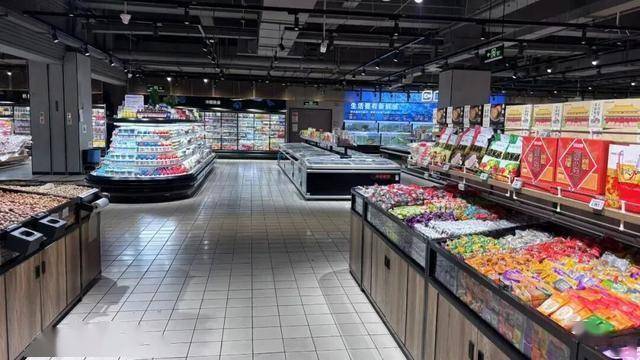
探店北京区域“胖改”店
Sou Hu Cai Jing· 2026-01-26 16:36
Core Viewpoint - The transformation of traditional supermarkets is not just about store renovation but involves deeper challenges such as supply chain restructuring, organizational culture change, and sustainable profitability [1]. Group 1: Consumer Behavior and Store Experience - Consumers have decreased in number at renovated stores, with some expressing dissatisfaction over higher prices and a lack of everyday items like fresh produce [3][6][8]. - Renovated stores have adopted a more boutique supermarket style, which some consumers find appealing, but others feel it lacks the "liveliness" and affordability of previous offerings [6][10][11]. - Observations indicate that foot traffic has significantly declined post-renovation, with stores that were once crowded now appearing empty, especially during peak shopping times [8][10]. Group 2: Pricing and Competition - The price increases following renovations have led consumers to seek alternatives, with many opting for online shopping where prices are often lower [14][16]. - Comparisons show that some products in renovated stores are priced significantly higher than similar items available on e-commerce platforms, leading to a perception of poor value [16][18]. - The competition from membership-based warehouse stores like Sam's Club adds pressure on traditional supermarkets to justify their pricing strategies [31]. Group 3: Operational Challenges and Employee Dynamics - The transformation efforts have resulted in a substantial increase in labor costs, with employee numbers and salaries rising significantly, which poses challenges to profitability [35][37]. - The need for consistent service quality across different locations and store sizes remains a critical challenge as companies scale their renovation efforts [37]. - The unique cultural and operational strengths of successful models like "胖东来" are difficult to replicate, creating a gap in execution for other supermarkets [35][37]. Group 4: Future Outlook and Strategic Considerations - The ongoing transformation of traditional supermarkets is seen as a necessary evolution in response to changing consumer preferences and competitive pressures [29][33]. - The ability of companies to navigate deeper operational challenges will determine whether they can establish themselves as sustainable "quality supermarkets" rather than fleeting trends [37][38].


北京一“胖改”永辉暂停营业 已非首例
经济观察报· 2026-01-26 15:20
Core Viewpoint - Yonghui Supermarket continues to face significant profitability pressure, with a projected net loss of 2.14 billion yuan in 2025, compared to a net loss of 1.47 billion yuan in the previous year, marking the fifth consecutive year of losses [1][5]. Group 1: Store Operations and Challenges - The Yonghui Supermarket store at Hongkun Plaza in Beijing, which underwent a "fat modification" and reopened less than a year ago, has now suspended operations. The store was reported to be closed on January 23, 2025, due to disputes over unpaid rent and other fees [2][3]. - The property management of Hongkun Plaza stated that Yonghui Supermarket had not paid any rent or related fees since the store's renovation was completed on March 28, 2025, and has not communicated with them regarding the closure [3]. - This incident is not isolated, as another Yonghui Supermarket in Fuzhou, which was also modified to follow the "fat model," closed just four months after reopening, indicating ongoing operational challenges [4]. Group 2: Strategic Adjustments and Market Position - The "fat modification" strategy, inspired by the successful model of another supermarket chain, aims to enhance product quality, improve shopping experiences, and optimize store layouts. Yonghui Supermarket has been implementing this strategy since May 2024, with 315 out of 403 stores having completed the modifications by the end of 2025 [4].

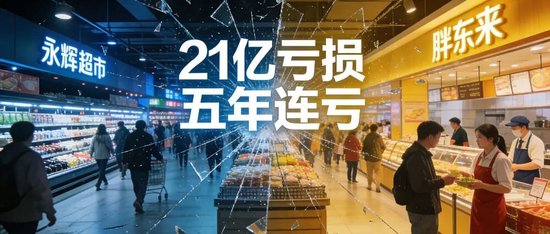
永辉学胖东来巨亏21亿:“形似神离”的转型困局
Xin Lang Cai Jing· 2026-01-26 15:09
Core Insights - The retail industry in China is experiencing a stark contrast, with Yonghui Supermarket forecasting a loss of 2.14 billion yuan for the year, marking five consecutive years of losses exceeding 10 billion yuan, while regional giant Pang Donglai reports impressive revenue of 23.5 billion yuan [1][8] - Yonghui's aggressive transformation attempt, which cost 1.8 billion yuan and involved 315 stores, has been deemed a complete failure, despite initial sales growth of 324% in the first month [1][8] Group 1: Transformation Challenges - Yonghui's transformation strategy, which aimed to replicate Pang Donglai's model, faced fundamental issues due to a conflict in business models, leading to a logistics cost that is 30% higher than regional competitors [3][10] - The company's high employee costs, ranging from 9 million to 18 million yuan per store annually, contributed to a "scale inefficiency" trap, making the national network a burden during the transformation [3][10] - The aggressive strategy resulted in direct losses of 1.8 billion yuan, including 910 million yuan in asset write-offs and 300 million yuan in lost operating profits from store closures [3][10] Group 2: Supply Chain and Operational Issues - Yonghui's shift to a "bare price direct procurement" model, after eliminating supplier backend fees, led to a decline in gross margin to 20.52% and an increase in stockout rates [4][11] - The company's revenue for Q3 2025 was 42.434 billion yuan, a year-on-year decline of 22.21%, indicating a disparity between rising costs and falling revenues [4][11] - Compared to competitors like Bubu Gao and Jiajiayue, which adopted a more cautious approach, Yonghui's rapid transformation exacerbated supply chain disruptions [4][11] Group 3: Employee and Consumer Trust Issues - Yonghui's strategy of high salaries combined with strict performance evaluations resulted in high employee turnover and a decline in service quality, with customers reporting a lack of patience from staff [5][12] - The company's pricing strategy, which raised prices without improving quality, led to a loss of consumer trust, with the repurchase rate dropping below 30% after an initial spike [5][12] - The essence of retail being human-centric was overlooked by Yonghui, which failed to adopt Pang Donglai's employee satisfaction-driven customer service model [5][12] Group 4: Recommendations for Recovery - Yonghui needs to abandon a one-size-fits-all approach and implement regional adaptations, maintaining high-end stores in core cities while focusing on value for money in lower-tier markets [6][13] - The company should establish a "joint procurement alliance" based on regional needs, aiming to reduce fresh produce loss rates from the industry average of 3.5% to below 1.5% within three years [6][13] - Rebuilding consumer trust through profit-sharing models and transparent pricing strategies is essential, with a goal to increase the share of essential goods to over 50% [6][13] Conclusion - Yonghui's 2.1 billion yuan loss serves as a warning to the retail industry that transformation must align with the company's inherent capabilities rather than superficial imitation [7][14] - The future of retail lies not with quick imitators but with those who respect industry dynamics and focus on value creation [7][14]
“胖改”失灵?永辉北京一门店突然停业,调改不满1年
Mei Ri Jing Ji Xin Wen· 2026-01-26 15:03
Core Viewpoint - Yonghui Supermarket's store at Hongkun Plaza in Beijing has suspended operations due to issues with the property management, including the inability to access the main entrance and interruptions in water and heating supply. The store had recently undergone renovations and reopened in March 2025, but it is now facing significant operational challenges and financial disputes with the property management [1][4][10]. Group 1: Store Operations and Financial Issues - The Yonghui Supermarket at Hongkun Plaza has been closed since January 23, with customers reporting blocked entrances and locked escalators [3][4]. - The shopping center claims Yonghui has not paid over 16 million yuan in rent and other fees since the store's renovation completion [10][11]. - Yonghui's official response indicates that they are in discussions to resolve the issues and aim to reopen the store soon [10][11]. Group 2: Financial Performance and Strategic Adjustments - Yonghui Supermarket is projected to incur a net loss of 2.14 billion yuan for 2025, marking a 45.6% increase in losses compared to the previous year [14]. - The company has been in a continuous loss situation for five years, with total losses exceeding 10 billion yuan during this period [15]. - In 2025, Yonghui closed 381 stores that did not align with its strategic direction, leading to significant one-time costs related to asset write-offs and operational disruptions [19][22]. Group 3: Market Position and Competitive Strategy - Yonghui has completed renovations on 315 stores, making it the supermarket brand with the most "Pang Donglai-style" adjustments in China [24]. - The company is shifting its strategy from "scale expansion" to "quality growth," aiming to redefine its market positioning [18]. - The challenges faced by Yonghui in adopting the Pang Donglai model reflect broader industry difficulties, as other retailers also struggle with similar transformations [25][27].
“胖改”失灵?永辉北京一门店突然停业,调改不满1年,商场:还欠房租等费用;永辉否认!公司5年亏掉上百亿元,去年关店381家
Mei Ri Jing Ji Xin Wen· 2026-01-26 14:39
Core Viewpoint - Yonghui Supermarket's store at Hongkun Plaza in Beijing has suspended operations due to issues with the property management, including the inability to access the main entrance and interruptions in water and heating supply. The store had recently undergone renovations and reopened in March 2025, but has now been closed for several days without a clear timeline for reopening [1][2][4]. Group 1: Store Operations and Financial Issues - The Hongkun Plaza shopping center claims that Yonghui Supermarket has not paid over 16 million yuan in rent and other fees since the store's renovation was completed [5][8]. - Yonghui Supermarket confirmed the store is not permanently closed but is in a state of suspension due to the ongoing issues with the property management [2][6]. - The shopping center has expressed its intention to pursue legal action if the situation is not resolved and has apologized to customers for the inconvenience caused by the store's closure [8]. Group 2: Financial Performance and Strategic Adjustments - Yonghui Supermarket is expected to report a net loss of 2.14 billion yuan for 2025, marking a 45.6% increase in losses compared to the previous year, continuing a trend of losses for five consecutive years [9][11]. - The company has closed 381 stores that do not align with its future strategic direction, while also undergoing significant operational adjustments, including the renovation of 315 stores [11][12]. - The financial impact of these adjustments includes asset write-offs and losses from store closures, totaling over 1.2 billion yuan due to the "Pang Donglai" reform strategy [11][12].
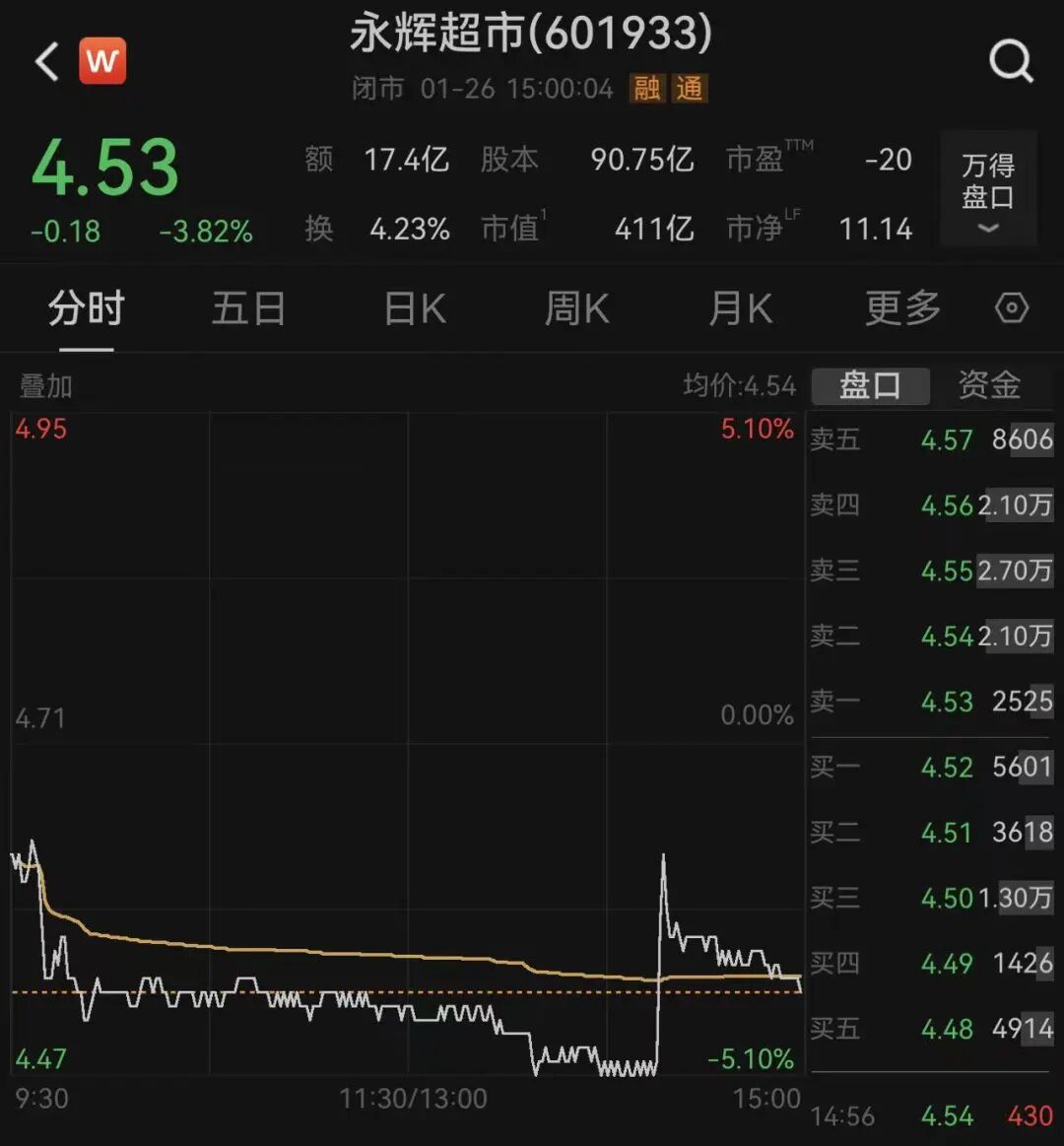
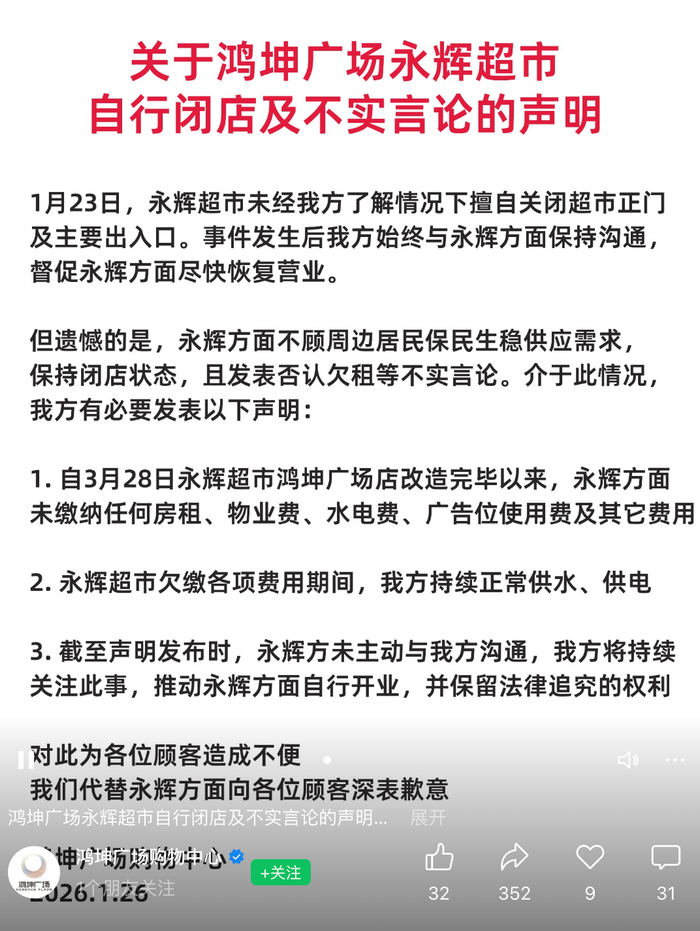
永辉北京一调改门店停业,购物中心发声:系永辉自行闭店,确有欠租情况
Xin Lang Cai Jing· 2026-01-26 10:26
Core Viewpoint - The sudden closure of Yonghui Supermarket at Hongkun Plaza in Beijing has raised concerns regarding unpaid fees and operational transparency, with both parties exchanging conflicting statements about the reasons for the closure [1][2]. Group 1: Company Actions - Yonghui Supermarket closed its main entrance and primary access points without prior communication with Hongkun Plaza management on January 23 [1][2]. - The supermarket has not paid any rent, property fees, utility costs, or advertising fees since the completion of its renovation on March 28, 2025 [2]. Group 2: Communication and Response - Hongkun Plaza has maintained communication with Yonghui, urging the supermarket to resume operations promptly [1][2]. - Yonghui has denied allegations of unpaid rent and stated that it is actively coordinating with relevant parties to resolve the issues and restore operations [1]. Group 3: Community Impact - The closure has caused inconvenience to local residents, with reports indicating that the water supply was cut off due to Yonghui's failure to pay property rent, a claim that Yonghui has refuted [1][2].
永辉门店设置年货“喜市”专区
Bei Jing Shang Bao· 2026-01-26 10:01
Core Viewpoint - Yonghui Supermarket has launched a new strategy called "New Yonghui New Year Flavor," featuring a dedicated "Joy Market" area in stores that showcases various traditional New Year goods and decorations [1] Group 1: New Year Strategy - Yonghui Supermarket has set up a "Joy Market" section in stores, offering items such as Spring Festival couplets, Fu characters, lanterns, and creative decorations [1] - The supermarket is hosting a three-day themed event from January 24 to 26, featuring tastings of traditional Laba porridge, discounts on Laba garlic, and innovative experiences like grilled lamb skewers paired with Laba garlic [1] - Yonghui has selected 30 high-demand products, seasonal fresh produce, and essential goods to offer special discounts, providing a one-stop shopping solution for New Year purchases [1] Group 2: IP Empowerment and Product Innovation - A highlight of this year's "Joy Market" is the introduction of products from popular IPs such as Sanrio and My Little Pony, featuring festive decorations that blend cute cartoon elements with traditional Chinese auspicious symbols [1] - The product development and creative design for traditional items have been enhanced, including 3D cartoon couplets and various fabric couplets, addressing common issues with traditional adhesive designs [1] - The "Joy Market" also features ancient-style lanterns made from faux sheepskin paper, 3D财神 (God of Wealth) ornaments, and woven Chinese knots, showcasing a blend of tradition and innovation [1]
可选消费W04周度趋势解析:黄金持续创新高叠加新消费板块回暖,黄金珠宝板块本周表现最优-20260126
Haitong Securities International· 2026-01-26 09:54
Investment Rating - The report assigns an "Outperform" rating to multiple companies including Nike, Midea Group, JD Group, Haier Smart Home, Gree Electric, Anta Sports, and others, indicating a positive outlook for these stocks [1]. Core Insights - The gold and jewelry sector has emerged as the top performer this week, driven by new consumer sentiment and expectations of improved sales as the Spring Festival approaches. The sector saw a weekly increase of 12.9% [4][14]. - The report highlights a rebound in the new consumer sectors, with various segments such as gambling, overseas cosmetics, and retail also showing positive performance [4][14]. - The overall market sentiment is influenced by the performance of the MSCI China index, which has shown fluctuations in its weekly, monthly, and year-to-date performance [12][13]. Sector Performance Summary - **Gold and Jewelry**: Increased by 12.9%, with notable gains from Lao Pu Gold (20.5%) and Chow Tai Fook (5.9%) due to positive sales forecasts [6][14]. - **Gambling**: Rose by 2.9%, with MGM China and Galaxy Entertainment seeing increases of 4.0% and 3.6% respectively, attributed to market share gains [6][14]. - **Overseas Cosmetics**: Gained 2.1%, driven by E.L.F Beauty's strong performance and positive earnings outlook [6][14]. - **Retail**: Increased by 2.0%, with Wanchen Group rising 14.3% due to optimistic revenue forecasts [6][14]. - **Domestic Cosmetics**: Saw a modest increase of 0.9%, with companies like Proya and Runben showing positive trends [8][14]. - **Snacks**: Increased by 0.6%, with Youyou Foods and Qiaqia Foods showing gains [8][14]. - **Pet Sector**: Experienced a slight decline of 0.4%, with Zhongchong Co. facing market challenges [8][14]. - **Domestic Sportswear**: Decreased by 1.4%, with Li Ning showing a positive increase of 4.3% while Anta Sports faced a decline [8][14]. - **US Hotels**: Fell by 1.4%, with major hotel chains like Marriott and Hilton seeing declines [15][16]. - **Credit Card Sector**: Also decreased by 1.4%, with Visa and Mastercard facing market uncertainties [15][16]. - **Luxury Goods**: Declined by 1.6%, with Burberry experiencing a significant drop [15][16]. - **Overseas Sportswear**: Decreased by 1.8%, with Adidas facing a notable decline due to downgrades from investment banks [15][16]. Valuation Analysis - The report indicates that most sectors are currently undervalued compared to their historical averages, with expected PE ratios for various sectors such as overseas sportswear at 30.0x (56% of the past 5-year average) and domestic sportswear at 13.4x (70% of the past 5-year average) [10][17].
叫好更叫座!重庆百货超市门店调改上台阶 业绩长虹树立转型新标杆
Quan Jing Wang· 2026-01-26 07:33
Core Viewpoint - The transformation of the retail industry is not merely about imitating peers but involves a systematic upgrade of concepts, scenarios, supply chains, services, and organization, reshaping consumer demands and behaviors as well as the brand ecosystem [1][3]. Group 1: Retail Transformation - The retail industry is undergoing rapid transformation, with significant changes in store formats and operations, but achieving success is challenging [1]. - Yonghui Supermarket is expected to continue reporting losses in 2025, with cumulative losses exceeding 5 billion yuan for 2024 and 2025, highlighting the difficulties faced in the industry [1]. Group 2: Store Performance - On January 23, the newly renovated Chongqing New Century Supermarket at Daping Times Square saw a 6-fold increase in customer traffic and a 7-fold increase in daily sales compared to before the renovation [3][8]. - The renovated store features an expanded area of 8,000 square meters, eliminating forced traffic flow designs to allow for a more autonomous shopping experience [8]. Group 3: Product and Supply Chain Strategy - The store renovation emphasizes "quality first and precise matching," reducing redundant products by 17% and achieving a high replacement rate of 70%, with non-food items seeing an 85% replacement rate [8]. - The product categories have expanded to 92 major categories and 1,305 subcategories, introducing popular items favored by younger consumers, with a new brand introduction rate of 48% and over 2,500 direct-sourced products [8]. Group 4: Culinary Experience - The new store integrates quality living with local flavors by introducing traditional Sichuan cuisine, enhancing the shopping experience with freshly prepared food options [9]. Group 5: Supply Chain and Financial Performance - The store will implement a "direct sourcing + strategic alliance" model, with nearly half of suppliers being direct sources, enhancing supply chain stability and product quality [10]. - Chongqing Department Store's overall gross margin reached 27.83% in the first three quarters of 2025, showing a year-on-year improvement and achieving a net profit of 999.1 million yuan, a 7.38% increase [12]. - The company has initiated a mid-term dividend policy, distributing 0.1589 yuan per share in 2025, with cumulative cash dividends over the past three years exceeding 125% of average annual profits, indicating a strong financial position [12].

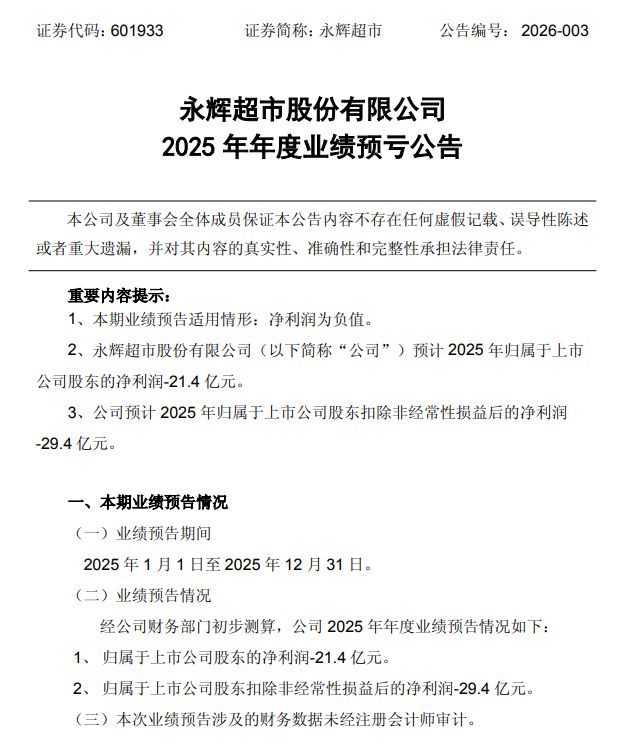
巨亏21亿!“胖东来之子”崩了
Sou Hu Cai Jing· 2026-01-26 03:45
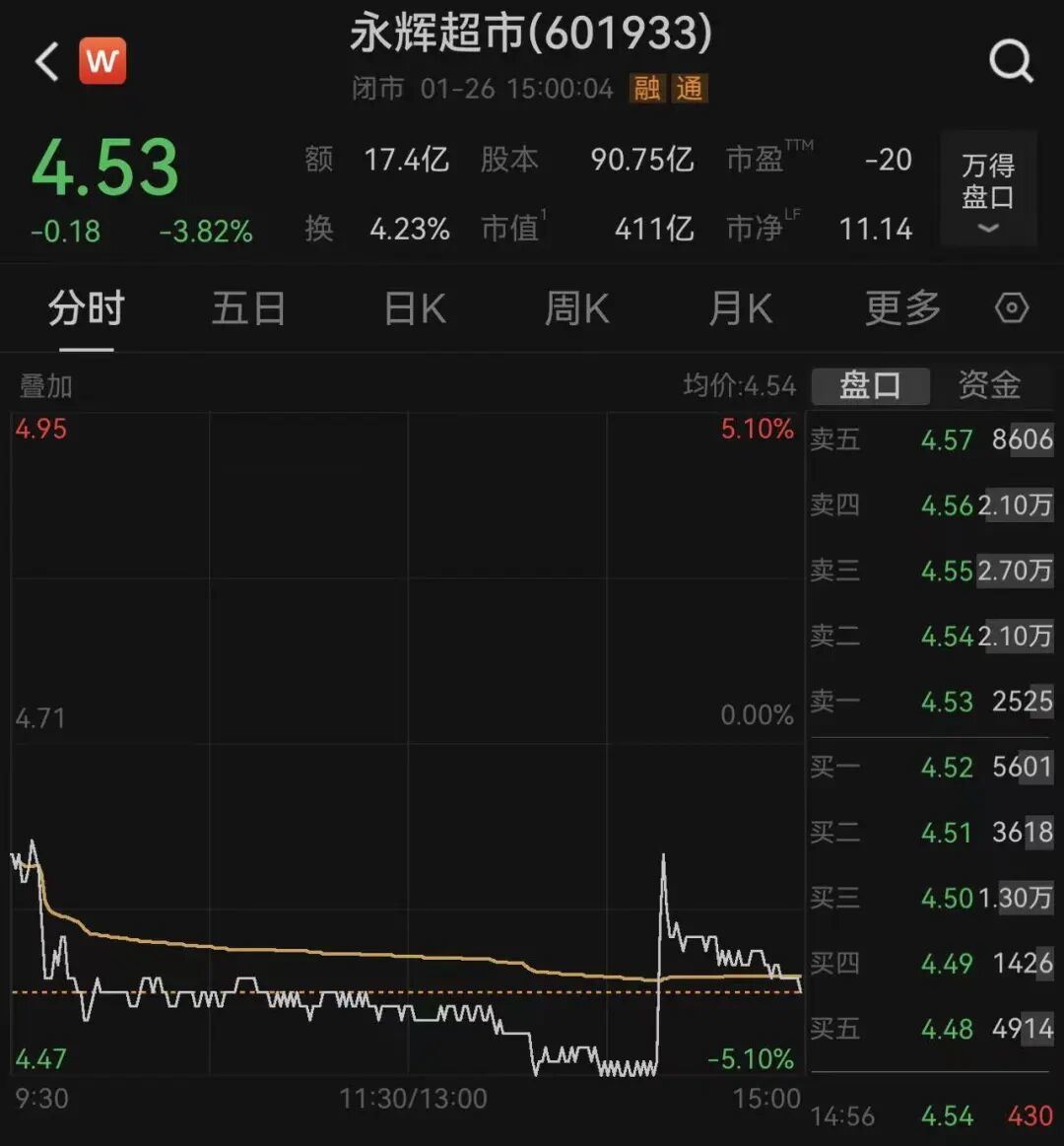
Core Viewpoint - The article discusses the struggles of Yonghui Supermarket as it attempts to emulate the successful business model of the renowned retailer Pang Donglai, but faces significant challenges and ongoing losses. Group 1: Yonghui Supermarket's Current Situation - Yonghui Supermarket, once a leading player in China's supermarket industry, is projected to incur a net loss of 2.14 billion yuan in 2025, accumulating losses of 11.6 billion yuan over five years [1][5] - The company has attempted to reform by adopting strategies from Pang Donglai, including significant changes in employee compensation, product quality, and shopping environment [5][6] - Despite a brief stock price recovery, Yonghui has closed nearly 20% of its stores within six months, indicating that the implementation of these strategies has not been effective [6][19] Group 2: Comparison with Pang Donglai - Pang Donglai reported an annual revenue of 23.531 billion yuan in 2025, a 38.7% increase from 17 billion yuan in 2024, showcasing a stark contrast to Yonghui's financial struggles [2][3] - The article highlights that while many retailers attempt to replicate Pang Donglai's model, they fail to grasp the underlying principles that contribute to its success, particularly the restructuring of profit-sharing mechanisms [11][17] - Pang Donglai's approach emphasizes employee satisfaction and high-quality service, which has resulted in a low employee turnover rate of less than 3%, compared to the industry average of over 25% [15][19] Group 3: Challenges in Implementation - Yonghui's strategy shift from "scale expansion" to "quality growth" has led to significant store closures, which the company claims are necessary to align with its new strategic direction [6][19] - The difficulties faced by Yonghui and other imitators stem from their inability to adapt the core principles of Pang Donglai's model to their larger, more complex operations [17][19] - The article suggests that successful retail strategies must consider the unique context of each company, rather than blindly copying successful models [17][19]