Figure AI

Search documents
国内外那些做具身大脑的公司们......
具身智能之心· 2025-09-13 04:03
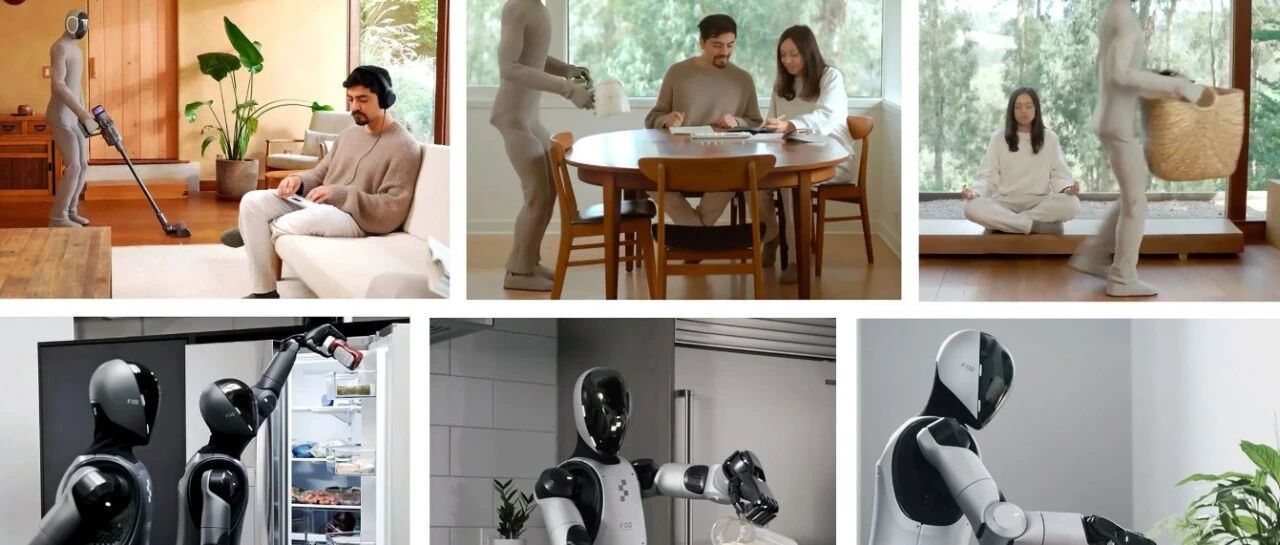
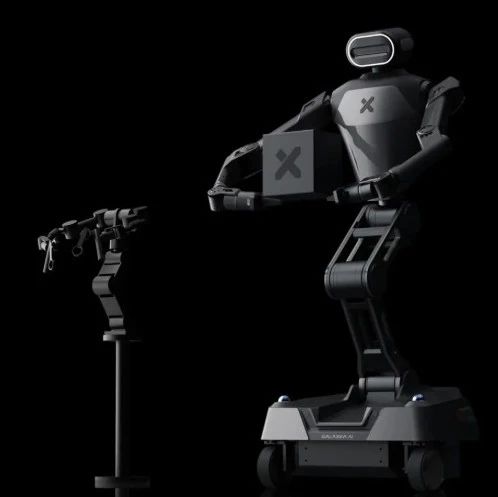
Core Insights - The article focuses on the emerging field of embodied intelligence, highlighting the development of general-purpose robotic "brain" systems and multi-modal perception-decision systems, which are gaining significant attention from both capital and industry sectors [2][3]. Domestic Companies - **Xinghai Map**: Founded in 2023, focuses on developing a general embodied large model using real-world data to create robots with fine operational capabilities. The company has completed 8 rounds of financing in less than two years. Its representative product, WALL-A model, is set to launch in October 2024 and is claimed to be the largest parameter scale embodied intelligence model globally, integrating visual, language, and motion control signals [6]. - **UBTECH**: Established in 2012, it is a leader in humanoid robot commercialization with comprehensive self-research capabilities. The Thinker model, set to be released in 2025, has achieved top rankings in international benchmark tests, significantly enhancing robots' perception and planning capabilities in complex environments [10]. - **ZhiYuan Robotics**: Founded in February 2023, it aims to create world-class general embodied intelligent robots. Its Genie Operator-1 model, to be released in March 2025, integrates multi-modal large model and mixed expert technologies, improving task success rates by 32% compared to market models [12]. - **Galaxy General**: Established in May 2023, it focuses on multi-modal large models driven by synthetic data. Its VLA model is the first general embodied large model globally, utilizing a "brain + cerebellum" collaborative framework [14]. - **Qianxun Intelligent**: Founded in 2024, it is a leading AI + robotics company with a focus on flexible object manipulation. Its Spirit V1 VLA model is the first to tackle long-range operations of flexible objects [16]. - **Star Motion Era**: A new tech company incubated by Tsinghua University, focusing on general artificial intelligence applications. Its ERA-42 model supports over 100 dynamic tasks through video training [18]. - **Zhujidi Power**: Concentrates on embodied intelligent robots, developing core technologies for hardware design, full-body motion control, and training paradigms [20]. International Companies - **Figure AI**: Focuses on embodied intelligence operation algorithms, enhancing data training and algorithm performance through video generation technology [17]. - **Physical Intelligence**: Founded in January 2023, it aims to develop advanced intelligent software for various robots. Its π0 model, released in October 2024, is a universal robot foundation model [22]. - **Google DeepMind**: Merged with Google Brain in 2023, it focuses on general artificial intelligence research. Its Gemini Robotics model can control robots to perform complex tasks without specialized training [20]. - **Skild AI**: A leading robotics "brain" development company in the US, aiming to create a universal robot operating system that enables intelligent operations across various scenarios [26].


82位用户访谈结论:家用人形机器人或许还远
机器人大讲堂· 2025-09-05 13:59
Core Viewpoint - The article discusses the emerging trend of humanoid robots entering households, highlighting both the excitement and skepticism surrounding this development. It emphasizes the need for a more user-centered approach in the design and deployment of household robots, as current trends may not align with user preferences and safety concerns [1][12]. Group 1: Expert Insights - Maya Cakmak, a professor at the University of Washington, expresses her concerns about the practicality of humanoid robots in homes, suggesting that non-humanoid robots may be more effective and user-friendly [3][4]. - Cakmak's research indicates a significant preference among users for specialized robots over humanoid ones, citing safety, privacy, and space concerns as primary reasons [6][8]. Group 2: User Preferences - A study involving 76 participants revealed that most preferred specialized robots for household tasks, associating humanoid robots with safety risks and privacy issues [6][7]. - Users expressed that specialized robots are perceived as safer, more private, and less intrusive compared to humanoid robots, which are often seen as bulky and unnecessary [6][11]. Group 3: Practicality vs. Design - The article highlights a critical contradiction in the industry: while companies pursue humanoid robots for their versatility, users may not require human-like features for effective assistance in household tasks [9][11]. - Cakmak argues that simpler, non-humanoid designs could fulfill most household needs without the complications associated with humanoid robots [11][12]. Group 4: Future Directions - The article concludes that the industry should focus more on user insights and practical applications rather than merely technological advancements. It suggests that companies should share user research data to better align product development with actual user needs [12][14].
最高涨超100倍!A股八大热门赛道业绩“增长王”出炉
Zhong Guo Zheng Quan Bao· 2025-08-31 00:51
Core Insights - A-share listed companies have reported significant profit growth in various sectors, with a total of 5,424 companies disclosing their semi-annual reports, showcasing strong performance in industries such as comprehensive services, agriculture, steel, and technology [1] Sector Summaries Ground Equipment Sector - The ground equipment segment has seen a remarkable increase of 107.85% this year, with 9 out of 15 companies reporting a year-on-year profit growth. Notably, Nairui Radar achieved a staggering profit increase of 866.97% [2] PCB Sector - The PCB sector has risen by 93.12% this year, with 73 out of 112 companies reporting profit growth. Honghe Technology led the sector with a profit increase of 10,587.74%. The demand for PCBs is driven by a growing need for computing power, with global server sales projected to reach $95.2 billion in Q1 2025, a 134.1% year-on-year increase [3] CPO Sector - The CPO sector has increased by 79.05%, with significant profit growth from leading companies. Shijia Photon reported a profit increase of 1,712%, while Xinyi Sheng saw a 355.68% increase. Analysts expect CPO technology to gain traction between 2026 and 2027 [4][5] AI Chip Sector - The AI chip sector has grown by 62.62%, with 22 out of 35 companies reporting profit growth. Yuboxun achieved a profit increase of 1,455.37%. The demand for AI computing power is expected to further expand, with new technologies enhancing chip performance [6] Rare Earth Permanent Magnet Sector - The rare earth permanent magnet sector has increased by 62.12%, with 41 out of 58 companies reporting profit growth. Huahong Technology led with a profit increase of 3,480.57%. The sector is benefiting from rising prices and sustained demand [7] Humanoid Robot Sector - The humanoid robot sector has seen a 54.30% increase, with 107 out of 163 companies reporting profit growth. Tianyu Digital achieved a profit increase of 453.67%. The industry is experiencing rapid development, with major companies investing in intelligent robotics [8] Liquid Cooling Sector - The liquid cooling sector has risen by 49.94%, with 77 out of 106 companies reporting profit growth. Gaolan Co. reported a profit increase of 1,438.57%. The market is undergoing a revaluation as liquid cooling technology expands into various applications [9] Innovative Drug Sector - The innovative drug sector has increased by 44.05%, with 71 out of 145 companies reporting profit growth. Hanyu Pharmaceutical achieved a profit increase of 1,504.3%. The sector is expected to transition from capital-driven to profit-driven growth by 2025 [10]
3个月!搞透具身大脑+小脑算法
具身智能之心· 2025-08-27 00:04
Core Viewpoint - The exploration of Artificial General Intelligence (AGI) is increasingly focusing on embodied intelligence, which emphasizes the interaction and adaptation of intelligent agents within physical environments, enabling them to perceive, understand tasks, execute actions, and learn from feedback [1]. Industry Analysis - In the past two years, numerous star teams in the field of embodied intelligence have emerged, establishing valuable companies such as Xinghaitu, Galaxy General, and Zhujidongli, driving advancements in embodied intelligence technologies [3]. - Major domestic companies like Huawei are launching initiatives such as the "Global Embodied Intelligence Industry Innovation Center" in collaboration with firms like Leju Robotics and Dazhu Robotics to develop key technologies for embodied intelligence [5]. - JD.com has been investing in companies like Zhiyuan Robotics and Qianxun Intelligent since May 2025 to enhance efficiency and service capabilities in logistics and home service scenarios [5]. - Internationally, companies like Tesla and Figure AI are advancing applications in industrial and logistics robotics, while U.S. investment firms are supporting companies like Wayve and Apptronik in autonomous driving and warehouse robotics [5]. Technological Evolution - The development of embodied intelligence has progressed through several stages, from low-level perception to high-level task understanding and generalization, aiming to enhance robots' capabilities in real-world environments [6]. - The first stage focused on grasp pose detection, enabling robots to predict suitable end-effector poses for static object manipulation, but lacked context modeling for complex tasks [6]. - The second stage introduced behavior cloning, allowing robots to learn from expert demonstrations, yet faced challenges in generalization and performance in multi-target scenarios [6]. - The third stage, emerging in 2023, utilized Diffusion Policy methods to improve stability and generalization by modeling action trajectories [7]. - The fourth stage, starting in 2025, explores the integration of VLA models with reinforcement learning and tactile sensing to overcome limitations in feedback and future prediction capabilities [8]. Product and Market Development - The evolution from grasp pose detection to behavior cloning and VLA models signifies a shift towards intelligent agents capable of handling general tasks in open environments, leading to the emergence of various products like humanoid robots and robotic arms across industries such as healthcare and logistics [9]. - The demand for engineering and system capabilities is increasing as embodied intelligence transitions from research to deployment, necessitating higher engineering standards [12].
英伟达机器人“新大脑”售价2.5万元,算力提升7.5倍
Nan Fang Du Shi Bao· 2025-08-26 01:19
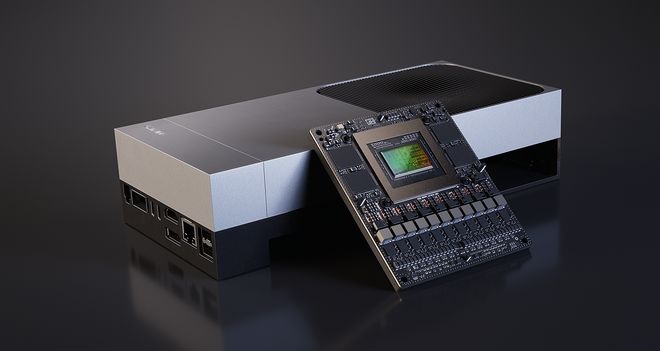
Core Insights - Nvidia has officially launched the Thor chip, referred to as the "new brain" for robots, priced at $3,499, aimed at enabling real-time intelligent interaction between embodied intelligent robots and the physical world [1] - The Thor chip significantly enhances computational power, offering up to 2070 TFLOPS, a 7.5 times increase over the previous Orin chip, addressing the computational limitations faced by robots [1][3] - The chip's performance improvements allow robots to process large amounts of sensor data and operate AI models at the edge, reducing reliance on cloud computing [3] Group 1: Product Launch and Features - The Thor chip is designed to support embodied intelligent robots with real-time processing capabilities, essential for autonomous operation in various environments [1] - It features a CPU performance increase of 3.1 times, 128GB of memory (a 2 times increase), and a 3.5 times improvement in energy efficiency [1][3] Group 2: Industry Adoption and Ecosystem - Notable companies such as Boston Dynamics and Figure AI, along with domestic firms like UBTECH and Galaxy Universal, have already begun deploying the Thor chip [3] - Nvidia has built a robust developer ecosystem in the robotics field, with over 2 million developers engaged across various industries since 2014 [4] Group 3: Financial Performance - Despite the advancements in robotics, the segment currently contributes a minimal portion to Nvidia's overall revenue, accounting for approximately 1.29% with a total income of $567 million, although it has seen a significant year-on-year growth of 72% [5]


3个月!搞透VLA/VLA+触觉/VLA+RL/具身世界模型等方向!
具身智能之心· 2025-08-22 00:04
Core Viewpoint - The exploration of Artificial General Intelligence (AGI) is increasingly focusing on embodied intelligence, which emphasizes the interaction and adaptation of intelligent agents within physical environments, enabling them to perceive, understand tasks, execute actions, and learn from feedback [1]. Industry Analysis - In the past two years, numerous star teams in the field of embodied intelligence have emerged, establishing valuable companies such as Xinghaitu, Galaxy General, and Zhujidongli, which are advancing the technology of embodied intelligence [3]. - Major domestic companies like Huawei, JD, Tencent, Ant Group, and Xiaomi are actively investing and collaborating to build a robust ecosystem for embodied intelligence, while international firms like Tesla and investment institutions are supporting companies like Wayve and Apptronik in the development of autonomous driving and warehouse robots [5]. Technological Evolution - The development of embodied intelligence has progressed through several stages: - The first stage focused on grasp pose detection, which struggled with complex tasks due to a lack of context modeling [6]. - The second stage involved behavior cloning, allowing robots to learn from expert demonstrations but revealing weaknesses in generalization and performance in multi-target scenarios [6]. - The third stage introduced Diffusion Policy methods, enhancing stability and generalization by modeling action sequences, followed by the Vision-Language-Action (VLA) model phase, which integrates visual perception, language understanding, and action generation [7][8]. - The fourth stage, starting in 2025, aims to integrate VLA models with reinforcement learning, world models, and tactile sensing to overcome current limitations [8]. Product and Market Development - The evolution of embodied intelligence technologies has led to the emergence of various products, including humanoid robots, robotic arms, and quadrupedal robots, serving industries such as manufacturing, home services, dining, and medical rehabilitation [9]. - The demand for engineering and system capabilities is increasing as the industry shifts from research to deployment, necessitating higher engineering skills for training and simulating strategies on platforms like Mujoco, IsaacGym, and Pybullet [23]. Educational Initiatives - A comprehensive curriculum has been developed to cover the entire technology route of embodied "brain + cerebellum," including practical applications and real-world projects, aimed at both beginners and advanced learners [10][20].
首批10000台!全球人形机器人最大订单签署,机器人ETF嘉实(159526)整固蓄势
Sou Hu Cai Jing· 2025-08-21 05:26
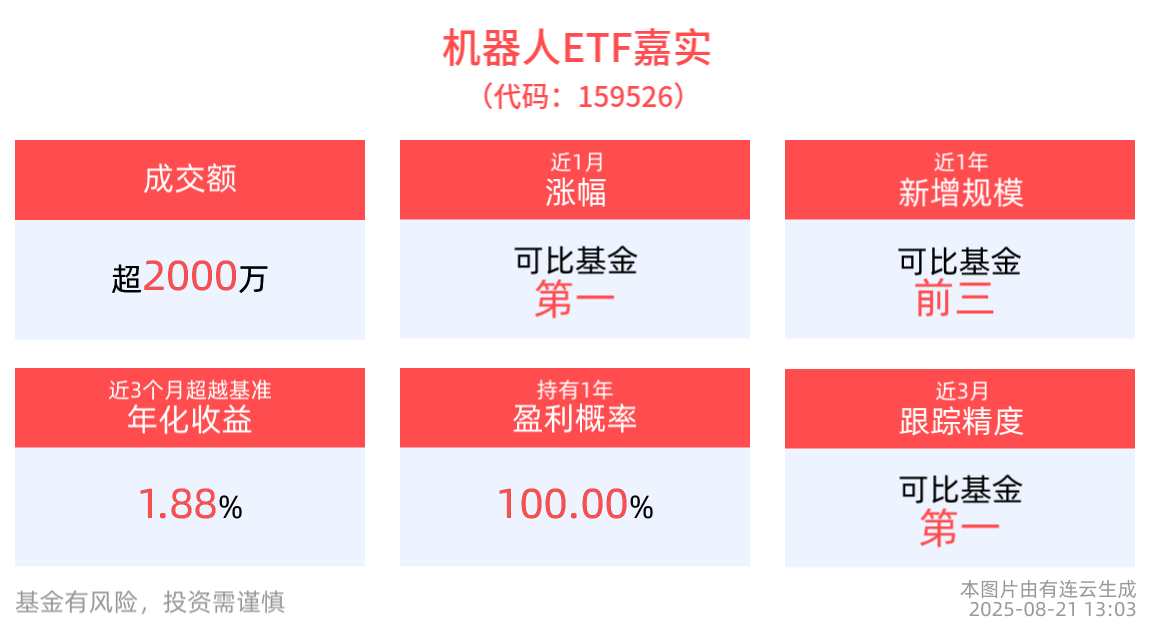
Core Viewpoint - The robotics industry is experiencing significant growth and investment, highlighted by the recent signing of a large order for humanoid robots and the increasing participation of major companies in the sector [6][7]. Group 1: Market Performance - As of August 21, 2025, the CSI Robotics Index decreased by 0.46%, with mixed performance among constituent stocks [1]. - The top-performing stocks included Yingfeng Environment (+3.21%), Maihe Co. (+3.16%), and OptoTech (+3.15%), while Junpu Intelligent and others faced declines [1]. - The Jiashi Robotics ETF has seen a 5.12% increase over the past week, ranking first among comparable funds [1]. Group 2: Liquidity and Fund Performance - The Jiashi Robotics ETF recorded a turnover rate of 5.51% with a transaction volume of 29.71 million yuan [3]. - Over the past year, the Jiashi Robotics ETF's scale increased by 517 million yuan, indicating significant growth [3]. - The net asset value of the Jiashi Robotics ETF rose by 78.34% over the past year, ranking 273 out of 2965 in the index stock fund category [3]. Group 3: Key Holdings - As of July 31, 2025, the top ten weighted stocks in the CSI Robotics Index accounted for 48.86% of the index, with Keda Xunfei and Huichuan Technology being the top two [3][5]. - The top ten stocks include Keda Xunfei (9.70%), Huichuan Technology (9.96%), and Stone Technology (5.03%) [5]. Group 4: Industry Developments - On August 20, TianTai Robotics signed a historic order for 10,000 humanoid robots, marking the largest single order in the humanoid robotics industry [5]. - Major companies such as Huawei, ByteDance, BYD, Xiaomi, and others are increasing their investments in embodied intelligence, indicating a growing trend in the industry [6]. - The humanoid robotics sector is entering a phase of rapid commercialization, with a clear trend towards industrial applications [7].
Helix模型助力Figure02自主折衣,灵巧手工程创新实现突破
GUOTAI HAITONG SECURITIES· 2025-08-15 11:27
Investment Rating - The report assigns an "Accumulate" rating for the humanoid robot industry, indicating a positive outlook for investment opportunities [5]. Core Insights - The humanoid robot industry is driven by "technological deepening" and "scene implementation," with Figure 02's technological breakthrough reflecting the industry's direction. The application scenarios are expanding from industrial to smart home environments [5]. - The report highlights the continuous technological transformation and exploration of application scenarios by domestic and international humanoid robot companies, indicating ongoing industrialization in the humanoid robot sector [5]. Summary by Sections Industry Overview - The report discusses the recent demonstration of Figure 02, which successfully completed the complex task of folding clothes autonomously, showcasing advancements in humanoid robotics [2][5]. Technological Advancements - Figure 02 utilizes the Helix architecture and a new dataset to master the skill of folding clothes, demonstrating significant improvements in its technical capabilities. The robot's ability to handle various fabric types and dynamic variables highlights its advanced environmental perception and motion planning [5]. - The report emphasizes the importance of algorithm optimization and data accumulation in expanding robotic skills, particularly in complex daily tasks [5]. Key Companies and Recommendations - The report recommends focusing on key players in the humanoid robot industry, including: - Joint module manufacturers: Zhongchen Technology, Shuanghuan Transmission, and Landai Technology - Linear actuator manufacturers: Hengli Hydraulic - Motor manufacturers: Mingzhi Electric - Encoder manufacturers: Yap Technology and Fengcai Technology - Dexterous hand and sensor manufacturers: Hanwei Technology and Zhaowei Electromechanical - Structural component manufacturers: Changying Precision [5][6]. Financial Projections - The report includes earnings forecasts for key companies, indicating expected growth in earnings per share (EPS) and price-to-earnings (PE) ratios for the years 2025 to 2027, with recommendations to "Accumulate" for several companies based on their projected performance [6].



国泰海通|机械:Helix模型助力Figure 02自主折衣,灵巧手工程创新实现突破
国泰海通证券研究· 2025-08-15 10:15
Core Viewpoint - The humanoid robot industry is driven by "technological deepening" and "scene implementation," with a focus on the transition from industrial applications to smart home environments [1][3]. Group 1: Technological Advancements - Figure 02 has achieved a breakthrough in autonomous clothing folding through its Helix architecture and new datasets, showcasing significant technical capabilities in complex tasks [1]. - The ability to fold clothes requires high environmental perception, precision in force control, and motion planning, which Figure 02 has successfully demonstrated using neural network algorithms [1]. - The innovative design of the dexterous hand utilizes underactuated modular finger components, integrating all necessary components within the fingers, which enhances movement stability and adaptability for grasping [2]. Group 2: Market Trends and Applications - The breakthrough in clothing folding signifies a shift from industrial applications to household scenarios, indicating potential for expanding capabilities in daily service needs such as cleaning and caregiving [3]. - The collaborative upgrade path of "algorithm - data - components" is essential for the ongoing development of humanoid robots, emphasizing the importance of algorithm optimization and data accumulation [3].

融资超15亿元,国内“最强”90后具身智能机器人创始团队,发布最强端到端VLA模型!
Robot猎场备忘录· 2025-08-14 00:03
Core Viewpoint - The article discusses the launch of the VLA model G0 by the domestic robotics startup Xinghaitu, which has raised over 1.5 billion yuan and achieved a valuation of 1 billion USD, highlighting its innovative dual-system architecture for intelligent robotics [2][8]. Financing and Valuation - Xinghaitu has completed five rounds of Series A financing in 2025, raising over 1.5 billion yuan, with notable investments from Meituan and Ant Group [8][9]. - The company is reportedly seeking a new round of financing at a valuation of 1 billion USD [9]. Product and Technology - The G0 model features a dual-system architecture that separates high-level thinking and low-level actions, enhancing the robot's ability to execute complex tasks [4][6]. - The G0 model utilizes 500 hours of high-consistency full-body motion data and a three-stage learning strategy to achieve long-range task execution from visual and language commands [2][4]. - The G0-VLM (visual language model) operates at a frequency of 2 Hz for task instruction output, while the G0-VLA (visual-language-action model) executes actions at 15 Hz and motion at 200 Hz [4]. Competitive Landscape - The dual-system architecture is becoming mainstream in the field of embodied intelligence, with other companies like Zhiyuan and Figure AI also developing similar models [7][8]. - Xinghaitu's G0 model has reportedly outperformed the π0 model from Physical Intelligence in various performance metrics [7]. Founding Team and Company Background - Xinghaitu was founded by a team with strong backgrounds in autonomous driving and academia, including professors from Tsinghua University [10][11]. - The company focuses on developing a comprehensive ecosystem for embodied intelligence, including both hardware and software solutions [10][22]. Market Position and Applications - The company's products are primarily targeted at research scenarios, serving clients such as laboratories and universities for technology research and data collection [20]. - Xinghaitu's robots have been delivered to over a hundred top developers globally, establishing it as a leading platform for embodied intelligence model training [19].