
华鲁恒升

Search documents
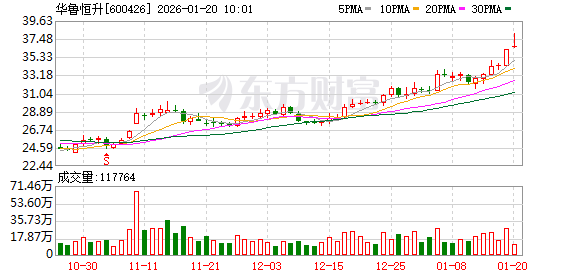
华鲁恒升涨2.97%,股价创历史新高
Zheng Quan Shi Bao Wang· 2026-01-20 02:00
证券时报·数据宝统计显示,华鲁恒升所属的基础化工行业,目前整体涨幅为0.70%,行业内,目前股价 上涨的有226只,涨幅居前的有阿拉丁、能之光、东岳硅材等,涨幅分别为8.99%、6.59%、6.11%。股 价下跌的有180只,跌幅居前的有博菲电气、神剑股份、*ST亚太等,跌幅分别为9.06%、3.86%、 3.25%。 两融数据显示,该股最新(1月19日)两融余额为4.62亿元,其中,融资余额为4.51亿元,近10日增加 1897.78万元,环比增长4.40%。 华鲁恒升股价创出历史新高,截至9:32,该股上涨2.97%,股价报37.39元,成交量139.73万股,成交金 额5189.97万元,换手率0.07%,该股最新A股总市值达793.87亿元,该股A股流通市值792.46亿元。 公司发布的三季报数据显示,前三季度公司共实现营业收入235.52亿元,同比下降6.46%,实现净利润 23.74亿元,同比下降22.14%,基本每股收益为1.1190元,加权平均净资产收益率7.45%。(数据宝) (文章来源:证券时报网) ...


化工ETF(159870)涨近1%,盘中净申购超2亿,石化化工行业或纳入全国碳排放交易市场
Xin Lang Cai Jing· 2026-01-20 01:57
Group 1 - The core viewpoint of the articles indicates that the petrochemical industry will likely be included in the national carbon emissions trading market by 2027, with a gradual inclusion of non-CO2 greenhouse gases like methane and nitrous oxide into the regulatory framework [1] - The Ministry of Industry and Information Technology and other departments have issued guidelines for the construction of zero-carbon factories, aiming to expand this initiative to various high-energy-consuming industries by 2030 [1] - New project approvals in the petrochemical sector will face stricter thresholds, with potential carbon emission assessments required for new or expanded chemical projects [2] Group 2 - The carbon trading mechanism is expected to increase operational costs for companies, particularly those in high-carbon industries, leading to the accelerated exit of outdated production capacities [2] - The China Securities Index for the petrochemical industry has seen a strong increase, with notable gains in stocks such as Huafeng Chemical and Hualu Hengsheng [2] - The top ten weighted stocks in the China Securities Index for the petrochemical industry account for 45.31% of the index, indicating a concentration of investment in major players like Wanhua Chemical and Yanhua Chemical [3]
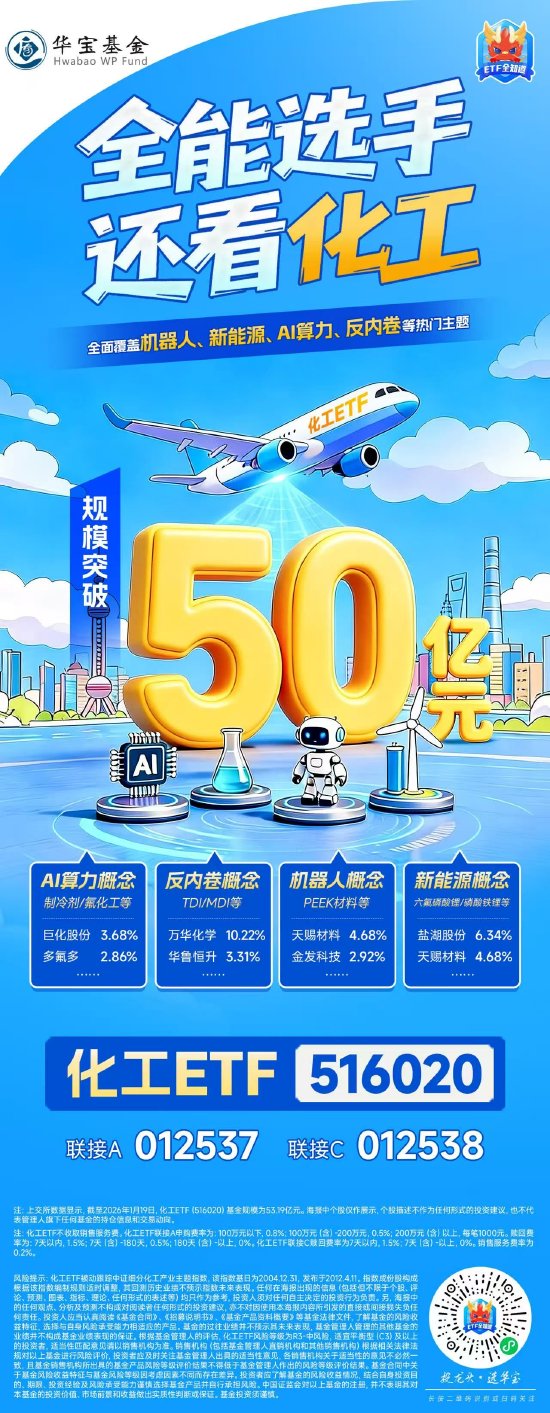
化工ETF(516020):规模突破50亿元!全面覆盖机器人、新能源、AI算力、反内卷等热门主题
Xin Lang Cai Jing· 2026-01-20 01:20
Group 1 - The article discusses various investment themes including robotics, new energy, AI computing power, and anti-involution [1] - Companies mentioned with their respective stock performance include Wanhua Chemical at 10.22%, Juhua Co. at 3.68%, and Tianqi Lithium at 6.34% [1] - The article highlights the significance of materials such as PEEK and various chemical products like refrigerants and fluorochemicals in the current market [1]




国内汽油、天然气等涨幅居前,建议关注进口替代、纯内需、高股息等方向 | 投研报告
Sou Hu Cai Jing· 2026-01-20 01:16
Group 1 - The core viewpoint of the report highlights significant price increases in domestic gasoline and natural gas, while products like sulfur and hydrochloric acid have seen substantial declines [1][2][4] - Major products with notable price increases this week include domestic gasoline (Shanghai Sinopec 93, +11.38%), natural gas (NYMEX futures, +8.68%), TDI (East China, +7.03%), and xylene (East China, +6.61%) [1][4] - Conversely, products with significant price declines include urea (Yunnan Yunwei, -9.95%), sulfuric acid (Zhejiang Heding 98%, -10.00%), and hydrochloric acid (East China hydrochloric acid (31%), -13.79%) [2][4] Group 2 - The report suggests that the chemical industry is currently in a weak overall performance phase, with mixed results across different sub-sectors due to past capacity expansions and weak demand [4] - It recommends focusing on investment opportunities in glyphosate, fertilizers, and high-dividend assets, particularly highlighting the potential recovery in the glyphosate sector as inventory decreases and prices begin to rise [4] - The report emphasizes the importance of selecting stocks with strong competitive positions and growth potential, such as Ruifeng New Materials in the lubricant additive sector and Baofeng Energy in the coal-to-olefins industry [4]

国内汽油、天然气等涨幅居前,建议关注进口替代、纯内需、高股息等方向
Huaxin Securities· 2026-01-19 14:53
Investment Rating - The report maintains a "Buy" rating for several companies including Xinyangfeng, Senqilin, Ruifeng New Materials, Sinopec, Juhua, Yangnong Chemical, CNOOC, Tongkun, and Daotong Technology [10]. Core Insights - Domestic gasoline and natural gas prices have seen significant increases, while products like liquid chlorine and hydrochloric acid have experienced substantial declines. The report suggests focusing on import substitution, pure domestic demand, and high-dividend opportunities [6][19]. - The international oil prices are expected to stabilize around $65 per barrel in 2026, influenced by geopolitical uncertainties and expectations of price declines. Companies with high dividend characteristics, such as Sinopec, are viewed positively due to their benefits from lower raw material costs [6][19]. - The chemical industry is currently in a weak state, with mixed performance across sub-sectors. However, certain sectors like lubricants are performing better than expected. The report highlights investment opportunities in glyphosate, fertilizers, and companies with strong domestic demand [22]. Summary by Sections Chemical Industry Investment Recommendations - The report emphasizes the importance of focusing on sectors that are likely to enter a recovery phase, such as glyphosate, which is currently facing operational difficulties but shows signs of improvement [22]. - It recommends selecting stocks with strong competitive positions and growth potential, particularly in the lubricant additives sector and the coal-to-olefins industry [22]. - The report also highlights the resilience of domestic chemical fertilizer sectors, which are expected to maintain stable demand due to self-sufficiency [22]. Market Performance - The report notes significant price increases for domestic gasoline (11.38%), natural gas (8.68%), and TDI (7.03%), while products like liquid chlorine (-18.02%) and hydrochloric acid (-13.79%) have seen notable declines [19][20]. - The overall performance of the chemical industry remains weak, influenced by past capacity expansions and weak demand, although some sectors are outperforming expectations [22]. Price Trends - The report provides insights into the price trends of various chemical products, indicating a mixed performance with some products rebounding while others continue to decline [20][22]. - It highlights the fluctuations in international oil prices, which are expected to impact the chemical sector significantly [23][24].
农化制品板块1月19日涨3.25%,利尔化学领涨,主力资金净流入6.39亿元
Zheng Xing Xing Ye Ri Bao· 2026-01-19 08:52
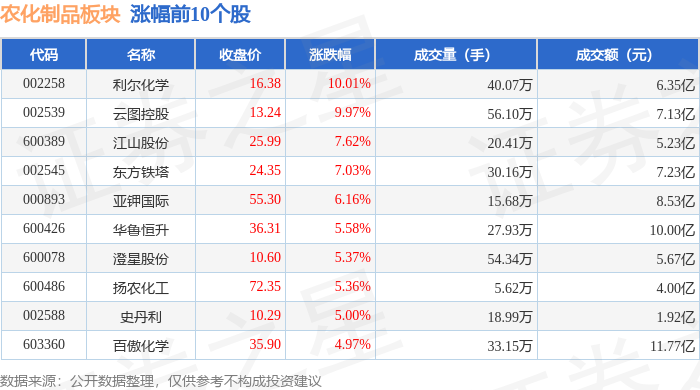
Group 1 - The agricultural chemical sector increased by 3.25% on January 19, with Lier Chemical leading the gains [1] - The Shanghai Composite Index closed at 4114.0, up 0.29%, while the Shenzhen Component Index closed at 14294.05, up 0.09% [1] - Key stocks in the agricultural chemical sector showed significant price increases, with Lier Chemical rising by 10.01% to a closing price of 16.38 [1] Group 2 - The agricultural chemical sector saw a net inflow of 639 million yuan from institutional investors, while retail investors experienced a net outflow of 370 million yuan [2] - Major stocks like Baiao Chemical and Hualu Hengsheng attracted substantial institutional investment, with net inflows of 160 million yuan and 154 million yuan, respectively [3] - Lier Chemical had a notable institutional net inflow of 117 million yuan, despite a significant outflow from retail investors [3]


化工ETF(159870)收涨超3.2%,今日净申购12.6亿份,连续13日获资金净流入
Xin Lang Cai Jing· 2026-01-19 07:45
Group 1 - The chemical sector is experiencing a positive sentiment, with leading stocks showing significant gains. The chemical ETF (159870) rose by 3.26% and saw a net subscription of 1.2635 billion units, marking 13 consecutive days of net inflow [1] - Institutions suggest that high-quality leading chemical companies are expected to benefit from the ongoing anti-involution measures and high energy consumption restrictions, with China's GDP projected to grow by 5% in 2025 [1] - The refining industry is expected to improve due to limited new capacity and the exit of outdated facilities, with the average USD to RMB exchange rate projected at 7.14 in 2025, potentially reducing crude oil procurement costs by approximately 2.5 billion RMB for 20 million tons of refining capacity [1] Group 2 - Refrigerant prices have increased, with R404 and R507 domestic prices at 49,000 RMB/ton, reflecting a 6.52% increase from the previous week [1] - In the herbicide market, companies have collectively raised prices by 2,100 RMB/ton in anticipation of the cancellation of export tax rebates, indicating a shift in cost transmission logic and confirming a price and profit turning point [1] - The spandex sector is seeing high operating rates among leading companies, with limited room for production increases, and a potential price increase of 1,000 RMB/ton is anticipated [2] Group 3 - The polyester industry is expected to reduce production by at least 15% due to inventory accumulation, with the possibility of increasing reductions to 25% [2] - The chlor-alkali sector is showing signs of an upward turning point, with many companies expected to enter significant losses by Q4 2025. 2026 is projected to be a year of capacity clearance for the chlor-alkali industry [2] - The chemical industry is set to face high energy consumption product restrictions as part of the 14th Five-Year Plan, with measures aimed at accelerating the exit of outdated capacity and promoting high-quality development [2] Group 4 - As of January 19, 2026, the CSI sub-sector chemical industry theme index (000813) rose by 3.05%, with significant gains from stocks such as Haohua Technology (10.00%) and Junzheng Group (8.68%) [3] - The chemical ETF (159870) closely tracks the CSI sub-sector chemical industry theme index, which consists of seven indices reflecting the overall performance of listed companies in related sub-industries [3] - The top ten weighted stocks in the CSI sub-sector chemical industry theme index account for 45.31% of the total, including companies like Wanhua Chemical and Yalake Co [3]
国际油价小幅上涨,丁二烯、环氧丙烷价格上涨
Zhong Guo Neng Yuan Wang· 2026-01-19 06:53
Core Viewpoint - The report highlights the current trends in the chemical industry, focusing on price movements, supply and demand dynamics, and investment opportunities in undervalued leading companies amid a backdrop of geopolitical tensions and changing market conditions [1][4][8]. Industry Dynamics - In the week of January 12-18, 49 out of 100 tracked chemical products saw price increases, while 20 experienced declines, and 31 remained stable. The average monthly price of 49% of products rose compared to the previous month [3]. - The average price of WTI crude oil futures increased by 0.54% to $59.44 per barrel, while Brent crude oil futures rose by 0.66% to $63.76 per barrel during the same week [4]. - As of January 9, U.S. crude oil production averaged 13.753 million barrels per day, a decrease of 58,000 barrels from the previous week but an increase of 272,000 barrels year-on-year. Total U.S. oil demand was 21.009 million barrels per day, up by 178,200 barrels from the previous week [4]. Price Movements - The price of butadiene rose by 4.04% to 9,663 yuan per ton as of January 18, with a month-on-month increase of 25.98% but a year-on-year decrease of 20.8%. The production of butadiene was 109,300 tons, down 2.85% from the previous week [5]. - Epoxy propane prices increased by 8.84% to 8,620 yuan per ton, with a year-on-year rise of 9.88%. The market operating rate was 65.38%, reflecting a 1.51% increase from the previous week [6][7]. Investment Recommendations - As of January 18, the price-to-earnings ratio (TTM) for the SW basic chemical sector is 14.68, at the 59.64% historical percentile, while the price-to-book ratio is 1.54, at the 40.20% historical percentile. The SW oil and petrochemical sector has a TTM P/E ratio of 13.44, at the 39.81% historical percentile [8]. - Investment suggestions include focusing on undervalued leading companies, the impact of "anti-involution" on supply in related sub-industries, and the growing importance of self-sufficiency in electronic materials and certain new energy materials amid rising prices [2][8]. - Recommended stocks include Wanhua Chemical, Hualu Hengsheng, and others, with a focus on sectors like semiconductor materials, OLED materials, and new energy materials [8][9].



华鲁恒升股价涨5%,兴证资管旗下1只基金重仓,持有52.01万股浮盈赚取89.46万元
Xin Lang Cai Jing· 2026-01-19 04:01
Group 1 - The core viewpoint of the news is that Hualu Hengsheng's stock has experienced a significant increase, with a 5% rise on January 19, reaching a price of 36.11 yuan per share, and a total market capitalization of 76.669 billion yuan [1] - Hualu Hengsheng has seen a cumulative increase of 6.31% over the past four days, indicating strong market performance [1] - The company specializes in the production and sales of urea and methanol, with its main business revenue composition being 48.34% from new energy and new materials, 24.61% from chemical fertilizers, and 10.82% from acetic acid and derivatives [1] Group 2 - From the perspective of fund holdings, Hualu Hengsheng is a top ten holding for a fund managed by Xingzheng Asset Management, which reduced its holdings by 100,000 shares but still holds 520,100 shares, representing 3.16% of the fund's net value [2] - The fund has generated a floating profit of approximately 894,600 yuan today and 1,061,000 yuan during the four-day increase [2] - The fund manager, Zheng Fangbiao, has a total asset scale of 438 million yuan, with the best fund return during his tenure being 92.66% [3]
机构详解2026年化工四大方向,石化ETF(159731)成布局利器,规模份额创历史新高
Sou Hu Cai Jing· 2026-01-19 02:56
Group 1 - The Petrochemical ETF (159731) has seen a rise of 1.79% as of January 19, with significant gains from holdings such as Yara International, Haohua Technology, and Hualu Hengsheng [1] - The Petrochemical ETF has experienced net inflows for eight consecutive trading days, totaling 269 million yuan, with its latest share count reaching 549 million and total scale hitting 522 million yuan, both marking new highs since inception [1] - Dongwu Securities highlights four major investment directions for the chemical industry by 2026, including dividend strategies focusing on China National Offshore Oil Corporation, China Petroleum, and Sinopec [1] Group 2 - The Petrochemical ETF and its linked funds closely track the CSI Petrochemical Industry Index, with the basic chemical industry accounting for 59.23% and the oil and petrochemical industry for 32.60% of the index [2] - The chemical industry cycle is expected to accelerate its reversal as supply-side measures continue to reduce capacity and promote domestic demand in the context of the "14th Five-Year Plan" [2]