AWS

Search documents
ASML Earnings Show Strength in Unsung A.I. Monopoly
Youtube· 2025-10-15 19:30
Core Viewpoint - ASML reported a strong quarterly performance with positive guidance, leading to increased price targets for the stock [1][2][3] Group 1: ASML's Performance and Outlook - The quarterly report indicates improving earnings expectations throughout the year, contributing to a rise in stock price [2][3] - ASML holds a monopoly on EUV lithography technology, essential for manufacturing advanced AI chips, making it a key player in the AI sector [4][6] - The company is expected to meet significant global demand, with bullish growth targets extending to 2030 [8] Group 2: Industry Impact - ASML's technology is crucial for major manufacturers like TSMC, impacting the entire AI ecosystem and benefiting other chip manufacturers such as AMD and Intel [6][7] - The positive outlook for ASML is reflected in the broader semiconductor industry, with improving earnings expectations indicating no bubble formation [10][11] Group 3: Competitors and Market Dynamics - Nvidia remains a leader in the market, supported by strong demand for data center capabilities and GPU training [12][14] - The presence of competitors like AMD reduces monopoly concerns for Nvidia, enhancing its market position [14][15] - Overall, the semiconductor sector is experiencing a rising tide, benefiting all players involved [9][10]


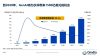
Omdia:到2029年 亚太生成式AI软件市场将增长至276亿美元
Zhi Tong Cai Jing· 2025-10-15 06:21
Core Insights - Independent Software Vendors (ISVs) are becoming key players in driving the commercialization of generative AI from experimentation to practical application [1][2] - The generative AI software market in the Asia-Pacific region is projected to grow to $27.6 billion by 2029, with a compound annual growth rate (CAGR) of 52.3% [1][5] - Collaboration between ISVs and cloud vendors will be crucial for the successful commercialization of generative AI [1][2] Market Opportunities - Omdia predicts that generative AI will create up to $158.6 billion in new opportunities for partners by 2028, with ISVs being among the most significant beneficiaries [2][13] - The global generative AI software market is expected to grow from $26.3 billion in 2025 to $101.3 billion by 2029, with a CAGR of 48.1% [5] Challenges Faced by ISVs - High computing and integration costs pose significant barriers for ISVs, who must invest heavily in model selection and data preparation before market validation [8] - Many ISVs lack brand recognition, making sales cycles unpredictable and complicating international market expansion due to compliance and local visibility issues [8] - The current pricing models are immature, with many projects remaining in pilot phases or highly customized deployments, hindering scalable and profitable growth [8] Cloud Vendor Strategies - Major cloud vendors are adjusting their strategies to assist ISVs in overcoming challenges, but their approaches vary [9][10] - AWS emphasizes modular combinations and a mature marketplace to help ISVs quickly build and promote AI solutions [10] - Microsoft Azure integrates AI deeply into enterprise suites but has higher entry barriers for partners [10] - Google Cloud focuses on engineering-driven paths, requiring higher self-expansion capabilities from ISVs [10] - Alibaba Cloud activates local ecosystems with low-code development tools but has a more fragmented marketplace [10] ISV Growth Stages - ISVs' growth in the generative AI space can be categorized into four stages: 1. AI Ready (Exploration Stage): Testing feasibility through APIs or demos [11] 2. AI Embedded (Deepening Stage): Integrating generative AI into existing products [11] 3. AI Native (Co-creation Stage): Embedding intelligent capabilities and enhancing market visibility [11] 4. AI Driven (Ecosystem Stage): Becoming ecosystem leaders with replicable solutions and international expansion [11] Future Outlook - Most ISVs are currently in the first two stages, focusing on reusable application scenarios and sustainable pricing models [12] - To unlock the potential of generative AI, ISVs and cloud vendors must collaborate to create scalable and practical solutions that businesses can adopt confidently [13]


云计算的“第一”之争:榜单之外的云端真相
Sou Hu Cai Jing· 2025-10-14 16:31
Core Insights - The cloud computing market is characterized by multiple companies claiming to be "number one" based on different metrics and conditions, leading to confusion among users and stakeholders [6][7][8] - The competition among cloud service providers has shifted from traditional metrics to a narrative-driven approach, where the concept of "first" has become a strategic asset in public relations and market positioning [8][9][23] Market Share Claims - Volcano Engine holds a 46.4% share of the Chinese public cloud large model market, leading in model invocation volume with a 49.2% share [3][12] - Alibaba Cloud claims to lead the AI cloud market in China with a 35.8% share, surpassing the combined share of the second to fourth players [4][10] - Huawei Cloud is noted for its rapid growth in the public cloud sector, particularly in the Middle East and Central Asia, achieving a tenfold revenue increase compared to 2023 [14] - Baidu Smart Cloud emphasizes AI capabilities in various sectors, focusing on "AI model as a service" to drive growth [16] Importance of "First" - The designation of "first" in the cloud computing industry signifies trust, capital, and competitive advantage, influencing investor confidence and customer choices [9][10] - Companies that maintain a "first" position can secure budget allocations and strategic priorities, while falling out of rankings may lead to organizational changes [9][10] Shift to AI-Driven Cloud - The competition has evolved to focus on "AI + Cloud," where cloud services are expected to integrate AI capabilities, transforming traditional cloud infrastructure into intelligent systems [17][18] - Alibaba Cloud is positioning itself as a "full-stack AI service provider," planning to invest 380 billion yuan in AI infrastructure over the next three years [18][19] - The integration of AI into cloud services is seen as a critical trend, with companies like Huawei and Baidu also adapting their strategies to emphasize AI capabilities [22][23] Future of Cloud Competition - The traditional metrics of market share may become less relevant as the industry shifts towards providing smarter, more adaptable cloud solutions [23] - The definition of "first" may evolve, focusing on the ability to deliver intelligent, open, and continuously evolving cloud services rather than just numerical rankings [23]


英伟达 VR200 NVL144 CPX - 印刷电路板设计变更及受益者-NVIDIA VR200 NVL144 CPX – PCB Design Change and Beneficiaries
2025-10-14 14:44
Summary of NVIDIA VR200 NVL144 CPX Rack Design Changes and Beneficiaries Company and Industry - **Company**: NVIDIA (NVDA US) - **Industry**: Semiconductor and PCB (Printed Circuit Board) Design Key Points and Arguments Introduction of VR200 NVL144 CPX Rack - NVIDIA has launched the VR200 NVL144 CPX rack, generating significant interest among investors [1] - The new rack features PCB design changes aimed at optimizing performance and cost [1] Processing Stages of Large Language Models - The processing of large language models is divided into prefill and decode stages, each with distinct load characteristics [2] - The prefill stage is compute-bound, while the decode stage is memory-bound, leading to performance degradation when run concurrently [2] Design Changes in the VR200 NVL144 CPX Rack - The rack maintains the traditional design of 18 compute trays and 9 switch trays but incorporates changes to the Oberon architecture [5] - Each compute tray includes 2 Vera CPUs, 4 Rubin GPUs, 8 Rubin CPX GPUs, and 8 CX9 NICs [5] - The Rubin CPX uses GDDR7 memory instead of HBM, focusing on optimizing prefill scenarios [2][7] PCB Value Increase - The PCB value in the VR200 NVL144 CPX rack has nearly tripled compared to the GB200/300 generation, with an estimated total PCB value of over $3000 per compute tray [19] - The Bianca board in the VR200 has seen a 30% increase in value compared to previous generations [18] Cooling Solutions - The power of Rubin GPGPU has increased from 1800W to 2300–2500W, necessitating the adoption of Micro-Channel Lid (MCL) for improved cooling efficiency [23][24] - MCL is supplied exclusively by Taiwan's Jentech, making it a key beneficiary of the power increase [25] Memory Module Changes - NVIDIA is switching from LPDDR5X memory to SOCAMM, which offers higher flexibility and maintainability [26][29] - This change benefits suppliers of memory module peripheral chips, such as Rambus, as SOCAMM modules require additional components [29] Supply and Demand for HVLP4 Copper Foil - Demand for HVLP4 copper foil is expected to exceed supply, with NVIDIA's VR200 racks and AWS Tranium 3 racks fully adopting HVLP4 [31][33] - By 2027, total demand for HVLP4 is projected to be 15,000 tons, while supply is estimated at 13,000 tons, resulting in a 10% supply shortage [33] MEC as a Hidden Beneficiary - MEC, a Japanese company specializing in surface treatment chemicals, is positioned to benefit from the increased demand for HVLP4 copper foil due to its CZ series products [35][36] - MEC's revenue from the adoption of its products in AI server PCBs could increase significantly, contributing to 50% of its total revenue by 2027 [48] Other Important Points - The PCB design changes include a midplane to replace overpass cables, enhancing connectivity within the compute tray [12][15] - The NVSwitch tray boards have also seen a value increase, with a new design that includes more layers and higher-grade materials [20] - The transition to SOCAMM memory modules is NVIDIA's second attempt, raising concerns about potential warpage issues [29] This summary encapsulates the critical developments and implications of NVIDIA's new VR200 NVL144 CPX rack, highlighting the potential beneficiaries and market dynamics within the semiconductor and PCB industries.

Oracle Introduces Multicloud Universal Credits
Prnewswire· 2025-10-14 12:20
Core Insights - Oracle has launched Oracle Multicloud Universal Credits, a new licensing option that simplifies the procurement of Oracle AI Database and OCI services across multiple cloud platforms including AWS, Google Cloud, and Microsoft Azure [1][2][3] - This initiative aims to streamline procurement processes, offering flexible terms and consistent contracts, which could enhance the adoption of Oracle's multicloud services [2][3] Unified Cross-Cloud Experience - The new Multicloud Universal Credits will allow customers to operate Oracle databases in their preferred regions while benefiting from a unified consumption model across different cloud providers [1][3] - Oracle's multicloud solution is designed to accelerate application modernization and cloud migrations, providing customers with more choices and flexibility [3] Additional Resources - Oracle's distributed cloud offers a single consumption model for seamless administration and governance across multiple clouds, enabling customers to deploy Oracle AI Database workloads in various regions [4] - The company provides options for hybrid cloud deployments, allowing customers to run OCI services in their own data centers and manage deployments globally [5][6] About Oracle - Oracle offers integrated applications and autonomous infrastructure in the Oracle Cloud, focusing on delivering innovative solutions to enhance cloud and AI capabilities [7]


Google to invest $10 billion in AI data center project in India
CNBC· 2025-10-14 06:08
Core Insights - Google is set to invest $10 billion in new data centers in southern India, marking a significant investment in the region to meet the rising demand for AI [1] - The investment will be part of a 1 gigawatt project in Andhra Pradesh, with plans to develop three campuses in Visakhapatnam [2] - The investment aligns with a broader trend of increasing infrastructure investments by tech companies to support the growing global demand for cloud and AI services [3] Investment Details - The memorandum for the investment will be signed following a year of discussions, indicating a strong commitment from both Google and the Indian government [2] - Google's Indian subsidiary, Raiden Infotech, will be responsible for the development of the data centers [2] - This investment is part of Google's broader strategy, as the company has raised its capital expenditure forecast for 2025 to $85 billion, reflecting strong demand for cloud services [4] Industry Trends - The investment in India is part of a larger trend where multinational companies like Microsoft and AWS are also increasing their investments in the country's cloud and AI infrastructure [5] - The Indian state of Andhra Pradesh plans to enhance its computing capacity significantly over the next three years to accommodate the growing demand [3]

3 'Promising' AI Stocks To Avoid
Benzinga· 2025-10-13 16:36
Core Insights - The essence of long-term investment success lies in discipline rather than brilliance, emphasizing the importance of avoiding mistakes over chasing high returns [1][2][7] Investment Philosophy - Successful investing mirrors poker and sports, where avoiding costly errors is crucial; investors should focus on not overpaying for stocks and maintaining a disciplined approach to valuation [3][4][5] - The market rewards those who survive by sidestepping high-risk investments, leading to a cumulative long-term advantage [8] Valuation Concerns - Companies trading at high multiples, such as 40 times earnings or 20 times sales, lack a margin for error, making them vulnerable to downturns when expectations are not met [5] - The Piotroski F-Score serves as a valuable tool for assessing a company's fundamental health, with low scores indicating potential pitfalls similar to struggling sports teams [6][10] Company-Specific Analysis - Synopsys (NASDAQ:SNPS) is highlighted as overvalued, trading at over 45 times forward earnings and 12 times sales, with growth slowing and competitive pressures increasing [9][10] - Snowflake (NYSE:SNOW) is noted for its significant valuation disconnect, trading at over 15 times forward sales despite declining revenue growth and persistent losses [11][12] - Datadog (NASDAQ:DDOG) faces valuation challenges, trading at around 70 times forward earnings, with growth slowing and competition impacting pricing power [12][13]


科技行业周报:AI应用驱动算力需求高增,中美摩擦推动国产算力提速-20251013
First Shanghai Securities· 2025-10-13 15:29
Investment Rating - The report maintains a strong positive outlook on the AI application-driven demand for computing power, indicating a sustained high growth trajectory [2]. Core Insights - The report emphasizes that the domestic computing power capacity bottleneck has been broken, with expectations for a significant increase in domestic chip production by 2026. The acceleration of commercialization by overseas AI giants like OpenAI is also highlighted, maintaining high demand for computing hardware [2][3]. - The ongoing US-China tensions are not expected to alter the development trends in the AI industry, with domestic computing power making significant strides in capacity and key components [3]. Summary by Sections Domestic Computing Power Industry - The report notes a persistent tight balance in domestic computing power, with critical bottlenecks in advanced process capacity, advanced packaging, large model adaptation, and HBM supply gradually being overcome. Positive news from the industry is expected to catalyze market interest, particularly in the latter half of this year and into next year [3]. - Major Chinese internet companies like ByteDance and Alibaba are experiencing genuine demand for computing power to support their operations, particularly in recommendation and search algorithms, alongside the new demand generated by generative AI applications [3]. Investment Recommendations - Key companies in the domestic computing power hardware supply chain are recommended for attention, including Cambrian (688256), SMIC (0981.HK), and Huahong Semiconductor (1347.HK) [4]. - The report suggests focusing on leading companies in the optical module sector, such as Zhongji Xuchuang (300308) and NewEase (300502), due to the increasing demand for optical modules driven by the needs of companies like Google, Meta, and AWS [5]. AI Edge Hardware Opportunities - The report highlights the launch of AI smart glasses by Meta and the anticipated entry of OpenAI into AI hardware, with Apple also shifting focus towards smart glasses development [6][7]. - Companies involved in edge AI hardware, such as Zhaoyi Innovation (603986) and BYD Electronics (002475), are noted for their potential in the evolving market [7].

台积电与人工智能半导体 2025 年第三季度业绩展望;助力 800V 人工智能-Investor Presentation TSMC and AI Semi Preview into 3Q25 Prints; Powering 800V AI
2025-10-13 15:12
Summary of TSMC and AI Semiconductor Preview Industry Overview - **Industry**: Greater China Semiconductors, specifically focusing on TSMC and AI semiconductor trends [1][2] - **Market View**: Attractive outlook for the semiconductor industry, particularly in AI applications [2] Core Insights - **Top Investment Picks**: - **AI Semiconductor**: TSMC (Top Pick), Aspeed, Alchip, KYEC, ASE, FOCI, Himax, ASMPT, AllRing - **Memory Sector**: Winbond (Top Pick), GWC, Phison, Nanya Tech, APMemory, GigaDevice, Macronix - **Non-AI**: Novatek, OmniVision, Realtek [5] - **AI Demand Dynamics**: - The introduction of DeepSeek is expected to increase inferencing AI demand, although there are concerns about the sufficiency of domestic GPU supply [5] - Historical trends indicate that a decline in semiconductor inventory days is a positive signal for stock price appreciation [5] - **Long-term Demand Drivers**: - **Tech Diffusion**: AI semiconductor demand is expected to accelerate due to generative AI, impacting various verticals beyond the semiconductor industry [5] - **Tech Deflation**: Anticipated "price elasticity" is expected to stimulate demand for technology products [5] Financial Projections for TSMC - **Revenue Growth**: - 2025 full-year USD revenue growth projections range from over 35% to 30% year-over-year [9] - 4Q25 revenue growth guidance varies from a 3-5% increase to a potential drop of 3-5% [9] - **Gross Margin Guidance**: - Expected gross margins for 4Q25 are projected between 55% and 61% [9] - **Earnings Per Share (EPS)**: - EPS estimates for 3Q25 are around NT$16.30, with consensus estimates slightly lower at NT$15.18 [12] Valuation Metrics - **TSMC Valuation**: - Current share price is 1,440.0 TWD with a target price of 1,388.0 TWD, indicating a downside of 4% [6] - P/E ratios for TSMC are projected at 31.8 for 2024, decreasing to 21.1 by 2026 [6] Additional Insights - **Market Trends**: - The semiconductor industry is experiencing a prolonged downcycle in mature node foundry and niche memory due to increased domestic fab supply [5] - The anticipated demand for advanced packaging solutions (Al/CoWoS) is expected to exceed supply in 2026 [9] - **Apple's Influence**: - Apple’s A20 processors are set to adopt TSMC's N2 technology, which is expected to account for 20-25% of TSMC's total revenue [20] - **Future Opportunities**: - The data center-related GaN (Gallium Nitride) market is projected to reach US$1.2 billion by 2030, indicating significant growth potential in power semiconductor applications [36] This summary encapsulates the key points from the TSMC and AI semiconductor preview, highlighting the industry's outlook, financial projections, and strategic insights for potential investment opportunities.
活动 | 多平台发力!2025福布斯中国新兴科技企业T30&30评选加速推进
Sou Hu Cai Jing· 2025-10-10 11:06
Group 1 - The core idea of the article emphasizes the importance of courage, resilience, and wisdom in innovation, highlighting that these qualities are more valuable than technology and results [2] - Forbes China has launched the "2025 Forbes China Emerging Technology Companies T30&30 Selection" to honor innovative companies and explore new paths for innovation development and application in the current era [2] - The selection process involves visiting various innovation incubation platforms to discover potential technology companies, ensuring a broad and cutting-edge representation of innovative forces [2] Group 2 - The Skynomics innovation incubation and acceleration platform focuses on low-altitude economy, artificial intelligence, robotics, and biotechnology, aiming to create an international innovation ecosystem [3] - The 36C Future Technology Venture Community hosts 16,000 AI companies, with about 30% of founders being former employees of major firms like Alibaba and Huawei, providing "venture + incubation" support for financing and globalization [3] - The Guangdong-Hong Kong-Macao Greater Bay Area has launched the Application Scenario Innovation Center to promote technology application, supported by various policies to build new pillars for industrial development [3] Group 3 - The registration for the 2025 Forbes China Emerging Technology Companies T30&30 Selection is ongoing until December 25, 2025, with results to be announced at an awards ceremony in January 2026 [4] - The selection aims to provide a broad platform for outstanding emerging technology companies, encouraging more entrepreneurs to pursue excellence and innovation [4]