
LG

Search documents
持续拓展高水平、深层次、宽领域对外交流合作盐城经开区打造新型国际园区
Xin Hua Ri Bao· 2025-11-23 00:25
Core Insights - The 2025 China-Korea (Yancheng) Industrial Park Economic and Trade Cooperation Exchange Conference was held, focusing on "sharing new opportunities between China and Korea and seeking a new future for open carbon" [1] - The Yancheng Economic and Technological Development Zone aims to become a new type of international cooperation park with a focus on industrial cooperation, investment trade, and a favorable business environment [1] Group 1: Economic Cooperation and Investment - Over 1,000 Korean enterprises have settled in Yancheng, with a cumulative investment exceeding $13 billion [3] - The SK battery project in Yancheng has a total investment of $4.54 billion, marking it as one of the largest foreign investment projects in Jiangsu province in recent years [3] - Yancheng is expanding its cooperation with Korea beyond the automotive sector to include new generation information technology, high-end equipment, and smart manufacturing [3] Group 2: Automotive Industry Development - Yueda Kia's third factory in Yancheng has fully automated production lines, focusing on electric and intelligent vehicle transformation, with production and sales increasing by 7.4% and 5.2% respectively from January to October this year [2] - The Yancheng Economic Development Zone is also accelerating the layout of new-generation photovoltaic and energy storage battery industries, with a scale nearing 10 billion yuan [2] Group 3: Cultural and Tourism Integration - The new Shilla Stay hotel in Yancheng is set to enhance high-end business travel services, contributing to the integration of industry and city development [4] - The KK-PARK International Street, established in 2022, has become a cultural tourism benchmark project, featuring Korean-style architecture and entertainment options [4] Group 4: Healthcare and Medical Aesthetics - Yancheng is attracting Korean medical aesthetics institutions and strengthening cooperation with hospitals to establish a significant medical aesthetics center in the Yangtze River Delta [5] Group 5: International Cooperation Platforms - The 26th China-Japan-Korea Friendly Cities Exchange Conference was held, focusing on local cooperation and the establishment of more collaborative platforms [6] - Yancheng is actively promoting investment cooperation activities in Korea, expanding its engagement with various Korean entities beyond just enterprises [6]
全球透明LED显示屏行业现状动态与竞争策略分析报告2026年版
Sou Hu Cai Jing· 2025-11-22 17:12
Core Insights - The report focuses on the global transparent LED display market, analyzing its growth, segmentation, and competitive landscape from 2020 to 2031 [2][3][4]. Market Overview - The transparent LED display market is segmented by product type and application, with projections for market size in 2020, 2024, and 2031 [2][3]. - The market is expected to grow significantly, driven by increasing demand in retail stores, shopping malls, and airports [3][4]. Industry Development - The transparent LED display industry is characterized by rapid technological advancements and increasing adoption across various sectors [3][4]. - Key factors influencing the industry include favorable technological developments and market demand, alongside challenges such as high entry barriers [3][4][5]. Market Share and Rankings - The report provides insights into the market share and rankings of major players in the transparent LED display market from 2022 to 2025, based on sales volume and revenue [4][5]. - It highlights the competitive landscape, identifying the top manufacturers and their respective market shares [4][5]. Regional Analysis - The report analyzes the market size and growth trends of transparent LED displays across different regions, including North America, Europe, and China, with forecasts extending to 2031 [5][6]. - It emphasizes the significant growth potential in the Chinese market, which is expected to lead in both production and consumption [5][6]. Product and Application Segmentation - The transparent LED display market is categorized by product types (e.g., brightness levels) and applications (e.g., retail, automotive showrooms) [3][4]. - The report includes detailed forecasts for sales volume and revenue for different product types and applications from 2020 to 2031 [6][7]. Competitive Landscape - The report profiles major manufacturers in the transparent LED display market, detailing their product specifications, market applications, and financial performance from 2020 to 2025 [5][6]. - It includes insights into the latest developments and strategic initiatives of key players in the industry [5][6].


Mini LED话语权之战:TCL如何用8年成为关键先生
3 6 Ke· 2025-11-22 14:19
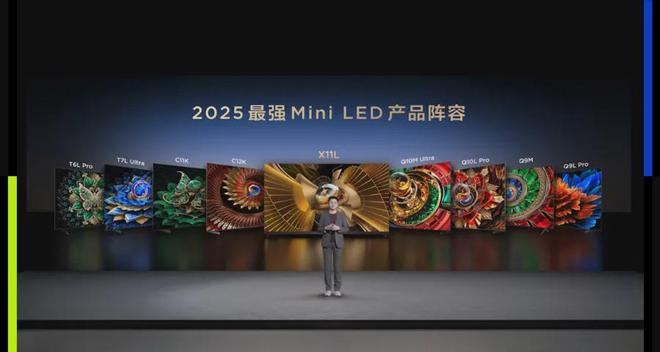
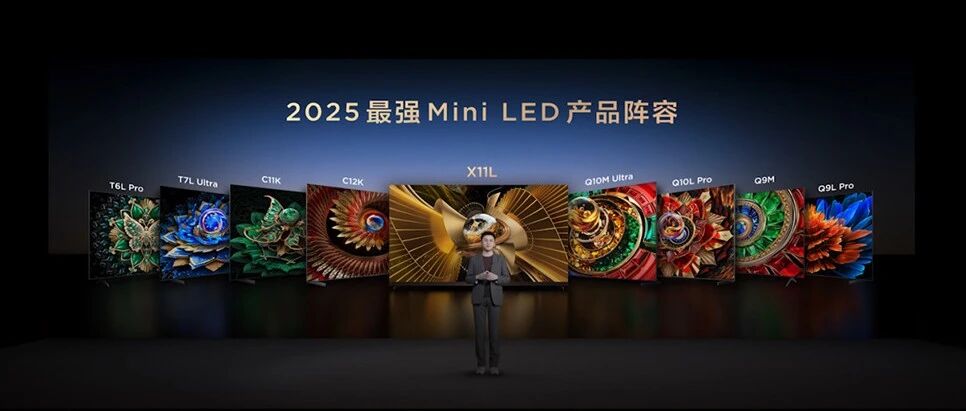
Core Viewpoint - TCL has successfully positioned itself as a leader in the display industry by focusing on Mini LED technology, diverging from the industry's trend towards OLED, and has developed a flagship product, the X11L SQD-Mini LED, which showcases significant technological advancements [2][4][42]. Group 1: TCL's Strategic Decision - In contrast to the industry's enthusiasm for OLED, TCL chose to deepen its investment in Mini LED technology, believing it to be superior in terms of technical limits, cost control, and overall performance [4][11]. - The decision to pursue Mini LED was made in 2017, amidst a strong industry focus on OLED, marking a significant divergence from prevailing trends [8][14]. - TCL's commitment to Mini LED involved a long-term exploration of technology, requiring collaboration with the entire supply chain to develop from scratch [5][12]. Group 2: Technological Advancements - TCL's Mini LED technology aims to achieve perfect black levels and infinite contrast ratios, which are traditionally associated with OLED, while maintaining the cost and longevity advantages of LCD [11][17]. - The X11L SQD-Mini LED features 20,736 backlight zones, setting a new industry standard for backlight partitioning and significantly enhancing contrast and brightness [21][42]. - TCL has set an ambitious target of achieving 10,000 nits of peak brightness, which surpasses current flagship mobile devices and aims to deliver an unparalleled viewing experience [23][25]. Group 3: Industry Impact - TCL's advancements in Mini LED technology have positioned it as a leader in the global market, with projections indicating it will be the top seller of Mini LED TVs in 2024 [21][22]. - The successful launch of the X11L SQD-Mini LED signifies a shift in the display technology landscape, marking TCL's transition from a follower to a leader in the high-end television market [42][43]. - The company's journey reflects a broader narrative of the Chinese display industry evolving from dependency on foreign technology to establishing its own technological pathways and innovations [43].

Mini LED话语权之战:TCL如何用8年成为关键先生
36氪· 2025-11-22 13:35
Core Viewpoint - TCL has successfully positioned its SQD X11L Mini LED television as a market leader by choosing to focus on Mini LED technology instead of following the OLED trend, demonstrating a long-term vision and commitment to innovation [6][20][61]. Group 1: Historical Context and Decision Making - The journey began at the 2017 CES, where OLED technology was highly praised, leading many companies to pursue it, while TCL opted to continue developing LCD technology with a focus on Mini LED [4][6][7]. - TCL's decision to invest in Mini LED was seen as a challenging yet correct path, as it allowed the company to leverage existing LCD supply chains and avoid the pitfalls associated with OLED technology [20][17]. - The internal debate at TCL regarding the future direction highlighted the contrast between the established OLED path and the uncertain Mini LED route, with the latter requiring significant R&D investment [12][13][14]. Group 2: Technical Development and Breakthroughs - TCL faced three major challenges in developing Mini LED technology: achieving extreme contrast, brightness, and color accuracy [22][24]. - The company established the Pangu Laboratory to address these challenges, focusing on system-level solutions and optimizing the entire production process from materials to final products [27][29]. - TCL's Mini LED technology achieved a significant milestone with the release of the X11G Max, featuring 20,736 backlight zones, which set a new industry standard [29][60]. Group 3: Industry Impact and Future Prospects - The launch of the X11L SQD-Mini LED television marked a pivotal moment for TCL, showcasing its ability to lead in display technology and shift the narrative from following to leading in the industry [61][62]. - The advancements made by TCL not only highlight the company's technical capabilities but also signify a broader transformation within the Chinese display industry, moving towards self-sufficiency and innovation [61][62]. - Looking ahead, TCL is poised to continue exploring new technologies and solutions, with a structured R&D roadmap in place to guide future developments [63].
韩大企业将向国内投资超过800万亿韩元以确保韩国未来产业竞争力
Shang Wu Bu Wang Zhan· 2025-11-21 10:50
Group 1 - The core point of the article is that major South Korean conglomerates, including Samsung, SK, Hyundai Motor, and LG, have committed to invest over 800 trillion KRW domestically in response to concerns about reduced domestic investment due to large-scale investments in the U.S. [1] - Samsung plans to invest 450 trillion KRW in South Korea over the next five years, while other major companies also promise medium to long-term investments [1] - The investments aim to foster growth industries such as artificial intelligence, semiconductors, and robotics, enhancing global competitiveness [1] Group 2 - Samsung will initiate the construction of the world's largest semiconductor production facility, the Samsung Pyeongtaek Plant No. 5, and establish an AI data center in South Jeolla Province [1] - SK plans to increase investments centered around the Yongin semiconductor cluster to meet the growing medium to long-term demand for semiconductors [1] - Hyundai Motor will build a robotics factory and focus on AI and robotics as new business areas, advancing investments in green energy [1] - LG intends to invest 100 trillion KRW domestically over the next five years, with 60% allocated to materials, components, and equipment technology development to support the growth of the domestic industrial ecosystem [1] - If these companies execute their investment plans, the manufacturing base and technological ecosystem in South Korea will be strengthened, and the pace of talent development will accelerate [1]
Hyundai CEO Says US Reached Out to Support Firm After ICE Raid in LG Plant
Youtube· 2025-11-19 06:27
When it comes to operating those factories. Strategic localization is key here, right. What's driving those moves and those decisions that you're making right now.Well, it is very interesting, right, Because as you see changes in regulation like the tariffs in the United States, you have to quickly react to try to minimize the impact and be more competitive. But we were already on a roll when it comes to announcing big investments in the United States. So we have announced 26 billion dollars in the next fou ...
Hyundai CEO Says US Reached Out to Support Firm After ICE Raid in LG Plant
Bloomberg Television· 2025-11-19 06:27
When it comes to operating those factories. Strategic localization is key here, right. What's driving those moves and those decisions that you're making right now.Well, it is very interesting, right, Because as you see changes in regulation like the tariffs in the United States, you have to quickly react to try to minimize the impact and be more competitive. But we were already on a roll when it comes to announcing big investments in the United States. So we have announced 26 billion dollars in the next fou ...

Tenstorrent,估值30亿美金
半导体行业观察· 2025-11-19 01:35
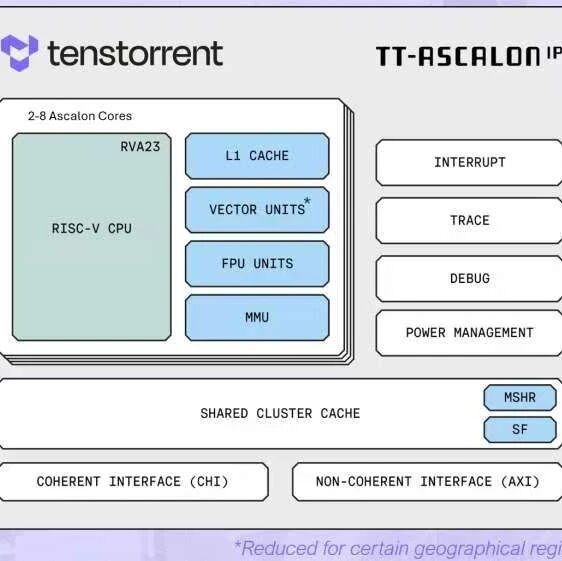
Core Insights - Tenstorrent, led by Jim Keller, has achieved a valuation of $3 billion in its recent funding round, focusing on scalable AI accelerators for cloud and edge computing [2] - The company is developing RISC-V CPUs and plans to license its designs to other entities, utilizing open-source technologies to reduce costs associated with high-bandwidth memory [2][3] - The first chip, Tensix processor, is produced in collaboration with GlobalFoundries and features a grid-based architecture for efficient tensor computation [4] Product Development - The Grayskull processor, Tenstorrent's first Tensix processor, simplifies programming and enhances scalability, featuring up to 120 Tensix cores and supporting various AI precision formats [3] - The Wormhole variant of Grayskull reduces the number of cores to 80 but increases SRAM capacity and adds support for more precision formats, with a local memory capacity of 12GB GDDR6 [3][4] - Tenstorrent's RISC-V CPU, Ascalon, is set to compete with Arm's Neoverse V2 and V3, with performance metrics of 10 to 20 SPECint2006/GHz [5] Market Strategy - Tenstorrent is focusing on IP licensing, with existing clients including LG and Hyundai, and aims to allow customization of its cores, which is uncommon in the industry [4][5] - The company plans to release new core generations every 18 months, with the next generation, Babylon, expected to enhance performance and efficiency [7] - Tenstorrent is exploring markets in industrial and medical sectors, which have traditionally been overlooked by competitors like Arm [7] Technological Advancements - The upcoming Tensix-Neo core adopts a cluster architecture for improved area efficiency and utilization, allowing for more modular and flexible designs [8][10] - Customers will have the option to customize certain parameters while Tenstorrent manages more complex configurations, offering innovative licensing for those interested in deeper customization [10]
C端养老机器人融资潮起:企业单笔获15亿投资,资本入场不再“畏惧”?
3 6 Ke· 2025-11-19 01:11
Core Insights - The traditional elderly care model is under increasing pressure due to a large elderly population of 300 million and a growing shortage of caregivers, leading to a shift towards C-end products for home care robots [1][9] - Investment in "hard technology" related to elderly care robots is gaining momentum, with several companies successfully securing funding for C-end products aimed at family scenarios [2][4] Group 1: Investment and Market Trends - Companies like Huaxi Technology and Ruisen Robotics are attracting significant investment for their C-end elderly care robots, indicating a growing confidence in the market [2][4] - The global market for C-end home care robots is heating up, with notable investments from major tech companies like Nvidia and Intel in products like Figure AI's humanoid robot, which has reached a valuation of approximately $39 billion [6][7] Group 2: Demand and Supply Dynamics - By the end of 2024, China's elderly population aged 60 and above is expected to exceed 310 million, highlighting a critical demand for elderly care solutions [9] - The shortage of caregivers in China is severe, with a reported gap of 5.5 million caregivers and a high turnover rate of 40% to 50% among new hires [9][10] Group 3: Technological Advancements and Standards - The Chinese robotics industry is transitioning from quantity to quality, with significant advancements in technology and a robust supply chain for components essential for elderly care robots [12][13] - The establishment of international standards for elderly care robots, led by China, is expected to enhance industry development and set benchmarks for future products [12][13] Group 4: Future Outlook and Market Penetration - The penetration rate of smart elderly care robots is projected to reach 8% by 2025, with various segments like rehabilitation robots and emotional companionship robots showing significant growth potential [16][17] - The current environment presents an optimal opportunity for companies to develop consumer-grade robots, as demand has been validated and the industry chain is maturing [16][17]


惠而浦在专利纠纷中起诉阻止三星和LG微波炉进口
Hua Er Jie Jian Wen· 2025-11-18 23:51
Core Viewpoint - Whirlpool has filed a complaint with the U.S. International Trade Commission (ITC) to block the import and sale of microwaves produced by competitors such as Samsung and LG, claiming these products infringe on its patented technology [1] Group 1: Company Actions - Whirlpool is seeking to protect its market by alleging that its competitors have copied its patented technology related to low-profile microwave hood combination products (LP-MHC) [1] - The company asserts that it was the sole supplier of LP-MHC products in the U.S. before the alleged infringement began [1] Group 2: Competitors - The complaint specifically targets South Korean competitors Samsung and LG for infringing on five of Whirlpool's patents [1] - Whirlpool emphasizes its role in creating the LP-MHC product category, highlighting its innovation in this market segment [1]

