
默沙东

Search documents
三生制药12亿美元卖掉一款新药,创下国产药交易价新高
Xin Lang Cai Jing· 2025-05-20 08:42
Core Viewpoint - The collaboration between 3SBio and Pfizer for the dual antibody PD-1/VEGF product SSGJ-707 marks a significant milestone in the biopharmaceutical industry, with a record-breaking upfront payment of $1.25 billion and potential total payments exceeding $6 billion, highlighting the growing interest and investment in innovative cancer therapies [1][3][4]. Group 1: Financial Aspects - The deal includes an upfront payment of $1.25 billion, making it the highest upfront payment for a domestic transaction in China to date [1]. - The total potential payments could reach $4.8 billion in milestone payments, bringing the total deal value to over $6 billion [1]. - 3SBio's stock price has surged over 200% since February, with a market capitalization increase of approximately HKD 30 billion [3]. Group 2: Product Development and Market Potential - SSGJ-707 has shown significant anti-tumor activity and safety in early clinical trials, positioning it as a potential best-in-class therapy [3][6]. - The product is currently undergoing four Phase II clinical studies targeting various cancers, with projected peak sales of approximately RMB 4 billion domestically and $4.5 billion in overseas markets [3][4]. - The product has received breakthrough therapy designation for treating PD-L1 positive non-small cell lung cancer (NSCLC) [4]. Group 3: Strategic Implications for Pfizer - Pfizer is actively seeking new products to bolster its portfolio, especially after a significant revenue drop in 2023 [5]. - The collaboration with 3SBio allows Pfizer to enhance its offerings in the PD-1/VEGF space, where it has previously engaged in clinical collaborations [6]. - The urgency for Pfizer to acquire new blockbuster products is underscored by its recent challenges in the GLP-1 drug development space [5].

医药股全线爆发!辉瑞60亿押注中国抗癌药
Hua Er Jie Jian Wen· 2025-05-20 07:34
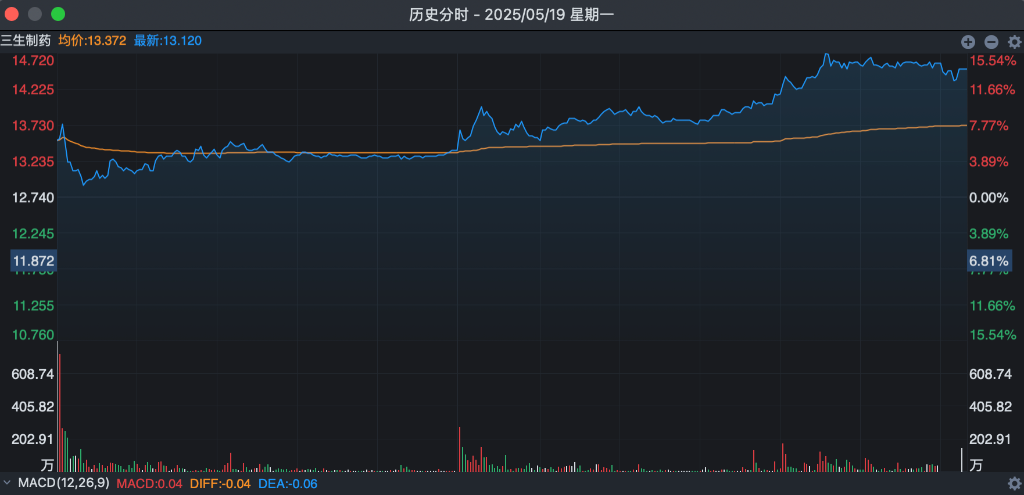
Core Viewpoint - Pfizer's investment of $6 billion in cancer drug development in China has led to a significant surge in Chinese pharmaceutical stocks, indicating strong market confidence in the innovation capabilities of Chinese biotech firms [1][6]. Group 1: Investment Details - Pfizer has entered into a global development and commercialization agreement with 3SBio for the PD-1/VEGF bispecific antibody SSGJ-707, which includes an upfront payment of $1.25 billion and a total deal value of $6.05 billion, excluding mainland China [3][4]. - The agreement sets a record for licensing transactions among Chinese pharmaceutical companies, with 3SBio potentially receiving up to $480 million in milestone payments [3][4]. Group 2: Market Impact - The collaboration is viewed as a significant endorsement of the increasing quality of innovation within the Chinese biotech sector, as reflected in the market's positive reaction [3][6]. - The Hang Seng Biotechnology Index surged over 4% following the announcement, with notable gains from companies like 3SBio, which rose over 35% [1]. Group 3: Drug Development Insights - SSGJ-707, developed by 3SBio, is undergoing multiple clinical studies in China, including a Phase III trial for first-line treatment of PD-L1 positive, locally advanced or metastatic non-small cell lung cancer (NSCLC) [4][5]. - The drug has received breakthrough therapy designation from the National Medical Products Administration (NMPA) in China, highlighting its potential [4]. Group 4: Competitive Landscape - The partnership positions 3SBio's drug as a competitor to Merck's Keytruda, with analysts noting that 3SBio's drug targets are similar to those of other successful therapies [7]. - The increasing investments from major pharmaceutical companies like Pfizer, Novo Nordisk, and Merck in Chinese biotech firms signal a growing trend of global expansion for these companies [7][8]. Group 5: Future Prospects - 3SBio plans to initiate late-stage studies for SSGJ-707 within the year, while Pfizer will handle the production of the drug in the United States [8]. - Following the agreement, Citigroup raised its target price for 3SBio from HKD 13 to HKD 21, reflecting heightened market confidence in Chinese innovative drugs [8].

三生制药与辉瑞达成60亿美元交易:双抗药物市场重构,中国药企全球化突围
2 1 Shi Ji Jing Ji Bao Dao· 2025-05-20 03:00
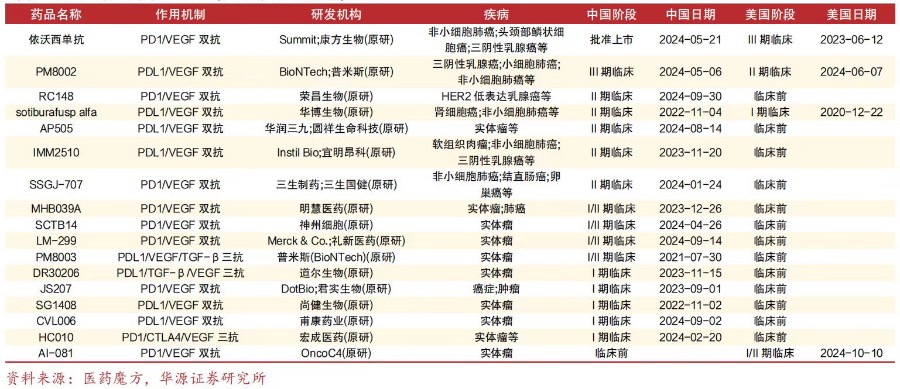
Core Viewpoint - The collaboration between 3SBio and Pfizer marks a significant advancement in the licensing of domestic bispecific antibodies, reflecting the growing confidence in the clinical value of SSGJ-707 and the potential for accelerated global commercialization [1][11]. Group 1: Licensing Agreement Details - 3SBio and its affiliates granted Pfizer exclusive rights to develop, manufacture, and commercialize the PD-1/VEGF bispecific antibody SSGJ-707 globally, excluding mainland China [1]. - Pfizer will pay a non-refundable upfront fee of $1.25 billion, with potential milestone payments reaching up to $4.8 billion, plus a tiered percentage of sales based on the product's revenue in the licensed regions [1][2]. - The agreement includes a multi-layered cooperation model, allowing 3SBio to retain commercialization rights in mainland China while granting Pfizer rights in other regions [2]. Group 2: Market Context and Implications - The upfront payment of $1.25 billion represents 21% of the total potential deal value, significantly higher than the industry average of 10%-15%, indicating Pfizer's confidence in SSGJ-707's clinical prospects [2]. - The collaboration is seen as a strategic move for Pfizer to enter the PD-1/VEGF market, which is expected to grow rapidly, especially as it competes with established players like Merck and Bristol-Myers Squibb [2][11]. - The bispecific antibody market has seen a surge in interest, with the transaction value for domestic bispecific antibodies rising from $1.5 million in 2019 to $707.4 million in 2022, and projected to reach $1.571 billion by 2024 [6][10]. Group 3: Clinical Development and Future Prospects - SSGJ-707 has shown promising results in clinical trials for non-small cell lung cancer (NSCLC), achieving high objective response rates and disease control rates, positioning it as a best-in-class candidate [5]. - The drug has received breakthrough therapy designation from the National Medical Products Administration (NMPA) in China and is currently in various stages of clinical trials in both China and the U.S. [5][11]. - The increasing focus on bispecific antibodies is expected to drive significant growth in the market, with projections indicating a compound annual growth rate (CAGR) exceeding 35% over the next three years [11].

医药行业周报:关税短期冲击减弱,出海仍是主要趋势
Huaxin Securities· 2025-05-19 03:00
Investment Rating - The industry investment rating is "Recommended" (Maintained) [1] Core Viewpoints - The trend of "going abroad" remains a major focus, with short-term impacts from tariffs diminishing. In Q1 2025, China's pharmaceutical exports reached $26.632 billion, a year-on-year increase of 4.39%, with exports to the U.S. at $4.639 billion, up 9.6% [3] - The market for gout and uric acid reduction presents significant potential, with the number of patients expected to rise from 1.7 billion in 2020 to 2.4 billion by 2030 in China. Current treatments show poor adherence and efficacy, indicating a need for safer and more effective drugs [4] - The oral weight loss drug sector is seeing major players like Novo Nordisk intensifying their efforts, with significant collaborations and clinical advancements. Chinese companies are also making rapid progress in this area [6] - Breakthroughs in universal CAR-T and autoimmune applications are emerging, with promising clinical data from companies like Kintor Pharmaceutical and Bangyao Biotech [8] Summary by Sections 1. Pharmaceutical Export Trends - Pharmaceutical exports are on the rise, with a notable increase in trade volume and value. The U.S. remains the largest single market for Chinese pharmaceutical exports [3] 2. Gout Treatment Market Potential - Gout is a global health issue, particularly in China, where the prevalence is increasing. The market for gout treatments is expected to grow significantly due to the high number of patients and the need for better treatment options [4] 3. Weight Loss Drug Developments - Major pharmaceutical companies are investing heavily in oral weight loss drugs, with significant collaborations and clinical trials underway. Chinese firms are also positioned to capitalize on this growing market [6] 4. Advances in CAR-T Therapy - New developments in universal CAR-T therapies are showing promise, with initial clinical results indicating high efficacy and safety. This could lead to broader applications in various diseases [8] 5. Stock Recommendations - The report recommends several companies based on their potential in various segments, including those focusing on international collaborations, innovative drug development, and market expansion [10]




HPV疫苗企业一季度业绩集体失速
Zhong Guo Jing Ying Bao· 2025-05-18 23:22
Core Viewpoint - The performance of major Chinese vaccine companies, including Wantai Biological Pharmacy (万泰生物), Zhifei Biological Products (智飞生物), and Watson Bio (沃森生物), has significantly declined in Q1 2025, primarily due to a shrinking self-paid market for HPV vaccines amid economic pressures [1] Group 1: Company Performance - Wantai Biological reported a revenue of 401 million yuan in Q1 2025, a year-on-year decrease of 46.76%, with a net loss of 52.78 million yuan [1] - Zhifei Biological's revenue fell to 2.374 billion yuan, down 79.16% year-on-year, resulting in a net loss of 305 million yuan [1] - Watson Bio achieved a revenue of 462 million yuan, a decline of 22.93%, with a net profit of 2.65 million yuan, down 81.27% [1] Group 2: Market Dynamics - The HPV vaccine market is experiencing a significant contraction, with a 61.57% year-on-year drop in the total number of HPV vaccine batches approved for sale in 2024 [3] - The two-valent HPV vaccine's sales revenue for Wantai Biological plummeted by 84.69% to 606 million yuan in 2024, influenced by price reductions and increased competition from the nine-valent HPV vaccine [3][4] - The price of HPV vaccines has drastically decreased, with the two-valent vaccine's procurement price dropping from over 300 yuan to 27.5 yuan in Shandong province, reflecting a nearly 90% decline [7] Group 3: Competitive Landscape - The introduction of the nine-valent HPV vaccine has intensified competition, with consumers favoring higher-priced vaccines, leading to a sharp decline in demand for the two-valent vaccine [4] - Zhifei Biological, as the exclusive agent for Merck's HPV vaccines, faced a 95.49% drop in the issuance of four-valent HPV vaccines in 2024, exacerbated by Merck's suspension of supplies to China [4][5] - The price war in the HPV vaccine market has severely compressed profit margins, with Wantai Biological's vaccine segment gross margin falling from 91.6% in 2022 to 70.4% in 2024 [7] Group 4: Future Outlook - The development of domestic nine-valent HPV vaccines is accelerating, with several companies, including Wantai Biological, advancing their clinical trials [8] - The potential introduction of male-targeted HPV vaccines may open new growth avenues, as Merck's four-valent HPV vaccine has been approved for male use [9]


来凯医药-B(02105):瞄准减重增肌新兴赛道,LAE102未来可期
Tianfeng Securities· 2025-05-18 14:08
Investment Rating - The report initiates coverage with a "Buy" rating for the company [4]. Core Insights - The company focuses on innovative therapies for cancer and metabolic diseases, with a strong emphasis on addressing unmet medical needs in obesity and tumor treatment [1][11]. - LAE102, a globally pioneering ActRIIA monoclonal antibody, aims to mitigate muscle loss associated with GLP-1 receptor agonist weight loss therapies, showing promising results in early clinical trials [2][38]. - Afuresertib (LAE002), a broad-spectrum AKT kinase inhibitor, is currently in late-stage clinical trials for HR+/HER2- breast cancer, demonstrating significant potential as a new treatment option for resistant cases [3]. Summary by Sections Company Overview - Laekna Therapeutics, established in 2016 and listed on the Hong Kong Stock Exchange in June 2023, is a biotechnology company dedicated to developing innovative therapies for cancer, metabolic diseases, and liver fibrosis [1][11]. LAE102 Development - LAE102 targets the ActRIIA receptor to counteract muscle loss caused by GLP-1 receptor agonists, with preclinical studies confirming its efficacy in promoting muscle growth and reducing fat accumulation [2]. - The drug has shown excellent safety and tolerability in Phase I trials, with no serious adverse events reported [38]. Afuresertib (LAE002) Development - Afuresertib is an oral, reversible, ATP-competitive AKT inhibitor that effectively suppresses tumor cell growth and metastasis by inhibiting the PI3K/AKT/mTOR signaling pathway [3]. - The drug is currently in Phase III clinical trials for HR+/HER2- breast cancer, with promising results in earlier phases indicating its potential as a new treatment for resistant breast cancer [3]. Financial Projections - The company anticipates revenues of 44 million, 50 million, and 76 million yuan for the years 2025, 2026, and 2027, respectively, with projected net losses of 271 million, 298 million, and 254 million yuan for the same years [4].
司美格鲁肽首季销售超K药登顶,诺和诺德股价却跌超三成,“减肥神药”造富效应退潮
Hua Xia Shi Bao· 2025-05-13 03:40
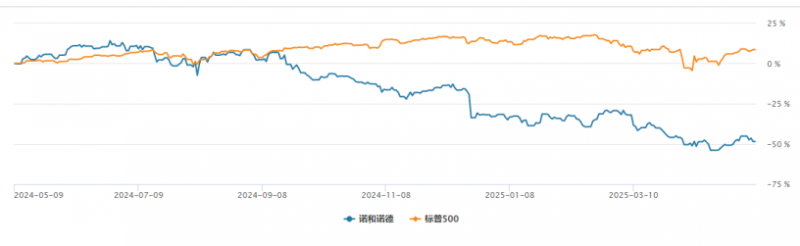
华夏时报(www.chinatimes.net.cn)记者 杨燕 北京报道 在诺和诺德近期公布的一季度业绩中,王牌产品司美格鲁肽在2025年第一季度实现了开门红,三个月约80亿美元 的整体销售表现,不仅超过了礼来旗下同类型GLP-1类产品替尔泊肽将近61.5亿美元的销售额,更是一举超过默沙 东旗下肿瘤药博利珠单抗(俗称"K药"),登顶全球"药王"宝座。 不过,即使业绩一路向上,诺和诺德在过去半年的股价表现却一路向下,这家在2023年市值一度超过奢侈品LV集 团的糖尿病龙头药企,股价相较最高点201.76美元/股已下滑超60%,仅今年年初至今就从最高点93.8美元/股下滑 约30%。 GLP-1类药物的出现,曾经一举助力礼来和诺和诺德成为全球最高市值药企和欧洲最高市值公司,但就在今年的 一季度财报公布后,这两大公司分别调低了2025年全年业绩展望和每股收益(EPS)指引。 但GLP-1赛道之所以在资本市场"风起云涌",还是离不开它被开发出的减重适应症。财报显示,2025年第一季度 减重版注射剂型司美格鲁肽Wegovy实现营收约26.46亿美元,同比增长83%,仍然是诺和诺德旗下增长最为迅猛的 产品,而降糖注射剂 ...
要降90%!特朗普签署行政令猛砍药价,放话不再容忍大药企、拿欧盟开刀
Hua Er Jie Jian Wen· 2025-05-12 17:14
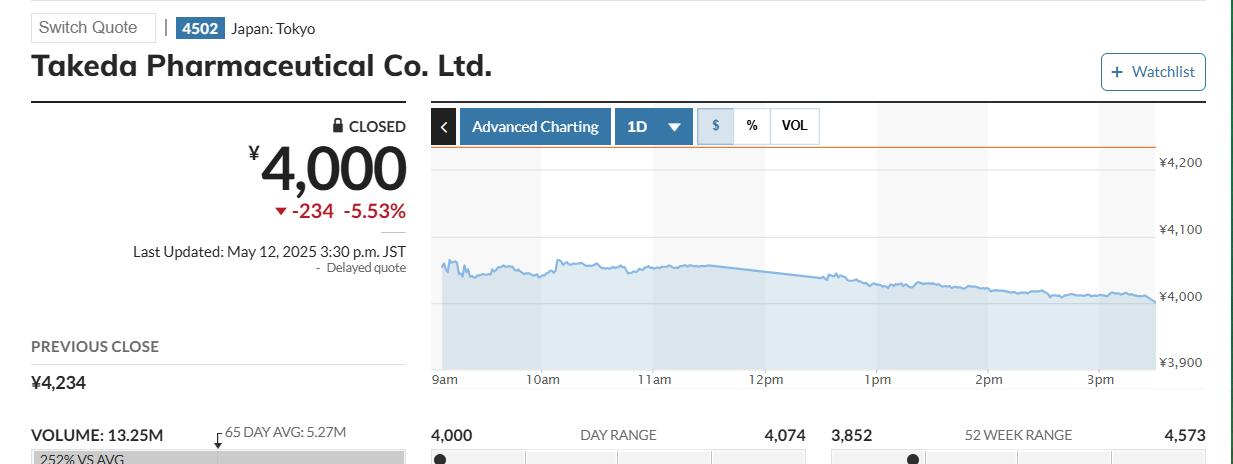
Core Viewpoint - President Trump is taking more aggressive actions to reduce drug prices in the U.S. by implementing a "Most Favored Nation" pricing policy, aiming to ensure that Americans pay the lowest prices for medications available globally [1][2]. Group 1: Policy Implementation - Trump signed an executive order on May 12, directing the U.S. to stop subsidizing foreign healthcare and to implement the "Most Favored Nation" pricing for drugs [1]. - The order instructs the U.S. Trade Representative and the Secretary of Commerce to take action against foreign practices that unfairly lower drug prices abroad while raising them in the U.S. [1][2]. - The Secretary of Health and Human Services is tasked with establishing a mechanism for U.S. patients to purchase drugs directly from manufacturers at the "Most Favored Nation" price, bypassing intermediaries [1]. Group 2: Expected Impact on Drug Prices - Trump indicated that some prescription drug prices could drop by 50% to 90% almost immediately as a result of this policy [2]. - The new policy is expected to significantly lower healthcare costs in the U.S., with estimates suggesting a potential decrease of 30% to 80% in drug prices [2]. Group 3: Market Reactions - Following the announcement, pharmaceutical stocks in Japan saw declines, with the pharmaceutical index dropping 3.9%, marking the largest single-day drop since August [3]. - Notable declines included Takeda Pharmaceutical Co. down 5.5% and Otsuka Holdings Co. down approximately 5.4% [3]. - In Europe, Novo Nordisk initially dropped 8.6% but later reduced its losses, closing down 0.65% [4]. Group 4: Specific Drug Categories - The executive order may include GLP-1 class drugs, such as Novo Nordisk's Ozempic and Wegovy, as well as Eli Lilly's Zepbound, in the price reduction scope [3].
从百济神州暴跌10%,看清特朗普“降药价”剧本
阿尔法工场研究院· 2025-05-12 12:47
Group 1 - Trump's announcement to reduce prescription drug prices by 30%-80% is seen as a political maneuver ahead of the midterm elections, lacking specific implementation details [2][3][8] - The pharmaceutical and healthcare industry in the U.S. has seen lobbying expenditures rise significantly, reaching $370 million in 2023, indicating strong political influence [5] - The high drug prices in the U.S. serve as a valuation anchor for Chinese companies entering the U.S. market, exemplified by the significant drop in the stock price of BeiGene following Trump's announcement [6][8] Group 2 - The U.S. healthcare system is characterized by a complex interplay of interests among pharmaceutical companies, insurance groups, hospitals, and physicians, making substantial reforms challenging [12][14] - The American Medical Association (AMA) plays a crucial role in maintaining high medical service prices, while insurance companies often transfer cost pressures to the middle class [11][12] - The U.S. market's profitability is driven by high drug prices, with top pharmaceutical companies generating substantial cash flow from their operations, particularly in the U.S. [25][27][28] Group 3 - The U.S. federal budget allocates a significant portion to healthcare, with Medicare spending projected to reach $1.66 trillion in 2024, highlighting the financial interdependence between government spending and healthcare costs [30][28] - The demand for U.S. Treasury bonds is influenced by the country's healthcare expenditures, with foreign investors and the Federal Reserve being key players in the bond market [33][34] - The sustainability of the current high-cost healthcare model is questioned amid rising national debt and potential challenges to the dollar's dominance, yet the pursuit of better health remains a constant driver for innovation [35][34]


智飞生物20250509
2025-05-12 01:48
Summary of Zhifei Biological Conference Call Company Overview - **Company**: Zhifei Biological Products Co., Ltd. - **Industry**: Biopharmaceuticals, specifically focusing on vaccines and metabolic disease treatments Key Points and Arguments Financial Performance - **Revenue Decline**: Starting from Q2 2024, the company experienced a significant decline in performance, particularly in HPV vaccine sales, attributed to economic cycles, reduced consumer willingness, and vaccine hesitancy [2][3][4] - **Losses**: The company reported three consecutive quarters of losses as of Q1 2025, with accounts receivable dropping from 30 billion to 14 billion, but with extended turnover days [3][10] - **Cash Dividends**: In 2024, the company distributed a total cash dividend of 2.394 billion, alongside a stock buyback exceeding 300 million [6][11] Strategic Measures - **Response to Challenges**: The company is actively seeking new growth points and has adjusted procurement plans with partners like GSK and Merck to align with market demand [2][4] - **Inventory Management**: Focus on reducing inventory levels, particularly for HPV and shingles vaccines, which are significant contributors to the current stock levels [8][9] - **Sales Promotion**: Enhanced marketing policies and public awareness campaigns to increase vaccination rates [4][9] Research and Development - **R&D Progress**: The company has 34 self-developed projects, with 19 in clinical trials or registration stages, including advancements in pneumonia, meningitis, and adult vaccines [5][15] - **Expansion into Metabolic Diseases**: Acquisition of a controlling stake in Cheng'an Biological, gaining access to GLP-1 receptor agonists, thus expanding into the metabolic disease sector [5][15] Corporate Governance and Social Responsibility - **Sustainability Report**: The company released its first sustainability report, emphasizing R&D, governance, quality management, and community engagement [12][13] - **Charitable Contributions**: Participation in 12 charitable projects with total donations exceeding 400 million, showcasing commitment to social responsibility [7][13] Future Outlook - **Operational Focus for 2025**: Key initiatives include inventory reduction, debt recovery, and risk management, with a strong emphasis on HPV and shingles vaccine sales [8][9] - **Market Expansion**: Plans to enhance international market presence and expedite the registration of new vaccine products [9][10] Market Challenges - **Industry Downturn**: The company is navigating a challenging environment characterized by high investment requirements and long product cycles, necessitating a focus on maintaining operational stability [11][15] Conclusion - **Long-term Vision**: Zhifei Biological aims to solidify its position as a leading biopharmaceutical company through innovation, strategic partnerships, and a commitment to sustainable practices, while addressing immediate operational challenges [6][15]