小鹏汽车

Search documents
小鹏汽车-W(09868):看好VLA2.0能力,即将在26Q1全量推送
GOLDEN SUN SECURITIES· 2026-02-14 08:37
Investment Rating - The report maintains a "Buy" rating for the company [8] Core Insights - The company is expected to launch VLA 2.0 in March 2026, significantly enhancing its autonomous driving capabilities with advanced hardware and software integration [1] - 2026 is projected to be the year of Robotaxi commercialization, with three models expected to be launched, featuring L4 autonomous driving capabilities [2] - The company anticipates strong growth in overseas markets, with a projected delivery of 45,000 units in 2025, representing a 96% year-on-year increase, and expects overseas revenue to exceed 20% in 2026 [3] - 2026 will also mark the mass production of advanced humanoid robots, aimed at commercial applications [4] - The investment recommendation highlights the company's strong product cycle, overseas expansion, advancements in autonomous driving, and emerging business opportunities in robotics and Robotaxi [5] Financial Projections - The company forecasts total vehicle sales of approximately 430,000 units in 2025, increasing to 566,000 units in 2026, and 836,000 units in 2027 [15] - Revenue is projected to reach 75.2 billion RMB in 2025, 103.1 billion RMB in 2026, and 145.5 billion RMB in 2027, with a significant increase in gross profit margins [15] - The non-GAAP net profit margin is expected to improve from -1.2% in 2025 to 2.3% in 2026 and 3.2% in 2027 [7][15] - The company anticipates a total revenue of 100.1 billion RMB from its core business in 2026, with an estimated profit contribution of 2.7 billion RMB from its collaboration with Volkswagen [5] Market Strategy - The company plans to introduce three new models in overseas markets in 2026, focusing on Europe, Southeast Asia, the Middle East, and Latin America [3] - The production strategy includes partnerships with local firms in Europe and Southeast Asia to better meet local demand [3] - The introduction of the Mona SUV series is expected to enhance the company's market presence in the competitive pricing segment while maintaining advanced intelligent driving capabilities [3]
小鹏汽车-W:看好VLA 2.0能力,即将在26Q1全量推送-20260214
GOLDEN SUN SECURITIES· 2026-02-14 08:24
Investment Rating - The report maintains a "Buy" rating for the company [8] Core Insights - The company is set to launch VLA 2.0 in March 2026, significantly enhancing its autonomous driving capabilities with advanced hardware and software integration [1] - 2026 is anticipated to be the year of Robotaxi for the company, with plans to introduce three Robotaxi models equipped with advanced autonomous driving systems [2] - The company is expected to see rapid growth in overseas sales, projecting a delivery volume of 45,000 units in 2025, a 96% year-on-year increase, with expectations to exceed 20% of total revenue from international markets by 2026 [3] - The company plans to mass-produce advanced humanoid robots by the end of 2026, aiming to integrate them into commercial scenarios [4] - The investment recommendation highlights strong product cycles, overseas expansion, advancements in autonomous driving, and emerging business opportunities in robotics and Robotaxi [5] Financial Projections - The company forecasts total vehicle sales of approximately 430,000 units in 2025, increasing to 566,000 units in 2026, and 836,000 units in 2027 [15] - Revenue is projected to reach 75.2 billion RMB in 2025, 103.1 billion RMB in 2026, and 145.5 billion RMB in 2027, with a significant increase in gross profit margins [7][15] - The non-GAAP net profit margin is expected to improve from -1.2% in 2025 to 2.3% in 2026 and 3.2% in 2027 [5][15] - The company anticipates a main business revenue of 100.1 billion RMB in 2026, with a profit contribution from partnerships expected to be around 2.7 billion RMB [5] Market Strategy - The company plans to launch three new models in overseas markets in 2026, focusing on Europe, Southeast Asia, the Middle East, and Latin America [3] - The introduction of the Mona SUV series is expected to cater to the mass market while providing advanced intelligent driving capabilities [3]
2025巨亏超230亿!美团发布盈利预警,一季度将延续亏损!网友:真是实打实的百亿补贴!
Xin Lang Cai Jing· 2026-02-14 07:30
Group 1 - Meituan expects a net loss of approximately RMB 233 billion to RMB 243 billion for the fiscal year ending December 31, 2025, a stark contrast to a net profit of RMB 358.08 billion in 2024, indicating a significant reversal of nearly RMB 600 billion [9][11][24] - The primary reason for this drastic change is the expected operating loss of RMB 68 billion to RMB 70 billion in its core local business segment, which had an operating profit of approximately RMB 524.15 billion in 2024 [11][26][28] - The company attributes this loss to intensified competition in the industry and a strategic increase in ecosystem investments, which include enhanced marketing efforts, rider incentives, and resource allocation to improve operational efficiency [13][26][28] Group 2 - Meituan's stock price has dropped 22.5% since its peak in January, closing at HKD 82.5 on February 13, with its market capitalization briefly falling below HKD 500 billion [7][22] - The company anticipates that the trend of losses will continue into the first quarter of 2026, although it maintains that its operational status remains stable and it has sufficient cash to support business development [13][28] - The Hang Seng Technology Index, which includes Meituan and other internet companies, has seen a decline of 6.26% since February, reflecting broader market challenges [28][29]


2025巨亏超230亿!美团发布盈利预警,一季度将延续亏损!网友:真是实打实的百亿补贴!
雪球· 2026-02-14 04:58
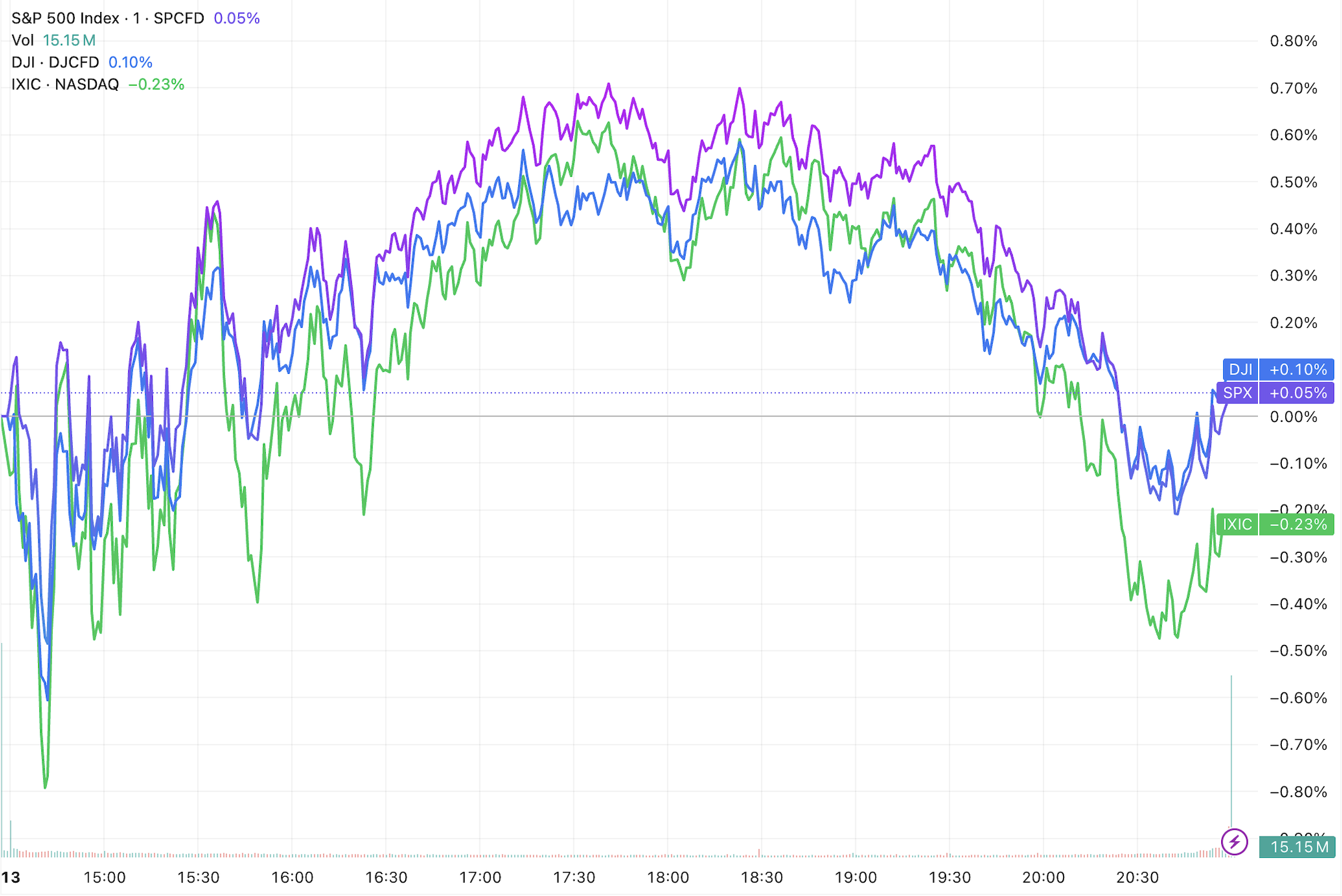
Market Overview - The three major U.S. stock indices closed mixed, with the Dow Jones up 0.1%, the Nasdaq down 0.22%, and the S&P 500 up 0.05%. The Russell 2000 small-cap index rose approximately 1.2%. All three indices recorded declines over the past week, with the Nasdaq showing the largest drop, indicating cautious market sentiment [1]. - Most popular tech stocks declined, with Nvidia and Apple dropping over 2%, and Google, Meta, and Broadcom falling over 1%. Investor concerns about the potential impact of artificial intelligence on traditional industries have heightened risk-averse sentiment [3]. Economic Indicators - The U.S. January CPI year-on-year decreased from 2.7% to 2.4%, the lowest since May 2025, while the core CPI fell from 2.6% to 2.5%, the lowest since March 2021. The core CPI rose 0.3% month-on-month, slightly above December's 0.2% increase [9][10]. - Following the CPI report, traders increased their expectations for interest rate cuts this year, with a 50% chance of three cuts by year-end. The probability of a cut in April is 30%, and over 80% for June [10]. Company-Specific News - Meituan issued a profit warning, expecting a net loss of approximately RMB 233 billion to RMB 243 billion for the fiscal year 2025, a stark contrast to a net profit of RMB 358.08 billion in 2024. This represents a significant reversal of nearly RMB 600 billion [16][18]. - The core reason for Meituan's drastic performance change is the profit collapse in its most profitable segment, "core local business," which is expected to incur an operating loss of RMB 68 billion to RMB 70 billion in 2025, compared to an operating profit of RMB 524.15 billion in 2024. This is attributed to unprecedented competition in the industry and strategic increases in ecosystem investments [18][20]. - Meituan plans to increase investments in marketing, rider incentives, and operational efficiency to counteract the losses, while also expanding its overseas business [20]. Market Sentiment and Trends - The Hang Seng Tech Index has shown weakness, declining 6.26% since February, influenced by liquidity shocks. Analysts suggest that the fundamentals and bullish logic for the Hong Kong tech sector remain unchanged [21]. - The performance of the Hang Seng Tech Index in February may be driven by macroeconomic data, policy pricing, and earnings verification, with U.S. inflation and employment data being key factors affecting valuation elasticity in Hong Kong tech stocks [21].

美股三大指数周线齐跌
财联社· 2026-02-14 00:39
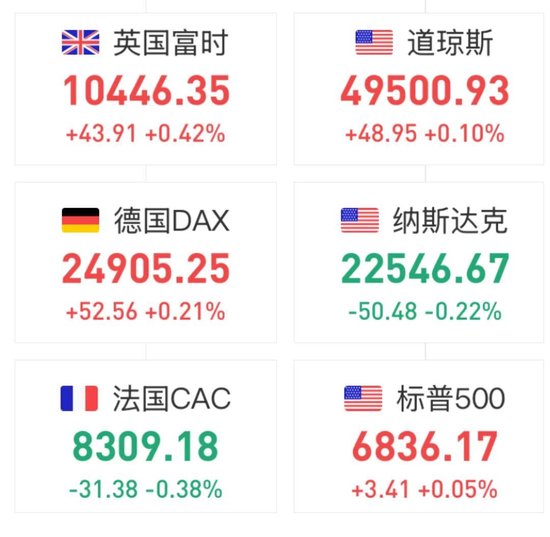
Market Overview - The three major indices showed mixed performance, with the Dow Jones up 0.10% to 49,500.93 points, the S&P 500 up 0.05% to 6,836.17 points, and the Nasdaq down 0.22% to 22,546.67 points [3] - All three indices recorded weekly declines, with the S&P 500 down 1.4%, the Dow down 1.2%, and the Nasdaq down 2.1% [3] Economic Indicators - The U.S. Bureau of Labor Statistics reported that the January CPI rose 2.4% year-over-year and 0.2% month-over-month, both below market expectations [3] - The core CPI, excluding volatile food and energy prices, increased by 2.5% year-over-year and 0.3% month-over-month, aligning with market expectations [3] - Phil Blancato, Chief Market Strategist at Osaic, indicated that this data could pave the way for interest rate cuts and inflation control if the trend continues [3] Sector Performance - Concerns over AI disruption led to market sell-offs, affecting various sectors including software, real estate, trucking, and financial services [6] - Financial stocks such as Charles Schwab and Morgan Stanley fell by 10.8% and 4.9%, respectively, while software company Workday dropped 11% and commercial real estate firm CBRE fell 16% [6] - The media sector was also impacted, with Disney down approximately 3% and Netflix down 6% [7] Technology Stocks - Major tech stocks mostly declined, with Nvidia down 2.21%, Apple down 2.27%, Microsoft down 0.13%, Google down 1.06%, and Amazon down 0.41% [7] - Tesla saw a slight increase of 0.09%, while Oracle rose by 2.34% and Netflix increased by 1.33% [7] Chinese Stocks - The Nasdaq Golden Dragon China Index fell by 0.10%, with Alibaba down 1.89%, JD.com down 1.38%, and Pinduoduo up 0.06% [7] - NIO remained flat, while Xpeng rose by 1.36% and Li Auto fell by 1.81% [7]



车贷“长跑”开启,汽车金融驶入共赢新赛道
Xin Lang Cai Jing· 2026-02-14 00:15
Core Insights - The automotive market is experiencing a shift in competitive dynamics with the introduction of long-term financing options such as "0 down payment" and "7-year ultra-low interest" loans, moving away from cash discounts [1][8][9] Group 1: Long-term Financing Options - Companies like Tesla, Xiaomi, and Li Auto have launched 7-year low-interest car loan products to attract new customer segments [2][10] - For instance, Xiaopeng Motors offers a 7-year financing plan with monthly payments starting at 1,355 yuan, while Xiaomi's new plan requires a down payment of 99,900 yuan with monthly payments starting at 1,931 yuan [2][10] - Nissan has also introduced an 8-year low-interest loan option, highlighting the trend towards extended loan terms in the market [2][10] Group 2: Consumer Demographics - The primary customers opting for these long-term loans include young individuals with limited savings, those facing existing financial pressures, and customers looking to replace their vehicles [3][11] - The extended repayment periods lower the barrier to entry for first-time buyers, particularly young families and those interested in electric vehicles [1][9] Group 3: Market Dynamics and Competition - The introduction of ultra-long-term loans is seen as a competitive strategy for automakers to stimulate demand and alleviate financial pressure on consumers [4][12] - The market for new energy vehicles (NEVs) is projected to grow significantly, with NEV sales expected to account for 47.9% of total new car sales by 2025, reflecting a 7% increase from 2024 [4][12] Group 4: Banking Sector Involvement - Banks are increasingly viewing high-quality auto loans as a key area for business expansion, collaborating with automakers to offer long-term low-interest products [5][13] - The regulatory environment is supportive, with policies allowing banks to extend personal loan terms from 5 to 7 years for long-term consumer needs [5][12] Group 5: Risk Management and Future Strategies - The shift to long-term loans raises concerns about asset depreciation and credit risk, particularly for electric vehicles, which may have lower resale values compared to traditional vehicles [6][15] - Financial institutions are encouraged to enhance risk management capabilities and develop a comprehensive service ecosystem that integrates vehicle financing with additional services [16][14]
中概股走势分化,腾讯音乐领涨超4%
Jin Rong Jie· 2026-02-13 23:32
Group 1 - The Livermore Chinese Concept Stock Index closed down 0.27% at 10,125.69 points on February 14, with mixed performance among constituent stocks [1] - Tencent Music led the gains, rising over 4%, followed by Yum China with an increase of more than 3%. In contrast, New Oriental and Alibaba both fell over 2%, while Li Auto, JD.com, and iQIYI saw declines of more than 1% [1] - The Nasdaq China Golden Dragon Index (HXC) also experienced a slight decline of 0.1% on the same day [1] Group 2 - Notable movements included Pinduoduo with a minor increase of 0.06%, NetEase rising 2.06%, XPeng up 1.38%, and Bilibili gaining 1.02%. Conversely, Baidu fell by 0.99%, Beike dropped 1.07%, and Huazhu Group decreased by 1.48% [1] - The Livermore Chinese Concept Stock Index had previously experienced a significant decline of 2.64% in the prior trading session, closing at 10,152.05 points. The drop on February 14 was less severe, indicating a shift from a broad decline to a more mixed performance among individual stocks [1]
通胀降温难抵AI忧虑,美股三大指数周线齐跌,中概股涨跌不一
Feng Huang Wang· 2026-02-13 22:20
Market Overview - The three major indices showed mixed performance, with the Dow Jones up 0.10% at 49,500.93 points, the S&P 500 up 0.05% at 6,836.17 points, and the Nasdaq down 0.22% at 22,546.67 points [2] - Concerns over AI disruption led to market volatility, affecting various sectors including software, real estate, trucking, and financial services [5] - Notable declines included Charles Schwab down 10.8%, Morgan Stanley down 4.9%, and software company Workday down 11% [5] Inflation Data - The U.S. Bureau of Labor Statistics reported a 2.4% year-over-year increase in January CPI, with a 0.2% month-over-month rise, both below market expectations [2] - Core CPI, excluding volatile food and energy prices, rose 2.5% year-over-year and 0.3% month-over-month, aligning with market expectations [2] Company News - SpaceX is reportedly considering a dual-class share structure for its upcoming IPO, allowing certain shareholders, including Elon Musk, to maintain control despite lower ownership stakes [6] - Anthropic appointed former General Motors executive Chris Liddell to its board as it prepares for a potential IPO in 2026, indicating openness to going public by the end of this year [9] - Following the merger with xAI, Musk's team is exploring financing options to reduce high-interest debt, which has accumulated to nearly $18 billion, in preparation for a potential IPO [10] - Moderna reported fourth-quarter revenue of $678 million, a 30% year-over-year decline, with a loss of $2.11 per share compared to a loss of $2.91 per share in the same period last year [11]
Magna International Q4 Earnings Call Highlights
Yahoo Finance· 2026-02-13 17:33
Core Insights - Magna International reported a fourth-quarter sales increase of 2% year-over-year to $10.8 billion, with adjusted EBIT margin expanding by 100 basis points to 7.5% and adjusted EBIT rising 18% to $814 million [3][4][7] - The company anticipates modest sales growth of near flat to 3.5% in 2026, with adjusted EBIT margins projected between 6.0% and 6.6%, reflecting operational excellence and cost management initiatives [6][15] Financial Performance - Fourth-quarter sales were positively impacted by foreign exchange translation, new program launches, and customer recoveries for tariffs, despite lower engineering revenue and complete vehicle sales [2][4] - For the full year 2025, Magna reported approximately $42 billion in sales, with adjusted EBIT margin increasing by 20 basis points to 5.6% and adjusted EBIT rising 2% to $2.4 billion [8][9] Operational Efficiency - Operational excellence initiatives contributed approximately 200 basis points of margin improvement from 2023 to 2026, with expectations for continued gains [5][18] - The company generated $3.6 billion in operating cash flow and $1.9 billion in free cash flow for 2025, supported by disciplined capital spending and efficiency improvements [9][10] Segment Performance - In the fourth quarter, three out of four segments reported higher sales year-over-year, with seating experiencing an 8% increase, while complete vehicle sales declined by 10% due to expected lower engineering revenue [11][12] - Power and vision margins faced pressure from discrete items and unfavorable mix, but management expects considerable margin expansion in this segment by 2026 [13][15] 2026 Outlook - Magna's guidance for 2026 includes adjusted EPS of $6.25 to $7.25, with free cash flow expected to be between $1.6 billion and $1.8 billion [16][17] - The company plans to maintain capital returns through dividend increases and share buybacks, with a $0.01 increase in the quarterly dividend marking the 16th consecutive year of increases [17][19] Market Position - Magna aims for growth of 1% to 4% excluding complete vehicles, driven by advancements in body exteriors and structures, while complete vehicles and seating are expected to decline due to program changes [22] - The company has not lost any incumbent seating programs to competitors and is managing input costs effectively through customer program structures [22]

李想之外具体的人事变动始终都是次要矛盾
理想TOP2· 2026-02-13 16:02
Core Viewpoint - The article discusses the strategic shifts within Li Auto, particularly focusing on the leadership changes and the implications for its autonomous driving and AI initiatives. It emphasizes the importance of Li Xiang's judgment on the AI industry's development and the need for effective organization of talent to achieve the company's vision [1][2][5]. Group 1: Leadership Changes and Organizational Structure - Zhan Yifei will take full responsibility for the research and productization of the robotics business, while Lang Xianpeng will be leaving the company [1]. - The restructuring of Li Auto's autonomous driving departments from 3 to 11 is seen as a secondary issue, with the primary challenge being the alignment of production factors and Li Xiang's vision [2]. - The merger of the autonomous driving and smart cockpit departments reflects a shift in Li Xiang's approach, emphasizing integrated design over traditional software and hardware separation [2][3]. Group 2: Strategic Direction and Market Position - Li Auto's strategy is compared to Tesla's VA (Value Added) approach, suggesting that while both strategies have their merits, the VA route may carry less risk due to Tesla's pioneering efforts [3]. - The article notes that regardless of whether Li Auto adopts a VA or VLA (Value Learning Architecture) approach, both have their rationales, and the company may continue to evolve its viewpoints [3][4]. - The potential for Li Auto's autonomous driving technology to enhance user value is considered highly probable, with a clear direction towards improving data utilization and model performance [3]. Group 3: Talent Management and AI Development - The ability to effectively recruit and organize suitable talent is crucial for Li Auto's success, with over 50% of significant technological breakthroughs expected to come from new graduates [9]. - Li Xiang's learning ability and decision-making quality are highlighted as critical factors in determining the company's future success in the AI sector [5][9]. - The article emphasizes that the departure of older team members is less significant than Li Xiang's capability to harness the intellectual resources of new talent [9].