
天合光能

Search documents
天合光能(688599) - 上海市协力(无锡)律师事务所关于天合光能股份有限公司2026年员工持股计划(草案)的法律意见书
2026-02-02 11:00
江苏省无锡市经开区金融八街联合金融大厦 2901-2903 室 邮政编码:214000 电话:051088888990 二〇二六年二月 关于天合光能股份有限公司 2026 年员工持股计划(草案)的法律意见书 目录 | 释 人 … | | --- | | 第一部分 引言 | | 第二部分 正文 | | 一、公司实施本次员工持股计划的主体资格 | | 二、本员工持股计划内容及合法合规性 | | 三、本次员工持股计划涉及的法定程序 | | 四、本次员工持股计划的信息披露 ………………………………………………………………………………………………………………………………………………………………………………………………………………………………………………… 13 | | 五、结论意见 13 | 為力津師事務所 EFFORT LAW FIRM LLP 上海市协力(无锡)律师事务所 关于天合光能股份有限公司 2026年员工持股计划(草案)的 协意字 2026011199 号 I 关于天合光能股份有限公司 2026年员工持股计划(草案)的法律意见书 上海市协力(无锡)律师事务所 关于天合光能股份有限公司 2026年员工持股计划 ...

天合光能(688599) - 天合光能股份有限公司关于公司提供担保的进展公告
2026-02-02 11:00
| 证券代码:688599 | 证券简称:天合光能 | 公告编号:2026-014 | | --- | --- | --- | | 转债代码:118031 | 转债简称:天 23 转债 | | 天合光能股份有限公司 关于公司提供担保的进展公告 本公司董事会及全体董事保证本公告内容不存在任何虚假记载、误导性陈述 或者重大遗漏,并对其内容的真实性、准确性和完整性依法承担法律责任。 重要内容提示: 担保发生时间:2026 年 1 月 1 日至 2026 年 1 月 31 日 被担保人名称:天合光能股份有限公司(以下简称"公司")及其合并 报表范围内下属子公司 截至本公告披露日,公司及合并报表范围内下属子公司对外担保余额为 482.16 亿元,占公司最近一期经审计净资产的 182.79%,其中公司对合并报表范 围内下属子公司提供的担保余额为 461.40 亿元。 一、担保情况概述 为满足公司生产经营和流动资金周转需要,在确保运作规范和风险可控的前 提下,公司及下属子公司在 2026 年 1 月 1 日至 2026 年 1 月 31 日期间,公司累 计发生的担保金额为 7.31 亿元,占公司最近一期经审计净资产的 2. ...
天合光能(688599) - 天合光能股份有限公司2026年第一次临时股东会会议材料
2026-02-02 11:00
天合光能股份有限公司 2026 年第一次临时股东会会议材料 2026 年 2 月 天合光能股份有限公司 2026 年第一次临时股东会会议材料 天合光能股份有限公司 2026 年第一次临时股东会材料目录 | 2026 年第一次临时股东会参会须知 2 | | --- | | 2026 年第一次临时股东会会议议程 4 | | 2026 年第一次临时股东会会议议案 6 | | 议案一:关于《天合光能股份有限公司 2026 年限制性股票激励计划(草案)》及其摘要 | | 的议案 6 | | 议案二:关于《天合光能股份有限公司 2026 年限制性股票激励计划实施考核管理办法》 | | 的议案 8 | | 议案三:关于提请股东会授权董事会办理公司 2026 年限制性股票激励计划相关事宜的议 | | 案 9 | | 议案四:关于《天合光能股份有限公司 2026 年员工持股计划(草案)》及其摘要的议案 | | 11 | | 议案五:关于《天合光能股份有限公司 2026 年员工持股计划管理办法》的议案 12 | | 议案六:关于提请股东会授权董事会办理公司 2026 年员工持股计划相关事宜的议案 . 13 | | 议案七:关于募 ...
天合光能:累计回购8.02亿元股份,占总股本1.86%
Xin Lang Cai Jing· 2026-02-02 10:45
天合光能公告称,公司于2024年6月25日启动回购计划,预计回购1亿-1.2亿元股份用于转换可转债,原 回购期限至2025年6月24日,后延至2026年3月24日,资金来源调整为自有和自筹资金。截至2026年1月 31日,累计回购43,603,172股,占总股本1.86%,成交最高价24.91元/股,最低价13.64元/股,支付资金 80,169.18万元。 ...
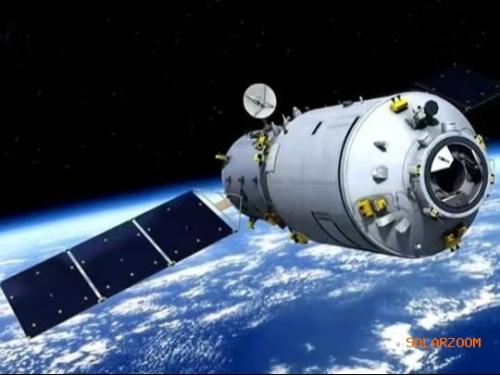
"太空光伏"概念走热,部分企业触发交易异常,业内: 目前仍处于0到1阶段
Di Yi Cai Jing· 2026-02-02 07:45
Core Viewpoint - The "space photovoltaic" concept has become a major focus in the secondary market, significantly influenced by Tesla CEO Elon Musk's endorsements, with the relevant index rising 19.83% in the past month, outperforming the CSI 300 index's 1.18% increase [1] Group 1: Market Performance - The space photovoltaic concept index has seen a substantial increase, with notable stocks such as JunDa Co., Ltd. rising by 84.62%, Mingyang Smart Energy increasing by 60.22%, and Jiejia Weichuang up by 44.04% over the past 20 days [1] - Several photovoltaic companies have experienced significant stock price surges, triggering trading anomalies, with stocks like Dongfang Risen and Laplace exceeding a cumulative price deviation of 30% over multiple trading days [3] Group 2: Technology and Feasibility - Space photovoltaic energy involves utilizing solar photovoltaic technology in outer space to generate and supply energy, with the potential for direct power transmission to Earth or powering satellites and space stations [3] - The feasibility of space photovoltaic technology is supported by the abundant sunlight in space and the ability to deploy photovoltaic components on satellites, with near-Earth orbit satellites experiencing over 60% sunlight exposure [3] - Despite the market enthusiasm, the industry faces significant uncertainties regarding the maturity and long-term reliability of the technology, as well as the economic viability required for large-scale commercialization [4][5] Group 3: Industry Insights - Industry insiders indicate that the application scenarios for space photovoltaic technology are still in the exploratory phase, with many companies in the secondary market not yet supplying products to commercial space satellite companies [4] - Analysts emphasize that space photovoltaic technology is currently in the early stages, requiring validation of technical routes and economic benefits for large-scale commercial applications [5] - The current cost of space photovoltaic energy is estimated to be around $2-3 per kilowatt-hour, significantly higher than ground photovoltaic costs of $0.03-0.05 per kilowatt-hour, highlighting the economic challenges ahead [6] Group 4: Future Outlook - Companies like Trina Solar and HaiMuxing express optimism about the future of space photovoltaic technology, with ongoing collaborations with leading aerospace institutions to accumulate practical experience [6] - The commercial viability of space photovoltaic technology is projected to gradually materialize over the next 10 to 15 years, driven by decreasing launch costs and breakthroughs in battery technology [7]






国盛证券:低轨星座竞赛与太空算力革命 引爆太空光伏需求新周期
智通财经网· 2026-02-02 07:34
Group 1 - The rapid increase in satellite deployment and the planning of space AI computing power are driving exponential growth in demand for space photovoltaic systems, which are transitioning from supporting components to strategic infrastructure [1] - China plans to submit applications for 203,000 satellites by the end of December 2025, while the US has launched over 10,000 satellites under the SpaceX Starlink program, intensifying the global space race [1] - The emergence of "space-based data centers" is driven by the limitations of ground data centers, with space offering continuous sunlight and near-zero cost cooling due to the cold cosmic background [1] Group 2 - New technological pathways are emerging, including P-type HJT batteries and silicon/perovskite tandem cells, which offer lower costs and improved performance compared to traditional gallium arsenide batteries [2] - P-type HJT batteries benefit from lower costs due to their manufacturing process and established supply chains, while silicon/perovskite tandem cells have demonstrated laboratory efficiencies of around 35% [2] - Perovskite materials are seen as the ultimate solution for space photovoltaics due to their high defect tolerance and radiation resistance, making them suitable for the harsh conditions of space [2] Group 3 - The global manufacturing landscape is misaligned, presenting historic opportunities for Chinese equipment and battery manufacturers as the US lacks capabilities in HJT and perovskite production lines [3] - The demand for photovoltaic equipment is expected to surge as SpaceX and Tesla plan to build a total of 200 GW of photovoltaic capacity in the US over the next three years [3] - Chinese photovoltaic companies, equipped with aerospace certification and large-scale delivery capabilities, are transitioning from ground support to core space applications, positioning themselves to benefit from the growing demand for space photovoltaics [3] Group 4 - Investment recommendations include photovoltaic equipment suppliers such as Maiwei Co., and potential players like Laplace, Liancheng CNC, Jiejia Weichuang, Aotwei, Gaocai Co., Dier Laser, and Jingsheng Mechanical & Electrical [4] - Material suppliers recommended include Junda Co., Dongfang Risheng, Mingyang Smart Energy, Shanghai Port, Qianzhao Optoelectronics, Trina Solar, and Shuangliang Energy [4]

银价暴跌,光伏狂欢?
投中网· 2026-02-02 07:33
Core Viewpoint - The recent drop in silver prices is expected to benefit the battery and component sectors, particularly in the photovoltaic (PV) industry, which has been struggling with overcapacity and losses [11][30]. Group 1: Silver Price Dynamics - Silver prices previously surged due to three main factors: the weakening dollar, Fed rate cuts lowering opportunity costs for holding silver, and rigid industrial demand amid supply shortages [5][6]. - The recent decline in silver prices, from a peak of $71.99 per ounce at the end of 2025 to a projected drop to $24,832 per kilogram, could reduce the hard costs of battery and component production by approximately $0.1 per watt [26][27]. Group 2: Impact on Photovoltaic Industry - The decline in silver prices provides a much-needed respite for battery and integrated enterprises, which are highly sensitive to silver costs and have been reporting significant losses [12][13]. - Major integrated component manufacturers, such as Jinko, Longi, JA Solar, and Trina Solar, are projected to incur losses exceeding 4 billion yuan each in 2025 [13]. - The cost of silver paste has become a significant factor in the pricing of photovoltaic components, accounting for 19.3% of the total cost [16][25]. Group 3: Market Reactions and Future Outlook - The capital market is actively seeking opportunities arising from the drop in silver prices, with expectations of a rebound in the photovoltaic sector [31]. - However, the rebound's sustainability is uncertain and will depend on long-term market dynamics, including demand recovery and capacity clearing [35][46]. - The current overcapacity in the photovoltaic industry remains a critical issue, and the anticipated demand growth is not expected to be rapid [36]. Group 4: Technological Innovations and Industry Shifts - The industry is focusing on reducing silver dependency through technological innovations, such as low-silver and silver-free technologies [39][40]. - Companies with insufficient technological reserves and tight funding may struggle to keep up with the transition to lower silver usage, potentially leading to a market shakeout [44]. - Leading firms that successfully implement these innovations will likely gain a competitive cost advantage in the long run [45].


出厂价格出现更多积极信号——1月PMI数据点评
一瑜中的· 2026-02-02 07:13
Core Viewpoint - The article discusses the decline in manufacturing PMI and highlights the positive signals in factory prices, indicating potential recovery in the midstream sector due to improved supply-demand dynamics and resilient overseas exports [2][3][4]. Group 1: PMI Data - The manufacturing PMI for January is reported at 49.3%, down from 50.1% in the previous month. Key sub-indices include: - Production index at 50.6%, down 1.1 percentage points from 51.7% - New orders index at 49.2%, down from 50.8% - New export orders index at 47.8%, down from 49.0% - Employment index at 48.1%, slightly down from 48.2% - Supplier delivery time index at 50.1%, down from 50.2% - Raw material inventory index at 47.4%, down from 47.8% [2][17][18]. Group 2: Price Indicators - Positive signals in price indicators are noted, including: - The PMI factory price index at 50.6%, marking the first rise above the critical point in nearly 20 months. Industries such as non-ferrous metal smelting and electrical machinery show significant increases in both raw material purchase prices and factory prices, exceeding 55.0% [5][14]. - The BCI consumer price expectations index surged to 51.5%, the first rise above the critical point in 28 months, while the profit expectations index reached 52.66%, the first rise above the critical point in 11 months [5][14]. - Micro-level price increases are observed in various sectors, including semiconductors, photovoltaic, and home appliances, with notable price hikes reported by companies like Zhongwei Semiconductor and Midea [6][15]. Group 3: Supply-Demand Dynamics - The article highlights a decrease in the proportion of companies reporting insufficient demand, with the manufacturing sector's percentage dropping to 54.9% in January from 64.3% in the previous month. This suggests an improvement in supply-demand dynamics [4][11]. - The midstream growth rate difference reached 10.4%, up from 8.1%, indicating a positive trend in demand relative to investment growth [4][11].

寒冬中逆势盈利9-11亿,阿特斯以战略韧性引领价值重估
Cai Fu Zai Xian· 2026-02-02 01:49
1月30日,光伏行业最后一批业绩预告揭晓。在此之前,A股已有24家光伏企业披露了业绩预告数据。 统计显示,其中13家企业净利润亏损较2024年明显收窄,但行业整体仍处于周期底部,企业经营承压态 势尚未根本扭转。在此背景下,阿特斯公布2025年度业绩预告,预计2025年实现归母净利润为人民币9 亿元-11亿元,业绩在行业里凸显韧性。 01 行业转折:寒冬中的曙光 光伏行业的"寒冬"正在出现微弱转机。根据同花顺iFinD数据,已披露2025年度业绩预告的24家光伏公 司中,超过半数实现减亏。 这一趋势背后,是行业从无序扩张向理性发展的艰难转型。2025年下半年以来,"反内卷"政策推动行业 自律,多家光伏企业落实了减产计划,部分玻璃企业减产规模达30%。 市场的反馈也逐渐显现。相比2025年中期0.6元/瓦左右的极端低价,目前头部厂TOPCon组件报价已普 遍抬升至0.85—0.90元/W……种种迹象都表明最困难的时期已经过去了。 然而值得关注的是,巨头们已将目光投向2026年。隆基绿能在《2025年员工持股计划》中明确提出, 2026年考核目标为年度净利润翻正。天合光能同样在近期发布的激励计划中将2026年至20 ...

1月PMI数据点评:出厂价格出现更多积极信号
Huachuang Securities· 2026-02-01 13:51
Group 1: PMI Data Overview - The manufacturing PMI for January is 49.3%, down from 50.1% in the previous month, indicating a contraction in the manufacturing sector[1] - The production index decreased to 50.6%, down 1.1 percentage points from 51.7%[1] - The new orders index fell to 49.2%, down from 50.8%, while the new export orders index dropped to 47.8% from 49.0%[1] Group 2: Supply and Demand Dynamics - The proportion of enterprises reporting insufficient demand decreased to 54.9% in January, down from 64.3%[4] - The midstream growth rate difference reached 10.4%, up from 8.1%, indicating improved supply-demand dynamics[3] - The downstream growth rate difference increased to 1.9%, up from 0.3%, suggesting a positive trend in demand[3] Group 3: Price Indicators - The PMI factory price index rose to 50.6%, marking the first increase above the critical point in nearly 20 months[12] - The BCI consumer price index surged to 51.5%, the first rise above the critical point in 28 months[12] - Micro-enterprises in the midstream sector are beginning to raise prices, with semiconductor companies announcing price increases of 15%-80%[14]