任天堂

Search documents
标普500冲高后按下暂停键,市场屏息等待关键数据周
Hua Er Jie Jian Wen· 2026-02-10 12:28
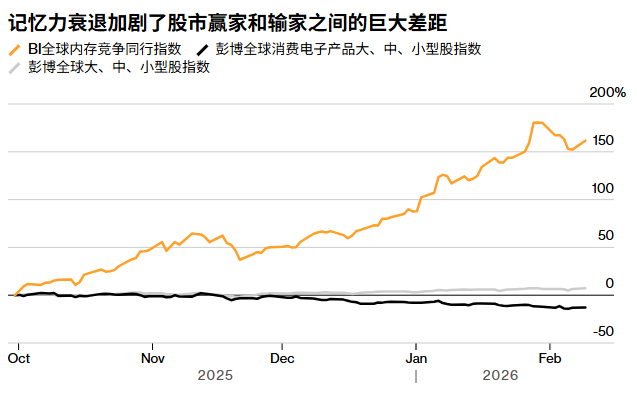
Core Viewpoint - The U.S. stock market is experiencing a cautious pause after a strong rebound, with the S&P 500 index slightly retreating from its historical high as investors await key economic data [1] Group 1: Market Dynamics - The market is facing a tug-of-war between recalibrated corporate earnings expectations and an escalating memory chip supply crisis, which is reshaping the landscape of winners and losers in the tech sector [1] - The ongoing earnings season has highlighted supply chain tensions, particularly the surge in memory chip prices, which is threatening profit margins across various industries from consumer electronics to automotive manufacturing [1][4] - Investors are trying to assess the duration of this supply bottleneck and its long-term impacts on inflation and corporate earnings, leading to a pause in trading activity ahead of significant economic data releases [1] Group 2: Performance Disparities - The recent relentless rise in memory chip prices has created a clear divide in the stock market, with a 10% decline in the Bloomberg index tracking global consumer electronics manufacturers since late September, while memory manufacturers, including Samsung, have surged approximately 160% [3] - Companies that can secure supply, raise product prices, or redesign products to reduce memory usage are being evaluated by fund managers and analysts for their ability to navigate this pressure [3] Group 3: Corporate Warnings - Frequent warnings from companies regarding memory shortages and pricing issues are becoming common in earnings reports and conference calls, with Honda and Qualcomm highlighting supply risks that could hinder production [4] - PC manufacturers are facing the most significant impact, with Lenovo and Dell seeing stock declines of over 25% from their peak last October, as concerns about rising chip prices dampen PC demand [4] Group 4: AI-Driven Supercycle - The memory price surge has become a headline issue this earnings season, with concerns about the timeline of supply tightness being questioned, particularly due to massive investments in AI infrastructure by major U.S. companies [6] - The shift in capacity from traditional DRAM to high-bandwidth memory driven by AI has led to a "supercycle," breaking the typical boom-and-bust pattern of memory supply and demand [6] - Despite weak demand for end products like smartphones and cars, DRAM spot prices have skyrocketed over 600% in recent months, with memory manufacturers emerging as winners in the tech sector [6][7]
一人干翻所有大厂,OpenClaw硅谷封神,开发者一夜爆赚两亿
3 6 Ke· 2026-02-10 11:37
【导读】硅谷新英雄OpenClaw之父豪言:本地AI智能体将灭掉80%App,人类从此只需「许下愿望」,世界自动为你运转!OpenClaw更是开启万亿美 元应用新场景,社交套利从未如此简单! 这些天,硅谷正在经历一场前所未有的疯狂。 OpenClaw之父,已经成为硅谷英雄——继互联网之后,他开启了文明层级的又一次范式转移。 所有人类,正在站在被智能体接管的奇点前夜。 而且,如果还没有用OpenClaw赚钱,你就out了。 最近,已经有开发者仅投入2万美元,就实现了4000万美元净资产的积累。 许多人说,这就是OpenClaw的「十亿美元级应用场景」! 一个人干翻所有大厂,2万美元撬动4000万? 刚刚,OpenClaw之父上了YC访谈,揭秘了OpenClaw这个爆款AI背后的顿悟时刻。 他放下豪言:本地优先智能体,将「杀死」当今80%的应用;个人智能体,会彻底重塑软件的未来! 最近,一个「2万美元变4000万美元」的例子,在全网疯传。 一个普通人用TikTok+OpenClaw,把华尔街按在地上摩擦。 TikTok上,一条视频突然爆了——一个女孩举着星巴克的粉色星星杯,声音都快破音了:「全城断货!真的买不到了 ...


Memory Chip Squeeze Widens Gap Between Market Winners and Losers
Yahoo Finance· 2026-02-10 10:58
Group 1 - The surge in memory chip prices has created a significant divide in the stock market, with memory producers experiencing unprecedented gains while companies reliant on these chips face profitability concerns [1][2] - A Bloomberg gauge of global consumer electronics makers has decreased by 10% since the end of September, while memory makers, including Samsung Electronics, have surged approximately 160% [3] - Industry experts believe that the current valuations may not fully account for the duration of supply tightness, which could persist through the rest of the year [4] Group 2 - Companies like Honda Motor Co. are highlighting supply risks related to memory components in their earnings reports, indicating widespread concern across various sectors [5] - Qualcomm Inc. saw its shares drop over 8% after signaling that memory constraints would limit smartphone production, while Nintendo's shares fell significantly due to margin pressure from shortages [6] - PC manufacturers such as Lenovo Group Ltd. and Dell Technologies Inc. have experienced declines of over 25% from their October peaks, with concerns about higher chip prices dampening demand [7] Group 3 - The conversation around memory prices has shifted from a background topic to a central issue in earnings discussions, with the market now questioning the timeline of supply tightness [8]
DRAM现货价狂飙600%:存储厂商股价冲顶,手机与PC巨头股价遭重创
Hua Er Jie Jian Wen· 2026-02-10 06:47
Core Viewpoint - The DRAM spot prices have surged over 600% in recent months, leading to a "super cycle" narrative in the memory chip market, resulting in a stark divergence in stock performance between memory manufacturers and consumer electronics companies [1][4]. Group 1: Market Dynamics - The global consumer electronics manufacturing index has dropped by 12% since the end of September, while memory manufacturers' stock index, including Samsung, has risen by over 160% in the same period [1]. - Market focus is on the duration of supply tightness, with Fidelity International's fund manager suggesting that the industry tightness may persist throughout the year, contrary to market expectations of normalization within one to two quarters [1][5]. Group 2: Impact on Terminal Manufacturers - Terminal manufacturers are facing profitability challenges due to memory chip shortages limiting production and rising product prices eroding margins [3]. - Major PC brands and Apple suppliers have seen stock declines due to concerns over profitability, while companies like Logitech are experiencing a bleak outlook due to higher chip prices suppressing PC demand [3]. Group 3: Performance of Memory Chip Manufacturers - Memory chip manufacturers have emerged as significant winners in the tech sector, with SK Hynix's stock soaring over 150% since late September, and companies like Kioxia and Nanya Technology seeing increases of approximately 280% and over 400%, respectively [3][4]. - The current memory chip cycle is noted to be longer and more pronounced than historical cycles, with no signs of demand momentum weakening [5].

内存“超级周期”成新常态?下游利润遭持久挤压,芯片巨头红利期未见尽头
美股IPO· 2026-02-10 04:36
过去数月,内存芯片价格持续飙升,在股市中形成了鲜明的赢家与输家格局,且投资者普遍认为这一趋 势短期内难以逆转。从游戏机制造商任天堂、大型个人电脑品牌到苹果供应链企业,众多公司因盈利前 景承压导致股价下跌。 与此同时,内存芯片生产商的股价却飙升至历史高位,形成强烈反差。当前,基金经理与分析师 正密集评估各企业的应对能力——哪些能通过锁定长期供应协议对冲成本、哪些能通过提价转嫁 压力、哪些又能通过产品重新设计减少内存使用量,从而在这场行业变革中占据优势。 对此,市场早已为此做好准备:自去年9月底以来,彭博社编制的全球消费电子产品制造商指数 已下跌12%,而包括三星电子公司在内的内存制造商一篮子指数则飙升逾160%。问题在于,这 在多大程度上已计入价格。 图1 富达国际(Fidelity International)基金经理维维安·派(Vivian Pai)表示: "目前尚未得到充分重 视的是持续时间方面的风险——当前估值在很大程度上计入的是这样的预期,即行业混乱将在一 到两个季度内恢复正常。" 她补充道:"我们认为行业紧张状况可能会持续下去,"甚至可能持续 到今年剩余时间。 在财报和电话会议中,各公司频繁提及内存 ...
内存“超级周期”成新常态?下游利润遭持久挤压,芯片巨头红利期未见尽头
智通财经网· 2026-02-10 04:06
智通财经APP获悉,过去数月,内存芯片价格持续飙升,在股市中形成了鲜明的赢家与输家格局,且投 资者普遍认为这一趋势短期内难以逆转。从游戏机制造商任天堂、大型个人电脑品牌到苹果供应链企 业,众多公司因盈利前景承压导致股价下跌。与此同时,内存芯片生产商的股价却飙升至历史高位,形 成强烈反差。当前,基金经理与分析师正密集评估各企业的应对能力——哪些能通过锁定长期供应协议 对冲成本、哪些能通过提价转嫁压力、哪些又能通过产品重新设计减少内存使用量,从而在这场行业变 革中占据优势。 对此,市场早已为此做好准备:自去年9月底以来,彭博社编制的全球消费电子产品制造商指数已下跌 12%,而包括三星电子公司在内的内存制造商一篮子指数则飙升逾160%。问题在于,这在多大程度上 已计入价格。 图1 富达国际(Fidelity International)基金经理维维安·派(Vivian Pai)表示:"目前尚未得到充分重视的是持续时 间方面的风险——当前估值在很大程度上计入的是这样的预期,即行业混乱将在一到两个季度内恢复正 常。"她补充道:"我们认为行业紧张状况可能会持续下去,"甚至可能持续到今年剩余时间。 在财报和电话会议中,各公 ...
存储芯片,势头不减
半导体行业观察· 2026-02-10 01:14
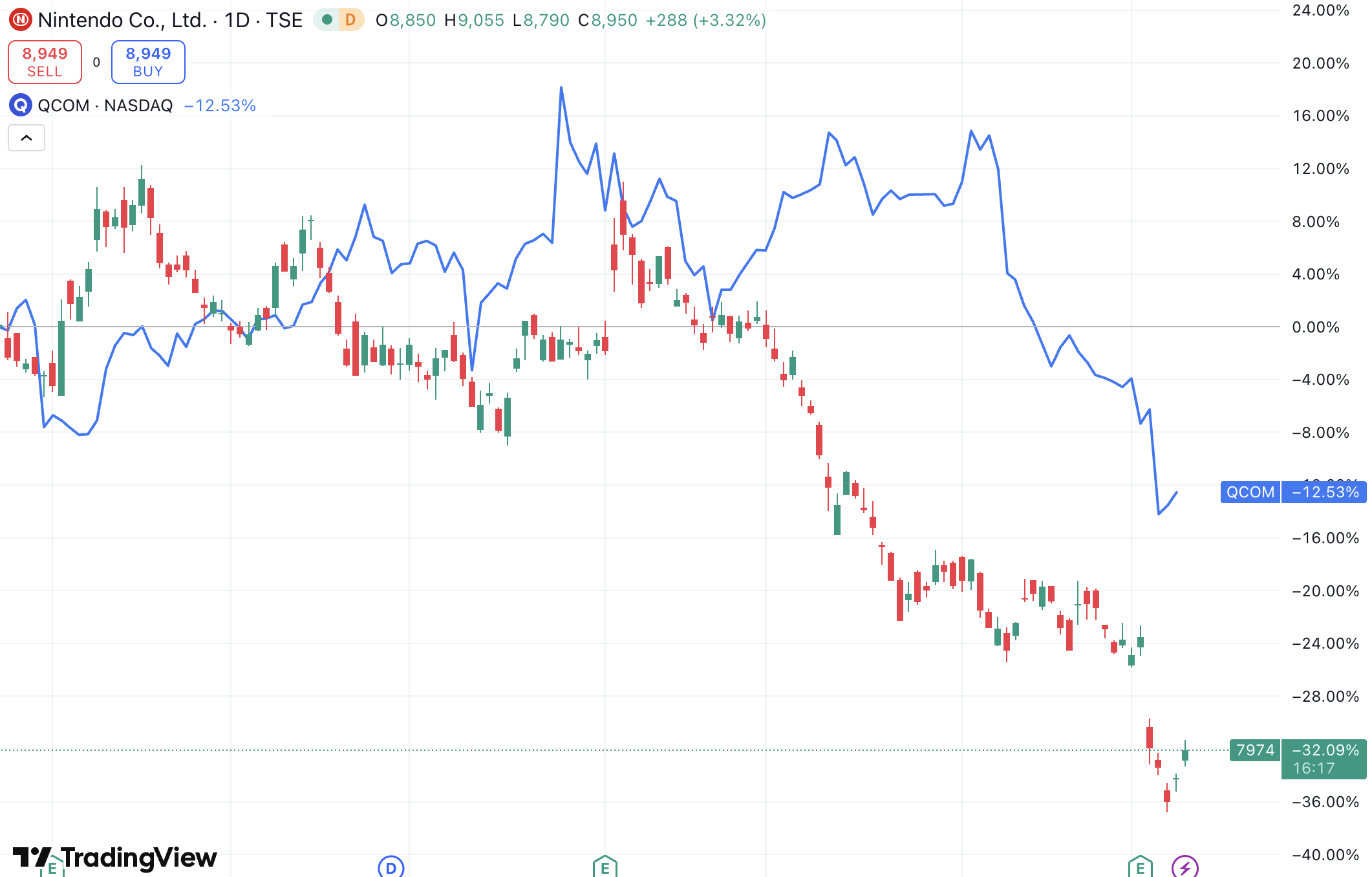
公众号记得加星标⭐️,第一时间看推送不会错过。 过去几个月内存芯片价格的持续飙升,导致股市赢家和输家之间出现巨大分化,投资者看不到尽头。 从游戏机制造商任天堂、大型PC品牌到苹果公司的供应商,许多公司的股价都因盈利担忧而下跌。 与此同时,内存生产商的股价却飙升至前所未有的高度。基金经理和分析师们正在评估哪些公司能够 通过锁定供应、提高产品价格或重新设计以减少内存使用量来更好地应对供应紧张的局面。 市场此前已经有所准备:彭博社全球消费电子产品制造商指数自9月底以来下跌了12%,而包括三星 电子在内的一篮子内存制造商的股价则飙升了160%以上。问题是,市场对这种波动的消化程度如 何。 富达国际基金经理Vivian Pai表示:"目前被低估的是持续时间方面的风险——目前的估值很大程度 上是基于这种波动将在1到2个季度内恢复正常的预期。"她补充说:"我们认为行业供应紧张的局面可 能会持续下去",甚至可能持续到今年年底。 内存芯片短缺和价格上涨的问题在各公司财报和电话会议中频繁出现。投资者们已经听到了警钟。 智能手机处理器制造商高通公司上周四股价下跌超过8%,此前该公司表示,内存供应紧张将限制手 机产量。任天堂在东京股 ...
3 Contrarian "Buy the Dip" Picks—and One Area to Avoid
Yahoo Finance· 2026-02-07 22:15
Group 1 - The market is experiencing a pullback, but this presents opportunities for contrarian investors as many individual stocks are down 20% to 50% despite major indexes being only modestly off their highs [3][5] - A significant shift in market leadership is noted, with capital moving away from last year's technology and AI favorites into previously ignored sectors, creating fertile ground for selective "buy the dip" strategies [3][4] - Stocks that were once highly favored are now facing steep declines, with many down 30% to 50% in a short period, indicating a potential for reversion to the mean [5][6] Group 2 - The current market environment is characterized by rotation rather than collapse, with oversold stocks likely to rebound while previously overextended stocks cool off, favoring disciplined contrarian strategies [6][8] - Technical extremes are emphasized as a key factor in distinguishing genuine opportunities from value traps, with stocks trading significantly below their historical norms indicating limited downside risk and increased rebound potential [7][9] - Specific sectors such as software and Bitcoin are highlighted as historically oversold, suggesting potential for snapback, while Albertsons is viewed as a defensive rotation play [8]
存储涨价负面效应初现
财联社· 2026-02-07 09:30
Group 1 - The rising prices of storage components are negatively impacting traditional industries, particularly in South Korea, where companies face significant increases in server costs, with prices rising from 30 million KRW to 90 million-100 million KRW [2] - The delivery times for server equipment have extended from 2-3 weeks to 2-3 months, disrupting internal project timelines for companies [2] - Hospitals in South Korea are also experiencing price increases for personal computers by 2-3 times and server prices rising by 30%-50% [2] Group 2 - Consumer electronics manufacturers, including Apple, are facing cost pressures due to rising memory prices, with Samsung increasing prices by over 80% and SK Hynix approaching 100% [3] - Apple has identified memory as a "cost pressure" in its financial discussions, indicating significant impacts on its product pricing strategy [3] - Analyst Ming-Chi Kuo notes that Apple's strong bargaining power may not reflect the broader memory demand trends among other manufacturers [3] Group 3 - The shift of major manufacturers towards high-margin products like HBM is leading to a continuous reduction in supply for consumer-grade storage chips, exacerbating the supply-demand gap and driving prices higher [4] - The cost pressures from rising memory prices are expected to extend to consumers, with potential price increases for gaming consoles like the Nintendo Switch 2 by 15% to offset memory costs [4] - PC manufacturers, such as ASUS, are adjusting product prices due to supply shortages, with expectations of relief not occurring until the second half of 2027 [4]

老黄鸽了游戏卡!30年来首次咕咕,内存优先让路AI
量子位· 2026-02-06 12:00
Core Viewpoint - Nvidia has indefinitely postponed the release of the RTX 50 Super and the next-generation RTX 60 series due to a global shortage of memory chips, prioritizing AI GPU production instead [2][15][18]. Group 1: Nvidia's Product Delays - Nvidia has historically released new gaming GPUs every other year, but this year, it has broken tradition by not launching the RTX 50 Super as expected [8][10]. - The RTX 50 Super was reportedly already designed under the codename "Kicker," but the release was delayed as of December last year [12][13]. - The delay will also affect the planned production of the RTX 60 series, originally set for late 2027 [14]. Group 2: Market Impact and Pricing - The price of the RTX 5090 has surged from an initial MSRP of $1999 to between $3500 and $4000, with projections suggesting it could reach $5000 by the end of the year [27][28]. - The ongoing chip shortage is causing price increases across all PC gaming components, leading to a potential shift in consumer behavior towards cloud services or delaying hardware upgrades [26][35]. - Companies like Valve and Nintendo are also reevaluating their product pricing and release schedules due to the memory shortage, with Nintendo having already increased the prices of its Switch models [29][33].