
富士胶片

Search documents
新一批京津冀医耗集采结果今天公布!医疗费有望进一步降低
Sou Hu Cai Jing· 2026-01-15 07:58
Core Insights - The recent announcement of the "3+N" alliance medical consumables bulk procurement results aims to reduce the prices of medical consumables, specifically medical films and hemostatic materials, thereby alleviating the financial burden on patients [1][2]. Group 1: Medical Film Procurement - The bulk procurement for medical films included 95 selected companies, such as Agfa, Fujifilm, Konica Minolta, and Ricoh, covering two types of products: laser films and thermal films, with a total of 2,466 specifications selected [1]. - The procurement process utilized a combination of volume-based pricing, negotiation, and dual selection to achieve cost optimization through bulk purchasing [1]. - The annual usage of medical films in China is approximately 650 million sheets, with a market size nearing 6 billion yuan, making it a significant component of operational costs for medical institutions [1]. Group 2: Hemostatic Materials Procurement - The bulk procurement for hemostatic materials included over 10 types of products, such as hemostatic gauze, collagen sponge, and bone wax, with a total of 126 specifications selected [1]. - Major manufacturers selected for hemostatic materials include Wehai Shichuang, Medtronic, Johnson & Johnson, and Stryker, promoting competitive pricing through a multi-product bidding mechanism [1]. - The pricing of hemostatic materials directly impacts surgical costs and patient expenses, and the recent procurement is expected to drive prices back to a reasonable range, potentially lowering future patient medical costs [1]. Group 3: Alliance Overview - The "3+N" alliance, led by Beijing, Tianjin, and Hebei, is a cross-regional procurement alliance aimed at reducing medical consumable prices through joint bulk procurement [2]. - Previous rounds of procurement by the alliance have successfully covered various medical consumables, including artificial lenses, coronary stents, and orthopedic trauma products, achieving positive results in price reduction, supply assurance, and market regulation [2]. - The alliance plans to continue expanding the scope of bulk procurement for medical consumables to enhance the effective use of medical insurance funds [2].
天禄科技(301045) - 2026年1月14日投资者关系活动记录表
2026-01-14 09:10
Business Overview - Suzhou Tianlu Technology Co., Ltd. operates in three main business segments, focusing on optical films, including TAC film and reflective polarizing films, to address domestic supply chain challenges and enhance growth potential [1][2]. TAC Film Market Insights - The demand for TAC film is projected to reach 1.229 billion square meters by 2025, with over 70% of the panel production capacity located in mainland China [2]. - Currently, Japanese suppliers dominate the TAC film market, holding approximately 75% of the global market share [2]. - The cost of TAC film constitutes over 50% of the polarizer film material costs, making it a critical component for profitability in the polarizer industry [2]. Competitive Landscape - Key players in the domestic TFT-grade TAC film development include LeKai Film and Anhui Jiguang, with limited new entrants expected due to high technical barriers [3]. - The market competition for domestic alternatives is relatively mild, allowing ample growth opportunities for existing players [3]. Project Development and Financing - Anhui Jiguang has received support from major stakeholders across the supply chain, including Sanli Film and Beijing Electric Control Investment, enhancing project advancement through technical and operational assistance [4]. - The construction of Anhui Jiguang's factory is progressing, with a production line expected to yield approximately 60 million square meters of TAC optical film annually [5]. Reflective Polarizing Film Project - The global market for reflective polarizing films is anticipated to reach $1.438 billion by 2025, primarily dominated by suppliers from the US, Japan, and South Korea [6]. - Suzhou Yijia, a subsidiary established in 2025, aims to produce reflective polarizing films, with plans for two production lines capable of generating 2.4 million square meters annually [7]. Financial Strategy - The investment for the reflective polarizing film project is estimated at approximately 300 million yuan, with initial funding sourced from capital raising and company funds, alongside plans for external financing to optimize governance and equity structure [7]. Market Trends and Production Capacity - The LCD panel market is experiencing upward price trends due to increased demand from upcoming sports events and proactive inventory management by brand manufacturers [7]. - The production capacity utilization rate is expected to remain high, driven by preemptive demand and inventory replenishment strategies [7].
是谁,抢拍立得相纸到发疯
3 6 Ke· 2025-12-24 11:52
Core Insights - The article discusses the rising prices and scarcity of Fujifilm's Instax film, particularly the mini series, which has led to a thriving secondary market and consumer frustration [3][4][6][9]. Group 1: Market Dynamics - Fujifilm's Instax film prices have skyrocketed, with the cost of mini film rising from 3.5 yuan per sheet five years ago to approximately 8 yuan now, while wide film prices have remained relatively stable [6][9]. - The Instax business has become a significant revenue source for Fujifilm, with sales increasing from 8 billion yen in 2020 to an expected 16 billion yen in 2024, indicating a doubling of sales in five years [9]. - Fujifilm holds over 85% of the global market share for instant film, highlighting its dominance in the sector [9]. Group 2: Consumer Behavior - Consumers are actively seeking ways to purchase Instax film, forming groups on social media platforms to share information about restocks and prices [3][12][15]. - Many consumers have resorted to purchasing from scalpers, with one seller claiming to sell thousands of boxes monthly, indicating a high demand despite the inflated prices [7][12]. - The article notes that consumers are willing to go to great lengths, including traveling to Japan, to find and purchase the film, only to face restrictions and limits imposed by retailers [19][21]. Group 3: Supply Chain Issues - The supply of Instax film is heavily skewed, with North America and Europe receiving 35% and 25% of the distribution, respectively, while China only receives 10% [9]. - Fujifilm's supply strategy has prioritized markets outside of China, leading to significant shortages in the Chinese market [9][12]. - The mismatch between explosive demand and limited supply has created a fertile ground for scalpers and has frustrated consumers [12][24].


一款AI内镜设备的转化路径长什么样?从临床需求到规模应用
思宇MedTech· 2025-12-20 01:11
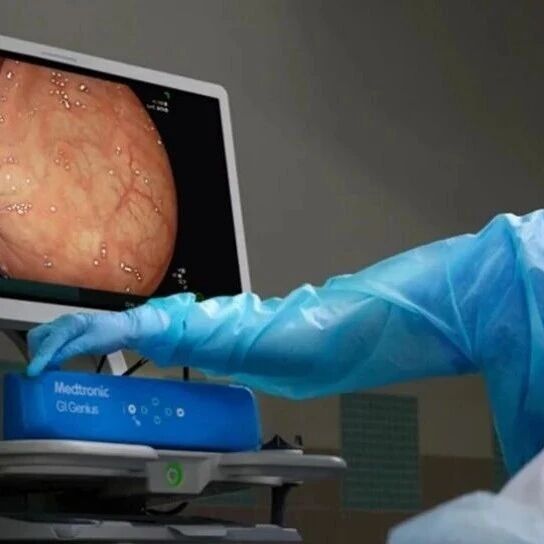
Core Viewpoint - The article discusses the significant advancement in gastrointestinal endoscopy technology with the introduction of a domestic high-definition endoscope system combined with AI-assisted diagnostic capabilities in Xinjiang, China. This innovation aims to enhance the accuracy and efficiency of gastrointestinal disease screening and treatment in county-level medical settings, reducing the need for patients to travel to larger hospitals for care [1]. Part 1: Clinical Demand Discovery - The emergence of the AI-assisted gastrointestinal endoscopy system is driven by unmet clinical needs, particularly the challenge of early detection of small lesions in gastrointestinal cancer patients, which often leads to late-stage diagnoses [3][4]. - The system enhances lesion recognition, operational standardization, and diagnostic reliability through a collaborative approach involving doctors, equipment, and AI [5]. Part 2: Technical Solution Selection - Various technical paths were considered for the AI-assisted gastrointestinal endoscopy system, including software enhancements to existing equipment, hardware upgrades for improved imaging, and a combination of both [6][7]. - Path A focuses on adding AI capabilities to existing endoscope systems, exemplified by the GI Genius system, which has shown a 14.4% increase in adenoma detection rates [8]. - Path B involves upgrading hardware for better imaging quality, while Path C emphasizes a gradual approach starting with quality control before expanding to lesion detection [10][11]. Part 3: Cross-Disciplinary Team Collaboration - The development phase involves a collaborative ecosystem where algorithm engineers, hardware engineers, and clinical doctors work together to refine the AI system based on real-world clinical practices [14]. - Iterative prototyping and preclinical validation are crucial, with multiple stages of testing to ensure safety and effectiveness before clinical trials [15][16]. Part 4: Clinical Trials and Regulatory Approval - Clinical trials are essential for validating the safety and effectiveness of the AI-assisted endoscopy system, with early studies indicating significant improvements in adenoma detection rates [20][21]. - Regulatory bodies like the FDA and NMPA play a critical role in the approval process, focusing on the system's effectiveness, safety, and compatibility with existing medical devices [23][24]. Part 5: Productization and Clinical Application - After regulatory approval, the AI endoscopy product enters the commercialization phase, requiring adaptation to various hospital systems and ensuring compliance with medical device standards [30]. - Key players in this phase include manufacturing, marketing, and clinical support teams, with a focus on demonstrating clinical efficacy to encourage adoption [31]. Challenges and Key Factors - The commercialization process faces challenges such as high initial costs, skepticism from experienced doctors, and the need for standardized protocols to ensure consistent performance across different products [34][35]. - Long-term success in the market will depend on continuous innovation, collaboration within the industry, and the ability to demonstrate tangible clinical benefits to both doctors and patients [36].
光刻胶技术发展与国产化:如何从树脂到光刻胶,构建自主产业链
材料汇· 2025-12-17 15:57
Core Viewpoint - The article emphasizes the critical role of photoresists in the semiconductor industry, particularly in the lithography process, and highlights the challenges and opportunities in domestic production and innovation in this field [2][3][5]. Group 1: Development and Importance of Photoresists - Photoresists are likened to a "brush" in the semiconductor industry, essential for transferring circuit patterns onto silicon wafers, with advancements in materials directly influencing the continuation of Moore's Law [2][3]. - The evolution of photoresist technology has seen a transition from early DNQ-phenolic resin systems to chemically amplified photoresists and now to metal cluster photoresists for EUV technology, showcasing the need for continuous innovation [2][3]. Group 2: Current Market and Competitive Landscape - The global photoresist market is projected to grow from $10.8 billion in 2024 to $12.5 billion by 2027, with the semiconductor photoresist market expected to reach $2.8 billion by 2027, reflecting a compound annual growth rate of 4% [65]. - The market is dominated by Japanese and American companies, with the top five firms holding 85% of the market share, indicating significant barriers to entry for domestic players [69]. Group 3: Challenges in Domestic Production - The path to domestic production of photoresists is complex, requiring advancements in molecular design, formulation development, and supply chain security, which involves a complete overhaul of capabilities from molecular design to customer validation [3][74]. - Domestic companies are making strides in the photoresist market, with some achieving breakthroughs in specific areas, but they still face significant challenges in high-end markets where competition is fierce [71][74]. Group 4: Technical Aspects and Performance Indicators - The article outlines the technical evolution of photoresists, detailing the importance of wavelength in determining material selection and the mechanisms of various types of photoresists, such as chemically amplified positive and negative photoresists [23][36][44]. - Key performance indicators for photoresists include sensitivity, contrast, resolution, and etch resistance, which are critical for meeting the demands of advanced semiconductor manufacturing processes [59][61]. Group 5: Future Directions and Innovations - The article suggests that the future of photoresist technology will depend on the collaborative evolution of materials, equipment, and processes, emphasizing the need for a systemic approach to overcome existing bottlenecks in the industry [16][87]. - Innovations in photoresist formulations and the development of new materials will be essential to meet the increasing demands for higher resolution and efficiency in semiconductor manufacturing [20][86].

光刻胶国产化:如何从树脂到光刻胶,构建自主产业链
材料汇· 2025-12-16 16:05
正文 在半导体产业攀登工艺巅峰的征程中,光刻胶作为集成电路图形化工艺的核心媒介,其地位堪比精密绘制蓝图的"画笔"。它不仅决定了电路图案能否被高 保真地转印至硅片,其材料本身的每一次革新—— 从早期的DNQ-酚醛树脂体系,到随KrF、ArF光刻技术而生的化学放大光刻胶,直至面向EUV时代的金 属簇光刻胶 ——都直接推动了摩尔定律的延续。 然而,这项精密且关键的产业,长期以来被少数国际巨头在 材料设计、核心树脂及复杂工艺 诀窍上所构建的壁垒所主导。 国产化之路,因而远非简单的产品替代,而是一场贯穿 基础化学、精密工程与供应链安全的系统性攻坚,涉及从分子设计、配方研发、稳定量产到客户 验证 的全链条能力重塑。 报告将系统性地梳理 半导体光刻胶的技术脉络与产业现状 。报告内容主要涵盖四大方面: 首先 ,回顾光刻胶随光刻技术代演进的 发展历程 ,揭示设备、材料与工艺协同发展的规律; 其次 ,深入剖析成熟制程中主流光刻胶(如248nm、193nm化学放大胶及I线胶)的 工作原理与配方核心 ; 再次 ,明确界定评估光刻胶性能的 关键技术指标 ,解读其背后的设计考量; 点击 最 下方 "在看"和" "并分享,"关注"材料汇 ...

全球及中国制造业无损测试设备行业发展潜力及投资策略研究报2026年版
Sou Hu Cai Jing· 2025-12-13 19:13
全球及中国制造业无损测试设备行业发展潜力及投资策略研究报2026年版 【全新修订】:2025年12月 【出版机构】:鸿晟信合研究院 【内容部分有删减·详细可参鸿晟信合研究院出版完整信息!】 【免费售后 服务一年,具体内容及订购流程欢迎咨询客服人员 】 报告目录 1 制造业无损测试设备市场概述 1.1 制造业无损测试设备行业概述及统计范围 1.2 按照不同产品类型,制造业无损测试设备主要可以分为如下几个类别 1.2.1 全球不同产品类型制造业无损测试设备规模增长趋势2020 VS 2024 VS 2031 1.2.2 粉磁检测设备 1.2.3 电磁检测设备 1.2.4 其他 1.3 从不同应用,制造业无损测试设备主要包括如下几个方面 1.3.1 全球不同应用制造业无损测试设备规模增长趋势2020 VS 2024 VS 2031 1.4 行业发展现状分析 1.3.2 汽车 1.3.3 航空 1.3.4 石油和能源设备 1.3.5 其他 1.4.1 制造业无损测试设备行业发展总体概况 1.4.2 制造业无损测试设备行业发展主要特点 1.4.3 制造业无损测试设备行业发展影响因素 1.4.3.1 制造业无损测试设备有 ...

日本绝对垄断的76项半导体技术
是说芯语· 2025-12-08 06:29
Core Viewpoint - The article emphasizes the critical role of Japan in the semiconductor industry, highlighting its dominance in various key technologies and materials, which poses challenges for other countries, particularly in the context of geopolitical tensions [3]. Group 1: Semiconductor Industry Overview - The semiconductor industry is characterized by significant technological barriers, with Japan holding a monopoly in 76 key semiconductor technologies, covering the entire supply chain from materials to equipment [3]. - Japan dominates the market for 14 out of 19 core semiconductor materials, establishing a stronghold in the semiconductor materials and equipment sectors [3]. Group 2: Key Technologies and Market Shares - EUV photoresist preparation technology is monopolized by companies such as Tokyo Ohka Kogyo, JSR, Shin-Etsu Chemical, and Fujifilm, with market shares exceeding 90% [4]. - The market for 300mm silicon wafer manufacturing technology is dominated by Shin-Etsu and SUMCO, holding a combined market share of 72% [9]. - The ultra-pure electronic-grade hydrogen fluoride preparation technology has a global monopoly with a market share of 96.7%-100%, being the only material usable for advanced processes below 7nm [9]. - The semiconductor cutting and grinding equipment technology is led by DISCO, which holds over 70% of the global market share [9]. - The high-end FC-BGA packaging substrate technology is also dominated by Japanese firms, with market shares exceeding 70% [10]. Group 3: Strategic Implications - The article stresses the need for countries to recognize their technological gaps and accelerate research and development efforts in the semiconductor sector to achieve breakthroughs [3]. - The strategic significance of the semiconductor industry is underscored, particularly in light of current geopolitical complexities, necessitating a focused approach to technology advancement and industrial upgrading [3].

印度正在打造芯片城
半导体芯闻· 2025-12-04 10:09
Group 1 - A planned city is emerging in India, designated as a semiconductor manufacturing hub, attracting businesses and investments [1] - The "Semiconductor City" project is located in the Dholera Special Investment Region, covering an area of 920 square kilometers, larger than Singapore [1] - The first phase of Dholera's development began in 2016, with infrastructure such as roads, water supply, and substations already established [1] Group 2 - Tata Electronics, a subsidiary of Tata Group, will play a central role in the semiconductor city, investing up to ₹910 billion (approximately $10 billion) to build India's first front-end wafer fab [1] - The wafer fab, currently under construction, is expected to have a monthly capacity of 50,000 wafers and create over 20,000 jobs, with production anticipated to start in two to three years [1] - The Indian government has approved the establishment of 10 semiconductor manufacturing plants nationwide, with total public and private investments reaching ₹1.6 trillion [2] Group 3 - Japanese companies are also seizing opportunities in India's semiconductor sector, with Tokyo Electron collaborating with Tata Group for employee training and planning to establish a support center in Dholera [2] - Fujifilm, a Japanese technology group, plans to invest billions of yen to build a chip materials factory in the next fiscal year, focusing on chemicals for impurity removal [2] - The growing Japanese expatriate community in India is leading to increased demand for services, prompting AJU Group to open a Japanese restaurant and plan a hotel in Dholera [2]

募资3亿!又一上市公司扩产PSPI
Sou Hu Cai Jing· 2025-12-03 10:34
Group 1 - The company, Jilin Aolide Optoelectronic Materials Co., Ltd., plans to raise up to 299.71 million yuan through a simplified procedure to expand the production capacity of OLED display core material PSPI and supplement working capital, injecting new momentum into the localization of key materials in the OLED industry [1][2] - Of the raised funds, 239.71 million yuan will be allocated to the "OLED Display Core Material PSPI Production Base Project," with the remaining 60 million yuan for working capital. The project, led by the company's wholly-owned subsidiary, is expected to have a total investment of 239.86 million yuan and a construction period of three years [2] - The project aims to significantly enhance the production capacity and efficiency of PSPI materials through the establishment of new production workshops and standardized production lines, with projected first-year revenues of 382.5 million yuan and a net profit of 57.51 million yuan [2] Group 2 - PSPI, a key photoresist in OLED display manufacturing, has been dominated by foreign companies, leading to risks for domestic panel manufacturers regarding procurement cycles, price volatility, and supply stability. The company has developed its PSPI products through independent research and has begun mass shipments after validation by leading display panel manufacturers [3] - The OLED industry is entering a growth phase, with global smartphone penetration of OLED expected to rise from 51% in 2023 to 55% in 2024, and automotive OLED panel shipments projected to reach 5.2 million units by 2027, a nearly ninefold increase from 2022 [3] - The global PSPI market size is forecasted to grow from 677 million USD in 2024 to 3.181 billion USD by 2031, with a compound annual growth rate of 25.1% [3] Group 3 - As a leading upstream enterprise in the domestic OLED industry chain, the company has established a solid foundation in technology research and customer resources, holding over 400 invention patents since its establishment in 2005 [4] - The company has successfully broken through foreign technological barriers in the PSPI field, forming an independent intellectual property system and achieving mass production and sales [4] - The company's revenue increased from 459 million yuan in 2022 to 533 million yuan in 2024, with future growth potential expected from the release of PSPI production capacity and the development of the OLED industry [4]
