辉能科技

Search documents
固态电池系列报告之三:车端应用加速,产业链有望迎来变革
Bank of China Securities· 2025-10-23 06:25
Investment Rating - The report maintains an "Outperform" rating for the solid-state battery industry [1]. Core Viewpoints - Solid-state batteries are expected to see rapid growth in demand for electric vehicles due to their significant advantages in safety and energy density, supported by strong policy backing [1][3]. - The production of solid-state batteries is anticipated to accelerate, with production lines and equipment likely to benefit first from this transition [1][3]. - The global market for solid-state battery equipment is projected to reach CNY 40 billion in 2024, with expectations to grow to CNY 1,079.4 billion by 2030 [28][30]. Summary by Sections Industry Overview - Solid-state batteries are positioned as the next-generation technology for electric vehicle power sources, offering superior safety and energy density compared to traditional lithium-ion batteries [1][13]. - The industry is experiencing a dual drive from both policy and market forces, leading to an increase in production capacity and technological advancements [1][19]. Market Dynamics - Equipment orders for solid-state batteries are expected to precede the demand for end products, indicating a rapid growth potential in the equipment market [23][28]. - The solid-state battery equipment market is projected to grow significantly, with a forecasted market size of CNY 1,079.4 billion by 2030 [28][30]. Technological Developments - The introduction of new equipment and upgrades across various production stages is essential for the solid-state battery industry, particularly in the front-end and mid-stage processes [24][31]. - The solid-state battery production process requires specific equipment that differs from traditional lithium-ion battery production, necessitating significant investment in new technologies [24][31]. Investment Recommendations - The report suggests focusing on specific equipment segments such as dry electrode technology and static pressure equipment, which are expected to see increased demand and penetration rates [3][19]. - Companies like Xianlead Intelligent, Winbond Technology, and others are highlighted as key players to watch in the solid-state battery equipment sector [3][19].


中国对高端锂电池及技术实施出口管制 首次在新能源领域筑起“技术护栏”
Zhong Guo Neng Yuan Wang· 2025-10-22 04:30
Core Insights - The Ministry of Commerce and the General Administration of Customs of China announced export controls on lithium batteries and related technologies, effective from November 8, 2025, marking the first "technical-level" export review in the new energy equipment manufacturing sector [1][2] - The export controls aim to protect core technologies, enhance national security, and ensure compliance with international non-proliferation obligations while maintaining the competitiveness of Chinese lithium battery companies in the global market [1][4] Industry Overview - China's lithium battery industry is a core advantage in the new energy sector, with over 250 overseas orders totaling 188 GWh secured by domestic energy storage companies in the first eight months of 2025, and a significant increase in demand from international markets [2][4] - The export controls are seen as a "signpost" that may reshape the development landscape for Chinese lithium battery companies, encouraging more firms to invest abroad [2][3] Export Control Details - The export controls specifically target rechargeable lithium-ion batteries with an energy density of 300 Wh/kg or higher, high-pressure lithium iron phosphate materials, artificial graphite anode materials, and related equipment and technologies [1][5] - The measures also include controls on artificial diamond micro-powder and single crystal products, which are critical for semiconductor and precision manufacturing applications [6] Technological Implications - The export controls are designed to provide a "technical barrier" for the lithium battery industry, ensuring that high-end products and technologies are managed with precision rather than imposing blanket export bans [3][4] - The focus on dual-use technologies reflects a global trend in maintaining national security while fostering innovation in high-tech sectors [4][5] Market Dynamics - The export controls may lead to short-term price premiums for high-end products due to their scarcity, while compliance for overseas capacity expansion and core equipment export may become stricter [5][7] - Long-term, these measures are expected to protect the leading technological advantages of Chinese companies and stabilize their pricing power within the global supply chain [5][7] Future Outlook - The lithium battery industry is transitioning from a focus on quantity to quality, with an emphasis on technological innovation and core competitiveness [6][7] - The anticipated growth of solid-state battery markets, projected to exceed an 80% compound annual growth rate from 2024 to 2030, highlights the importance of rapid industrialization and scaling production capabilities [6][7]


护“链”稳“技”,筑牢锂电池出口安全屏障
中国能源报· 2025-10-20 01:43
Core Viewpoint - The recent implementation of "technology-level" export controls in China's new energy equipment manufacturing sector is aimed at enhancing national security and protecting core technologies, rather than imposing trade restrictions [5][6][9]. Export Control Announcement - The Ministry of Commerce and the General Administration of Customs announced the implementation of export controls on lithium batteries and related manufacturing equipment, effective from November 8, 2025 [5]. - The updated export control list includes rechargeable lithium-ion batteries with an energy density of 300Wh/kg or more, high-pressure lithium iron phosphate cathode materials, artificial graphite anode materials, and related technologies [6][11]. Industry Impact - The new policy is expected to help maintain China's competitive advantage in the global lithium battery supply chain and prevent core technologies from leaking abroad [6][11]. - The export controls are seen as a "wind vane" that may reshape the development layout of Chinese lithium battery companies, encouraging them to invest overseas [8][11]. Technological Focus - The export controls specifically target high-end products and technologies, similar to export restrictions in the semiconductor industry [9][11]. - The measures are designed to create a "technical barrier" for the lithium battery industry, ensuring national security while promoting a shift towards high-end, technology-driven industrial transformation [11][15]. Market Dynamics - China's lithium battery products are experiencing strong demand overseas, with a reported 90% year-on-year growth in the overseas energy storage market [8]. - The export controls may lead to a temporary premium on high-end products due to their scarcity, while also tightening compliance approvals for overseas capacity expansion and core equipment exports [12][15]. Future Outlook - The export controls are expected to provide a regulatory framework that encourages companies to focus on core technology research and development, enhancing their market competitiveness [15]. - The global solid-state battery market is projected to grow at a compound annual growth rate of over 80% from 2024 to 2030, indicating significant opportunities for Chinese battery manufacturers [14][15].

滨江集团:辉能科技法国工厂建设已取得当地的环评和建筑许可,目前正处于EPC招标阶段
Mei Ri Jing Ji Xin Wen· 2025-10-14 13:41
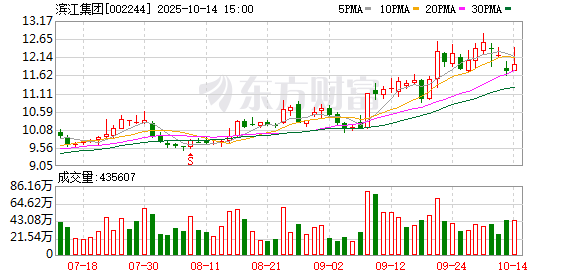
Group 1 - The core viewpoint of the news is that Huineng Technology has achieved significant production milestones with 2.4 million solid-state batteries shipped from its Taoke factory, and there are ongoing discussions about expanding production capacity to meet market demand [2] - The company, Binjiang Group, has confirmed that Huineng Technology's factory in France has received local environmental and construction permits, and is currently in the EPC bidding phase [2] - Binjiang Group's investment plans in Huineng Technology will depend on the latter's development status [2]

字节跳动入局锂电赛道:一场科技巨头与能源革命的碰撞
Sou Hu Cai Jing· 2025-10-12 02:07
Core Insights - ByteDance's entry into the lithium battery sector is a strategic move driven by policy benefits, technological collaboration, and ecological logic, aiming for long-term energy positioning rather than short-term profits [2][3] Group 1: Policy and Market Demand - The lithium battery industry is experiencing a dual-driven growth pattern under China's "dual carbon" goals, with a significant increase in demand for electric vehicle batteries and energy storage solutions [4] - In the first nine months of 2025, global lithium battery shipments reached 1758 GWh, a year-on-year increase of 142.3%, with China accounting for 70% of this volume [4] - ByteDance is targeting a core market worth hundreds of billions as the energy structure shifts from fossil fuels to renewable energy over the next decade [4] Group 2: Technological Synergy - ByteDance's AI algorithms and big data capabilities are well-suited to address the efficiency bottlenecks in lithium battery research and development [5] - The company has established an AI research lab in collaboration with the Chinese Academy of Sciences, significantly reducing the time required for material screening from months to hours [5] Group 3: Ecological Closure - The lithium battery initiative is crucial for ByteDance to enhance its "digital services + physical hardware" ecosystem, addressing its own energy needs while extending its commercial boundaries [6] - The company aims to reduce electricity costs by 15%-20% through a planned 200 MWh energy storage microgrid, which will also meet carbon reduction requirements [6] Group 4: Competitive Landscape - ByteDance's entry into the lithium battery market has intensified competition, leading to a multi-polar game involving traditional battery giants, internet peers, and emerging startups [7][8] - Unlike other tech giants, ByteDance is directly engaging in lithium battery R&D and production, aiming for solid-state battery pilot production by 2026 [9] Group 5: Industry Trends and Recommendations - The lithium battery industry is transitioning from single-material competition to a model emphasizing technological integration and scene reconstruction [12] - Key trends include the need for interdisciplinary innovation, the evolution of batteries into energy hubs, and the importance of global competition and localization [13][14][15] - Recommendations for traditional battery giants include enhancing algorithm capabilities and exploring new application scenarios, while emerging companies should focus on niche areas to build technological barriers [18]
滨江集团:截至目前,公司对辉能科技的投资尚未产生收益
Zheng Quan Ri Bao Zhi Sheng· 2025-10-09 10:08
Core Viewpoint - Binjiang Group announced on October 9 that its investment in Huineng Technology has not yet generated returns, but the company will continue to manage its invested projects effectively [1] Group 1 - Huineng Technology's factory in France has obtained local environmental and construction permits [1] - The project is currently in the EPC (Engineering, Procurement, and Construction) bidding phase [1] - The company is focused on post-investment management of its projects [1]
滨江集团:截止目前,公司对辉能科技的投资尚未产生收益
Mei Ri Jing Ji Xin Wen· 2025-10-09 07:21
Core Viewpoint - The construction of Huineng Technology's solid-state battery production line in France has progressed, with environmental and building permits obtained, and the project currently in the EPC bidding phase. However, the investment has not yet generated returns for the company, which will continue to manage its existing projects effectively [1]. Group 1 - Huineng Technology's French factory has received local environmental and construction permits [1]. - The project is currently in the EPC bidding stage [1]. - The company's investment in Huineng Technology has not yet yielded any returns [1]. Group 2 - The company plans to continue managing its existing investments in the solid-state battery sector [1].
每日速递|电动化进程低于预期,宁德时代退出芬兰电池项目
高工锂电· 2025-09-04 11:05
Battery - CATL exits the Finnish battery project, selling its 20.6% stake in Valmet Automotive to the Finnish government and Pontos, with the government injecting approximately €35 million into Valmet, resulting in a 79% ownership stake [2] - Huineng Technology announces collaboration with CEA-Liten to develop a modular, detachable solid-state battery that allows for individual cell replacement, aiming to reduce waste and maintenance costs, with a showcase planned for the 2025 Munich Motor Show [3] - Guangdong Jinseng New Energy submits a listing application to the Hong Kong Stock Exchange, focusing on the recycling of mainstream battery systems, including ternary lithium and lithium iron phosphate batteries, establishing a vertically integrated business model [5] Materials - Jiuwu High-Tech wins a bid for a lithium extraction project in the Lop Nur salt lake, with a contract value of 81.5 million yuan, which is expected to enhance the company's market share and performance in the lithium extraction sector [7] Overseas - SK On signs a supply agreement with Flatiron Energy for lithium iron phosphate batteries for energy storage systems, planning to supply up to 7.2 GWh of batteries from 2026 to 2030 [9] - SK On plans to convert part of its electric vehicle battery production line in Georgia, USA, to produce batteries for energy storage systems, with mass production expected to start in the second half of next year [11] - Volkswagen announces a reduction in production of its ID.4 electric SUV in the US due to lower-than-expected sales, indicating a need for manufacturers to adjust production plans in a competitive EV market [12] - Toyota announces plans to produce a pure electric vehicle model in its Czech Republic factory, marking its first local production of an all-electric model in Europe, with the Czech government investing up to €64 million in a new battery assembly facility [14]
重视新能源龙头的布局,新方向持续发力 | 投研报告
Zhong Guo Neng Yuan Wang· 2025-08-25 01:17
Core Viewpoint - The report highlights the ongoing investments and developments in the solid-state battery sector, with major companies like Nissan and others making significant strides in this technology [1][4]. Group 1: New Energy and AI Industry - The industry strategy emphasizes the importance of leading companies in the new energy sector, particularly in solid-state batteries and AI integration, as the market approaches a critical bottoming phase [2]. - Companies like Nissan are targeting the launch of electric vehicles equipped with self-developed solid-state batteries by the fiscal year 2028 [1][4]. - Dao Technology is increasing its investment in single-wall carbon nanotube projects, indicating a focus on advanced materials [1][4]. Group 2: New Energy Vehicle Supply Chain - The new cycle in the mid and downstream sectors of the new energy vehicle industry has begun, with companies like Xiaomi and Jinbo Co. benefiting from this trend [3]. - Xiaomi's smart electric vehicle business is projected to generate revenue of 20.6 billion yuan in Q2 2025, with a gross margin of 26.4% [3]. - Jinbo Co.'s carbon-ceramic brake disc products have received approval from leading global electric vehicle manufacturers, enhancing the safety and performance of automotive materials [3]. Group 3: Solid-State Battery Developments - Major players continue to invest in solid-state battery technology, with companies like Puxin and Xiamen Tungsten benefiting from these advancements [1][4]. - The global first mass-produced fourth-generation solid-state lithium ceramic battery platform has been launched by Huineng Technology, which boasts lower material costs [1][4]. - Deep Blue Huize has secured Pre-A investment from Saudi Aramco, accelerating its global solid-state battery strategy [1][4]. Group 4: Photovoltaic Industry Insights - The photovoltaic industry is experiencing a positive supply-demand dynamic, with recent increases in silicon material and wafer prices [5]. - The Ministry of Industry and Information Technology is working to regulate competition within the photovoltaic sector, which may lead to improved market conditions [5][6]. Group 5: AI and New Energy Integration - The integration of AI with new energy sectors, including humanoid robots, is gaining traction, with companies like Nvidia and others leading the charge [7]. - Zhongcai Technology reported a significant increase in net profit, driven by sales of wind turbine blades and specialized fiber products [7].
矿山停产,锂价飞升?
Sou Hu Cai Jing· 2025-08-11 04:24
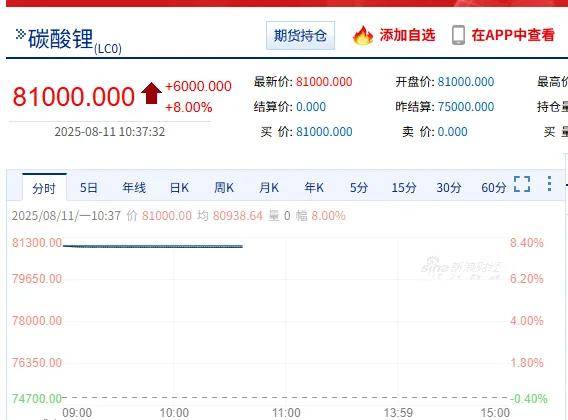
Group 1 - The core viewpoint of the articles highlights a significant surge in lithium carbonate futures prices, with the main contract rising by 8% to 81,000 yuan/ton, driven by supply constraints and increasing demand across multiple sectors [1][5][10] - The suspension of operations at the Jiangxi lithium mine, which has an annual production capacity of approximately 42,000 tons of lithium carbonate, is expected to create a supply gap of around 30,000 tons over the next three months [2][5] - Despite a total inventory of 140,000 tons in the lithium carbonate supply chain, the effective inventory for battery-grade lithium carbonate is only 43,000 tons, indicating a tight supply situation that cannot meet battery production needs [3][5] Group 2 - Demand for lithium carbonate is surging in three key areas: 1. Power batteries, with BYD's second-generation blade battery increasing production by 15%, leading to a demand increase of 3,500 tons 2. Energy storage, with the State Grid's new storage plan raising capacity to 50GWh, resulting in a demand increase of over 4,000 tons 3. Solid-state batteries, with a 25% increase in demand due to advancements in production lines [4][5] - The market's response to these developments has been immediate, with futures prices rising sharply and spot prices expected to reach between 90,000 to 100,000 yuan/ton [5][10] - The current situation reflects a broader crisis in domestic lithium mica mining, where high production costs and regulatory challenges are leading to a systemic contraction in capacity [6][9] Group 3 - The average grade of lithium mica in the Jiangxi mine is only 0.27%, significantly lower than the 1.5% grade of Australian spodumene, resulting in high processing costs [7][8] - Environmental regulations have further increased production costs, with the total cost of producing one ton of lithium carbonate approaching 150,000 yuan, while market prices hover around 70,000 yuan, leading to losses for producers [8] - The current supply chain dynamics are reshaping the global lithium resource landscape, with domestic resources facing challenges in converting reserves into production advantages due to high costs [9][10] Group 4 - Analysts have differing views on future price movements, with some predicting continued upward pressure on prices until overseas supply can compensate for domestic shortages, while others believe the impact will be less significant than previous supply disruptions [10] - The market is also witnessing advancements in battery recycling technologies, which can extract up to 90% of lithium from retired batteries at lower costs, potentially altering the competitive landscape [9]